
Car Camping

Are Portable Solar Panels Worth the Investment for Camping Trips?

Casey - The Weekend Warrior
4 min read
Includes Video

My first car camping trip was a $47 experiment in a Honda Civic hatchback in Shenandoah Valley. Mid-October. I had a Walmart foam pad, a sleeping bag rated to 40F, and zero idea that the temperature drops 15 degrees F after midnight in the mountains.

My first car camping trip was a $47 experiment in a Honda Civic hatchback in Shenandoah Valley. Mid-October. I had a Walmart foam pad, a sleeping bag rated to 40F, and zero idea that the temperature drops 15 degrees F after midnight in the mountains. By 2AM I was wearing every piece of clothing in my bag and still shivering. The fix was a $12 fleece liner from Amazon that turned my 40F bag into a 25F bag.

Three years later I still use that same liner on every trip. Now, I'm looking at portable solar panels, and honestly, they feel like another gear list I don't need. But, what if they actually make camping easier? Reddit users are split, with some saying power banks are enough unless you're really draining them. I need to know if this is a $200+ mistake waiting to happen.
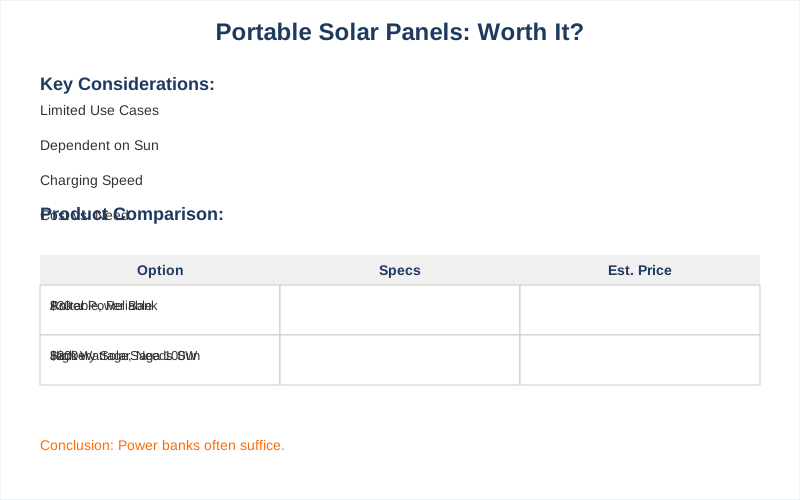
Are Portable Solar Panels Worth the Investment for Camping Trips? — Key Specifications Compared
Key specifications for Are Portable Solar Panels Worth the Investment for Camping Trips?

The Core Answer

Here's the honest version: portable solar panels are usually not worth it for weekend warriors like me, unless you have a specific need. My power needs boil down to charging my phone and maybe a headlamp. A $30 power bank from Anker is all I've ever needed for a 3-day trip. I learned this the hard way at Big Meadows Campground in Shenandoah, when my phone died on day two and I realized I could have just charged it in my car before leaving. GearLab's testing shows that even the best panels need direct sunlight for hours to fully charge a power station. If you're camping under trees, or it's cloudy, you're out of luck. That $200 Jackery SolarSaga 100W panel is useless if it's raining. YouTube reviews often show these panels charging small power stations over a full day. That's a lot of waiting game for a phone charge. The real move is a beefy power bank. You can charge it at home, and it works anytime, anywhere. It's the $50 version of off-grid power for most people. The panels are for people running fridges or charging laptops all day, every day. My first trip with just a power bank was twice as comfortable as my theoretical trip with a solar panel, and $200 cheaper. A $100 power station might be better than a $30 power bank, but it's still not a substitute for a generator or reliable grid power if you need a lot of juice. For my needs, it's overkill.
To maximize your solar setup, it's helpful to know how long it takes to charge a camping power station.
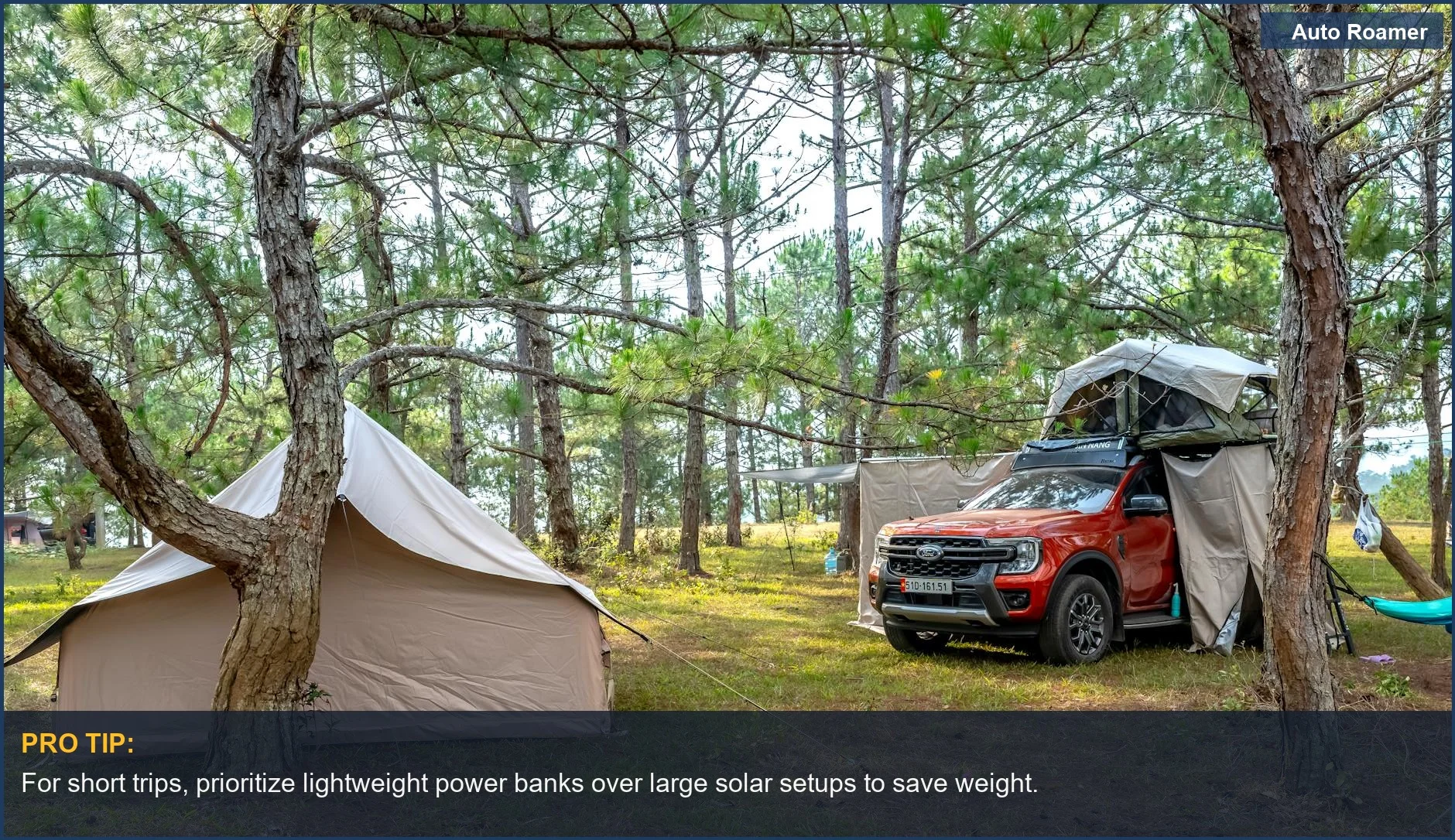
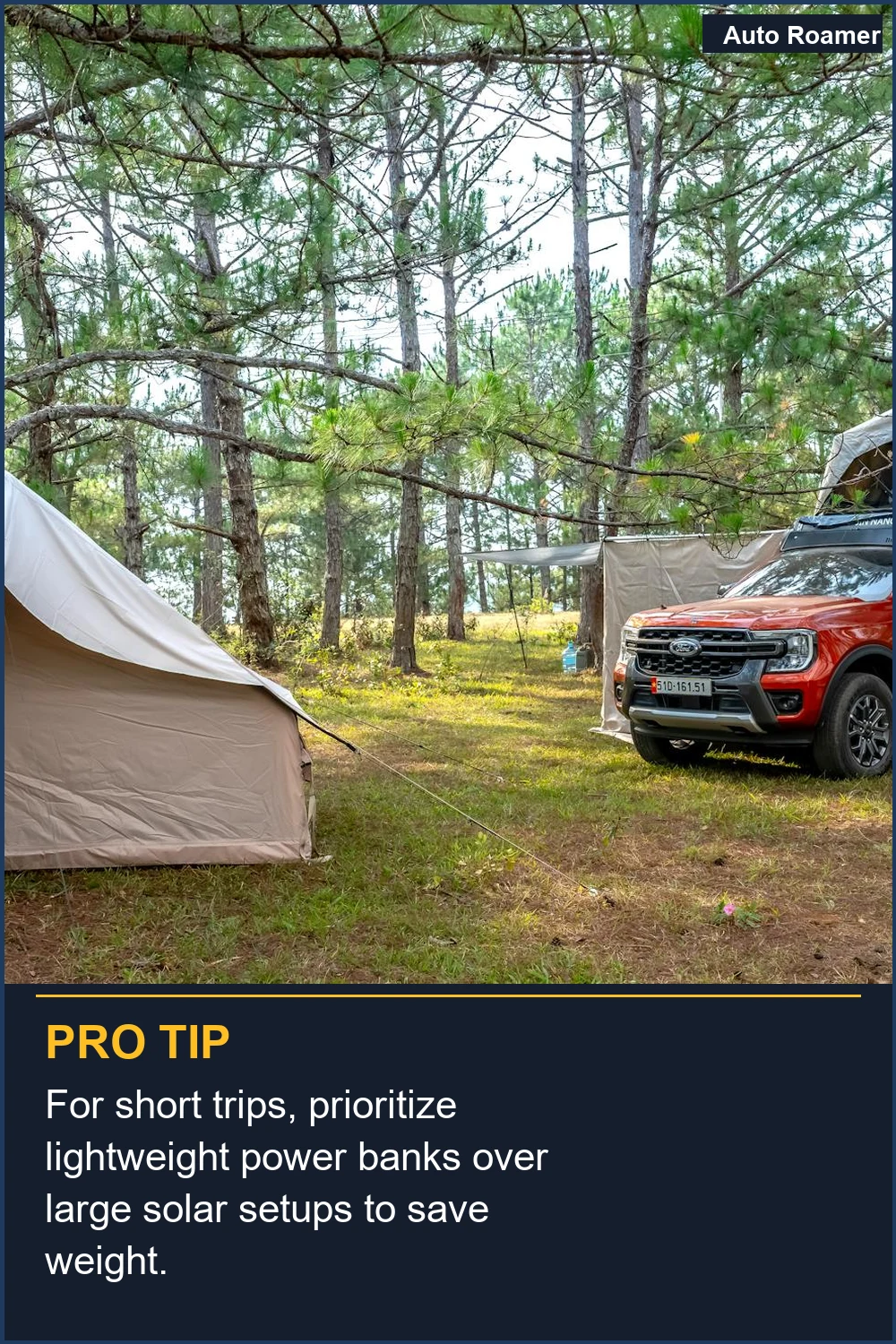
For short trips, prioritize lightweight power banks over large solar setups to save weight.
A serene forest campsite featuring a tent and rooftop tent. Consider if the portable solar panel value justifies the extra gear for your typical camping power cost. | Photo by Quang Nguyen Vinh

Why This Matters for Your Setup

Why does this matter for your setup? Because you don't want to carry extra weight for zero return.
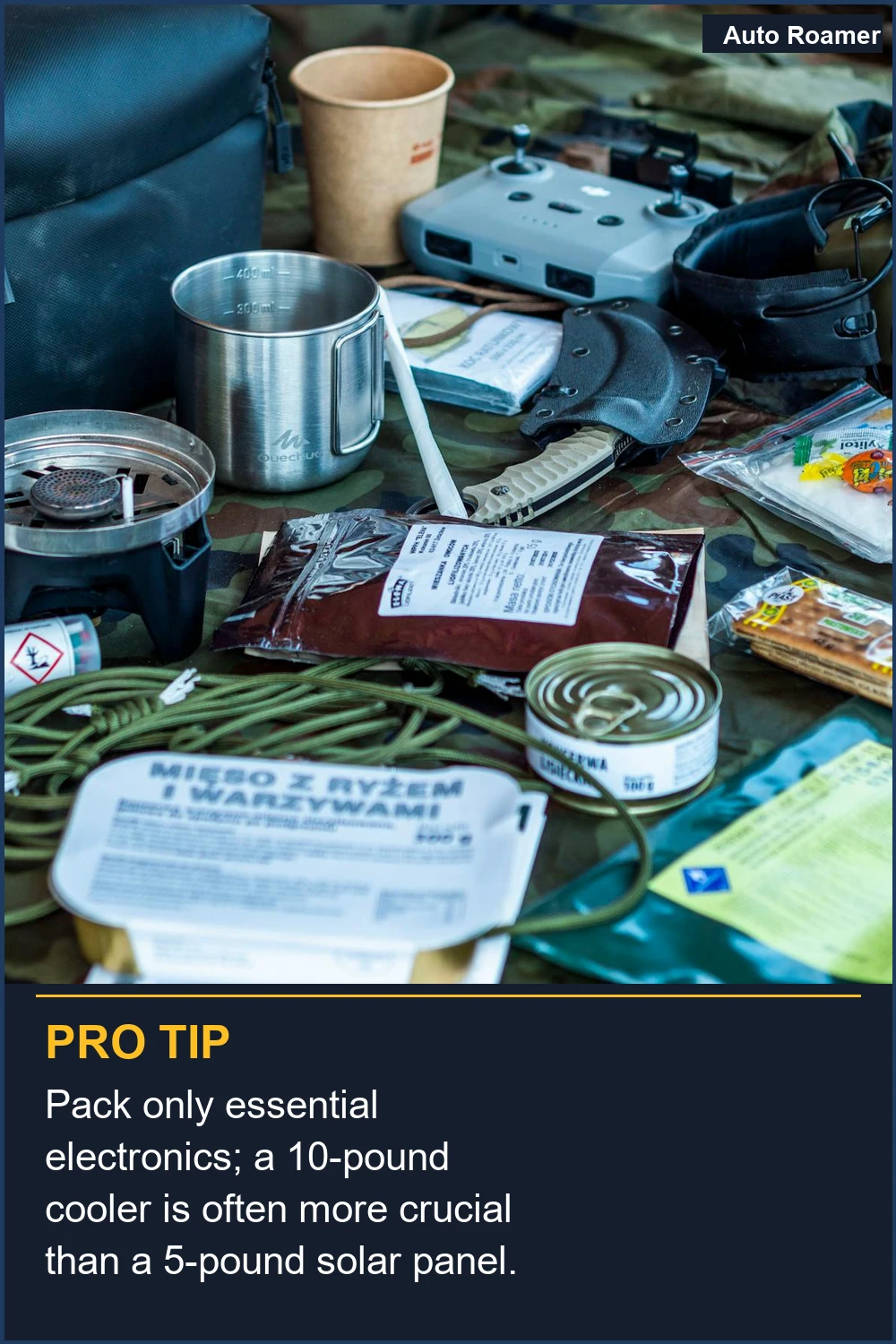
  • Weight vs. Need: I hauled a 15-pound cooler on my first trip to Yosemite, only to realize I only needed half of it. Same logic applies here. A 5-pound solar panel and a 1-pound power station are dead weight if you only need to charge your phone twice. Campers on Facebook often discuss overpacking.
  • Focus on what you *actually* use.
  • Sunlight Dependence: If you're car camping in a dense forest like I did at my uncle's place in the Adirondacks, good luck finding 8 hours of direct sun. You'll be wrestling with panels under branches. The Trek points out that batteries work anytime. Solar panels only work when the sun is out, and often, when you're busy doing other things like hiking.
  • Cost: A decent 100W panel can run you $150-$250.
  • Add a compatible power station, and you're looking at $300-$500 total. For my phone and headlamp needs, that's like buying a private jet to go to the grocery store. The $50 version with a power bank is your game-time decision. You can get a solid 20,000mAh power bank for under $50.
    To maximize your setup, understanding how long a portable power station lasts can be crucial during those camping trips; learn more about it here.
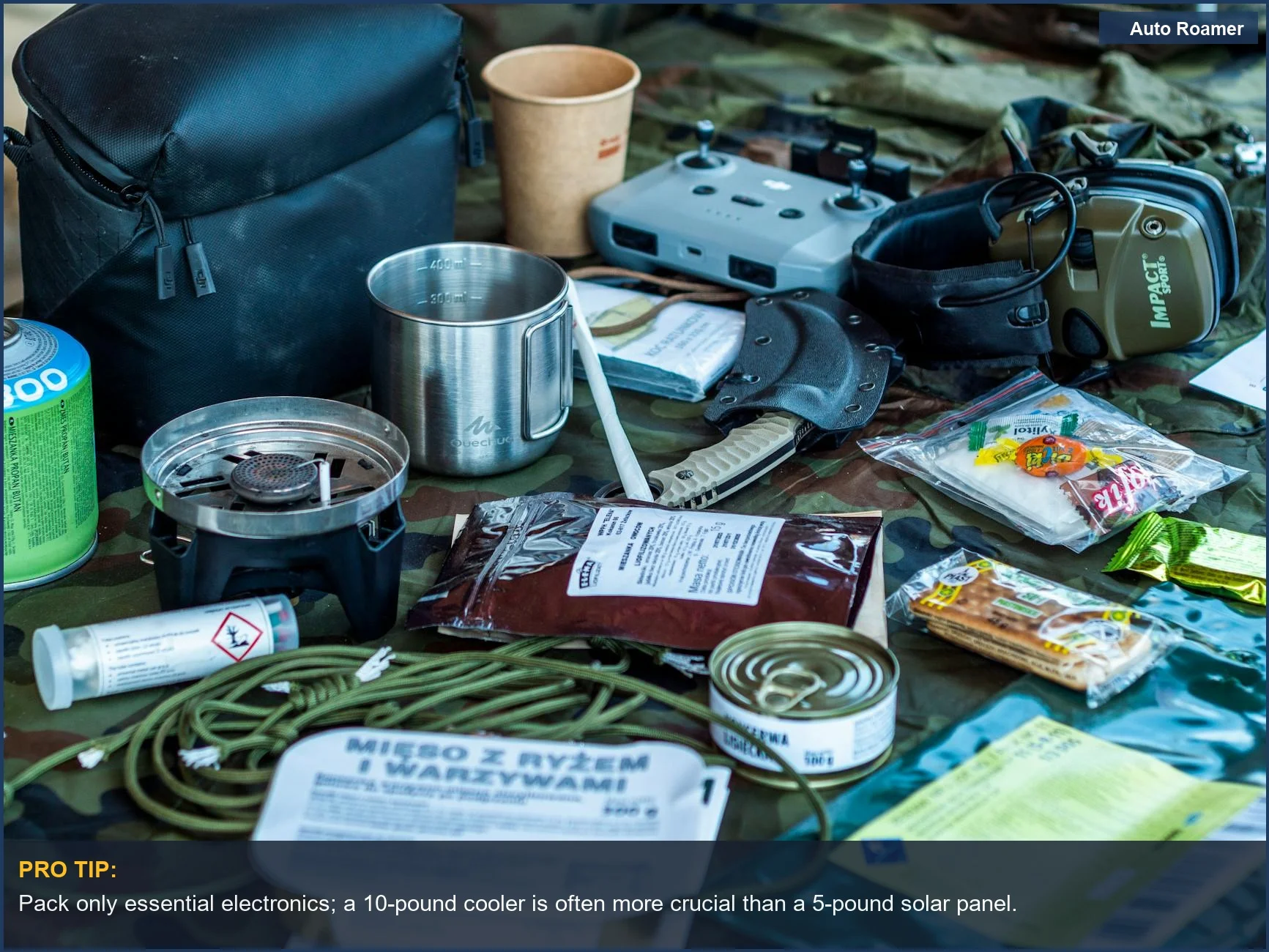
    Pack only essential electronics; a 10-pound cooler is often more crucial than a 5-pound solar panel.
    A collection of camping gear laid out. Evaluate your actual camping power cost needs before investing in bulky equipment like portable solar panels. | Photo by SHOX ART

    Making the Right Choice

    Making the right choice for your camping power needs is all about honesty with yourself.
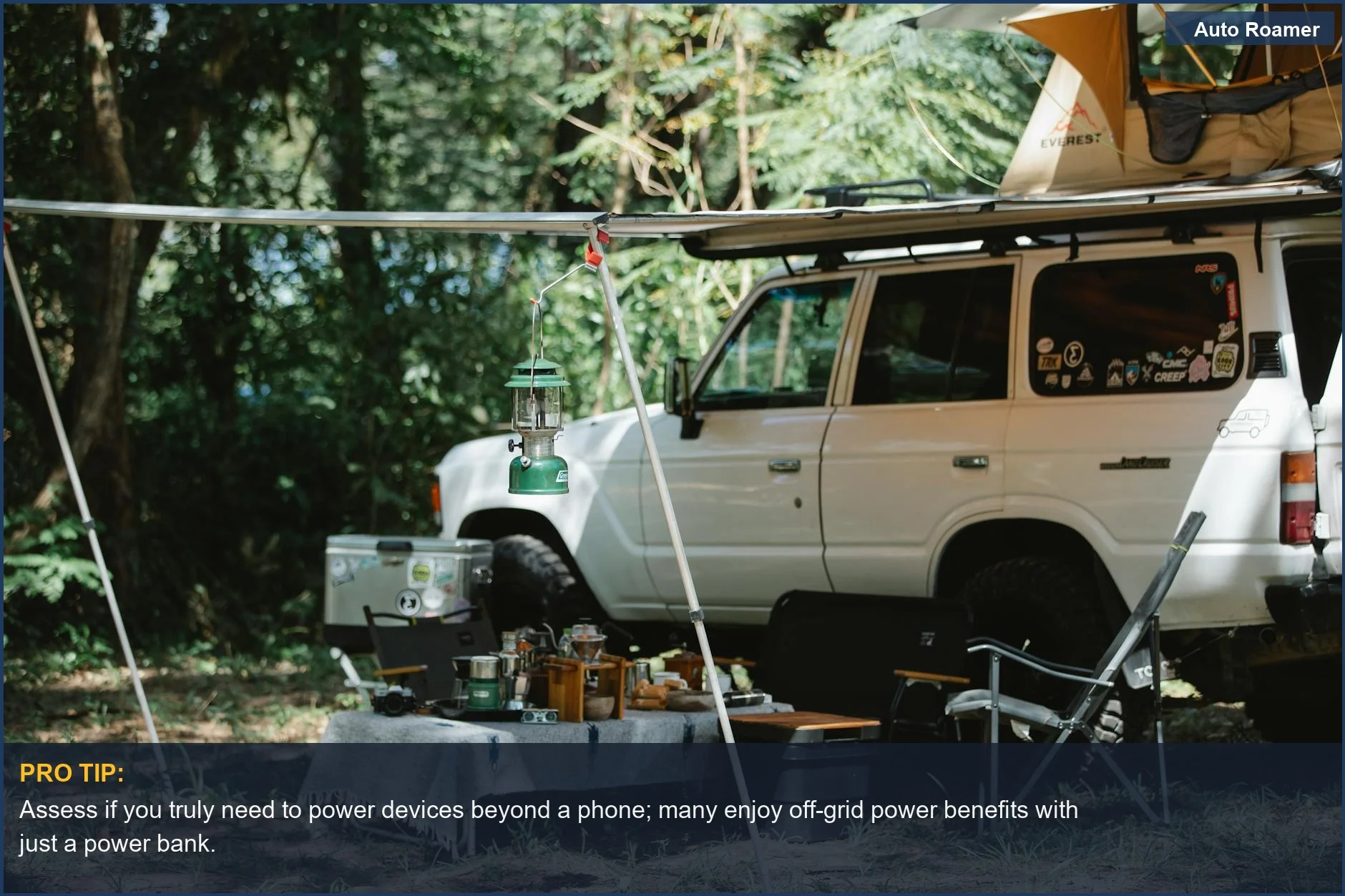
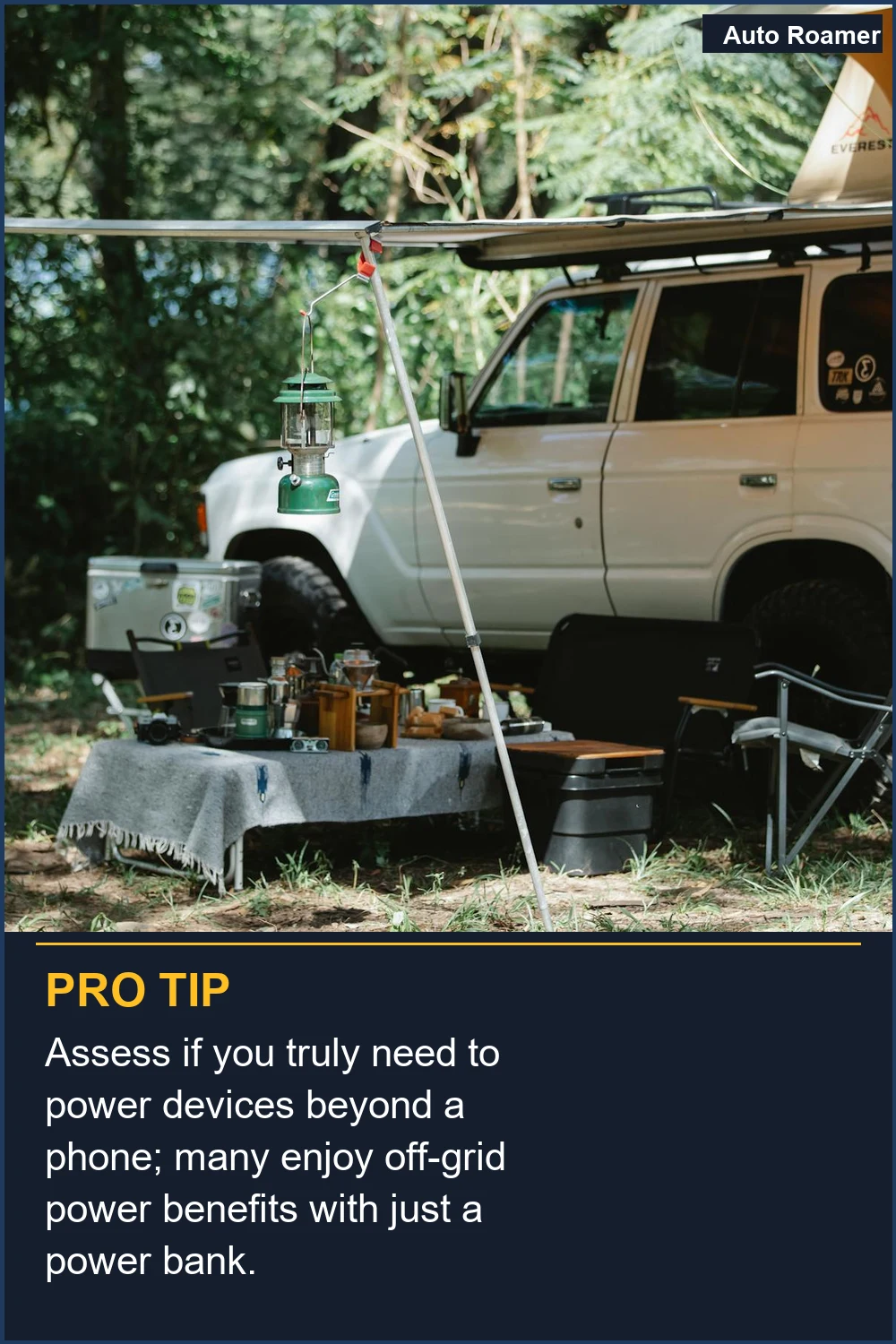
  • Assess Your Usage: Do you *really* need to power a laptop or a portable fridge? Or are you just topping off your phone and headlamp? If it's the latter, stick with a good power bank. Go Power Solar says the power is free once you invest, but that investment can be steep for minimal needs.
  • Consider the Environment: Are you camping somewhere with consistent, unobstructed sun for days on end?
  • If you're frequently under tree cover or dealing with unpredictable weather, solar is a gamble. Quora users debate this constantly. My experience says unreliable sun means unreliable power.
  • The $50 Solution: For most weekend campers, a high-capacity power bank, like a 20,000mAh unit, is the most practical and cost-effective solution. It's reliable, works anytime, and fits in your pocket. You can charge it at home before you leave, and it'll keep your essential devices alive for days.
  • Your wallet will thank you, and your campsite won't be cluttered with extra gear.
    To complement your solar setup, understanding what size portable power station you need is essential; explore options in our article on power station sizes.
    Assess if you truly need to power devices beyond a phone; many enjoy off-grid power benefits with just a power bank.
    A rugged camper enjoying nature with a rooftop tent and awning. Determine your true off-grid power benefits to avoid unnecessary portable solar panel investment. | Photo by Uriel Mont

    Frequently Asked Questions

    If I just get a cheap $50 solar panel from Amazon, will it actually charge anything?
    Honestly, probably not effectively. Those $50 panels are usually low wattage, maybe 10-20W. You’d need to lay it out in direct sun for 10 hours to get enough juice to charge a phone once. It’s like trying to fill a bathtub with a leaky eyedropper. GearLab found even good panels need hours of prime sun. You’re better off with a $30 power bank.
    Do I really need a fancy power station to go with my solar panel, or can I just plug my phone directly into it?
    You *can* sometimes plug directly into a panel, but it’s a rookie mistake. The power output fluctuates wildly with clouds and angle. Your phone's charging port could get fried by a voltage spike. A power station acts as a buffer, storing the energy and providing a stable output. Think of it like a surge protector for your phone. Without it, you're risking your device for a few dollars saved. YouTube demos always show a power station in the loop for a reason.
    What if I buy a good solar panel and power station, set it up perfectly, and it still doesn’t charge my devices?
    First, double-check your connections. Make sure the panel is plugged into the correct input on the power station and your device is plugged into the correct output. If it’s still not working, and you’ve had it in direct sunlight for at least 6 hours, it's possible the panel or power station is defective. This happened to me with a cheap battery pack once; it wouldn't hold a charge. You might need to contact the manufacturer for a warranty claim or return it. People on Reddit sometimes troubleshoot with replacement cables.
    Can leaving a solar panel out in the sun all day damage my car if I have it parked nearby?
    No, the panel itself won’t damage your car. The heat it generates is minimal compared to direct sun on your car’s paint. However, leaving *any* electronic device, including a power station or your phone, in a hot car can absolutely damage them. Batteries degrade faster in extreme heat. Always keep your power station and devices out of direct sunlight and in a cooler spot, even if the panel is out. Campers discuss car heat constantly.
    I heard solar panels are bad for the environment because of how they're made. Is that true?
    That’s a common misconception. While manufacturing any electronic device has an environmental footprint, solar panels are incredibly clean *during their use*. Compare that to a gas generator, which spews CO2 and noise. The energy generated by a solar panel over its lifetime far outweighs the impact of its production. Go Power Solar highlights the eco-friendly aspect. It’s a much greener option than fossil fuels for camping power.

    🏅 Looking for Gear Recommendations?

    Check out our tested gear guides for products that work with this setup:

    C

    Casey - The Weekend Warrior

    Weekend car camper and road trip enthusiast. Focuses on practical, budget-friendly solutions for families and first-time campers.

    Sources

    Related Articles