
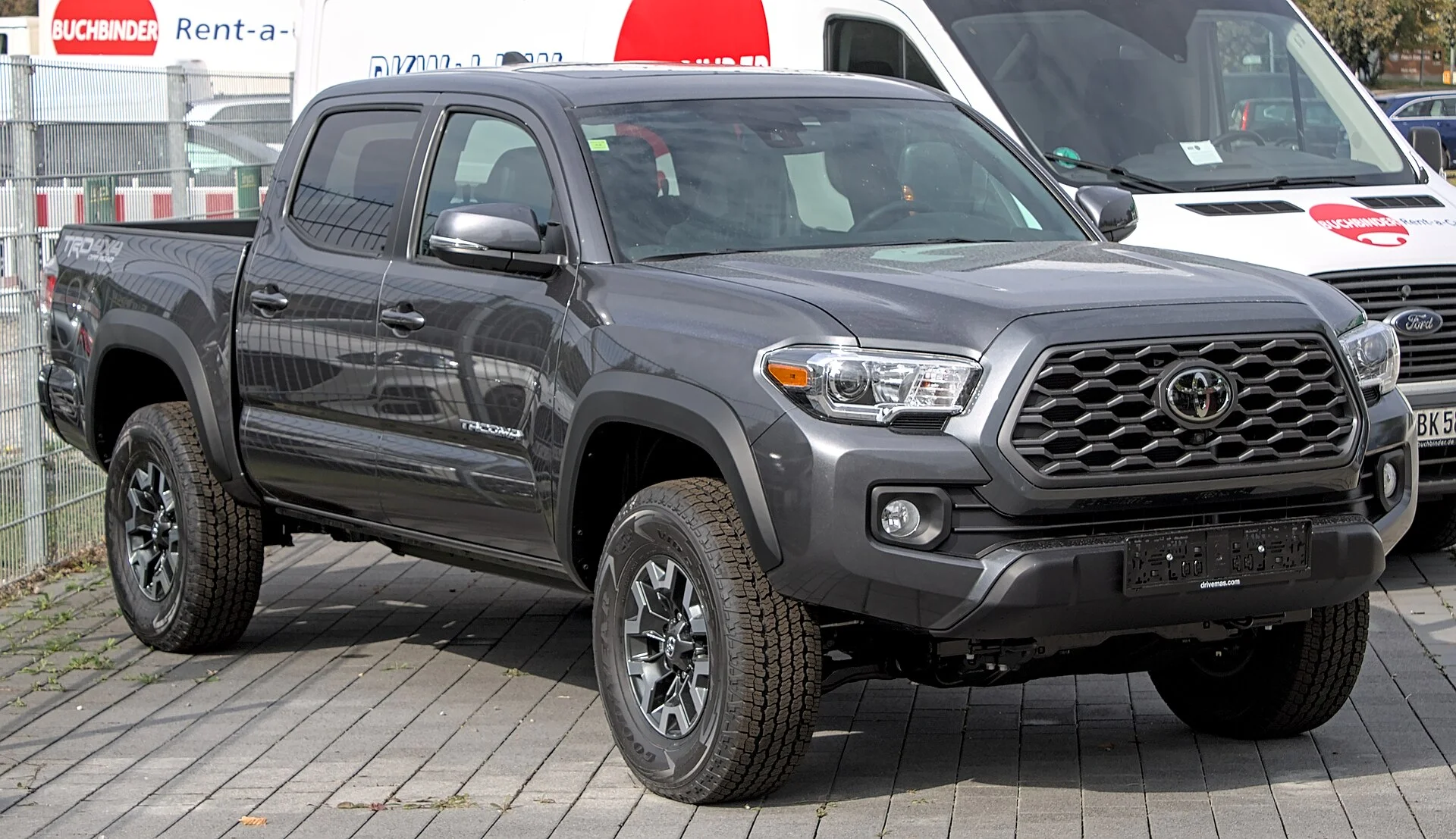
Securing the Load Is the Step Everyone Skips
Ask most Tacoma owners about their bed and they will talk about size, a slide-out, or a rooftop tent. Ask an overlander what fails on a rough two-track and the answer is quieter: the tie-down. Gear that is not properly anchored shifts, chafes, and eventually launches, and the anchor point you never thought about is the one that lets go two hundred miles from the nearest parts store.
The 4th-generation Tacoma gives you a genuinely good system for this, the deck-rail and cleat setup, but it comes with load limits that the shiny hardware does not advertise. Those limits are not conservative liability numbers to ignore; they are the difference between a bed platform that stays put over washboard and one that works its bolts loose. Knowing them is the whole point of this guide.
The trap is that the cleats look bombproof. Machined, spring-loaded, sliding on a rail, they feel like they could hold anything. They cannot, and a camper who straps a heavy load to a single cleat as if it were a recovery point is trusting a number far higher than the one Toyota actually assigns it. The hardware's appearance and its rating are two different things.
This guide reads the Tacoma's tie-down system the way you would rig a load that has to survive a rough trail: what anchors exist and where, the working load limit on each, how to spread a load across them, and which parts, like the accessory hooks, are not anchors at all. Securing the load is the step everyone skips, and it is the one that strands you.
The Deck-Rail System: What It Is and Where
The heart of the 4th-gen Tacoma's cargo-securing setup is the composite deck-rail system, adjustable cleats that slide along rails mounted on the bed walls. It is a flexible system, which is its strength: instead of a few fixed rings, you get anchor points you can position exactly where the load needs them.
The count depends on the bed. The deck rail system supports up to 3 adjustable tie-down cleats per side rail on the short 5-foot bed and up to 4 adjustable cleats per side rail on the long 6-foot bed. On top of the sliding cleats, a Toyota accessory reference describes the system as including four adjustable tie-down cleats and four fixed cargo bed tie-down points total, so you have both movable and permanent anchors to work with.
Each cleat is a substantial-feeling piece, approximately 6 in x 1 in, that slides along the bed rail and locks in place via a spring-loaded twist clamp. You loosen it, slide it to where your strap needs to pull, and lock it down. For a camper rigging an irregular load, that adjustability is worth a lot, because a strap that pulls straight is a strap that stays tight.
One important caveat: the deck rails are not standard equipment on every 4th-gen Tacoma configuration, and 5-foot bed trucks in particular may not have them. Before planning a build around the deck-rail system, confirm the specific truck actually has the rails, because the fixed points and the rail system are not the same thing, and a bed without rails gives you fewer and less flexible anchors.
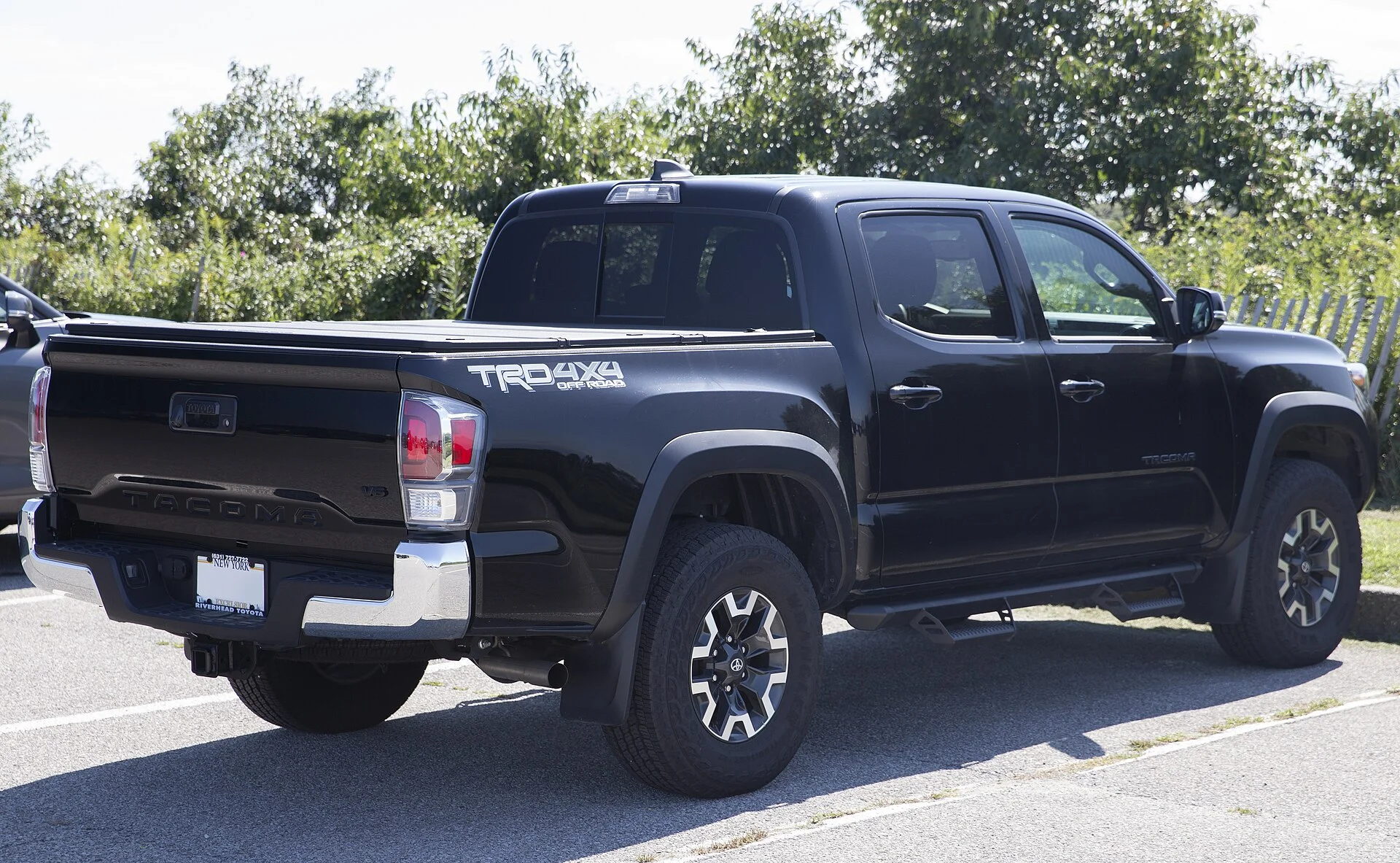
Fixed Points and Adjustable Cleats Do Different Jobs
The Tacoma gives you two kinds of anchor, and they suit different tasks. The four fixed cargo tie-down points are permanent, bolted to the bed structure, and predictable; the adjustable cleats slide to wherever the load needs them. A well-rigged setup usually uses both rather than favoring one.
The fixed points are the anchors to trust for the heaviest, most static pulls, because they tie directly into the bed structure at set locations. They do not move, which is exactly what you want for a base load or the corners of a platform that should never shift. Their downside is that they are where they are; if the load does not line up with them, the strap pulls at an angle, which reduces its effectiveness.
The adjustable cleats solve that angle problem. By sliding a cleat to line up with the load, you get a strap that pulls straight and stays tight, which matters more than raw anchor strength for keeping gear from working loose over rough ground. The tradeoff is that each cleat carries a specific, and fairly modest, load limit, which we will get to next.
The overlander's habit is to plan the anchor layout before loading, not after. Decide which points take the base load, position the adjustable cleats to pull straight on the rest, and avoid the temptation to run everything to whichever anchor is closest. A load secured by four straight, moderate pulls is far more stable than one held by a single heavily loaded strap at a bad angle, regardless of how strong that one anchor feels.
The Numbers That Matter: 110 Pounds and 440 Pounds
Here are the two numbers that govern everything, and they are lower than the hardware suggests. Each genuine Toyota bed cleat is rated to hold up to 110 lb individually. And Toyota's own deck-rail documentation states plainly: do not exceed a total tensile load of 440 lb (200 kg) per deck rail.
Those limits stack in a predictable way. A short-bed truck running three cleats per side maxes out at a combined 330 lb per rail, three cleats at 110 pounds each. A long-bed truck running four cleats per side reaches 440 lb per rail, four at 110 pounds, which lands right at the 440-pound-per-rail ceiling. The per-cleat and per-rail limits are designed to work together, and exceeding either is where trouble starts.
Each cleat holds up to 110 pounds. Each rail holds up to 440 pounds total. Strap a 330-pound load to a single cleat and you are three times over its 110-pound rating, no matter how solid it feels in your hand.
This is why spreading the load matters so much on the Tacoma. The system is rated for distributed loads, not concentrated ones; four cleats sharing a load stay within spec where one cleat carrying the same total is dangerously overloaded. A camper rigging a heavy build has to think in terms of the total per rail and the share per cleat, not just whether an individual anchor feels strong.
The honest read is that the Tacoma's tie-down system is excellent for what it is, a distributed cargo-securing system, and not what it looks like, a set of recovery-grade anchors. Rig within 110 pounds per cleat and 440 pounds per rail and it holds a serious load securely. Treat any single cleat as bombproof and it becomes the failure point on the roughest part of the trail.
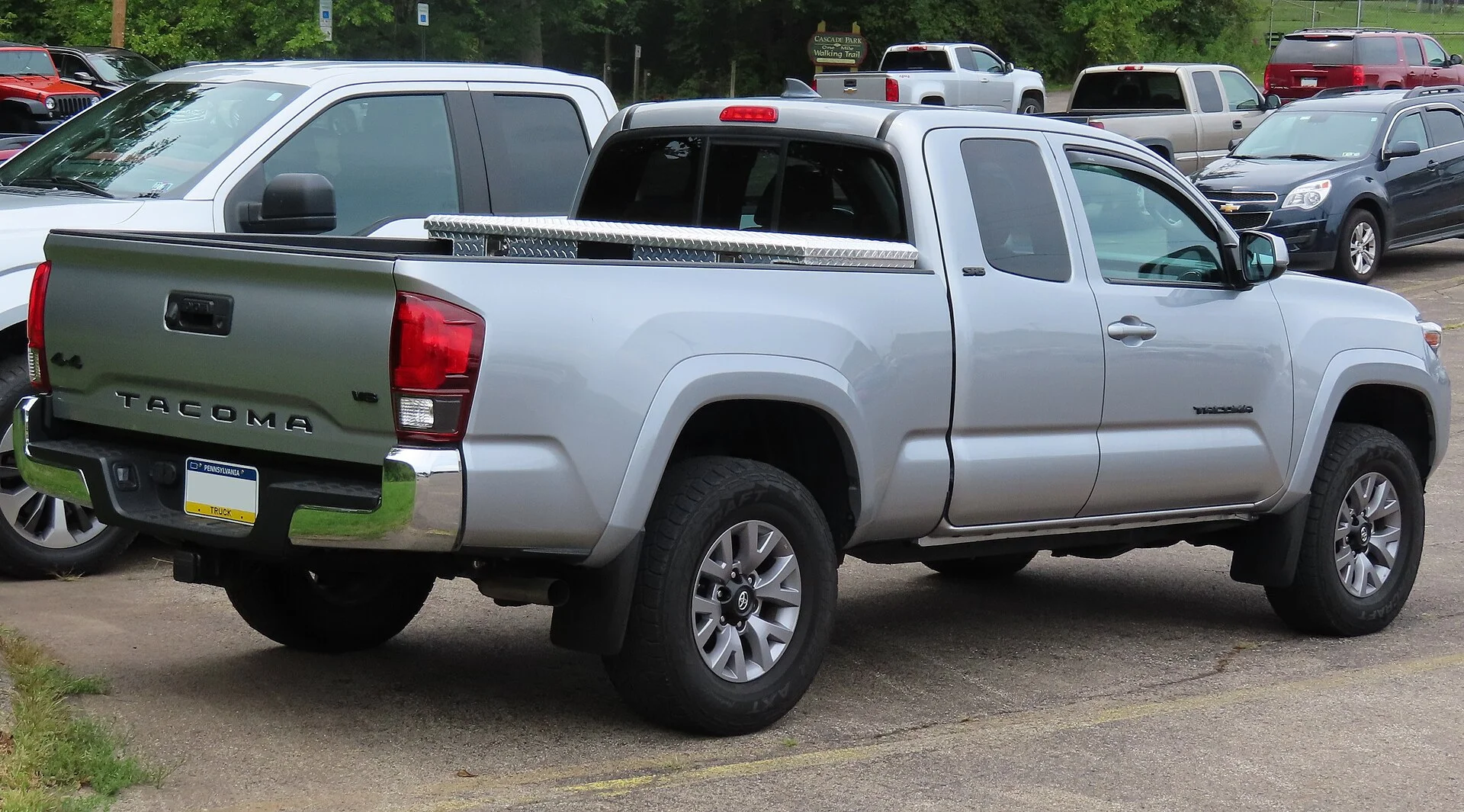
Securing a Bed Platform or Gear Box the Right Way
The most common camping use for these anchors is holding down a sleeping platform, a drawer system, or a gear box, and the right technique flows directly from the load limits. The goal is a build that cannot shift, using multiple anchors each working well within its rating.
Start by anchoring the platform's corners to the fixed points where they line up, then use the adjustable cleats to add straight-pulling straps along the sides. Spreading the hold across four or more anchor points means each carries a modest share, keeping every cleat under its 110-pound limit and each rail under its 440-pound total. A platform tied down at six points is far more secure than one cinched hard at two.
Ratchet straps are the tool of choice because they hold tension over rough ground where cam-buckle straps can loosen, but the strap is only as good as the anchor it pulls against. Running a heavily tensioned ratchet strap to a single cleat concentrates the load exactly where the rating is lowest, so distribute the straps and keep the tension reasonable rather than cranking one strap to its limit.
For gear that shifts, water cans, fuel, a fridge, secure each item to nearby anchors so nothing relies on the platform staying put. On a rough trail the load moves in every direction, and a securing plan that only resists backward motion lets cargo slide side to side. Anchoring across multiple points in multiple directions, each within the cleat and rail limits, is what keeps a build silent and intact after a day of washboard. A quality set of ratchet straps is the other half of the system the anchors only complete.
The Accessory Hooks Are Not Anchors
One part of the deck-rail system fools people badly, and it is worth its own warning: the accessory storage hooks. They mount to the same rails as the cleats and look like they belong in the same load-bearing family. They do not.
Toyota's rating is unambiguous: the deck-rail accessory storage hooks are rated so that you do not hang any object heavier than 6.6 lb (3 kg). That is not a tie-down rating; it is a hang-a-light-item rating. The hooks are meant for a coiled strap, a light bag, or a jacket, not for anchoring cargo. A camper who runs a tie-down strap to a storage hook is trusting a 6.6-pound anchor to hold a load that belongs on a 110-pound cleat.
The failure mode is obvious in hindsight and expensive in the moment. A hook loaded far past 6.6 pounds bends, pulls out, or breaks, and it does so under exactly the rough-trail conditions where the load is trying hardest to move. The gear it was holding then becomes a projectile in the bed. This is a case where reading the specific rating, not eyeballing the hardware, is the difference between a secure load and a mess.
The rule is simple: cleats and fixed points are anchors, storage hooks are for hanging light items, and the two are not interchangeable. When rigging a load that matters, use the rated cleats and fixed points exclusively, and let the hooks do the light-duty job they are actually built for. The hardware sharing a rail does not mean it shares a rating.
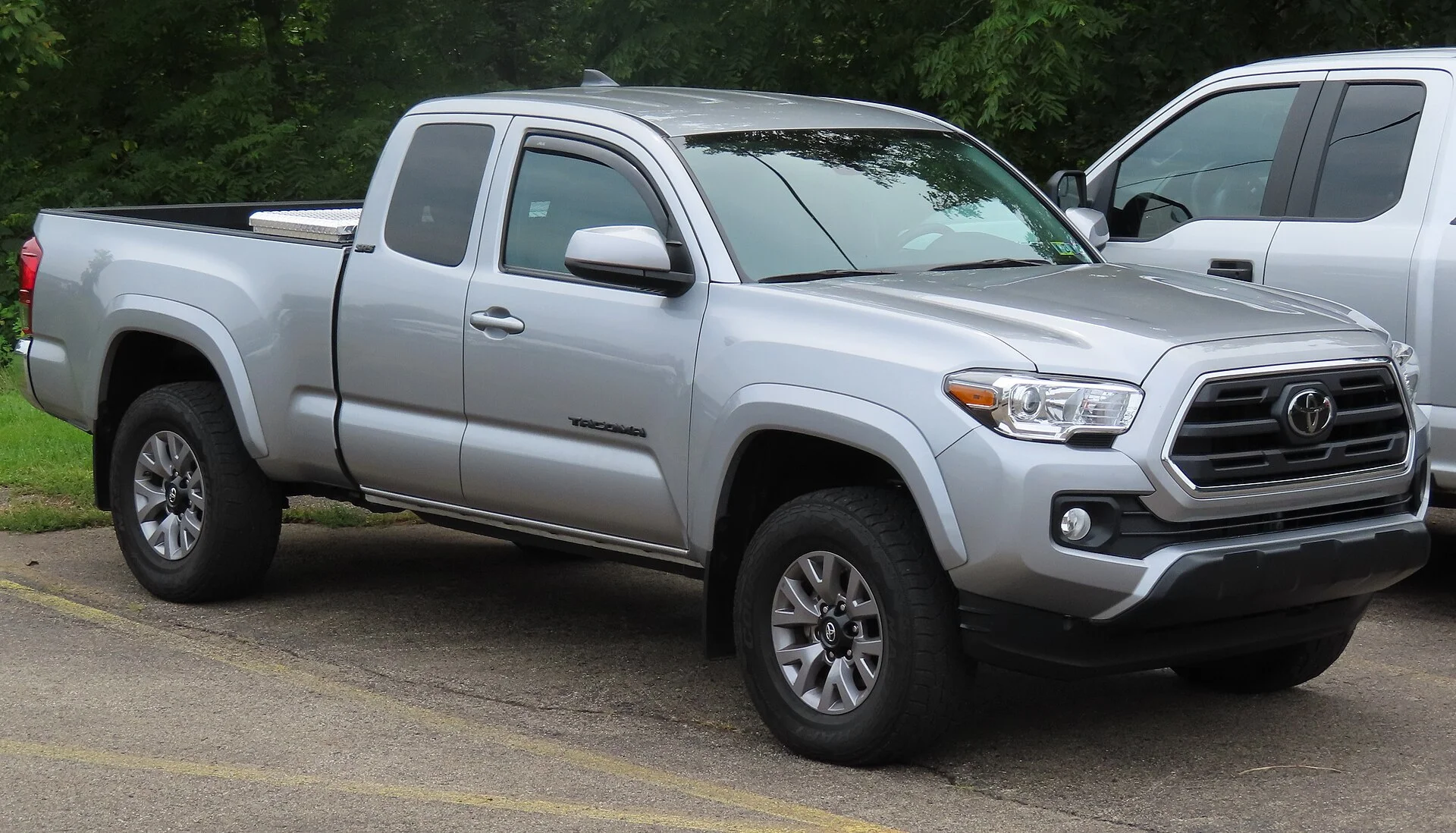
The 400-Watt Outlet Changes What You Secure
The 4th-gen Tacoma adds a feature that shapes how a camp bed gets rigged: an available bed-mounted power outlet. It matters for tie-down planning because a powered accessory in the bed is one more thing that has to be secured and positioned near the outlet.
The truck offers an available 120V/400W bed-mounted AC power outlet, standard on the TRD Sport trim, and it supplies power only while the engine or hybrid system is running. That 400-watt ceiling defines what it can run, enough for lights, charging, and small camp electronics, but not a high-draw appliance. Knowing the limit keeps expectations honest and prevents tripping the outlet with something it was never meant to power.
For rigging, the outlet's location influences the layout. A powered cooler, a light bar, or a charging station wants to sit near the outlet, which means the tie-down plan has to anchor those items where the cord reaches while still pulling straight to a rated cleat or fixed point. The outlet has a weather-resistant cover and is rated for use with cords and devices suited to outdoor conditions, which is what you want in an open bed.
The broader point is that a modern Tacoma camp bed is a small system, gear, power, and the anchors that hold it all together. The 400-watt outlet expands what you can run in the bed, and the deck-rail system, used within its 110-pound cleat and 440-pound rail limits, is what keeps that gear where it belongs while the truck moves. Planning power and tie-downs together, rather than as afterthoughts, is what makes the bed genuinely livable on a rough trip.
Bed Geometry Sets the Platform You Anchor
The anchors hold whatever fits, and what fits is set by the Tacoma's bed dimensions, which differ between the two bed lengths. Those numbers decide the size of the platform or gear layout the tie-down system has to secure, so they are part of the securing plan, not separate from it.
The short 5-foot bed measures 60.3 in in length, and the long 6-foot bed measures 73.5 in. That difference is significant for sleeping: the long bed's 73.5 inches is close to accommodating an adult lying flat, while the short bed's 60.3 inches usually requires a tailgate extension or a diagonal layout. Width is shared, 44.7 in between the wheel wells and widening to 56.4 in at the accessory rail, and the inside bed depth is 21.2 in.
Those dimensions govern the platform you build and therefore the anchors you use. A full-length platform on the long bed anchors to more points and distributes its weight across both rails naturally; a shorter build or a tailgate-extended sleeping surface needs its anchors planned around the gap. The 44.7-inch width between the wheel wells is the constraint for a flat platform that sits at bed-floor level, while a platform built above the wheel wells can use the full 56.4-inch width.
The takeaway is that the tie-down plan and the build dimensions are one design problem. A platform sized to the bed, anchored across the fixed points and adjustable cleats within their 110-pound and 440-pound limits, and positioned to leave power and access clear, is a bed that works. Sizing the build without planning the anchors, or the reverse, is how a camp setup ends up either loose or impossible to secure properly.
When the Truck Doesn't Have Deck Rails
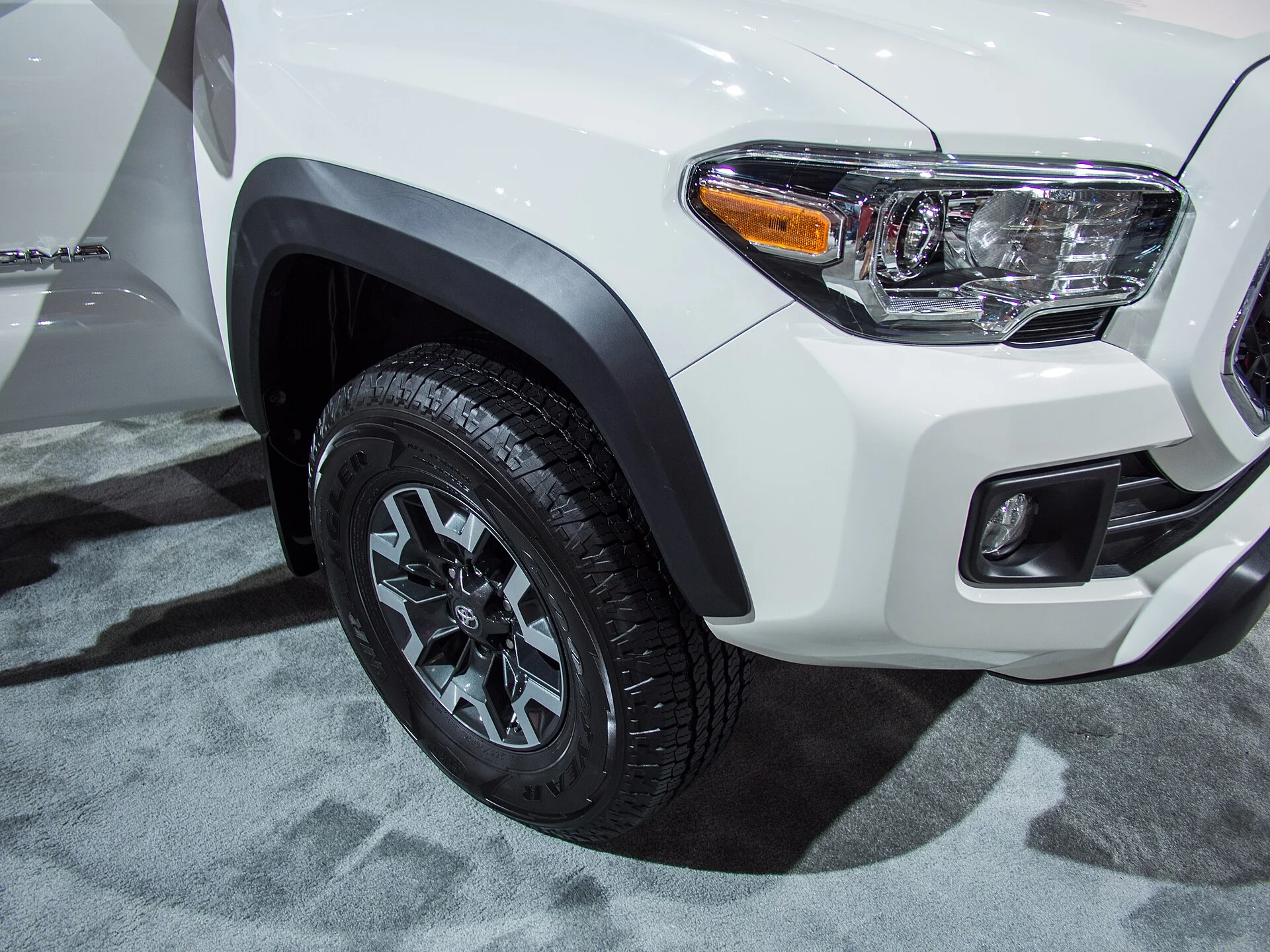
Not every 4th-gen Tacoma leaves the factory with the composite deck-rail system, and a camper planning a build has to know which truck they actually have. The deck rails are not standard equipment on all configurations, and 5-foot bed trucks in particular may come without them, which changes the securing plan entirely.
A rails-less Tacoma still has the four fixed cargo tie-down points, and those are the anchors to build around. They are permanent, tied into the bed structure, and predictable, which makes them reliable for a base load. What they lack is the adjustability of the sliding cleats, so a strap can only pull from where the fixed point sits, and if the load does not line up, the strap pulls at an angle that reduces its holding power.
The workaround is to plan the build to the fixed points rather than fighting them. Size a platform so its anchor straps line up with the fixed locations, and add aftermarket bed-mounted tie-down anchors if the layout needs points the factory did not provide. Aftermarket anchors carry their own load ratings, so check them the same way, and never assume an add-on point matches the 110-pound genuine cleat rating without confirming it.
The broader lesson is to verify the hardware before designing around it. A camper who assumes every Tacoma has the deck-rail system can build a platform expecting sliding cleats that are not there, then scramble to secure it on trip day. Confirming whether the truck has rails, fixed points only, or a mix is a five-minute check that shapes the entire securing approach, and it is the kind of small verification that separates a build that works from one that improvises at the trailhead.
The Verdict: Rig to the Rating, Not the Look
The Tacoma's deck-rail cleat system is one of the better factory cargo-securing setups on a midsize truck, flexible, adjustable, and genuinely useful for a camp build. But its strength is distributed, not concentrated: each cleat holds up to 110 lb, and each rail holds up to 440 lb total, and those limits are lower than the machined hardware suggests.
Use both anchor types for what they do best. The four fixed points take the heaviest static pulls; the adjustable cleats, up to three per side on the 5-foot bed and four per side on the 6-foot bed, slide to pull straight on the rest. Spread every load across multiple anchors so no single cleat approaches its 110-pound rating and no rail passes its 440-pound total.
Remember what is not an anchor. The accessory storage hooks are rated for just 6.6 lb, for hanging light items, never for tie-downs, and treating them as anchors is the fastest way to lose a load on rough ground. Plan the tie-downs alongside the bed dimensions and the 400-watt outlet, because a camp bed is one system, not a pile of separate parts.
Rig within the ratings and the Tacoma holds a serious camp load securely over the worst washboard the trail offers. The system rewards a plan: decide which fixed points take the base load, slide the adjustable cleats to pull straight on the rest, keep each strap under 110 pounds and each rail under 440, and reserve the 6.6-pound accessory hooks for the light items they are meant to hold. A few minutes of planning before loading is what separates a silent, intact build from a rattling one.
Trust the hardware's bombproof look instead of its 110-pound and 440-pound numbers, and the anchor you never thought about becomes the one that lets go a long way from help. Secure the load to the rating, spread it across the anchors, and it stays put through the roughest miles the trip throws at it.