
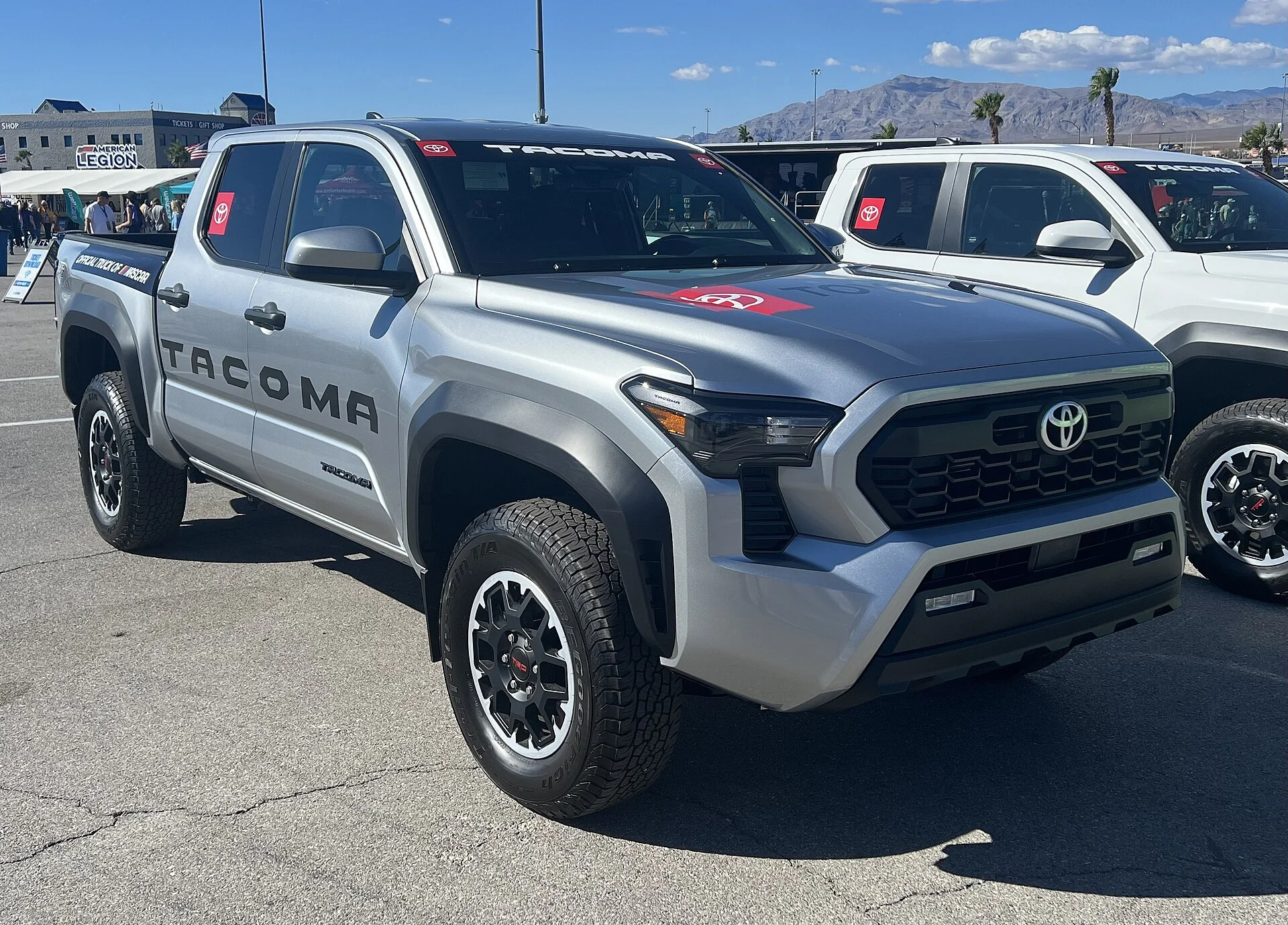
The Awning Fits the Rack, Not the Truck
Shop for a Tacoma awning and it is easy to think in terms of the truck: which awning fits a Tacoma. That is the wrong frame. An awning does not bolt to the Tacoma at all; it bolts to the rack, and the rack, its type, its spacing, and its tubing, is what actually decides fitment. Get the rack question right and the awning choice becomes simple.
This matters because a Tacoma can carry an awning in two very different places: a cab-top roof rack or a bed rack. Tacoma owners commonly mount these awnings to either a cab-top roof rack, such as a Prinsu rack, or a bed rack, with bolt-on brackets sized for standard rack tubing. The awning is the same; where it lives on the truck changes everything about the install.
The governing numbers are all about the rack. The crossbar spread the awning's clamps have to span, the maximum reach from clamp to awning end, and the roof's load limit are the specifications that determine what fits and how strong the mount is. None of them are truck-body numbers; they are rack numbers.
This guide takes the Tacoma awning decision the way it is actually built, rack first. It covers the crossbar spread that governs fitment, the cab-versus-bed mounting choice, the common awning sizes, and how to build a mount strong enough to trust in wind.
Crossbar Spread: The Number That Governs Fitment
The single most important fitment number is the crossbar spread, the distance between the two bars the awning clamps to. The good news for Tacoma owners is that the common truck-rack awnings are built to span a wide window. 270-degree awnings designed for truck racks, including Rhino-Rack Batwing and Sunseeker style units, list a compatible crossbar spread of 26 inches to 76 inches.
That 26-to-76-inch range is generous, and it is why these awnings fit so many rack setups. Whether the awning mounts to two crossbars on a cab-top rack or to the rails of a bed rack, as long as the clamp points fall within 26 to 76 inches apart, the awning's brackets can span them. Most Tacoma racks land comfortably inside that window.
The reason the spread matters is that the awning's mounting brackets are what carry it, and they have to reach both bars. Too narrow a spread and the awning cantilevers far past the bars; too wide and the brackets do not reach. The 26-to-76-inch compatibility is what gives the install its flexibility across rack types.
For a buyer, the first step is simply measuring the rack's usable bar spacing and confirming it falls within the awning's stated 26-to-76-inch range. On a Tacoma that is rarely a problem, but confirming it before ordering avoids the frustration of brackets that do not fit the rack they were bought for.
The 50-Inch Clamp-to-End Rule
Beyond the spread, there is a second mounting number that governs how the awning sits on the rack. Mounting guidance for these 270-degree units specifies that the distance from the front or rear clamp to the end of the awning must not exceed 50 inches. It is a limit on overhang, and it protects the mount from excessive leverage.
The rule exists because an awning that cantilevers too far past its clamps concentrates load and wind leverage at the mounting points. Keeping the clamp within 50 inches of the awning's end ensures the brackets carry the awning where they are designed to, rather than at the end of a long lever arm that stresses the rack.
The 50-inch clamp-to-end limit is easy to overlook, but it is what keeps a long awning from levering itself off the rack in wind. Position the clamps so no more than 50 inches of awning hangs past them.
In practice this shapes where the clamps go on the rack. On a longer awning, the clamps are positioned inboard enough that the overhang past each clamp stays within 50 inches, which spreads the load and keeps the mount within its designed leverage. It is a positioning rule as much as a fitment one.
For the installer, the takeaway is to plan the clamp positions against both numbers together: the spread within 26 to 76 inches, and the overhang past each clamp within 50 inches. Meeting both is what makes the awning sit securely on the Tacoma's rack rather than stressing it.
Cab-Top Rack vs Bed Rack
The Tacoma's two mounting locations each suit a different setup. A cab-top roof rack, such as a Prinsu, mounts the awning over the cab, high and forward, throwing shade toward the front and side of the truck. It keeps the bed clear and is the choice for owners who want the bed for a tent or cargo.
A bed rack mounts the awning over the bed, lower and rearward, shading the tailgate area where much of camp life happens. It is the natural pairing for a bed-based camping setup, putting the shade where the cooking and gear are, and bed racks often offer more mounting length for a larger awning.
Both use the same attachment approach: bolt-on brackets sized for standard rack tubing clamp the awning to the bars. That standardization is why the same awning can move between a cab rack and a bed rack, and why the 26-to-76-inch spread compatibility covers both. The bracket hardware is common; the location is the choice.
For a Tacoma owner, the decision follows the camp style. A rooftop-tent build usually wants the awning on a cab rack to keep the bed and tent area shaded from above; a bed-based or ground-tent setup often wants it on a bed rack to shade the tailgate kitchen. Either mounts securely within the same fitment rules.
Straight Awning vs 270-Degree
The two awning styles suit different needs, and the choice affects both coverage and mounting demand. A straight awning, such as the widely used 6.5ft by 8.2ft configuration, about 2.0m by 2.5m, like the ARB Touring Awning, extends a rectangular canopy off one side of the truck. It is simpler, lighter, and the easy starting point for most Tacoma builds.
A 270-degree awning wraps shade around from one side across the rear corner without repositioning the truck, covering a much larger area for a basecamp. The 2m Shadow Awning and similar Tacoma-fit units provide roughly 6.1 square meters of shade coverage when deployed, a substantial wrap-around living space compared to a straight awning's single-side rectangle.
The trade is weight and mounting demand. A 270-degree awning is heavier and cantilevers a larger canopy off the rack, which raises the load on the mount and makes the 50-inch overhang rule and a solid rack more important. A straight awning asks less of the mount and is easier to deploy solo.
For a Tacoma owner, the choice comes down to how much shade the camp needs versus simplicity and weight. The 6.5ft by 8.2ft straight awning is plenty for a chair and a cooking area; the 6.1-square-meter 270-degree awning is the pick for a frequent basecamp where wrap-around shade is worth the extra weight and mounting care.
The Roof Load Limit You Cannot Ignore
Whatever awning goes up, the Tacoma's factory roof rack has a hard limit that governs a cab-top install. Toyota's owner's manual lists a maximum roof load capacity of 100 lbs evenly distributed when using the factory roof rack. That 100 lbs is the ceiling for everything on the roof, awning included, while the truck is moving.
The number matters because an awning is not weightless, and it shares the roof budget with anything else mounted up there. A heavier 270-degree awning plus its brackets can consume a meaningful share of the 100 lbs, and adding a cargo basket or other roof gear on top of it can exceed the limit, which stresses the rack and the roof.
The 100 lbs is a dynamic limit, the load allowed while driving, which is when the roof structure is stressed by motion and bumps. A parked truck with a deployed awning is a different, static situation, but the transporting limit is the one that governs how much awning-plus-gear the factory rack should carry down the road.
For an installer, this is a reason many serious awning builds use an aftermarket cab-top or bed rack rather than the factory rack. A purpose-built rack is engineered for heavier awnings and roof loads, whereas the factory rack's 100 lbs evenly distributed is a real constraint to respect if that is what the awning is mounted to.
What the 270-Degree Numbers Tell You
For owners drawn to the wrap-around option, the 270-degree awning's specifications describe a genuinely different piece of equipment. The 6.1 square meters of shade coverage is the headline, enough to shade a full outdoor kitchen, a couple of chairs, and the tailgate area at once, which a straight awning cannot match from a single mount.
The build quality shows in the fabric. Common Tacoma-fit 270-degree units use a 280gsm poly-cotton ripstop with a 2,500mm waterproof polyurethane coating. The 280gsm weight indicates a substantial, durable fabric, and the 2,500mm coating rating means it sheds real rain, not just sun, making the awning a rain shelter as well as shade.
These numbers also explain the weight and mounting demand. A fabric heavy enough to rate 280gsm, spanning enough area to throw 6.1 square meters of shade, is a heavier assembly than a small straight awning, which is why the rack strength and the 50-inch overhang rule matter more for a 270. The capability and the mounting demand rise together.
For a buyer weighing the upgrade, the 6.1-square-meter coverage and the 2,500mm-rated fabric are what the extra weight and cost buy: a wrap-around, weatherproof living space rather than a simple sunshade. Whether that is worth it depends on how often the truck is a basecamp versus an overnight stop.
Matching Awning Size to How You Camp
Awning size should follow the camp style, not the other way around. For an owner who mostly needs shade over a chair and a cooking spot at day stops and overnights, the 6.5ft by 8.2ft straight awning is right-sized, light, and quick to deploy solo. Buying a large 270 for that use is more weight and cost than the camp needs.
For a frequent basecamp, where the truck sits for days and outdoor living space matters, the 270-degree awning's 6.1 square meters of wrap-around coverage earns its weight. It shades a full kitchen and seating area and doubles as rain shelter with its 2,500mm-rated fabric, turning a parking spot into a livable camp.
The mounting location interacts with the choice. A large 270 pairs naturally with a sturdy bed rack that offers the length and strength for it, while a straight awning is content on a cab rack or a bed rack. Matching the awning to both the camp style and the rack keeps the setup balanced.
The honest guidance is to size the awning to the most common trip, not the rare one. Most Tacoma owners are better served by a straight awning that gets used constantly than a heavy 270 that is more shade than the typical stop requires, though the basecamp crowd who live under it will value every one of the 6.1 square meters.
Mounting It Strong Enough to Trust
An awning lives outdoors in wind, so the mount has to hold in more than still air. The strength principle on a Tacoma is the same as on any rack: the awning is only as secure as the rack it clamps to and the bolts that hold that rack to the truck. A quality awning on an undersized or loose rack is a liability the first windy afternoon.
The junctions are where to focus. The rack's mounting bolts to the cab or bed must be properly torqued, the awning's brackets clamped solidly to the rack tubing, and the clamp positions set within both the 26-to-76-inch spread and the 50-inch overhang rules. Each junction is a potential failure point, so each deserves checking before a trip.
Wind management finishes the job. Even a well-mounted awning should be guyed out with lines and stakes when deployed for any length of time, because guy lines transfer wind load to the ground rather than concentrating it on the rack. The rack holds the awning; the guy lines keep the wind from testing that mount to failure.
Set up this way, a Tacoma awning gives years of reliable shade and rain cover. A quality awning tie-down kit with guy lines and stakes is cheap insurance against the gust that would otherwise turn a deployed awning into a sail, and it belongs with any awning install regardless of style.
The Verdict: Start With the Rack
A Tacoma is an excellent awning platform, but the whole decision starts with the rack, not the truck. The awning bolts to a cab-top rack or a bed rack, and the rack's crossbar spread, load limit, and tubing are what govern fitment, so measuring and choosing the rack is the first real step.
The fitment numbers are forgiving. Common truck-rack awnings span a 26-to-76-inch crossbar spread and ask only that no more than 50 inches of awning overhang past each clamp, which most Tacoma racks satisfy easily. The factory roof rack's 100 lbs evenly distributed is the constraint to respect if the awning mounts there rather than on a purpose-built rack.
The style choice follows the camp. A 6.5ft by 8.2ft straight awning is the light, simple pick for shade over a chair and kitchen; a 270-degree awning with roughly 6.1 square meters of coverage and 2,500mm-rated fabric is the basecamp choice for wrap-around, weatherproof living space, at the cost of more weight and mounting care.
Choose the rack and location for the camp style, match the awning within the spread and overhang rules, mount every junction solidly, and guy it out in wind, and the Tacoma gains reliable outdoor living space for years. Start from the truck instead of the rack and the fitment guesswork begins where it never needed to.