
Clearance Is One Number. Clearing the Obstacle Is Three
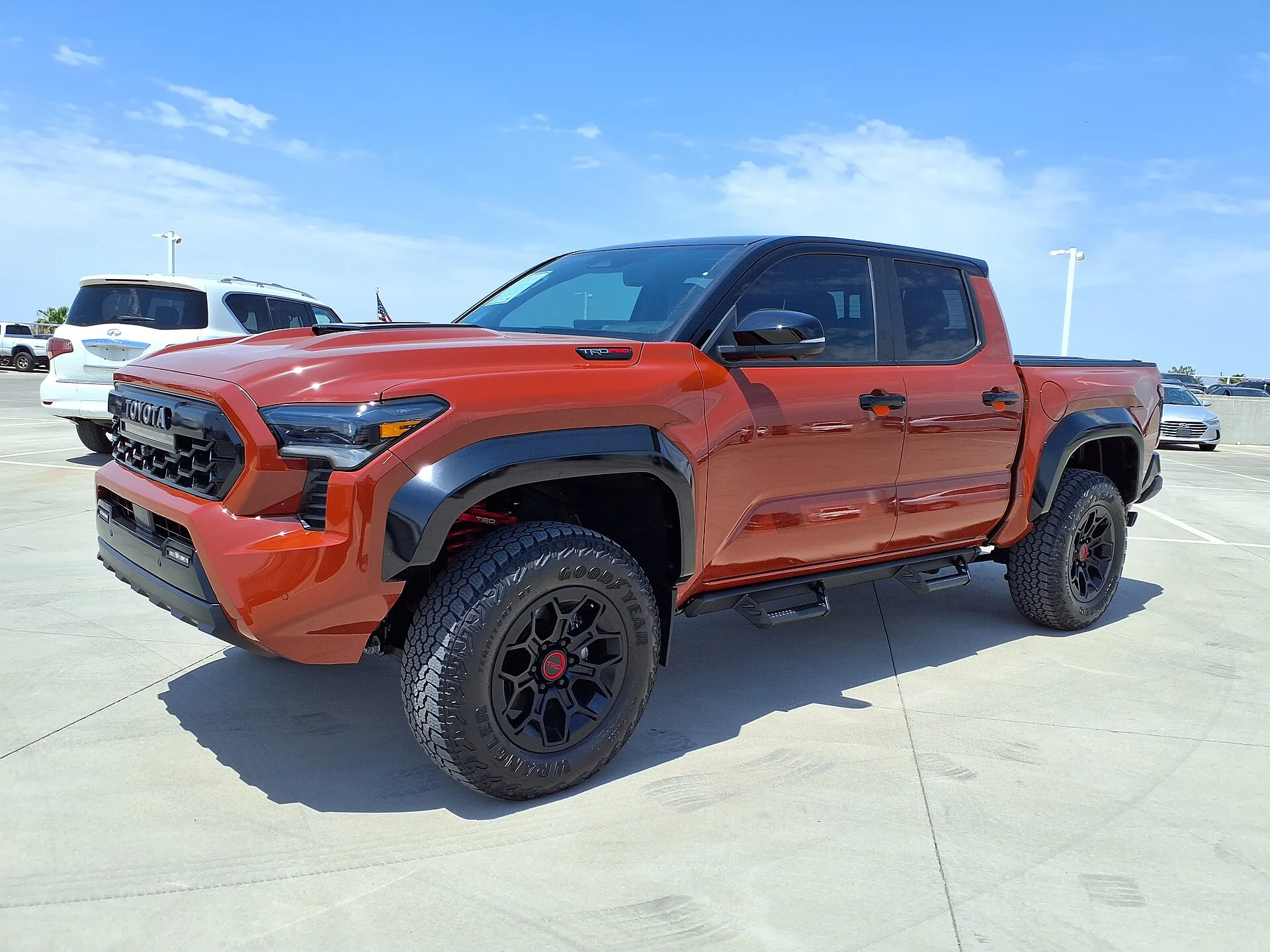
Two hundred miles from the nearest parts store, the spec that keeps you moving is not the one on the brochure. Everyone quotes ground clearance as a single figure — the Tacoma TRD Off-Road lists 11.0 inches, the TRD Pro about 11.1 inches — but that number alone never tells you whether you clear the ledge in front of you. Geometry does.
What actually decides an obstacle is three angles: how steep a rise you can climb into (approach), how sharp a crest you can drive over without beaching the belly (breakover), and how steep a drop you can come down without dragging the tail (departure). The single clearance number is the belly height at one point; the angles describe the whole truck's shape against the terrain.
On my rig, I have watched trucks with tall clearance numbers high-center on a crest because their wheelbase was long and their breakover angle shallow. The number looked great in the driveway and failed on the trail. That gap — driveway-nice versus matters-on-the-obstacle — is what this guide is about.
Everything here traces to the published Tacoma trim specs and the manufacturer's overland-grade details, compared impersonally across sources. I have not measured a specific truck on a specific rock; I am reading the geometry the way you should read it before you commit to a line. Get the shape right and the clearance number becomes what it should be: one input among three.
What Ground Clearance Actually Measures, and What It Hides
Ground clearance is the distance from the lowest fixed point of the truck to level ground. On the Tacoma that lowest point is usually a skid plate or a differential, and the TRD Off-Road's 11.0 inches describes that single gap. It is a real and useful number, but it is a snapshot of one spot, not a description of how the whole truck moves over uneven ground.
Here is what it hides. Clearance is measured static and typically at curb weight. Load the bed with camp gear, water, and a fridge, add passengers, and the suspension compresses — your real-world clearance under load is less than the sticker. An overlander who ignores this discovers the difference the first time a loaded truck scrapes something a friend's empty one cleared.
It also hides where the low points sit. Two trucks with identical belly clearance can behave completely differently if one has its lowest point centered between the axles and the other hangs a bumper low at the nose. That is why the angles exist: they place the clearance in context of the truck's front, middle, and rear separately.
The overlander's habit is to treat the clearance figure as necessary but not sufficient. Yes, you want the highest belly you can get. But before you trust it on a real obstacle, you check the three angles and you subtract mentally for the load you actually carry. A number measured empty and level is the best case, not the trail case.
Approach Angle: Climbing Into the Ledge
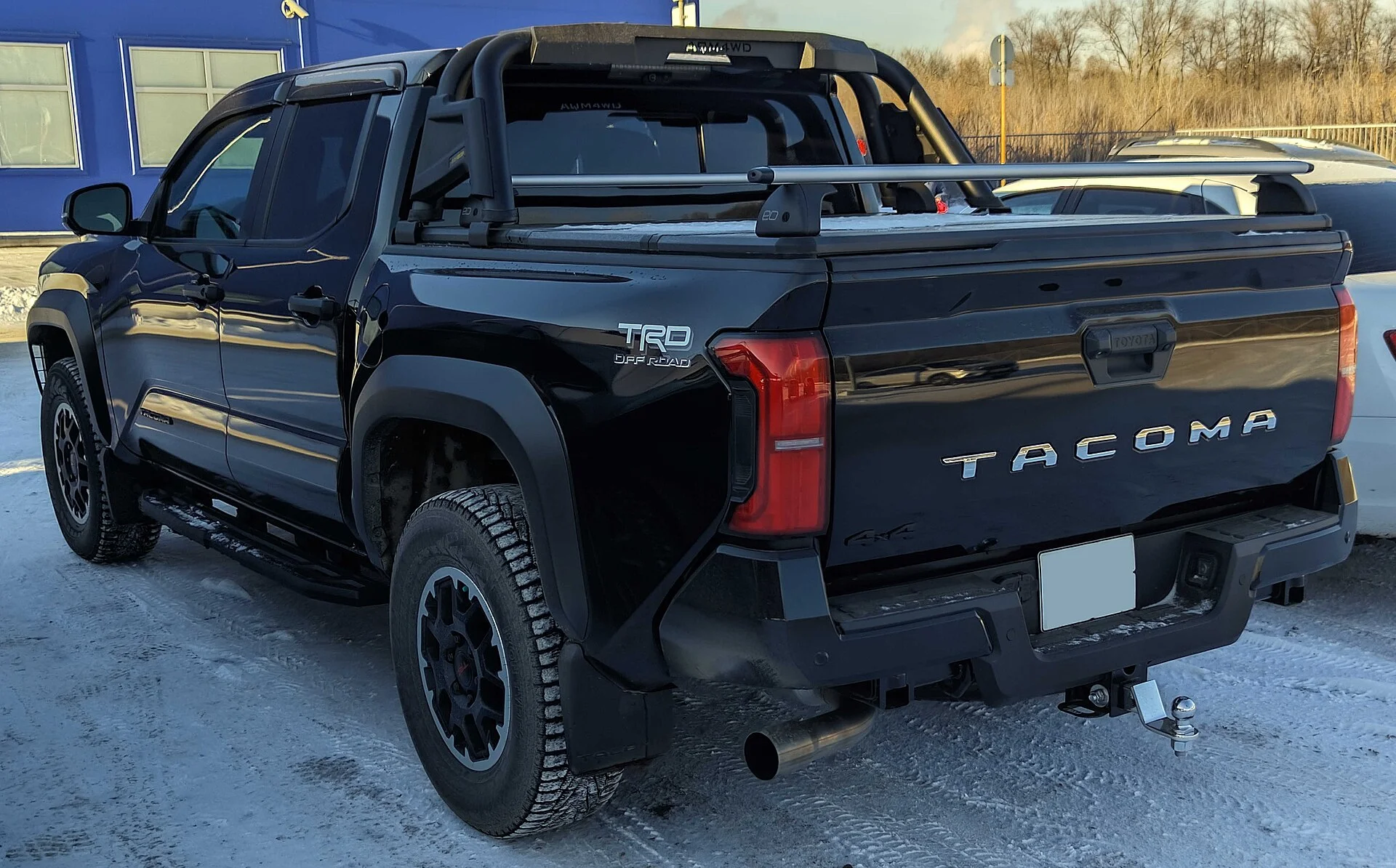
Approach angle is the steepest rise you can drive the front tires up to without the front bumper or air dam striking first. On the Tacoma TRD Off-Road that angle is 32.2 degrees; the TRD Pro is steeper, reported around 33.8 degrees in one measurement and as high as 35.7 degrees in another. The steeper the number, the sharper the ledge you can nose into before the front end grounds out.
This is the angle that matters at the base of a rock step, a steep ditch exit, or a washed-out trail lip. If your approach angle is too shallow for the obstacle, the front bumper contacts the rise before the tires can climb it, and you either stop or scrape your way up leaving your bumper behind. It is the most common place a stock front end gets damaged.
The TRD Pro's advantage here comes partly from its suspension lift and partly from front-end design. The Trailhunter grade pushes the same idea further for overlanding, pairing Old Man Emu forged monotube shocks with a low-profile high-mount air intake — the intake placement is a nod to water crossings, but the suspension is what holds the nose high enough to keep that approach angle usable under load.
My rule at the base of a climb: read the angle of the obstacle against the angle of your truck before you commit. If the ledge is steeper than your approach number, you need a different line, a spotter, or traction boards — not more throttle. Momentum into an obstacle your geometry cannot accept just turns a scrape into a bent bumper.
Breakover Angle: The High-Centering Trap
Breakover angle is the one overlanders underestimate most, and it is where a long truck like the Tacoma gets caught. It measures the sharpest crest you can drive over before the middle of the truck — the belly, between the axles — touches down. The TRD Off-Road's breakover is 24.7 degrees; the TRD Pro sits near 23.5 degrees by one measurement.
Notice something counterintuitive: the TRD Pro can have a slightly shallower breakover than the TRD Off-Road despite more clearance, because breakover is a function of wheelbase and belly height together. A longer or lower-slung midsection reduces the crest you can clear even if the belly number is high. This is exactly how a truck with a great clearance figure ends up beached on a hump with all four tires still on the ground.
High-centering is the failure mode that strands you, and it is miserable because the wheels lose their grip on the terrain and just spin. Prevention is about line choice: approach a crest at an angle rather than straight-on when you can, so one tire crests while the others still carry weight, and avoid driving the belly directly over a point taller than your breakover geometry allows.
For a loaded overlanding Tacoma, breakover is the angle I watch hardest on rocky two-track and eroded ruts. A skid plate protects the belly if you do touch, but the goal is not to touch at all. When in doubt on a sharp crest, get out and look — the thirty seconds it takes to walk the line is far cheaper than a winch recovery off a high-center.
Departure Angle: The Tail on the Way Down
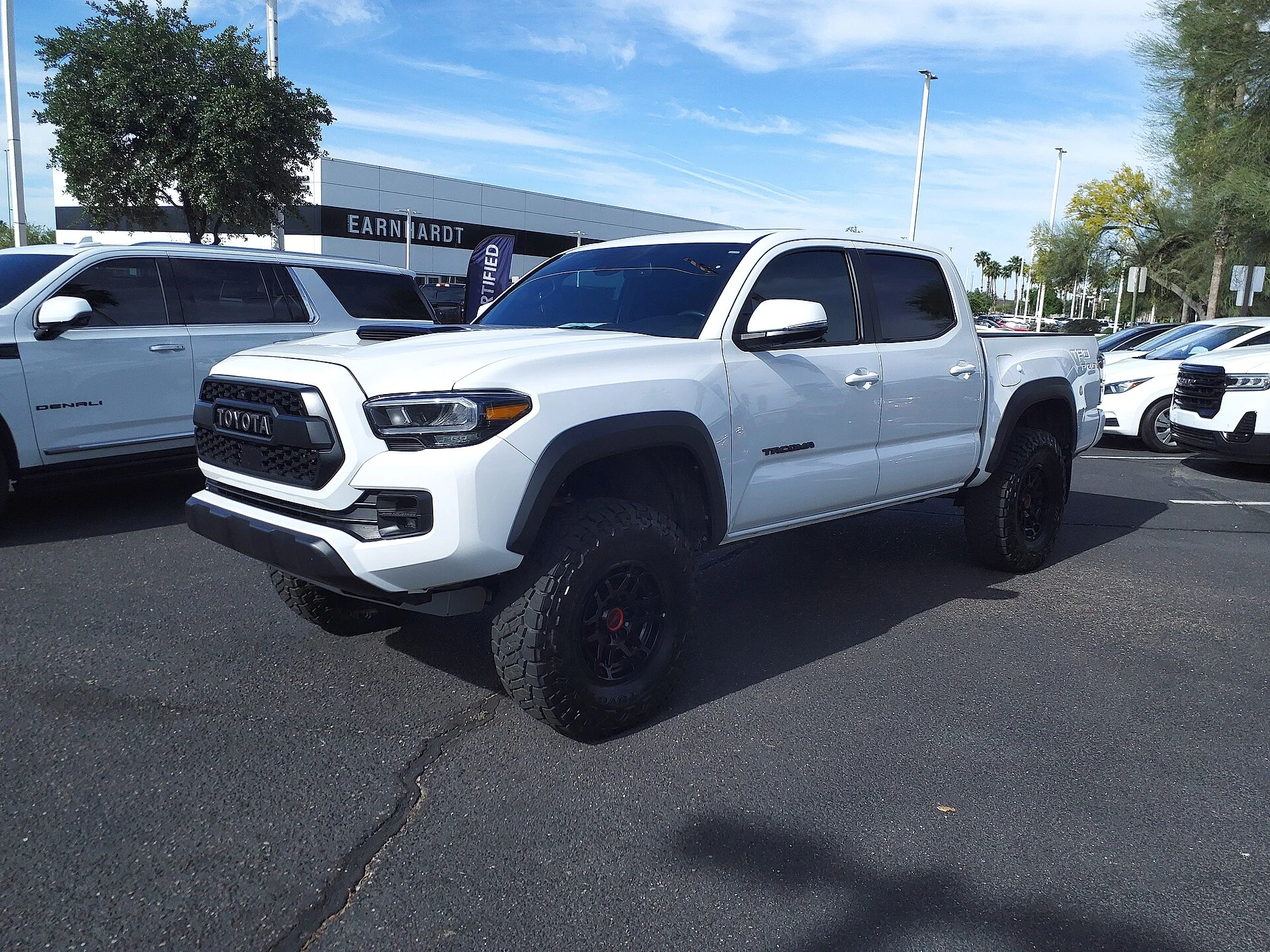
Departure angle is the steepest drop-off you can descend before the rear bumper or hitch drags. The Tacoma TRD Off-Road posts a 26.6-degree departure angle, the strongest of its three angles; the TRD Pro is reported around 25.7 degrees in one set of figures and lower, near 22.6 degrees, in another. The disagreement between sources is real, and it is a reminder to verify your exact build.
Departure matters at the exit of a steep descent, a ledge you are dropping off, or a sharp transition at the bottom of a hill. Too shallow an angle for the drop and the rear end catches — and because the hitch and rear bumper hang behind the rear axle, a trailer or a receiver-mounted cargo rack makes your effective departure angle worse than the truck's own number.
This is where overlanders who tow or carry rear-mounted gear get surprised. Your published departure angle assumes a bare tail. Bolt a spare-tire carrier, a hitch rack, or a trailer to the back, and you have effectively lowered and lengthened the rear overhang, so the real angle you can descend shrinks. The number on the sticker is not the number on your rig.
The habit that saves your bumper is simple: on a steep exit, know whether anything hangs behind the rear axle, and if it does, treat your departure angle as smaller than the spec. Ease down rather than dropping, and take drops at a slight angle when the trail allows so one rear corner clears before the other loads. A dragged hitch is a cheap lesson; a torn-off bumper on a remote trail is not.
The Trim Ladder: Off-Road, Pro, and the Overland-Built Trailhunter
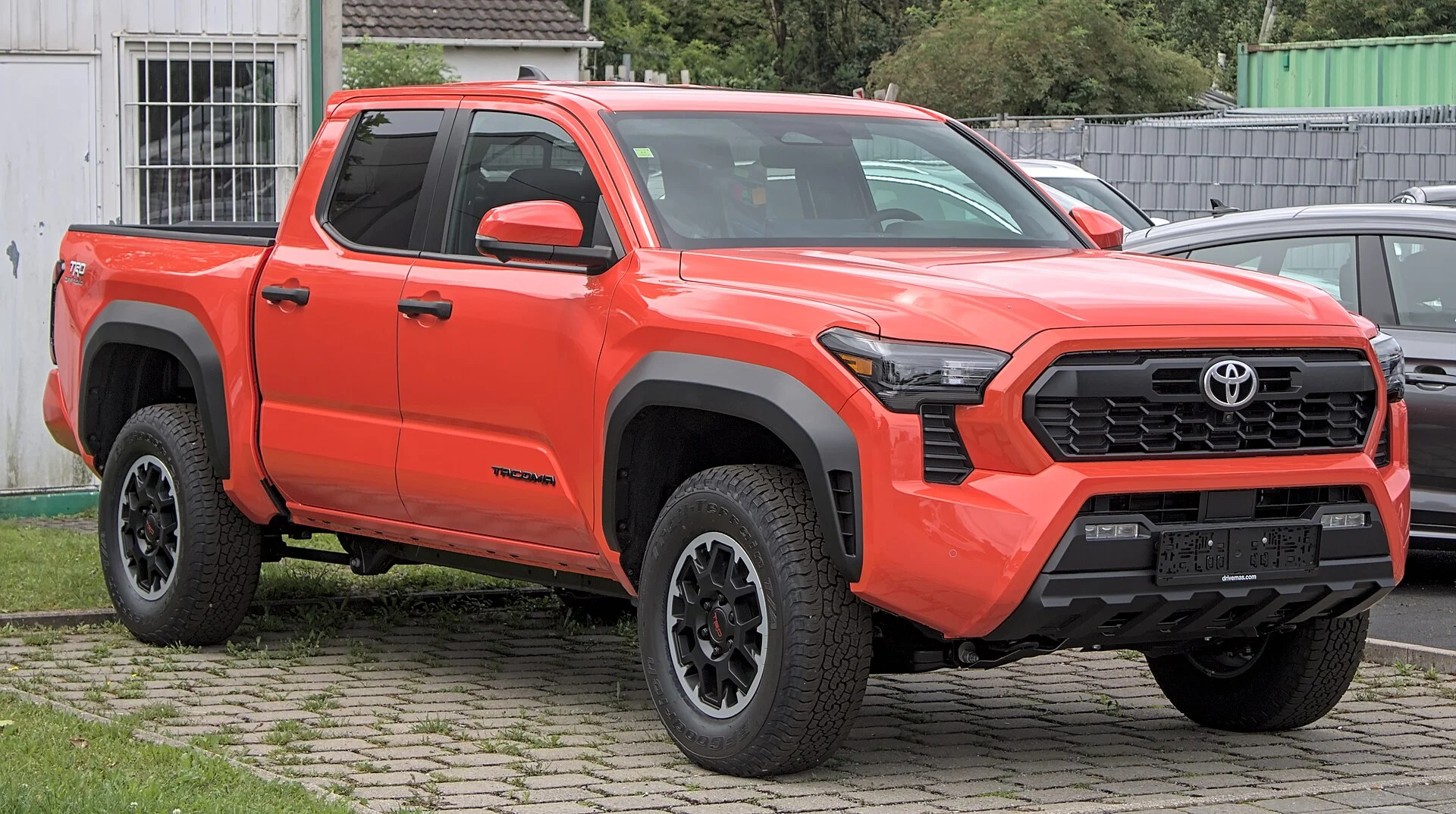
Match the trim to the terrain honestly. The TRD Off-Road is the value overlanding pick: 11.0 inches of clearance, a 32.2-degree approach, 24.7-degree breakover, and a strong 26.6-degree departure, with a rear locker and terrain modes. For most dispersed camping and moderate trails, this trim's geometry is genuinely enough.
The TRD Pro steps up the suspension and pushes the approach angle to roughly 33.8 degrees with running clearance around 11.1 inches. It is the trim for steeper, rockier terrain where the extra approach and lift earn their keep — though as the numbers show, its breakover and departure are not automatically better than the Off-Road's, so it is a targeted upgrade, not a blanket one.
The Trailhunter is the one built for the overlanding job specifically. It comes with Old Man Emu forged monotube shocks, a high-mount air intake, 33-inch Goodyear Territory Rugged Terrain tires on 18-inch alloy wheels, and RIGID LED fog lamps from the factory. That is a factory expedition build: the taller tires alone lift the belly and improve every angle before you add a thing.
My honest take from the trail: buy the trim whose geometry matches the hardest obstacle you will actually attempt loaded, then stop. Overbuying a Pro for gentle forest roads wastes money and ride quality; underbuying for genuine rock crawling leaves you scraping. The Off-Road covers most overlanders, the Trailhunter rewards the ones who go far and rough, and the Pro is the sharp-terrain specialist in between.
How Tires Change Every Angle You Just Read
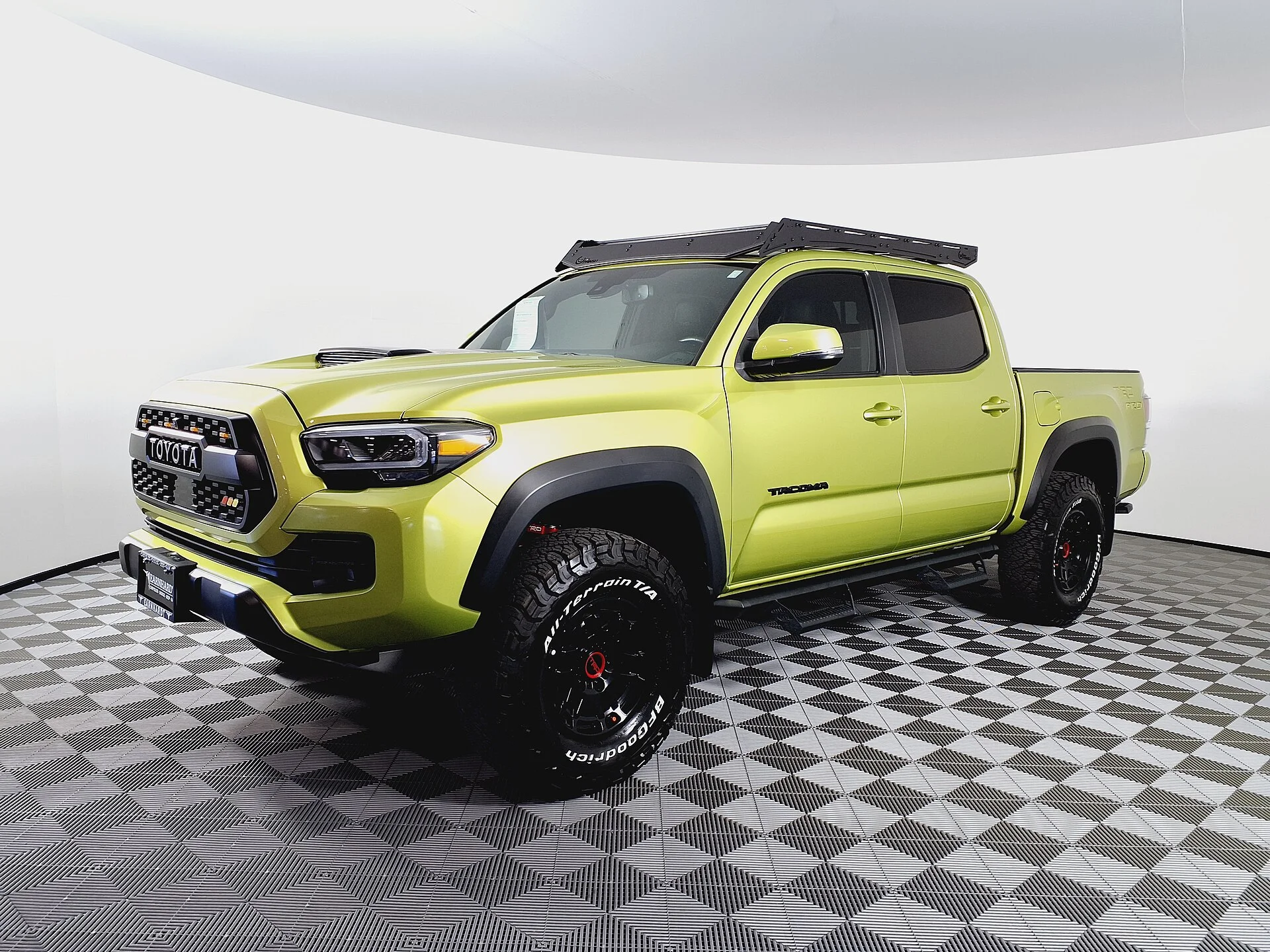
Here is the lever most overlanders reach for first, and for good reason: tire size changes your geometry more cheaply than almost anything else. The Trailhunter's factory 33-inch tires are a clear example — a taller tire raises the axle centerline, which lifts the belly and simultaneously improves approach, breakover, and departure without touching the suspension.
The mechanism is straightforward. Ground clearance at the differential is roughly half the increase in tire diameter, because the axle sits at the center of the wheel. Go up a tire size and you gain belly height and, because the whole truck rides higher, a little on all three angles. It is the reason a set of proper all-terrains is often the highest-value first mod for an overlanding truck.
The honest trade-offs matter, though. Bigger tires add unsprung weight, can rub without a lift or trimming, change your effective gearing so the engine works harder, and throw off the speedometer until recalibrated. A tire that looks great and rubs the fender at full stuff is a durability problem waiting a long way from a shop. Match tire size to what the truck can actually accept.
My approach is to treat tires as geometry, not just grip. If you are choosing between a higher trim for its angles and staying in a lower trim with a good tire upgrade, run the numbers — sometimes the tire gets you most of the geometry for far less money. A well-chosen all-terrain tire set for the Tacoma is where I would spend first before chasing a pricier trim.
The Honest Limits: Static Specs Versus Loaded Reality
Before you trust any of these numbers on a remote trail, respect three honest limits. First, the specs disagree. As we saw, the TRD Pro's approach is reported anywhere from 33.8 degrees to 35.7 degrees and its departure from 22.6 degrees to 25.7 degrees depending on the source and how running height is measured. Verify your exact model year and configuration rather than trusting one blog figure.
Second, everything is measured empty. A loaded overlanding Tacoma — bed full, roof rack loaded, tank topped off — sits lower and compresses its suspension, so your real clearance and angles are smaller than the published static numbers. The truck that clears an obstacle empty may not clear it packed for a two-week trip.
Third, gear changes the shape. Rear-mounted racks and spare carriers cut departure angle, a front bumper or winch can help or hurt approach depending on design, and side steps can reduce breakover clearance at the rockers. Your rig's real geometry is the factory numbers modified by every accessory you bolt on, for better and worse.
The overlander's discipline is to know your loaded, accessorized numbers, not the brochure's empty ones, and to build in margin. Aim to attempt obstacles comfortably inside your geometry rather than at its exact edge, because the edge assumes perfect conditions you rarely get in the backcountry. Margin is what turns a spec sheet into a truck you can trust when help is hours away.
The Verdict: Match the Trail to the Trim, Then Add Margin
Ground clearance sells the Tacoma, but geometry gets you home. The 11.0 inches on the TRD Off-Road and roughly 11.1 inches on the TRD Pro are only the starting point; the approach, breakover, and departure angles decide whether you actually clear the obstacle, and the breakover angle in particular is the one that strands the unwary long truck.
For most overlanders, the TRD Off-Road and its 32.2-degree approach and 26.6-degree departure are enough, especially with a good tire upgrade that lifts every angle at once. Step up to the TRD Pro for genuinely sharp, rocky terrain, and choose the Trailhunter if you want a factory expedition build on 33-inch tires ready to go.
Whatever trim you land on, remember the two truths the spec sheet leaves out: the numbers are measured empty, and your gear changes them. Know your loaded, accessorized geometry, leave margin below your limits, and walk the sharp lines before you drive them. Do that, and the Tacoma's clearance stops being a bragging number and becomes what it should be — a tool you trust a long way from a parts store.
One last piece of overland advice that outranks any spec: recovery gear and a spotter beat geometry every time you misjudge a line. Even a truck perfectly matched to the trail will eventually meet an obstacle that has shifted since the last rain, and the margin that saves you then is the traction boards in the bed and the friend watching your tire placement, not the last half-degree of departure angle. Buy the clearance you need, then back it with the gear and the patience to use it well.