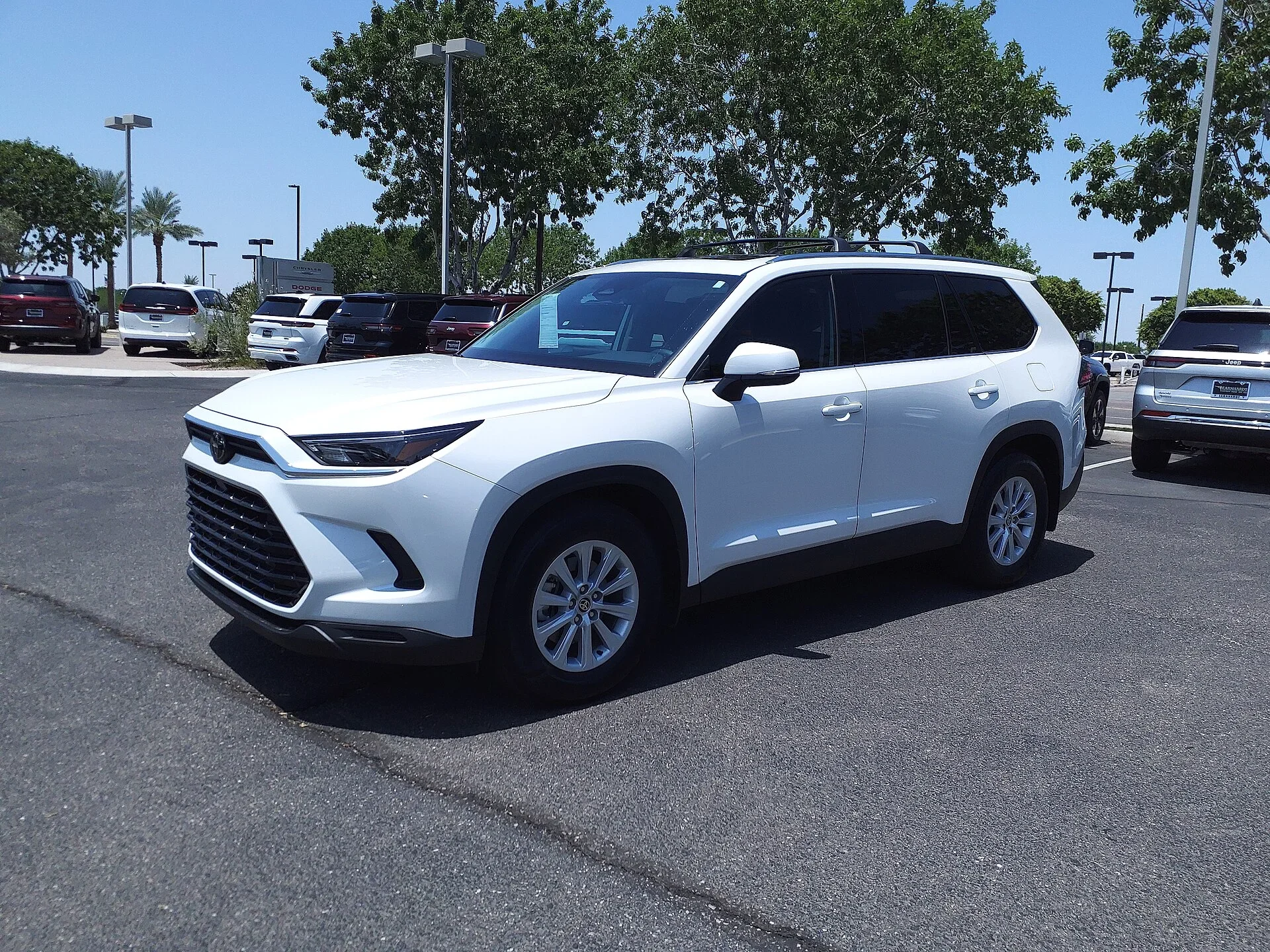
Is the Grand Highlander just a bigger Highlander?
Here's what the reps won't tell you, and what half the spec sheets online get wrong: the Toyota Grand Highlander is a different vehicle from the regular Highlander, not a stretched version of the same numbers. It's genuinely larger, with more third-row and cargo room, and if you copy a regular Highlander's cargo length onto a Grand Highlander you'll build a bed to the wrong dimensions. So the first job of this page is to keep the two Toyotas straight.
Once you do, the Grand Highlander is one of the more interesting SUVs to sleep in - not because of a length number (Toyota doesn't publish a clean one), but because the hybrid version carries a 1500-watt inverter with two household outlets, which is a different league of camp power than almost anything its size. This page works from the cargo volumes Toyota actually publishes, explains why the second-row choice changes your bed, deals honestly with the missing flat-length number, and covers that standout inverter. No regular-Highlander numbers borrowed - just the Grand Highlander's own.
Think of it the way a mechanic thinks about two engines that share a family name: same badge, different block. The Grand Highlander rides on a longer wheelbase and a taller, boxier body built specifically to open up the third row and the cargo hold behind it - the exact space you sleep in. That's why the regular model's tidy cargo figures undersell this truck, and why lifting them onto a Grand Highlander shorts your bed by inches you can't spare. Get the two vehicles clear in your head first, and every number below lands where it should.
The three cargo numbers Toyota actually publishes
Start with what's official for this vehicle specifically. Toyota lists the Grand Highlander's cargo volume as 20.6 cubic feet behind the third row, 57.9 behind the second, and 97.5 behind the first. Those are real Grand Highlander figures - noticeably bigger than the regular Highlander, which is the whole point of the model.
- 20.6 cu ft (behind row three): a big number for third-row-up cargo, but that's gear space, not a bed.
- 57.9 cu ft (behind row two): third row folded - a partial bed for a shorter sleeper.
- 97.5 cu ft (behind row one): both rows down, and the configuration that makes the Grand Highlander a full two-adult-capable sleeper.
Read as a build spec, the Grand Highlander is a large-cargo three-row, and nearly every bed here means folding both rear rows to the 97.5-cubic-foot floor. The volume is genuinely generous. What Toyota doesn't hand you is the flat length in inches - and that gap is worth being honest about.
One more thing the volume tells you if you read it like a build sheet: 97.5 cubic feet is a lot of air to fill, and on this body it's distributed long and wide rather than tall, which is exactly the shape that makes a bed instead of a closet. The jump from 57.9 to 97.5 - close to forty cubic feet of it - is the second row dropping flat, and that single fold is the difference between a partial platform for a short sleeper and a full-length floor for two adults.
Why there's no official folded length to quote
Skip the marketing and here's the real situation: Toyota does not publish a full folded cargo floor length in inches for the Grand Highlander with both rows down. There's a partial figure floating around (around 48 inches with just the third row folded, from reviewers), but no official both-rows-folded flat length. And the number that decides a bed is exactly that both-rows one.
The 73-inch length and 43-inch width you'll find on some sites are the regular Highlander's numbers, not the Grand Highlander's. Ship those onto this truck and you've measured the wrong vehicle - don't.
So the honest path is the mechanic's path: don't quote a length Toyota didn't measure, and don't borrow the regular Highlander's. What you can say from the 97.5-cubic-foot volume and from reviewers who've climbed in is that the Grand Highlander builds a long, wide floor - competitive with the biggest three-rows for a flat bed. What you have to do is measure your own flat length, which the checklist near the end walks you through.
Why won't Toyota just print the number? Because a folded cargo floor on a three-row isn't one clean plane - it's a run of seatback panels with small steps between them and a lip at the tailgate, and where you call the end of usable flat length is a judgment call, not a fixed point. Reviewers who climb in describe a floor long enough for a six-footer with the front seats nudged forward, but that's an eyeball read, not a measured spec. A tape settles it in your own driveway in about a minute.
Bench or captain's chairs - which folds into a better bed?
This is the Grand Highlander choice that decides your build, and it's the one buyers make without thinking about sleeping. The second row comes as either a bench (eight-passenger) or captain's chairs (seven-passenger), and they fold into very different sleeping surfaces.
- Bench second row: folds into a continuous, more uniform floor - the better bed, because there's no gap down the middle.
- Captain's chairs: leave a center channel between the two folded seats - a gap right where a solo sleeper's spine or the seam between two pads wants to be.
If you're cross-shopping a Grand Highlander specifically to sleep in it, the bench is the quieter, better camping choice - it gives you a flatter, gap-free floor. The captain's chairs are nicer for passengers and worse for a bed. It's not a dealbreaker (a platform or a wide mattress bridges the channel), but it's exactly the spec that matters for sleeping and never shows up in a sleeping context on the lot.
Here's the part that trips people standing in the showroom: the bench and the captain's chairs look nearly identical once they're folded, right up until you lie across the seam. The bench drops into one broad panel, so your weight spreads evenly and a pad rests flat on top. The captain's chairs fold as two separate cushions with an inch or more of trough between them, and that trough runs front-to-back exactly under your spine. A rigid platform erases it outright; a soft mattress laid straight on the seats tends to sag into it by morning.
How long a bed can you really build?
Since Toyota won't give you the flat length, here's how to think about it honestly. The Grand Highlander is a large three-row with a 97.5-cubic-foot cargo hold - bigger than the regular Highlander and among the roomier vehicles in its class - so reviewers who've laid down in one describe a genuinely long floor with both rows folded, adequate for tall sleepers.
What sets your real number:
- Both rows folded is the only configuration that gives a full-length bed; the 57.9-cubic-foot second-row-up setup is a shorter sleeper's space.
- Front-seat slide buys a tall sleeper the last few inches, at the cost of the morning driving position.
- Bench vs captain's changes the flatness of that length, not the length itself.
The mechanic's answer: measure tailgate-to-front-seatbacks along the floor with both rows down, and expect a length competitive with the biggest SUVs - but confirm it with your tape rather than trusting a number the internet borrowed from the wrong Toyota.
Set your expectation by the vehicle's footprint, not by a borrowed figure: the Grand Highlander spends its longer wheelbase mostly on the second and third rows, so both-rows-down it opens a floor that lands in the same conversation as a Palisade or a Traverse for stretching out. I'd still treat every online length for this truck as suspect until you've run a tape from the closed tailgate to the folded front seatbacks - that one measurement, taken on your own trim with your own seats, decides whether you sleep flat or at an angle.
Width and sitting up in the Grand Highlander
Width decides one sleeper or two, and the Grand Highlander's size works in your favor. Toyota doesn't publish a cargo width in inches, but it's a wide vehicle, and reviewers consistently describe a cargo floor roomy enough for two adults across with both rows folded - the payoff for the Grand Highlander's extra size over the regular one.
The number that limits two-across isn't the widest point - it's the pinch between the wheel wells. Toyota doesn't print it, so measure it; that's your true two-person ceiling.
On height and sitting up: a big three-row gives you enough cargo-area height to sit up on an elbow and change a shirt seated, though not to kneel fully upright. Watch it against your build - a platform to bridge the captain's-chair channel or level the floor raises you toward the roof, so keep it low and do the awkward dressing on the tailgate with the hatch up. For two-person sleeping, the Grand Highlander's width is a real reason to pick it - just measure the wheel-well pinch first.
That pinch deserves a word of its own, because it's the one spec nobody prints and everybody runs into. The cargo floor is widest right at the back and again up near the second row, but it necks down where the rear wheel housings push in - and a two-across bed has to fit through that neck, not the wide spots on either side of it. Lay your tape between the two wheel wells at their closest point; clear a bit over forty inches there and you've got honest room for two pads side by side. I've seen builders trust the widest measurement instead and end up with one sleeper riding half up on the housing.
The 1500-watt hybrid inverter that changes camp power
Now the spec that actually sets the Grand Highlander apart, and it's a real one, not marketing. The Hybrid MAX carries a 1500-watt inverter feeding two 120-volt household outlets - that's not the 150-watt token outlet you get in most SUVs, it's enough to run genuine gear. For a three-row family SUV, that's a legitimately unusual camp-power advantage.
Fifteen hundred watts with two outlets is a different league than the 150-watt outlets in a Pathfinder or Acadia. On a Grand Highlander Hybrid, the car itself can run camp gear a normal SUV can't touch.
Two honest caveats a mechanic has to add. First, it's the hybrid trims - a non-hybrid Grand Highlander doesn't get the 1500-watt inverter, so confirm your powertrain. Second, like any car outlet it depends on the vehicle's power state; it's a run-with-the-system feature, not an infinite-free-power one, so you still manage the battery. But if you buy the hybrid, this is the standout reason it's a serious camping vehicle.
The reason 1500 watts is the headline and not a footnote comes down to what a heating element pulls. Anything that makes heat - a kettle, a burner, a small heater - draws hundreds of watts, and a 150-watt token outlet simply trips or refuses to run it. Fifteen hundred watts clears that threshold, so the Grand Highlander Hybrid stops being a phone charger on wheels and starts being a kitchen you can run without dragging a separate battery along. That's the whole standout, and it lives on the hybrid powertrain alone.
What that outlet runs that a normal SUV can't
Let me put the 1500 watts in practical terms, because the number only matters if you know what it unlocks. Where a typical SUV's 150-watt outlet runs a laptop and stops, the Grand Highlander Hybrid's 1500-watt pair handles real loads.
- Actual appliances: a small electric kettle, a coffee maker, or a compact induction burner - the heating-element stuff that trips every 150-watt outlet.
- A 12V fridge on AC plus charging plus lights, all at once, with room to spare.
- Tools and recharging - a real 120-volt workspace at camp.
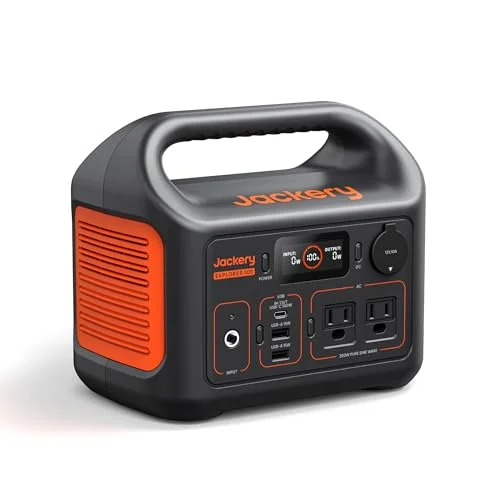
That said, for the non-hybrid buyer or for when the vehicle's off, the answer is the same as any SUV: a Jackery Explorer 300 power station runs a fan, lights and charging off its own battery and recharges from the 12V socket as you drive. On a hybrid you may not need it; on a gas Grand Highlander, it's still the reliable overnight supply.
The honest ceiling still applies even on the hybrid: 1500 watts is plenty for one appliance at a time and comfortable for a couple of small draws together, but it isn't a house panel. Run the kettle, then the induction burner - not both flat out at once - and watch the running total the way you'd watch a shared circuit at home. Managed like that, the pair of outlets covers a genuine camp kitchen, which is more than any 150-watt SUV can claim.
Building the bed over the folded rows
Here's the build sequence that turns the Grand Highlander's volume into a flat bed. It's the same discipline as any three-row, with the bench-versus-channel wrinkle.
- Fold both rear rows to the 97.5-cubic-foot floor - the sleeping configuration.
- Measure your flat length and wheel-well width before you buy bedding - the Grand Highlander's numbers are generous, but they're yours to measure.
- Add a sleeping pad on top once the surface is level.
With the bench second row you skip the channel entirely and get a flatter floor to start. Either way, level first and soften second, and the Grand Highlander's big floor becomes a comfortable bed.
One build note specific to this truck: because the folded panels step down slightly toward the tailgate, level from the front of the floor working back, so the low end sits under your feet rather than your head. On a bench you're fighting only those small seatback steps; on captain's chairs you're leveling the steps and spanning the center channel at the same time, which is exactly where a shaped SUV mattress earns its keep over a flat pad. Measure first, then buy bedding - never the reverse.
The verdict on the Grand Highlander as a sleeper
The Toyota Grand Highlander is one of the more capable three-row sleepers out there, and its own vehicle - not a bigger regular Highlander. Toyota publishes 97.5 cubic feet behind the first row and a large, wide floor, but no official flat length, so you measure your own and ignore the regular Highlander's numbers. The bench second row builds a better, gap-free bed than the captain's chairs.
The Grand Highlander's standout is the hybrid's 1500-watt, two-outlet inverter - real camp power a normal SUV can't match. Get the bench, get the hybrid if power matters, measure your own floor, and it's a serious camping SUV.
Strip it to a buying rule and it stays short: the Grand Highlander earns its place as a sleeper on size and on power, not on a length number anyone at Toyota will sign off on. Get it straight that this is the big Toyota and not the regular one wearing a longer name, spend a few minutes with a tape instead of trusting the internet, and the rest of the decisions fall into line on their own.
Keep the two Toyotas straight, choose the bench for a flatter bed, measure your own length and wheel-well width, and lean on the 1500-watt inverter if you bought the hybrid, and the Grand Highlander turns its big floor into a comfortable, well-powered bed. The full setup lives in our Kia EV9 cargo dimensions.
Related on Auto Roamer: Jeep Grand Cherokee cargo dimensions; Hyundai Palisade cargo dimensions; Chevy Traverse cargo dimensions.