
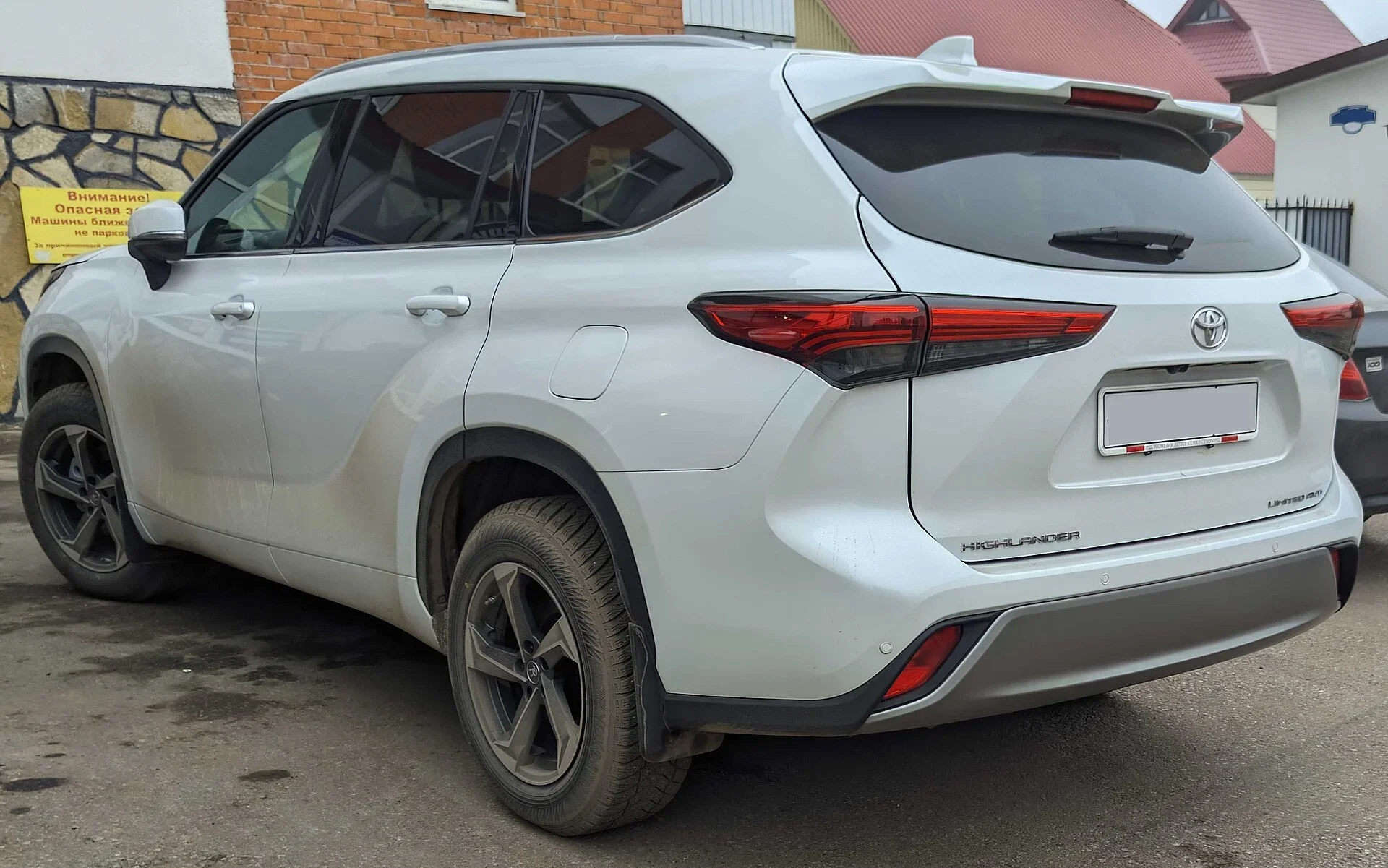
The Highlander sleeps you, but the hybrid is the one to want
Can you sleep in a Toyota Highlander? Yes - fold both rear rows and the current XU70 opens up to 84.3 cubic feet of cargo, per Toyota-derived figures, which is a real bed for one adult and a workable one for two. That is the short answer. The longer answer, the one a mechanic cares about, is that not every Highlander is the same camping vehicle, and the difference is the outlet.
I look at this three-row the way I'd look at any rig a customer wants to sleep in: where's the flat spot, where's the catch, and which option is worth the money. On the Highlander the catch is a floor that folds long-ish but not perfectly flat, and the option worth the money is the hybrid powertrain - not for the fuel economy here, but because its 1500-watt inverter turns the car into genuine camp power. Get those two things straight and you'll know exactly what you're buying into.
This page works from the numbers the XU70 actually carries - not the bigger Grand Highlander's, which is a different vehicle people confuse it with constantly - and walks the floor, the length, the width, the power, and the build, so you can decide before you spend a dime on a mattress.
Who this suits: someone who already owns or wants a three-row family Highlander and camps a handful of nights a year, not a full-time van-lifer. The Highlander was built to carry seven people first and sleep one or two second, and it does the second job honestly once you know its limits. Read it as a capable weekender, not a purpose-built camper - and judge it by that standard.
The cargo numbers: 84.3 cubic feet, not 97.5
Start with what Toyota actually gives the current Highlander. The XU70 lists 16.0 cubic feet behind the third row, 48.4 cubic feet behind the second with the third folded, and 84.3 cubic feet behind the first row with both rear rows down, per Toyota-derived specs carried by US News. Those are the real numbers for the 2020-and-newer Highlander.
Read them as a build spec:
- 16.0 cubic feet with all seats up is a grocery run, not a bed.
- 48.4 cubic feet with just the third row folded gets you a short, partial platform - fine for a diagonal solo sleeper.
- 84.3 cubic feet with both rows down is the number that makes the Highlander a full sleeper, so almost every setup here means folding both rear rows.
Eighty-four cubic feet is a healthy mid-to-large three-row hold - less than a full-size body but plenty for a flat bed. Just anchor on that 84.3 figure and don't let a spec sheet talk you into a bigger one.
One more way to use these three numbers: they tell you how much of the car you give up for a bed. Keep the third row and you have 48.4 cubic feet - a partial platform in a car that's still hauling a family; drop both rows and you commit the whole back to sleeping. Most people leave the seats up on weekdays and fold them only at camp, so 84.3 cubic feet is a weekend configuration, not a permanent one.
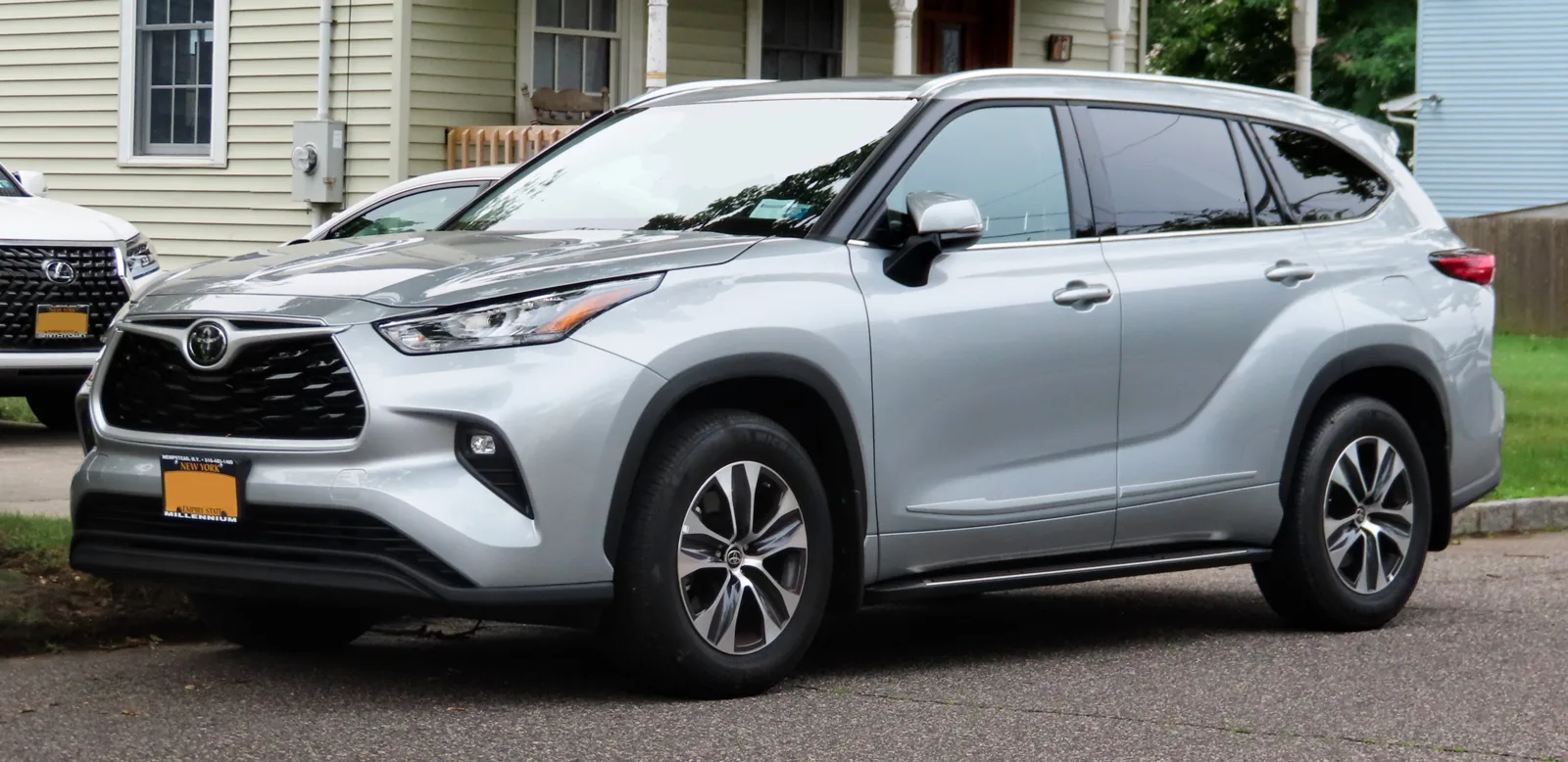
The Grand Highlander trap: a different, bigger vehicle
Here is the mistake I see constantly, and it will throw your whole build off if you fall for it: the Highlander and the Grand Highlander are two separate vehicles, and the Grand Highlander is meaningfully bigger. The Grand Highlander folds to about 97.5 cubic feet; the regular Highlander tops out at 84.3 cubic feet. If you plan a bed around the 97.5 number in a standard Highlander, you'll come up roughly thirteen cubic feet - and several inches of floor - short.
The regular Highlander's real max is 84.3 cubic feet. The 97.5 figure belongs to the larger Grand Highlander, a different model - never size a Highlander bed to the bigger car's number.
The same trap hides in length. Owners of the bigger Grand Highlander report a longer load floor, and that number gets copied onto Highlander pages by careless blogs. When you measure and plan, use only figures that clearly say XU70 or 'regular Highlander,' and when in doubt, trust your own tape over anyone's spec sheet.
The quickest check is the badge and the length of the car itself. A Grand Highlander is visibly longer and wears its own name on the tailgate; a regular Highlander does not. If a listing, forum post, or blog quotes 97.5 cubic feet, it is describing the bigger car, and any floor-length claim sitting next to that number travels with it - discard both and start from the XU70 figures.
The floor: nearly flat, with a step you'll feel
Now the make-or-break detail for sleeping, and the Highlander's real weakness. When you fold both rear rows the floor comes out nearly flat but not dead level - reviewers consistently note a slight rise or step where the folded seatbacks meet the cargo deck. It's fine for hauling; for a spine it's the difference between a good night and a stiff back.
What the step means for your build:
- Solo, you can often ignore it - lie so the step falls under your knees, not your hips.
- For two, you'll want to bridge it so nobody sleeps on the ridge.
- A shaped pad or a platform is the cure; don't count on the folded seats alone to give you a flat plane.
The step sits where the folded seatbacks meet the cargo deck, so its exact height depends on your trim and how the seats settle - one more reason to measure rather than assume. Sleep with your head toward the tailgate and the ridge tends to land lower on your body, under the knees instead of the hips, which most people find far easier to ignore through the night.
Length: over 70 inches, but Toyota won't tell you exactly
Length is where the Highlander turns coy. Toyota does not publish a folded load-floor length, and I won't hand you a number the maker didn't measure. What owners report is a floor 'over 70 inches' with both rows down - long enough that a shorter adult lies flat and a six-footer fits at a slight diagonal or with the front seats nudged forward.
One caution, because this exact figure gets muddled online: an older XU50 Highlander owner once measured about 77.5 inches hatch-to-seatback, and that number gets copied onto the current car - but it's the previous generation, so don't bank on 77.5 inches in an XU70. Treat 'over 70 inches' as the honest floor and measure your own truck to know exactly where your feet land. Ten minutes with a tape beats a borrowed inch every time.
Two cheap ways to buy back the length you're missing: slide the front seats all the way forward before you measure, which can add several inches of usable floor, and sleep on a slight diagonal from one rear corner toward the opposite front seat. A tall sleeper who does both usually finds the Highlander goes from 'almost' to 'flat enough.' If your feet still reach the seatbacks, lying with knees just slightly bent gets you a full night without a stiff back.
Width: one adult easily, two only if you're narrow
Width decides whether the Highlander is a single or a double, and the honest answer is 'a comfortable single, a tight double.' Toyota doesn't publish an interior cargo width, and owner figures for the space between the wheel wells cluster loosely in the 40-to-45-inch range - low-confidence numbers, so measure rather than trust them. Call it about enough for two narrow pads if you plan it, roomy for one.
- Solo: easy - a wide, flat floor with space for gear alongside.
- Two adults: possible on the Highlander's wide body, but measure the wheel-well pinch first and build the platform level with the wells to reclaim the shoulder room.
- Two plus gear: tight - move the gear to the front seats or a roof bag.
Because none of the width figures are official, the wheel-well pinch is the one measurement I'd take before deciding two people fit. It's always narrower than the wide-open look of the tailgate suggests.
The wheel wells are the pinch point on nearly every SUV, and the Highlander is no exception - the floor is widest above them and narrowest between them. Build the platform level with the top of the wells and you reclaim that lost shoulder room, turning a tight double into a fair one. Keep the sleeping surface down at the raw floor and you're back to one comfortable adult with gear stowed up front.
The hybrid's 1500-watt outlet: real camp power
This is the Highlander's standout feature for camping and the reason to pay up for the hybrid. On hybrid trims - Bronze Edition, Limited, and Platinum - Toyota fits a 1500-watt inverter feeding two 120-volt household outlets, one near the rear of the center console and one in the cargo area, per owner documentation on ToyotaNation. Fifteen hundred watts is genuine camp electricity, not a token socket.
The hybrid Highlander's 1500-watt outlet is the rare factory system that can actually run camp gear - a small fridge, device charging, even a low-draw kettle in short bursts - where most SUVs give you 150 watts at best.
What 1500 watts unlocks: a 12V-style compressor fridge, laptops, a CPAP, fast device charging, and short runs of a heating appliance. It won't run all night with the engine off - the system is happiest with the car in ready mode - but it's the most capable factory outlet in this comparison by a wide margin, and it changes what the Highlander can do at camp.
The placement matters as much as the wattage: with one outlet near the rear of the center console and one in the cargo area, per owner documentation, you can charge a device up front and run a fridge in back at the same time. Treat 1500 watts as a ceiling, not a promise - stack a fridge, a laptop, and a kettle all at once and you can trip it. Stagger the heavy draws and the system stays happy.
The gas Highlander: a 100-watt phone charger, nothing more
Now the flip side, so nobody buys the wrong trim expecting camp power. The gas (non-hybrid) Highlander does not get the 1500-watt system - it has at most a single roughly 100-watt 120-volt outlet, per the same owner sources. A hundred watts charges a phone or a small light and stops there; it will not run a fridge or anything with a heating element.
- Gas trims: plan on a portable battery for everything beyond a phone - the car's outlet is a convenience, not a power source.
- Hybrid trims: you have real power, but still bring a station for anything that must run while you sleep with the car off.
- Either way, a standalone battery is the reliable overnight answer.
The trim you buy locks this in, so decide before you sign. The 1500-watt system comes only on the hybrid grades named above, and no dealer accessory bolts it onto a gas Highlander after the fact. If you're shopping used and camp power matters, confirm the car is a hybrid and look for the second, cargo-area outlet - that's the tell that the full system is fitted rather than a lone console socket.
Building a flat bed over the folded rows
The Highlander's build is straightforward once you accept it isn't dead flat. Fold the third row, fold the second row forward, and you have a long platform with a gentle step and a slope near the front. Your job is to turn that into one plane.
- Bench versus captain's chairs: a second-row bench folds into a more continuous floor; captain's chairs can leave a center channel to fill.
- Slide the front seats forward to buy length and give your platform something to bridge to.
- Level with a pad or plywood, then add cushion - the shaped air mattress is the no-tools route; a low platform gives you storage underneath.
Measure from the tailgate to the back of the front seats along the floor before you buy anything - that's your true bed length, and on the Highlander it's generous enough to work but only your tape makes it a number you can trust.
A few build notes for the platform route: keep it low and light so it doesn't eat headroom or add needless weight, and cut it in two pieces if you want to lift it out without folding the seats back up. Pad any hard edge that meets the seatbacks with foam or carpet so it doesn't chew the upholstery as the car flexes down the road. The goal is one continuous plane from tailgate to front seats - nothing more, nothing taller.
Headroom and getting changed inside
Height is the quiet comfort factor, and the Highlander does fine here. A mid-to-large three-row gives you enough room to sit up on an elbow and change a shirt seated, as long as your build doesn't eat too much of it. Every inch you raise the floor to level that step is an inch off your sitting height, so keep any platform low.
- Keep the platform low - level the step, don't build a stage.
- Do the awkward business on the tailgate, hatch up, to reserve inside height for lying down.
- A thinner pad preserves headroom if you're tall.
It's no stand-up camper - nothing this shape is - but the Highlander leaves enough room to be comfortable seated, which is all most sleepers need for changing and organizing before bed.
Ventilation rides on that same height. Cracking the front and rear windows an inch keeps condensation off the glass without letting much weather in, and the taller cabin gives that moisture somewhere to go rather than dripping onto your face. A cheap mesh screen over a cracked window keeps bugs out while the air moves. Manage the air and the modest headroom feels less like a tent and more like a small room.
Take these measurements before you buy a mattress
Because Toyota publishes volume but not the inches that matter for sleeping, your tape measure is the real spec sheet. Take these with both rear rows folded, and take each one twice.
- Flat length: tailgate to the back of the front seats along the floor - your true bed length.
- Wheel-well width: the pinch between the wells - the real two-person ceiling.
- Step height: the rise from cargo floor to folded seatbacks - how much your pad or platform must bridge.
- Sitting height: floor to headliner, minus your planned pad.
Five minutes of measuring turns 'over 70 inches, near-flat' from a frustration into a plan, and it's the difference between a bed that fits and one that fights you all night.
Do the measuring with the car parked level and the seats settled exactly as they'll be at camp - a floor that reads flat on a sloped driveway will fool you. Save the four numbers in your phone before you shop so a mattress or platform gets bought to your Highlander, not to a generic 'SUV' size. Each one is a two-minute job, and together they replace the inch figures Toyota chose not to publish.
The verdict: a marginal sleeper the hybrid rescues
So where does the Highlander land? Honestly, as a marginal-but-usable sleeper that the hybrid powertrain lifts into genuinely appealing territory. The 84.3-cubic-foot floor is long enough for one adult flat and two with a bridge, but it's not dead flat and the length is borderline for a six-footer - so it takes a little building, unlike a Forester's flat floor.
Buy a gas Highlander to sleep in and you've got a competent, slightly stepped bed and a phone charger. Buy the hybrid and you've got the same bed plus 1500 watts of real camp power - which is the whole argument for this car.
Level the step, respect the length, and choose the hybrid if camp electricity matters, and the Highlander earns its keep. The full fold-by-fold measurements live in our Highlander cargo dimensions for sleeping, and if you're cross-shopping three-rows, the Pilot vs Highlander comparison puts the two head to head.
Bottom line for a buyer: if you already own a Highlander, it will sleep you fine once you level the step and respect the length. If you're choosing one partly to camp in, spend up for the hybrid - the bed is the same either way, but the 1500-watt outlet is the feature you can't add later, and it's the one thing that turns a competent floor into a genuine reason to sleep in this car.
Related on Auto Roamer: Toyota Highlander camping guide; Sorento vs Highlander for car camping.