Two different sizes wearing the same job title
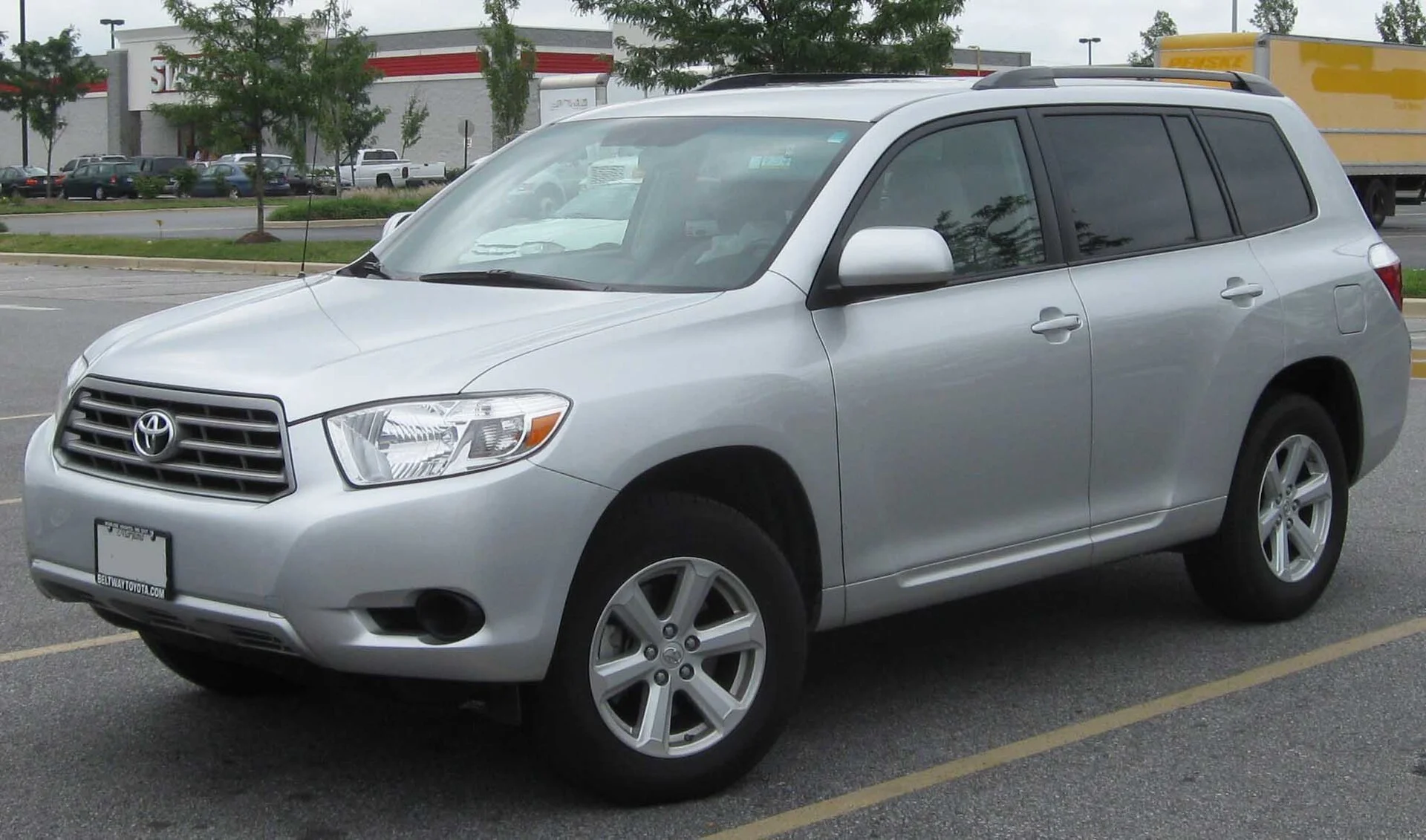
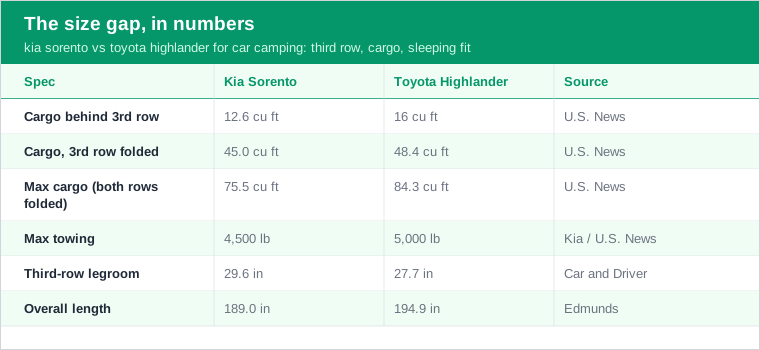
Here are the three numbers that decide this whole comparison: the Toyota Highlander stretches 194.9 inches long and folds down to 84.3 cubic feet of cargo, while the Kia Sorento measures 189.0 inches and maxes out at 75.5 cubic feet, per Edmunds and U.S. News. That 5.9-inch, roughly 9-cubic-foot gap is not a rounding error - it is the entire story. The Highlander is the bigger, roomier default three-row; the Sorento is the shorter, lighter, cheaper compact-midsize that gives up cargo to gain nimbleness.
Most comparisons treat these two as interchangeable rivals and then declare the bigger one the winner. That is lazy. For a camper, 'bigger' is only better in some scenarios - and in others the shorter vehicle that slips into a tight forest-service pull-out and returns 26 mpg is the smarter buy. The right question is not 'which is bigger' (the Highlander, settled) but 'which is right-sized for the trip you actually take.'
So instead of a spec-sheet beauty pageant, I'm going to walk you through three concrete camping scenarios - a solo or couple weekender, two adults with gear and a dog, and a family of five with the third row up - and show which vehicle wins each, using the sourced dimensions. Then price, warranty, and a plain who-should-buy verdict.
Meet the right-sized Kia and the default Toyota
Start with an honest sizing, because the class label hides it. The Highlander is a full midsize three-row: 194.9 inches long on a 112.2-inch wheelbase, per Edmunds, with 16 cubic feet of cargo behind the third row, 48.4 with that row folded, and 84.3 maximum, per U.S. News. It tows up to 5,000 pounds. It is the segment's safe, roomy default - the vehicle a family buys when they want 'the big Toyota' and stop thinking about it.
The Sorento sits a size down. At 189.0 inches on a 110.8-inch wheelbase (per Edmunds), it is closer to a stretched two-row than a true midsize, which is exactly why Kia can price it lower. Cargo runs 12.6 cubic feet behind the third row, 45.0 with it folded, and 75.5 maximum, per U.S. News, and towing tops out at 4,500 pounds on the turbo trims (3,500 on the base four-cylinder), per Kia.
The twist that keeps this from being a blowout: the smaller Sorento actually gives its third row 29.6 inches of legroom to the Highlander's 27.7, per Car and Driver, and rides 8.2 inches off the ground to the Toyota's 8.0. The 'small' Kia is not small everywhere. Hold those exceptions - they decide two of the three scenarios below.
Scenario 1 - The solo or couple weekender
Picture the most common camping use: one or two adults, a two- or three-night trip, sleeping inside on a folded load floor. Here the Highlander's 84.3 cubic feet is genuine overkill. Both vehicles fold to a flat-ish bay that swallows two adults on a full-width pad with gear stacked to the sides; the Sorento's 75.5 cubic feet is more than enough for that job, and the extra 9 cubic feet in the Toyota mostly goes unused when you are sleeping two.
What the couple actually feels day to day tilts the other way:
- Parking and trailheads: the Sorento's 189.0-inch length tucks into cramped campground loops and rocky pull-outs that make a 194.9-inch Highlander a three-point-turn exercise.
- Fuel on the long haul: the base Sorento returns 26 mpg combined to the Highlander's 25, per EPA figures - small, but real over a 600-mile road trip.
- Money left for gear: the Sorento's lower entry price leaves budget for the mattress, the power station, and the fuel.
Scenario 1 goes to the Kia Sorento. When you are sleeping two, the Highlander's size advantage is a tax you pay in length, thirst, and price for cargo you are not using. The right-sized vehicle wins the weekender - and our Kia Sorento camping guide covers the full two-adult build for exactly this trip.
Scenario 2 - Two adults, a pile of gear, and a dog
Now load it up: two adults sleeping inside, a big cooler, a bin of kit, chairs, and a dog that needs its own floor space so it is not on the mattress. This is where cargo volume stops being a spec and starts being the difference between an organized camp and a Tetris nightmare - and where the Highlander's size earns its keep.
With the third row folded, the Highlander opens 48.4 cubic feet behind the second row to the Sorento's 45.0, per U.S. News. That 3.4-cubic-foot edge, plus the Toyota's longer 194.9-inch body, means a longer, wider flat floor - enough to bed two adults up front of the cargo bay and still leave a defined back corner for a dog crate and the cooler without everything sliding into the sleepers overnight.
The dog is the deciding factor here. Two adults fit in either vehicle. Two adults plus a dog that needs its own dry, separate corner is where the Highlander's extra floor length turns a cramped compromise into a workable three-zone layout - sleepers, gear, dog.
Scenario 2 goes to the Toyota Highlander. When the passenger count is low but the cargo-and-critter load is high, the bigger vehicle is right-sized and the Sorento starts to feel packed. If this is your typical trip, our Highlander cargo dimensions for sleeping breakdown has the exact floor measurements to plan the three zones.
Scenario 3 - A family of five with the third row up
The hardest scenario, and the one buyers get wrong most often: five people, three of them in the back two rows, camping with the third row occupied by kids the whole trip. Now you are not sleeping in the folded bay - you are hauling five humans and stuffing gear behind an upright third row, and legroom back there decides whether the kids arrive happy or feral.
This is the scenario people assume the bigger Highlander wins - and it splits:
- Third-row comfort leans Sorento: its 29.6 inches of third-row legroom beats the Highlander's cramped 27.7, per Car and Driver - the smaller Kia is genuinely the roomier one back there for kids.
- Gear-behind-the-seats leans Highlander: 16 cubic feet behind the third row versus the Sorento's 12.6, per U.S. News - a 3.4-cubic-foot edge that swallows the strollers, day bags, and a cooler.
So Scenario 3 is a genuine draw that you break on your own family. If the third-row riders are older kids or occasional adults who need the legroom, the Sorento's 29.6 inches is the humane choice. If they are little and the back is mostly gear, the Highlander's 16 cubic feet behind the seats wins. Neither third row is an adult-all-day space - both makers build them for kids and short hops, per Car and Driver.
The sleeping fit - both need help, one needs a hair more
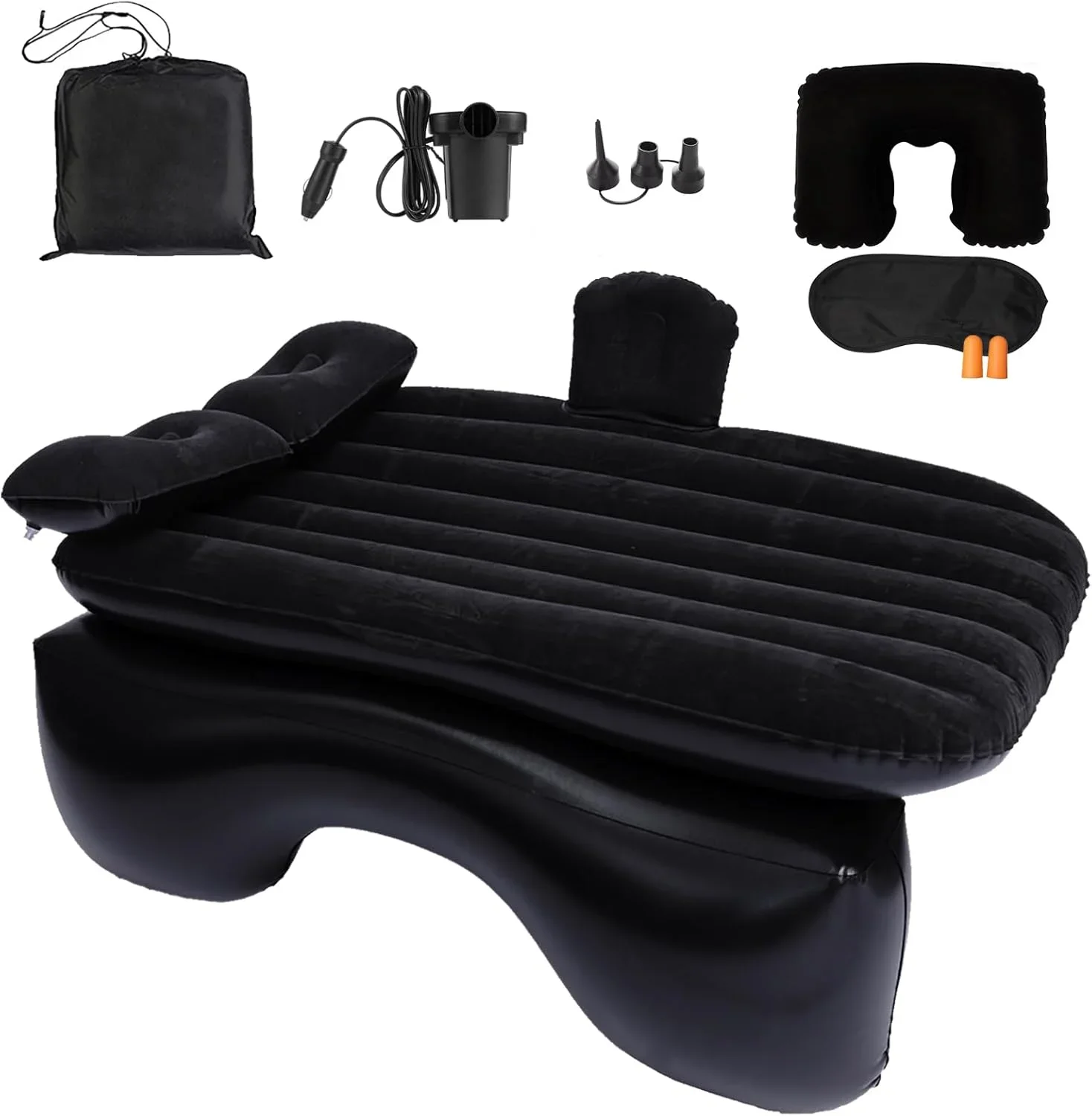
Here is the reality neither brochure prints: a folded three-row load floor is never truly flat. Both the Sorento and the Highlander leave a mild step where the seatbacks meet the cargo floor, and both bays run long enough to sleep two adults diagonally or in-line once you bridge that step. The fix is the same in either vehicle - an SUV-shaped air mattress that fills the footwells and levels the seams into one continuous surface.
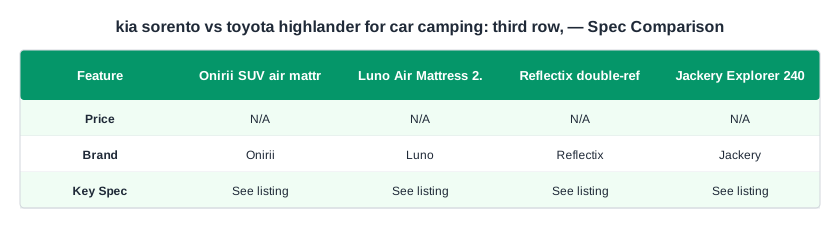
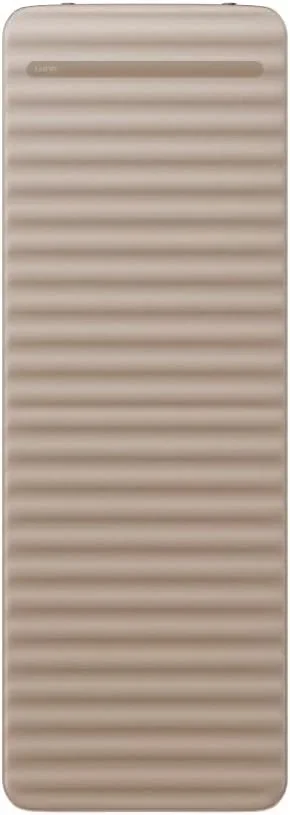
A back-seat-style pad like the Onirii SUV air mattress drops into the folded bay of either SUV and turns the stepped floor into a level bed in one inflate. If you camp monthly rather than once a season, the Luno Air Mattress 2.0 is the buy-once upgrade for the same footprint. The Highlander's longer 194.9-inch body gives you a touch more room to lie fully stretched, while the Sorento's 75.5-cubic-foot bay is snugger but still takes two adults - measure your own diagonal before you assume you are cramped.
One planning note that applies to both: build and test the bed at home before the first trip. Fold the rows, inflate the pad, and lie down with the hatch closed in the driveway. Twenty minutes of rehearsal finds the too-short gap and the wrong-size pad while the store is still open - a lesson every camping family learns exactly once.
The width question is where the size gap resurfaces one more time. Both vehicles fold to a bay wide enough for a full-size SUV pad, but the Highlander's longer 194.9-inch body, per Edmunds, buys a couple more inches of usable length once the front seats are slid forward - the difference between a six-footer lying flat and lying with knees just bent. In the Sorento's 75.5-cubic-foot bay, taller campers sleep on the diagonal or angle the pad corner-to-corner; it works, but it is a plan, not an afterthought. Our Sorento camping guide shows the exact diagonal layout that reclaims the length.
Power, mesh, and the overnight systems
Sleeping arrangements are only half a comfortable night; the other half is power and airflow, and here the two SUVs are effectively identical - a big three-row greenhouse to screen and a 12V socket to charge from. Neither vehicle's starter battery should run your fan overnight, so the overnight electrical load lives on a separate power bank.
The shared kit is short:
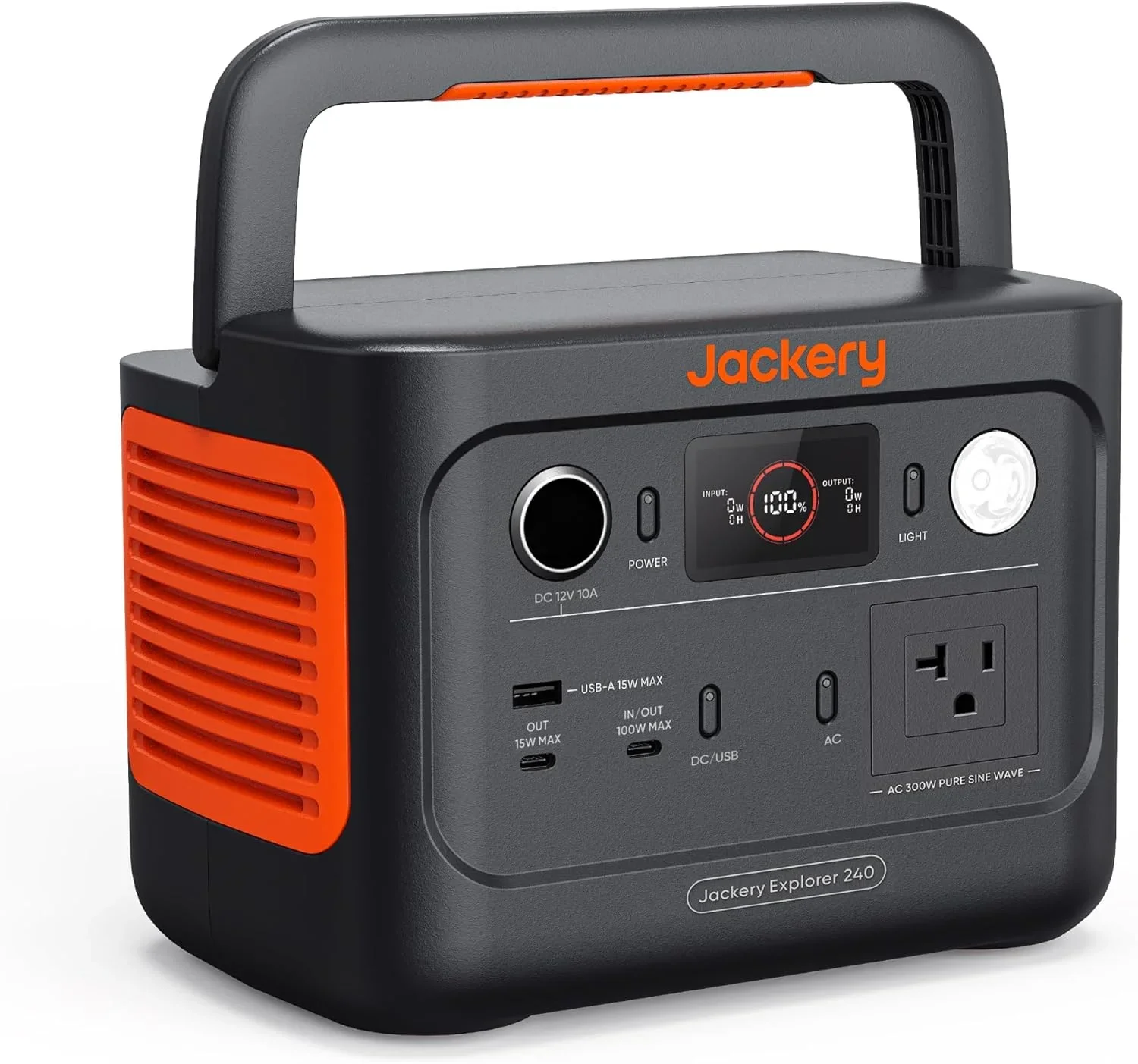
- Power: a Jackery Explorer 240 v2 power station carries a night of fan, phone charging, and a light in either SUV; top it off the 12V socket while you drive between camps and the starter battery never meets your accessories.
- Airflow: screened window openings at opposite corners for cross-flow - the wide three-row glass in both vehicles is a bonus here, more openings to catch a breeze.
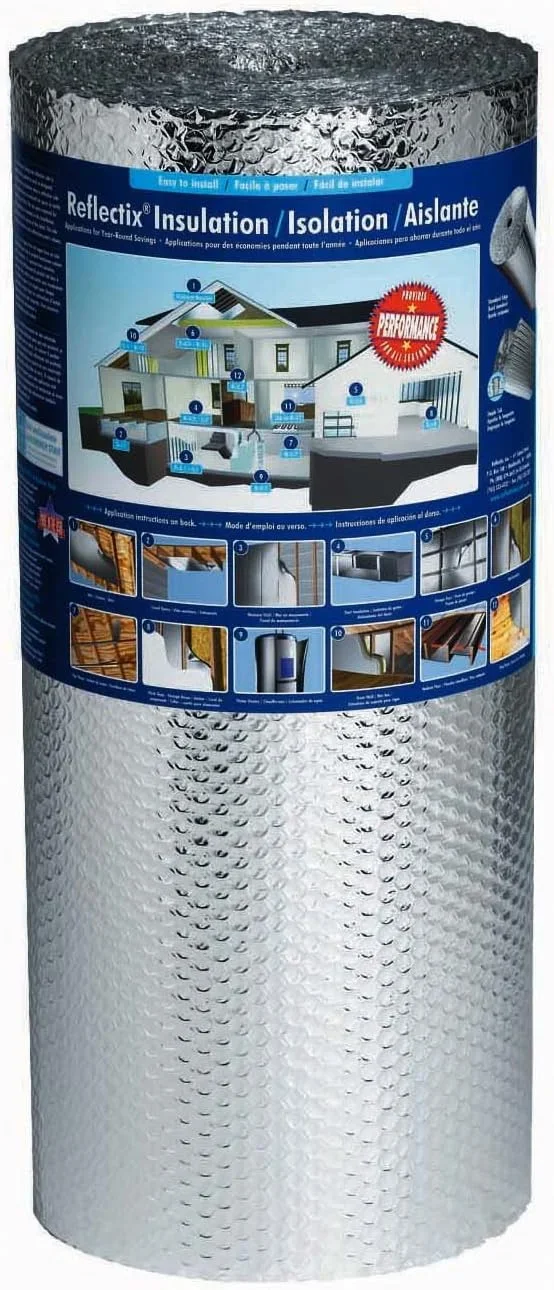
- Privacy and heat: Reflectix double-reflective insulation panels cut once per window and labeled; the Highlander needs slightly larger panels for its longer greenhouse.
Because the systems are the same, you can buy the sleep-and-power kit before you have picked the badge - it transfers between the two without modification, which is handy if you cross-shop right up to the dealer lot.
Price and warranty - the Sorento's quiet trump card
Step off the cargo floor and the ownership math swings hard toward Kia. The Sorento starts thousands below the Highlander trim-for-trim, per Kelley Blue Book's comparison - a real gap that funds the entire camping build with money to spare. For a family watching the budget, the smaller vehicle is not a compromise; it is the one that leaves cash for the trip itself.
Then there is the coverage, and it is not close:
Kia backs the Sorento's powertrain for 10 years or 100,000 miles; Toyota covers the Highlander's for 5 years or 60,000 - the longest mainstream warranty in the class against a middle-of-the-pack one. For a camping vehicle run hard on seasonal mileage and washboard approaches, that decade of engine-and-transmission insurance is worth real money.
The counterweight is resale and reputation: the Highlander's legendary reliability record and stronger resale value claw back some of that price gap over a long ownership, per Kelley Blue Book. So the honest read is that the Sorento wins the day you buy on price and warranty, while the Highlander narrows it over ten years on resale - pick the horizon that matches how long you keep vehicles.
Towing and the rough approach to camp
Two more numbers matter if your camping runs past the paved campground. On towing, the Highlander pulls up to 5,000 pounds to the Sorento's 4,500 on its turbo trims, per U.S. News and Kia - a 500-pound margin that only matters if you tow near the limit with a teardrop or loaded utility trailer. Under that, both pull a small trailer fine and the gap is noise.
On the approach itself, the smaller Kia quietly answers back. The Sorento rides 8.2 inches off the ground to the Highlander's 8.0, per Edmunds, and its shorter 189.0-inch body means a better break-over angle over ruts and rocks. Neither is a serious off-roader - these are family crossovers, not trucks - but for the graded forest-service road to a dispersed site, the Sorento's shorter, slightly taller body is marginally more at home.
Weight is the quiet variable behind both numbers. The Sorento is the lighter vehicle, so its 4,500-pound tow rating and its climb up a loose grade both ask less of the drivetrain than the heavier Highlander does of its 5,000, per Kia and U.S. News figures. That cuts the other way when you actually hitch a trailer: a lighter tow vehicle is more affected by what it is pulling, so the Highlander's extra mass and 500-pound rating give a steadier tow near the limit. Light-and-nimble for the approach, heavy-and-planted for the trailer - the size gap decides this section the same way it decides the scenarios.
The read: tow-heavy campers lean Highlander for the 500-pound cushion; rough-road, dispersed-site campers lean Sorento for the length and clearance. Most families do neither near the limit, in which case this section is a wash and you decide on the scenarios above.
The verdict - buy the size that fits your trip
This is not a case of one vehicle being better. It is a case of two different sizes, and the winner is whichever is right-sized for the camping you actually do. Tally the scenarios: the solo-or-couple weekender goes to the Sorento (nimbler, cheaper, thriftier), the gear-and-dog haul goes to the Highlander (84.3 cubic feet and a longer floor), and the family-of-five run with the third row up is a genuine draw that your kids' ages break.
Buy the Kia Sorento if you camp light, park tight, value the 10-year warranty, and want the roomier third row for kids (29.6 vs 27.7 inches). Buy the Toyota Highlander if you routinely haul big cargo loads, want the extra 9 cubic feet and 500 pounds of towing, and plan to keep it a decade for the resale. Both sleep two adults inside.
The mistake is defaulting to the bigger Toyota because bigger sounds safer. For a lot of camping families, the right-sized Sorento is the smarter tool - it does the common trips better and costs less doing them. Match the vehicle to the trip you live, not the brochure's biggest number, and either one lands you at a good campsite. If your shortlist runs wider, our Honda Pilot vs Toyota Highlander comparison runs this same scenario lens against the segment's other big default.