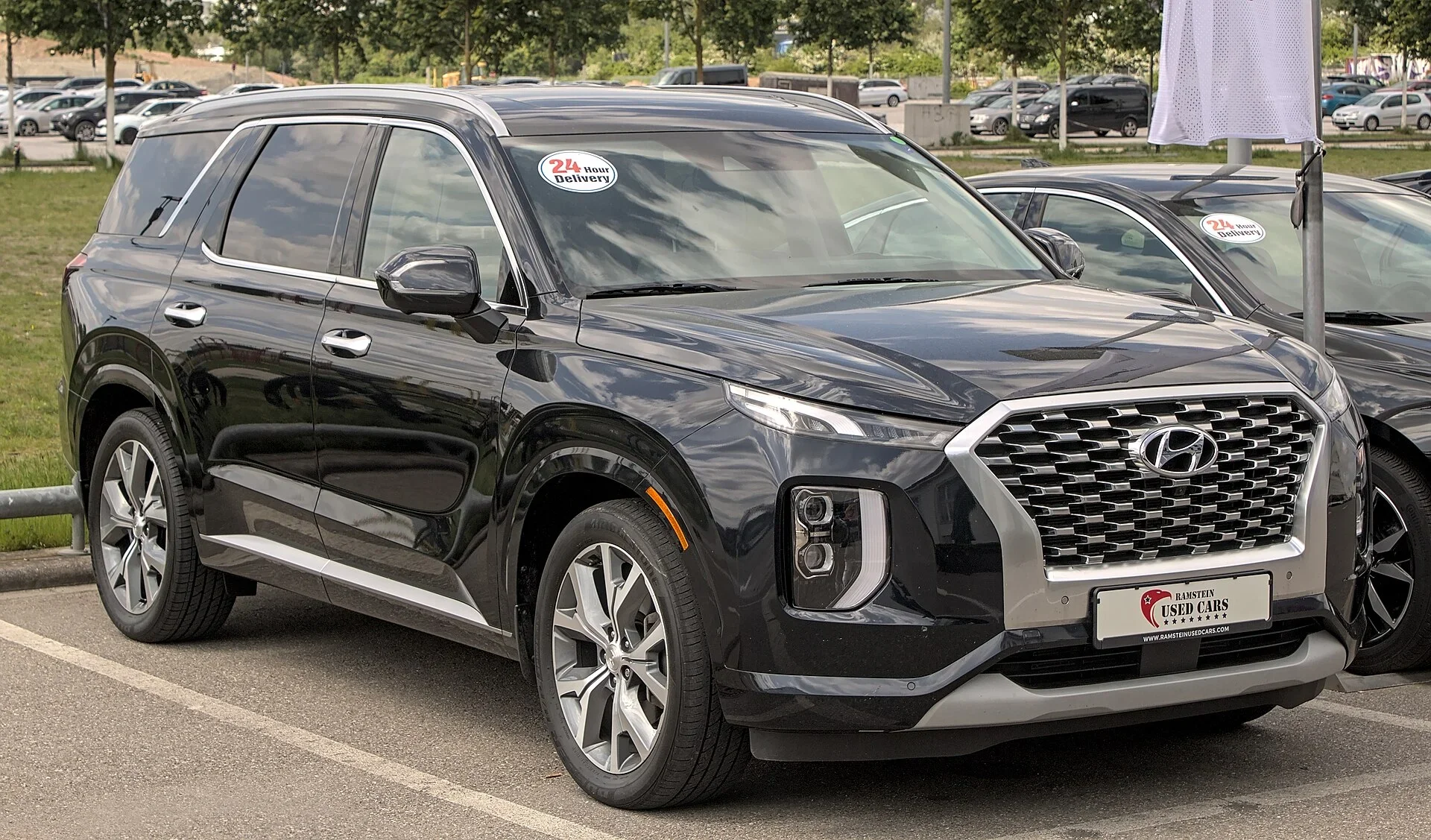
Is the Palisade really big enough to sleep in?
Short answer: yes, and the Hyundai Palisade is one of the best three-rows going for it. Fold both rear rows on the 2023-2025 model and you get 86.4 cubic feet of genuinely level floor, per Hyundai-derived figures - a big, flat box that turns into a two-adult-capable bed with less building than most SUVs its size.
But 'big enough' isn't the whole question, and an installer's job is the rest of it. The Palisade earns its reputation on flatness, not just volume, which is what actually matters when your spine is on the surface. The two things I flag before anyone builds are the seating layout - captain's chairs behave differently from a bench - and the outlet, which is smaller than the roomy interior makes you expect.
This page walks the cargo numbers Hyundai publishes, how flat the floor really folds, the captain's-chair catch, the length question Hyundai won't answer, the power reality, and the platform build - so you can judge the fit before you spend on a mattress or a sheet of plywood.
An installer reads a cargo bay differently than a brochure does. The number that sells a family SUV - three rows, seven or eight seats, a big advertised cubic-foot figure - tells you almost nothing about whether a body lies flat back there. What matters for sleeping is a short list: how level the folded floor comes out, how long and wide the usable surface is, where the pinch points sit, and whether you can run the small loads a night needs. The Palisade scores well on most of that list, which is why it keeps coming up when people shop a three-row they can also sleep in. The rest of this page treats it as a build surface and works down that checklist one item at a time.
What does Hyundai actually publish for cargo?
Start with the official box. Hyundai lists the 2023-2025 Palisade at 18.0 cubic feet behind the third row, 45.8 cubic feet behind the second with the third folded, and 86.4 cubic feet behind the first row with both rear rows down, per Hyundai-derived specs carried by US News. Those are the real numbers for the current LX2 car.
Translate them into a bed:
- 18.0 cubic feet seats-up is luggage space, not a sleeper.
- 45.8 cubic feet with only the third row folded is a short platform - a diagonal solo bed at best.
- 86.4 cubic feet with both rows down is the sleeping number, and it's a generous one for the segment.
Eighty-six and a half cubic feet is right at the top of the mainstream three-row class - more than a Highlander's 84.3 and close to the bigger Acadia. The volume alone tells you a two-person bed is plausible; the flatness is what makes it comfortable, and that's next.
Keep in mind what a cubic-foot rating does and doesn't measure. It's a total volume - floor space multiplied by the height up to the roofline - so a chunk of that 86.4 sits well above where anyone sleeps and never touches your build. The figure is still useful because a bigger box almost always means a longer, wider floor, but you sleep on the floor, not in the volume. Read the 86.4 as a strong signal that the flat surface underneath is generous, then confirm the surface itself with the flatness and length checks that follow. That's the difference between shopping a spec sheet and planning an actual bed.
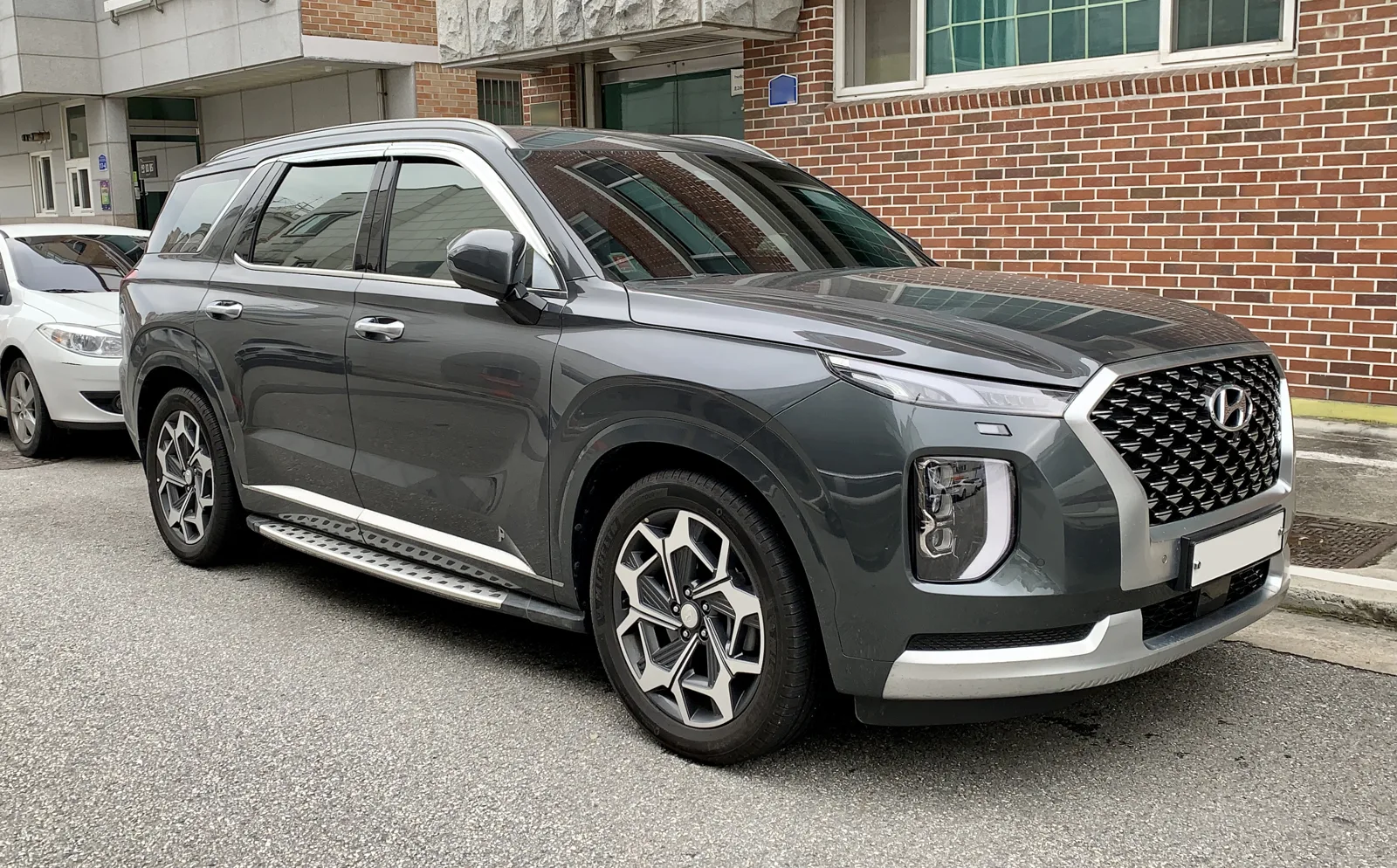
How flat is the floor when the seats fold?
This is where the Palisade wins. Fold the flat-folding second and third rows and the seatbacks drop to create a level load floor with no major step - reviewers and owners describe it as one of the flatter three-row surfaces you'll find. For sleeping, that flatness is worth more than an extra few cubic feet, because a level floor is a level bed.
The Palisade's real advantage isn't its size - it's that the folded floor comes out genuinely level, so you're softening a good surface instead of fighting a stepped one.
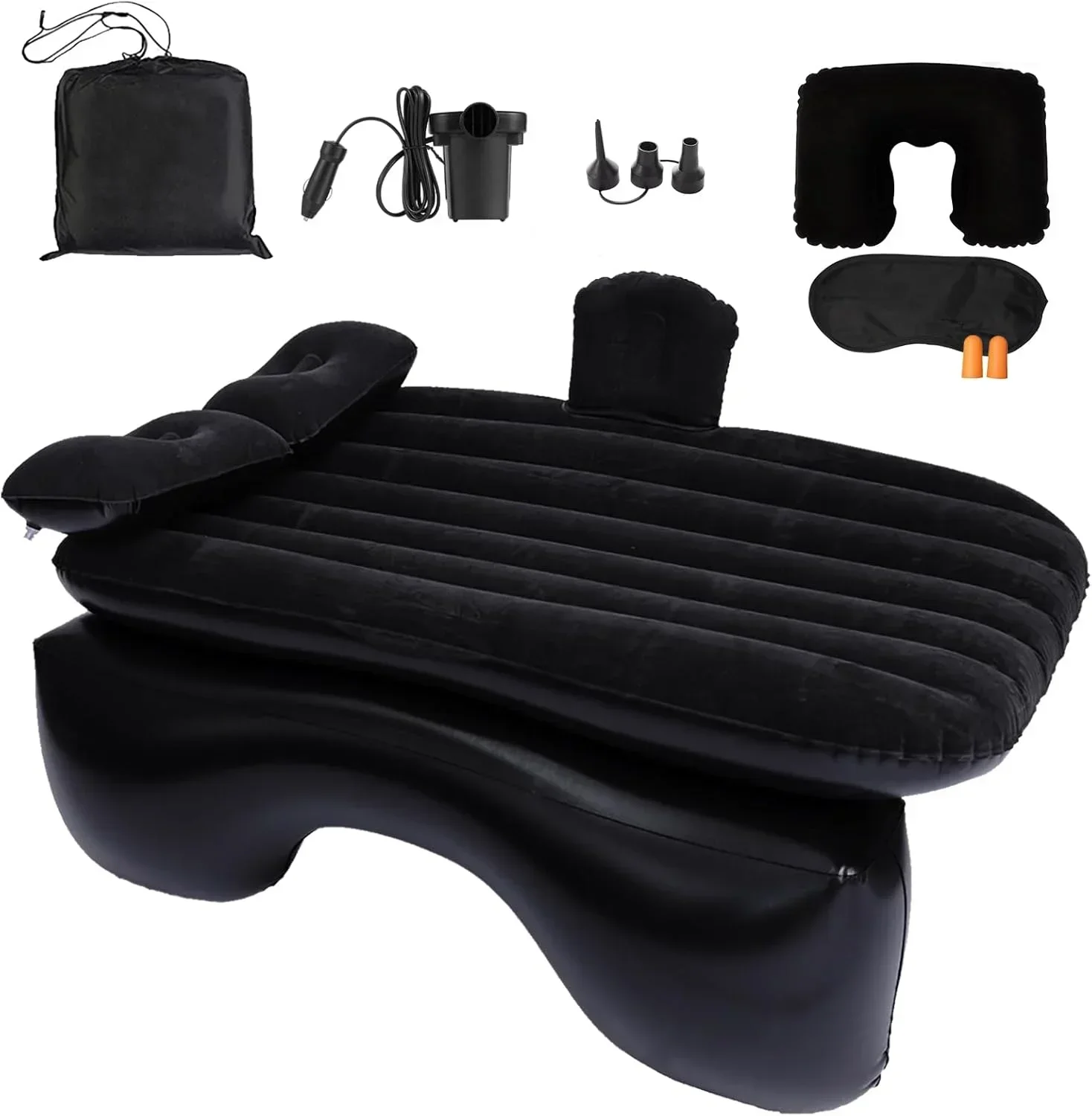
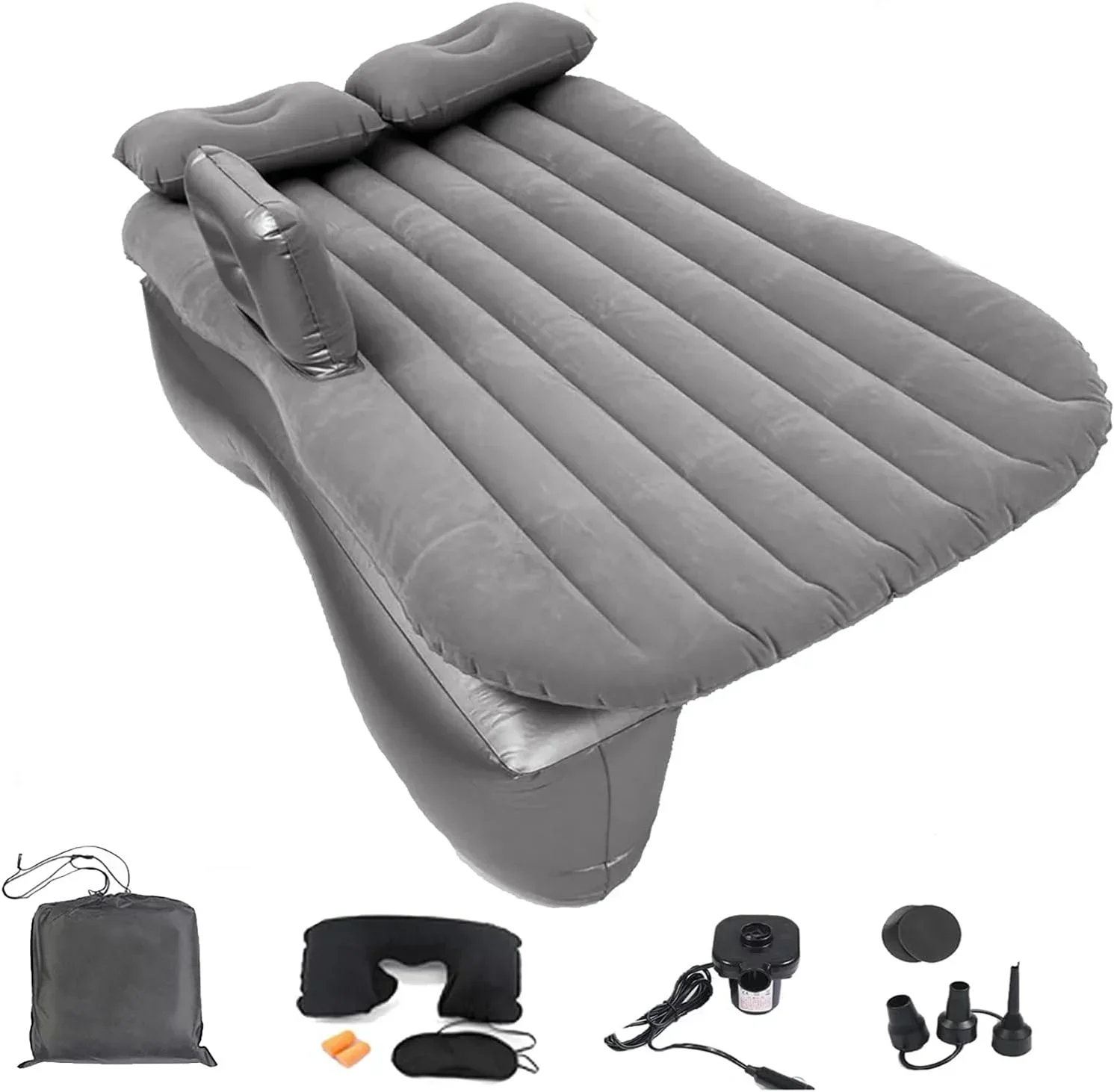
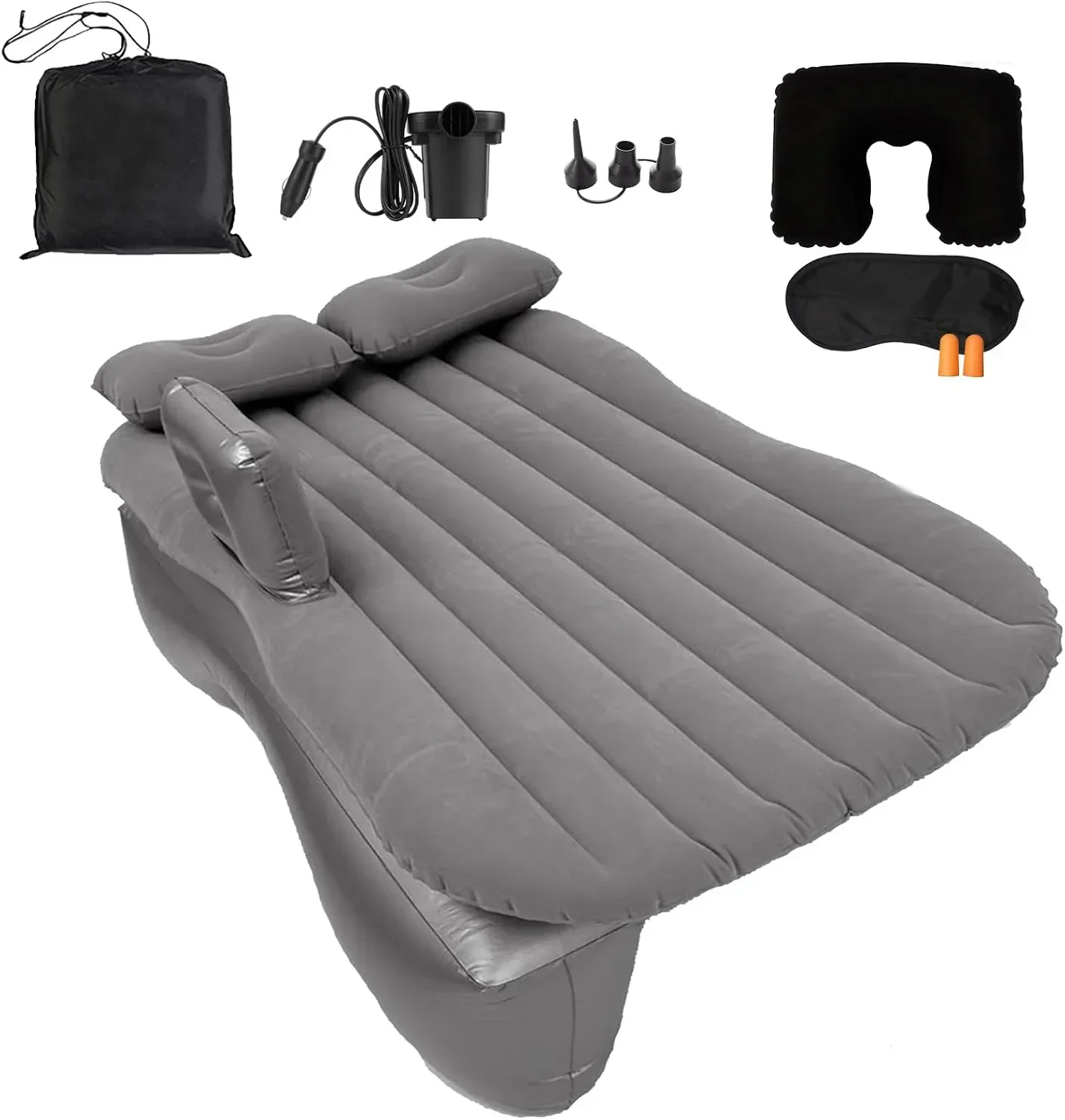
An Onirii SUV air mattress laid over that level floor gives you a flat, cushioned bed in one inflate, and on a surface this even it's finishing the job rather than rescuing it. The one thing that interrupts the flatness is the seating layout - which is the next thing to check.
Two small things stay honest about even a good folded floor. There's usually a gentle rise where the second-row seatbacks meet the front seats, and there can be a slight lip where the cargo floor meets the folded backs - neither is a step you fight, but both are why a cushion on top earns its keep. A three- to four-inch pad or a shaped SUV mattress absorbs those minor transitions completely, where a thin yoga mat would telegraph them into your hip. On a surface this level you don't need a thick platform to sleep well; you need enough loft to erase the last small irregularities, and the flatter the starting floor, the less loft it takes.
Why do the captain's chairs matter for a bed?
Here's the catch most buyers miss until they're lying in it. The Palisade comes as a seven-seater with second-row captain's chairs or an eight-seater with a second-row bench, and they fold differently. The bench folds into a more continuous floor; the captain's chairs leave a center channel - a gap between the two folded seatbacks running right down the middle where a solo sleeper's spine wants to be.
How I handle each layout:
- Eight-seat bench: the easier sleeper - fold it and you're close to a continuous plane.
- Seven-seat captain's chairs: plan a fill panel or a firm pad to bridge the center gap, or sleep to one side of it.
- Two adults on captain's chairs: each person can take one side of the channel, so the gap matters less for a couple than for a solo sleeper lying up the middle.
None of this is a dealbreaker - it's a ten-dollar foam block or a cut-to-fit panel - but you have to know your trim before you build, because a captain's-chair Palisade and a bench Palisade are two different beds.
If you're shopping used and sleeping is part of the plan, this is worth confirming on the exact vehicle before you buy, because the window sticker won't always make it obvious and both layouts wear the same badges. The practical fill for a captain's-chair channel is nothing exotic: a rigid foam block cut to the width of the gap, a folded moving blanket, or a section of closed-cell pad works, and a cut-to-fit plywood strip on a couple of supports is the tidier permanent answer. Whatever you use, set it flush with the height of the folded seatbacks so your mattress rides across the whole bay as one plane. Bridge the channel first, cushion second, and a seven-seat Palisade sleeps every bit as flat as the bench.
How long is the floor, and will you fit?
Now the honest gap: Hyundai does not publish a folded load-floor length for the Palisade, and no reliable owner tape-measure has surfaced that I'd stake a build on. So I won't hand you an inch figure - a made-up length is exactly what strands a tall sleeper with their feet on the tailgate.
What you can say honestly: 86.4 cubic feet packed into a body just under 196 inches long implies a load floor comfortably over six feet with both rows folded and the front seats slid forward - so most adults, including six-footers, should lie flat. But 'should' isn't 'measured,' so the measure-your-own step below isn't filler; it's the only way to know your body fits before you build. Take the tape from the tailgate to the back of the front seats along the floor, and you'll have the one number that actually decides it.
A few things you can do to buy yourself length before you measure. Slide the front seats all the way forward and, if the trim allows, tip their backs upright - that recovers several inches at the head end. Fold the second-row seatbacks as flat as they'll go rather than leaving them reclined, and clear the far corners so your feet aren't stopped short by trim. If your tape comes up an inch or two shy of lying square, sleeping on a slight diagonal usually closes the gap for a six-footer, since the corner-to-corner run is longer than the straight tailgate-to-seatback line. Measure with the setup you'll actually sleep in, not an empty showroom truck, because a cargo cover, a cooler, or a bin left in place quietly eats the length you were counting on.
Can two adults sleep in it?
Yes - this is where the Palisade's size pays off, and it's a real two-person bed when you set it up right. The wide, level floor takes two sleeping pads side by side, which is exactly what most compact SUVs can't offer. The details decide how comfortable that second person is.
- Bench trim: the most continuous two-person surface - level it and you're done.
- Captain's-chair trim: two adults each take a side of the center channel, which actually works well for a couple.
- Measure the wheel-well pinch - it's narrower than the tailgate opening and it's the true ceiling on two pads.
Build the platform level with the wheel-well tops and you reclaim the full width above them, which is how you get two adults comfortable rather than shoulder-to-shoulder. As three-row sleepers go, the Palisade is one of the friendliest for a pair.
Width is the quieter constraint on a two-person setup, and the wheel-well pinch is where it bites. The opening at the tailgate is wider than the channel between the wheel wells, so two pads that slide in easily at the back can crowd toward the middle of the bay. Two narrow twenty-inch pads sit more comfortably than two wide ones, and a single double pad avoids the seam that partners inevitably roll into. Building a platform level with the wheel-well tops is the move that pays off most here, because it turns the widest part of the bay into your sleeping width instead of pinching you down to the narrowest. Sort out length for both sleepers first, then width, and a couple travels comfortably.
Does the 150-watt outlet actually help?
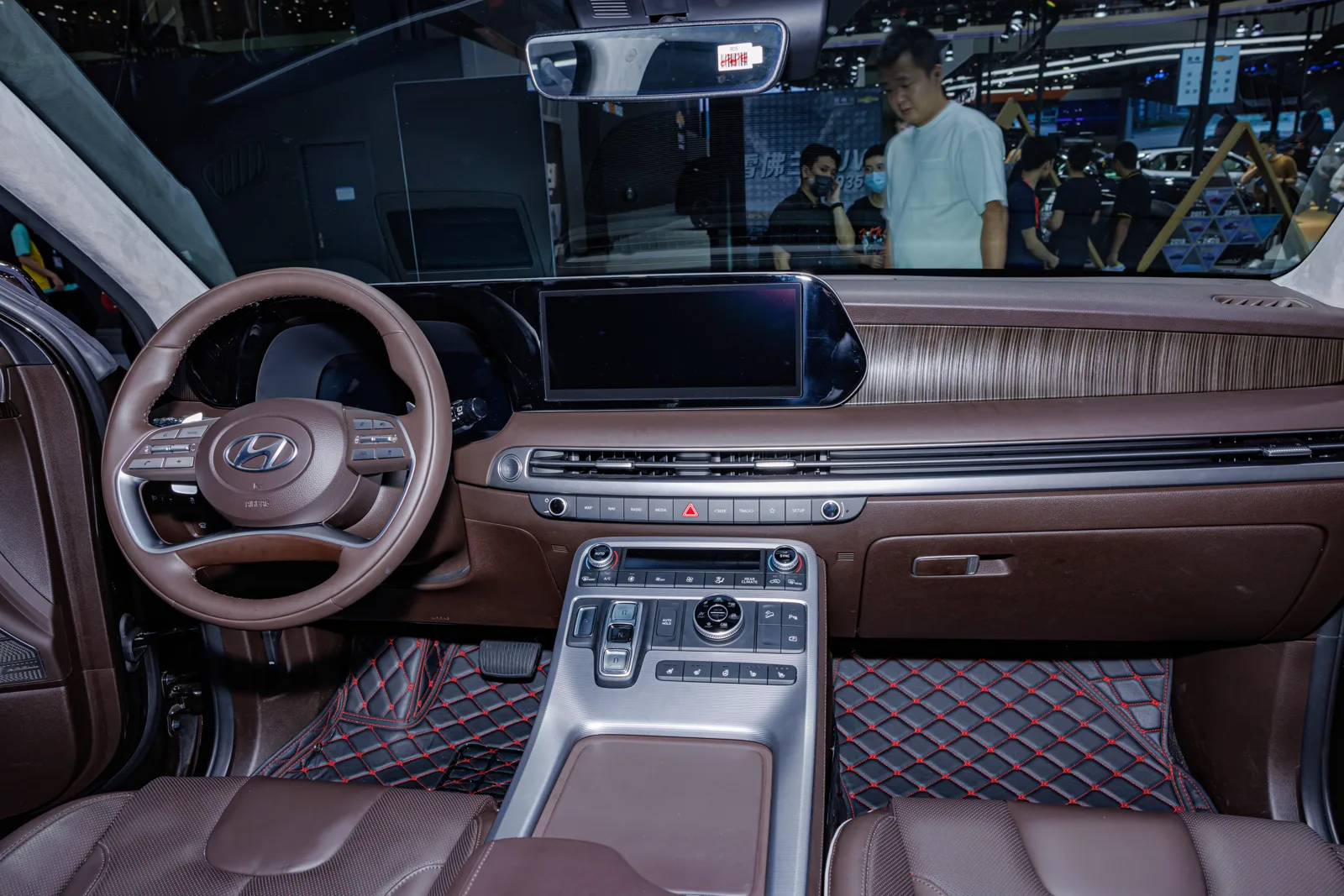
Barely, and this is the Palisade's weak spot for camping. Upper trims (Limited and Calligraphy and up) get a 115-volt household outlet on the rear of the center console rated at 150 watts, per owner and manual sources. A hundred and fifty watts runs device chargers, a laptop, or a CPAP on many units - and stops there.
- What 150 watts runs: phones, a laptop, lights, a CPAP on many models - light, steady loads.
- What it won't: a 12V compressor fridge or anything with a heating element.
- Overnight: assume the outlet is dead with the ignition off, so nothing it powers runs while you sleep.
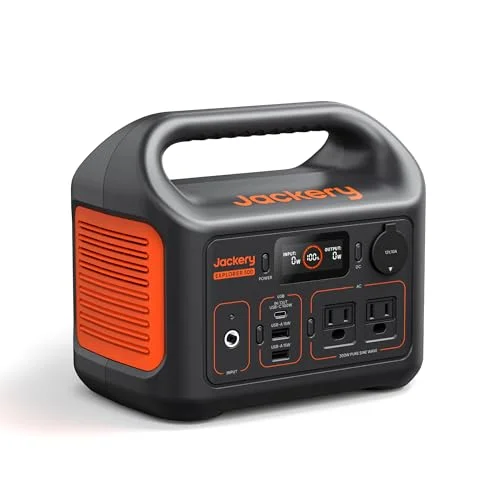
For real camp power the reliable answer is a Jackery Explorer 300 power station: it runs a fan, lights and charging off its own 292 watt-hours through the night and tops up from the 12V socket as you drive, so you're not leaning on the Palisade's little 150-watt outlet or its battery.
The math is worth doing once so the ceiling is obvious. A hundred and fifty watts is a hard cap on draw, not a reserve of energy, and it lives off the vehicle's own battery - so leaning on it overnight with the engine off risks a no-start in the morning even if the outlet still had power. A portable station sidesteps both problems: it carries its own stored watt-hours, it powers loads the 150-watt outlet can't, and it isolates your camp gear from the truck's starting battery entirely. Charge it while you drive, and the Palisade's outlet becomes a daytime convenience for topping a phone rather than the thing keeping your night alive.
Building a level platform over the folded rows
The Palisade build is one of the easier ones because the floor is already close to flat. Fold the third row, fold the second row forward, and address the two things that break the plane: the small slope near the front seatbacks and, on captain's-chair trims, the center channel.
- The simple fix: a shaped SUV air mattress that spans the whole bay and levels the minor gaps in one inflate.
- The durable fix: a low plywood platform on cross supports, cut to your measured floor, with storage underneath - split the panel at the seatback break so it drops flat without wrestling one long board past the pillars.
- Captain's chairs: fill the center channel first with foam or a panel, then lay your surface.
Level first, cushion second - always that order. On a floor this even you're doing less bridging than in almost any other three-row, which is the whole reason the Palisade is a pleasure to build in.
A couple of build details keep a good platform livable. Leave an air gap or a few vent holes under a solid deck so condensation doesn't pool against the underside, and keep the deck low enough that you still have sit-up room under the roofline - every inch of platform height is an inch of headroom you give away. Line the underside edges where the panel meets painted trim with felt or weatherstrip so nothing rattles or scuffs on the drive. If you want the bay to double as daytime seating, size the sleeping surface to the folded floor rather than the full run to the front seats, so you can flip the second row back up without dismantling the whole build.
The 2023-2025 Palisade versus the all-new 2026
One generation note that will save you from planning around the wrong numbers: the 2026 Palisade is an all-new design, a different generation from the 2023-2025 LX2 this page covers. The new one lists about 86.7 cubic feet - close, but its specs and interior packaging are its own, so don't mix its figures with the current car's when you plan a build.
- 2023-2025 (LX2): 86.4 cubic feet, level floor, the car most people own and shop used - and the one this page measures.
- 2026 (all-new): about 86.7 cubic feet on paper, but a fresh generation with its own layout - verify its numbers separately.
- Either way, confirm the trim and the seating layout, because those change the bed more than the model year does.
When you read a spec or an owner measurement online, check which generation it describes before you trust it for your truck.
This matters more than usual right now because the two generations overlap in the market. The 2023-2025 LX2 is the car filling used lots and most driveways, so it's the one most readers are actually planning a bed in, and its numbers are the settled, well-documented ones. The all-new 2026 is fresh enough that owner tape-measures and real-world camping reports are still thin, so treating its brochure figures as build-ready would be getting ahead of the evidence. Whichever you end up with, the honest step is the same: pin down the model year, the trim, and the seating layout, then measure the truck in front of you rather than the one in the spec table.
The verdict on the Palisade as a sleeper
Can you sleep in a Hyundai Palisade? Yes, and if you want a three-row that sleeps two, the 2023-2025 Palisade is about the best mainstream pick there is. The 86.4-cubic-foot hold and a genuinely level folded floor mean less building than its rivals, and the width takes two pads side by side. It's the flattest big sleeper in this comparison.
The Palisade's level floor and 86.4 cubic feet make it the friendliest three-row here to build a two-person bed in - just fill the captain's-chair gap and bring your own power, because 150 watts won't carry a camp.
Weighed against the rest of the class, the trade is clear. The Palisade asks for a little setup a bench-floor van wouldn't - the gap-fill on captain's chairs, a battery to cover the weak outlet - but it hands back a flatter, wider, longer sleeping surface than almost any three-row you can buy new or used. Those two chores are cheap and one-time; the level floor and the width are structural and permanent. For a buyer who wants one vehicle that hauls a family on Friday and sleeps two on Saturday, that's an easy trade to make.
Match the trim to how you sleep, fill the center channel if you have captain's chairs, and plan a portable battery instead of the little outlet, and the Palisade rewards you with the easiest two-adult bed in the class. The full fold-by-fold measurements are in our Palisade cargo dimensions for sleeping, and the Telluride vs Palisade comparison covers its closest twin.
Related on Auto Roamer: Hyundai Palisade camping guide; Palisade camping accessories.