Two adults sleep flat in a 2025 Palisade — but ONE option on the build sheet decides your bed
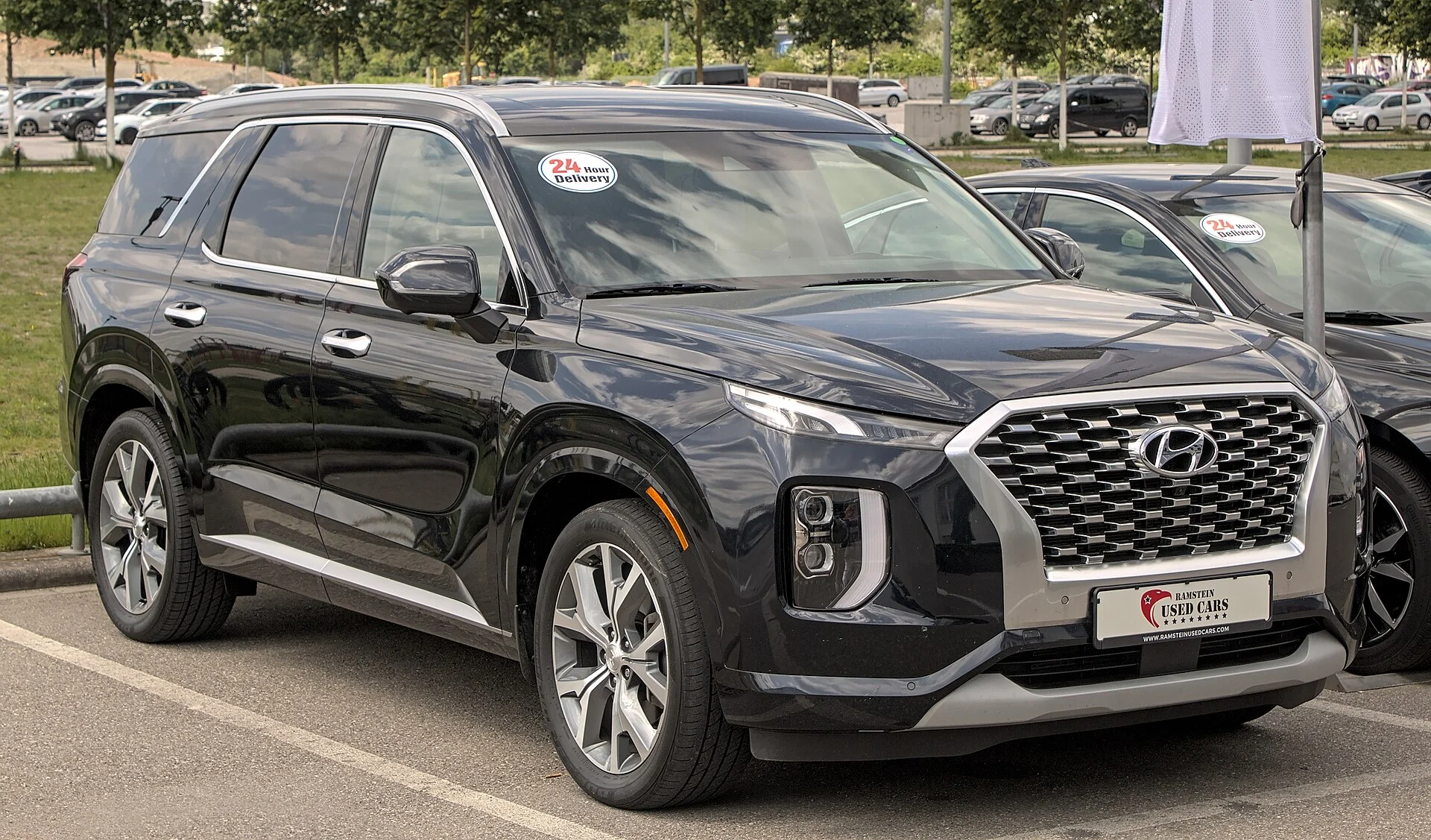
Most three-row camping guides hand you a cargo number and call it a day. The 2025 Hyundai Palisade earns a better opening, because the single most important camping decision on this SUV isn't a piece of gear — it's a no-cost line on the order sheet you may have already skipped: the eight-seat bench versus the seven-seat captain's chairs. Pick the bench and the folded floor is a flat platform two adults sleep across. Pick the captain's chairs and you inherit a channel running straight down the middle of your bed. Same SUV, same 86.4 cubic feet — completely different night.
So before any mattress: fold the second AND third rows and the Palisade opens 86.4 cubic feet (Hyundai's published figure; owner tape-measures run a hair higher at ~86.7), and the floor goes nearly flat — not glass-flat. A camping reviewer who slept in one found a 6′3″ (190 cm) adult fits comfortably diagonally, and that a 5–7 cm foam or air topper is what turns the folded seatbacks into a real bed. Skip the topper and you sleep over the seam.
I won't dress this up with a road trip I didn't take. The numbers below come from Hyundai's published specs, U.S. News and Edmunds, Car and Driver, and the owner threads and camping reviews where Palisade buyers actually measure their floors. Get the seating call and two quirks right — the bed-leveling and the tiny 150-watt outlet — and the Palisade is one of the best-value ways in America to put a whole family near a trailhead and still sleep two adults flat in back.
Are you a Palisade camper? The three-question fit test before the gear list
A compact crossover makes camping a yes/no question of fit. A Palisade makes it a question of how you'll use the three rows — and that changes the gear list completely. Run yourself through three questions first.
- Are you sleeping two, or is the family aboard? Fold both rear rows and two adults sleep flat in 86.4 cu ft — the Palisade's sweet spot. Travel four-up and sleeping inside stops being the plan: the move is two adults in back and the kids in a ground or rooftop tent, with the Palisade as the dry base and kitchen. Decide which camper you are, because it sets everything from the mattress size to whether you even fold the third row.
- Do you need to keep the second row up? With the third row folded you still have 45.8 cu ft — enough for one person to sleep behind a standing second row while a passenger rides shotgun. That's the road-trip configuration the compact SUVs can't offer: a usable bed AND a seated passenger at the same time.
- How far off pavement, and how often? A handful of gravel weekends a year and front-drive is fine. Wet grass, muddy site entrances and snow mean you want the optional HTRAC all-wheel drive — the upgrade that actually changes where you can camp, far more than the XRT's looks do (more on that trap below).
If you answered ‘two sleepers, fold everything, a few trips a season,’ the Palisade is squarely your camper. If you answered ‘a family of five every weekend,’ be honest: you're buying a base camp with a great bed for two, not a four-person bunkhouse — and that's still a genuinely good reason to own one.
Bench or captain's chairs: the no-cost seating call that makes or breaks your bed
On most SUVs the trim choice is about screens and leather. On a Palisade the choice that decides your camping life costs nothing and hides in the seating section: the eight-seat bench or the seven-seat captain's chairs. Get this right before you spend a dollar on a mattress, because no topper fully fixes the wrong pick.
- Eight-seat bench (standard on SE; a no-cost option on SEL and SEL Premium). The second-row bench folds into a continuous flat surface, so the sleeping floor is one uninterrupted platform from the front seatbacks to the liftgate. If you sleep in the car often, this is the configuration to order — full stop. It's the cheapest upgrade in this entire guide because it's free.
- Seven-seat captain's chairs (standard on SEL Premium and up, XRT, Limited, Calligraphy). The two chairs leave a gap running down the centerline where they meet. A flat mattress sags into it; you wake up rolled toward the middle. It's fixable — bridge the channel with a foam block or a footwell cushion first, then your topper — but it's a build step the bench owner never thinks about.
The trim ladder itself (SE, SEL, SEL Premium, XRT, Limited, Calligraphy) mostly buys comfort and tech that don't change where you sleep. The two things that DO — the bench-vs-chairs floor and the HTRAC all-wheel drive — you can't add after purchase, so settle them at the order desk. The false economy to avoid: chasing leather and a panoramic roof on a Calligraphy while accepting captain's chairs you'll spend every trip bridging, when an SEL with the free bench sleeps better for thousands less.
The three cargo numbers that size your bed — and where the floor actually steps
Hyundai's spec sheet says ‘spacious.’ The numbers a camper plans a bed around are three, not one, because the Palisade's whole appeal is that you choose how much of it to fold:
- 18 cu ft behind the third row, all seats up — a cooler and duffels with the whole family aboard.
- 45.8 cu ft with the third row folded — a solo sleeper's full rig with a passenger riding up front.
- 86.4 cu ft with both rear rows down — the two-adult bedroom (owner forum measurements: ~86.7).
The catch is the one every folding-seat SUV has, and the Palisade is no exception: the folded third-row seatbacks sit a touch proud of the cargo floor, so the surface is nearly flat, not glass-flat. There's a low step where the third-row backs meet the floor, plus — if you ordered captain's chairs — the center channel from the section above. Both disappear under a 5–7 cm foam or air topper; ignore them and you feel the seam at 2 a.m.
What the Palisade gives you that a compact never will is a genuinely tall, square box — standout sit-up height and a flat floor roughly seven feet long with both rows down, so even a six-footer who lies a touch diagonally isn't fighting for length. Measure your own floor with the front seats set where you'd actually sleep before you buy a mattress; the forum number is a starting point, the number in your specific car is the one the bed has to satisfy.
Air mattress or plywood platform: matching the build to the Palisade's tall, square floor
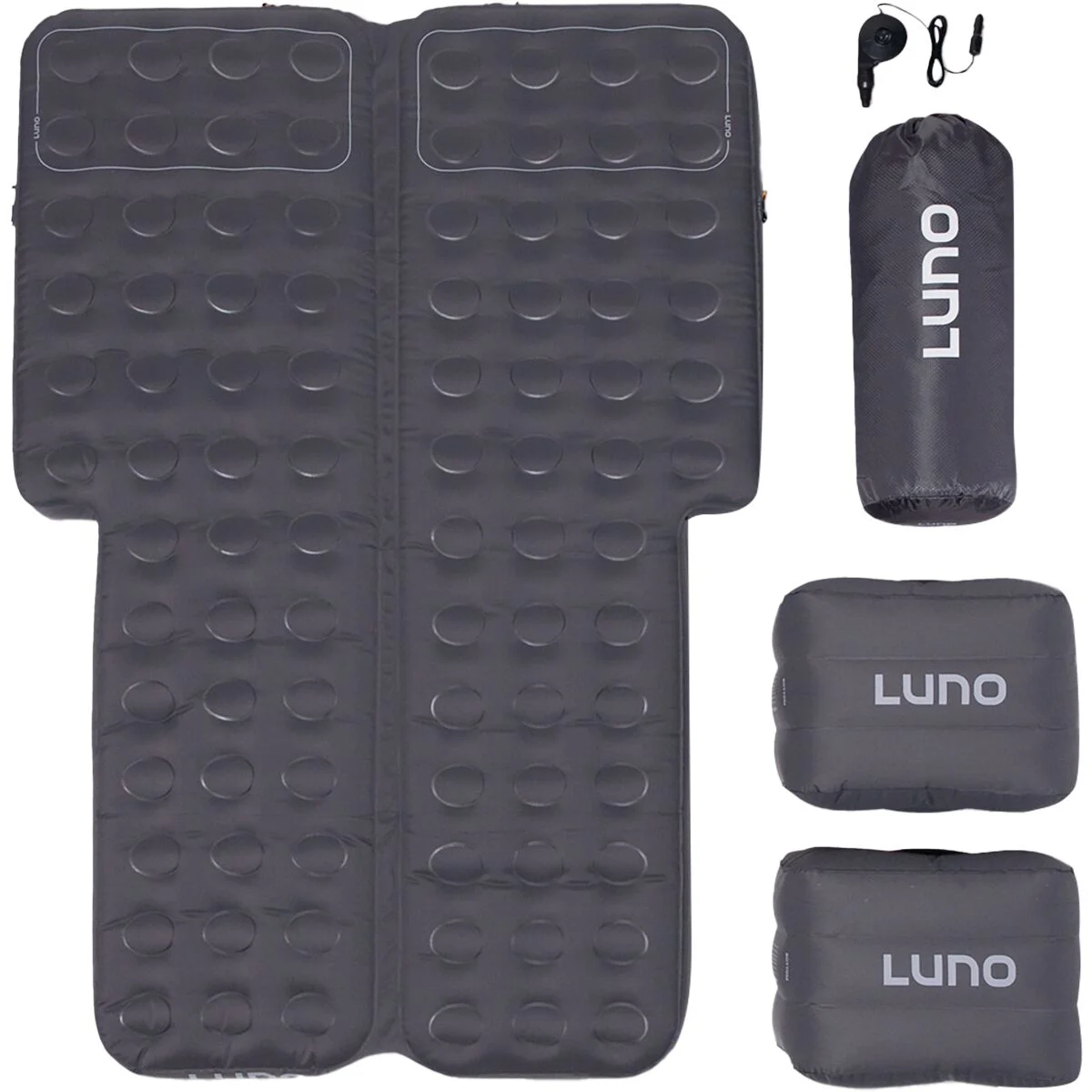
The Palisade's tall, square cargo box suits both common builds — pick by how often you camp, and remember the captain's-chairs owner has one extra job (bridging the channel) before either build sits flat.
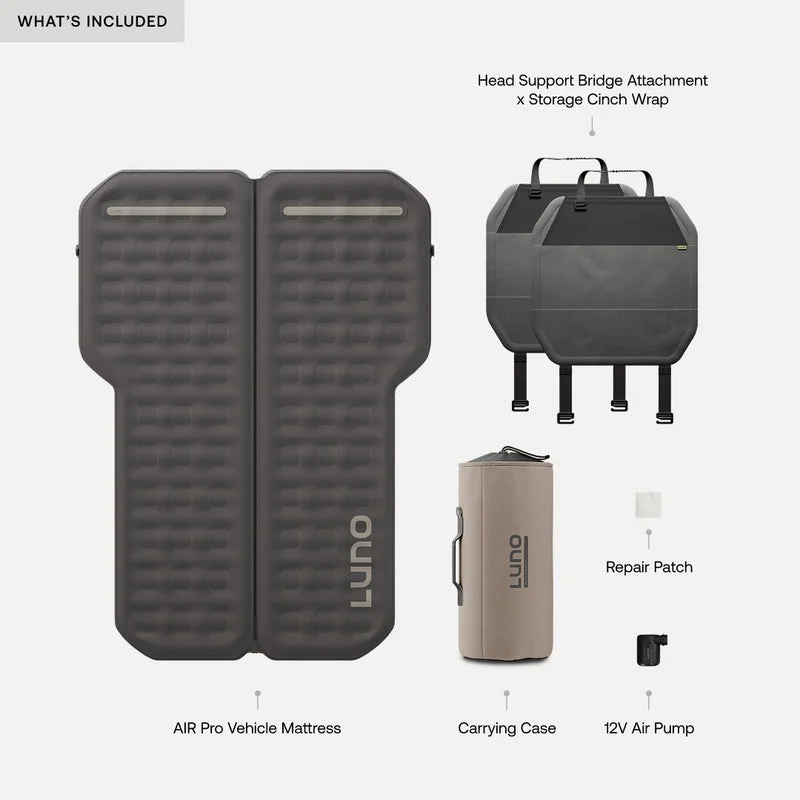
Fold-flat SUV air mattress (weekenders). The Luno Air Mattress 2.0 is the pick three-row owners cite most: its foam-bottom design bridges the third-row step and fills the footwell, turning the uneven 86.4-cu-ft floor into a flat two-person bed in about a minute, then deflating into a stuff sack so Monday's school run is normal. No tools, no commitment. On a captain's-chairs car, drop a foam block in the center channel first so the mattress doesn't sag into it.
Plywood platform with foam on top (regulars). More work and semi-permanent, but flatter, and the space underneath becomes tailgate-access drawers. The Palisade's roughly seven feet of flat-ish floor with both rows down is long enough that a platform built level with the top of the folded seatbacks gives a tall camper a genuinely flat, full-length bed — and it makes the captain's-chairs channel irrelevant, because the deck spans it. The right answer for someone who sleeps in the car most weekends.
Whichever route: level the floor first, decorate second. A fitted sheet and a real pillow cost almost nothing and beat a sleeping bag sliding around on bare seatbacks. Solo campers behind a standing second row (45.8 cu ft) can skip both builds and run a thick self-inflating pad — the simplest setup in this guide.
The 150-watt trap: why the Palisade's outlet won't run your fridge, and what does
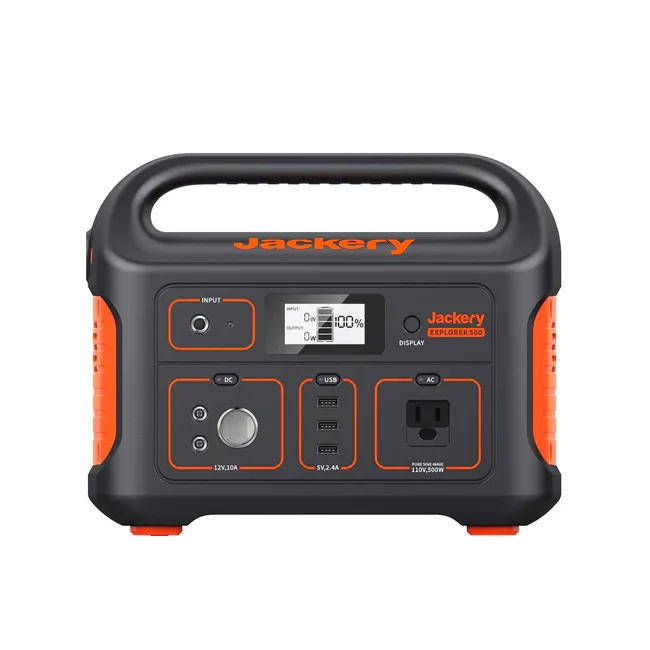
Skip the marketing. The number that matters is the one nobody prints big: the Palisade's available household-style AC outlet is rated 115V / 150 watts. That runs a laptop charger, a phone bank, a small CPAP-adjacent load — and that's the ceiling. A 12-volt compressor fridge spikes well past 150 W on its startup cycle, so plugging one into that outlet trips it or simply won't start the compressor. Treat the 150-watt outlet as a convenience, not a power plan.
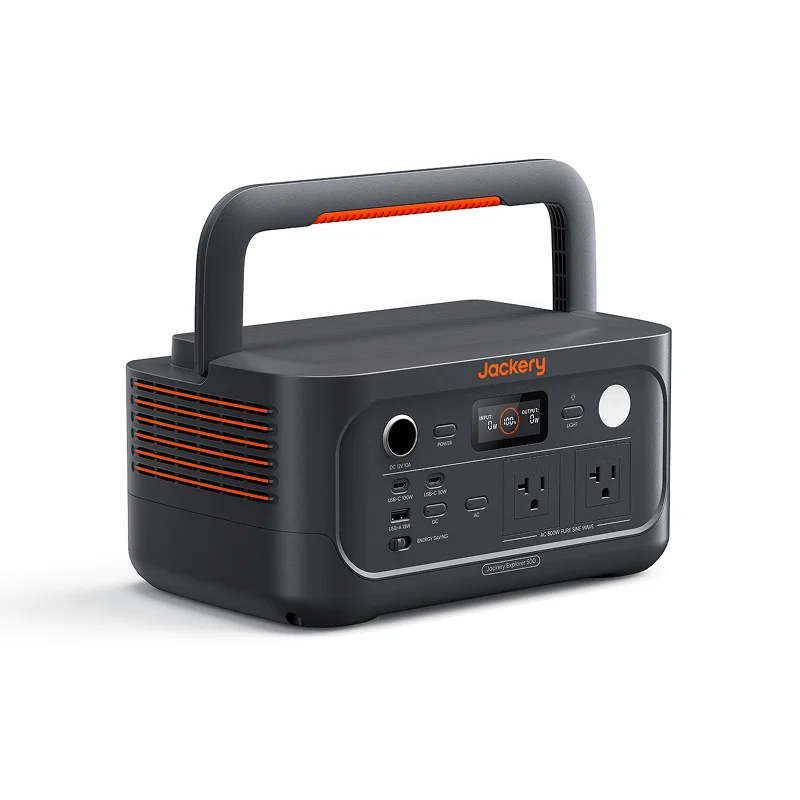
For a fridge or a work laptop off-grid, the right tool is a dedicated 500–700 Wh LiFePO4 portable power station that recharges from the 12V socket while you drive or from a folding solar panel at camp. The Jackery Explorer 500 (around 518 Wh) is a common owner pick because it runs a small fridge overnight and charges every device without touching the starter battery. Size it to the load: 500 Wh covers lights, fans and phones for a weekend; a fridge cycling all night wants more headroom or a mid-trip recharge.
The golden rule holds on any trim: keep heavy camp loads OFF the 12V starter battery so the 3.8-liter V6 always cranks in the morning. And never idle the V6 overnight to power anything — in an enclosed space that's a carbon-monoxide risk you never take. A dead starter at a remote trailhead turns a good trip into a recovery call.
Computed runtime: how long each capacity this page states lasts against each draw it states. Nothing here is a spec-sheet import — it is arithmetic on figures this page already states (700 Wh, 518 Wh, 500 Wh, 150-watt). The formula is the plain one: hours = watt-hours ÷ watts. No conversion-loss derating is applied, because this page states none — real-world output will be lower than the division.
| What the page states | Capacity | at 150-watt |
|---|---|---|
| …the right tool is a dedicated 500–700 Wh LiFePO4 portable power station that recharges from the 12V socket… | 700 Wh | 4.7 h |
| The Jackery Explorer 500 (around 518 Wh) is a common owner pick because it runs a small fridge overnight and… | 518 Wh | 3.5 h |
| …500 Wh covers lights… | 500 Wh | 3.3 h |
Read down the 150-watt column, because that is the choice: 700 Wh runs 4.7 h where 500 Wh runs 3.3 h — at the same draw the larger capacity beats the smaller by 1.3 h. Every column to the right is that same choice at a heavier load, down to 3.3 h at 150-watt.
Keeping a family-sized cargo box clear after dark and reachable by day
The whole trick to living in a vehicle is keeping the bed clear after dark and the gear reachable by day — and a three-row gives you more native storage to work with than a compact ever does. The Palisade hands you a deep center-console bin with a pass-through, big door pockets, and an under-floor cargo well behind the third row — the natural home for the recovery strap, jumper pack and tools you want aboard but never touch at 2 a.m.
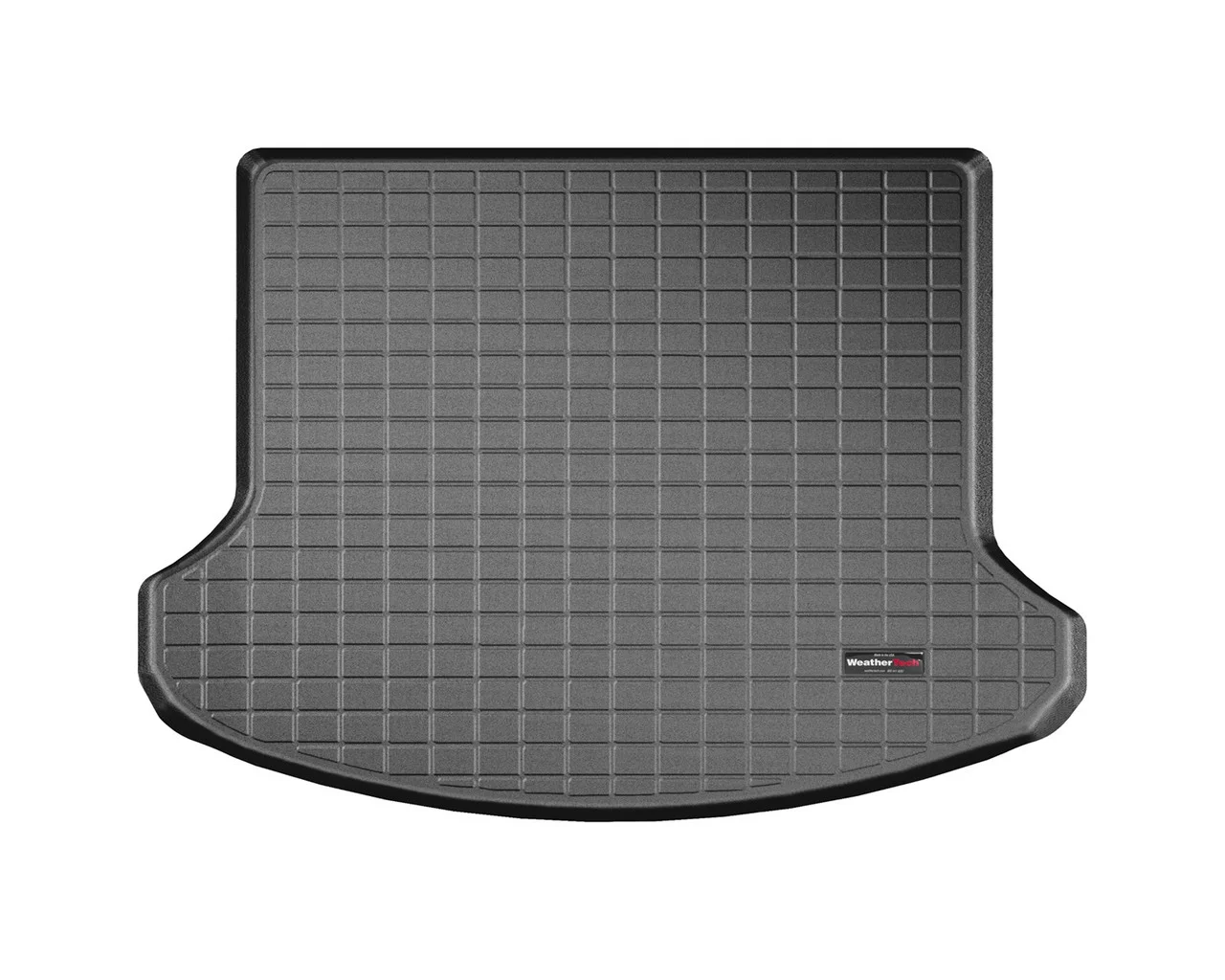
On the air-mattress route, the move is collapsible bins that slide to the footwells and the front seats at night, then back to center for driving. A laser-cut WeatherTech Cargo Liner earns its keep here: a camping cargo area gets muddy and wet, and a molded tray you can hose out protects the carpet for resale day. Favor soft duffels over hard cases — they squash into the wheel-well gaps a family SUV has in abundance, and that captured volume is exactly why a Palisade swallows a weekend's gear without crowding the bed.
Then go up. With roof rails, the roof is the right home for a cargo box or a rooftop tent once the family's gear outgrows the cabin — and on a four-up trip, a rooftop tent for the kids is what turns the 86.4-cu-ft floor back into a clean two-adult bed. Pack the heavy bins low in the under-floor well and forward over the rear axle so the loaded Palisade stays settled, not tail-heavy, on washboard forest roads.
Why all that glass fogs fast — and the cheap fix for the Palisade's greenhouse cabin
Two adults breathing for eight hours in a sealed cabin exhale enough moisture to fog every window and leave the bedding damp — and the Palisade has a lot of glass to fog. The fix is cross-ventilation: crack two windows on opposite sides so air actually moves rather than stagnating.
On cold, still nights — when condensation is worst — run the fan continuously on its lowest setting and wipe the inside of the glass before you sleep; a dry start beats fighting fog at 3 a.m. A moisture-absorber tub tucked in the under-floor well pulls the worst of the damp out overnight. The Palisade's big greenhouse is a glorious place to wake up to a view — just plan for the moisture it invites.
Hot afternoon, freezing night: taming the Palisade's greenhouse with covers, not the V6
The Palisade's generous glass is great for the view and terrible for holding a temperature, so managing the glass is most of the climate battle. A full set of reflective covers — magnetic panels or cut Reflectix — is the highest-value comfort upgrade per dollar: it blocks the afternoon sun in summer and traps body heat after dark in winter, and it doubles as blackout privacy in a campsite or a rest area.
Never idle the V6 for the air conditioning while you sleep. It's a carbon-monoxide and dead-battery risk, full stop — park in shade, pop the visors and run the 12V fan instead. In the cold, lean on insulation over powered heat: a four-season sleeping bag, a wool layer and the reflective covers will carry you through most three-season nights without ever drawing from the battery you need to start the car.
The advantage a big three-row has here is air volume — a cabin this size warms and cools more slowly than a compact crossover, so once you've handled the glass, the Palisade holds a comfortable temperature longer than a small SUV does. The glass is the whole job; cover it and the box does the rest.
The XRT badge trap: every 2025 Palisade rides on the same 7.4 inches
Here's the spec that's marketing versus the one that matters. Every 2025 Palisade — SE through Calligraphy, XRT included — rides on the same 7.4 inches of ground clearance. The XRT adds 20-inch black wheels, dark exterior trim, black skid-plate-look pieces and side steps; it's an appearance package, not a low-range trail trim. (The taller 8.4-inch setup belongs to the 2026 XRT PRO, a different vehicle entirely — don't let an online spec for that one talk you into the 2025 XRT expecting trail capability.)
What that clearance and the optional HTRAC all-wheel drive actually handle is most of what car camping needs: gravel forest roads, packed dirt, muddy site entrances, light farm tracks, snowy lots. With HTRAC and a multi-terrain mode it's surefooted on slippery surfaces. The honest limits are a road-biased unibody crossover with no low range: deep ruts, rock gardens and serious technical trails are out, and the long wheelbase makes tight turnarounds a chore.
For the gravel-snow-and-mud reality of dispersed camping, though, it reaches plenty of trailheads, hauls the whole family, and tows up to 5,000 lbs when equipped — enough for a real teardrop or a small camper, which is a capability the compact crossovers in our other guides simply don't have. The takeaway: spend on HTRAC if you camp where it's wet, and treat the XRT as a look, not a leg-up.
Palisade vs the rivals: when this is the three-row to sleep in
The Palisade isn't the only family box on this site — its rivals get their own guides: the smaller Kia Sorento, the longer Mazda CX-90, and the perennial Toyota Highlander. So where does the Palisade earn the pick?
- Versus the Kia Telluride (its twin under the skin): they share a platform and the same ~86 cu ft, so that's mostly a styling, incentives and warranty call — both sleep two adults flat, both have the captain's-chairs channel to plan around, both top out at the same 150-watt outlet. The Palisade edges it when the flat-floor bench is offered free.
- Versus the Highlander and other three-rows: the Palisade counters with a tall, square box, standout sit-up height and a strong value stack — lots of standard comfort and a long warranty for the money. On the floor and the outlet they're broadly even; the Palisade wins on price-for-content.
- Versus a compact crossover (the RAV4s and CR-Vs in our other guides): the Palisade's whole-family capacity, ~7-foot flat floor, sit-up height and 5,000-lb tow rating are in a different league — you trade fuel economy and tight-trail nimbleness for a real base camp that also carries five.
- Where it wins outright: value. The Palisade stacks standard comfort, tech and a long warranty against pricier three-rows, and the eight-seat bench — the configuration that gives you the flat bed — is free. Few three-rows give you the best camping floor at the lowest seating cost.
The rule of thumb: if you need to move a family AND sleep two adults flat, and you want it for sensible money, the Palisade is the smart three-row. If it's just one or two of you on tight forest roads chasing mpg, read the compact guides instead — that's what they're for.
Three Palisade-specific mistakes campers make (and how to dodge each)
A handful of mistakes come up again and again on the Palisade owner forums. Knowing them ahead of time saves a miserable first night:
- The captain's-chairs channel. Seven-seat owners (SEL Premium, XRT, Limited, Calligraphy) buy a flat mattress and discover a gap running down the middle of the bed where the two chairs meet. Bridge it with foam first, or order the eight-seat bench (free on SE, SEL and SEL Premium) if you sleep in the car often. This is the Palisade's signature trap, and it's decided before you ever buy gear.
- Planning power around the 150-watt outlet. Owners buy a fridge expecting to plug it into the in-car AC outlet, then find 150 W won't start the compressor. Bring a power station; use the outlet for phones and a laptop.
- Trusting the XRT badge for trail capability. It's 7.4 inches and a look package — capable on gravel and snow with HTRAC, not a rock crawler, and not the 8.4-inch 2026 XRT PRO. Match the trip to the vehicle.
Notice the pattern: two of the three are order-sheet decisions (the bench and HTRAC), not gear problems. The single best thing you can do before buying a Palisade to camp in is to settle the seating and the all-wheel-drive call at the dealer, because those are the two things no amount of money fixes after you drive off the lot.
Spec snapshot: the Palisade numbers that set your bed and your build
The figures a camper actually plans around, pulled from Hyundai's spec sheet, U.S. News, Edmunds and owner measurements — with the owner-measured item flagged honestly:
| Spec | Figure | Source / note |
|---|---|---|
| Max cargo (both rear rows folded) | 86.4 cu ft | Hyundai; owner-measured ~86.7 — the two-adult bedroom |
| Behind 2nd / behind 3rd row | 45.8 / 18 cu ft | solo rig with a passenger up front / family-aboard storage |
| Flat-sleep fit | 6′3″ (190 cm) diagonally | camping review; level the seam with a 5–7 cm topper |
| Second-row config | 8-seat bench OR 7-seat captains | BENCH = flat floor; CHAIRS = center channel to bridge |
| 120V power | 115V / 150W outlet | charging only — will NOT start a fridge compressor |
| Ground clearance | 7.4 in (all 2025 trims) | XRT included; the 8.4-in setup is the 2026 XRT PRO |
| Drivetrain | FWD or HTRAC AWD | HTRAC + terrain modes = the upgrade that changes where you camp |
| Engine | 3.8L V6 | never idle overnight for AC/heat — CO + dead-battery risk |
| Towing | up to 5,000 lb (equipped) | a real teardrop/small camper — beyond any compact crossover |
Read it as a build sheet: the seating line tells you whether your floor is flat or channeled, the 86.4 line sizes the mattress, the outlet line says bring a power station, and the drivetrain line says tick HTRAC if you camp where it's wet. Settle the two order-sheet rows (seating + HTRAC) at the dealer; everything else you can add later.
Order the bench, tick HTRAC, and the Palisade is the value three-row to sleep in
The 2025 Hyundai Palisade is one of the best-value three-row SUVs to sleep in — 86.4 cubic feet, a tall square box, standout sit-up room, a 5,000-lb tow rating and Hyundai's long warranty — provided you go in honest about its two quirks and one order-sheet decision. Spend on three things and it's transformed: a fold-flat SUV mattress to level the third-row seam (and bridge the captain's-chairs channel if you have it), a 500–700 Wh LiFePO4 power station to run a fridge and charge devices off the V6's starter battery, and window visors plus a fan to keep the big glass dry. Add reflective covers and you've handled privacy, heat and cold in one cheap move.
The seating call is the whole game. Order the eight-seat bench — it's free on SE, SEL and SEL Premium and gives you a flat, channel-free floor — and tick HTRAC all-wheel drive if you camp where it's wet, snowy or muddy. Those two boxes, settled at the dealer, matter more than any trim badge, because they're the two things you can't add after you drive away. Treat the XRT as a look, not a leg-up, and don't plan a watt of power around the 150-watt outlet.
Match your trips to what a three-row crossover honestly does — two adults flat in back, the kids in a tent, a few weekends a season of gravel-and-snow access, a real teardrop on the hitch — and the Palisade does exactly what it's best at: carrying a whole family near the map's edge and being a comfortable, dry, sit-up bed for two when you arrive. If it's just one or two of you chasing mpg on tight trails, size down to a compact; for the family that wants a great bed for two and a base camp for everyone, this is the smart three-row buy.