
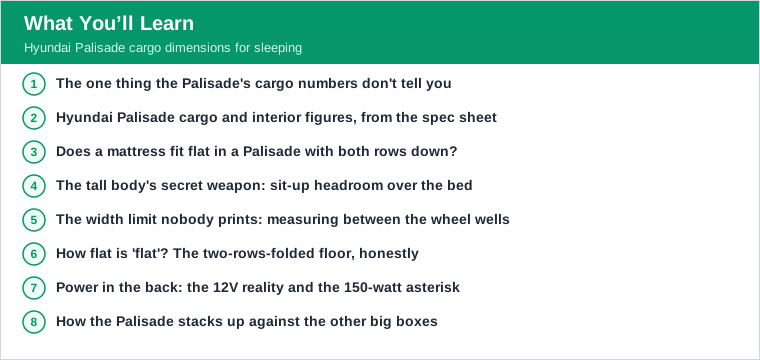
The one thing the Palisade's cargo numbers don't tell you
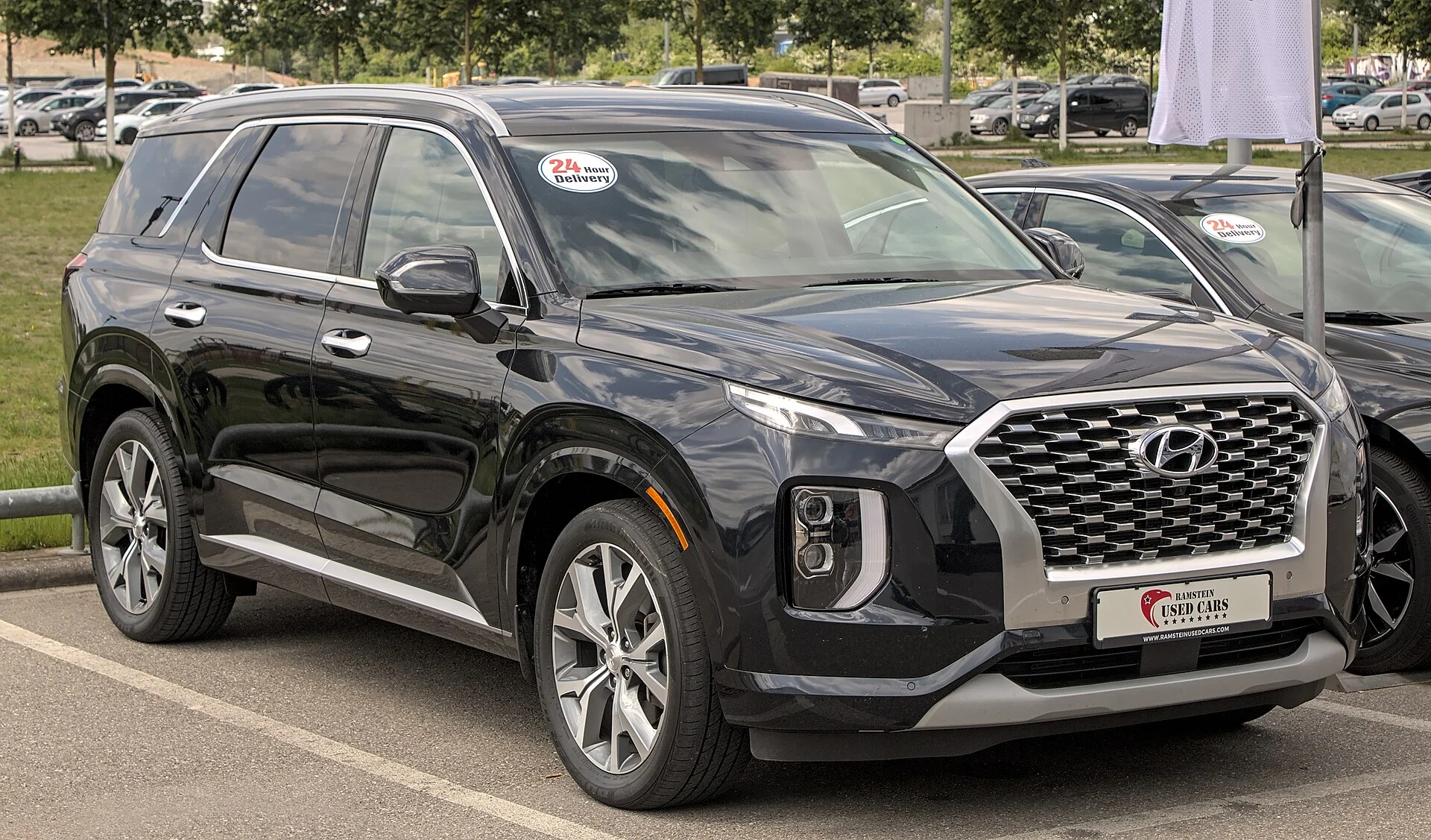
The Hyundai Palisade is a three-row family SUV, not a purpose-built camper, and yet it sleeps better than a lot of vehicles that try harder — for one reason the cubic-foot numbers completely hide. Checkered Flag Hyundai's all-model-years cargo page lists 18.0 cubic feet behind the third row, 45.8 cubic feet with the third row folded, and 86.4 cubic feet with both rear rows down; the all-new 2026 redesign nudges those to 19.1, 46.3, and 86.7 cubic feet respectively, per Webb Hyundai's dimensions page. Those are healthy numbers for the class, but volume is the wrong lens for a sleeper.
What actually matters is that the Palisade is a tall, upright, nearly square box. Colonial Hyundai lists the 2025 model at 68.9 inches of overall height, and iSeeCars puts the 2026 redesign at 69.5 inches — genuinely tall for a crossover. That vertical body is the whole story here: it buys sit-up headroom over the bed that a sleek, sloped-roof SUV can't touch, while the same width that makes the cabin feel roomy pinches down between the rear wheel wells right where your mattress wants to lie. This guide walks every published Palisade figure, flags the two you have to confirm with your own tape, and explains why the boxy shape out-sleeps its own spec sheet.
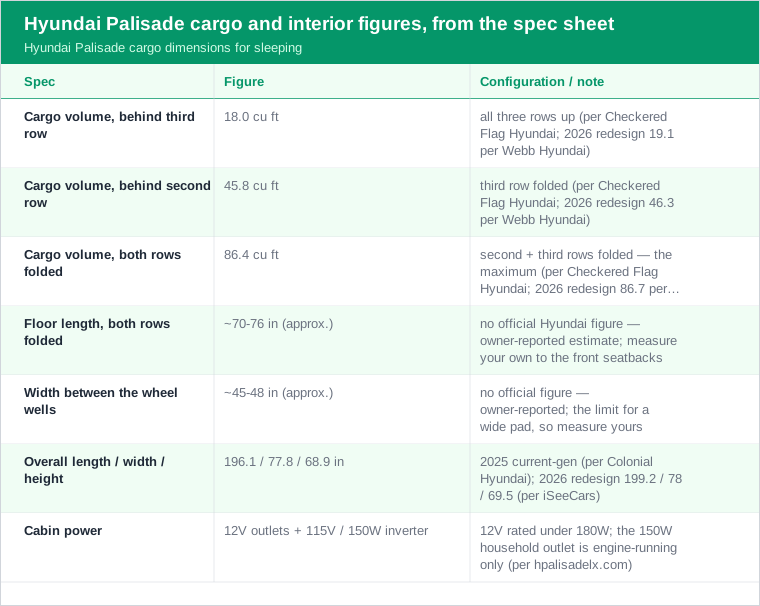
Hyundai Palisade cargo and interior figures, from the spec sheet
Here is what Hyundai's dealers and the major spec databases publish for the Palisade, with the configuration spelled out so you never compare the wrong floor. The current generation (2020-2025) and the 2026 redesign are listed together because the numbers are close but not identical:
| Spec | Figure | Configuration / note |
|---|---|---|
| Cargo volume, behind third row | 18.0 cu ft | all rows up (per Checkered Flag Hyundai; 19.1 on the 2026 redesign per Webb Hyundai) |
| Cargo volume, behind second row | 45.8 cu ft | third row folded (per Checkered Flag Hyundai; 46.3 on 2026 per Webb Hyundai) |
| Cargo volume, both rows folded | 86.4 cu ft | the maximum (per Checkered Flag Hyundai; 86.7 on 2026 per Webb Hyundai) |
| Floor length, both rows folded | ~70-76 in (approx.) | no official Hyundai number — owner-reported estimate; measure to the front seatbacks yourself |
| Width between the wheel wells | ~45-48 in (approx.) | no official figure — owner-reported; the real limit for a wide pad |
| Overall length / width / height | 196.1 / 77.8 / 68.9 in | 2025 (per Colonial Hyundai); 2026 redesign 199.2 / 78 / 69.5 per iSeeCars |
| Cabin power | 12V + 115V / 150W | 12V outlets under 180W; the 150W household outlet runs engine-on only, per hpalisadelx.com |
Two lines in that table carry an asterisk on purpose. Hyundai publishes cargo volume in cubic feet but does not publish the cargo floor length or the width between the wheel wells — the two linear numbers a person sleeping in the back actually needs. The ranges shown are honest owner-reported estimates, not manufacturer specs, which is exactly why the rest of this guide keeps telling you to run a tape on the specific Palisade you own or are buying.
Does a mattress fit flat in a Palisade with both rows down?
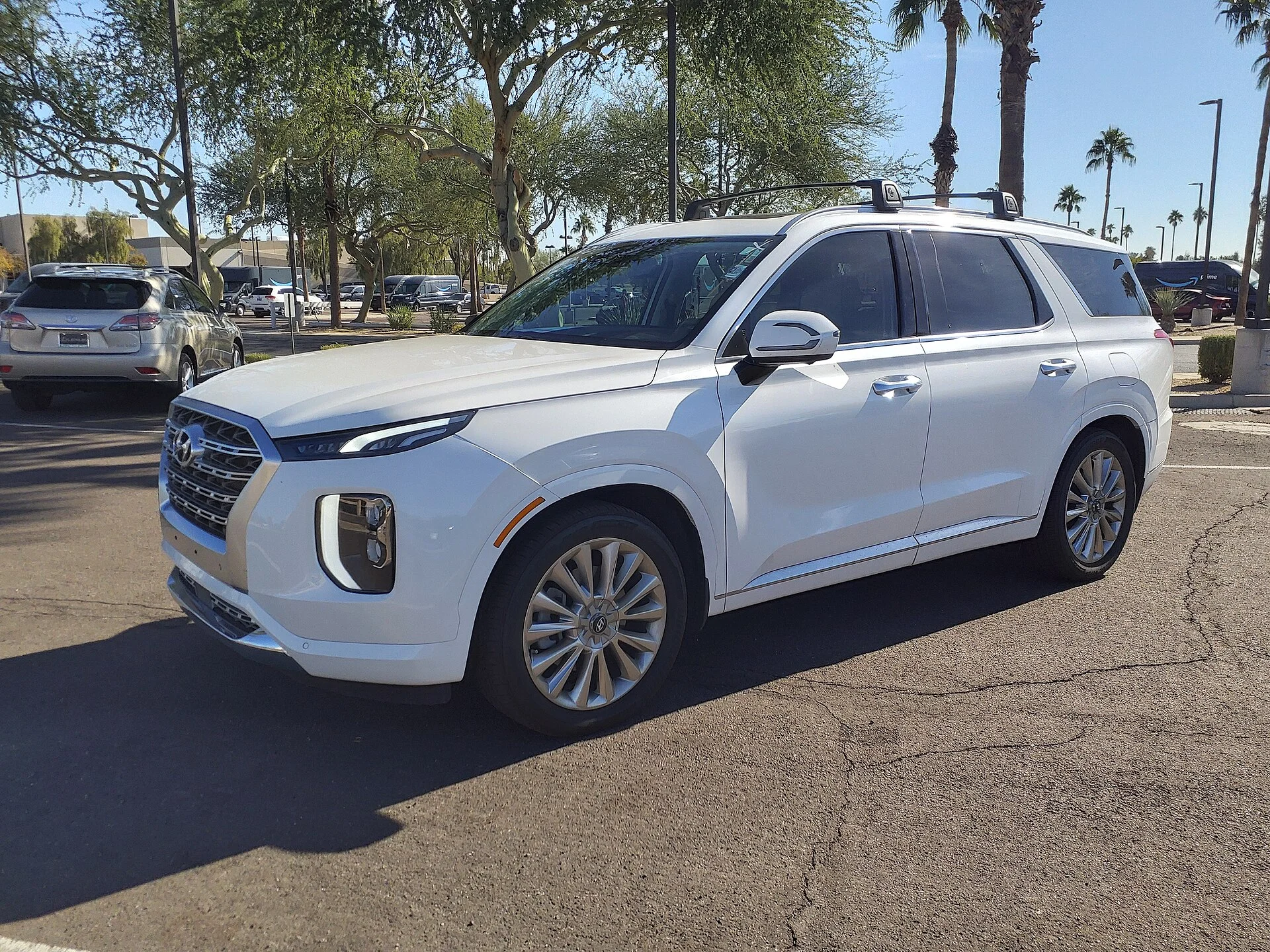
This is the question that brings most people here, so let me answer it against real mattress sizes and the honest floor situation. A standard twin is 38 by 75 inches, a full is 54 by 75, and a queen is 60 by 80. The Palisade's usable sleeping floor, with the second and third rows folded, runs an owner-reported roughly 70 to 76 inches long — no official Hyundai figure exists, so that range is an estimate you should verify with a tape.
At that length, a tall adult is right on the edge. Someone under about six feet can usually stretch out diagonally or with knees slightly bent; a six-footer who wants to lie dead straight will often run out of flat floor before the tailgate and end up with feet on the closed liftgate or angled across the cargo well. Width is the harder limit: owners report roughly 45 to 48 inches between the rear wheel wells, so a 60-inch-wide queen or a 54-inch full will not lie flat between the arches — both ride up onto the wheel housings into a taco shape. A twin at 38 inches wide clears the pinch and is the mattress that actually works solo. Two adults sleep cozy on a pair of narrow pads, not a rectangular queen. For the full sizing breakdown across vehicle types, see what mattress size fits an SUV before you buy anything wider than the floor.
The tall body's secret weapon: sit-up headroom over the bed
Here is where the Palisade quietly beats sleeker three-rows that post bigger cargo numbers. Overall height is 68.9 inches on the 2025 car per Colonial Hyundai and 69.5 inches on the 2026 redesign per iSeeCars — a genuinely upright, square-shouldered body. That vertical roofline is not just styling; it is livability. With the load floor low and the roof high, there is real space to sit up over the bed, change clothes, pull on boots, or sit cross-legged with a headlamp and a book without folding yourself against a sloped ceiling.
On raw cubic feet the Palisade sits mid-pack among big three-rows, but for a sleeper the number that matters is the height over the floor. A tall, square cabin like the Palisade's (68.9 in overall, per Colonial Hyundai) turns the back into a room you can move in, not a coffin you slide into. That sit-up headroom is worth more on a rainy morning than another five cubic feet of volume ever will be.
Sleeker crossovers waste their volume on a raked rear window and a curved roofline that eats the space right where your head and shoulders go. The Palisade's near-vertical rear glass and flat-ish roof keep that space usable. If you are cross-shopping tall boxes specifically to sleep in them, put a tape measure to the ceiling height over the folded floor at a dealer — that single number predicts a good night better than the brochure's cargo-volume headline.
The width limit nobody prints: measuring between the wheel wells
The Palisade is a wide vehicle — 77.8 inches across the body on the 2025 car per Colonial Hyundai, and 78 inches on the 2026 redesign per iSeeCars — but you do not sleep on the outside of the body. You sleep on the floor, and the floor pinches at the rear wheel housings. Here is how that shakes out for a pad:
- The wide number is a trap. That ~78-inch overall width, per iSeeCars, includes doors, sheet metal, and armrests you never lie on. It has nothing to do with how wide your mattress can be.
- The real limit is between the arches. Owners measuring the current-gen Palisade report roughly 45 to 48 inches between the rear wheel wells — no official Hyundai figure, so treat that as a range to confirm, not a spec.
- That kills a flat queen or full. A 60-inch queen or 54-inch full is far wider than the wheel-well gap, so it rides up the arches instead of lying flat. A 38-inch twin clears it; two narrow 20-to-24-inch pads side by side clear it for a couple.
- Measure at the narrow point, not the beltline. Lay the tape across the floor right at the wheel housings, because that is the choke point that decides your pad, and it is inches narrower than the cabin feels.
The takeaway is simple and it costs nothing: buy your pad to the measured wheel-well width, never to the impressive overall-width number on the spec sheet. A pad sized to the arches lies flat; a pad sized to the body rides up into a valley you fall into all night.
How flat is 'flat'? The two-rows-folded floor, honestly
Hyundai's dealers describe the redesigned 2026 Palisade as having a flat load floor, per Webb Hyundai, and the current-gen folds nearly flat too — but 'nearly' is the word doing the work, and an honest fitment guide has to say so. When you fold the second and third rows, the folded seatbacks form the sleeping surface, and on most Palisades that surface sits a touch higher than the rear cargo well and carries a gentle slope and a small step where the folded second-row backs meet the cargo floor. It is far flatter than a mid-size SUV, but it is not a single dead-level plane out of the box.
That is not a knock — it is just the reality of folding seats rather than removing them. The Palisade's rear rows fold; they do not lift out the way the seats in a couple of purpose-built boxes do. On Limited and Calligraphy trims those rows fold with a power function you can trigger from the cargo area, per U.S. News, which is a genuine convenience but does not change the surface geometry. So the working plan for a flat bed is a thin sleeping platform, a folded moving blanket, or a couple of pool noodles laid in the low spots to bridge the step and take the slope out. Do that once and the Palisade gives you a broad, stable, sit-up-height bed; skip it and you will slide gently toward the tailgate all night.
Power in the back: the 12V reality and the 150-watt asterisk
This is where SUV camping dreams meet an owner's manual, so let me be precise about what the Palisade's cabin can and cannot power. The vehicle offers 12-volt accessory outlets — rated for accessories under 180 watts, per the Palisade owner reference at hpalisadelx.com — plus, on many trims, a single 115-volt household-style AC inverter in the second row. That AC outlet sounds like the answer until you read its two limits: it supplies only 115V at 150 watts, and Hyundai's own guidance is not to use the inverter while the engine is off, because it will drain the starter battery.
Put plainly: there is no big household outlet you can run a fridge or a heater off overnight with the engine off. The 150-watt inverter is for a laptop charger or a phone brick while you drive, not for powering camp. The honest overnight setup is a dedicated portable power station — a LiFePO4 unit runs a 12V fridge, a fan, and LED lights for a night or two, then recharges off the 12V outlet while you drive to the next site. Never idle the engine for heat or power in an enclosed space; that is a carbon-monoxide risk, not a workaround. For the stations, fans, and platform parts that suit this specific vehicle, our Palisade camping accessories roundup covers what actually fits the cargo bay and the 12V draw.
How the Palisade stacks up against the other big boxes
The Palisade shares its bones with the Kia Telluride, and campers cross-shop the two constantly, so it is worth being clear about how the sleeping math compares. On cargo volume the two are near-twins: the Palisade posts 18.0 / 45.8 / 86.4 cubic feet per Checkered Flag Hyundai, and the Telluride lands within a cubic foot or two in the same configurations. Both are tall, square, three-row boxes that trade a little maximum length for a lot of usable height — the same recipe that makes either one a better sleeper than a sleeker crossover with similar numbers.
Where you actually choose between them is trim, seat mechanism, and which one you can measure in person, not the spec sheet — the floors are close enough that a tape and a night's test matter more than the brochure. If you want the side-by-side on the corporate cousin, our breakdown of Kia Telluride cargo space walks the same measurements for that vehicle so you can line the two up column for column. Against the broader field, the Palisade's advantage is the upright body: it will out-sleep a longer-on-paper but lower-roofed SUV because you can sit up in it, and it splits the difference between a cramped mid-size and an unwieldy full-size van.
Measure your own Palisade before you build a bed
Published volume gets you in the ballpark, but Hyundai never printed the two linear numbers that decide your bed, and the specific Palisade you own has its own quirks — a cargo mat, a subwoofer housing on some trims, seat wear. I do this on every fitment job and it takes five minutes. Run these four measurements before you spend a dollar on a pad or platform:
- Floor length, both rows folded. Fold the second and third rows and run the tape flat along the floor from the closed liftgate to the back of the front seats set where you'd drive. Expect an owner-reported 70 to 76 inches — write down what you actually get, because that decides whether you sleep straight or diagonal.
- Width between the wheel wells. Lay the tape across the floor at the narrowest point, right at the rear wheel housings. Plan for roughly 45 to 48 inches; anything wider than your result rides up the arches.
- Height over the floor. Measure from the folded load floor straight up to the headliner. The Palisade's tall body (68.9 in overall, per Colonial Hyundai) usually leaves comfortable sit-up room — confirm it if you're stacking a thick platform.
- The step and slope. Run your hand along the folded surface and note where it rises or dips. Mark those spots so your platform or leveling foam spans them instead of resting in them.
Save those four numbers to your phone before you shop. A pad or platform bought to your measured floor beats one bought to a spec-sheet guess every time — especially on a vehicle where the spec sheet never printed the two numbers that matter most.
The verdict: a boxy three-row that sleeps above its numbers
The Hyundai Palisade is not a camper, but it sleeps better than its cargo-volume figures suggest — not because of the cubic feet (18.0 behind the third row, 45.8 behind the second, 86.4 maximum per Checkered Flag Hyundai; 19.1 / 46.3 / 86.7 on the 2026 redesign per Webb Hyundai) but because of the SHAPE. The tall, square body (68.9 to 69.5 inches of overall height per Colonial Hyundai and iSeeCars) buys sit-up headroom over the bed that sleeker three-rows can't match.
Plan around the two numbers Hyundai never printed. The floor runs an owner-reported 70 to 76 inches with both rows folded — fine for most adults, tight for a tall one — and pinches to roughly 45 to 48 inches between the wheel wells, so a twin pad fits and a queen does not. The surface folds nearly flat but carries a step and a slope, so a thin platform or leveling foam earns its keep. And treat the cabin as a 12V vehicle: the 150-watt household inverter is engine-on only per hpalisadelx.com, so a portable power station is the real overnight plan. Measure your own floor, bridge the step, bring your own power, and the boxy Palisade turns into a broad, tall, genuinely comfortable bed. For the full build — platform, bedding, ventilation, and privacy — start with our Palisade camping guide and measure before you mount.