
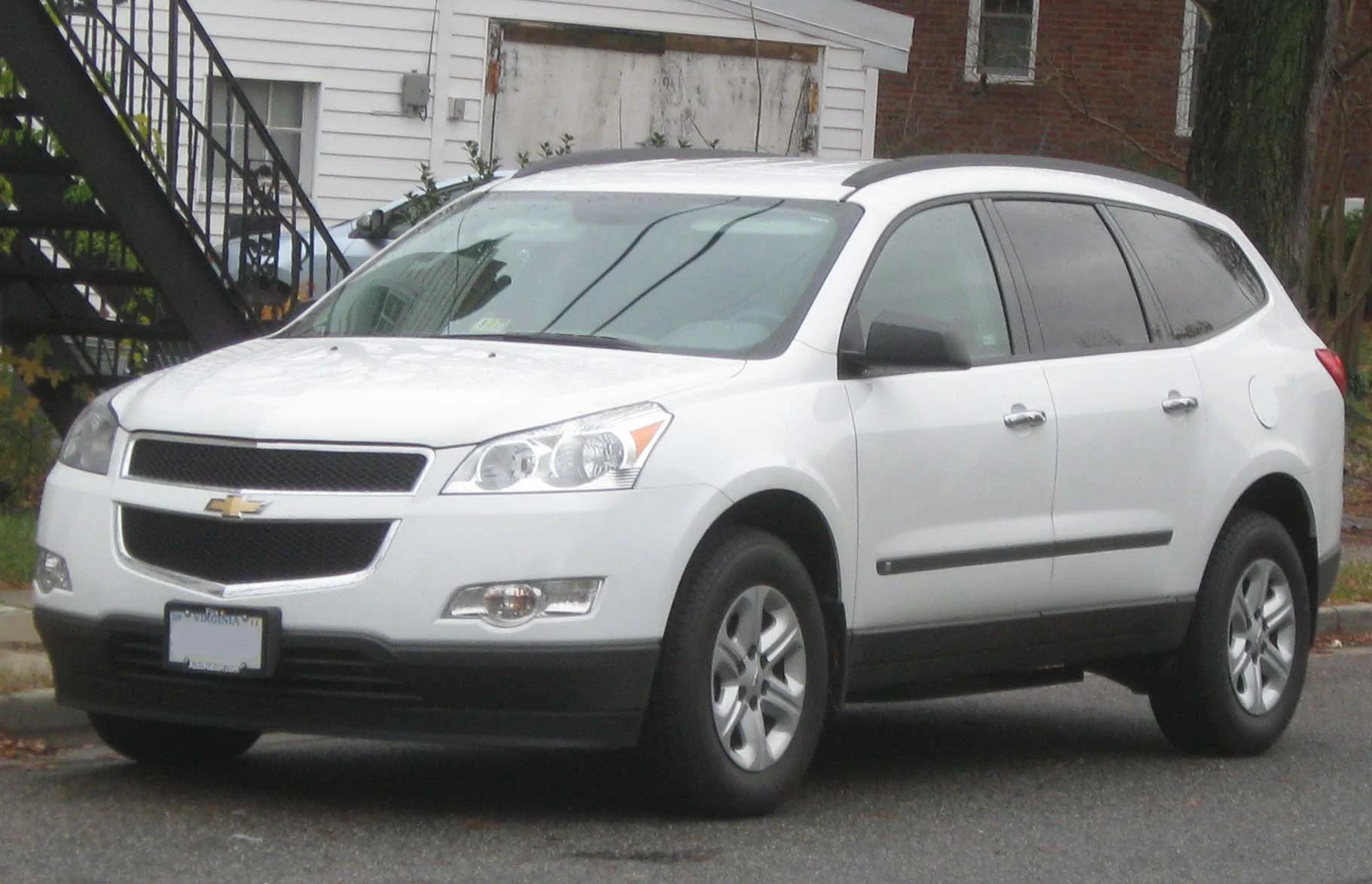
Why the Traverse sleeps longer than almost any midsize three-row
Most three-row SUVs give you plenty of cubic feet and then betray you on the one measurement that decides a night's sleep: flat floor LENGTH. The current-generation Chevrolet Traverse (2024-2026) is the happy exception. Chevrolet publishes 22.9 cubic feet of cargo behind the upright third row, 56.6 cubic feet with that third row folded, and 97.6 cubic feet with both rear rows down — a near-98 figure Chevrolet markets as best-in-class for the class. Those volume numbers matter for gear, but the reason this vehicle belongs on a car-camping shortlist is the shape those cubic feet take.
Fold both rear rows and the Traverse lays out one of the longest flat floors you'll find in a midsize three-row — long enough that a tall adult can stretch out straight, and roomy enough that two adults can sleep side by side without either of them curled up. It rides on a 121.0-inch wheelbase inside a 204.5-inch body, per iSeeCars, and that long wheelbase is exactly what feeds the long load floor. Where a compact crossover forces a diagonal sleep and a premium two-row trades cargo length for lounge seating, the Traverse gives you near-van sleeping length in a vehicle that still fits a normal garage.
This guide gives every published Traverse figure, tells you honestly which numbers Chevrolet does NOT publish (so you measure them yourself), walks the one real obstacle — the step at the folded seat backs — and covers the 12V and 120V power picture. If you want the folded floor to sit truly flat afterward, our guide to how to level the load floor for a flat night's sleep carries the setup end to end.
Every published Traverse cargo and interior figure
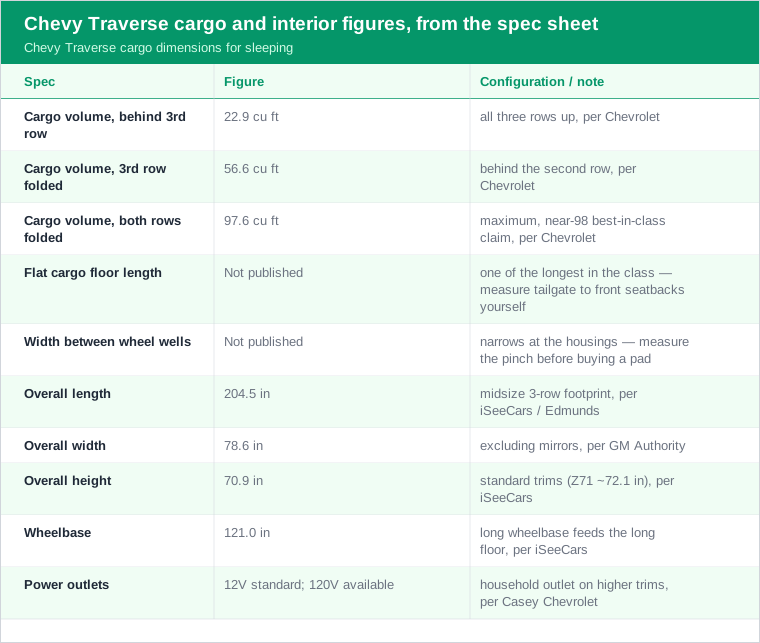
Here is what Chevrolet and the major spec databases publish for the current Traverse, with the configuration spelled out so you never compare the wrong floor. Two rows of this table say Not published on purpose — the linear floor measurements are the ones you confirm with your own tape:
| Spec | Figure | Configuration / note |
|---|---|---|
| Cargo volume, behind 3rd row | 22.9 cu ft | all three rows up, per Chevrolet |
| Cargo volume, 3rd row folded | 56.6 cu ft | behind the second row, per Chevrolet |
| Cargo volume, both rows folded | 97.6 cu ft | maximum; near-98 best-in-class claim, per Chevrolet |
| Flat cargo floor length | Not published | one of the longest in the class — measure tailgate to front seatbacks yourself |
| Width between wheel wells | Not published | narrows at the housings — the limit for a wide pad |
| Overall length | 204.5 in | midsize 3-row footprint, per iSeeCars / Edmunds |
| Overall width | 78.6 in | excluding mirrors, per GM Authority |
| Overall height | 70.9 in | standard trims (Z71 ~72.1 in), per iSeeCars |
| Wheelbase | 121.0 in | long wheelbase feeds the long floor, per iSeeCars |
| Power outlets | 12V standard; 120V available | household outlet on higher trims, per Casey Chevrolet |
The volume numbers are settled and consistent across Chevrolet, Edmunds, and iSeeCars. The two blanks are the honest part: Chevrolet publishes cargo VOLUME, not cargo LENGTH or the width between the wheel housings, and no reputable spec sheet fills those in for the Traverse. That is not a gap in this guide — it's a gap in the brochure, and the rest of this article is about closing it with a tape rather than a guess.
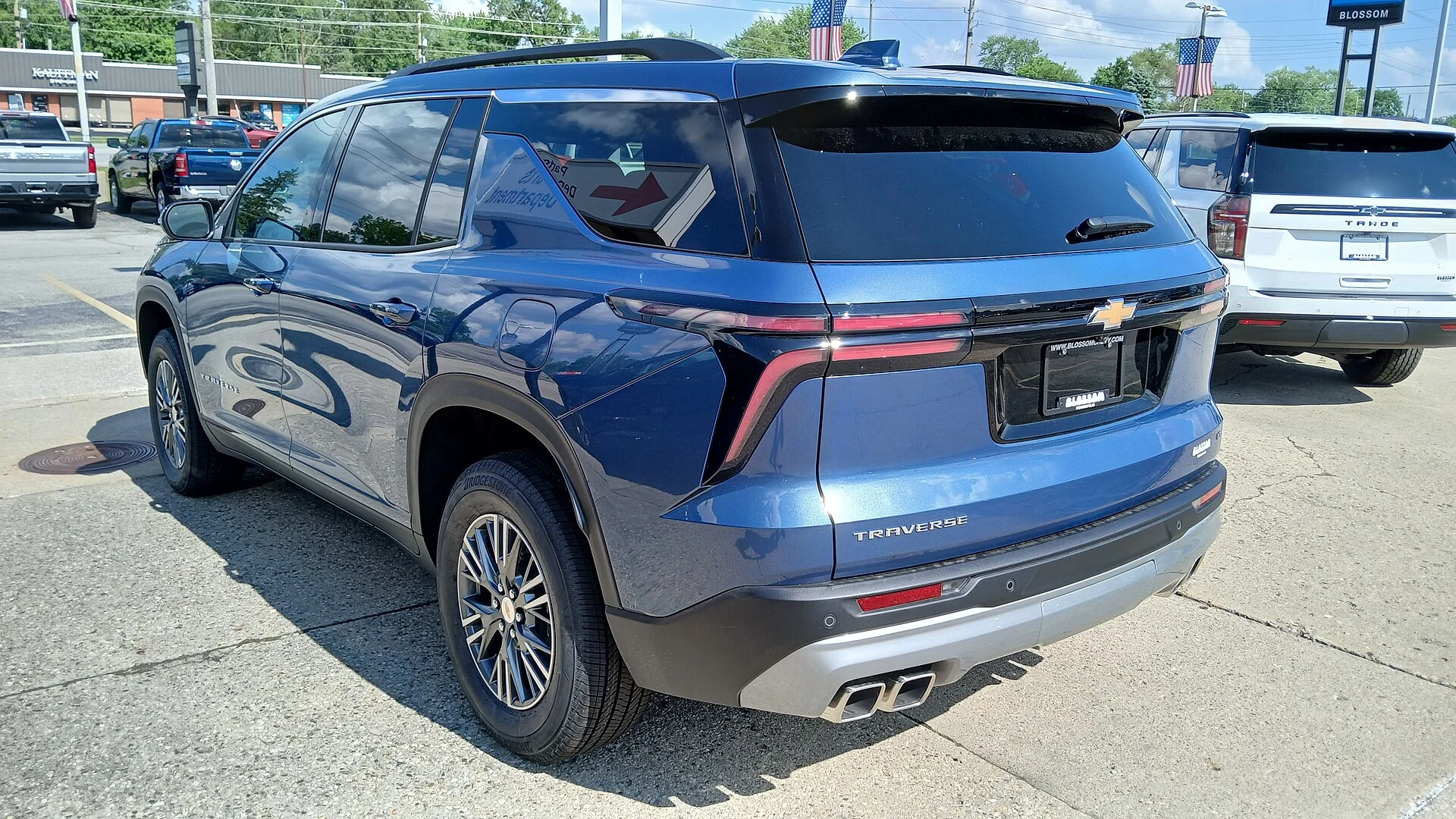
The flat-floor length: near-van, but you must measure it
This is the number people come here for, so let me be precise about what is known and what isn't. Chevrolet does not publish a flat cargo-floor length for the Traverse. What IS documented is the envelope: a 204.5-inch overall length on a 121.0-inch wheelbase per iSeeCars, and 97.6 cubic feet of maximum cargo volume per Chevrolet — both among the largest in the midsize three-row class. Put those together and the Traverse's both-rows-folded floor runs long enough for a six-foot adult to lie out straight, which is exactly why it earns the near-van reputation among owners who camp in theirs.
But I won't hand you a length I can't source. Owner-reported sleeping floors on this generation land in the range you'd expect from that footprint — comfortably into the seven-foot-plus territory measured from the closed tailgate to the folded front seat backs — and that is an approximate, measure-it-yourself figure, not a Chevrolet spec. The exact number moves with how far forward you slide and recline the front seats, whether you're measuring at floor level or across the seat-back tops, and the thickness of any cargo mat.
So treat the length as a genuine advantage you still verify: run a tape from the shut tailgate to the back of the front seats, set exactly where you'll drive, on the specific Traverse you're buying or renting. That measured number — not a forum figure and not mine — is the one you buy a mattress to. For how the Traverse's long floor stacks up against the truck-based alternative, our GMC Yukon cargo measurements make a useful side-by-side.
The seat-back step: the one obstacle to a flat bed
The Traverse's rear seats fold nearly flat, but 'nearly' is the word that decides your comfort. When you drop the 60/40 third row and the second row, the folded seat backs sit slightly proud of the rear cargo floor, leaving a low step and a gentle slope rather than one dead-level plane. This is normal for the class and easy to manage — but you have to manage it, not ignore it. Here's the order I work it on a fitment job:
- Map the step first. Fold everything, then run a straightedge or a broom handle from the tailgate forward. You'll feel where the rear cargo floor meets the higher folded seat backs — that transition is the spot every leveling decision keys off.
- Bridge, don't fight. A cargo-floor filler, a plywood sleeping deck, or a thick foam layer spanning the step turns two heights into one. The goal is a platform that rests on the high points and bridges the low rear floor, not a pad that sags into it.
- Aim the slope the right way. The seat backs sit higher toward the front, so your head naturally ends up at the tailgate. Either sleep head-to-tailgate or add a thin wedge so you're not tilted head-down all night.
- Fill the footwells, if any remain. With the second row down you may find shallow gaps at the seat hinges; a rolled towel or a foam offcut keeps a platform leg from dropping into one.
None of this is exotic. The Traverse gives you an unusually long canvas to work with; the step is simply the seam you build across. Get a level deck over it and the length advantage pays off in full.
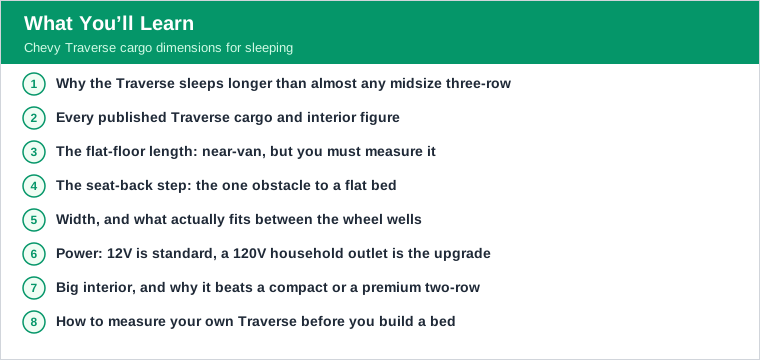
Width, and what actually fits between the wheel wells
Length is the Traverse's strength; width is where you slow down and measure. Chevrolet does not publish the width between the rear wheel housings, and that pinch — not the wide-open width at the beltline — is what caps the pad you can lay flat. The body is a generous 78.6 inches wide overall per GM Authority, but you don't sleep at the beltline; you sleep on the floor, where the wheel wells step in on both sides.
Because the number isn't published, the honest move is to measure it: lay a tape across the load floor at the narrowest point between the wheel housings on the exact vehicle. That single measurement tells you whether one wide pad clears the wells or whether you're better off with two narrower pads laid side by side. A rigid rectangular mattress bought to the wide beltline number will ride up the arches into a taco; a pad sized to the measured pinch lies flat. For how the standard mattress sizes map onto an SUV floor, see what size mattress fits in an SUV before you order anything.
The practical read for two sleepers: the Traverse has the LENGTH to put two adults head-to-toe or side by side, but the usable width between the wells is the constraint, so plan on either a two-person pad you've confirmed clears the pinch or a pair of narrow pads. Either way, buy to the tape, not to the brochure's overall-width headline.
Power: 12V is standard, a 120V household outlet is the upgrade
A long flat floor is only half a camp; the other half is keeping a fan, a light, and a phone alive overnight without murdering the starter battery. The Traverse gives you a real electrical story here, and it's worth knowing exactly what your trim carries before you plan around it.
Per Casey Chevrolet's rundown of the 2025 Traverse interior, 12-volt accessory power is standard and a 120-volt household-style outlet is available on higher trims, alongside USB-A and USB-C charging points spread through the cabin. Confirm the 120V outlet on the specific trim you're buying — it is a feature, not a guarantee, and the base configuration may give you 12V and USB only.
Here's the discipline that keeps your morning drivable: the 12V sockets and any 120V outlet feed off the vehicle's electrical system, so running a fridge or a heater from them overnight with the engine off is how you wake up to a Traverse that won't crank. The honest setup is a dedicated portable power station — a LiFePO4 unit runs a 12V fridge, a fan, and lights for a night or two, then recharges off the 12V socket while you drive to the next site. Never idle the engine for heat or power in an enclosed space; that's a carbon-monoxide risk, not a workaround. Treat the 120V outlet as a convenience for topping up small devices, and let a separate battery carry the overnight load.
Big interior, and why it beats a compact or a premium two-row
The Traverse's sleeping case isn't just the floor length — it's the whole volume around it. At 70.9 inches of overall height per iSeeCars on a long 121.0-inch wheelbase, this is a genuinely big midsize box, and that size changes what the interior feels like at 2 a.m. There's air above the bed to sit up and change, room along the walls to stage bins of food and a power station, and enough length that your gear doesn't have to live on top of you.
Compare the alternatives buyers cross-shop. A compact crossover gives you cubic feet on paper but forces a diagonal sleep and leaves no width to spare; you're negotiating with the space all night. A premium two-row SUV spends its length on second-row lounge legroom and a reclining bench, which is lovely for passengers and worse for sleepers — the flat floor comes up short. The Traverse threads that needle: three rows that both carry people AND fold down into a long, flat, wide-walled hold. You get the family-hauler practicality on weekdays and the near-van sleeping length on weekends out of one vehicle.
That dual-purpose shape is the quiet reason the Traverse keeps showing up on car-camping lists above flashier names. It isn't the most rugged three-row and it isn't the most luxurious, but for the specific job of laying an adult out flat in the back, its 97.6 cubic feet arranged over a long floor, per Chevrolet, is hard to beat at the price.
How to measure your own Traverse before you build a bed
Published specs get you to the shortlist; your own tape gets you to a bed that fits. Because Chevrolet leaves the two floor measurements blank, this step isn't optional on a Traverse — it's the whole job. It takes five minutes and catches every gotcha a trim mat or a seat adjustment can introduce. Work it in this order:
- Length, in your real sleeping setup. Fold both rear rows, slide and recline the front seats exactly where you'll drive, then run the tape at floor level from the shut tailgate to the back of the front seats. That measured number is what you buy a mattress to — not a forum figure.
- Width at the narrow point. Lay the tape across the floor at the tightest gap between the rear wheel housings, not at the open beltline. This is the limit for a wide pad; if it's tight, plan on two narrow pads instead.
- The seat-back step. Measure the height difference between the rear cargo floor and the folded seat backs. That figure sizes the filler, foam, or deck you need to bridge to level.
- Height over the bed. From the load floor straight up to the headliner tells you how much sit-up room you keep once a platform and pad go in — the Traverse's tall roof usually leaves plenty.
- Confirm the power outlets. Physically check whether your trim has the 120V household outlet or just 12V and USB, so your electrical plan matches reality.
Write those five numbers on your phone before you shop. A platform and pad bought to a measured floor beat ones bought to a spec-sheet guess every single time — and on the Traverse, half those specs aren't on the sheet to begin with.
The fitment mistakes that ruin a first night in a Traverse
After enough of these builds, the bad first nights all trace back to the same handful of skipped steps — never to the vehicle. The Traverse gives you an unusually forgiving amount of room; the trick is not squandering it. The most common mistake is treating the both-rows-folded floor as dead level and laying a pad straight onto it, then discovering the seat-back step as a ridge under your spine at midnight. Bridge the step with a deck or foam first; the length is generous enough that a proper platform costs you nothing you'll miss.
The second is buying a mattress to the overall-width headline. The Traverse is 78.6 inches wide overall per GM Authority, but that is not the number you sleep on — the wheel-well pinch is, and it's narrower and unpublished. A rectangular queen forced onto that floor rides up the arches; a pad sized to the measured pinch lies flat. The third is the power trap: assuming your trim has the 120V outlet, or running a fridge off the 12V socket overnight and flattening the starter battery. Confirm the outlet, carry a separate power station, and leave the vehicle's battery for starting the engine.
The last one is skipping the tape entirely because the Traverse 'looks huge' — then ordering a platform to a forum length that doesn't match your seat positions. None of these costs a dollar to avoid. They cost a five-minute measure-up in the driveway instead of a cramped, tilted night at the campsite. For squeezing every usable inch out of any three-row, our guide on how to maximize your SUV's cargo space pairs well with the numbers above.
The verdict: one of the longest flat floors in its class
The Chevrolet Traverse is one of the easiest midsize three-rows to sleep in — not because of any single headline number but because 97.6 cubic feet of maximum cargo, per Chevrolet, is arranged over one of the longest flat floors in the class. Fold both rear rows and a tall adult stretches out straight where a compact crossover forces a diagonal and a premium two-row runs short.
Plan around what's published and what isn't. The volumes are settled — 22.9 cubic feet behind the third row, 56.6 with it folded, 97.6 with both down, per Chevrolet — but the flat length and the width between the wheel wells are not on the brochure, so you measure them yourself on the exact vehicle. Bridge the seat-back step with a deck or foam, size your pad to the measured wheel-well pinch rather than the 78.6-inch overall width, and confirm whether your trim carries the available 120V outlet or just the standard 12V before you build an electrical plan. Do those three things and the Traverse gives you near-van sleeping length in a vehicle that still hauls the family on Monday — measure before you mount, and the back of this Chevy becomes a genuinely comfortable bed.