
Car Camping

Essential Accessories for Your SUV Car Camping Awning

Casey - The Weekend Warrior
5 min read
Includes Video

My first SUV camping trip involved a $400 awning I bought on impulse. It was a sunny Saturday near Moab, Utah, and I thought I was set. Then the wind picked up. Not a gale, just a steady breeze. Within 10 minutes, my fancy awning was doing the Macarena, threatening to rip itself off the side of my Jeep.

My first SUV camping trip involved a $400 awning I bought on impulse. It was a sunny Saturday near Moab, Utah, and I thought I was set. Then the wind picked up. Not a gale, just a steady breeze. Within 10 minutes, my fancy awning was doing the Macarena, threatening to rip itself off the side of my Jeep. I spent the next hour wrestling it down, feeling like a total rookie.

Stage 3 Motorsports and their fancy accessories probably could have saved me that headache. I learned that an awning is just the start; the real game-time upgrades are the bits you don't think about until you're fighting the elements.
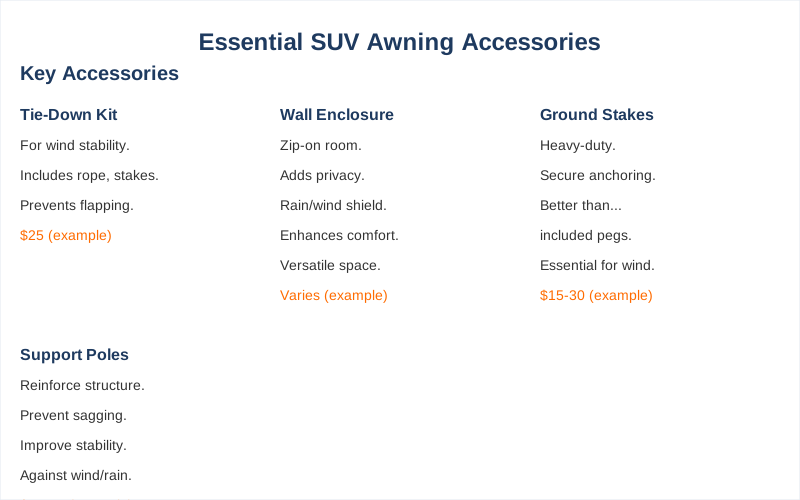
Essential Accessories for Your SUV Car Camping Awning — Key Specifications Compared
Key specifications for Essential Accessories for Your SUV Car Camping Awning

The Core Answer

Look, I get it. You bought an awning because you want shade and maybe some rain protection. That's the dream. But what nobody tells beginners is that the awning itself is only half the battle. The real moves for making it actually useful involve a few key accessories. Overland Vehicle Systems has a bunch of stuff, some of which is genuinely useful, some is just... extra. Let's break down what actually matters. First up, stakes and tie-down kits. My awning-flapping incident? Entirely preventable with a good set of stakes and some beefy rope. Most awnings come with flimsy little pegs that are good for holding down a picnic blanket, not a 6-foot wide sail. I snagged a $25 rope, strap, and stake kit from Overland Vehicle Systems, and it was a game-changer. It turned my flapping nightmare into a secure shelter, even when the wind decided to pay a visit. Then there are the wall enclosures. These are basically zip-on rooms for your awning. I was skeptical at first. Seemed like overkill. But on a trip to Big Bend last year, we got hit with a sudden downpour. My $400 awning was keeping the rain off, but it was blowing sideways. Zipping up one of these $300-$400 enclosures from Cascadia Tents turned it into a dry, wind-protected lounge. It was the difference between being miserable in the car and actually enjoying our campsite. Brilliant engineering, if you ask me. Don't forget lighting. Most awnings don't come with integrated lights. This is a rookie mistake I made. Fumbling around in the dark trying to cook or find your headlamp is annoying. A simple, flexible LED light strip like the $30 one from Overland Vehicle Systems that clips right on makes a huge difference. It's not a floodlight, but it's enough to see what you're doing without blinding yourself. Finally, consider mounting options. While most awnings bolt directly to roof racks, some situations might need more. If you have a specific rack setup, you might need specialized brackets. ARB USA mentions that they don't include brackets because every vehicle is different, and you might need an 'L' bracket or something custom. This is where you might need to do a little research specific to your SUV, but don't skip it. The last thing you want is your awning coming loose because of a cheap mounting job.
To ensure your vehicle is well-equipped, understanding what size awning fits your SUV is essential.
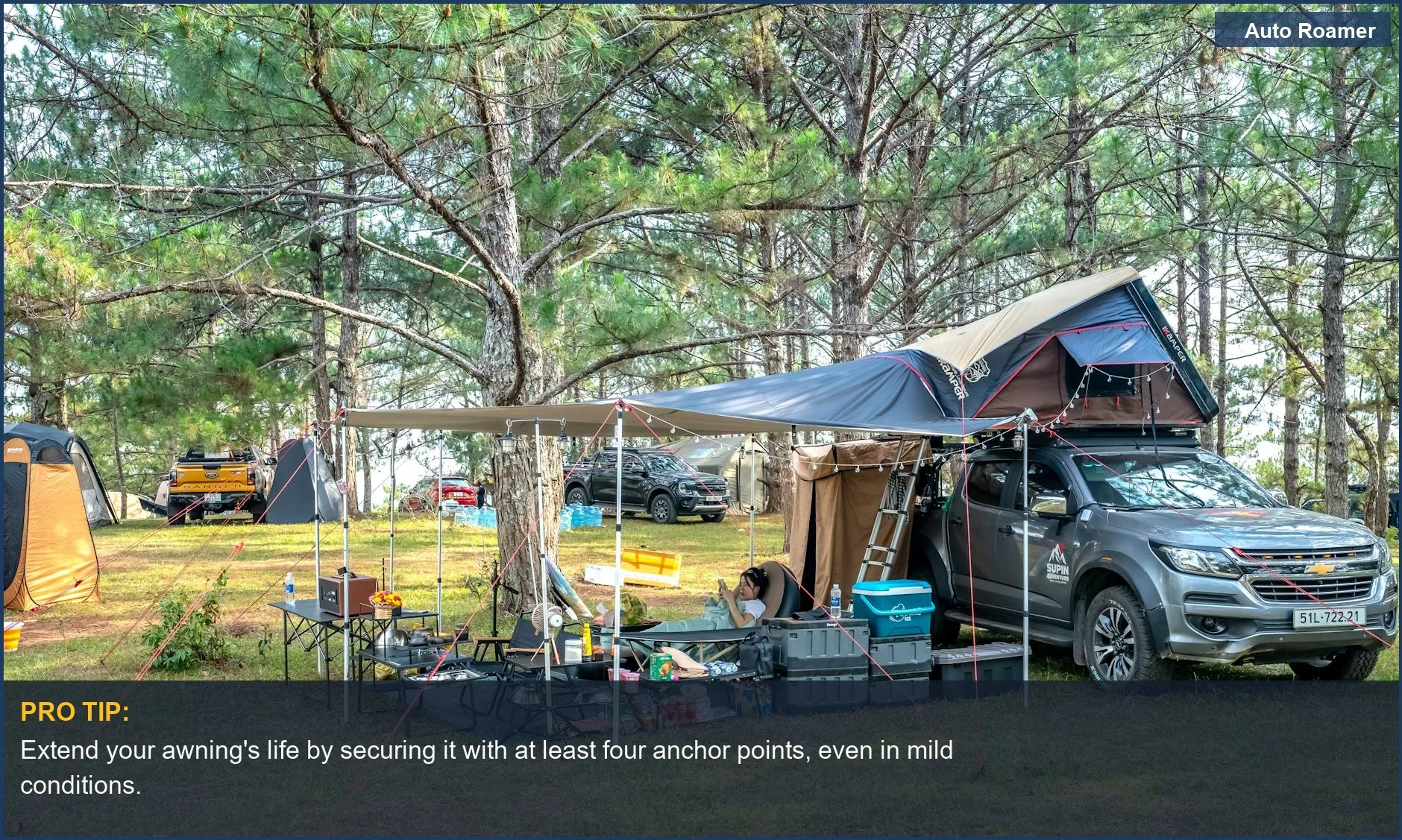
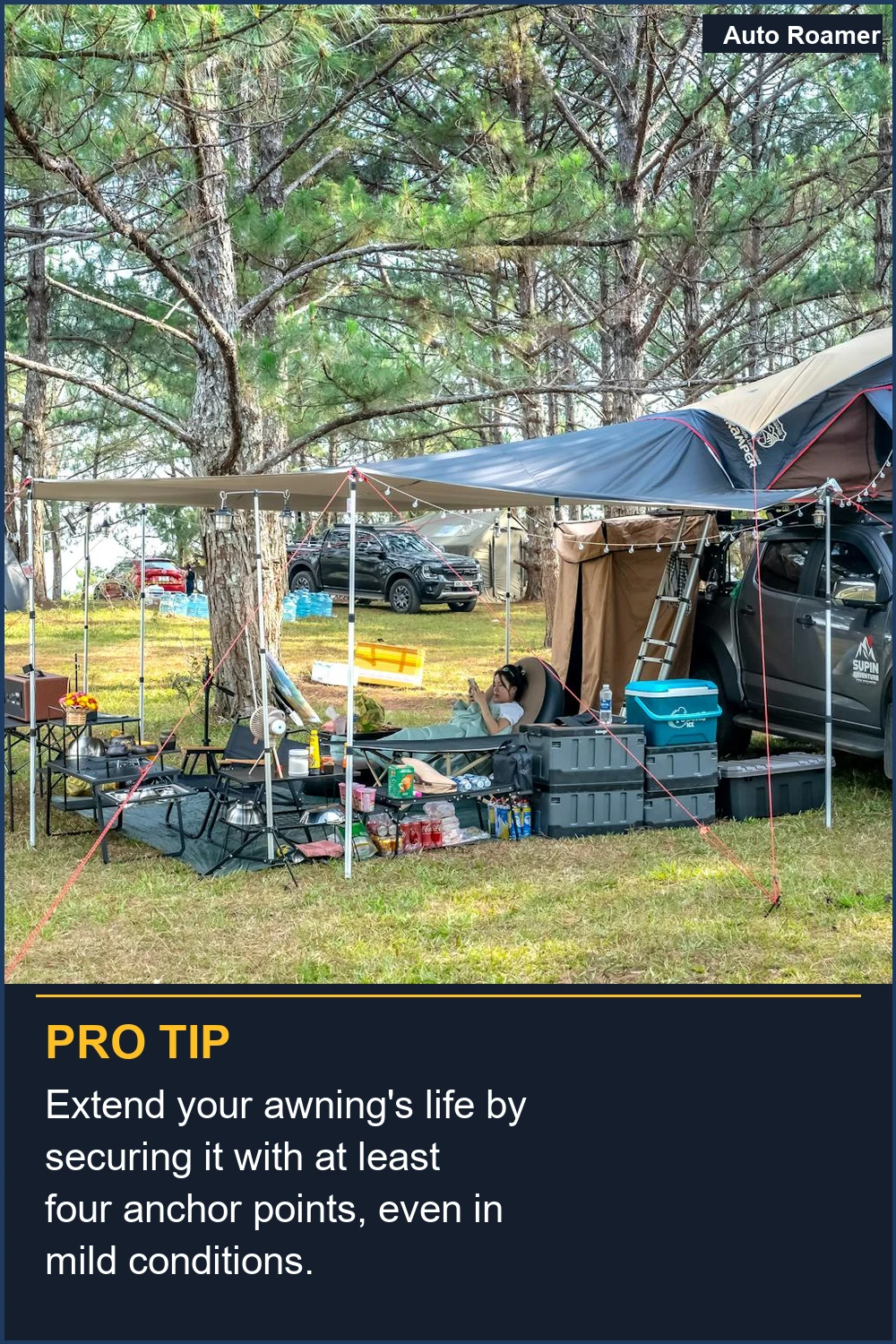
Extend your awning's life by securing it with at least four anchor points, even in mild conditions.
Start your car camping journey with a well-equipped SUV and awning setup. This scene shows the basic elements for comfortable outdoor living, showcasing the need for essential awning accessories. | Photo by Quang Nguyen Vinh

Why This Matters for Your Setup

So, why bother with these add-ons? Because they turn your awning from a fancy sunshade into a functional outdoor room. I learned this the hard way at a state park in Colorado. It was supposed to be a quick overnight, but the weather turned nasty. My awning was up, but the wind was whipping rain under it. If I hadn't had a cheap $20 tie-down kit I'd almost forgotten to pack, I would have been soaked and packing up early.
  • Wind and Rain Protection: My first awning setup was just the awning itself. When the wind picked up, it felt like I was sitting under a kite. Adding a $25 stake and rope kit from Overland Vehicle Systems secured it. Then, a $300 annex room from Cascadia Tents turned that protected space into a dry sanctuary during a freak storm.
  • Extended Season Camping: You might think an awning is just for summer. Nope. With walls, you can extend your camping season. I used my awning with walls on a chilly fall trip in the mountains. It blocked the wind, keeping the space warmer than just the open air.
  • Bug Defense: If you're camping anywhere with even a hint of a mosquito, walls are your friend. They create a barrier, making your campsite much more enjoyable. I've definitely cursed my exposed awning area while swatting at bugs.
  • Privacy: Sometimes you just want a little privacy. Zipping up the walls gives you that, whether you're changing clothes or just want to relax without the whole campground seeing you.
  • To enhance your experience even further, consider reviewing our essential gear checklist for SUV camping trips.
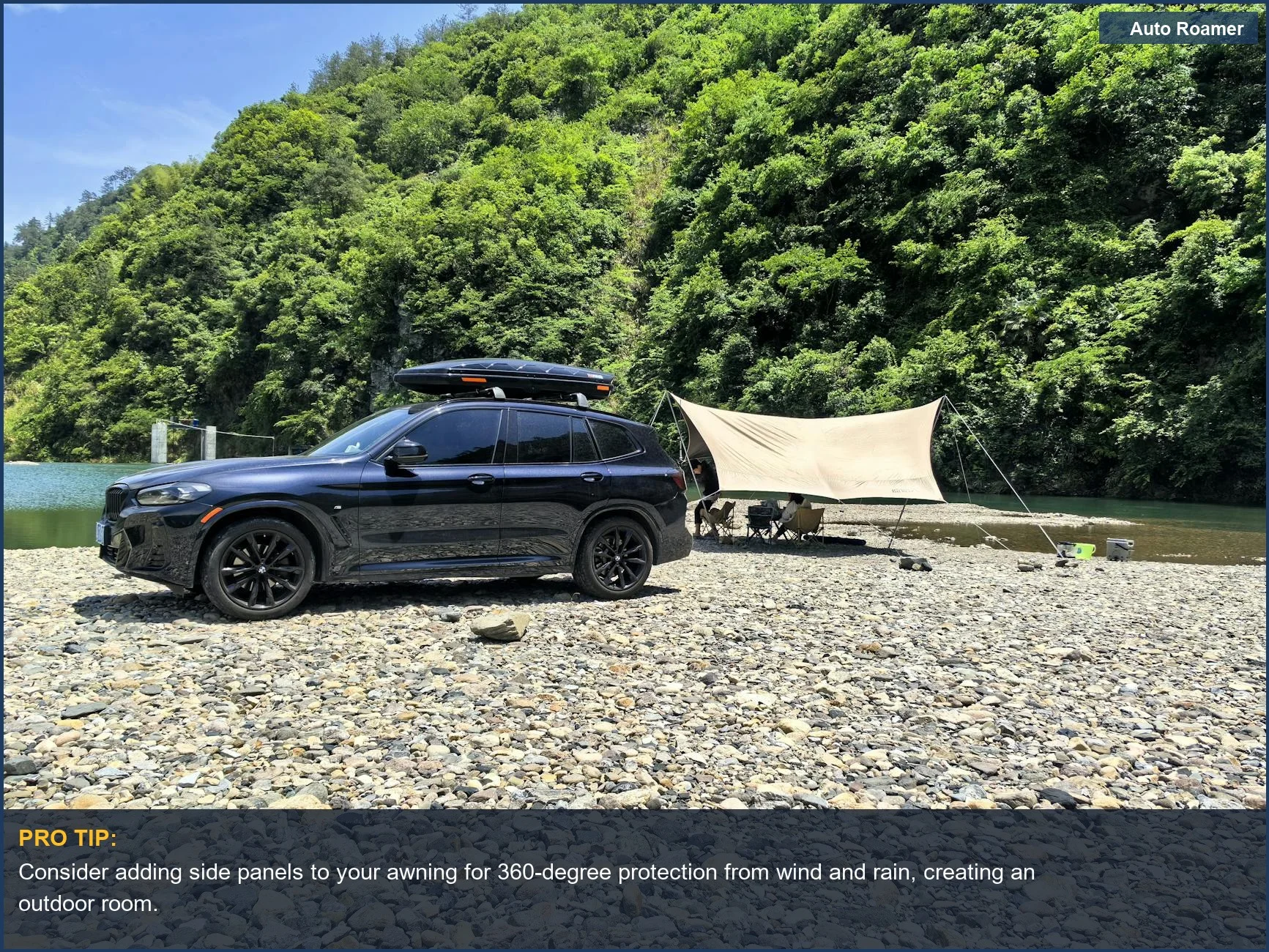
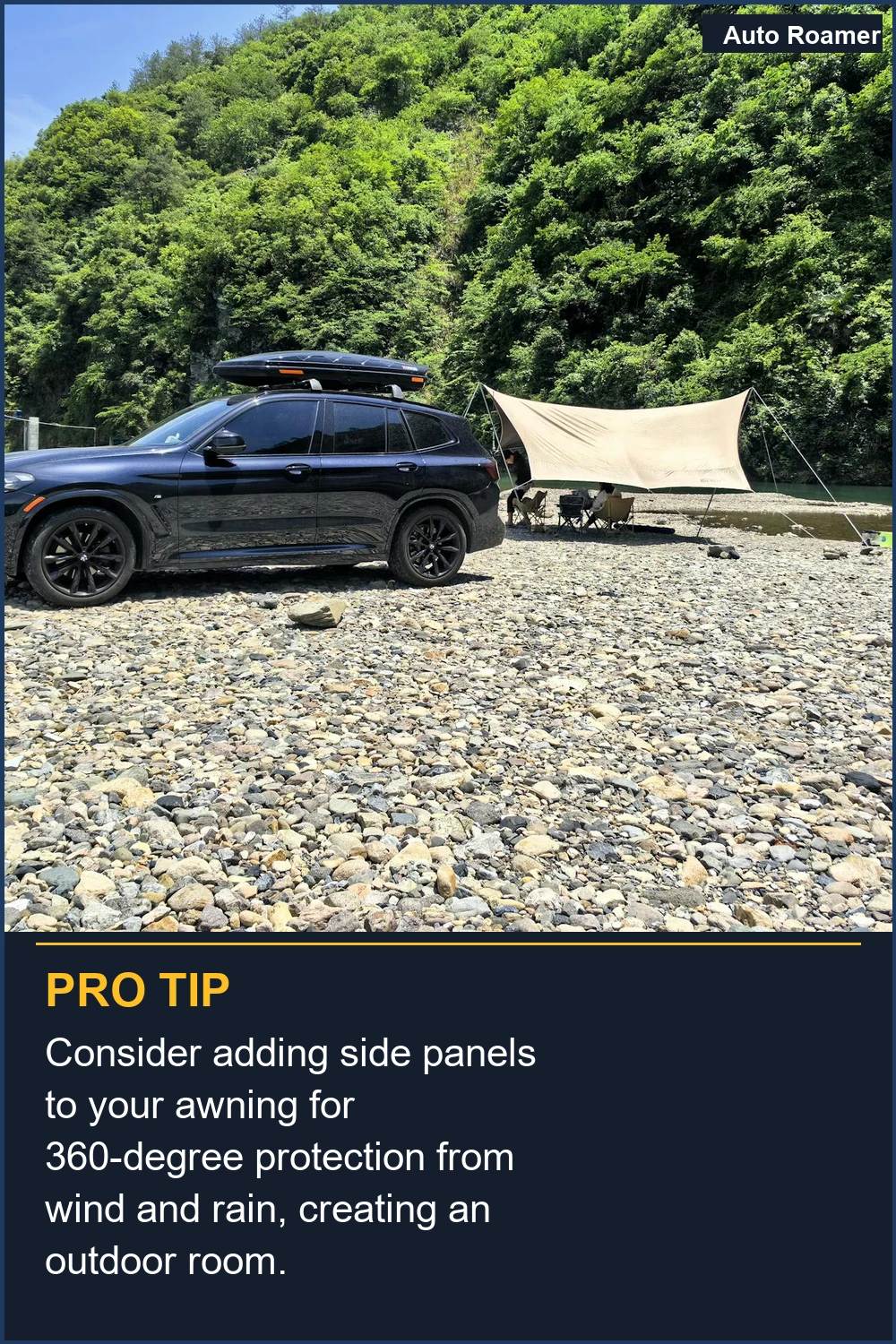
    Consider adding side panels to your awning for 360-degree protection from wind and rain, creating an outdoor room.
    Transform your awning into a functional outdoor room with these car camping essentials. This setup by the river highlights how accessories enhance your experience, offering shelter and comfort. | Photo by bluestome zhang

    Making the Right Choice

    When you're starting out, the awning itself feels like a big enough purchase. And it is. But don't stop there. Think about what you actually *do* when you're camping. Do you need bug protection? Shelter from unexpected rain? A place to hang out after dark?
  • Start with the Basics: You absolutely need a solid tie-down kit. My $25 investment saved me from a ruined trip. It's the $50 version of not having your awning fly away.
  • Consider the Walls: Annex rooms from places like Cascadia Tents ($300+) are expensive, but they add a whole new level of usability.
  • Lighting is Key: Don't underestimate the power of a cheap LED strip light ($30). It's the little things that make a big difference when you're out there.
  • Check Your Mounts: If you're not using a standard roof rack, do some homework on brackets. ARB makes it clear that not all setups are the same.
  • To enhance your camping experience, consider learning about setting up your SUV camping tent effectively.
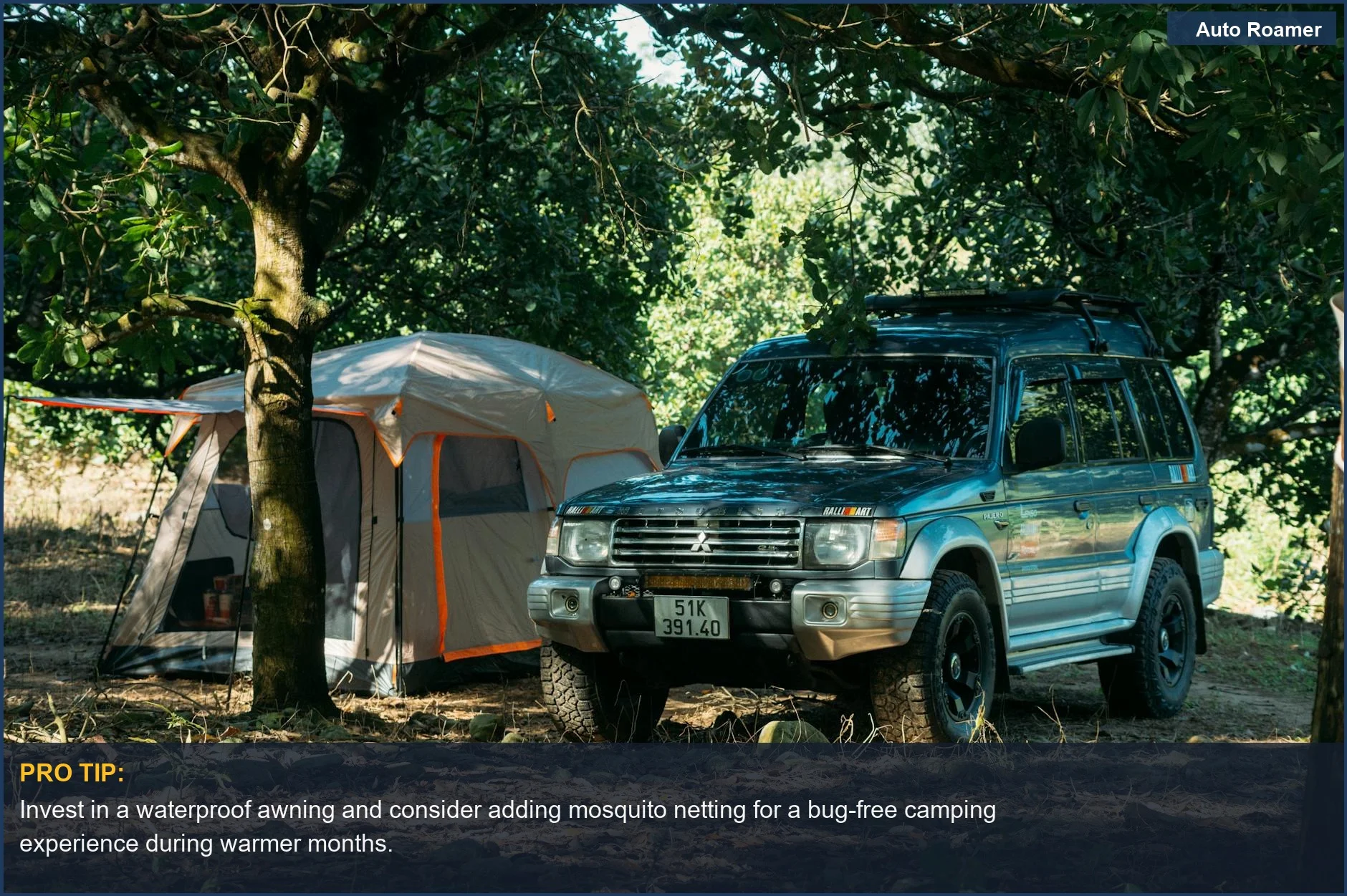
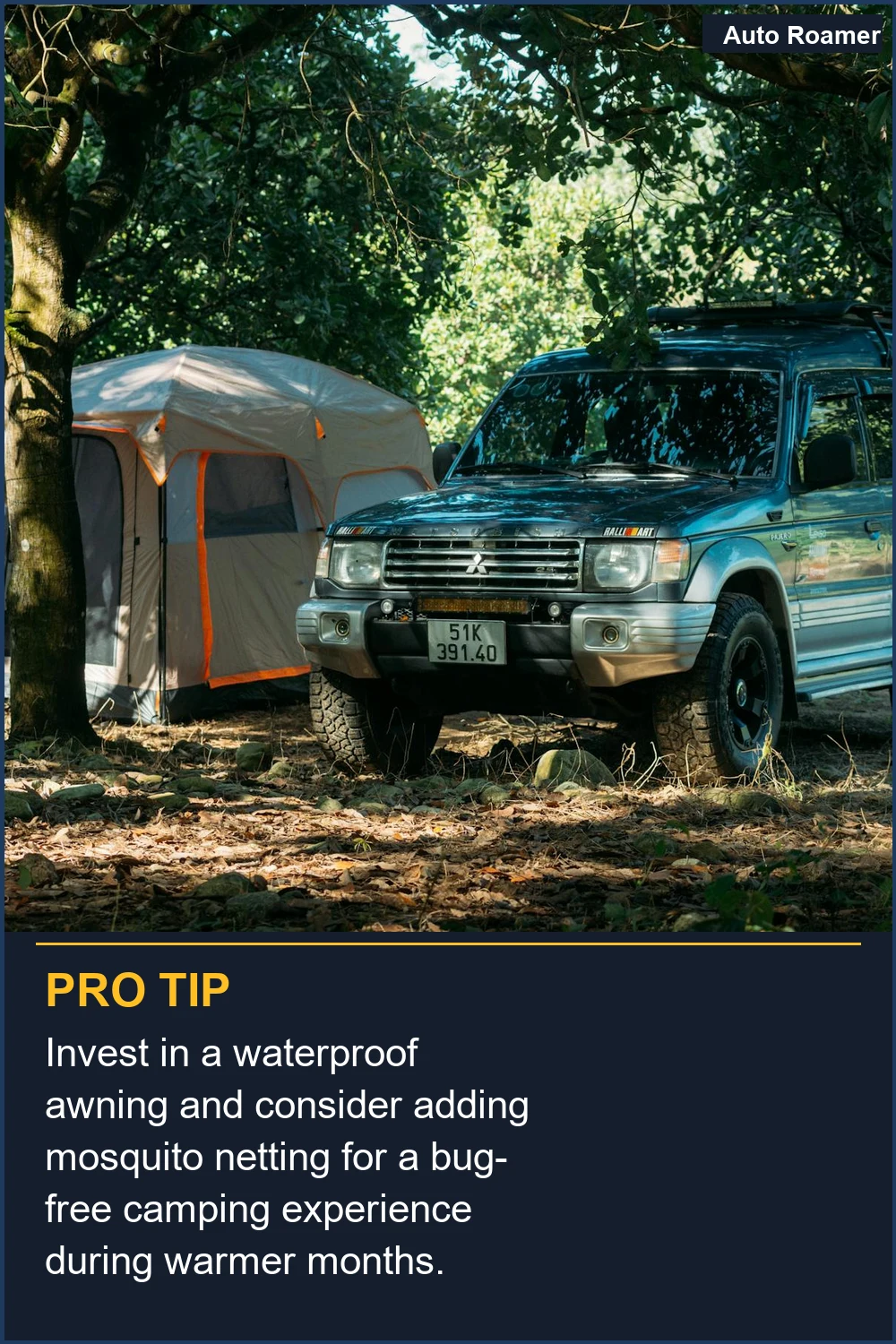
    Invest in a waterproof awning and consider adding mosquito netting for a bug-free camping experience during warmer months.
    This forest SUV awning setup is perfect for outdoor enthusiasts. Don't let unexpected weather ruin your trip; essential accessories offer protection and comfort for your next adventure. | Photo by Dương Nhân

    Frequently Asked Questions

    My awning cost $400, and the annex room is $350. Is it really worth spending almost as much on walls as I did on the awning itself?
    That's a fair question. Think of it this way: the awning is your roof, the walls are your room. That $350 annex room from Cascadia Tents can make your awning usable in ways it just isn't on its own, especially in bad weather or buggy conditions. I've used mine for cooking in the rain and sleeping when it was too cold to be fully exposed. It doubles the utility of your awning.
    Do I really need a special tie-down kit, or can I just use some bungee cords I have lying around?
    Oh, you absolutely need a real tie-down kit. Bungee cords are a rookie mistake waiting to happen. I saw a guy at the campground once whose bungee cord snapped in a gust of wind, and his awning went tumbling. A good kit with sturdy rope and proper stakes, like the $25 one from Overland Vehicle Systems, is designed to hold under stress. Bungees are just glorified rubber bands for your camping gear.
    What if my awning doesn't have easy attachment points for lights?
    Most awnings have a channel or edge where you can clip things. If yours doesn't, don't panic. You can get clip-on lights, or even use a bit of strong Velcro tape. I once used some heavy-duty industrial Velcro to attach a $30 LED strip from Overland Vehicle Systems to the inside of my awning arm when the built-in channel was too narrow. It worked perfectly.
    Can leaving an awning attached to my SUV all the time damage the paint or the roof rack?
    It's possible, especially if it's not mounted correctly or if you're constantly going through car washes. ARB even recommends manually washing your car if you have an awning. If you have quick-release brackets, you can remove it for car washes, which is a good idea. Constant vibration and exposure to the elements without proper care could eventually wear on your vehicle's finish.
    I heard that most awnings are basically the same, so I can just buy the cheapest one and it'll be fine. Is that true?
    That's the kind of thinking that leads to my awning-flapping story. While many awnings might look similar, the quality of the fabric, the strength of the arms, and the mounting hardware can vary wildly. Buying the cheapest option is often a recipe for disaster when the wind picks up. I learned that lesson the hard way with a $400 impulse buy that I now regret. Investing a little more in a reputable brand from places like Stage 3 Motorsports or Overland Vehicle Systems usually means better durability and less chance of it turning into a kite.

    🏅 Looking for Gear Recommendations?

    Check out our tested gear guides for products that work with this setup:

    C

    Casey - The Weekend Warrior

    Weekend car camper and road trip enthusiast. Focuses on practical, budget-friendly solutions for families and first-time campers.

    Sources

    Related Articles