
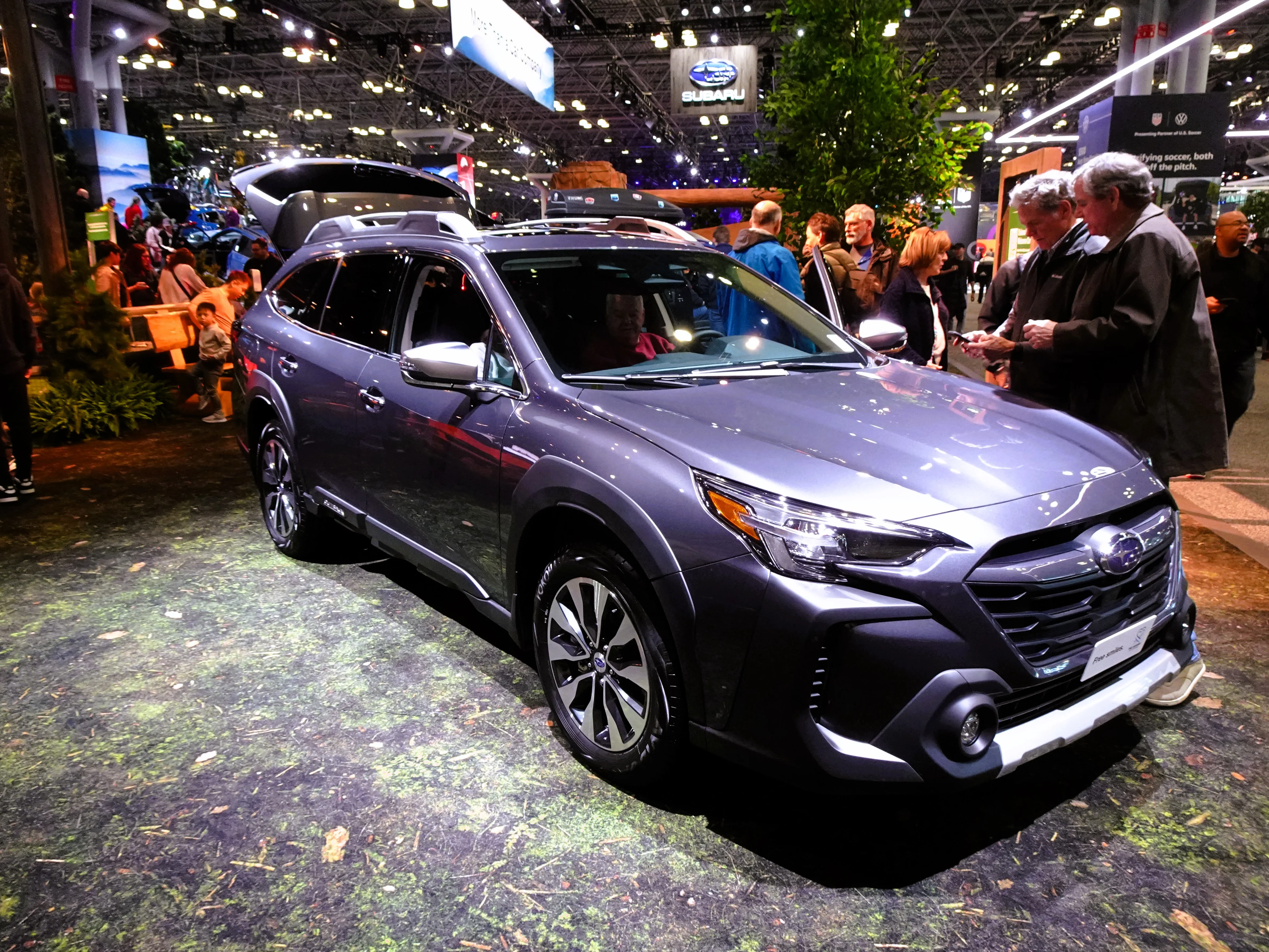
Which Subaru Is Best for Car Camping? The Short Answer
For most car campers, the Subaru Outback is the best all-round choice: Subaru publishes about 75.7 cubic feet of maximum cargo space and roughly 75–76 inches of flat load floor with the rear seats folded — enough for a six-foot adult to stretch out — along with 8.7 inches of ground clearance and standard symmetrical all-wheel drive. No other Subaru combines that flat sleeping length, unpaved access, and efficiency as neatly.
That said, “best” depends on what you value. Ranked by the published specs that actually decide comfort in the field — flat-fold cargo length, AWD and clearance, and accessible power — the Subaru lineup sorts out like this:
- Best flat sleeping floor: the Subaru Outback — the longest, lowest, flattest load floor in the lineup.
- Best headroom / boxiest space: the Subaru Forester — a tall, square cabin with class-leading sit-up room.
- Best for families: the Subaru Ascent — a three-row SUV that folds flat to roughly 86.5 cubic feet.
- Best compact / most efficient: the Subaru Crosstrek — the smallest footprint and best fuel economy for solo campers.
- Best for rough campsite access: the Wilderness trims of the Outback, Forester, and Crosstrek, which add clearance and all-terrain tires.
If you take one rule from this guide, make it this: the headline cubic-foot figure sells the brochure, but the flat load-floor length and the width between the rear wheel wells are what decide whether you actually sleep comfortably. The rest of this guide walks each model against its published numbers so you can match the right Subaru to how you camp.
Why Subarus Are So Popular for Car Camping
Subaru has earned a near-cult following among car campers, and it is not just marketing. Three concrete, brand-wide traits show up on every model’s spec sheet and make the whole lineup unusually camp-friendly straight from the factory.
- Standard symmetrical all-wheel drive. Subaru fits AWD as standard across the Outback, Forester, Ascent, and Crosstrek — you do not pay extra for the traction that gets you to a dispersed site on gravel, mud, or snow.
- Genuine ground clearance. The core models publish 8.7 inches of clearance, and the Wilderness trims go higher (9.5 inches on the Outback Wilderness, 9.2 on the Forester Wilderness). That is competitive with or better than many crossovers in the class.
- Flat-folding rear seats and square cargo bays. Across the lineup the rear seats fold into a long, nearly level load floor, which is exactly what in-vehicle sleeping rewards.
The Subaru advantage for camping is consistency: standard AWD, real clearance, and a flat-folding floor on every model, not just a top trim. The choice between Subarus is therefore less about “is it capable” and more about how much flat floor and seating you need.
There is also a healthy aftermarket built around these vehicles — window covers, platform kits, and model-specific mattresses are easy to find — which lowers the effort of turning any Subaru into a comfortable sleeper. Before naming the best model for your trips, though, it helps to be precise about which published numbers actually matter, because the brochure’s favorite figure is not the one that decides your night’s sleep.
It is worth noting what Subarus do not offer, too, so expectations stay honest. None of these vehicles let you stand up inside — interior heights run roughly 35 to 39 inches, so you sit up to dress and cook rather than walk around as you would in a van. And standard AWD with car-style clearance is not the same as a body-on-frame off-roader; Subarus excel at reaching dispersed sites on dirt and gravel, not at technical rock crawling. Within those limits, though, the combination of efficiency, all-weather traction, and a flat sleeping floor is exactly what makes them such a sweet spot for the way most people actually car camp.
The Specs That Actually Decide Comfort
Marketing leans on a single cargo-volume figure, but campers care about a short list of concrete, published specifications. Rank any Subaru against these and the right model becomes obvious for your situation.
- Flat load-floor length (seats folded). This is the make-or-break number for sleeping. A six-foot adult needs roughly six feet of flat floor to stretch out front-to-back. The Outback (about 75–76 inches) clears this comfortably; the Crosstrek (about 68–69 inches) falls short for taller campers and needs the front seats slid forward or a diagonal layout.
- Width between the rear wheel wells. The cargo bay is widest across the open floor and narrows between the wheel housings. That narrow width — not the wide-open figure — is what limits a wide mattress. On most Subarus it sits in the low 40-inch range above the wells and narrower between them, which is why two narrow pads usually beat one queen mattress.
- Seats-fold-flat reality. Subaru seats fold quite flat, but rarely perfectly level — expect a slight step where the seatbacks meet the cargo floor and a gentle slope. A two-to-three-inch sleeping pad bridges that gap on every model.
- AWD, X-Mode, and clearance for camp access. Standard AWD plus 8.7 inches of clearance (more on Wilderness trims) handles maintained forest roads; X-Mode adds low-traction control for loose surfaces and inclines.
- Accessible power. A 12-volt outlet reachable from the cargo bay and USB ports in the cabin let you run a fan, lights, and devices — though for a fridge or extended trip you will want a dedicated power station rather than the starting battery.
Volume tells you how much gear fits; the flat length and the wheel-well width tell you whether you fit. Always confirm those two linear measurements with a tape measure in the actual vehicle before you buy a mattress or build a platform.
One honest caveat: Subaru publishes cargo volumes far more consistently than exact inside-the-tape linear cargo dimensions, and the linear figures quoted here are widely reported approximations that vary slightly by model year. So the reliable method is to use the published volume to build your shortlist, then verify the critical flat length and wheel-well width yourself in the specific model year you are considering. Our Outback cargo dimensions for sleeping guide shows exactly which measurements to take.
Subaru Outback: The Best All-Round Flat Sleeper
If sleeping in the vehicle is your priority, the Outback is the strongest pick in the lineup. Subaru publishes about 75.7 cubic feet of maximum cargo space, and the load floor runs roughly 75–76 inches with the rear seats folded — long enough for most adults to lie flat front-to-back without diagonal contortions.
Why the Outback leads for in-vehicle sleeping, by the numbers:
- Length: about 75–76 inches of flat floor — comfortable for campers up to six feet, and workable up to about 6′3″ with minor positioning.
- Clearance and drivetrain: 8.7 inches of ground clearance (9.5 inches on the Outback Wilderness) and standard symmetrical AWD for unpaved access.
- Floor geometry: the Outback is a raised wagon rather than a tall crossover, so the load floor sits lower and longer — many find it the easiest Subaru to sleep flat in, and it swallows long items like fishing rods or skis more readily.
The honest limitation is width: like the rest of the class, the Outback narrows between the rear wheel wells, so a full queen mattress fights the space. A full-size pad (about 54 by 75 inches) fits with slight width adjustment above the wheel wells, while two narrow pads suit two sleepers better. Our best mattress for the Subaru Outback guide covers sizing, and how to maximize sleeping space in your Outback walks through platform and layout tricks.
For who the Outback is and is not for: if you camp solo or as a couple, want the flattest, longest bed without a fuel penalty, and reach sites on maintained roads, the Outback is hard to beat. If you need three rows of seats or the absolute boxiest sit-up room, the Ascent or Forester respectively will serve you better — the Outback trades a little vertical headroom for its long, low floor.
A realistic Outback sleeping setup looks like this: fold both rear seats, lay a two-to-three-inch pad or a model-specific air mattress to smooth the slight seam where the seatbacks meet the cargo floor, and use the area above the wheel wells for the widest part of your bed. Gear that does not fit alongside goes in a roof box or up front. Owners chasing rough campsite access should look hard at the Outback Wilderness, whose 9.5 inches of clearance, all-terrain tires, and revised gearing meaningfully extend where the wagon can go before the floorpan becomes the limit.
Subaru Forester: The Boxy, Best-Headroom Option
The Forester is the Outback’s closest sibling for camping, and it wins on a different axis: headroom and a square, boxy cabin. Subaru publishes about 74.2 cubic feet of maximum cargo, with a flat floor of roughly 70–72 inches — a touch shorter than the Outback, but in a taller, more upright space.
What the Forester’s shape buys you:
- Best-in-class sit-up headroom. The boxy roofline gives the most comfortable sitting height of any Subaru — valuable for changing clothes, cooking in the hatch, or waiting out rain.
- Square, easy-to-organize bay. The upright sides make the cargo area feel larger than the volume suggests and simplify stacking bins and gear.
- Standard AWD and X-Mode with 8.7 inches of clearance (9.2 inches on the Forester Wilderness) for loose surfaces and light off-road access.
The tradeoff versus the Outback is purely length: at roughly 70–72 inches, the Forester’s flat floor suits campers up to about 5′10″ lying straight, with taller sleepers using a diagonal layout. Choose the Forester if headroom and a compact footprint matter most, or if you are under about 5′10″; choose the Outback if maximum flat sleeping length is the priority. The full Subaru Forester camping guide details the setup, and you can extend its capacity with a roof rack — see Forester roof rack weight capacity.
The Forester also rewards a particular style of camping: the kind where you spend waking hours in or around the open hatch rather than only sleeping. Its upright glass and tall roof make it the easiest Subaru to sit up in, change clothes in, or cook from the tailgate during bad weather, and the square walls make a tidy two-bin-wide storage system simple to organize. If you frequently camp solo and value that livable upright space over an extra few inches of bed length, the Forester can be the smarter pick than the Outback despite its slightly smaller published volume. As with the Outback, a Wilderness trim is available for those who want the extra clearance and all-terrain tires for rougher access.
Subaru Ascent and Crosstrek: Family vs. Compact
Beyond the Outback and Forester, two more Subarus bookend the lineup — one for families who need seats, one for solo campers who want efficiency. They answer very different needs, and their published specs make the choice clear.
Subaru Ascent — the three-row family choice. Subaru publishes up to about 86.5 cubic feet of maximum cargo behind the first row with the rear rows folded, plus seating for seven or eight on travel days. That is the biggest bay in the lineup and a near-six-foot flat floor for one or a snug two sleepers once the seats are down. With standard AWD and 8.7 inches of clearance, it doubles as a capable family camp base.
Subaru Crosstrek — the compact, most efficient choice. The Crosstrek publishes about 55.3 cubic feet of maximum cargo and a flat floor of roughly 68–69 inches — the smallest in the lineup, but with the same standard AWD and 8.7 inches of clearance. Its strengths are fuel economy and a compact footprint that threads tight forest roads and small campsites. Its limit is space:
- Solo campers under about 5′8″: the Crosstrek works well — enough length and room for gear.
- Taller solo campers: use a front-seat-extended, feet-forward diagonal layout.
- Two adults: very cozy — best treated as occasional, or paired with a rooftop tent.
Think of it as a spectrum: the Ascent maximizes seating and total volume for families, the Crosstrek maximizes efficiency and maneuverability for soloists, and the Outback and Forester sit in the sweet spot between them for one or two campers.
On a tight budget, the smaller Subaru Impreza can also work for a minimalist solo setup, though its lower clearance and shorter floor make it the most compromised of the family for sleeping.
A useful way to decide between the Ascent and the Crosstrek is to count the people who will actually be in the vehicle on a typical trip. If you regularly travel with kids or a group and need real seats on the drive in, the Ascent’s three rows and class-leading volume make it the obvious family base, with the rear rows folding flat at camp to open the biggest bay in the lineup. If you almost always camp alone or as a couple and care more about fuel economy, easy parking, and threading narrow forest roads, the Crosstrek’s compact footprint and efficiency win — just plan around its shorter floor with a feet-forward layout or a rooftop tent. The middle of the lineup, the Outback and Forester, exists precisely because most campers fall between those two extremes and want one vehicle that does daily driving, road trips, and weekend sleeping without the size of an Ascent or the space limits of a Crosstrek.
Wilderness Trims, AWD, and Reaching Remote Sites
A big part of the Subaru camping appeal is getting to the campsite, and here the Wilderness trims and the standard AWD system earn their reputation. If your camping leans toward dispersed sites down rough forest service roads, the access hardware matters as much as the sleeping floor.
What the Wilderness trims add over the standard models:
- More ground clearance: 9.5 inches on the Outback Wilderness and 9.2 inches on the Forester Wilderness, versus 8.7 inches standard — meaningful on rutted roads and over rocks.
- All-terrain tires and revised gearing for better traction and control on loose, steep, or technical surfaces.
- Tougher protection and recovery points aimed squarely at off-pavement use.
Across the lineup, Subaru’s standard symmetrical AWD — paired with X-Mode on most models — handles the conditions most campers actually face: dirt and gravel forest roads, mud and snow with appropriate tires, loose sand, and moderate inclines. The honest limit is that clearance, not traction, is the usual ceiling: AWD will not lift the floorpan over a deep rut or a high rock, so scout unfamiliar roads and know the vehicle’s approach limits.
For maintained gravel and light forest roads, any standard Subaru is plenty. The Wilderness trims are worth the premium only if you regularly push past where a standard crossover would scrape — otherwise you are paying for clearance you rarely use.
Whatever trim you choose, a few habits keep remote trips safe: carry simple recovery gear, tell someone your plans, check conditions with ranger stations, and fit all-terrain or snow tires for the season rather than relying on AWD alone.
Power, Gear, and Turning Your Subaru Into a Camper
Once you have picked the right Subaru, the setup matters as much as the model. The good news is that the lineup’s flat floors and factory roof rails make the conversion straightforward, and the same accessories work across the range.
The setup priorities, in rough order of impact:
- A sleeping surface that bridges the floor. Because Subaru seats fold nearly — but not perfectly — flat, a two-to-three-inch pad or a model-specific air mattress is the single biggest comfort upgrade. Our best car-camping mattresses for SUVs and sedans roundup covers sizing across the lineup.
- Window covers for privacy and insulation. Reflective covers or model-specific shades cut light, heat, and cold — see our window covers guide.
- Accessible power. Subarus offer a 12-volt cargo-area outlet and cabin USB ports for a fan, lights, and devices. For a fridge or longer trip, a dedicated portable power station for car camping is far safer than drawing on the starting battery — and note that running the engine for heat or AC overnight has real limits, as our guide to how long you can run car AC while parked explains.
- Roof storage to free up the cabin. Factory roof rails accept crossbars for boxes, baskets, awnings, or a rooftop tent — the simplest way to keep the sleeping area clear of gear.
For campers who like to build rather than buy, the flat Subaru cargo area is a friendly platform for a DIY sleeping deck with storage underneath; our DIY sleeping platform guide walks through a simple build. Whichever route you take, the principle is the same: match the model to your trips first, then finish the job with a good pad, window covers, and a power plan.
Two safety notes are worth repeating because they apply to every Subaru. First, never run the engine for cabin heat while you sleep — idling in an enclosed or low-airflow spot risks carbon monoxide, and even in the open it burns fuel and wears the engine; an insulated pad, a cold-rated bag, and good window covers keep you warmer and far safer. Second, plan your ventilation: cracking windows slightly (with bug screens) controls condensation, the most common complaint of first-time car campers in any vehicle. Get the sleeping surface, insulation, power, and airflow right, and any of these Subarus turns into a genuinely comfortable basecamp — which is why the lineup keeps its reputation as some of the most camp-ready vehicles you can buy without stepping up to a van.