
The short version
The Subaru Crosstrek is one of the most popular small vehicles for car camping, and it earns that reputation — but not for the reason people assume. It is not spacious inside. What it offers is the rare combination of a compact, efficient, affordable platform with genuine trail capability, so it reaches places most crossovers cannot.
Here is the honest summary. With the rear seats folded you get a near-flat load floor roughly 64-66 inches long and about 54-55 cubic feet of space — comfortable for one person sleeping inside on a fitted pad, tight to impossible for two adults lying flat.
Most Crosstrek campers either sleep solo inside, add a rooftop tent, or use the car as a capable basecamp for a ground tent. The vehicle rewards a realistic plan more than any clever hack.
This guide walks through the real numbers and the practical setups: cargo dimensions, sleeping options, storage, power, ventilation, cooking, and the off-road advantage that defines the Crosstrek. If you are choosing between vehicles, our overview of which SUV is best for camping puts the Crosstrek in context against larger rigs.
The hard numbers: dimensions, cargo and space
Start with the measurements, because they drive every decision. The Crosstrek offers approximately 20 cubic feet of cargo behind the upright rear seats and about 54-55 cubic feet with the 60/40 seats folded.
The flat load length with the seats down is roughly 64-66 inches, and width between the wheel wells is around 40 inches at the narrowest. Those two constraints — length and wheel-well width — shape every sleeping setup.
| Measurement | Approximate figure |
|---|---|
| Cargo behind rear seats | ~20 cu ft |
| Cargo, seats folded | ~54-55 cu ft |
| Flat floor length (seats down) | ~64-66 in |
| Width between wheel wells | ~40 in |
| Ground clearance | ~8.7 in |
Those numbers tell you the Crosstrek is generous for a compact SUV but short for flat sleeping — 64-66 inches is under 5 feet 6 inches, so anyone taller must sleep diagonally or extend the floor with a platform into the footwells.
If you are weighing interior sleeping against other vehicles, our breakdown of what size mattress fits in an SUV explains how to translate these dimensions into a pad that actually fits. Always confirm figures for your exact model year, since Subaru revises cargo numbers between generations and trims.
Sleeping setups: mattress and platform options
Because the flat floor is short, sleeping well in a Crosstrek is about matching the setup to your body and your party size. For a solo camper, the simplest approach is a custom-cut foam pad or short self-inflating mattress laid on the folded seats.
The footwell gap behind the front seats is the catch: fill it with a firm cushion or a storage bin to level the surface, or you will roll toward the gap all night. Getting that single detail right is the difference between a good night and a sore back.
Taller campers and anyone wanting a flatter, longer bed build a simple sleeping platform: a low plywood deck that spans the folded seatbacks and reclaims length toward the footwells, with gear stored underneath. Our walkthrough on building a DIY car-camping sleeping platform covers the dimensions and materials, and our guide to the best car-camping sleeping pad helps choose the surface on top.
Rule of thumb for the Crosstrek: one person sleeps comfortably inside with the right pad; two adults flat is a tent job, not an interior job.
If you camp as a pair and want to stay off the ground, a rooftop tent is the upgrade that transforms the Crosstrek into a genuine two-person sleeper without touching the cargo area — just confirm your roof and rack load ratings first, since a compact's roof has real limits.
Storage and gear organization
In a compact vehicle, organization is the difference between a relaxing trip and a frustrating one. The Crosstrek's roughly 20 cubic feet behind the seats swallows a weekend of gear if you pack in stackable bins rather than loose bags, which also gives you a stable surface to build a sleeping platform on.
The catch is that interior sleeping competes directly with storage: the same space is either bed or boxes. You cannot have both at full size, so plan which gear sleeps inside and which moves out for the night.
The standard solutions are to move bins to the front seats overnight, or to expand outward. A roof rack for camping gear with a basket or box keeps bulky and dirty items outside and frees the cabin for sleeping. For owners who camp often, our overview of a car-camping drawer system shows the organizing principles that scale down to a small SUV.
- Stackable bins beat loose bags for packing and platform building
- Front seats become overnight gear storage when you sleep inside
- Roof storage is the single best way to free interior space
- A nightly reset — gear out, bed in — keeps the system working
Power and charging options
The Crosstrek's electrical needs for camping are modest, and that is good news because you do not need to modify the vehicle. The 12V outlet and USB ports handle phone and device charging while driving between sites, and that alone covers a lot of weekend camping if you top everything up before you leave.
For lights, a fan, or keeping a small cooler going, the clean answer is a portable power station rather than any wiring — it is movable, renter-friendly, and recharges from the car, solar, or a wall outlet.
Size it honestly to your loads. If you are weighing how much capacity you actually need, our piece on power-station battery life while camping walks through realistic runtimes for lights, a phone, and a 12V cooler over a weekend.
For a vehicle this size, a permanent dual-battery install is almost always the wrong call — our case for choosing a power station for car camping explains why a movable box beats wiring for the modest loads a Crosstrek camper actually runs.
Ventilation and condensation control
The most common complaint from first-time car campers in any small SUV is waking up to wet windows and a damp sleeping bag. This is condensation, and in a sealed cabin one or two sleepers exhale enough moisture overnight to soak the glass.
The Crosstrek is no exception, so plan for ventilation from the start rather than treating it as an afterthought once you are already damp.
The fix is cross-flow: crack two windows on opposite sides an inch or so to let humid air escape and dry air in. Because you often need to vent in light rain, many owners fit window rain-guard deflectors so the gap stays open without water coming in, and add a small USB fan to keep air moving.
Our deeper explainer on understanding condensation in car-camping setups covers why cold, damp nights are worst and how to stay dry. Keeping wet gear in the cargo area or outside, and never cooking inside the cabin, cuts the moisture load dramatically and makes the biggest single difference to comfort.
The off-road advantage: X-MODE, AWD and clearance
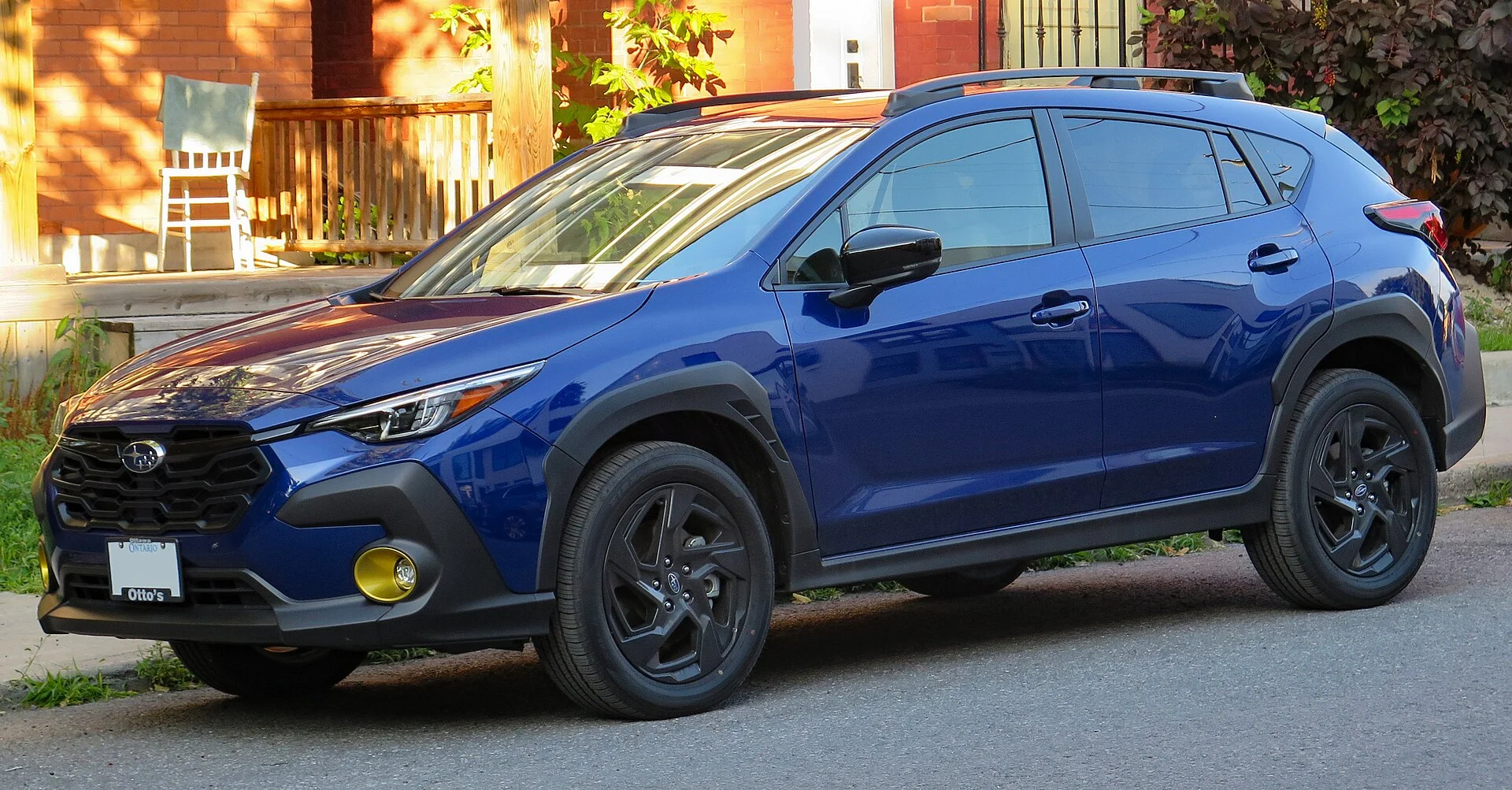
If interior volume is the Crosstrek's weakness, capability is its signature strength, and it is the real reason the vehicle is a camping favorite. Every Crosstrek comes with Subaru's standard symmetrical all-wheel drive and roughly 8.7 inches of ground clearance — more than many midsize SUVs.
On most trims you also get X-MODE, Subaru's traction-control software that optimizes the AWD, engine output, and braking for low-grip surfaces, with a hill-descent control that meters your speed down loose grades so you are not riding the brakes.
In practice that means the Crosstrek confidently handles washboard forest service roads, mild rutted two-tracks, shallow water crossings, and the kind of rough access that strands a low-slung crossover at the trailhead. The 8.7 inches of clearance is often the deciding factor — it is what clears the rocks and ruts on the approach roads that actually lead to good dispersed sites.
It is not a rock crawler — there is no low-range transfer case, and the all-season tires limit you on technical terrain — but for the purpose most campers care about, reaching remote established and dispersed sites, it is genuinely capable.
The Crosstrek's trade is honest: it gives up interior sleeping room to gain the ability to get somewhere worth sleeping. For basecamp and dispersed camping, that is often the better trade.
That capability pairs naturally with reaching campsites others skip, so plan your access with our guide to planning your first car-camping trip.
Which Crosstrek trim should a camper choose?
Every Crosstrek shares the same interior dimensions, so trim does not buy you a longer bed — but it does change capability, comfort, and how easily you reach the sites worth camping at. That makes the trim decision worth a moment.
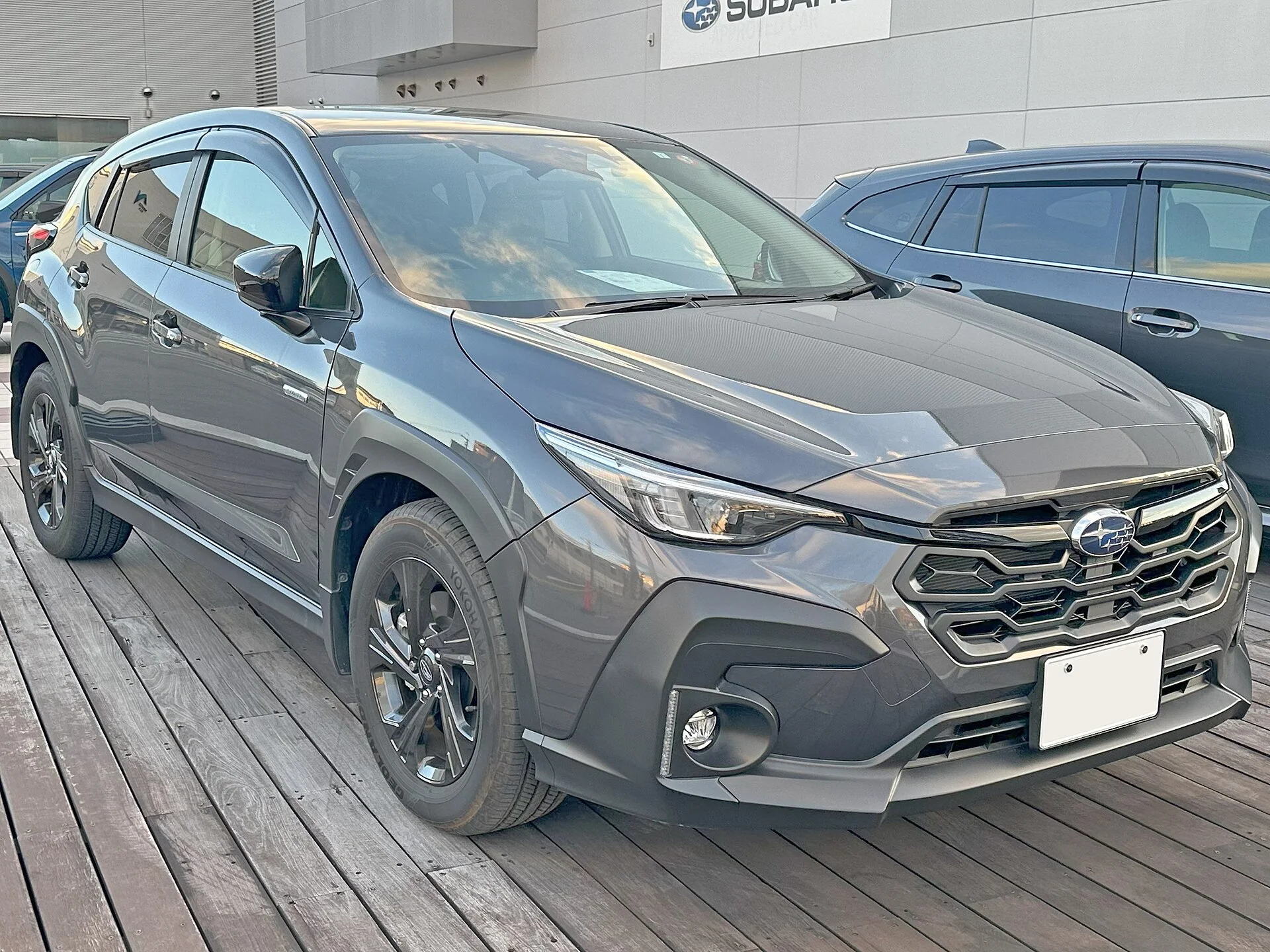
The base and Premium trims give you the full camping advantage that matters most: standard symmetrical AWD, the roughly 8.7 inches of clearance, and X-MODE on most build years. For a camper who mostly drives forest-service roads to established sites, that is genuinely all you need.
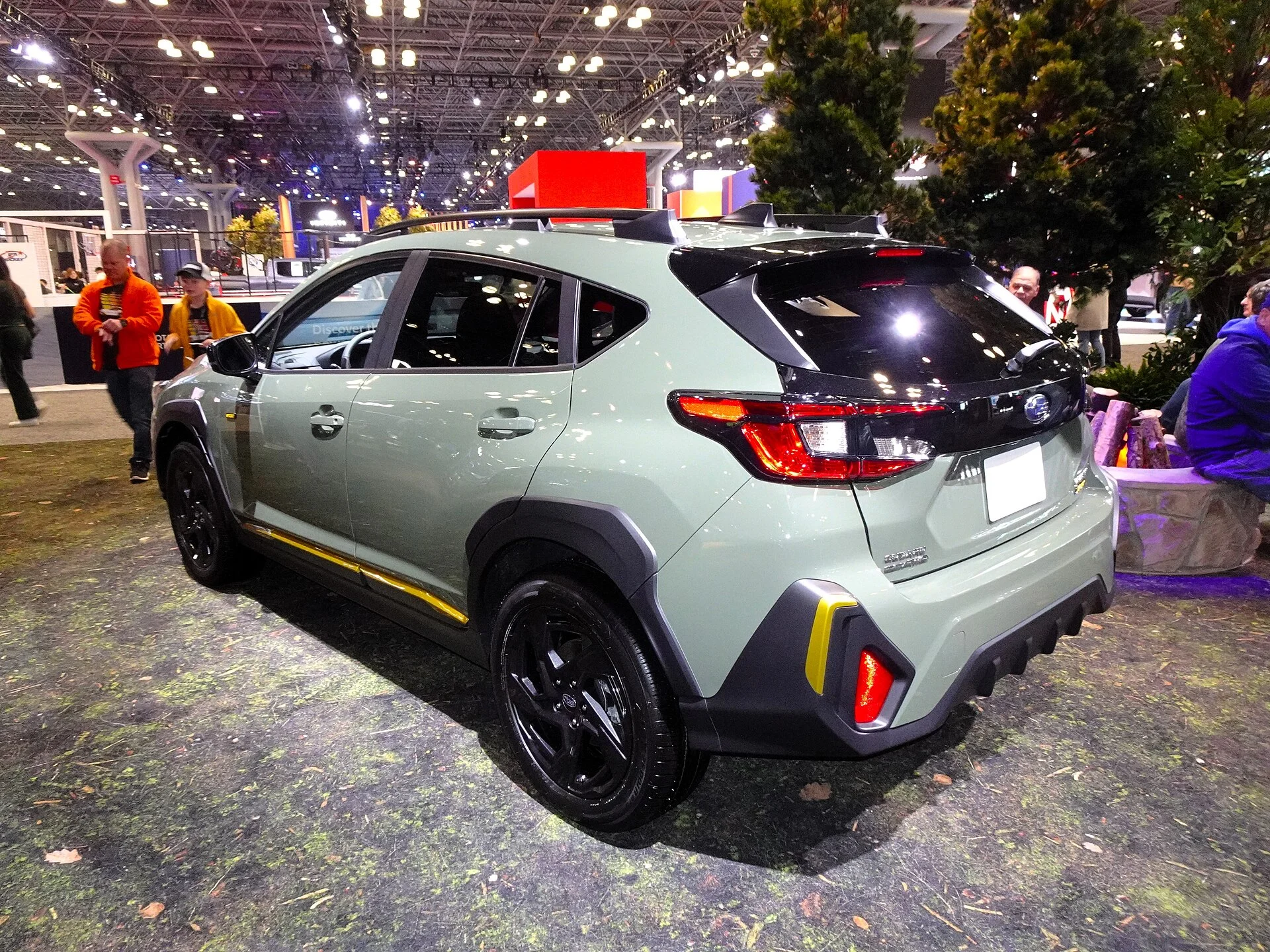
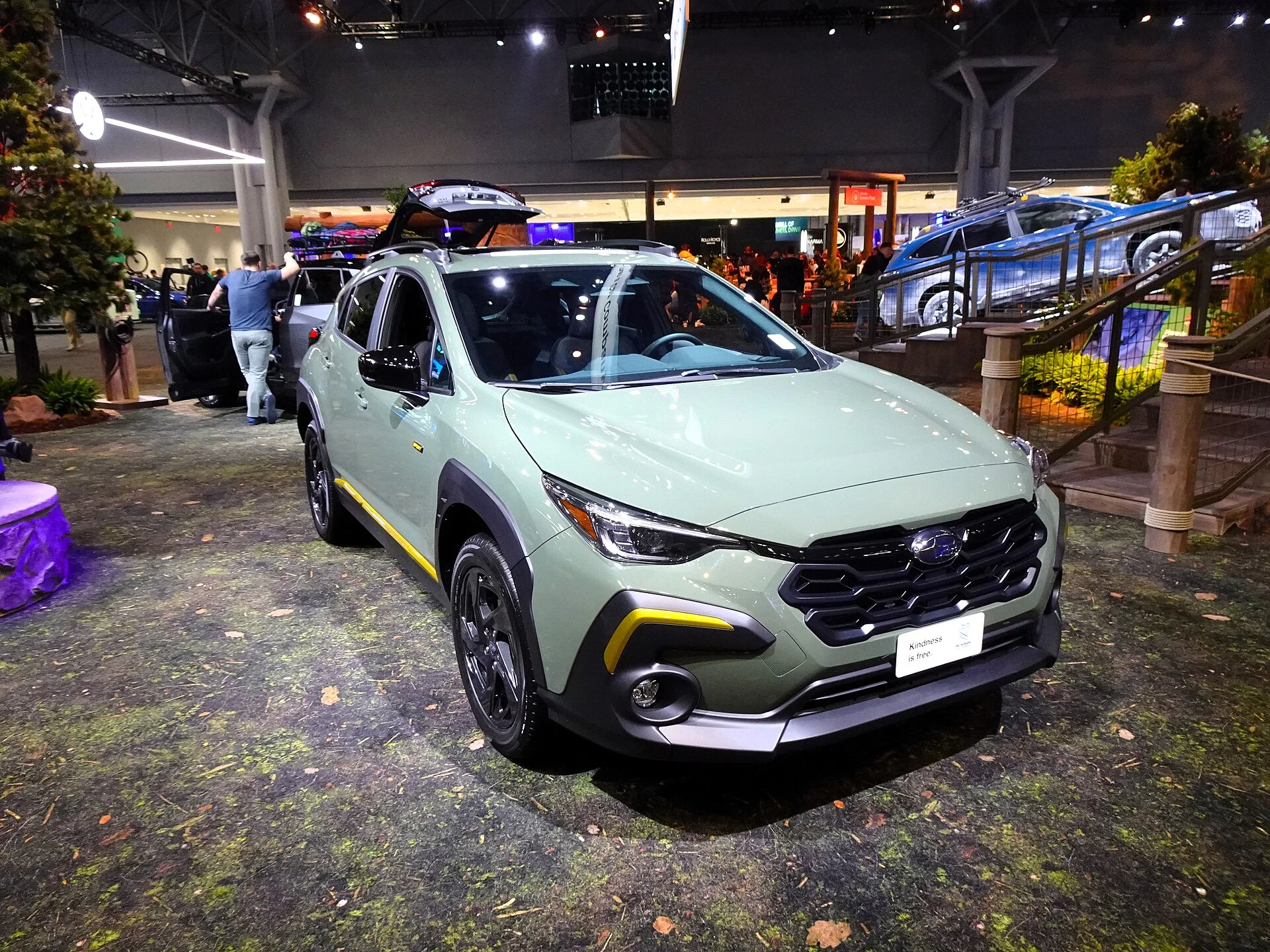
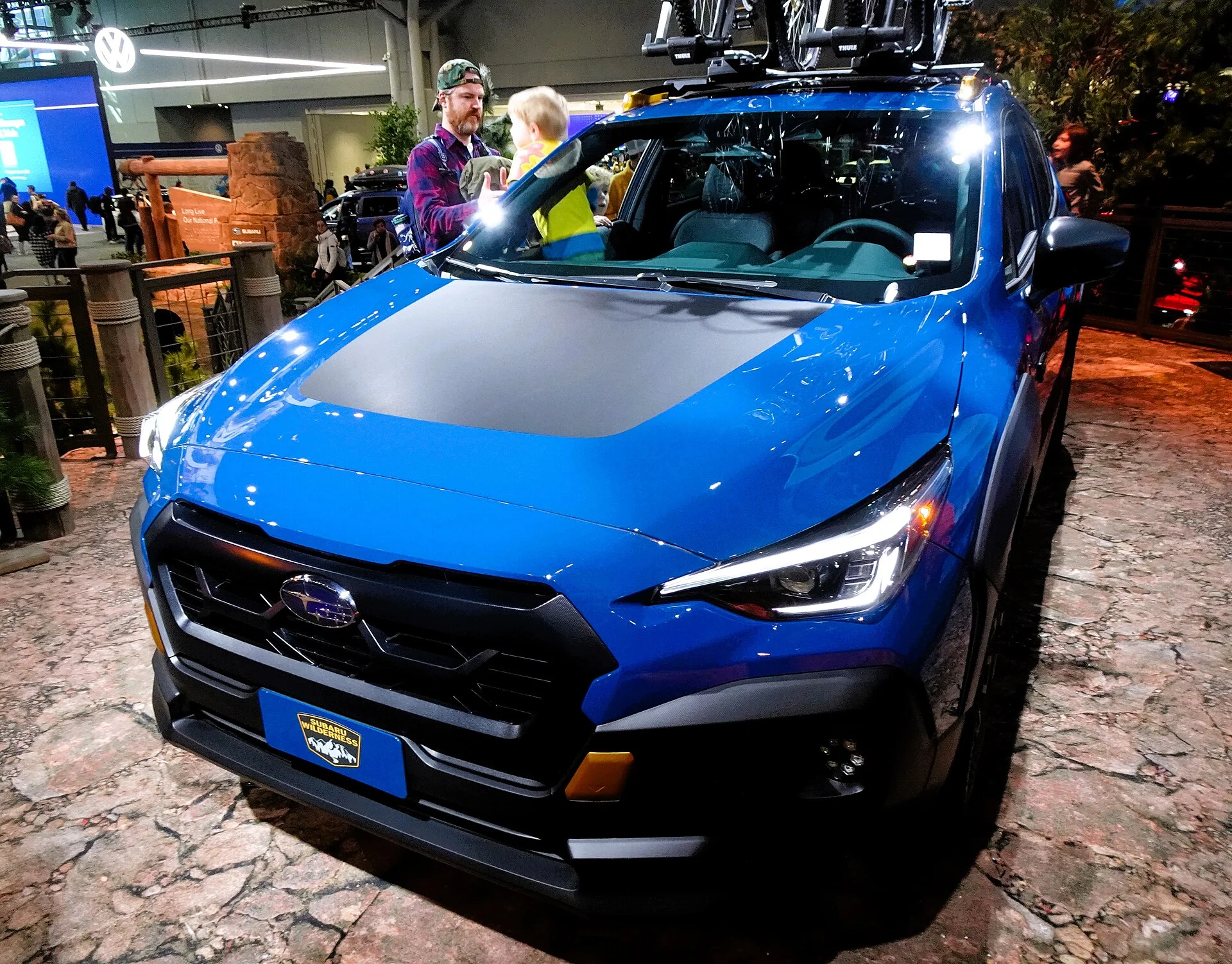
The Sport and Wilderness trims add the extras that matter on rougher approaches. The Wilderness in particular brings more aggressive all-terrain tires, additional clearance, a retuned X-MODE with dual functions for deeper snow and mud, and underbody protection — the closest the Crosstrek gets to a purpose-built trail rig.
If dispersed and rough-access camping is your goal, the Wilderness is the trim that earns its premium, mostly because its tires and clearance handle the rutted, washed-out approach roads that actually decide whether you reach a quiet spot. If you stick to graded roads and campgrounds, a Premium saves money and rides a touch smoother on pavement.
Trim buys you capability and tires, not sleeping room — the Crosstrek is a solo interior sleeper in every version, so choose the trim for where you drive, not how you sleep.
Cooking and the camp kitchen around a Crosstrek
Because you sleep where you would otherwise store and prep food, the camp kitchen in a Crosstrek setup happens almost entirely outside the vehicle — and that is a feature, not a limitation. Cooking inside any small sealed cabin is both a fire and a carbon-monoxide risk, and it dumps moisture that worsens condensation.
The practical layout uses the open rear hatch as a rain-sheltered work surface and the folded cargo floor or a tailgate-height table as the prep zone. A single-burner stove on a low folding table beside the car, with a bin of kitchen gear pulled from the cargo area, covers most weekend cooking.
Keep the kitchen kit in one labeled bin so the whole system lifts out in a single motion when it is time to convert the interior to a bed. The same bins that organize your storage double as the kitchen box here.
Plan water and a small wash setup too — a collapsible jug and a basin let you clean up without tracking food smells and grease into the sleeping space, which matters more in a compact than in a roomy rig. Our broader car-camping essentials checklist covers the kitchen kit that fits a small SUV without overloading it.
Weather, privacy and living in the space
Beyond sleeping and driving, the day-to-day livability of a Crosstrek camp setup comes down to a few small things done well. Privacy and light control matter more than people expect: covering the windows lets you change, sleep past sunrise, and feel secure at a busy site.
Custom-cut reflective covers or fabric privacy curtains sized to the Crosstrek's glass are the standard answer, and reflective covers double as insulation against heat and cold.
For wet trips, the realities of car camping in the rain — staged entry to keep water out, gear management, ventilation — apply directly to a vehicle this small, where one wet sleeping bag ruins the night.
In cold weather, the compact cabin actually helps: a small space holds body heat, and a good cold-weather camping blanket plus an appropriately rated bag keeps a solo sleeper comfortable without any powered heat, which is the safest approach in a sealed vehicle. In summer, the opposite applies — park in shade, vent both ends, and run a small fan to move air on hot nights.
A realistic solo weekend build
It helps to picture how all of this comes together for an actual trip. A typical solo Crosstrek weekend looks like this, and it is achievable on a modest budget.
Before leaving, charge the power station and every device, and pack the cargo area in three bins: sleep (pad, bag, pillow), kitchen (stove, pot, food, water), and camp (lights, chair, tools). Loose gear that does not fit goes in a roof box.
At the site, the conversion is quick: fold the 60/40 seats, lift the kitchen and camp bins onto the front seats or out to the table, fill the footwell gap, and roll out the pad. Five minutes turns a daily driver into a bedroom.
- Arrive + level: park nose-up or down to level the sleeping floor
- Kitchen out: stove and food bin to the table beside the car
- Bed in: seats down, footwell filled, pad and bag rolled out
- Vent: crack two windows on opposite sides before sleep
The morning reverses it: bag and pad stow into one bin, seats come up, and the Crosstrek is a normal car again for the drive to the next trailhead. The whole appeal is that nothing is permanent.
Common mistakes Crosstrek campers make
Most Crosstrek camping disappointments come from a handful of predictable errors, and every one is avoidable once you know to watch for it.
The first is expecting two-person interior sleeping. The 64-66 inch floor and 40-inch wheel-well width simply do not allow two adults to lie flat side by side — couples who plan on it end up cramped and frustrated. Plan a rooftop or ground tent for two from the start.
The second is ignoring the footwell gap. Laying a pad straight onto the folded seats without filling the drop behind the front seats leaves you sliding into a trough all night. Fill it with a firm cushion or bin first.
The third is sealing the cabin against condensation. Closing every window to stay warm guarantees a wet bag by morning; cross-ventilation with two windows cracked is non-negotiable, even in the cold.
The fourth is overloading the interior instead of using the roof. The cabin is either bed or boxes, not both, so a roof rack is what makes a comfortable night possible. And the fifth is cooking inside — a fire, carbon-monoxide, and moisture risk that has no place in a sealed compact cabin.
- Two flat inside: not happening — plan a tent for couples
- Footwell gap: fill it or slide into it all night
- Sealed cabin: vent two windows or wake up damp
- Cooking inside: never — cook outside, every time
Pros and cons: honest trade-offs
No vehicle is perfect for camping, and the Crosstrek's profile is unusually clear: it trades space for capability and efficiency. Weigh these honestly against how you actually camp before deciding it is the right rig.
| Pros | Cons |
|---|---|
| Standard AWD + ~8.7 in clearance reaches remote sites | Short ~64-66 in flat floor — solo sleeper, not two flat |
| Efficient, affordable, easy to park and drive daily | ~54-55 cu ft is modest vs midsize/full-size SUVs |
| Excellent basecamp + gear hauler for tent camping | No low-range gearing for serious technical trails |
| Roof-tent and rack friendly to expand capacity | Interior sleeping competes directly with cargo storage |
The pattern is consistent: the Crosstrek is a superb small, capable, efficient camping vehicle for solo sleepers and tent campers, and a compromise for couples who insist on flat interior sleeping.
Final verdict and recommendation
The Subaru Crosstrek deserves its camping popularity, as long as you buy it for what it is. It is the rare affordable, efficient compact that can genuinely reach dispersed and rough-access campsites thanks to standard AWD and high ground clearance — a capable basecamp vehicle and a comfortable solo interior sleeper.
Set your expectations on sleeping: one person fits well on a fitted pad or platform; two adults flat inside do not. Couples are happiest with a rooftop tent or a ground tent using the Crosstrek as the capable hauler.
Add roof storage to free the cabin, plan for ventilation against condensation, cook outside, and power the trip with a portable station rather than wiring. Do that and the Crosstrek rewards you with access most crossovers cannot match.
If you want to see how it stacks up against bigger options, start with our best SUVs for camping overview and our car-camping essentials checklist to kit it out.