
Setting Up Your SUV Camping Tent: Tips for Beginners
Setting up your SUV for camping isn't about fancy gadgets; it's about using what you've got to get outside without a fuss. My first trip involved trying to sleep on a pile of gym clothes because I didn't think about comfort.
Setting up your SUV for camping isn't about fancy gadgets; it's about using what you've got to get outside without a fuss. My first trip involved trying to sleep on a pile of gym clothes because I didn't think about comfort. The real move is figuring out how to make your vehicle work for you, not against you. It's about maximizing your space and minimizing your headaches.
This guide cuts through the noise and gets you to the point: getting a decent night's sleep so you can actually enjoy the outdoors. Think of it as the $50 version of a luxury RV, but with better access to dirt roads. SUV camping is about simplifying, not complicating. It's about making the most of your existing rig.
My goal is to help you avoid the rookie mistakes I made, like forgetting a pillow and waking up with a crick in my neck that lasted three days. Let's make your next trip comfortable.
The Core Answer
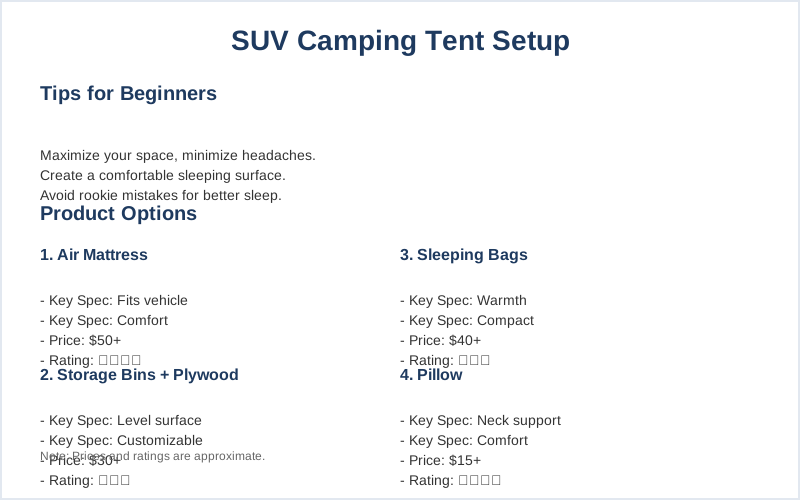
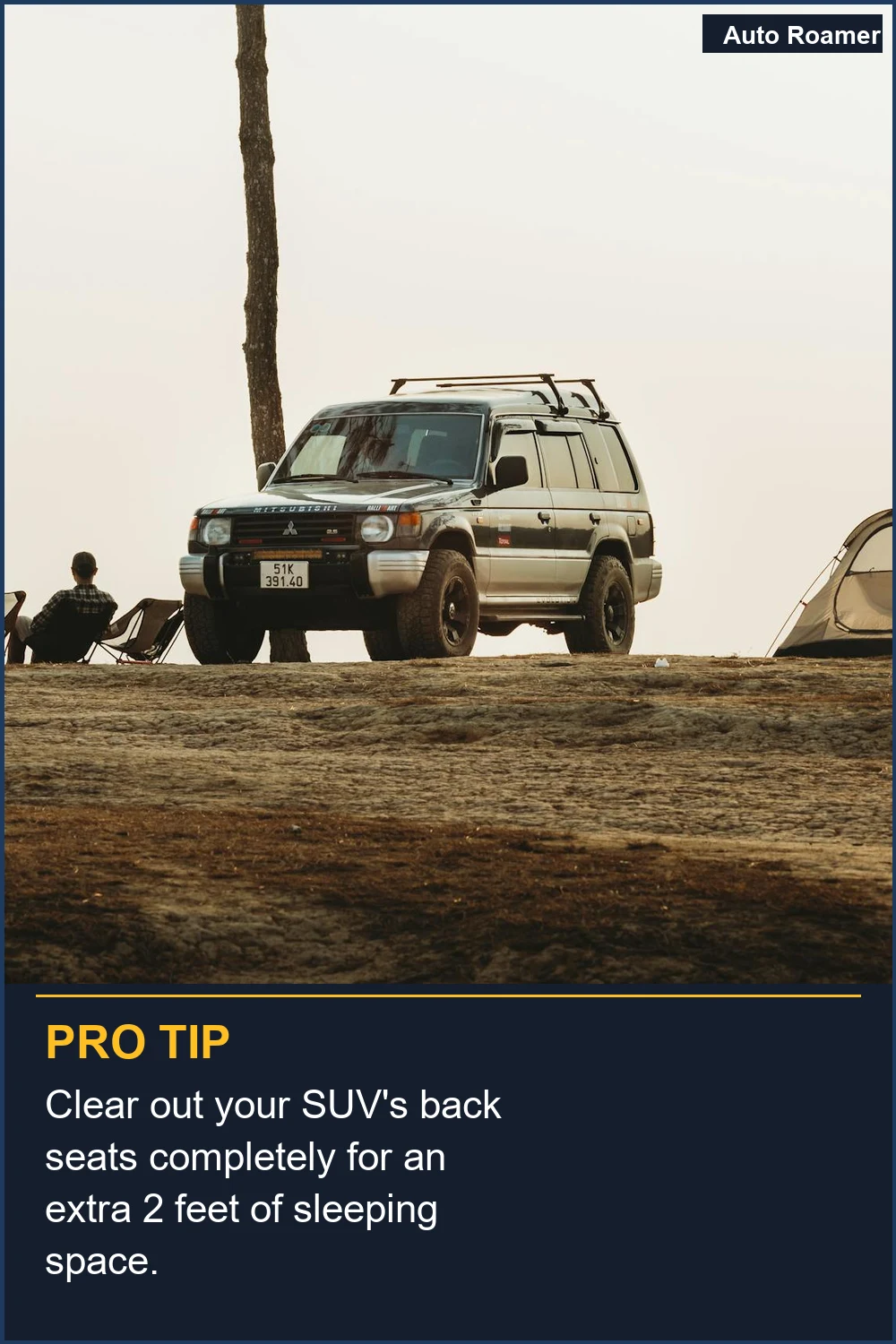
The core of setting up your SUV for camping is creating a usable sleeping and living space inside or attached to your vehicle. This usually involves clearing out the back, creating a level sleeping surface, and figuring out where your gear goes. For sleeping inside, you're essentially turning your cargo area into a bed. This means folding down seats and potentially adding something to make it flatter and more comfortable. I learned the hard way that a lumpy back seat is not a recipe for good sleep. My first attempt involved just shoving sleeping bags on the floor, which was like sleeping on a bag of rocks. The real move is a solid platform or a good quality air mattress that fits. You don't need a custom build; sometimes strategically placed storage bins with a piece of plywood on top is enough. For example, I used two sturdy plastic bins and a $30 sheet of plywood to create a mostly level surface in my old Forester. It wasn't perfect, but it was a world away from the original seats. Then comes the sleeping bag and pillow situation. What nobody tells beginners is that even a $20 foam pad makes a massive difference. It's not about the fanciest gear; it's about the essentials. My $12 fleece liner, mentioned before, was a game-changer for warmth. For storage, think vertically. Use bins and bags to organize everything. My trunk used to be a black hole of forgotten gear. Now, everything has a place. This makes setup and breakdown so much faster. It's about having your essentials accessible. The honest version: you need a comfortable place to sleep, a way to keep warm, and light. Everything else is gravy. I saw a guy at Yosemite once with a full kitchen setup in his hatchback. Impressive, sure, but he spent 20 minutes just trying to find his headlamp. Focus on the sleep system first.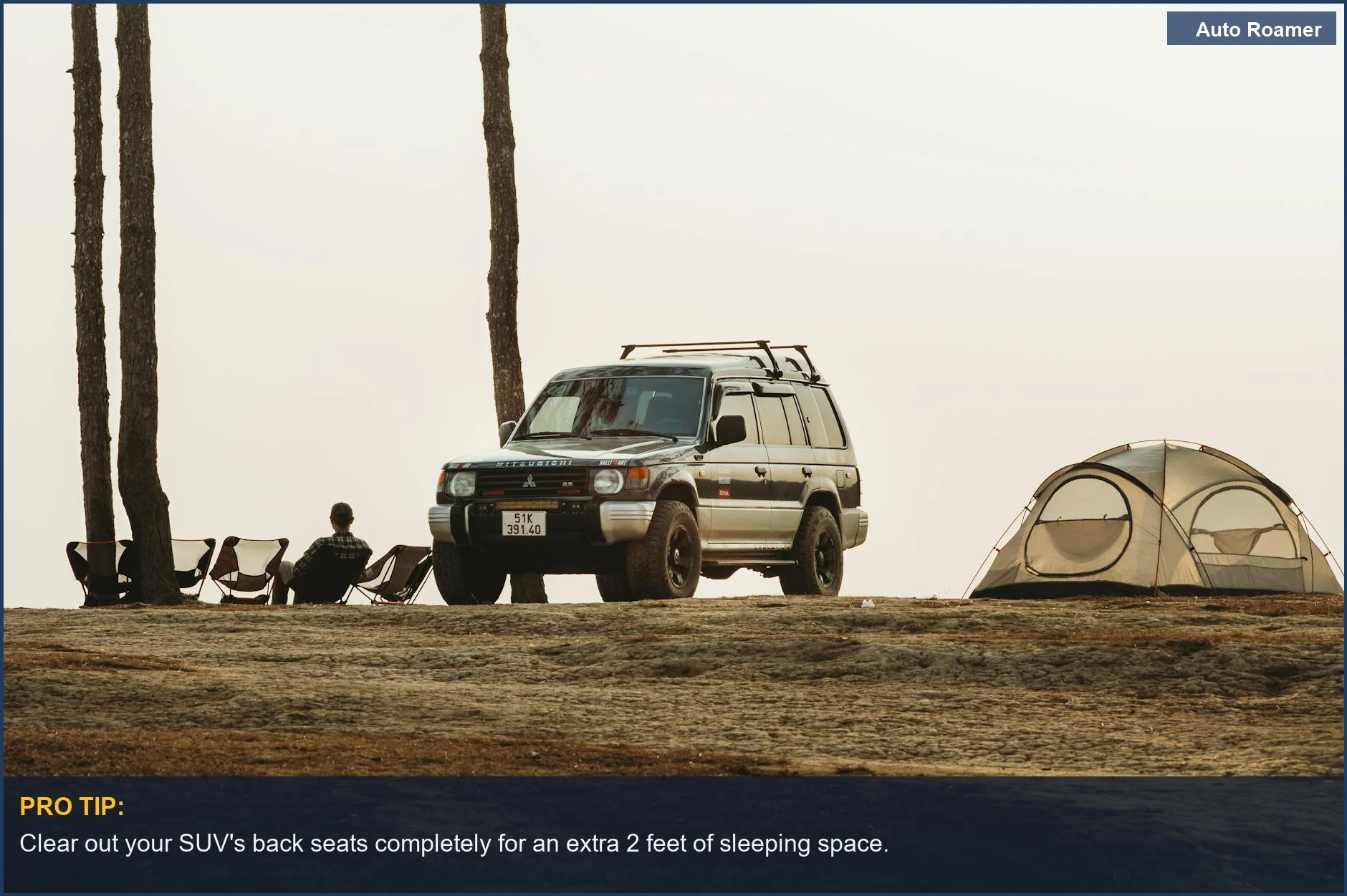
Why This Matters for Your Setup
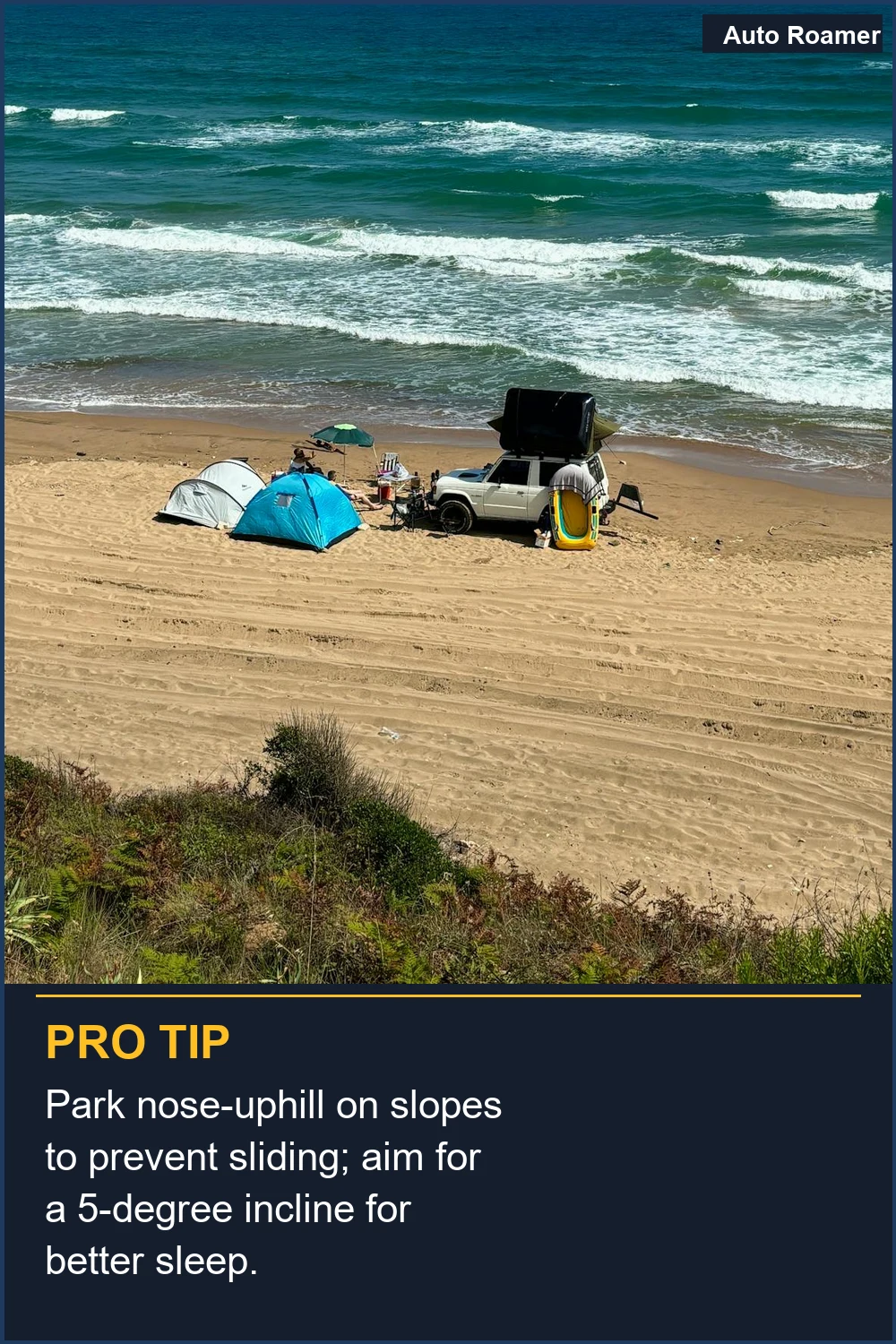
Why does all this matter? Because a poorly set-up SUV means a miserable camping trip. Imagine trying to sleep on a slope where you're constantly sliding into the passenger seat. That's what happened to me on my second trip before I learned about nose-uphill parking. Setting up your tent at least once before you go is crucial. I once spent 45 minutes fumbling with poles in the dark, in the rain, at Assateague Island. Brilliant engineering, that. Clearing your space and organizing gear means you aren't digging through piles of stuff for your toothbrush when you're already exhausted. It prevents that feeling of being overwhelmed. It allows you to actually relax. The real move is to make your vehicle a functional, comfortable basecamp, not just a place to shove your stuff. My goal is to have my sleeping setup ready in 10 minutes and my cooking area functional in another 15. That leaves me plenty of daylight to actually hike or explore. A well-organized SUV makes the whole experience smoother.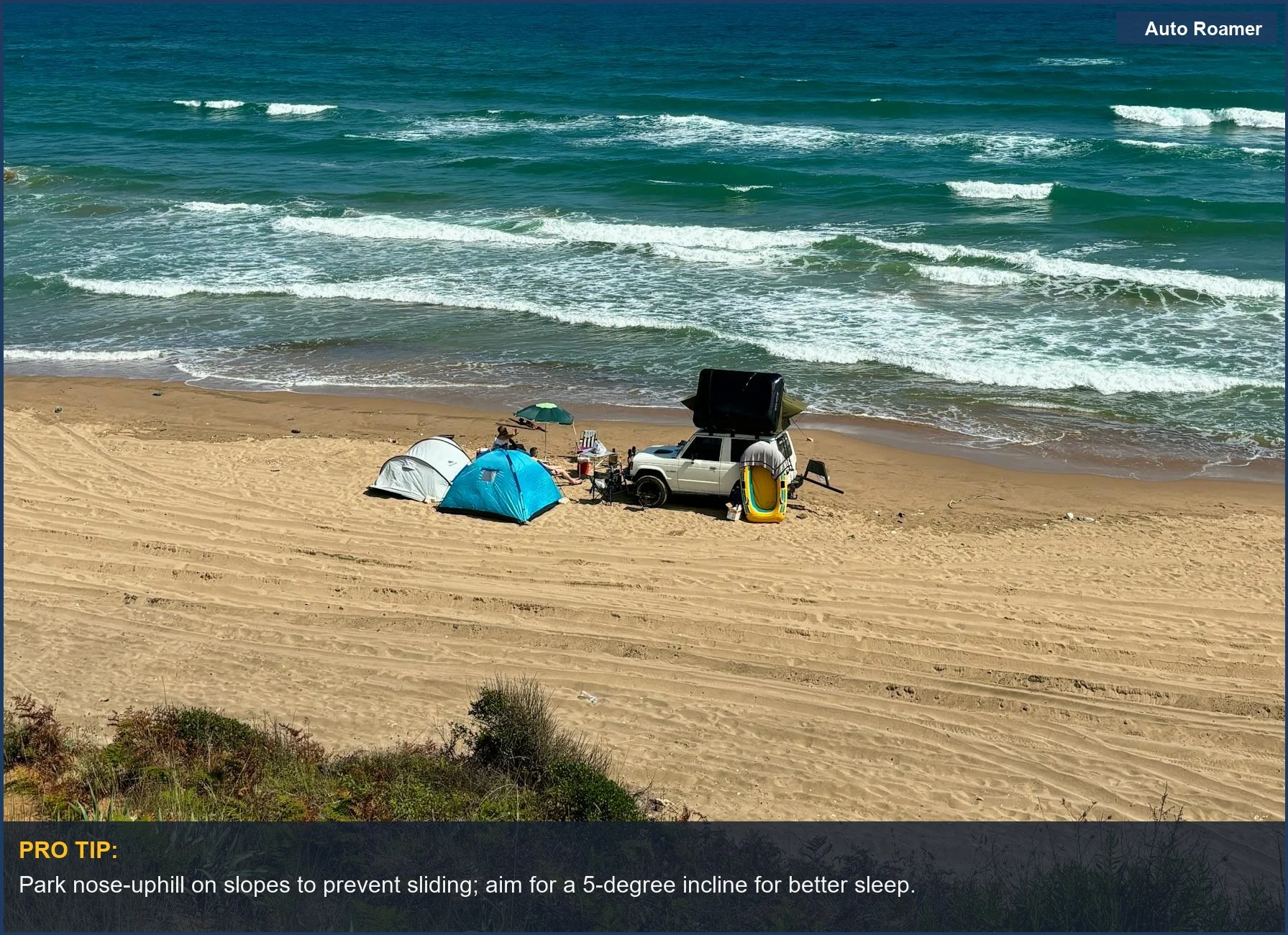
Making the Right Choice
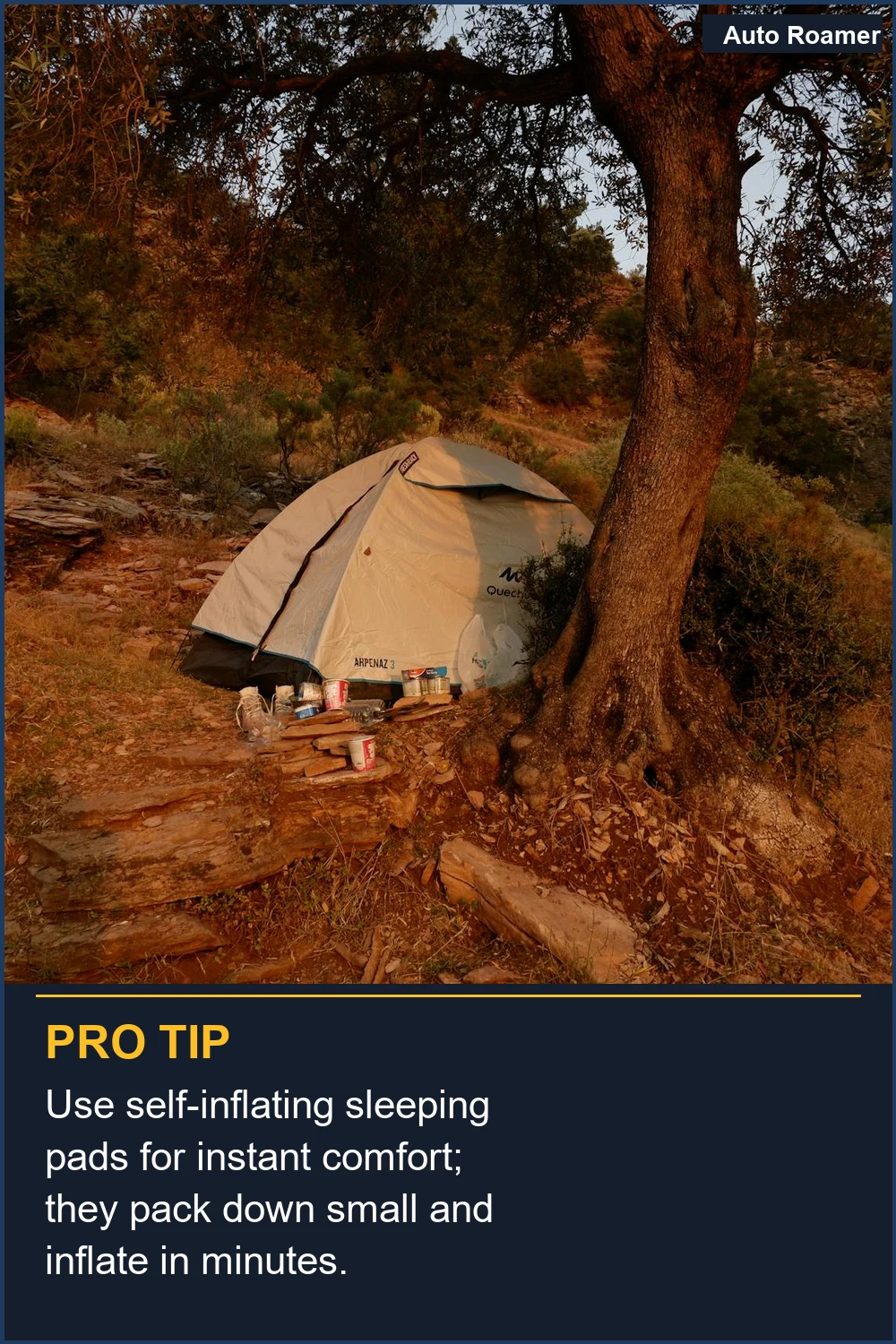
Choosing how to set up your SUV for camping boils down to your priorities. Do you want maximum sleeping space inside, or are you looking to use an external tent or rooftop setup? For beginners, sleeping inside your vehicle is often the easiest and most affordable starting point. It requires less gear and less setup time. Start simple. Get a comfortable sleeping pad, a warm bag, and a pillow. Figure out your storage situation with bins or duffel bags. The honest version: you don't need a $2,000 rooftop tent to have a good time. My $47 foam pad and 40F sleeping bag got me through my first few trips, albeit with some shivering. Focus on comfort and function. Don't overpack. My second trip had half the gear and was twice as comfortable because I knew what I actually used. The goal is to enjoy nature, not wrestle with your gear. The right setup makes all the difference.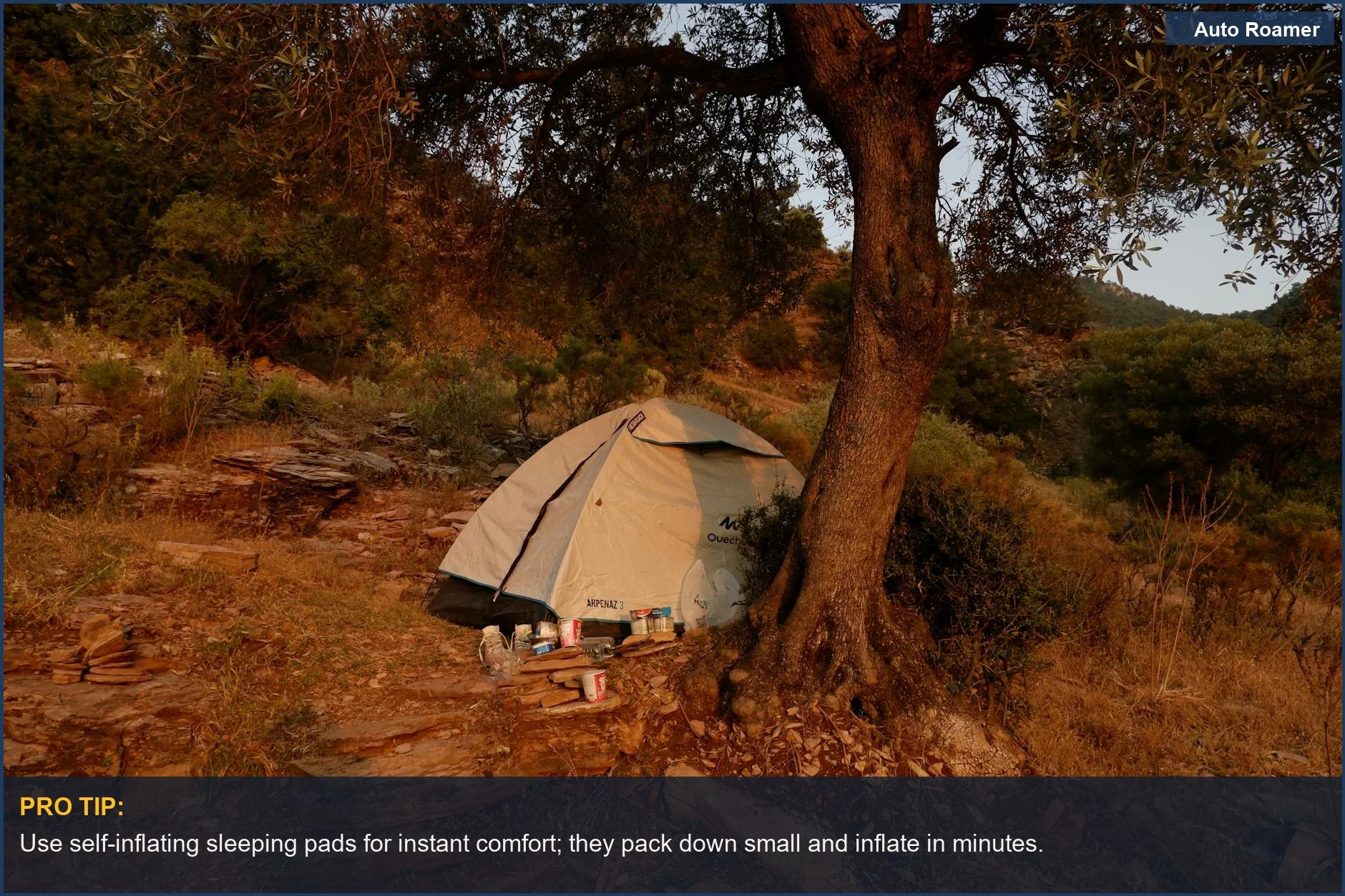
Frequently Asked Questions
I saw a platform online that looked custom-built for my SUV for $800. I can build a basic one with plywood and screws for maybe $75. Is it worth paying the extra $725 for the fancy one?
Do I really need a specific 'car camping' mattress, or can I just use my queen-size air mattress from home?
What if I clear out my entire back and set up my sleeping platform, but then it rains really hard and my tent leaks? Can I just sleep in the SUV then?
Will constantly folding down my SUV's rear seats and sleeping on a platform damage the seats or the interior over time?
I've heard you need to "insulate" your car windows to keep it warm. Is this true, or is it just another expensive gadget I don't need?
🏅 Looking for Gear Recommendations?
Check out our tested gear guides for products that work with this setup: