Car Camping

Essential Gear Checklist for SUV Camping Trips

Casey - The Weekend Warrior
6 min read
Includes Video

My first car camping trip was a $75 experiment in a Nissan Rogue in the Great Smoky Mountains. Mid-September. I had a $30 sleeping bag rated to 30F and zero idea that the humidity would make it feel like a damp sponge by 3 AM.

My first car camping trip was a $75 experiment in a Nissan Rogue in the Great Smoky Mountains. Mid-September. I had a $30 sleeping bag rated to 30F and zero idea that the humidity would make it feel like a damp sponge by 3 AM. I woke up colder and wetter than if I'd slept in a puddle.

The fix was a $15 waterproof liner bag from Amazon that kept the dew off and my 30F bag actually feeling like a 30F bag. Three years later, that liner still goes on every trip.

The honest version: you can definitely get overwhelmed by gear lists. Everyone online acts like you need a Sherpa and a second mortgage to camp. But for SUV camping, where your vehicle is basically a walk-in closet, you can keep it simple and comfortable.

The goal is to enjoy the outdoors without feeling like you're roughing it in the worst way. Bearfoot Theory has a good starting point, but let's talk about what actually matters when you're not in a dorm room anymore.
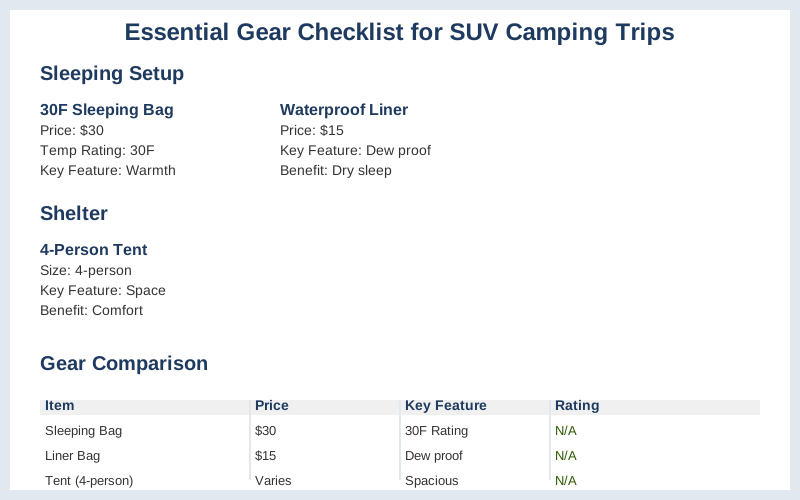
Essential Gear Checklist for SUV Camping Trips — Key Specifications Compared
Key specifications for Essential Gear Checklist for SUV Camping Trips

The Core Answer

Look, your SUV is your mobile base camp. That means you don't need to pack like you're going to the moon. The real move is focusing on a solid sleeping setup and basic creature comforts. REI lists a tent, sleeping bags, and pads, which is a solid start. But let's break down the essentials from someone who's actually slept in their car with a leaky air mattress.

First, the tent. You need one big enough to stand up in, or at least sit up comfortably. My first tent was a two-person job that felt like a sardine can. I spent 10 minutes at the KOA in Asheville, North Carolina, trying to change without my elbow in my buddy's ear. Get a four-person tent for two people. It's worth the extra space, trust me. Outdoor Gear Lab talks about tent size, but they don't mention the sheer psychological relief of not bumping into your tentmate.

Next, sleeping. This is where rookie mistakes cost you sleep. That Walmart foam pad? It's basically glorified yoga mat. It does nothing for insulation. My first night, I woke up freezing because the cold seeped up from the ground. A good sleeping pad is non-negotiable. I use a $100 inflatable pad now, but a decent $50 one will do wonders. It's not just about comfort; it's about staying warm. Luno Life mentions mattresses, but a good pad is more versatile for car camping.

Your sleeping bag needs to be rated for the coldest temperature you *might* encounter. I learned this the hard way in October. My 40F bag was useless when it hit 20F. The $12 fleece liner I mentioned earlier is clutch, but a 20F or even 15F rated bag is better for shoulder seasons. Don't be like me, shivering in your Civic.

Then there's lighting. A headlamp is game-time. You'll be fumbling for your keys, trying to set up camp in the dark, or just needing to find the bathroom. My first trip, I used my phone flashlight. Big mistake. I dropped it in the dirt three times and nearly tripped over a root. A $20 headlamp from Amazon is a lifesaver. Facebook campers always mention headlamps, and they're right.

Water. You need more than you think. I always pack a 5-gallon jug. It's cheaper than buying bottled water and you can use it for cooking, cleaning, and drinking. Don't rely on campground spigots unless you're absolutely sure they're working and clean.

Food. Keep it simple for your first few trips. Sandwiches, pre-made salads, and stuff you can just heat up are perfect. I tried to be a gourmet chef on my second trip and ended up burning hot dogs because I forgot the tongs. A small cooler and some easy-to-prepare meals are the way to go. Julia Turshen has some great ideas that don't require a full kitchen.

Finally, chairs. You don't need a full dining set. A couple of comfortable folding camp chairs make a huge difference. Sitting on a cooler or the ground gets old fast, especially after a hike. The $50 version from most outdoor stores is perfectly fine for starting out.
To enhance your camping experience, consider adding essential accessories for your SUV's awning, which can provide extra shelter and comfort.
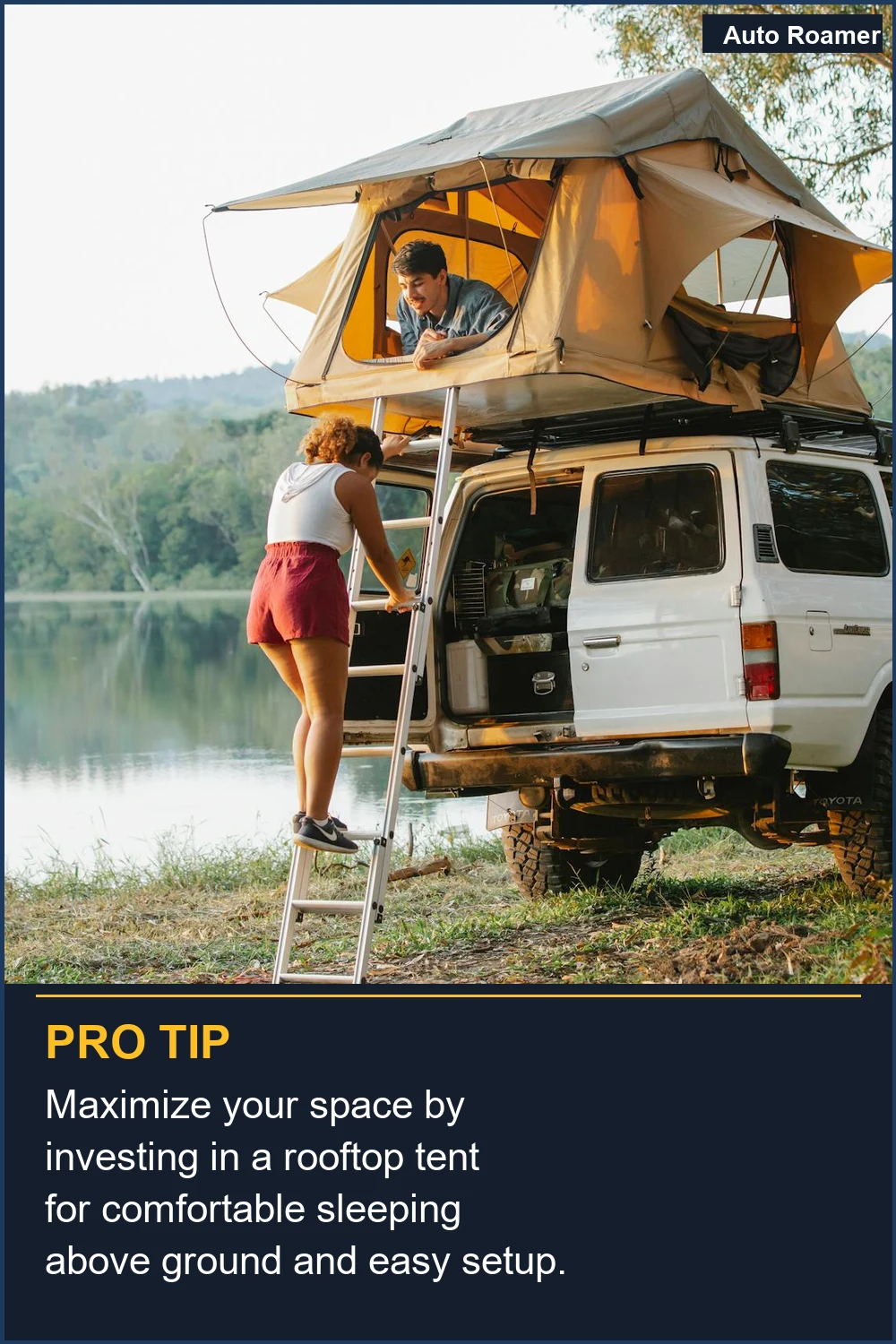
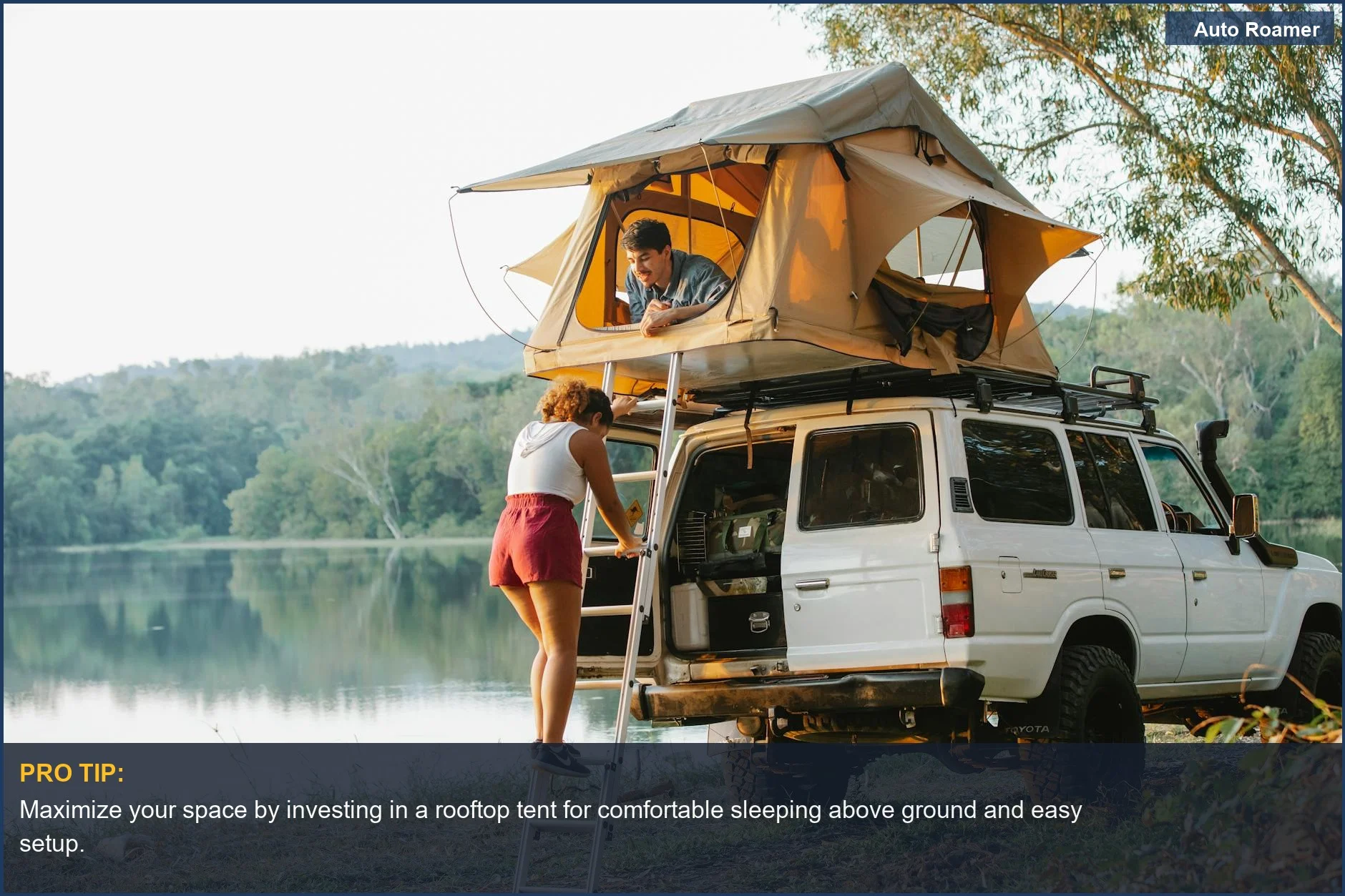
Maximize your space by investing in a rooftop tent for comfortable sleeping above ground and easy setup.
Embrace the freedom of SUV camping with a rooftop tent, a key item on your car camping essentials list, offering stunning lake views. | Photo by Uriel Mont

Why This Matters for Your Setup

  • Sleeping Pad: This is where I saw the biggest difference. On my first trip to a state park near Austin, Texas, the ground was surprisingly cold even in May. My cheap foam pad did zilch. I woke up with my hips aching. A good inflatable pad (REI recommends them) acts as insulation between you and the cold earth. It's not just about cushiness; it's about heat retention.
  • My $100 pad keeps me toasty down to about 20 degrees F.
  • Tent Size: Don't be a hero and cram yourself into a tiny tent. I learned this lesson at Zion National Park. My friend and I were trying to play cards inside during a sudden rainstorm, and we felt like we were wrestling. The extra space in a larger tent (Bearfoot Theory suggests sizing up) means you can actually move around, store gear, and not feel claustrophobic.
  • It's a small upgrade that pays off big in comfort.
  • Headlamp: Seriously, get a headlamp. On a trip to Joshua Tree, I was trying to find my toothbrush in the dark, juggling my phone and a bag of chips. Predictably, I dropped both. A headlamp frees up your hands. Campers online agree: it's essential for navigating camp after dark.
  • Water Storage: Bringing a large reusable water jug is way more convenient than constantly buying small bottles.
  • I use a 5-gallon jug for weekend trips. It means I'm not running to the store for water and I have enough for cooking and cleaning. Luno Life highlights water as a key item, and a big jug is the easiest way to handle it.
    To maximize comfort on your trips, consider how to effectively use a SUV camping tent for extra space.
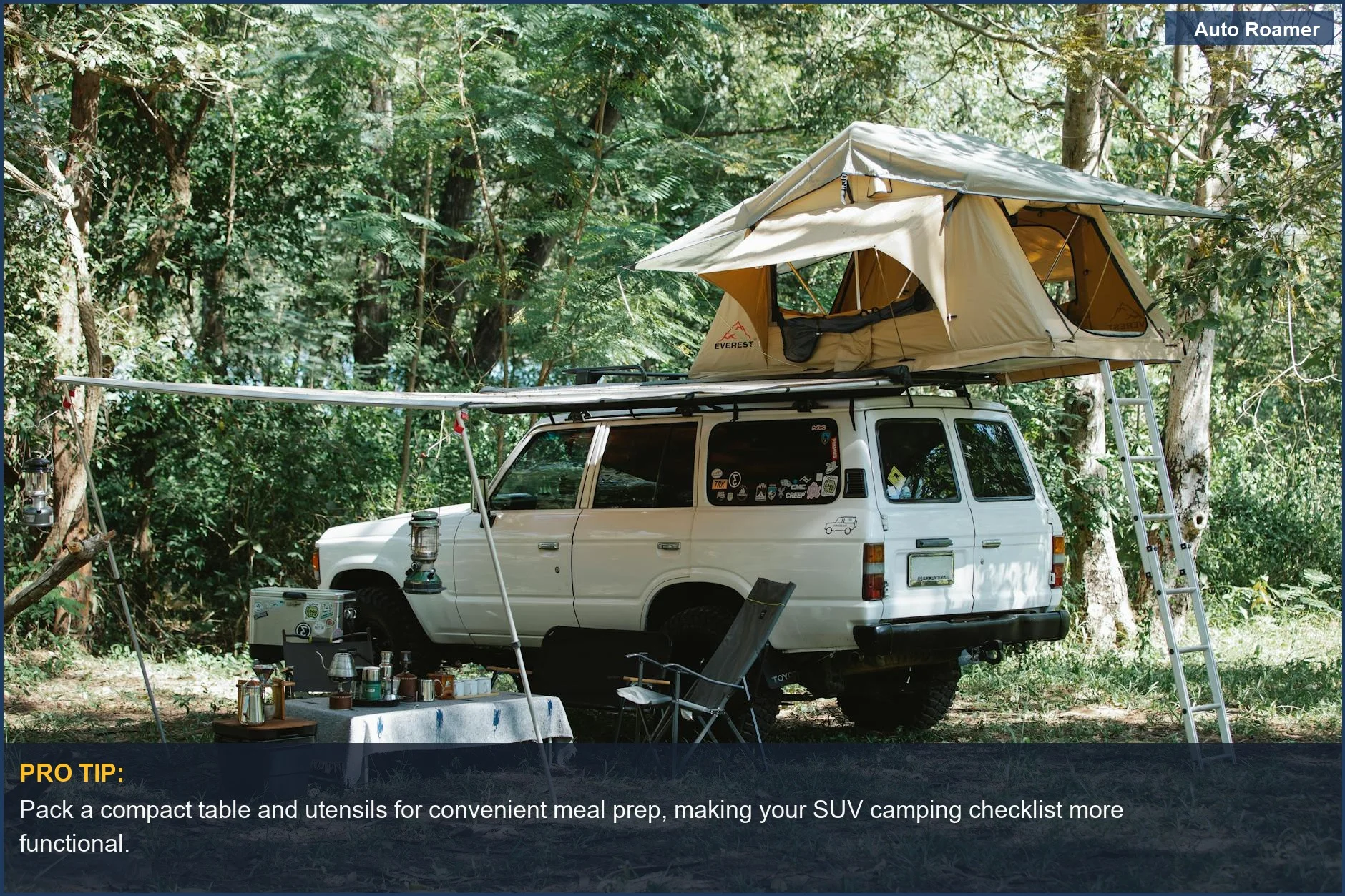
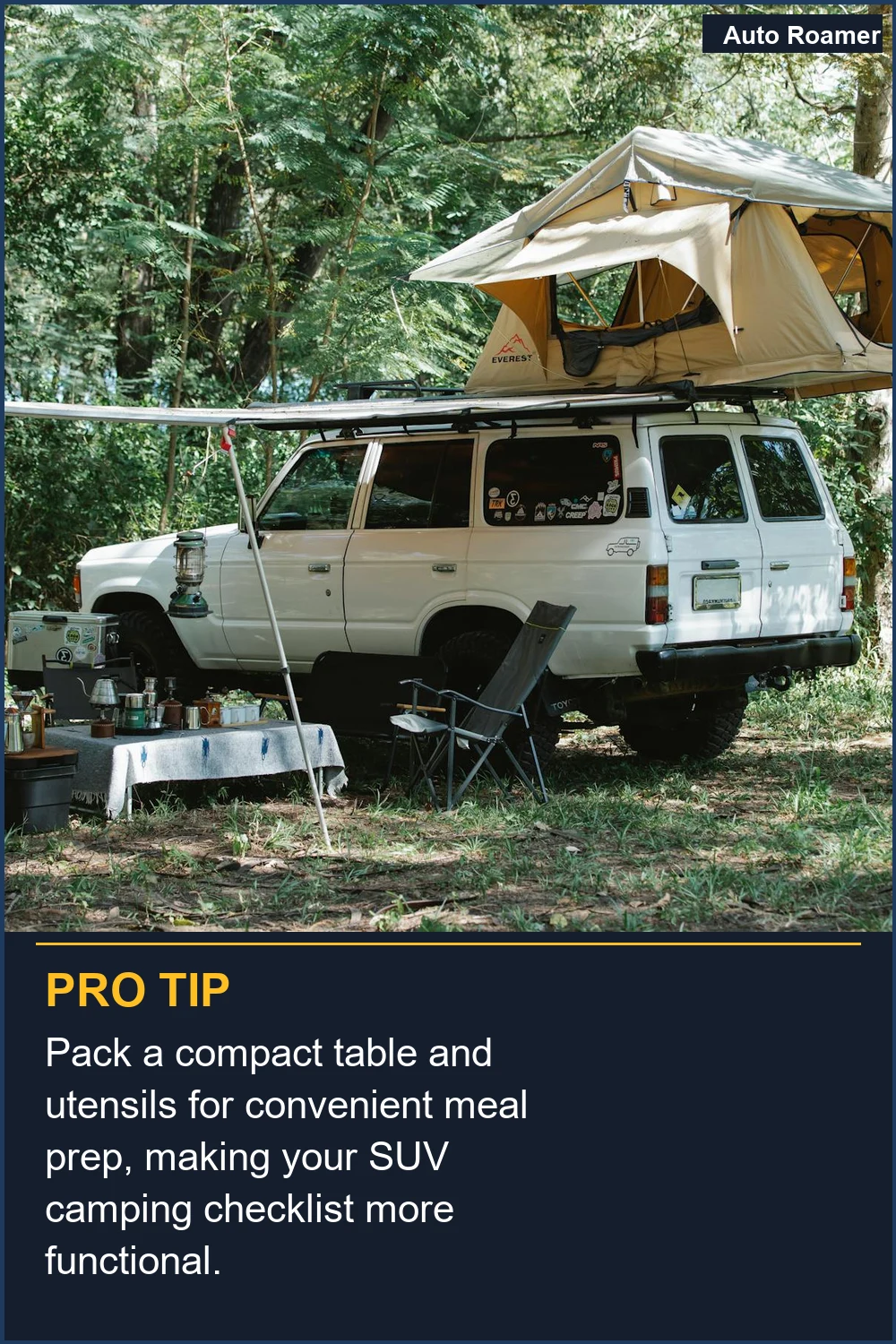
    Pack a compact table and utensils for convenient meal prep, making your SUV camping checklist more functional.
    This white SUV, equipped with a rooftop tent and picnic setup, highlights essential items for your comprehensive SUV camping checklist. | Photo by Uriel Mont

    Making the Right Choice

  • Start Simple: Don't buy everything at once. Borrow gear if you can for your first trip. You'll quickly figure out what you use and what's just dead weight in your trunk. This list is a good starting point, but tailor it to your needs.
  • Prioritize Sleep: A good night's sleep is the difference between a great trip and a miserable one. Invest in a decent sleeping bag and pad. Your future self will thank you.
  • REI has solid recommendations here.
  • Think About Your Vehicle: Your SUV is your biggest asset. Use the space wisely. If you can't stand up in your tent, maybe you can sleep in the car sometimes. I've done it in my old Honda CR-V when it rained buckets at a campsite in Vermont.
  • Don't Fear the 'Optional': Things like camp stoves, fancy chairs, and portable showers are great, but they're not essential for your first few trips.
  • Focus on the core items first. Reddit threads often boil it down to tent, bag, pad, light. That's a solid core.
    While ensuring communication is crucial, don't overlook the importance of having essential items in your car camping first aid kit.
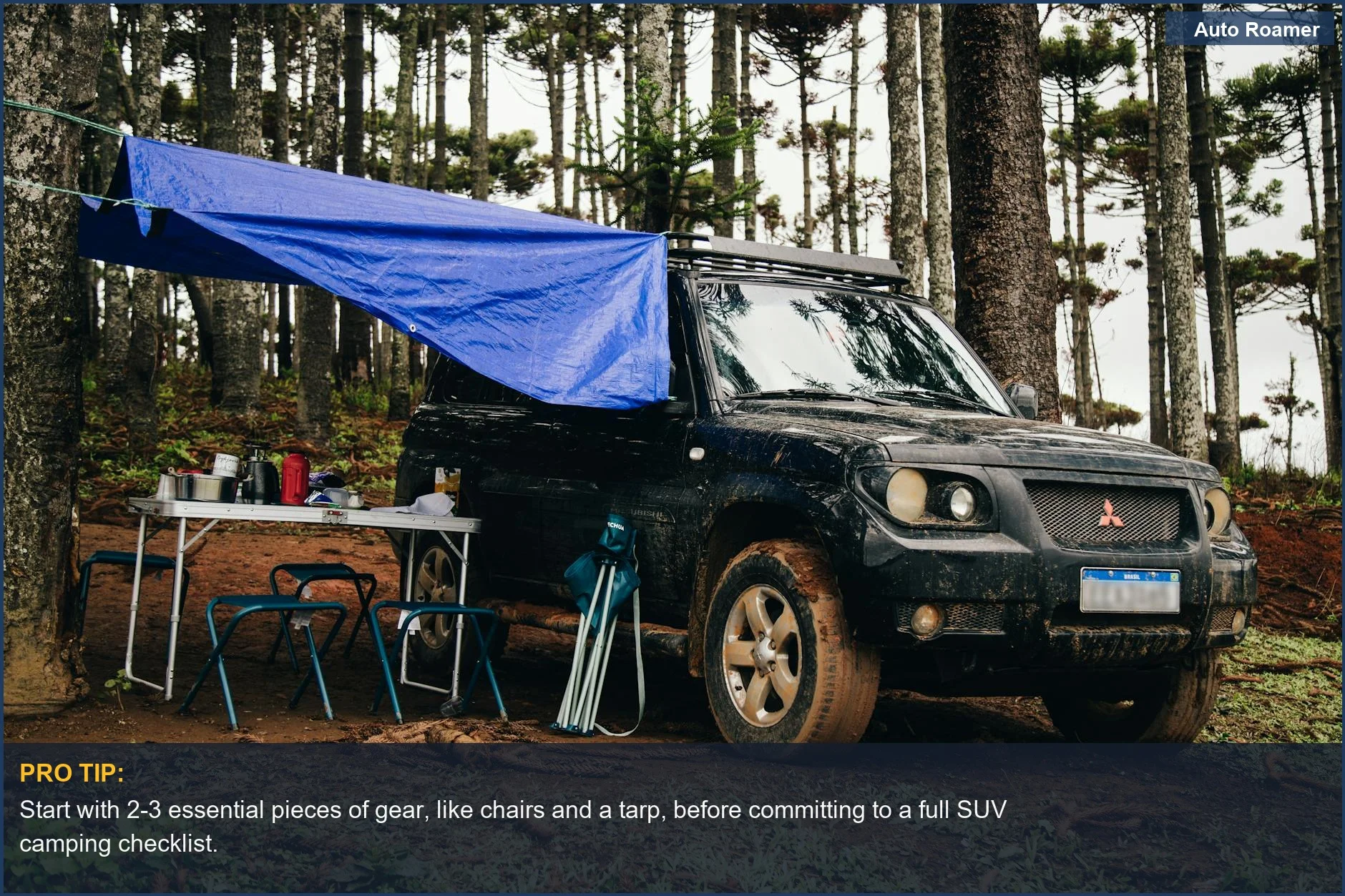
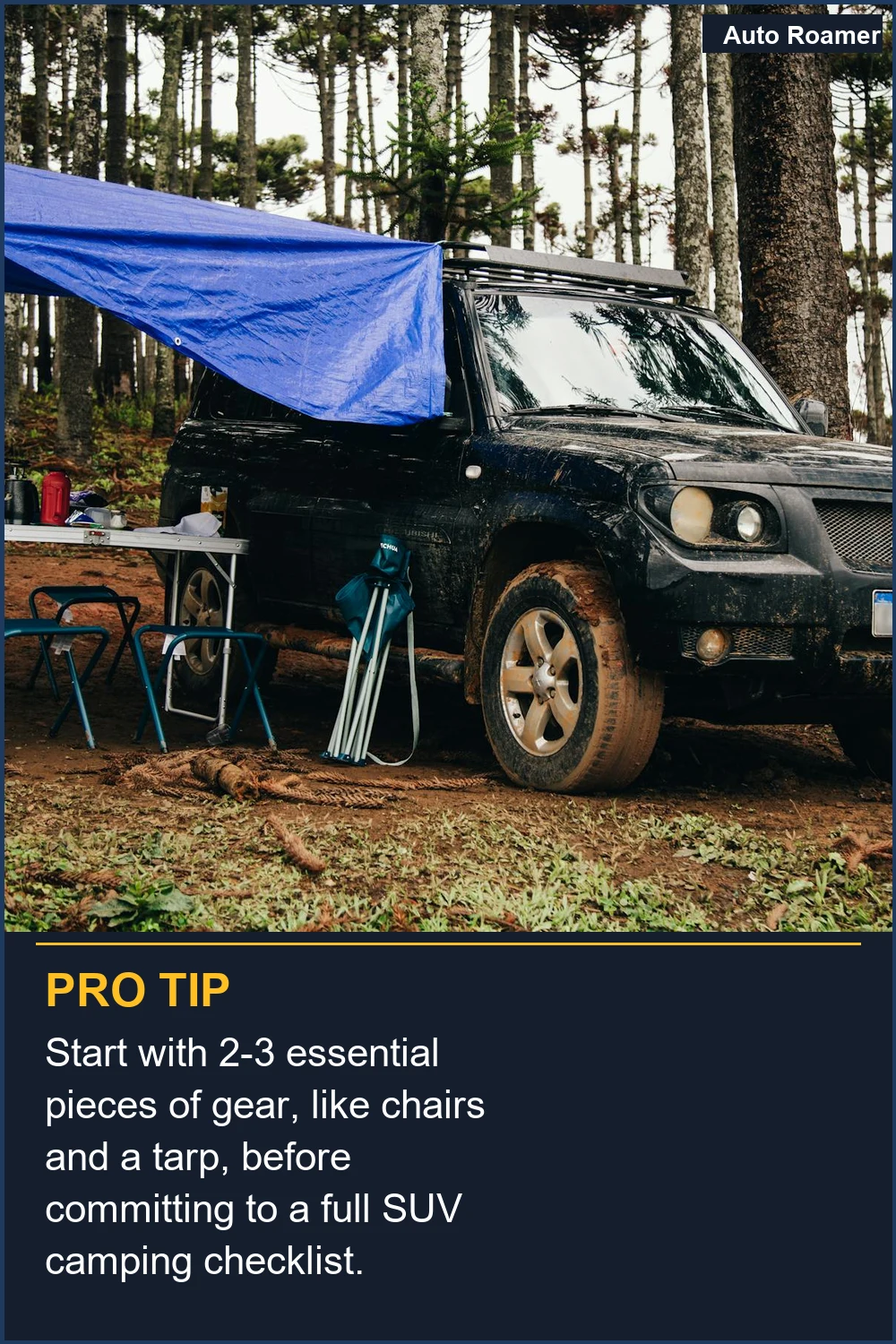
    Start with 2-3 essential pieces of gear, like chairs and a tarp, before committing to a full SUV camping checklist.
    An SUV with a tarp and chairs in a forest setting illustrates the practical side of a car camping essentials list for outdoor adventures. | Photo by Matheus Bertelli

    Frequently Asked Questions

    If I buy a decent 4-person tent for $150, is that way more expensive than just renting one for a weekend?
    Renting a tent for a weekend might seem cheaper upfront, maybe $30-$50. But if you camp more than 3-4 times a year, buying a $150 tent is the better long-term move. You get to own it, use it whenever you want, and you know its condition. Plus, you can't guarantee a rental will be perfectly clean or have all its poles.
    Do I really need a water filter if I'm car camping and can just bring jugs?
    For car camping where you can drive right up to your site, a water filter is generally overkill. Bringing sealed jugs of water is much easier and safer. I've never used a filter at a car campsite, and I've camped from Maine to California. Save the filter for backpacking trips where you have no other choice.
    What if my brand new sleeping bag still feels too cold, even with a liner?
    If your bag is still too cold, the most likely culprit is your sleeping pad. If the pad isn't insulating you from the ground, the bag is fighting a losing battle. Make sure your pad has a decent R-value (look for 3 or higher for most conditions). If the pad is good, then your bag might just be rated too low for the temps you're experiencing.
    Can sleeping on a bad air mattress in my SUV permanently mess up my back?
    Yeah, definitely. Constantly sleeping on a lumpy or deflated air mattress can throw your spine out of alignment, leading to chronic back pain. It's like sleeping on a bag of rocks. Investing in a good quality car camping mattress or a thick sleeping pad is crucial for preventing long-term issues.
    Is it true that you need to 'break in' a new sleeping bag?
    That's mostly bunk. While a synthetic sleeping bag might feel a little 'stiff' out of the bag, it's not like a pair of leather boots. You can use a new sleeping bag straight out of the packaging. The real 'break-in' happens as you use it and realize you should have bought one rated for colder weather, like I did.

    🏅 Looking for Gear Recommendations?

    Check out our tested gear guides for products that work with this setup:

    C

    Casey - The Weekend Warrior

    Weekend car camper and road trip enthusiast. Focuses on practical, budget-friendly solutions for families and first-time campers.

    Sources

    Related Articles