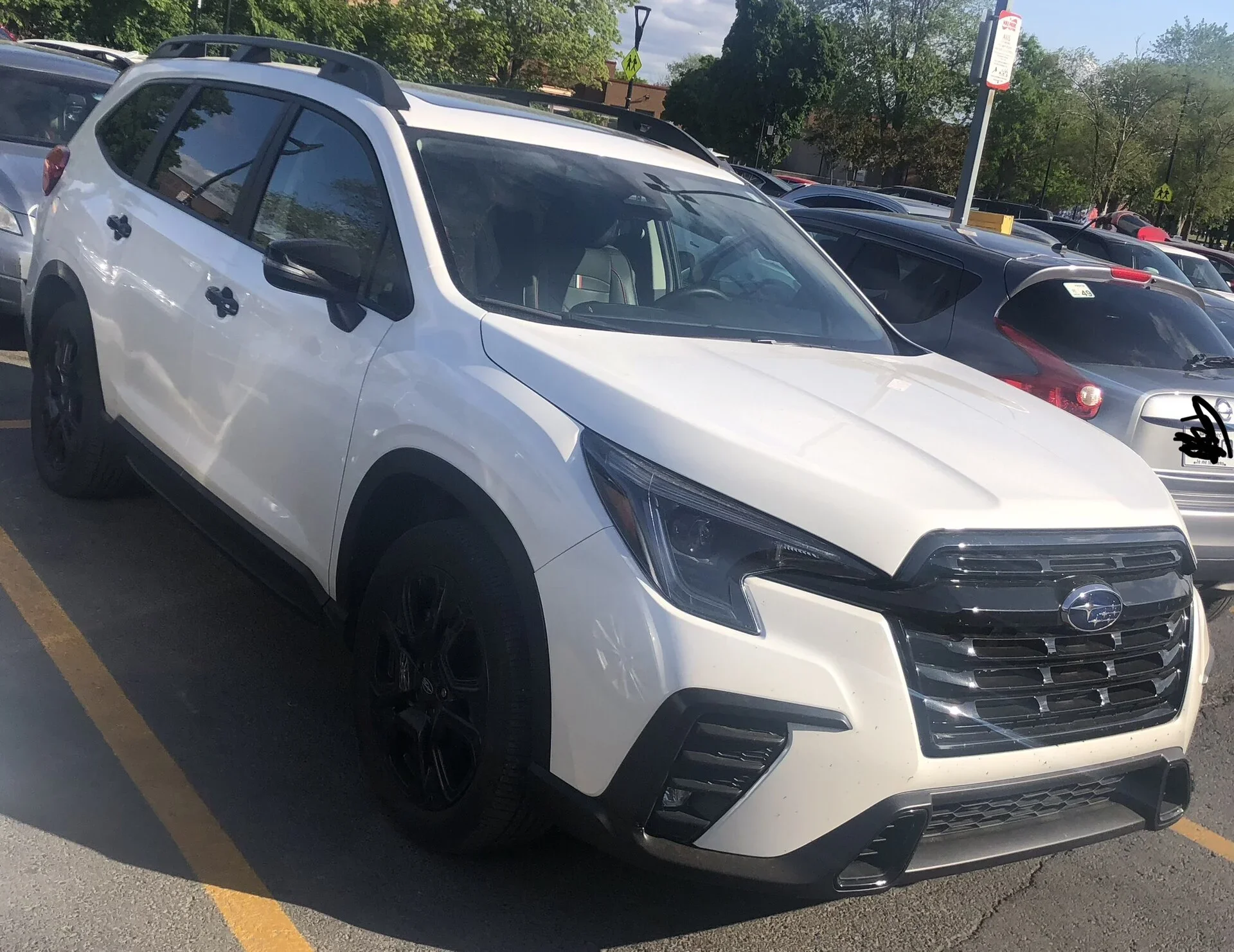
The rare SUV that prints the inches you need
Most makers hand a car camper a wall of cubic feet and leave you to guess the inches. Subaru is the refreshing exception: for the Ascent it publishes an actual folded cargo floor length of 82.9 inches, a width between the wheel wells, an opening width, a height, and a liftover - the exact numbers you need to know whether you lie flat, printed on the official spec sheet. As someone who likes to know how a thing is really built, I appreciate that a lot.
But a good spec sheet still has a blind spot, and the Ascent's is a beauty: the numbers describe a floor that isn't level. Fold the seats and the surface tilts, so that lovely published 82.9-inch length is measured over a slope, not a flat bed. This page works entirely from Subaru's real numbers - length, width, height, liftover - flags the one old-spec trap to avoid, and then does the tinkerer's job: turning an honest but tilted floor into a genuinely flat place to sleep.
Why does a printed inch matter more than a printed cubic foot? Because volume is a mixed bag of footwells and cupholders you can't lie down on, while a floor length tells you flat-out whether a body fits. When a maker hands you 82.9 inches instead of a vague heap of storage, you can plan the whole bed on paper before you ever open the hatch - and I've built enough odd platforms to know that a real number is a head start most SUVs refuse to give.
Subaru's published numbers: 82.9 inches and a real spec sheet
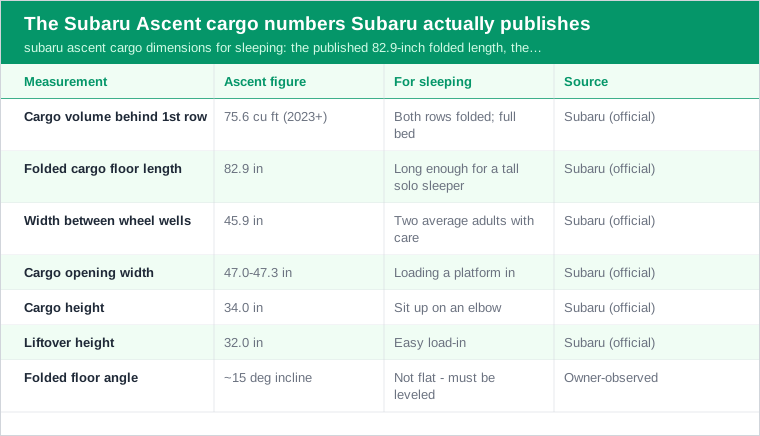
Here's what Subaru actually prints for the Ascent, and it's a rare gift. Working from the current-generation figures: a folded cargo floor length of 82.9 inches, a width between the wheel wells of 45.9 inches, a cargo opening around 47.0 to 47.3 inches, a cargo-area height of 34.0 inches, and a liftover of 32.0 inches. Behind the first row you get 75.6 cubic feet of volume on the current cars.
An 82.9-inch published floor length is genuinely long - that's nearly seven feet, enough that even a tall sleeper isn't fighting the tailgate. Subaru measuring and printing it is exactly the honesty most makers skip.
Read as a build spec, the Ascent looks excellent on paper: long enough for the tallest solo sleeper and wide enough between the wells for two average adults with care. The numbers are real and I trust them. What they don't encode is the angle of the floor, which is where the tinkering starts - but first, one trap in those very numbers.
Line those figures up and a picture forms before any tape comes out: a floor stretching close to seven feet, comfortably past four feet at its pinch, an opening broad enough to feed a platform through, and a liftover low enough that loading it isn't a chore. That the 75.6 cubic feet is the current-method figure - not an inflated older one - only makes the whole set more trustworthy. When you open it up, the published inches are what you build against, not a showroom guess.
The old-volume trap you have to avoid
One honesty flag before you cross-shop, because Subaru changed how it measures. Older 2019-2022 Ascent spec sheets list a larger cargo volume (around 86.5 cubic feet behind the first row) measured by a different method than the current 75.6-cubic-foot figure. The vehicle didn't shrink meaningfully - the measurement standard changed - so do not mix an old volume number with the current dimensions.
Why it matters when you're comparing:
- Apples to apples: use the current-generation numbers throughout, not an older 86.5-cubic-foot figure next to today's inches.
- Cross-shopping: if you're comparing the Ascent to another SUV, make sure both volumes use the same era's method or the comparison is meaningless.
- The inch dimensions - length, width, height - are the reliable ones for sleeping anyway; they don't move with the volume-method change.
- The math looks alarming but isn't: dropping from 86.5 to 75.6 cubic feet reads like an eleven-cubic-foot loss, yet it's almost entirely a change in how the empty space is counted, not cargo that vanished.
The tinkerer's rule: know which spec sheet you're reading. For sleeping, lean on the inch measurements, which are consistent and directly answer 'do I fit,' and don't let an old volume number muddy the picture. Automakers quietly re-based these volume ratings on a stricter counting standard, which is why a raft of 2023-onward SUVs look 'smaller' than their own older brochures without a single panel moving.
Cargo length: 82.9 inches, and who lies flat
Length is the make-or-break dimension, and here the Ascent is a standout because Subaru actually gives you the number: 82.9 inches of folded cargo floor. That's just under seven feet, which is long even by three-row standards and means the Ascent handles tall sleepers a compact never could.
What 82.9 inches means for real bodies, with the incline caveat that comes next held in mind:
- Up to about six foot two: you have flat-out room to spare once the floor is leveled.
- Six foot two to six foot five: you still fit comfortably - this is where the Ascent's length earns its keep.
- Two people head to toe isn't the play; two side by side is (see width) - but the length gives either sleeper full extension.
- Against the segment: plenty of three-row rivals never publish a folded length at all, so a stated 82.9 inches isn't just long - it's a rare case where you can trust the printed number instead of eyeballing a dealer lot.
The length is the Ascent's headline strength for sleeping, and unlike most SUVs you don't have to guess it. The only asterisk is that those 82.9 inches sit on a tilt, so the usable flat length depends on how well you level the floor - which is the very next thing. Measure your own sleeper first - shoulder to heel with a little slack for a pillow - and the Ascent's floor usually swallows it whole.
The catch the spec sheet skips: the floor tilts
Here's the detail no spec sheet prints and every Ascent sleeper discovers: the folded cargo floor isn't level. Owners consistently observe an incline of roughly 15 degrees when both rows are down - the seatbacks fold to a surface that slopes rather than sitting flush and flat. On paper you have 82.9 flat inches; in reality you have 82.9 tilted inches until you fix it.
A great published length on a 15-degree slope is still a great length - you just have to level it. The spec sheet tells you the Ascent is long enough; it doesn't tell you your head will be uphill of your feet until you build a flat surface.
What the incline changes about the build:
- A thin pad alone won't cut it - it follows the slope, and you slide toward the low end all night.
- You need a leveling layer - a shaped mattress or a wedge-built platform that fills the low side and creates a true flat plane.
- Orientation matters - some owners sleep with their head at the high end so the slight residual tilt is at least in the comfortable direction.
- Measure the drop before you build: lay a level across the folded floor and read the gap at the low end - that single number is exactly how tall the wedge or the low-side supports need to be.
This is the Ascent's whole build challenge, and it's a solvable one. The length and width are excellent; you're just leveling an honest floor. I've seen builders chase the slope with loose foam scraps and give up halfway; a purpose-shaped leveling layer beats a pile of shims every single time.
Width between the wheel wells: 45.9 inches
Width decides one sleeper or two, and again Subaru gives you the number that matters: 45.9 inches between the wheel wells. That's the honest pinch measurement - not the widest point, but the true constraint - and it's wide for the segment, which makes two-across genuinely workable.
- Two adults: 45.9 inches is just under the ~48 inches two average adults ideally want, so it's a friendly squeeze - close pads, shoulders near, doable for two who don't mind contact.
- Build up over the wells and you reclaim the full width above 45.9 for the widest part of your body.
- Solo or one-plus-a-kid: luxurious - 45.9 inches is wider than any single pad.
- The two-across math: 45.9 inches splits to roughly 23 inches a side, which is a standard narrow sleeping-pad width - snug, honest, and workable for two who packed for closeness rather than a king mattress.
The fact that Subaru publishes the between-wells number instead of just a widest-point figure is exactly the honesty I like: 45.9 inches is the real answer, and it makes the Ascent a legitimate two-person bed for average-sized adults who plan the pads. Bridge a platform level with the tops of the wheel wells and the space above them opens up past that pinch, so the widest part of two sleepers - the shoulders - rides clear of the 45.9-inch constraint.
Opening, liftover and headroom: the loading numbers
The rest of Subaru's published set tells you how the Ascent lives, not just how you lie in it. The cargo opening runs about 47.0 to 47.3 inches wide, the liftover height is 32.0 inches, and the cargo-area height is 34.0 inches.
- Opening ~47 inches: plenty to slide a platform or a full-size air mattress in without a wrestling match.
- Liftover 32 inches: a comfortable height to load gear and to sit on the tailgate edge - not a tall climb.
- Height 34 inches: about right for the class - enough to sit up on an elbow and change a shirt seated, not enough to kneel upright.
- Feeding a build in: a ~47-inch opening means a pre-cut platform up to about 45 inches wide slides through the hatch instead of getting assembled in place - a real convenience when the slope-leveling frame is the bulky, awkward part.
Watch the height against your build: a platform to level the incline raises you toward the roof, so every inch of platform plus pad comes off the 34-inch sitting height. Keep the leveling layer as low as the slope allows, and do the awkward getting-dressed business on the tailgate with the hatch up to reserve the inside height for sleeping. Those loading numbers are the quiet difference between a build you slide home in one motion and one you fight through a pinched tailgate every night.
Power, and the outlet spec Subaru won't stand behind
Here's where the Ascent's honesty runs out, so I'll be careful. Subaru does not clearly publish a rated wattage for a household outlet on the Ascent the way it publishes the cargo dimensions; owner and accessory sources cite a modest figure (on the order of 100 watts), but I'm labeling that owner/accessory tier, not an official spec, because I won't hand you a number Subaru doesn't stand behind.
- Treat any car outlet as small and daytime-only: even if your Ascent has one, plan it for chargers and a laptop, not a fridge.
- The 12V sockets are the reliable factory power, and like most SUVs they're switched - assume no key-off power.
- For anything overnight, bring your own battery rather than trusting an outlet spec nobody officially rates.
- Why the honesty flag matters: an outlet figure a maker won't officially rate can quietly be a low-wattage accessory port that trips the instant a real load hits it - exactly the surprise you don't want at two in the morning.
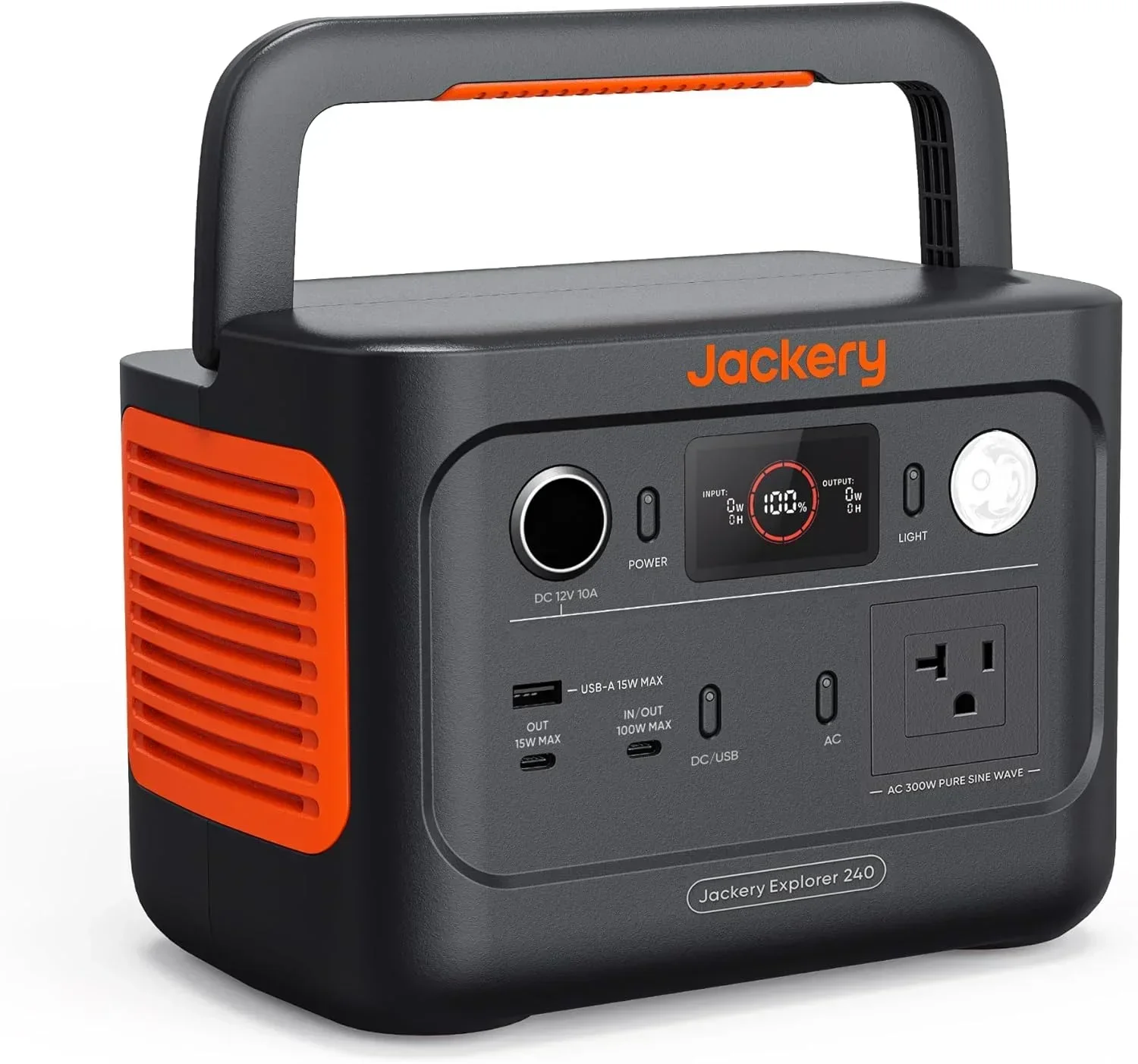
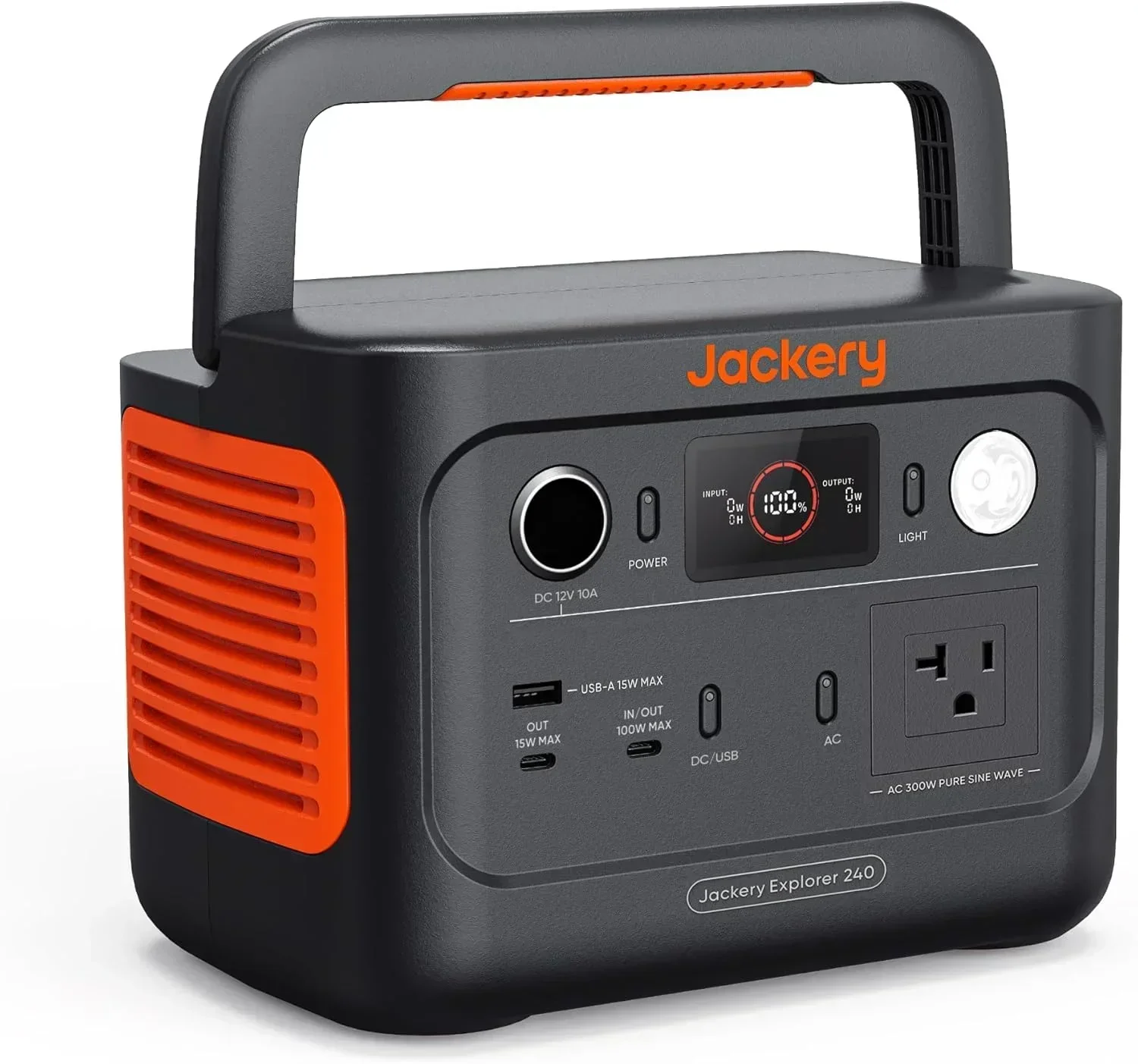
A Jackery Explorer 240 v2 power station is the honest answer here: it runs a fan, lights and charging off its own 256 watt-hours and recharges from the 12V socket as you drive, so your camp power doesn't depend on an Ascent outlet spec that isn't officially documented. With that capacity on board, you size the power to the trip instead of hoping an undocumented port carries the whole night.
Leveling the incline into a flat bed
Here's the build that makes the Ascent's excellent numbers pay off. The whole job is turning that tilted 82.9-inch floor into a flat plane.
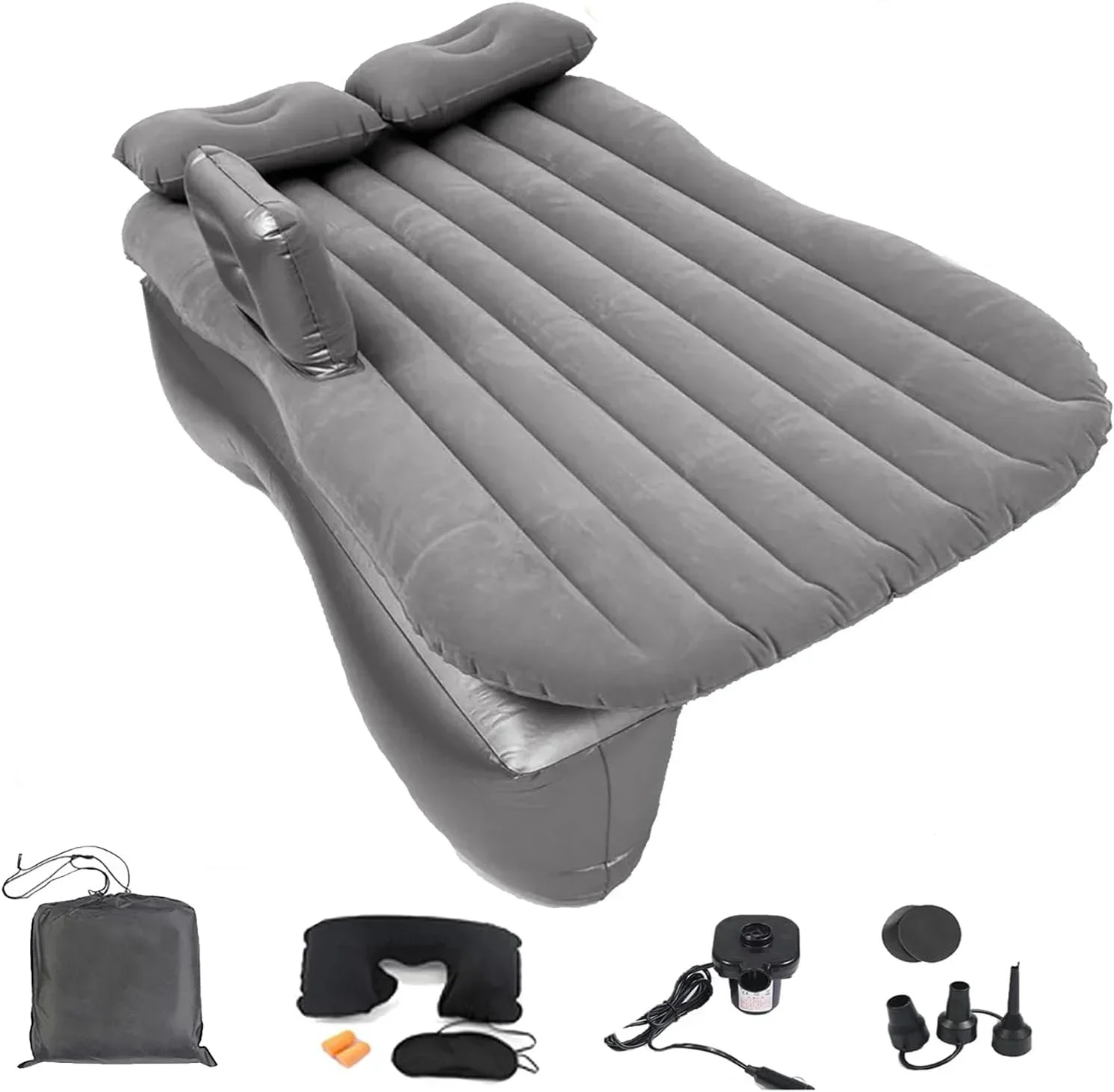
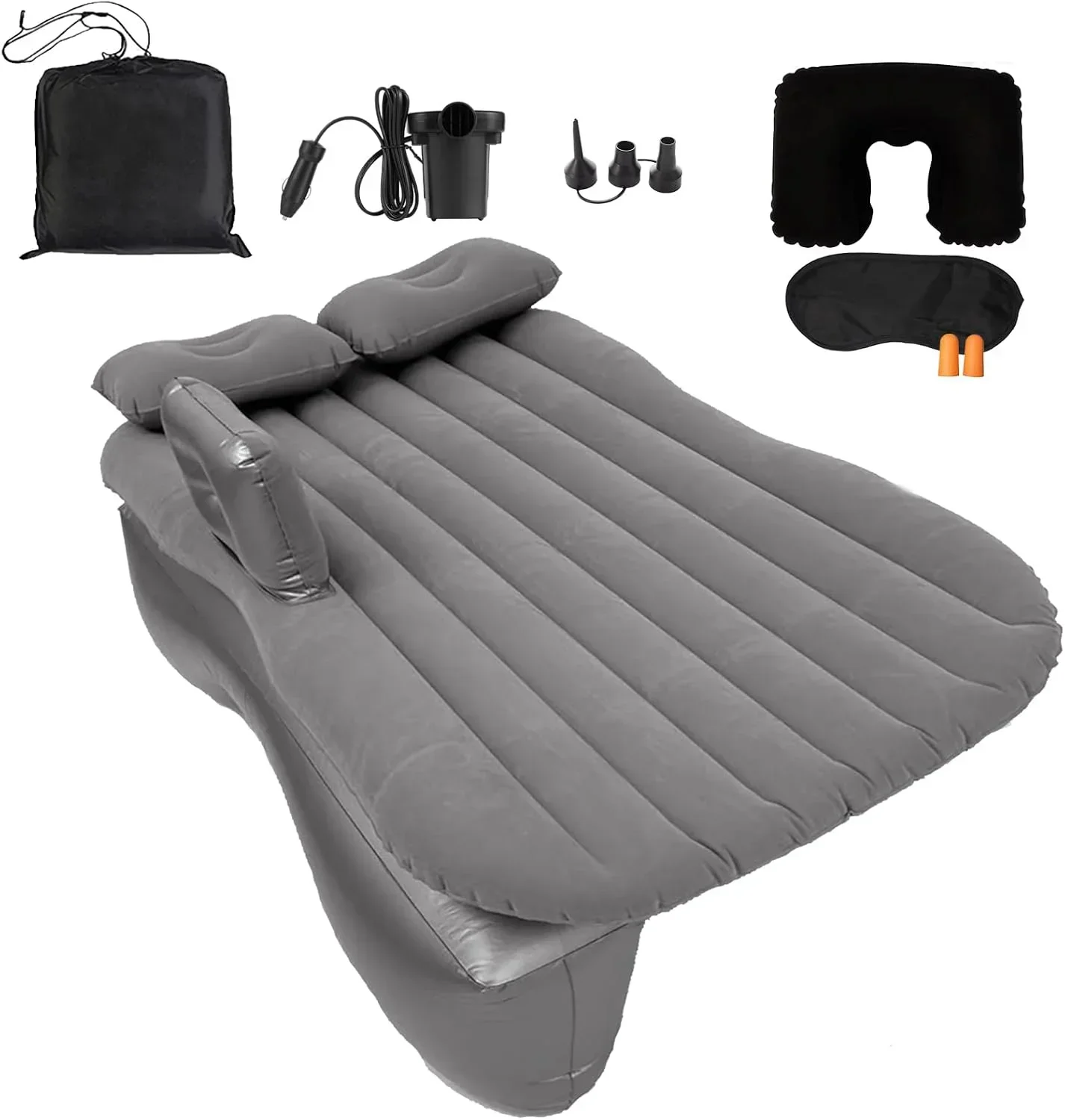
- The fast fix: a shaped SUV air mattress. An Onirii SUV air mattress fills the low side and bridges the seatback steps, leveling the slope in one inflate - the quickest route to a flat Ascent bed.
- The durable fix: a platform built slightly wedged - taller supports on the low end - so the sleeping surface comes out level even though the floor under it isn't. Measure the slope front to back before you cut.
- Either way, add your sleeping pad on top for comfort once the surface is flat - level first, soften second.
- Wedge geometry: if the floor drops, say, four inches over its length, the low-end supports run about four inches taller than the high end and the deck lands dead level - plain trigonometry doing the work a flat floor won't do for you.
Done right, the Ascent goes from 'long floor on a slope' to one of the flatter, longer three-row beds around. The published numbers were never the problem; the angle was, and a leveling layer solves it. Build it once, measure twice, and the tilt stops being a nightly annoyance - it becomes a solved detail you never think about again.
The verdict on the Ascent as a sleeper
The Subaru Ascent is one of the best-documented and most capable three-row sleepers you can buy, with a single build challenge. Subaru publishes the real numbers - 82.9 inches of folded length, 45.9 inches between the wheel wells, 34 inches of height - so you know it fits a tall solo sleeper or two average adults. The catch the spec sheet omits is that the floor tilts about 15 degrees, so you level it before you sleep on it. Think of it as a maker doing most of your homework and leaving one clearly marked problem for you to finish - and unlike a mystery cubic-foot rating, the fix is obvious the moment you read the slope.
The Ascent gives you honest, generous numbers and one tilted floor. Level the incline with a shaped mattress or a wedged platform and you've got a near-seven-foot flat bed - long, wide, and rare in publishing the specs to prove it.
Use Subaru's published inches with confidence, avoid the old-volume trap, level the incline, and bring your own overnight power, and the Ascent turns an honest spec sheet into a genuinely comfortable bed. Few three-row SUVs give you this much verified information to plan against, and fewer still repay a single afternoon of leveling with a bed this long and this flat. The full setup lives in our Subaru Outback vs Forester comparison.
Related on Auto Roamer: Subaru Forester cargo dimensions; Kia EV9 cargo dimensions; Hyundai Palisade cargo dimensions.