
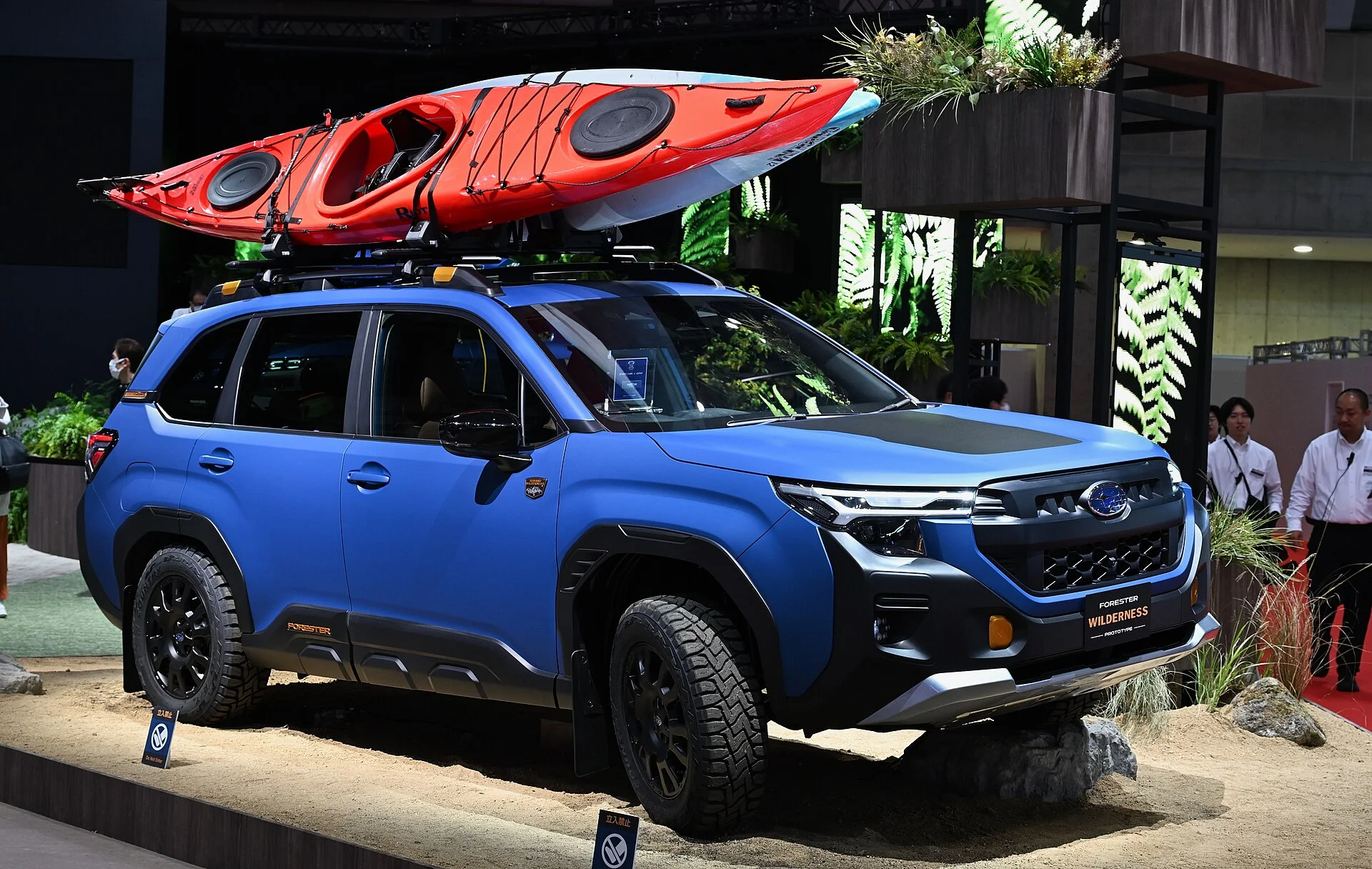
The Forester's real trick isn't its cargo number — it's the flat floor
The Subaru Forester is a compact SUV that sleeps bigger than its footprint, and the reason is shape, not volume. Subaru publishes 27.5 cubic feet of cargo behind the rear seats on most trims — 29.6 on the base trim without the panoramic moonroof — and up to 74.4 cubic feet with the 60/40 rear seats folded, per Subaru's spec sheet. Those are respectable mid-pack numbers for the class. But cubic feet is the wrong metric for anyone planning to sleep back there, because the Forester's advantage is that its folded load floor is genuinely FLAT and wide, where most crossovers give you a floor that humps and slopes.
Here is the honest framing this guide is built around: the Forester is a tall, boxy compact, not a long wagon. Subaru lists the cargo area length at about 70.7 inches from the floor to the front seats, which makes it a realistic one-adult-flat bed or a snug two-person bed — not the stretch-out floor you get from a longer Outback wagon. What the Forester trades away in length it pays back in flatness, width, standard all-wheel drive that reaches remote sites, and big glass that turns the cabin into a greenhouse you will want to shade. This guide gives every published figure, flags the ones you should still confirm with a tape, and covers how to level the folded floor into a flat bed once you are parked for the night.
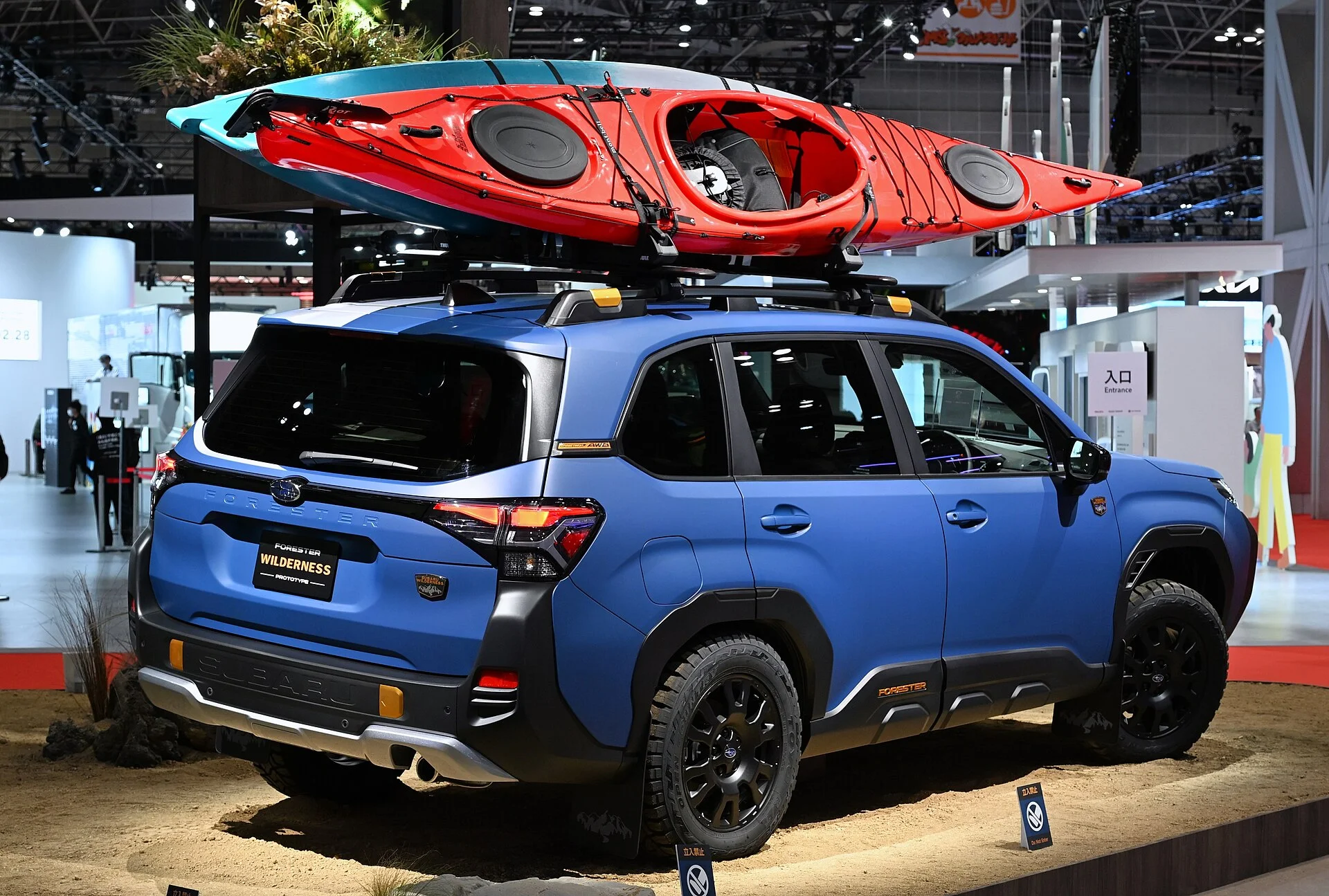
The Forester cargo figures, straight from Subaru's spec sheet
Before you buy a single piece of gear, get the published numbers straight, because the Forester has two cargo figures that change with the trim you pick. Per Subaru's spec sheet, cargo volume behind the upright rear seats is 27.5 cubic feet on trims fitted with the panoramic moonroof and 29.6 cubic feet on the base trim without it. Fold the 60/40-split rear seats and that opens to 69.1 cubic feet with the moonroof or 74.4 cubic feet without it — the moonroof hardware eats into the ceiling near the tailgate, which is why the plainer trim actually carries more.
For a sleeper, the volume matters less than the flat-floor dimensions. Subaru lists the cargo area length at roughly 70.7 inches measured along the floor to the front seats, and the cargo width at the beltline at 49.2 inches. Edmunds' own Forester cargo test found the hold swallows more real luggage than its cubic-foot rating suggests, which tracks with the boxy, square shape. The overall body is compact — 183.3 inches long, 72.0 wide, and 68.1 tall, per Elk Grove Subaru's dimensions page — so you get a tall cabin over a short floor, exactly the proportions that make a Forester easy to sit up in but tight to stretch out in.
Does a twin, full, or queen mattress fit flat in a Forester?
This is the question that brings most people here, so here are the real numbers against standard mattress sizes. A standard twin is 38 by 75 inches, a full is 54 by 75, and a queen is 60 by 80. The Forester's flat sleeping floor runs about 70.7 inches to the front seats per Subaru, roughly 49.2 inches wide at the beltline, and narrower still between the rear wheel wells — a point Subaru does not publish, so treat 40 to 43 inches as an estimate and measure it yourself.
| Mattress size | Dimensions | Fits flat in a Forester? |
|---|---|---|
| Twin | 38 x 75 in | Width yes, length tight — 38 in clears the wheel-well pinch, but 75 in is longer than the ~70.7 in floor, so it rides up the front seatbacks unless you slide the front seats forward |
| Twin (folded to fit) | ~38 x 70 in usable | Best single-adult option — a trimmed or short-cut pad on the flat floor |
| Full | 54 x 75 in | No — too wide for the wheel-well pinch and too long for the floor |
| Queen | 60 x 80 in | No — far too wide and long; it tacos up the wheel arches |
The takeaway is that the Forester is a one-adult-flat vehicle for a rigid pad, or a snug-two floor if you run two narrow pads side by side and let feet tuck toward the tailgate. A rectangular queen never lies flat in a compact SUV like this — the honest move is a cut-to-fit foam pad or a purpose-built SUV mattress sized to the actual floor. For the full breakdown of sizes against real vehicles, see what size mattress fits in an SUV.
Why the flat floor beats a bigger sloped one
Plenty of crossovers out-spec the Forester on paper and still make a worse bed, and the reason is the load floor. Sleeker rivals waste their cubic feet on a curved cargo floor and a raised hump where the seats fold, so a rectangular pad bridges the gaps and you sleep on a wave. The Forester's folded floor sits low and reads flat and square, which is why Edmunds' cargo test found it holds more usable gear than its rating implies — flat volume is usable volume.
That flatness is the whole pitch for sleeping. On a genuinely level floor a single foam pad lands evenly, your hips do not sink into a seat-gap valley, and a leveling job takes one thin wedge instead of a stack of foam shims. The Forester still has a small step where the folded seatbacks meet the cargo floor — almost every folding-seat SUV does — so plan to bridge that seam with a low platform or a thick pad. But the baseline you are starting from is flatter than the sloped crossovers this Subaru competes with, and on a short floor, flatness is what buys back the comfort the length gives up.
One adult flat, or two if you're friendly
Let's be blunt about who sleeps well in a Forester, because a short floor sets a real limit and honest expectations beat a bad first night. Here is how the ~70.7-inch floor plays out for real bodies, per Subaru's published cargo length:
- One adult, flat and easy. A single sleeper up to roughly five-foot-ten lies flat with room to spare, especially with the front seat slid forward to reclaim a few inches. This is the Forester's sweet spot and where it genuinely shines as a compact camper.
- A tall adult, diagonally or feet-forward. Over six feet, you'll either angle across the floor or slide the front passenger seat all the way up and let your feet reach into the footwell space — workable, not luxurious.
- Two adults, snug. Two narrow pads fit side by side across the ~49-inch beltline width, but the wheel wells pinch the floor narrower down low, so you sleep shoulder to shoulder, not spread out. Great for a couple who like each other; tight for two who want space.
None of this is a knock — it is the reality of a compact SUV, and the Forester is one of the better compacts for it. Just buy your pad to the one-adult-flat or snug-two truth, not to a queen-bed fantasy the floor can't hold.
The big glass is a feature — and a problem you have to solve
Subaru gave the Forester a lot of glass: tall side windows, a big rear hatch pane, and on most trims a panoramic moonroof overhead. In daylight that greenhouse is wonderful — it is why the cabin feels open and airy for a compact — but at a campsite that same glass is your biggest liability. It leaks your privacy, it lets in every parking-lot light and sunrise, and it bleeds cabin heat on a cold night faster than any body panel does.
The fix is shades, and it is not optional if you plan to sleep in public or sleep past dawn. Cut reflective panels or a fitted shade set for the side and rear glass do triple duty — privacy, blackout, and a thermal barrier against the Forester's generous window area. The panoramic moonroof needs its own cover; the factory sunshade cuts light but not much heat, so add an insulating panel above it for a genuinely dark, temperature-stable cabin. Budget for glass coverage as a core part of the build, not an afterthought — in a Forester it matters more than in a small-windowed van precisely because there is so much more glass to manage.
Power in a Forester: 12 volts, and that's the whole story
Do not plan your electrical setup around an outlet the Forester doesn't have. Per Subaru, the Forester provides 12-volt DC accessory outlets — below the climate controls, in the console, and in the cargo area — and it does NOT come with a standard 120-volt household AC outlet. A low-wattage 120V accessory socket exists in Subaru's parts catalog, but it is an add-on, not standard equipment, and it is not the power source for a real camping setup.
The 12-volt outlets feed off the starter battery. Run a 12V fridge or a fan off them overnight with the engine off and you will wake up to a car that won't start. The Forester's electrical plan for camping is a separate portable power station — full stop.
So the honest setup is a LiFePO4 portable power station sized to your real draw: a 256-to-500 watt-hour unit runs a 12V fridge, a fan, and LED lights for a weekend, then recharges off the Forester's 12V socket while you drive to the next site. Never idle the engine for heat or power in an enclosed space — that is a carbon-monoxide risk, not a workaround. Because the Forester gives you no high-output inverter to lean on, the power station IS your electrical plan, not a nice-to-have accessory.
Standard AWD is why you'd sleep here in the first place
The reason to sleep in a Forester rather than a longer, flatter wagon is where it can take you. Every Forester comes with Subaru's standard symmetrical all-wheel drive and a healthy dose of ground clearance, which is the part of the value that never shows up in a cargo-dimension chart. A short bed at the end of a rough forest road beats a long bed you can't reach because the road turned to washboard and mud two miles back.
That capability changes how you shop for the rest of the build. Because the Forester will actually get to dispersed sites and rough trailheads, the sleeping platform, the shades, and the power station are worth doing properly — you are not building for one paved campground, you are building for the remote spots the AWD unlocks. It also means you should plan your cargo layout around access: keep the gear you need at the site reachable from the tailgate, and pack the heavy bins low and forward so the compact body handles predictably on the loose stuff. For the wider playbook on getting a usable bed and usable storage out of one small SUV, see how to maximize your SUV's cargo space on a road trip.
How to measure your own Forester before you build a bed
Published specs get you close, but the Forester you actually own has its own quirks — a cargo cover, a floor mat, the exact seat recline — so the only numbers you should trust for a sleeping platform are the ones off your own tape. I do this on every fitment job, and it takes five minutes. Here is the order that catches the gotchas:
- Measure length in the config you'll actually sleep in. Fold the rear seats, then run the tape along the floor from the closed tailgate to the back of the front seats. Expect roughly 70 inches with the front seats upright, a few more with them slid forward. Now you know whether your height fits flat or needs an angle.
- Measure width at the narrow point, not the wide one. Subaru's 49.2-inch figure is the beltline; you sleep on the floor, where the rear wheel housings pinch it narrower. Lay the tape across the floor right at the wheel wells and plan your pad to that number, not the beltline.
- Find the seat-fold step. Feel where the folded seatbacks meet the cargo floor — there's a small height step and a slight slope. Note it so your platform or foam layer spans it flat instead of resting in the seam.
- Check sit-up height under the moonroof. Measure from the floor straight up. The Forester's tall roof usually leaves real sit-up room, but a thick platform plus a lofty pad eats into it — confirm before you build up.
Write those four numbers on your phone before you shop. A pad or platform bought to your measured floor beats one bought to a spec sheet every time, because the spec sheet doesn't know about the cargo mat the last owner left in.
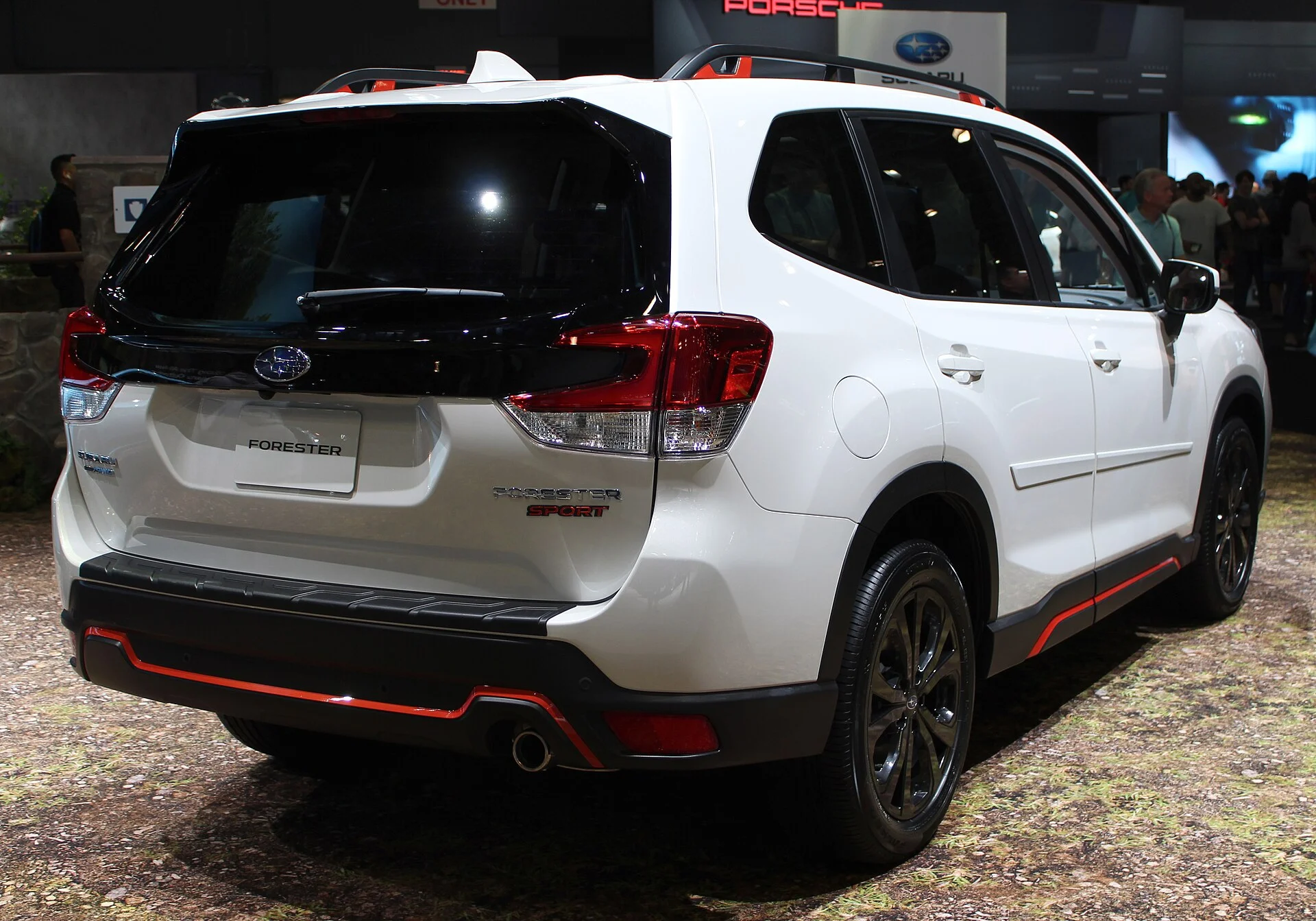
Forester vs the wagon: when the shorter floor is the right call
Anyone cross-shopping Subarus for camping runs into the same fork: Forester or Outback. The Outback is a longer wagon with a longer, lower load floor that stretches out taller sleepers more easily — if flat-out sleeping length is your top priority, that's the body style to read next, and we break its numbers down in Subaru Outback cargo dimensions for sleeping. The Forester answers with a taller cabin, a more upright and boxy cargo box, a higher seating position, and a smaller overall footprint that's easier to thread down a tight forest two-track and park in a crowded trailhead lot.
So the choice is honest and simple. Pick the Forester if you value sit-up headroom, a compact body that goes more places, and a flat floor for one-adult-flat or snug-two sleeping. Pick the wagon if you regularly sleep two full-size adults stretched out and want the extra floor length. Neither is wrong; they're tuned for different trips. The Forester's case is that for a solo camper or a close couple chasing remote sites, the shorter floor is a fair trade for everything the taller, nimbler body gives back.
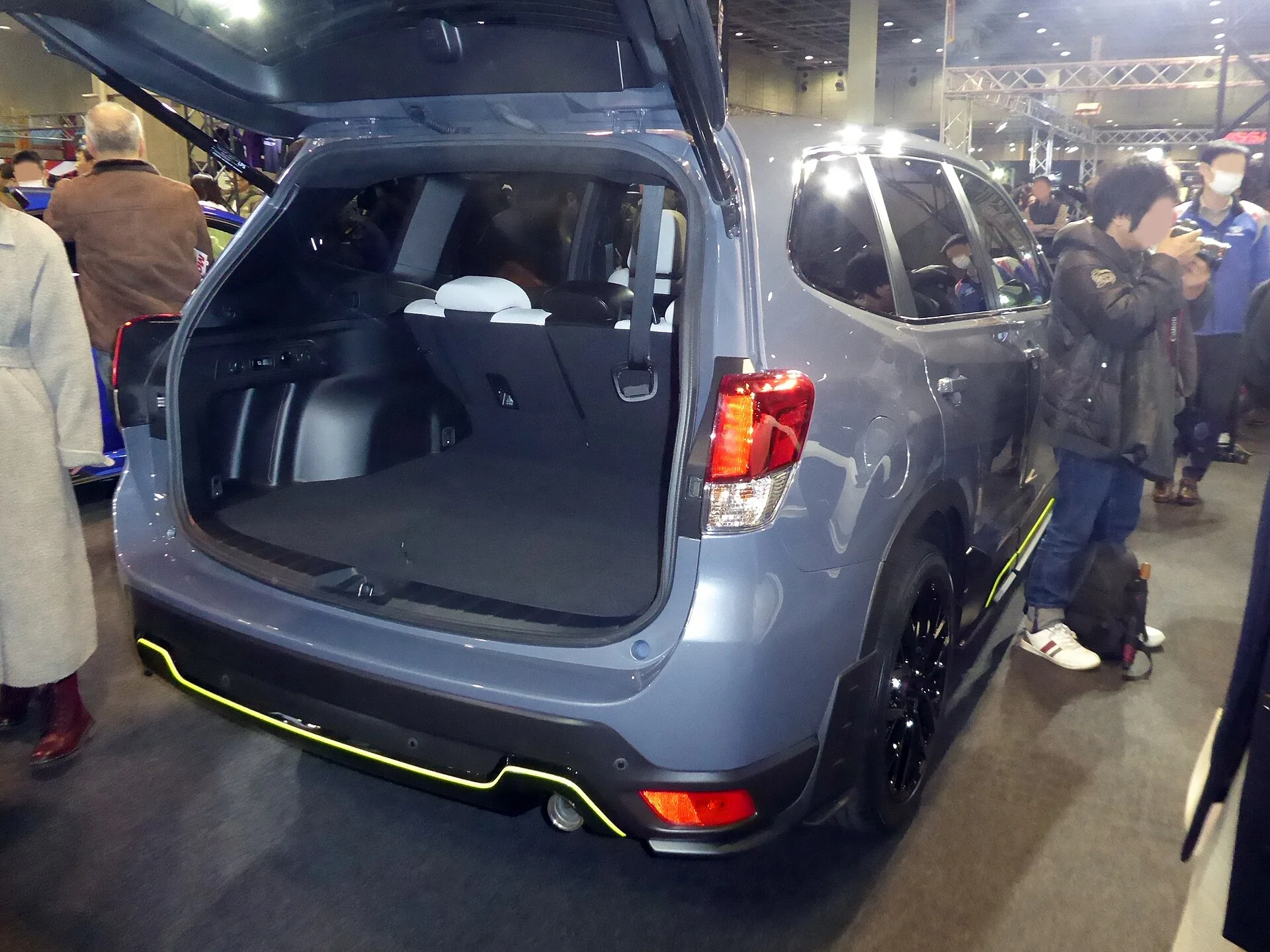
A flat, capable one-adult bed that punches above its size
The Subaru Forester is one of the better compact SUVs to sleep in — not for its cargo volume (27.5 cu ft seats up, up to 74.4 folded per Subaru, mid-pack for the class) but for its SHAPE and its CAPABILITY. The load floor is flat and square where rivals slope, the ~70.7-inch length per Subaru makes a real one-adult-flat or snug-two bed, and standard all-wheel drive gets that bed to sites a longer wagon can't reach.
Plan around the truth of the floor. A twin pad fits width-wise but runs long against the ~70.7-inch floor, so trim it or slide the front seats forward; a full or queen never lies flat in a compact this size. Solve the three things the Forester makes you solve — level the seat-fold step with a low platform or thick pad, add a LiFePO4 power station because the truck is 12V-only with no household outlet, and shade the big side, rear, and moonroof glass for privacy, blackout, and warmth. Measure the floor on your specific Forester before you buy a pad, do those three things, and a compact Subaru gives you a flatter, more go-anywhere bed than its modest cargo numbers suggest.