
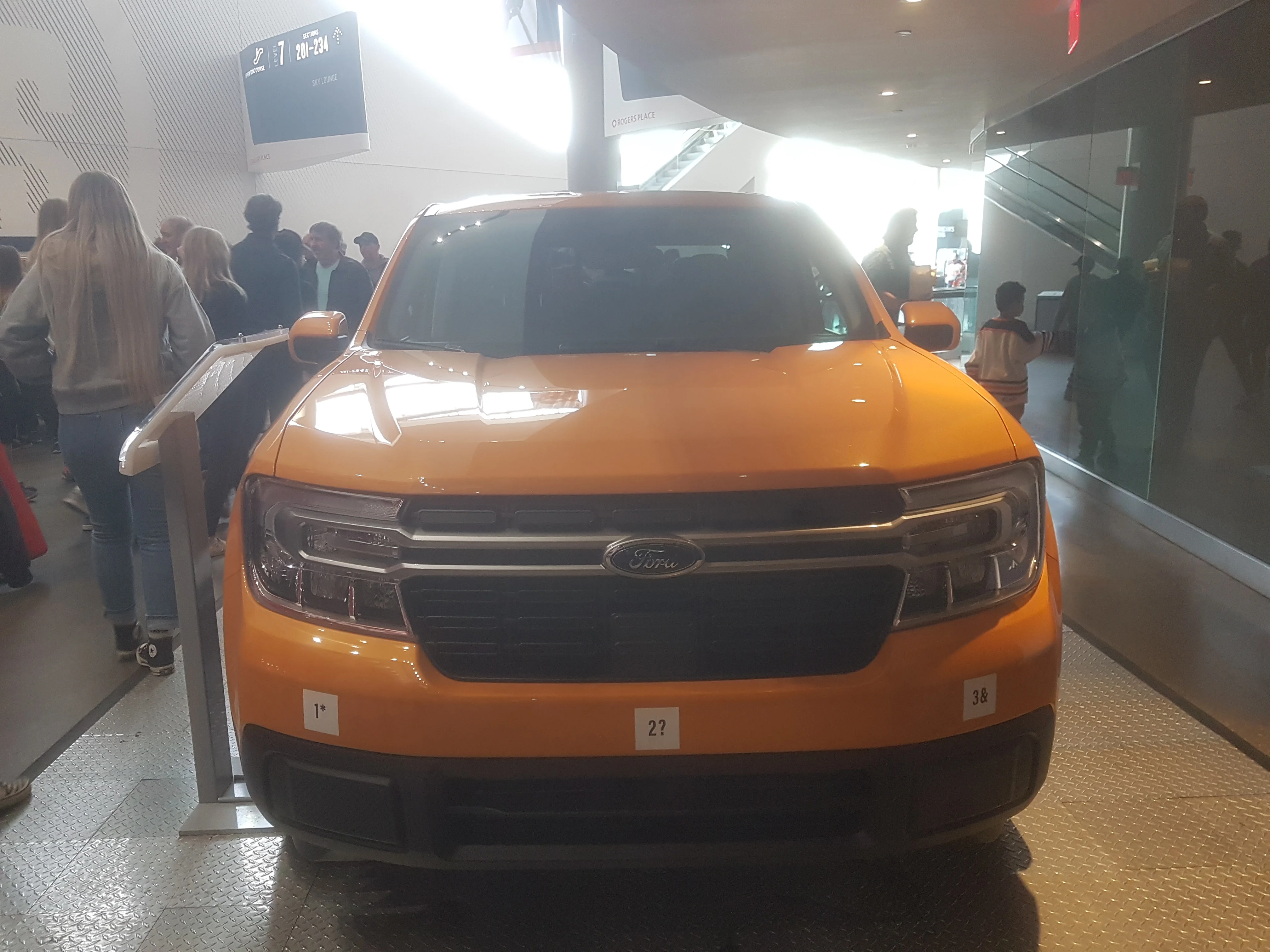
Two trucks that are secretly cars - and why that's exactly the point
Start with the two numbers that frame this whole build: the Ford Maverick's bed floor runs 54.4 inches and the Hyundai Santa Cruz's runs 52.1, per J.C. Lewis Ford's dimensions guide and Metro Hyundai's bed-size page - both about 18 inches short of the 72 a six-foot adult needs to lie flat. The Maverick answers with a 1,500-pound payload on most trims and a hybrid rated at 38 mpg combined, per J.C. Lewis Ford and Ford Authority; the Santa Cruz counters with 1,753 pounds of payload and up to 5,000 pounds of towing, per Edmunds. So this is not a 'which bed do you sleep in' comparison - neither bed sleeps you - it's a 'which platform do you build on' comparison.
Both of these are unibody trucks: car construction with a bed grafted on, not a body bolted to a ladder frame. For a camper, unibody is mostly upside - you trade rock-crawling credentials you probably weren't using for a rig that rides like a crossover and stays pleasant for the 300 highway miles before the campsite.
So I'm going to do this the way I'd actually do it: build a bed-camping setup on each truck, piece by piece - sleep system, storage, payload math, range, power - and see which build comes together better. The verdict at the end isn't a winner; it's a match: which truck suits which camper.
The tape measure first: what these little beds actually are
Every build starts with the tape measure, so here's the bed, dimension by dimension. The Maverick's box measures 54.4 inches long at the floor, up to 53.3 inches wide, 42.6 inches between the wheel housings, and 20.3 inches deep, per J.C. Lewis Ford's dimensions guide. The Santa Cruz measures 52.1 inches long at the floor (48.4 at the top of the bed, because the sides rake inward), 53.9 inches at its widest, 42.7 between the wheel wells, and 19.2 inches deep, per Metro Hyundai.
What the numbers mean for a build:
- Length goes to the Maverick by 2.3 inches - real, but neither number gets you a flat sleep, so it decides gear fit, not bed fit.
- Width is a wash: 42.6 vs 42.7 inches between the wheel wells means the same coolers, bins, and mattress widths work in both.
- Depth leans Maverick (20.3 vs 19.2 inches) - about an inch more wall to hide gear below the tonneau line.
- Drop the Santa Cruz's tailgate and the load floor stretches to 74.8 inches, per Metro Hyundai - a number that matters a lot in the next section.
Verdict on the tape: the Maverick's box is slightly longer and deeper; the Santa Cruz's is slightly wider with a longer gate-open floor. These are the two closest truck beds on the market, and everything interesting happens in how you use them.
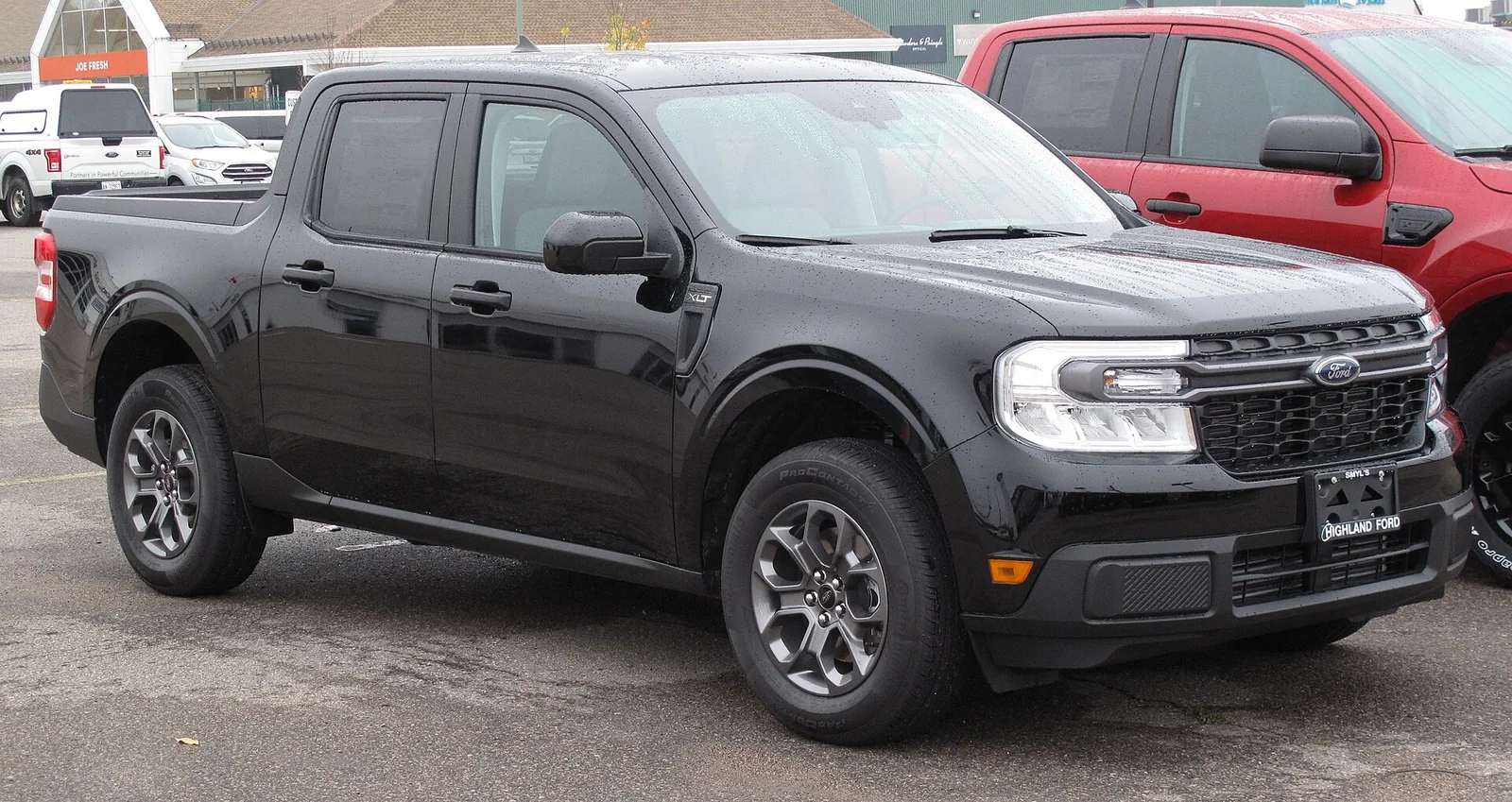
Honest part first: nobody sleeps flat in either bed
Let's kill the fantasy before we spend money on it. A six-foot adult needs roughly 72 inches to stretch out; the Maverick offers 54.4 and the Santa Cruz 52.1, per J.C. Lewis Ford and Metro Hyundai. That's a shortfall of a foot and a half in both trucks. No mattress, no clever angle fully fixes it with the tailgate up - anyone who tells you they sleep 'in the bed' of a compact truck is sleeping diagonally, curled, or with the gate down.
Bed-camping a compact truck means one of three setups: a bed tent that encloses the open tailgate, a tailgate-down sleep with your feet on the gate, or a shorter sleeper lying diagonal corner to corner. Buy for one of those three - not for a flat 6-foot sleep that neither truck can deliver.
This is where the Santa Cruz's 74.8-inch gate-open floor, per Metro Hyundai, earns its keep: with the tailgate dropped and a bed tent enclosing it, you have a legitimate 6-foot-2 sleeping platform. The Maverick pulls the same tailgate trick, though Ford doesn't publish a gate-open floor length the way Metro Hyundai does. Either way, the tent does the enclosing and the gate does the stretching. Plan the build around that reality and both trucks sleep one adult (two friendly ones, across the width) just fine.
The sleep build: tent over the gate, mattress over the wells
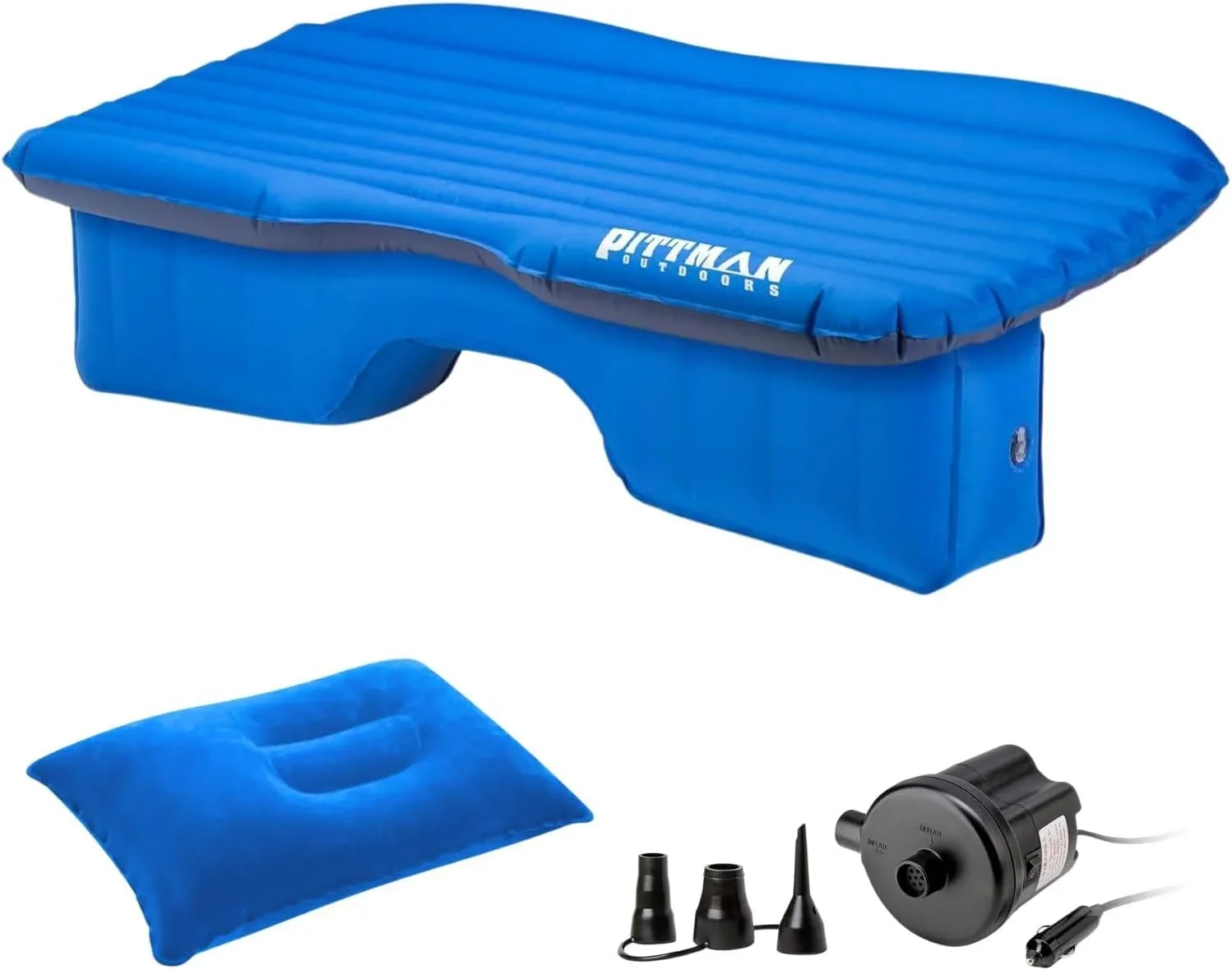
Here's the build order for the sleep system, and it's identical on both trucks because the beds are near-twins between the wheel wells (42.6 vs 42.7 inches, per J.C. Lewis Ford and Metro Hyundai). First the shelter: a compact-truck bed tent that wraps the open tailgate, turning the gate-down floor into enclosed sleeping length. Second the pad: in the bed itself, any straight air pad that fits between the 42-inch wheel wells works under the tent. The backup bedroom both crew cabs share is the back seat - a backseat-specific pad like the AirBedz backseat air mattress (60 by 35.5 inches with a base pillar that fills the rear footwell, per the Pittman Outdoors listing) turns the rear bench into a flat bunk when weather kills the tent plan.
Third piece: the tonneau, which is the compact-truck camper's garage roof. The Santa Cruz's party trick is that its tonneau is integrated - a built-in sliding cover, power-operated on the Limited trim, per Metro Hyundai - so the lockable, weather-resistant gear bay comes with the truck. The Maverick gets there with accessory hard trifold and soft folding covers from Ford's catalog; it works just as well but shows up as a line item, not a standard feature.
Total sleep-build scorecard: the hardware list is the same, the mattress is the same, the tent is the same. The Santa Cruz starts a step ahead because the tonneau is baked in and its published gate-open floor is 74.8 inches, per Metro Hyundai; the Maverick claws back elsewhere, as the next sections show.
Storage tricks: Flexbed slots vs the trunk hiding under the floor
This is the most fun section of the build, because both companies clearly assumed owners would live out of these beds. Ford's answer is Flexbed: the Maverick's box comes molded with vertical and horizontal slots sized for 2x4 and 2x6 lumber, so you can build dividers, a two-tier load floor, or a sleeping platform frame with a trip to the hardware store, per Ford's Flexbed support page. The same system includes moveable tie-downs, an in-bed cubby on XLT and up, an LED bed lamp, and - the camper's favorite - an available 120-volt, 400-watt outlet in the bed wall, per Ford.
Hyundai's answer is a trunk. Under the Santa Cruz's rear bed floor sits a lockable, drainable storage compartment - a hinged section roughly 7 inches deep by 18 by 38, per Metro Hyundai - plus smaller sidewall cubbies. Fill it with ice and it's a built-in cooler that drains through the plug; fill it with recovery gear and valuables and it's the hidden safe a tent camper never has.
The philosophies are different and both are right. Flexbed assumes you'll BUILD something - it's a framing kit molded into a truck. The under-bed trunk assumes you'll STASH something - cold food, muddy gear, things you'd rather not leave visible at a trailhead. Pick the one that matches how you actually camp.
My read for a bed-camper: the Flexbed slots matter more - a lumber-framed platform raises the mattress above the wheel wells with a gear bay underneath, the classic truck build in four boards. But a locked, drainable built-in cooler makes the Santa Cruz argument all by itself.
Payload: the quiet number that carries the whole camp
Payload is the least glamorous spec in the brochure and the most important one in the build, because everything - water, cooler, platform lumber, passengers, the dog - counts against it. Here the Santa Cruz takes a clean win: up to 1,753 pounds, per Edmunds' spec listing, against the Maverick's 1,500 pounds on most trims, per J.C. Lewis Ford's towing and payload guide. And the Maverick's number erodes on the trucky-looking versions: the Tremor drops to 1,140 pounds and the Lobo to 1,045, per J.C. Lewis Ford.
Run the camp math and the margin is real:
- A two-person weekend build - platform, mattress, cooler, water, stove, chairs, two adults - lands around 600 to 700 pounds before anything ambitious.
- Add a week's water (8 pounds per gallon), firewood, and a second battery, and a 1,045-pound Maverick Lobo is genuinely tight while the 1,753-pound Santa Cruz still has headroom.
- The trap: buying the off-road-styled trim for camping and losing a third of the payload that camping actually uses.
Practical read: any standard Maverick or Santa Cruz carries a normal camp without drama, but the Santa Cruz's extra 250-plus pounds of rating is the difference that shows up when the build gets heavier every season - and it always does.
Towing: the Santa Cruz pulls like it's a class bigger
If the camp involves a trailer, this section decides the comparison. The Santa Cruz's 2.5-liter turbo with all-wheel drive is rated to tow 5,000 pounds, with the base 2.5 at 3,500, per Edmunds. The Maverick starts at 2,000 pounds and tops out at 4,000 with the 4K Tow Package on all-wheel-drive models, per J.C. Lewis Ford's towing guide. That's a 1,000-pound gap at the top and a 1,500-pound gap at the bottom.
Five thousand pounds is small-camper territory - a loaded teardrop, a lightweight travel trailer, a boat. Four thousand still covers a teardrop and a utility trailer, but with less cushion once water tanks and gear go in. If a towed camper is anywhere in your plan, the Santa Cruz turbo is the honest pick.
Two footnotes keep the math honest. First, the Maverick's 2,000 and 4,000-pound figures both require choosing the right configuration up front - the 4K package can't be added later, per J.C. Lewis Ford. Second, towing and payload share the same underlying limits: tongue weight counts against payload, so a Santa Cruz towing 5,000 pounds with a 500-pound tongue load has already spent a chunk of its 1,753-pound rating, per Edmunds' figures. Weigh the whole trip, not just the trailer.
Range and power: the hybrid rewrites the basecamp math
Here's the Maverick's counterpunch, and it's a big one: the standard hybrid is EPA-rated at 42 mpg city and 38 combined in front-wheel-drive form, per Ford Authority's report on the 2025 ratings. The Santa Cruz offers no hybrid at all - its 2.5-liter returns 25 mpg combined in base form and 21 with the turbo and all-wheel drive, per Edmunds. For a camper who drives 250 miles to a basecamp and day-trips all week, the hybrid roughly halves the fuel bill of the turbo Santa Cruz.
The efficiency edge compounds at camp:
- Range between stations: a 38-mpg truck stretches remote loops where gas stops are 100-plus miles apart, and idling a hybrid to top a battery burns far less fuel.
- Bed power: the Maverick's available 400-watt, 120-volt bed outlet, per Ford's Flexbed page, runs lights or recharges electronics straight from the truck.
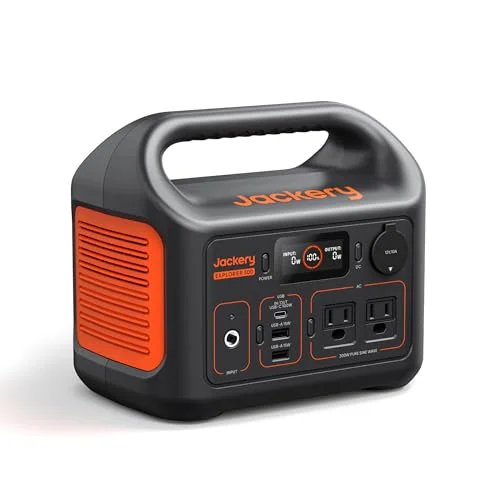
- Quiet overnight power still belongs to a battery box: a compact station like the Jackery Explorer 300 power station carries the fan-and-phones load in either truck, then refills from the Maverick's bed outlet or either truck's 12-volt socket on the next drive.
Scorecard: the Santa Cruz has no answer here. If your camping is high-mileage - long approaches, weekly trips, fuel budgets that matter - the hybrid Maverick is the build that pays for its own gear over a couple of seasons.
Where they sit against the body-on-frame crowd
Zoom out one step, because most shoppers cross-shop these two against real-frame trucks. Against a midsize like the Tacoma, both unibody trucks trade bed length and off-road hardware for ride, price, and economy - our Tacoma vs Maverick comparison runs that trade in detail, and the same logic applies with a Santa Cruz badge on it. Against the Honda Ridgeline - the segment's other unibody, one size up - the question becomes whether you want a bigger bed and more payload for more money, which our Maverick vs Ridgeline piece takes apart.
The honest positioning: these two are the entry tickets to truck camping. They're the cheapest way to get a weatherproof, lockable, power-equipped gear bay behind a comfortable commuter - and the compromise is the one this article keeps repeating, a bed too short to sleep flat without the tailgate's help.
What they are NOT is worse versions of big trucks. A Maverick hybrid doing 38 mpg, per Ford Authority, does something no body-on-frame pickup in America does; the Santa Cruz's integrated tonneau and under-floor trunk, per Metro Hyundai, out-clever most full-size beds. They're a different species, and for a solo or two-person camper who camps from the bed rather than in it, often the smarter one.
The verdict: match the truck to the build, not the badge
After building the same camp on both trucks, here's the honest split. Buy the Ford Maverick if efficiency and bed-building are the build: the 38-mpg hybrid, per Ford Authority, plus the Flexbed lumber slots and available 400-watt bed outlet, per Ford, make it the best cheap-to-run camping platform on sale. Buy the Hyundai Santa Cruz if hauling is the build: 1,753 pounds of payload and 5,000 pounds of towing, per Edmunds, plus the integrated tonneau and lockable under-bed trunk, per Metro Hyundai, make it the stronger gear mule with the cleverer built-in storage.
One sentence each: the Maverick is the efficiency camper's truck - cheapest miles, best DIY bed. The Santa Cruz is the hauler's truck - most weight, most towing, best factory storage. Neither sleeps you flat in the bed, and both fix it the same way: gate down, tent on.
And keep the shared lesson for whichever you pick: the compact truck camp is a build, not a purchase. The 54.4 and 52.1-inch beds, per J.C. Lewis Ford and Metro Hyundai, only become bedrooms with a tent and a wheel-well mattress; the payload sheet only stays happy if you weigh the water. Get the build right and either of these little unibody trucks camps far above its size - if you'd rather start from a rig you can sleep inside with the doors shut, our Tacoma camping guide shows what the extra money buys.