
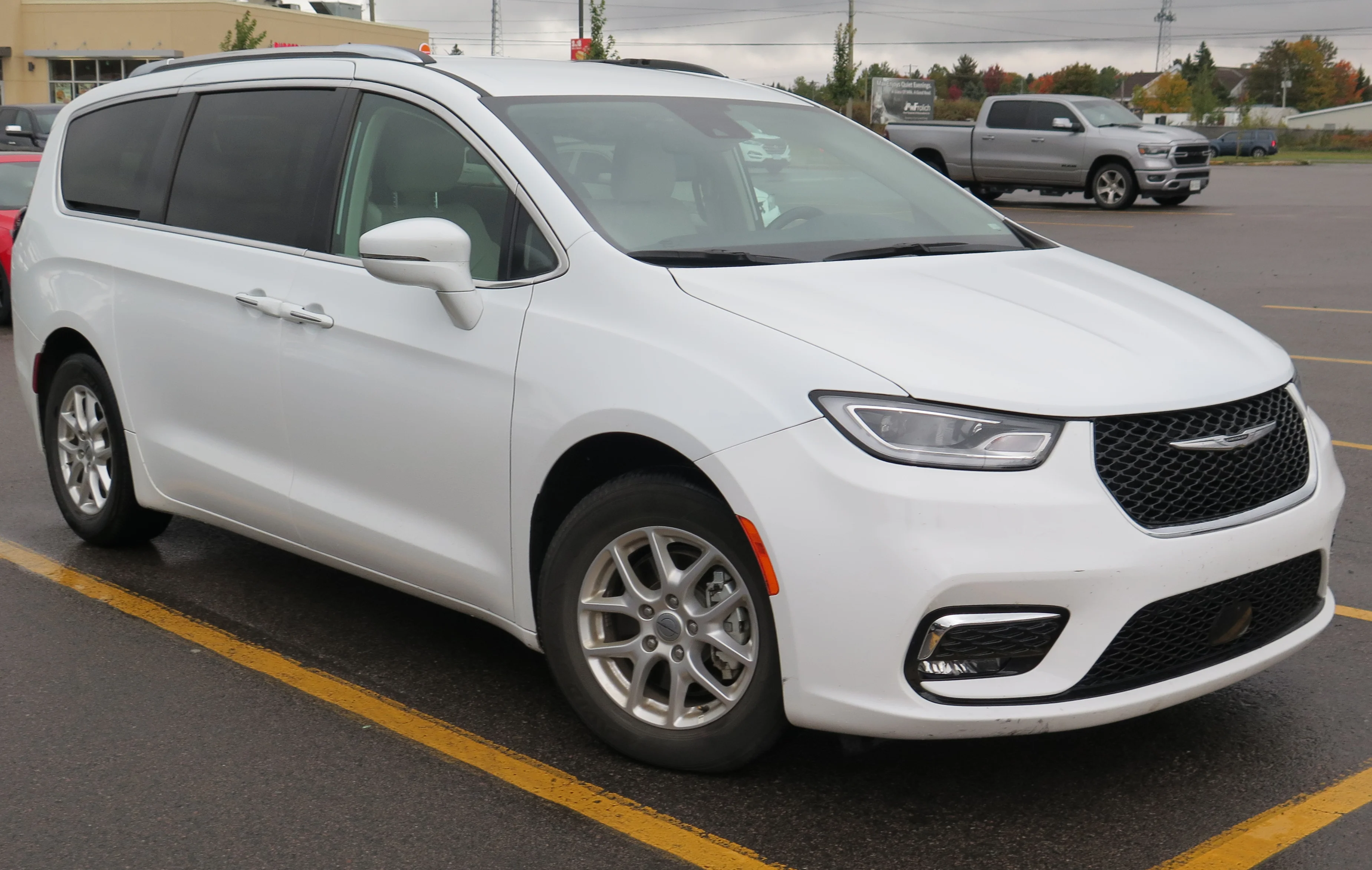
The one minivan that makes a flat floor for free
Here's the value nobody prices out for you: the gas Chrysler Pacifica is the only mainstream minivan that folds both of its rear rows flat into the floor with nothing to carry out to the garage. That's Stow 'n Go, and for a car camper it's worth real money, because a flat sleeping floor is the whole job and the Pacifica does it in about a minute with no lifting, no seats to store, no platform to build. Every other van either can't fold the middle row flat or makes you haul heavy seats out to fake it.
But there's a catch that costs some buyers the exact feature they came for, and I'll put it up front because it's the money mistake: the Pacifica Hybrid does not have second-row Stow 'n Go. The plug-in's battery lives in the under-floor wells where the gas van's middle seats tuck away, so on the Hybrid only the third row stows into the floor. This page works from the cargo numbers Chrysler actually publishes, explains why there's no flat length in inches, and makes the gas-versus-hybrid call the deciding factor it should be - because for sleeping, it is.
One more thing before the numbers, since it's where the money leaks: a flat sleeping floor is the single most expensive thing to fake in any other rig, whether that's a plywood platform you cut and carry or a pile of seats you store in the garage. The gas Pacifica hands you that floor as a factory feature you already paid for, so the sleeping conversion costs you a pad and nothing else. When I weigh a camping van, I'm really asking what the flat floor will cost me on top of the purchase price - and on the gas Pacifica the honest answer is close to zero, which is why it keeps earning its spot in this class.
The numbers Chrysler prints: 32.3, 87.5, 140.5
Start with what's official, because it's the honest floor for the build. Chrysler lists the Pacifica's cargo volume as 32.3 cubic feet behind the third row, 87.5 behind the second, and 140.5 behind the first. Those are real, published Chrysler figures.
- 32.3 cu ft (behind row three): gear space with all seats up - useful, not a bed.
- 87.5 cu ft (third row stowed): the third row drops into its floor bin and you get a long flat run from the tailgate forward. Both gas and hybrid do this.
- 140.5 cu ft (both rows stowed): the number that makes the gas Pacifica special - the second row also folds into the floor for a genuinely flat, full-length deck. On the Hybrid you don't reach this the same way.
Read those as a build spec: for the gas van, 140.5 is a flat floor you unlock without removing a thing, which is the cheapest full-length bed in the segment because the labor is zero. That's the value case in one number - and it's exactly the number the Hybrid can't hand you the easy way.
It's worth reading those three volumes as a progression rather than three separate stats, because that's how you shop them. The 32.3 cubic feet is your everyday trunk with the family aboard; the 87.5 is the third row dropped away for a long weekend of gear; and 140.5 is the full clear-out that turns the van into a room. Only the last one is a bed number, and only the gas model reaches it by folding, not lifting. So when a listing brags about maximum cargo volume, remember the figure that matters for sleeping is the one behind the first row - and remember to ask whether the van in front of you actually gets there with Stow 'n Go or with a battery in the way.
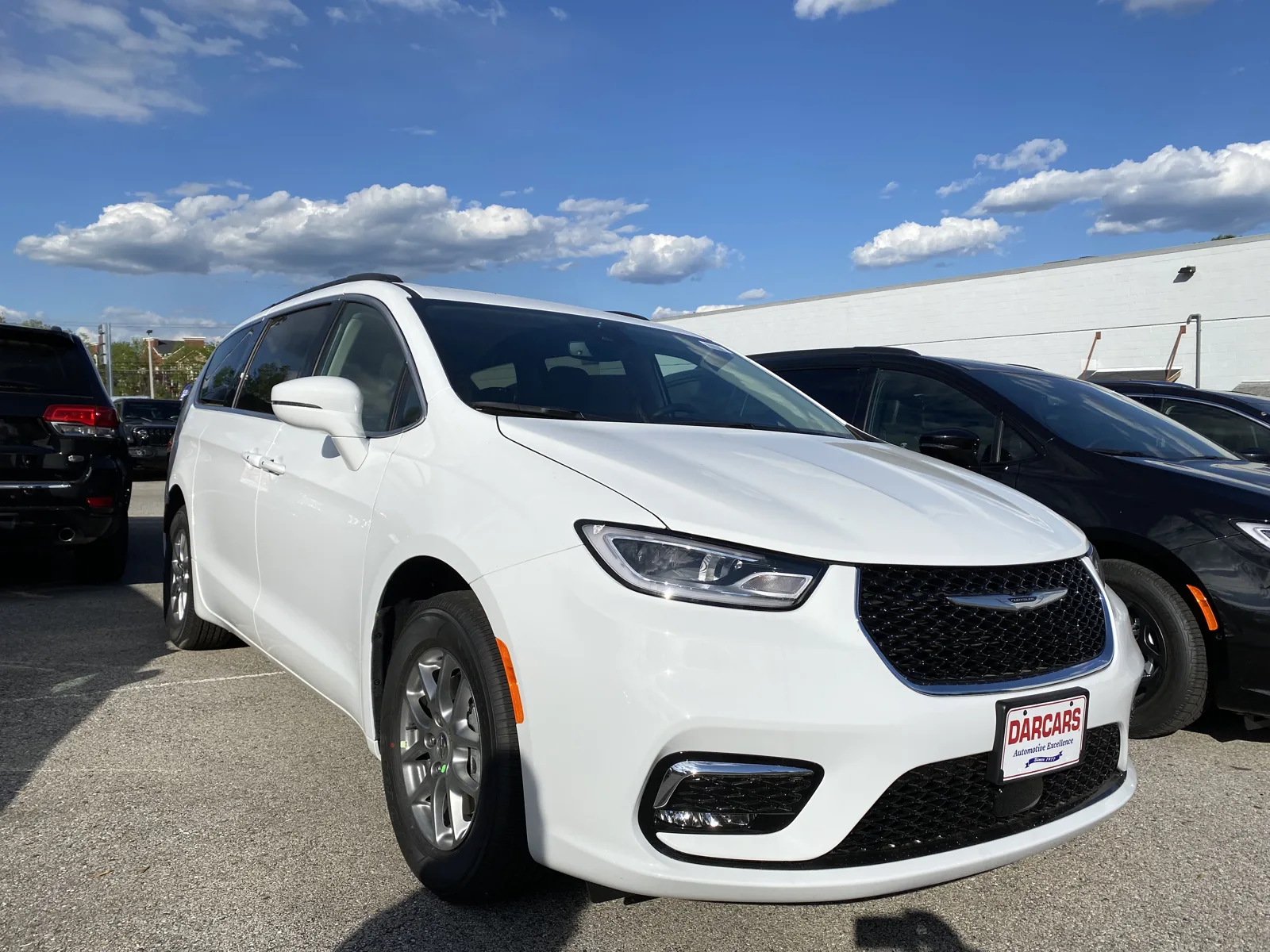
Stow 'n Go, and why it's the best value in the class
Let me explain what Stow 'n Go actually is, because it's the feature that earns the Pacifica its spot. Each second-row seat folds down and drops into a bin molded into the floor, and the third row tumbles into its own well out back. Fold both and the floor is flat, edge to edge, with the seats stored below the load line instead of sitting in your garage.
Every other minivan makes you choose: live with a middle row that won't fold flat, or lift out heavy seats and find somewhere to keep them. The gas Pacifica just swallows both rows into the floor. For a bed, that convenience is the whole ballgame.
Where the value shows up:
- No seats to store: you keep the van's full flexibility and a flat floor without a shed full of removed seats.
- Minute-fast conversion: arrive at camp, fold, sleep - no wrestling 68-pound seats in a dark lot.
- Those in-floor bins double as storage when the seats are up - dry, lockable space for gear.
That's why, dollar for dollar, the gas Pacifica is the flat-floor value pick. You're not paying for a feature you'll fight; you're paying for the one that does the sleeping job by itself.
Don't overlook those in-floor bins, either, because they're a quiet bonus that most sleeping guides skip. When the seats are up during the drive, the same molded wells that swallow the second row are dry, out-of-sight storage - and on the Pacifica they lock, so I stash the stuff I don't want visible in a trailhead parking lot down there instead of piled on the seats. Then, when it's time to sleep, I empty a bin, fold the seat into it, and the floor goes flat over the top. One set of wells does two jobs across a single trip, storage by day and bed structure by night, and I'm not paying for a roof box or a cargo tray to get it.
The Hybrid catch that costs you the feature
Now the false economy, because it's a real one and it's easy to walk into. The Pacifica Hybrid is a plug-in, and its drive battery is packaged in the under-floor space where the gas van's second-row Stow 'n Go bins live. There isn't room for both, so the Hybrid gives up second-row Stow 'n Go entirely. The third row still folds into the floor on the Hybrid - that well is elsewhere - but the middle seats do not.
What that means if you buy for sleeping:
- Gas Pacifica: both rows stow flat into the floor - the full flat-floor party trick.
- Pacifica Hybrid: only the third row stows; the second row folds down onto the floor rather than into it, so you don't get the same flat, nothing-removed deck. You'd bridge the folded second row with a platform or mattress to level it.
- The buying rule: if the flat floor is why you want a Pacifica, the gas model is the one that delivers it - don't assume the pricier Hybrid does more here, because on this feature it does less.
Plenty of listings quote Pacifica Stow 'n Go without ever noting the Hybrid loses the second row, which is how someone pays more for the plug-in and ends up with less bed. Check the powertrain before the badge.
I'm not telling you the Hybrid is a bad van - the plug-in has its own case for the right buyer - just that on this one sleeping feature the extra money buys you less capability, not more, and that's the opposite of what people assume when they pay up. If you're cross-shopping a used gas Pacifica against a used Hybrid at a similar price, the gas one is the better sleeper before you've spent a dollar on the build, because it already has the flat floor the Hybrid asks you to fabricate. Decide what you want the van to do first: if overnight flatness is the priority, that decision writes itself, and it writes gas.
The flat length Chrysler never prints
Let me be straight about a gap instead of guessing: Chrysler does not publish a cargo-floor length, width, or height in inches for the Pacifica. Sites will hand you a confident number, but most estimated it from the volume. I won't quote a made-up inch, because that's exactly what strands a tall sleeper with their feet on the tailgate.
What I'll say honestly: with both rows stowed, the gas Pacifica opens a long, flat, full-length floor - 140.5 cubic feet spread into a genuinely level deck, one of the easiest full-length beds in any van. What I won't give you is an exact flat length, because Chrysler hasn't measured it for you. The measure-your-own step below isn't filler; it's the only way to know the fit before you buy a mattress or cut a board, and on a van this flat, it's a five-minute job with a good result.
Here's how I'd actually take the measurement, since the whole point is to trust your own tape over a website's guess. Stow both rows on the gas van, lay a rigid board or a broom handle along the floor from the closed tailgate toward the front seats, and mark where a comfortable sleeper's headroom and legroom run out - that's your usable flat length, and it's the only figure that decides whether you stretch out or sleep on a diagonal. Do the same for width between the wheel wells while you're back there. It costs you five minutes and a tape you already own, and it saves you from buying a mattress that Chrysler's un-published numbers would have let you get wrong.
Building the bed: gas is easy, hybrid needs a level
The build splits cleanly by powertrain, which is the whole point of getting the trim right.
- Gas Pacifica: stow both rows and you already have a flat floor - all you add is padding.
- Pacifica Hybrid: stow the third row, fold the second row down, then bridge the step with a platform or a shaped mattress to get level - a little more work, the same end result. Budget for the leveling the gas van does for free.
- Either way, measure first and check sitting height against any platform you add.
The value lesson: on the gas van, your whole 'build' is choosing a pad, which is why it's the cheapest flat bed going. On the Hybrid you're buying a little lumber or a thicker mattress to make up the difference - not a dealbreaker, just a cost the badge doesn't advertise.
If you do build a platform for the Hybrid, keep it dead simple and keep it cheap. The job is only to carry the folded second row up to the same level as the stowed third-row well, so a low plywood deck on a couple of cross-braces gets you there - you're bridging a step, not framing a house. Measure the height difference between the folded second row and the flat rear floor before you cut anything, because that step is what your platform has to match, and on the Hybrid it's the number that replaces the labor the gas van does for you. Build it just tall enough to level out, and you've turned the plug-in into the same flat bed the gas van gives away.
Width, wheel wells, and two across
Width decides one sleeper or two, and the minivan shape helps. Chrysler doesn't publish a cargo width in inches, but the Pacifica is a wide box, and with the flat Stow 'n Go floor two pads side by side are realistic - more so than in a tapering SUV.
The real limit isn't the widest point - it's the pinch between the wheel wells. Measure that, because it's the true ceiling on two pads across, and it's the number worth having before you buy a wide mattress.
Working with the width:
- Two adults: plausible on the flat gas-Pacifica floor - measure the wheel-well pinch first.
- Solo or one-plus-a-kid: easy, with gear alongside.
- Keep pads inboard of the sliding-door tracks low on the sides.
The flat floor is what makes the width usable - on the gas van you get the full wide deck with nothing sticking up, which is exactly what a two-person setup wants.
One practical note on the wheel-well pinch, since it's the number that actually caps two-across: it sits lower than your pads if you plan the layout right. The wells intrude near the floor, so a mattress or foam pad that clears them at pad height can be wider than the tightest point between the arches - which is why measuring at the height you'll actually sleep matters more than measuring at the floor. I'd take two numbers back there: the pinch between the wells, and the clear width a few inches up where your body rides. On the flat gas-Pacifica floor those two numbers are what tell you honestly whether two adults fit shoulder to shoulder or whether it's a roomy one-person setup with gear alongside.
Power: a 150-watt outlet, if the package includes it
The Pacifica offers a 115-volt, 150-watt household outlet, but read the fine print: it isn't standard across the board - it comes with option packages like the Uconnect Theater or Premium groups, so a base trim may not have it at all. Check the window sticker before you count on it.
- What 150 watts runs: phone and laptop charging, lights, a CPAP on many models - light, steady loads.
- What it won't: a 12V compressor fridge is better off its own supply, and anything with a heating element is out. It's a device outlet, not an appliance one.
- Package check: confirm the outlet is actually on your trim/options, or plan for none.
The reason I lean on a power station over the built-in outlet isn't just the package gamble - it's that 150 watts and a household plug that only lives while the engine or system is willing to feed it is a thin thread to hang a night on. A station gives you a battery that's yours, sized to the job, that you can carry out to a picnic table or keep by your head, and that tops back up from the 12V socket on the next drive. If your Pacifica did come with the 150-watt outlet, treat it as a bonus for daytime device charging while you're parked and running, and let the station carry the overnight load. That way your sleep setup doesn't care which options box the previous owner checked.
The verdict on the Pacifica as a sleeper
For the money, the gas Chrysler Pacifica is the best flat-floor minivan to sleep in, full stop - both rows fold into the floor for a level, full-length 140.5-cubic-foot deck with nothing to remove, which is the cheapest full-length bed in the class because the labor is zero. Chrysler gives you volume but no flat length in inches, so confirm the fit with a tape.
Buy the gas Pacifica for the flat floor; know the Hybrid trades second-row Stow 'n Go for its battery, so it needs a platform to match. Measure your own length and wheel-well width, check the outlet package, and the gas van is a two-adult bed with almost no build.
The value play is simple: don't overpay for a Hybrid expecting more bed - on this one feature it's less - and let the gas van's Stow 'n Go do the work a platform does everywhere else. The full setup lives in our Chrysler Pacifica camper conversion, and our Sienna versus Odyssey comparison weighs the other two minivans.
To put a bow on the value case: what you're really buying with the gas Pacifica is a flat, full-length floor that arrived from the factory with the labor already done, and everything else on this page is about protecting that advantage. Confirm the powertrain so the battery doesn't steal your second-row Stow 'n Go, run a tape down the floor and across the wheel wells because Chrysler won't hand you those inches, and check the window sticker for the 150-watt outlet instead of assuming it. Do those three small things and the gas Pacifica is about the least expensive way I know to end up with a level two-adult bed you didn't have to build - which, for a budget car camper, is the whole point.
Related on Auto Roamer: Kia Carnival camper guide; best SUV and sedan camping mattresses.