
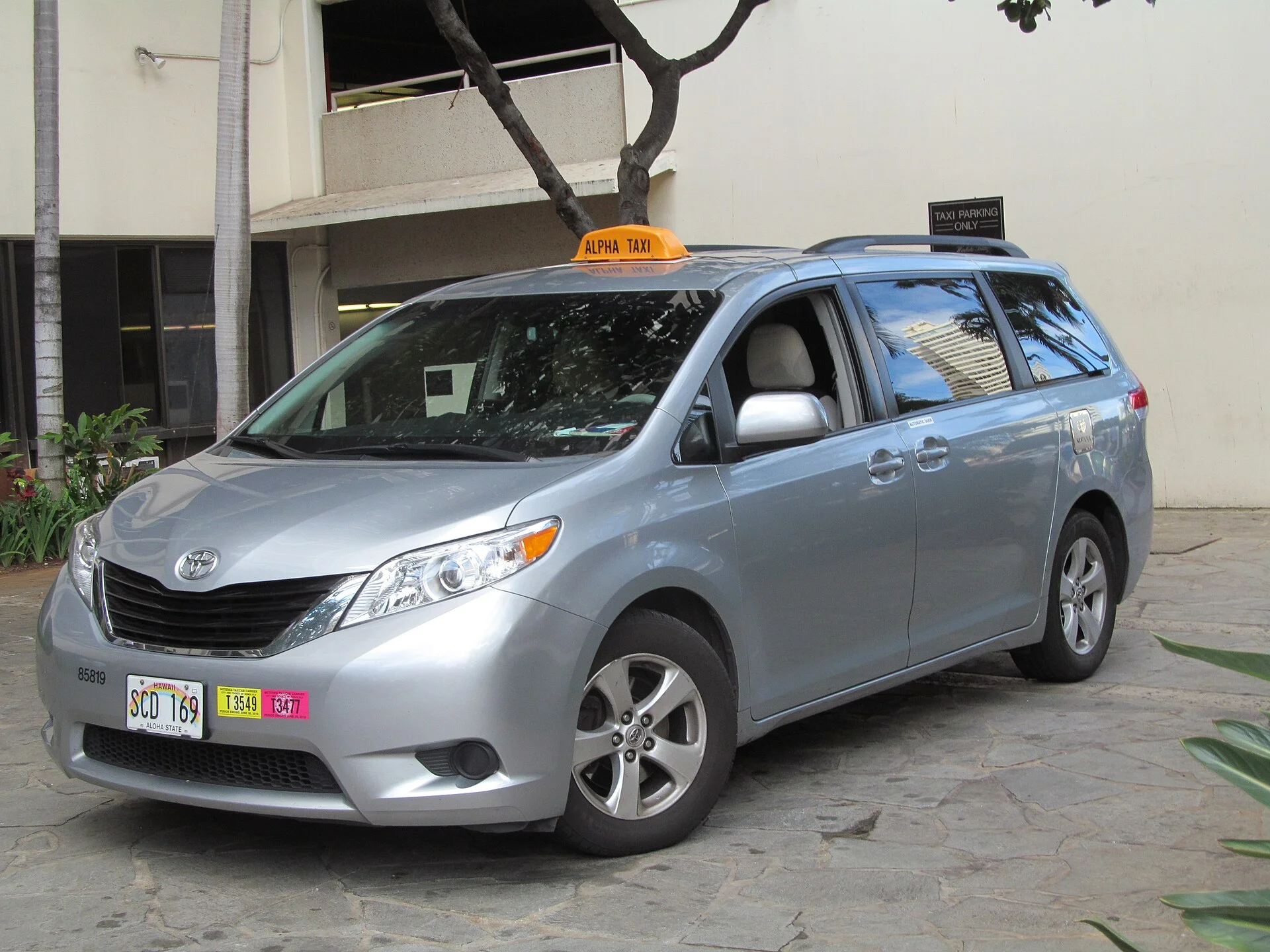
The whole minivan-camping fight comes down to the seats
Two numbers frame this whole fight: 158 cubic feet of flat floor in a Honda Odyssey with its seats pulled, 101 in a Toyota Sienna whose seats stay bolted in. People overthink minivan camping - minivans are already the best-sleeping vehicles on the road, long, tall, boxy, flat - so between the Toyota Sienna and Honda Odyssey the deciding question is narrower than you'd think: what happens to the second-row seats when you want a flat floor to sleep on? That one mechanical difference decides this whole comparison, and it's the first thing I check on any van a customer wants to camp in.
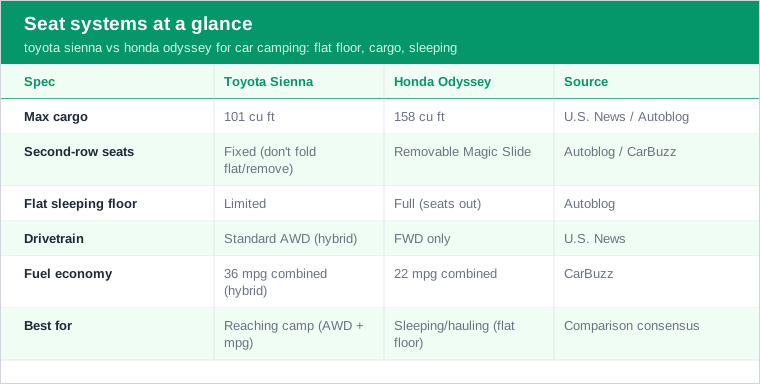
The Odyssey's second-row Magic Slide seats come OUT completely, opening a maximum 158 cubic feet of flat cargo floor, per Autoblog. The Sienna's second-row seats do NOT remove and don't fold flat the same way - a consequence of packaging its standard hybrid system - capping it at 101 cubic feet. That's a 56% cargo advantage to the Odyssey, and for a flat-floor sleeper it's the ballgame.
But the Sienna didn't give up that flat floor for nothing - it traded it for standard all-wheel drive and a 36-mpg hybrid, which is exactly the gear you want for REACHING remote camps. So this isn't a blowout; it's a genuine fork between the better SLEEPER and the better ROAD-TRIPPER. Here's how the seat difference ripples through every part of a camping trip - the flat floor itself, the drive to camp, the campground reconfiguration game, the ten-year money, the bedroom build, and what one real night in each van actually feels like. By the verdict you'll know which seat system matches the way your family camps - and why either answer still out-sleeps the SUV you were probably cross-shopping.
Round 1 - The flat floor: Odyssey, decisively
Start with the bed, because that's why you're here. Pull the Odyssey's Magic Slide second-row seats out and fold the third row into its well, and you get a genuinely enormous flat floor - 158 cubic feet, enough that testers fit 57 carry-on suitcases in one, per Autoblog. That's not 'a minivan you can sleep in'; that's a cargo van with windows, long and flat enough for two adults plus a mountain of gear.
The Sienna simply can't match the geometry:
- Odyssey (158 cu ft, seats out): a full, uninterrupted flat floor - the best sleeping platform in the class.
- Sienna (101 cu ft): its second-row seats stay in and don't fold flat, so you're sleeping around them or in the space behind, not on a full flat floor.
- Why: the Sienna's hybrid hardware and seat design trade removability for efficiency - a real compromise for a flat-floor camper.
If your camping plan is 'lay a mattress on a flat floor and sleep,' the Odyssey's removable seats win before any other number is read. This is the Sienna's one real weakness as a camper.
Round to the Odyssey, and it's the most important round. To put the scale in perspective: 158 cubic feet is more than an Odyssey-and-a-half of Sienna, more than any three-row SUV on the market, and enough flat floor that a 75-inch adult sleeps lengthwise with a full camp kitchen packed alongside. Minivan people know this secret and guard it smugly: nothing this side of a cargo van sleeps bigger, and the cargo van doesn't have windows, seats, or a school-run alibi.
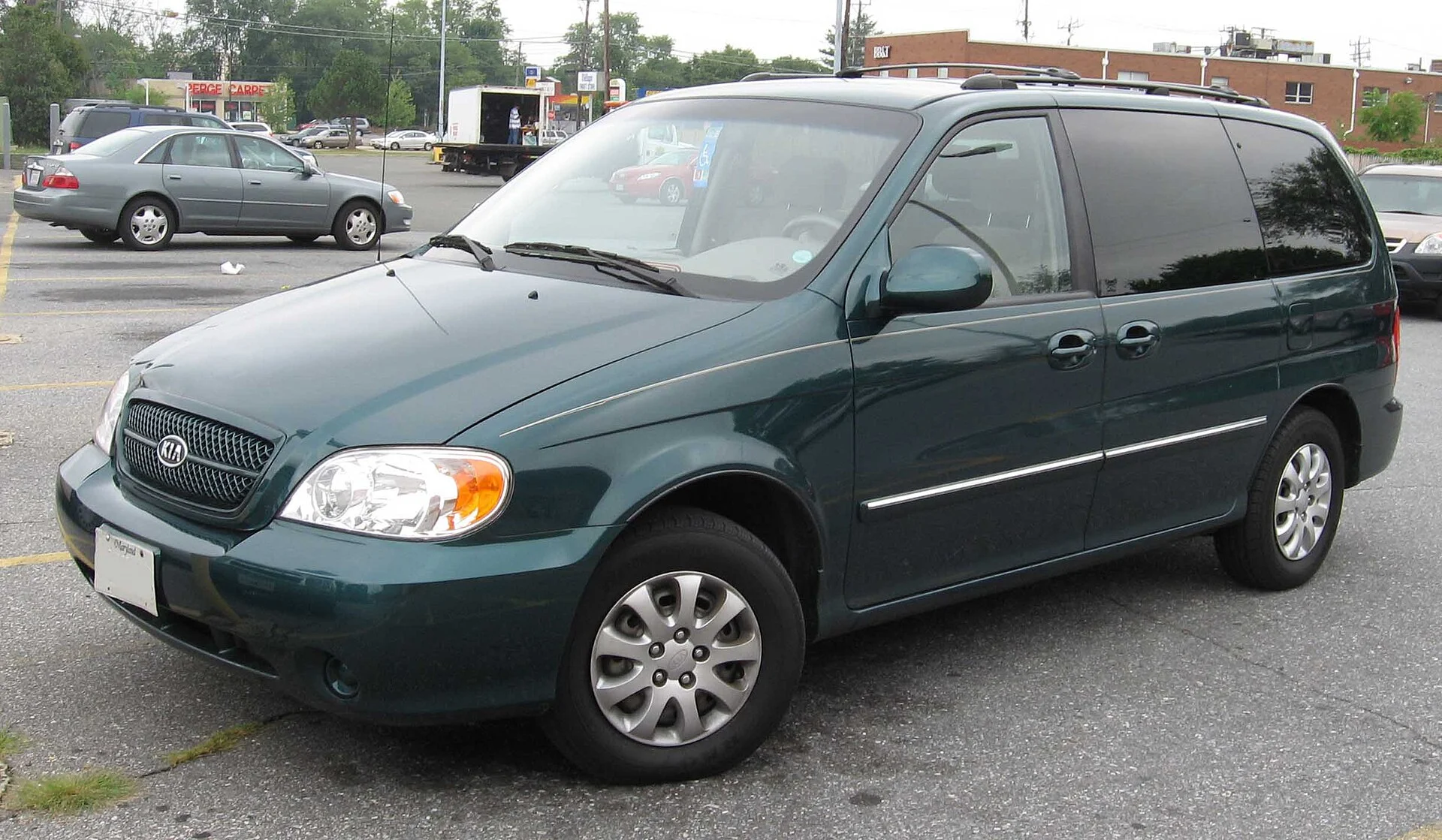
Round 2 - Reaching camp: Sienna's AWD and 36 mpg
Now the Sienna lands its counter, and it's a strong one for anyone who camps beyond the paved campground. The Sienna comes standard with all-wheel drive; the Odyssey is front-wheel drive only, per U.S. News. And the Sienna is hybrid-only, delivering about 36 mpg combined against the Odyssey's 22, per CarBuzz - a massive fuel advantage on the long highway hauls between camps.
Why this round matters more than it first looks:
- AWD traction: standard all-wheel drive gets the Sienna up wet, muddy, or gravel campground approaches the FWD Odyssey can struggle with.
- 36 vs 22 mpg: the Sienna's hybrid nearly doubles the range between fill-ups - a real advantage when campgrounds are remote and gas stations are far apart.
- Quieter camp: the hybrid system also runs the climate more efficiently at idle around camp.
For the camper whose challenge is GETTING to a dispersed site and affording the miles, the Sienna's AWD and hybrid economy are exactly the right tools. And don't underrate the range math on a camping-specific basis: at 36 mpg, a Sienna's tank comfortably covers 500 miles of mixed driving - out to a remote campground, a weekend of around-camp errands, and home - without hunting for a station in the sticks. The Odyssey at 22 mpg plans fuel stops the Sienna doesn't think about. Round to the Sienna.
Round 3 - Configurations and living space: Odyssey's flexibility
Beyond the flat floor, the Odyssey's Magic Slide system is a tinkerer's dream, and it pays off at camp. The second-row seats slide side to side AND fore and aft, giving countless configurations - and then come out entirely, per Autoblog and CarBuzz. That means you can shape the interior for a family by day and a bedroom by night in ways the Sienna's fixed seats can't.
How the flexibility helps a camping family:
- Mixed layouts: slide seats to open a walkway, pull one for a bed and keep one for a kid - the Odyssey reconfigures on the fly.
- Full conversion: seats out, it's a flat cargo hold for a full sleeping build; seats in and slid, it's a people-mover again.
- The catch: those second-row seats are heavy and you need somewhere to store them at home while camping - a real logistical chore, not a free trick.
The Sienna's seats stay put, which is less flexible but means nothing to lift out or store - and in fairness, they slide through a long track that opens a real gear bay behind them, so the fixed row is a constraint, not a wall. But watch a family reconfigure an Odyssey at a campground - seats slid apart for a changing room at noon, pushed together for the drive to the lake, one pulled entirely for firewood at 4 p.m. - and the difference is a verb, not a spec. For maximum configurability the Odyssey wins. Round to the Odyssey.
Round 4 - The everyday-ownership tiebreaker
You drive a minivan far more than you camp in it, so the last round is about living with it. The Sienna's hybrid economy and Toyota's resale reputation make it cheaper to own over years of trips; the Odyssey counters with its cargo flexibility and a traditionally strong family-hauler reputation. This is where the $2,000-ish price and efficiency gap gets decided by your priorities.
The honest tiebreaker: if you camp a few times a year and commute the rest, the Sienna's 36 mpg and AWD earn their keep every week. If the van is your adventure rig and cargo hauler, the Odyssey's flat floor earns its keep every trip.
The practical split:
- Sienna: lower running costs, AWD security, hybrid range - the efficient daily driver that camps.
- Odyssey: unmatched flat-floor cargo, endless seat configs - the camper and hauler that dailies.
Neither is a bad van, and both carry the family-hauler virtues that make minivans quietly great campers - low load floors that spare your back at pack-up, sliding doors that open the full side of the 'bedroom' at camp, and cabins engineered for people who live in them hours a day. The tiebreaker is simply how the driving-to-camping ratio falls for you: miles favor the hybrid, loads favor the seats that leave.
Building the van bedroom: the configuration-lover's kit
A minivan bedroom is the easiest build in vehicle camping - the floor is already long and flat-ish - but the two vans want slightly different kits, and that difference follows the seats. In the Odyssey with the second row pulled, you have a genuine open floor: a full-size or even queen foam mattress fits, and the build is basically 'lay it down.' In the Sienna you work AROUND the fixed second row, so a shaped, movable pad wins - a back-seat-style air mattress like the Onirii (about 55 by 35 inches) fills the space behind the second row and moves in 2 minutes when the layout changes.
The rest of the kit is identical for both vans:
- Power: a compact power station for the overnight loads - the Sienna's hybrid system is efficient, but the starter-battery rule doesn't change: overnight draw lives on its own battery.
- Mesh screens: the sliding side doors are the minivan superpower here - a screened, cracked slider moves more air at bed level than any SUV window, and two opposite openings keep the big glass box dry.
- Window covers: a van has an acre of glass; reflective panels cut to fit give privacy, insulation, and a dark-enough cabin to sleep past sunrise.
Family logistics ride on top of the hardware - our camping with kids sleep guide covers who sleeps where when the van is the master bedroom and the tent is the bunkhouse.

One night in each: how the seat difference actually sleeps
Run the same overnight in both vans and the spec-sheet difference becomes furniture. In the Odyssey, setup night one looks like this: second-row seats came out in the driveway (they're heavy - budget two people or good technique), third row folded into its well, and the floor is a flat, uninterrupted platform longer than any SUV's. You make a real bed, walls of gear on either side, and the van sleeps like a small studio apartment.
The Sienna's night one is different but far from bad: the third row folds away, the fixed second-row seats slide far forward, and your bed lives in the generous bay behind them. One adult sleeps royally; two sleep fine with a shaped pad; the second row becomes a nightstand, a gear shelf, and a kid's bunk all at once. What you lose is the single big rectangle - and the option of a true full-width mattress.
The seat-storage chore is the hidden tax on the Odyssey's win: those second-row seats need a garage corner while you camp, and re-installing them is a 15-minute, two-person job. Families who camp monthly learn to love it; families who camp twice a summer sometimes stop bothering - and then the two vans sleep nearly the same.
That last sentence is the honest asterisk on this whole comparison: the Odyssey's advantage is real but only as real as your willingness to pull seats. Know your own laziness before you pay for capability it will cancel - and if you're honest enough to admit the seats would stay in after the second trip, read the Sienna's case again with fresh eyes, because a 36-mpg van whose bed you never have to assemble is its own kind of luxury on a Sunday night, 300 miles from home.
The family-hauler decade: fuel, resale, and 200 school runs a year
A minivan is the most honest vehicle purchase there is - nobody buys one for image - so the ten-year money math deserves its own verdict. The Sienna's case is overwhelming on paper: the hybrid drivetrain's 36 mpg against the Odyssey's 22 is the largest efficiency gap in any comparison we cover, and it compounds across every school run, road trip, and camping haul of a decade. Add Toyota's resale strength and the Sienna is clearly the cheaper van to own long-term.
The Odyssey's counter is that its advantage never wears out. The Magic Slide seats and the 158-cubic-foot hold are as useful in year ten as year one - moving kids to college, hauling furniture, swallowing a family's worth of camping gear - while a fuel-economy edge matters less to a family that drives modest miles. Honda's own reliability record keeps the ownership risk low.
So the decade verdict tracks the mileage: high-mileage families (long commutes, road-trip habits, 15,000-plus miles a year) save real money with the Sienna; low-mileage families who camp and haul get more USE from the Odyssey's configurability than they'd ever save at the pump. Both are decade-proof vans - the question is whether your decade is measured in miles or in loads.
The verdict: Odyssey to sleep in, Sienna to drive there
Tally it and the split is clean. The Honda Odyssey is the better vehicle to CAMP in - its removable Magic Slide seats open a 158-cubic-foot flat floor no Sienna can match, plus the most flexible interior in the class. The Toyota Sienna is the better vehicle to REACH camp in - standard AWD and a 36-mpg hybrid make it the more capable, more affordable road-tripper, at the cost of that flat floor.
Buy the Odyssey if the flat sleeping floor is the point - pull the second-row seats and you have the best minivan bed on the market. Buy the Sienna if reaching remote camps and fuel economy matter more - AWD and 36 mpg, with a smaller but still workable sleeping space.
Both out-sleep almost any SUV by virtue of being minivans - long, boxy, and tall. The choice between them is just whether you optimize for the flattest floor (Odyssey) or the capable, efficient drive to camp (Sienna). Our Sienna camping guide and the broader minivan camping comparison take it further. And whichever van wins, take the minivan smugness with you: for the price of a mid-trim SUV you bought more sleeping floor than anything in the SUV aisle, sliding doors that load a sleeping kid without a gymnastics routine, and a vehicle that disappears into every campground and parking lot in America. The best camping vehicle was in the family aisle all along - the only fight was which badge.