
Why the 2021 redesign makes the Sienna a different camper
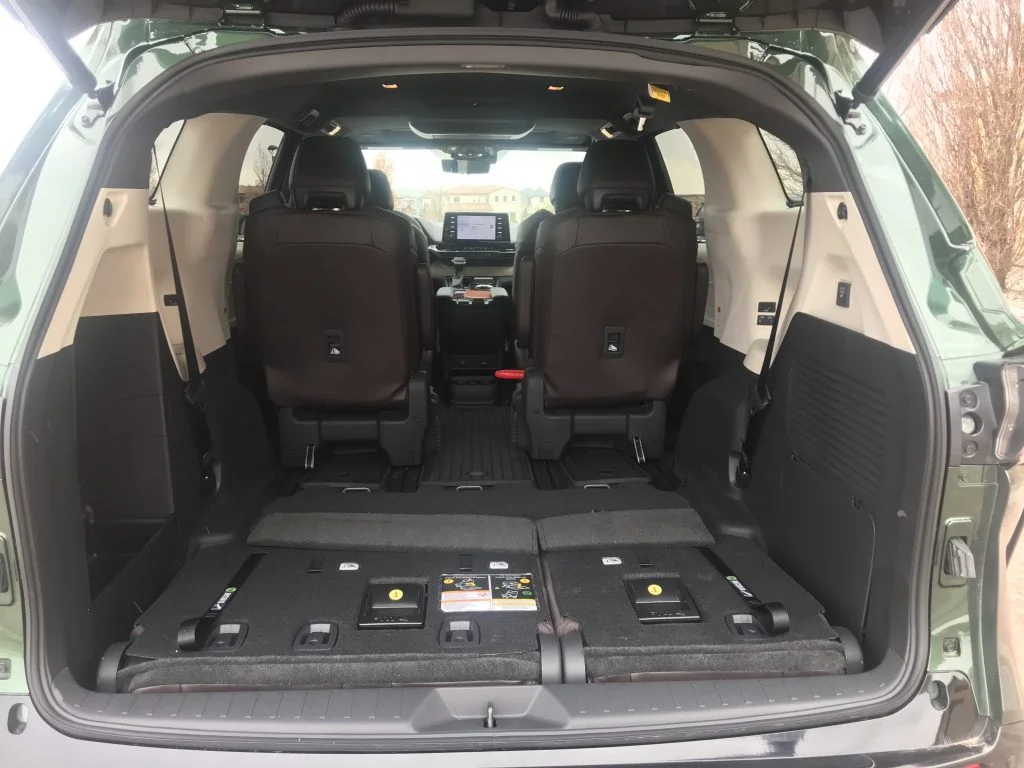
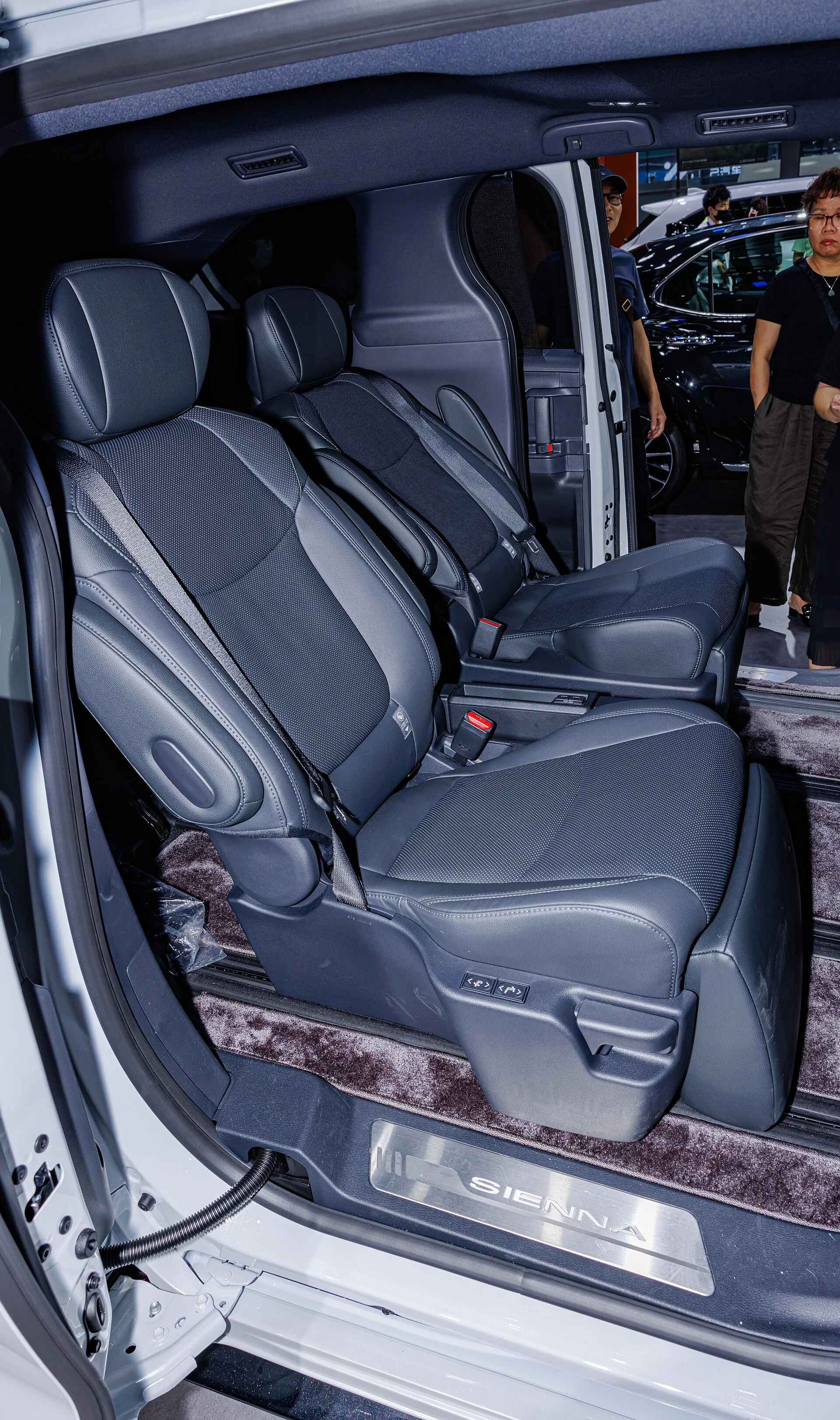
If you are sizing up a Toyota Sienna as a place to sleep, the most important thing to know up front is what changed in 2021. The fourth-generation Sienna is hybrid-only, and its second row is a pair of captain’s chairs that, unlike the old van, you cannot pull out and you cannot fold flat into the floor — Toyota builds side airbags into the seatbacks. So the “yank the seats, drop a queen mattress” plan that works in older minivans does not apply here. What the new Sienna gives you instead is a Super Long Slide: the captain’s chairs travel roughly 25 inches fore-and-aft, and the third row folds flat into a deep well. Slide the chairs all the way forward, fold the third row away, and you open a long, low, flat floor to lay a pad on.
On the numbers, Toyota publishes 33.5 cubic feet of cargo behind the upright third row, 75.2 cubic feet with the third row folded, and 101 cubic feet maximum. What Toyota does NOT publish is a flat-floor sleeping LENGTH, so this guide does the opposite of inventing one: it gives you every figure that is published, tells you exactly which measurement to take with a tape before you build, and walks through the chairs-forward setup, the hybrid power option that makes the Sienna special, and the ventilation that keeps a minivan night comfortable.
The mistake that ruins a Sienna sleep plan: trying to remove the seats
The single biggest mistake new Sienna campers make is planning around a vehicle that no longer exists: they read an older guide, assume they will yank out the second row, and lay a queen mattress across a clear flat floor. On the 2021-and-newer van you cannot, because the captain’s chairs stay bolted in — and the good news is you do not need to. The real question every Sienna camper asks is whether a six-footer can stretch out flat, and the honest answer is “yes, but not the way you picture it.” Instead of removing seats you slide both chairs all the way forward on the Super Long Slide, fold the third row into its well, and lay a pad on the floor that runs from the tailgate forward between and past the slid-forward chairs. Owners routinely report stretching out at six feet and more this way, with feet reaching the footwell ahead of the chairs.
Here is the limit no chart settles: Toyota does not publish a flat-floor sleeping length for this configuration, so the single number you see quoted around the web is an owner estimate, not a spec. Third-party measurements put the usable flat run behind the folded second row at roughly 72 inches long and 48 inches wide, but that varies with exactly how far forward the chairs slide and where you bridge over the seat track. The reliable move is to do it yourself at the dealer or in your own van: slide the chairs forward, fold the third row, and run a tape from the closed liftgate along the floor to where it steps up, noting the narrow point between the seat rails.
If your tape comes up short of the roughly 75 inches most adults want, you have two clean fixes. Slide the front seats forward too and bridge a pad section into the footwell so your feet carry past the captain’s chairs, or sleep slightly on the diagonal. Width is the other thing to verify on the spot, because the floor narrows between the seat tracks; a single sleeper has room to spare, but a couple should confirm the narrow point clears a wide pad before counting on it. The Sienna sleeps a tall adult well — you just prove it with a tape, not a brochure.
Sienna cargo and dimension figures, from the spec sheet
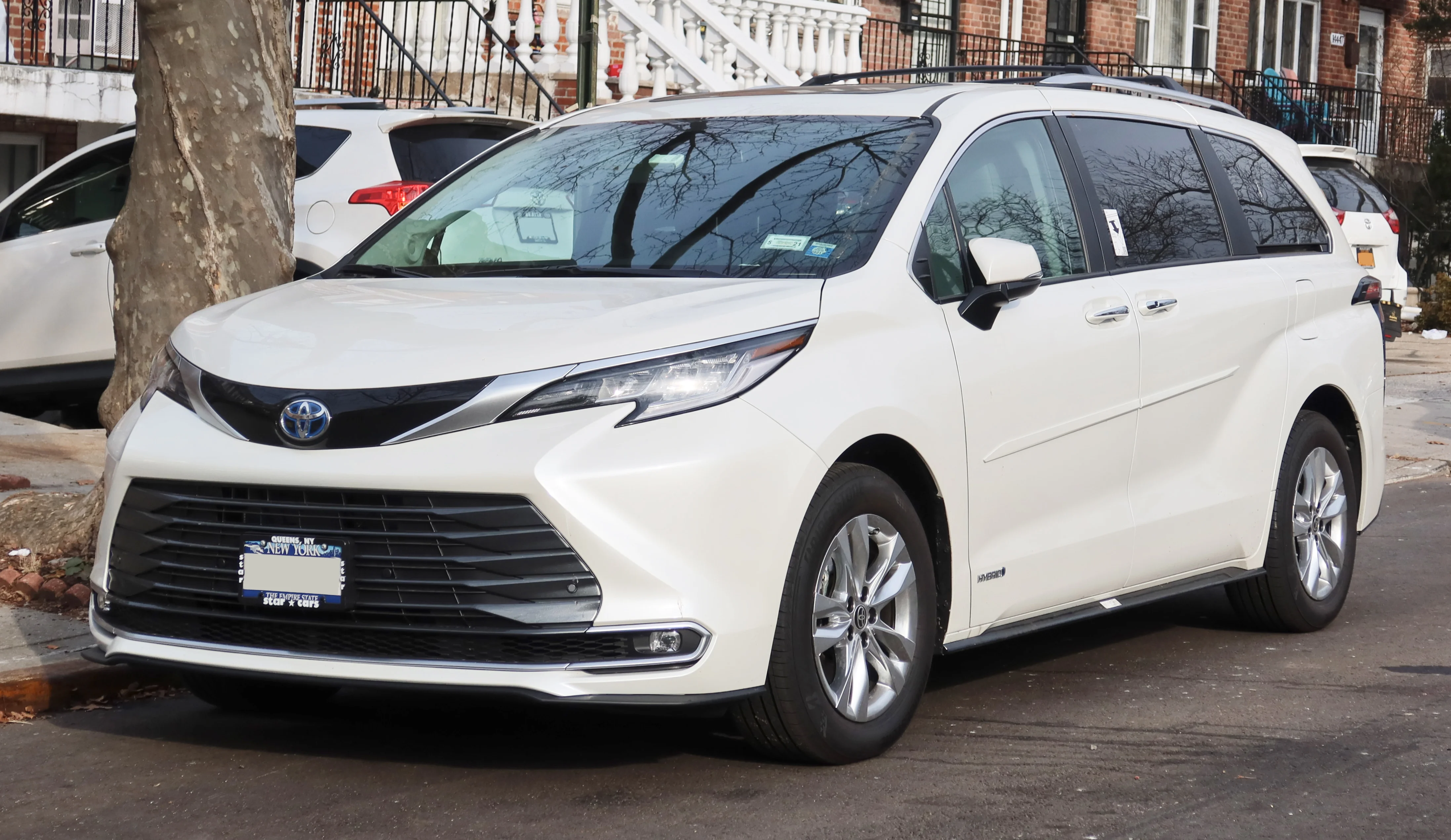
Here is what Toyota and the major spec databases publish for the 2021-and-newer Sienna, with the one figure you have to measure yourself flagged plainly:
| Spec | Figure | Source / note |
|---|---|---|
| Cargo volume, behind 3rd row | 33.5 cu ft | Toyota published |
| Cargo volume, 3rd row folded | 75.2 cu ft | Toyota published; 3rd row stows into a well |
| Maximum cargo volume | 101 cu ft | Toyota published; 2nd-row chairs slid forward, not removed |
| Flat-floor sleeping length | not published | Toyota lists none — measure your own (owners report ~72 in) |
| Floor width behind folded 2nd row | ~48 in (third-party) | not a Toyota spec — confirm at the narrow point |
| Ground clearance | 6.4 in | Toyota published |
| Fuel economy (AWD hybrid) | 35 mpg combined | EPA; FWD rates slightly higher |
| Overall length / width / height | 203.7 / 78.5 / 69.7 in | Toyota published |
Two things matter most for a sleeper. The 101-cube maximum is genuinely van-adjacent, and the third row disappears into the floor instead of folding up onto it, which is what makes a long, flat sleeping deck possible at all. What no spec sheet settles is exactly how long that flat run is once the captain’s chairs are slid forward — that is a tape-measure question, answered next.
It is worth being precise about the generation, because online numbers mix model years badly. The figures above are for the fourth-generation hybrid (2021 onward). The previous Sienna (2011–2020) was a V6 with a genuinely removable second-row bench and a much larger 150-cubic-foot maximum — a different vehicle for camping purposes. Plenty of guides quote the old removable-seat workflow under a current-year headline; if a source tells you to lift out the second row, it is describing the pre-2021 van, not the one in showrooms now.
The minivan power myth: what the 1500-watt outlet really does
Here is where the Sienna earns a real edge over most vehicles you might sleep in. Toyota offers an optional 1500-watt, 120-volt household AC outlet that draws from the hybrid traction battery rather than the little 12-volt starter battery. It is roughly a $300 factory option on XLE trims and up, and it is the first time Toyota has run a household outlet off the high-voltage battery instead of a weak 12-volt inverter capped around 500 watts.
For a camper that changes the math. A genuine 1500-watt household outlet can run a 12-volt fridge, charge laptops and camera gear, run a CPAP, or power a small appliance — the kind of load a standalone power station is usually bought to cover. Because it pulls from the big traction battery, the engine will quietly cycle on now and then to top that battery up, so it is not silent forever, but it will not strand you with a dead starter battery the way running accessories off the 12-volt system overnight can. If you are shopping used, confirm the specific van has the option — it is not standard, and a Sienna without it falls back to ordinary 12-volt sockets and USB ports.
If your van lacks the outlet, the honest setup is the same one used in any non-hybrid: a dedicated portable power station, sized to your actual draw. A LiFePO4 unit in the 300-to-700 watt-hour range runs a fridge, a fan and lights for a weekend, then recharges off the 12-volt outlet while you drive. Whichever way you power camp, never idle the engine for heat in an enclosed space — that is a carbon-monoxide risk, not a workaround, and it applies to the “Ready” mode too.
How much to spend on a camp-ready Sienna
You do not need the top trim to camp well in a Sienna — you need the right handful of things. Spend where it touches the bed and the night, save everywhere else:
- The 1500-watt outlet is the upgrade worth chasing. It is the Sienna’s standout camping feature; on a used van, prioritize one that has it (XLE and up) over fancier cabin trim.
- Add AWD if you camp in mixed conditions. The rear-motor all-wheel drive earns its keep on wet grass, gravel and light snow; front-drive is fine for paved campgrounds.
- Don’t overpay for lounge captain’s chairs. The ottoman-equipped “super” second-row seats are great for passengers but irrelevant to your sleeping deck — they still don’t fold flat.
Pick the outlet and drivetrain you actually need first; judge the comfort trim afterward. The floor still needs leveling around the seat tracks and the folded third-row well, the flat-floor sleeping length is still unpublished (measure your own), and none of that is fixed by a pricier badge.
The accessories that turn the chairs-forward floor into a flat bed
Because the second-row chairs do not stow into the floor, a Sienna sleeping deck is built around them rather than after removing them. The floor is long and low but interrupted by the folded-down third row, the seat tracks and a gentle slope; erasing those is the whole job. Work this checklist before your first night out:
- Slide the captain’s chairs fully forward first. The Super Long Slide is what frees the floor — do this before you measure anything, because it changes every dimension that matters.
- Level across the third-row well and seat tracks. Lay a thick foam pad or a low plywood deck so you are not dropping into the stowed-seat well or catching a rail all night. An unleveled floor is the number-one reason a first minivan night goes badly.
- Bridge into the footwell if you are tall. A pad section that carries past the slid-forward chairs into the second-row footwell buys the extra length a six-footer needs without sleeping on the diagonal.
- Match the pad to the narrow point. Measure between the seat tracks before buying; a trimmable foam mattress or a contoured air mattress fills the irregular floor better than a rigid rectangle.
Weekenders are well served by a fold-flat pad they can deflate by Monday; frequent campers build a low platform that spans the well and tracks, leaving a storage layer underneath. Either way, the Sienna’s low, flat floor gives you room for a real leveling layer without running out of headroom.
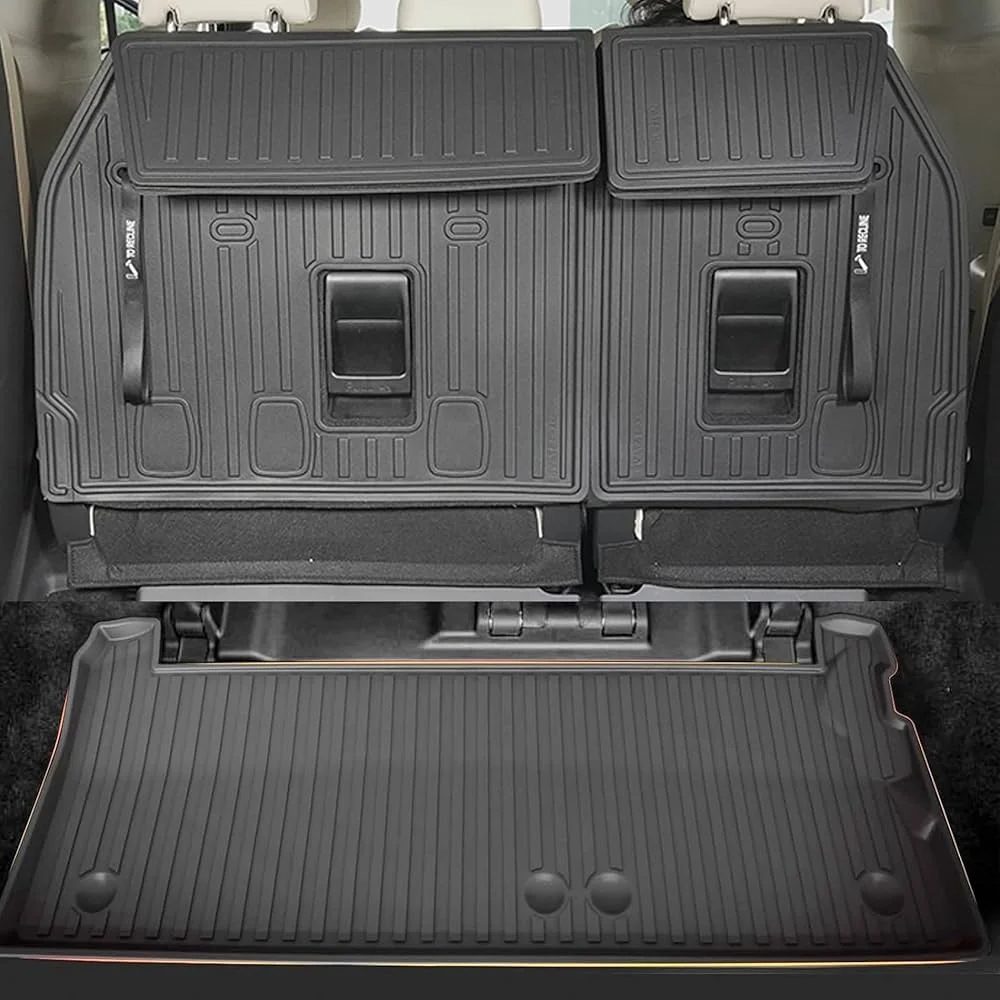
A few accessories punch above their price for a Sienna build. A fitted cargo liner protects the factory carpet from the mud and condensation that come with sleeping in a vehicle, and reflective panels cut to the abundant minivan glass do triple duty as privacy, light-blocking and insulation. A mesh organizer hung off a grab handle keeps the 2 a.m. essentials — headlamp, charger, glasses — off the bed and within reach. None of these is expensive, and together they turn an improvised night into a setup you actually look forward to.
Keeping the cabin livable: insulation, shade and cold-weather storage
A minivan has more glass than almost anything else you might camp in, which is a double-edged sword. Park in the open and a summer afternoon turns the cabin into an oven; on a cold night the same glass bleeds heat fast. Temperature control in the Sienna is mostly glass control, and the cheap fix is almost comical against the alternative — a modest set of reflective covers versus idling the engine all night, which is both a carbon-monoxide and a dead-battery risk you should never take.
Reflective panels or cut Reflectix in the windshield, side and rear glass do triple duty: privacy, light-blocking and insulation. The sliding doors make it easy to seal the big side openings with custom-cut panels that pop in and out. Insulate the floor under your mattress against the cold steel, and let a four-season bag or quilt do the rest. In summer the priority flips to airflow and shade — park in shade, block the greenhouse glass, and rely on cross-ventilation with a 12-volt fan rather than the air conditioning, which would drain the battery overnight. If your van has the 1500-watt outlet you have more margin for a small fan or electric blanket, but never run an unvented fuel heater inside the cabin.
Keeping the glass dry overnight: a quick ventilation checklist
Two adults breathing for eight hours in a sealed cabin fog every window and leave a damp film on the bedding, and a minivan’s big glass area makes that worse. The fix is airflow, not less of it. Run this short list before you turn in:
- Crack the front windows and the sliding-door windows on opposite sides about an inch so air actually moves through; in-channel rain visors let you leave them open in a drizzle.
- Clip a small 12-volt or USB fan to a grab handle to push air across the cabin — the single step that takes you from clammy to dry.
- On cold, still nights, when condensation is worst, wipe the inside of the glass before sleeping and run the fan on its lowest setting.
- Cut a bug screen to the cracked openings for summer, and run the climate fan on fresh air for a minute before you drive off if you wake to fog.
Reflective shades over the big windshield and side glass slow the heat loss that drives much of the condensation in the first place. Ventilation is the cheapest comfort upgrade you can make and the one new car campers most often skip.
The Sienna’s sheer cabin volume actually helps here: a minivan holds far more air than a wagon or SUV, so the moisture two people exhale is diluted across a larger space before it reaches the glass, and the same cracked-window airflow clears it faster. It is a small advantage, but it stacks with the fan and visors to make a dry morning the default rather than the exception.
Reliability, AWD and clearance: how far the Sienna reaches
A camp rig is only as good as its ability to keep showing up year after year, and this is where the Sienna’s reputation does real work. Toyota’s hybrid system has one of the longer real-world reliability records on the road, and the fourth-generation Sienna is hybrid across every trim. The payoff for a vehicle you sleep in at the end of a long drive is a van that also starts Monday morning and sips fuel getting there — the AWD hybrid is EPA-rated around 35 mpg combined, far better than any body-on-frame SUV or van you might otherwise sleep in.
Access is the other half. The Sienna offers available all-wheel drive — a rear electric motor rather than a driveshaft — which handles wet grass, gravel forest-service roads and light snow that would stop a front-drive van. It is genuinely useful for reaching dispersed and developed campsites in mixed conditions.
What it is NOT is a backcountry rig. Ground clearance is just 6.4 inches, lower than most crossovers, so skip rutted two-tracks, rocks and water crossings — the underbody will find them. Think of the Sienna’s capability as “reach the campground and the easy dirt beyond it,” not “crawl a trail.” Stay in that lane and you get a reliable, efficient base camp on wheels that turns back into a comfortable family van the moment the trip ends — which is exactly what most minivan campers actually want.
A weekend in the Sienna, start to finish
Friday after work you fold the third row into its well from the cargo area, slide the captain’s chairs all the way forward on the Super Long Slide, and lay a leveling pad across the floor and over the seat tracks. A couple of totes of food and a 12-volt fridge go in behind the front seats; if your van has the 1500-watt outlet, the fridge simply plugs into the wall socket. The low floor and dual sliding doors mean you load at hip height through a wide opening, not over a tall tailgate.
At the trailhead you pop reflective panels into the big side glass for privacy, crack the front and slider windows behind the vent visors, and clip a fan to a grab handle. Saturday you cook at the open liftgate, charge phones and a laptop off the household outlet, and read by an LED lantern. Sunday you raise the third row, slide the chairs back, and the Sienna is an ordinary eight-seat family van again by Monday — the weekday-to-weekend versatility that makes a minivan worth camping out of in the first place.
The detail that makes this work is how little ceremony it takes. There is no awning to crank out, no pop-top to raise, no trailer to back into a site — you fold one row, slide two chairs, roll out a pad, and you are home for the night. That low friction is the whole argument for sleeping in a vehicle you already own and drive every day, and the Sienna’s hybrid efficiency and optional household outlet make it one of the most livable family vehicles to do it in.
The verdict: a livable sleeper once you work with the seats, not against them
The 2021-and-newer Toyota Sienna is one of the most comfortable vehicles to sleep in once you accept how it is built: the second-row captain’s chairs do not remove and do not fold flat, but they slide nearly 25 inches forward and the third row stows into the floor, opening a long, low deck for a pad. Toyota publishes 101 cubic feet of maximum cargo and an optional 1500-watt household outlet — the feature that genuinely sets the Sienna apart from almost anything else you might camp in.
The one thing the spec sheet will not give you is the chairs-forward flat-floor length, so confirm it with a tape measure before you build — that single check is the difference between stretching out and curling up. Spend on the things that matter: a van with the 1500-watt outlet if you can find one, a leveling pad or low platform that spans the seat tracks and folded-third-row well, and reflective covers plus a fan to keep the air dry and the cabin private. Do that, and the Sienna rewards you with an efficient, reliable, powered place to sleep — and then turns right back into a comfortable eight-seat family van on Monday morning, which is exactly what most minivan campers actually want.