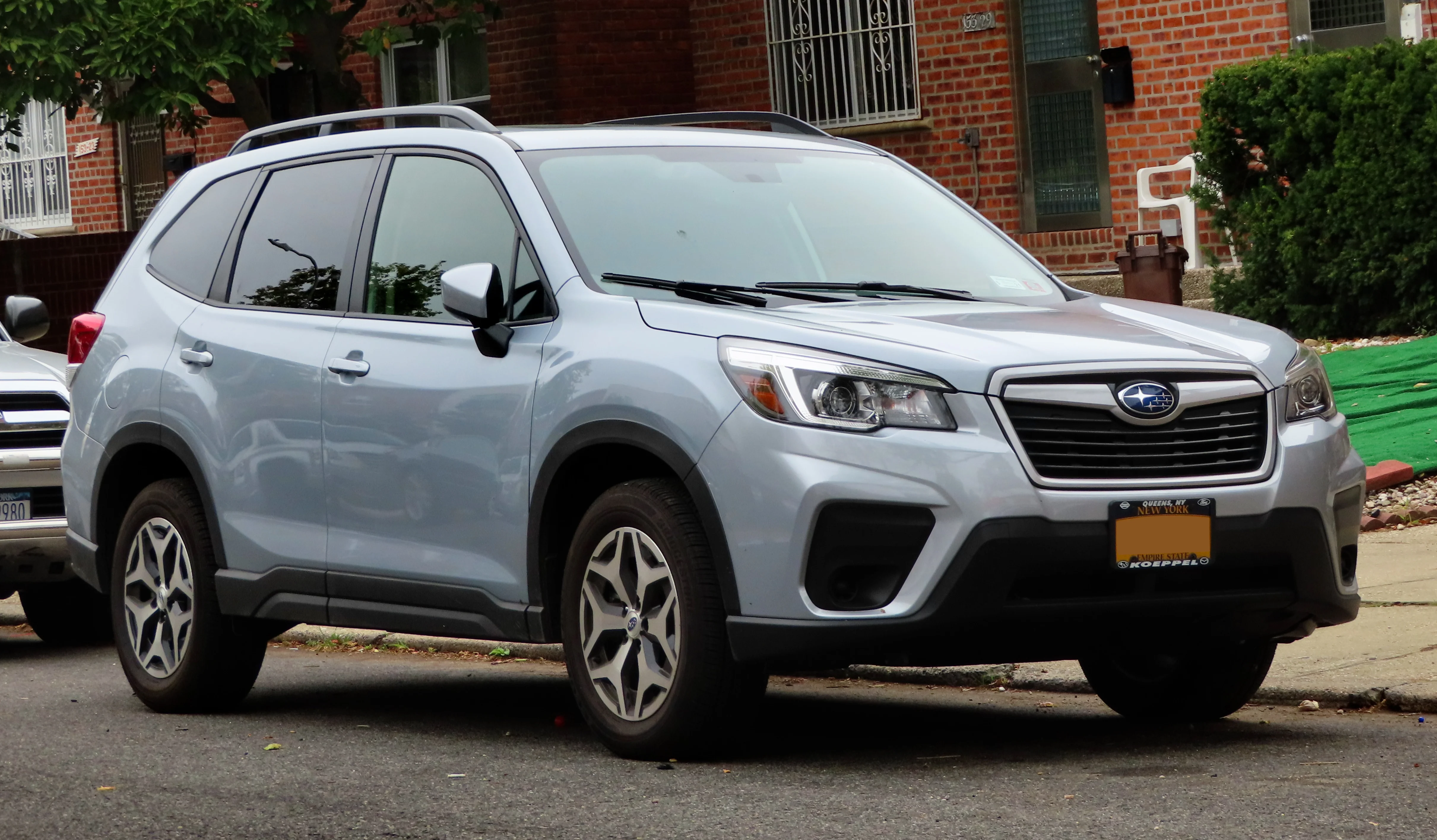
The Forester is the one Subaru built for sleeping in
Yes, you can sleep in a Subaru Forester, and among compact SUVs it is one of the best at it - not because it is big, but because the floor is flat. The catch is length, and it is honest: roughly 70 inches of load floor sleeps one adult comfortably and a six-footer at a slight angle.
Judge a small SUV by one test - can you actually lie down flat in the back - and the Forester passes where most of its rivals fumble. Fold the 60/40 rear seats and you get a nearly step-free platform about 70 inches long, the surface that earned this car its camper reputation. This is not a big three-row with a cavernous hold; it is a compact wagon-ish SUV whose advantage is a flat, low, usable floor rather than raw cubic feet.
What follows is the honest feasibility picture: the cargo numbers Subaru actually publishes, why the flatness matters more than the volume, the length limit that decides whether you fit, the fact that there is no household outlet, and the one generation surprise - the newer 2025 Forester rates slightly smaller on paper than the one it replaced. By the end you will know whether your body fits this floor before you ever buy a mattress.
Think of this as a fit check, not a sales pitch. The Forester rewards the solo camper who wants to roll into a trailhead, fold two seats, and be lying down in under a minute, with no plywood platform to build and no drawer system to bolt in. It asks only two things in return: that you are not much taller than the floor is long, and that you carry your own electricity. Get past those and it is one of the easiest vehicles in its class to actually rest in.
What Subaru actually publishes for cargo
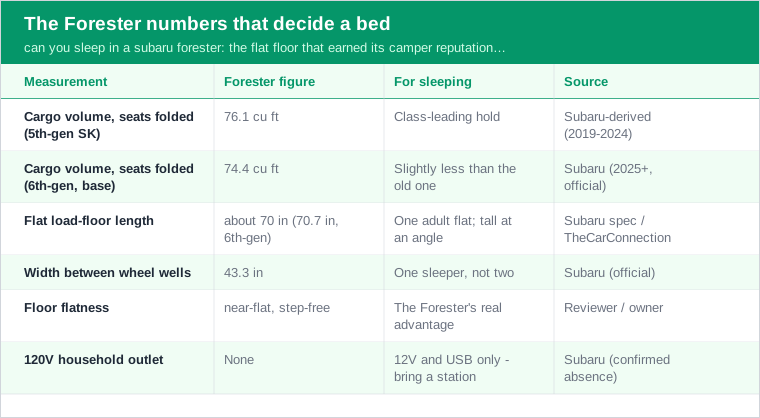
Start with the official numbers, because Subaru is unusually honest about them. On the current sixth-generation Forester (2025 and newer), Subaru lists 29.6 cubic feet behind the rear seats and 74.4 cubic feet with them folded on the base trim, per Subaru's published dimensions; trims with the panoramic moonroof drop to about 27.5 and 69.1 cubic feet because the glass lowers the ceiling. Those are real, maker-stated figures, not estimates.
The fifth-generation SK Forester (2019 through 2024), which is the one you are far more likely to own or find used, actually rates a touch larger: about 35.4 cubic feet seats-up and 76.1 cubic feet folded per Subaru-derived specs. Read those volumes as a hauling story, though, not a sleeping one:
- 76.1 cubic feet (5th-gen, folded) is genuinely class-leading for a compact - more usable box than a RAV4 or CR-V of the same era.
- The volume tells you it will swallow gear; it does not tell you a six-foot body lies flat, which is a question of length and flatness, not cubic feet.
- Ignore the seats-up number for sleeping - you are always folding the rear bench to make a bed here.
So the cubic-feet headline is a green light that the Forester is camper-sized, but the numbers that actually decide your night are the length and the flatness, which come next.
The moonroof penalty is worth a second look if you are shopping used. On the sixth-gen it trims the folded figure from 74.4 to about 69.1 cubic feet because the glass and its housing lower the ceiling, and the fifth-gen shows the same pattern - roughly 76.1 cubic feet folded on a plain roof versus about 74.2 on the moonroof cars from 2022 to 2024, per Subaru-derived specs. None of that changes the floor length you sleep on, but a lower ceiling is a real thing when you are sitting up to change clothes or read, so a non-moonroof Forester is quietly the better sleeper.
The flat floor is the whole reason to pick it
Here is the Forester's real trick, and it is the thing brochures bury: when you fold the 60/40 rear seats, the seatbacks drop to sit nearly level with the cargo floor, giving a continuous, essentially step-free surface. Reviewers and long-time owners describe it the same way - a flat platform rather than the terraced steps you fight in most folding SUVs. That single trait is why Foresters get recommended for car camping again and again.
Why flatness beats volume for sleeping:
- A flat floor needs no build. In a stepped SUV you cut plywood or buy a bridging pad to level the hump; the Forester mostly just needs a sleeping pad on top.
- Your spine follows the floor. A slight tilt or a seatback ridge under your hips is what wakes you at 3 a.m., and the Forester largely removes it.
- Low load height makes climbing in and sitting up easier than in a tall, narrow crossover.
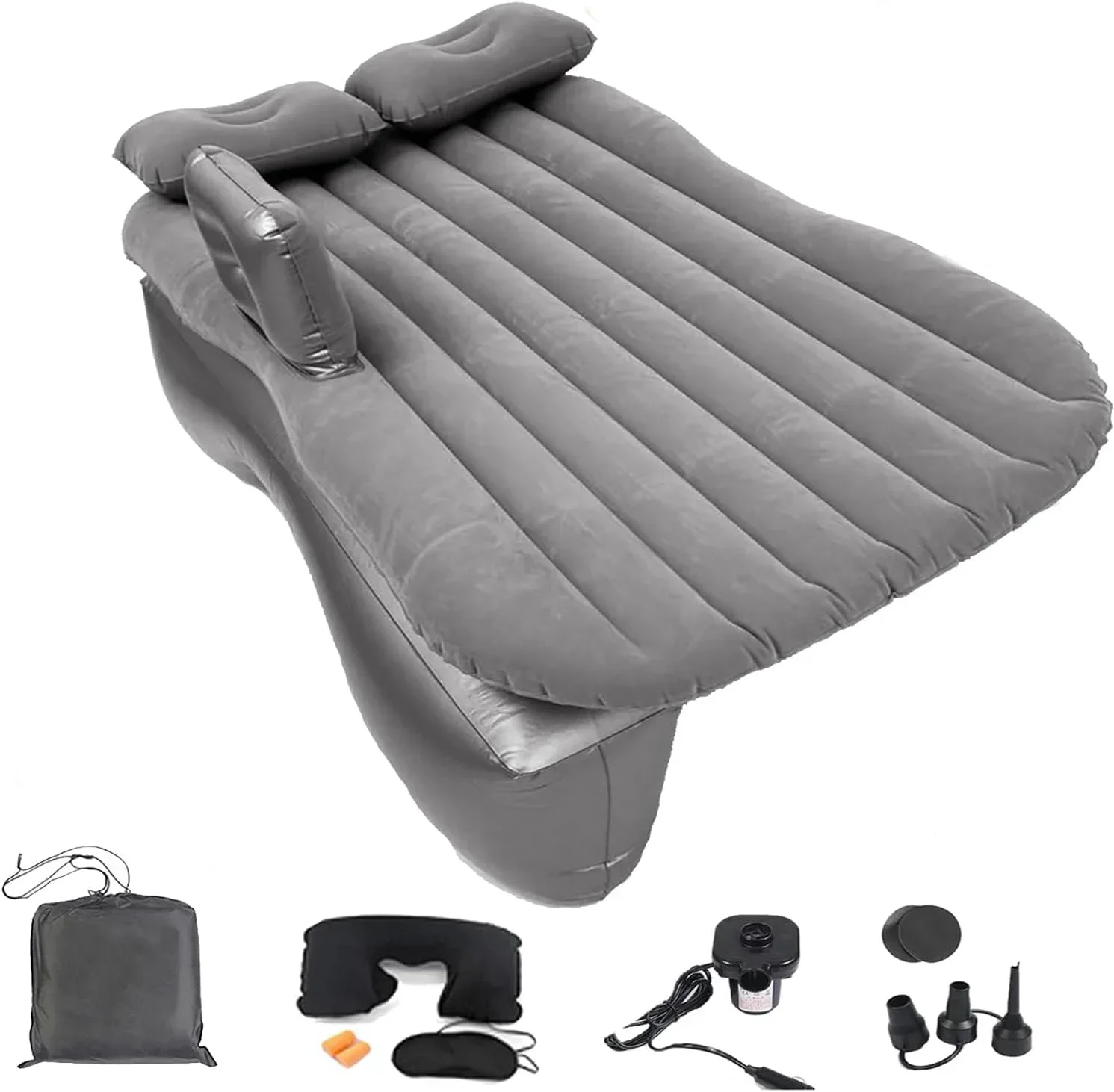
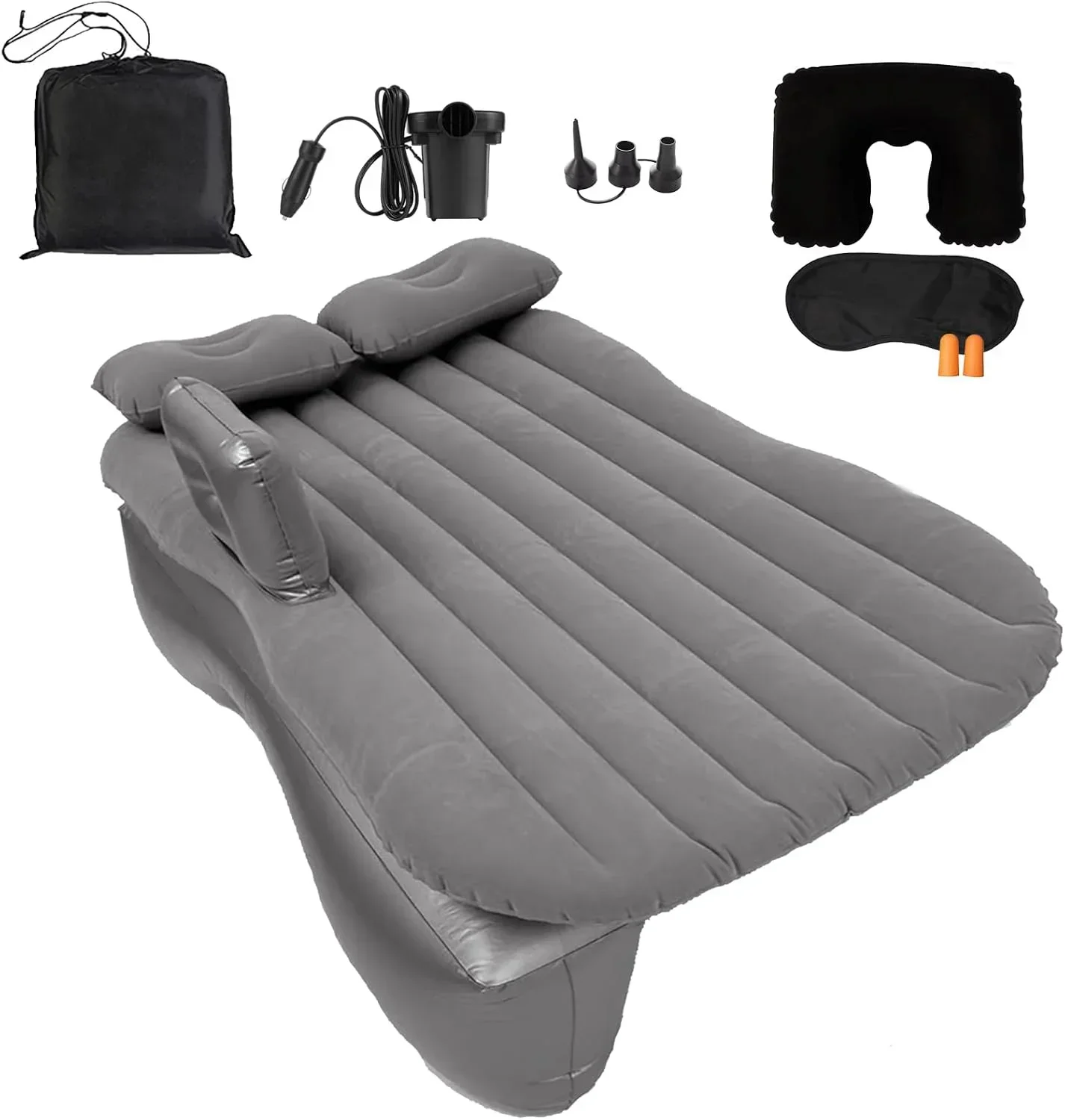
An Onirii SUV air mattress takes that already-flat floor the rest of the way, filling the small gap where the seatbacks meet the cargo deck and adding cushion in one inflate. On a floor this level you are softening a good surface, not rescuing a bad one - which is exactly the position you want to be in.
The one seam to watch is where the folded seatbacks meet the fixed cargo deck - even on a floor this level there is usually a shallow lip and a soft hinge line rather than a single continuous plane. A full-length pad or an SUV-shaped air mattress bridges it so you never feel the transition under your hips or shoulders. Foam pads work too and pack smaller, but they follow the floor exactly, so any small ridge stays; an inflatable spans it. Either way you are finishing a good floor, which is the whole point.
Length is the catch: 70 inches, and that is your limit
Now the honest bad news, because a fair feasibility answer has to name it. Subaru does publish a load-floor length, and for the 2025 Forester it is 70.7 inches at the floor with the seatbacks down, per the maker's specifications repeated by TheCarConnection; the older fifth-gen measures close to the same, in the high-60-inch range. Roughly 70 inches is your flat bed, and that is the number that decides whether you fit.
Do the body math plainly: 70 inches is about five feet ten inches. If you are that height or shorter, you lie flat down the length of the floor with room. If you are six feet or taller, you will either angle across the cargo bay corner-to-corner to steal a few inches, or slide the front seat forward and let your feet reach into the footwell. None of that is a dealbreaker - it is just the reality of a compact, and far better to know it now than to discover it with your feet against the tailgate glass.
The Forester's floor is flat enough to sleep anyone; it is just not long enough to sleep everyone straight. Measure your own height against 70 inches before you decide.
The cleanest way to settle it is a five-minute test at home. Fold the seats, lay a tape down the middle of the floor, and note where 70 inches lands against a pillow at the tailgate end. Then lie down in your normal sleeping posture, because almost nobody sleeps ramrod straight - a slight curl reclaims a few inches on its own. If your head and feet both land on padding rather than on bare plastic or the closed tailgate, you fit, and you learned it in the driveway instead of at a dark campsite.
Does a six-footer really fit in there?
This is the question I get most, so here is the straight answer for a roughly six-foot adult in a Forester: yes, with a small compromise. You have three levers, and any one of them buys the inches a 70-inch floor doesn't give you outright.
- Sleep on the diagonal. A cargo bay is longer corner-to-corner than end-to-end; angling your body across the folded floor adds several inches of usable length.
- Slide the front seats forward and let your feet run into the space behind them - the oldest trick in the small-SUV book, and it works here.
- Drop the front seatback slightly to bridge into the footwell if you want to stretch fully straight.
What you should not do is trust a random inch figure off an aggregator blog; several of them quote confident cargo lengths that trace back to the older, differently-shaped Forester or to nobody in particular. The one number worth trusting is Subaru's roughly 70-inch floor length and your own tape measure against your own height. Do that in the driveway, at home, before any trip.
One more small gain people forget: your pillow does not have to sit inside the 70 inches. Push it against the closed tailgate or up against the front seatbacks and it borrows space the tape measure ignores, buying an inch or two at the top of the bed. Combine a soft pillow at one end with a slight diagonal and most six-footers stop noticing the length at all. The taller you are, the more you lean on these tricks - but they are tricks that work, not wishful thinking.
One sleeper, not two
Width is where the Forester quietly draws its line, and it is a one-person line. Subaru publishes the space between the wheel wells as 43.3 inches on the current car - a real, official figure - and 43 inches is about the width of a single sleeping pad plus a little slack. Two adults side by side is not happening on a flat floor here; that is the trade you make for a compact this easy to live with.
How to think about the width you have:
- Solo: ideal - a 43-inch-wide flat floor is roomy for one, with space alongside for a bag and shoes.
- One adult plus a small child or a dog: workable, snug, and better with the pads run lengthwise.
- Two adults: look at a mid-size or three-row instead - the Forester is honestly a single bed.
If you routinely need to sleep two, the Forester is the wrong tool and I would rather tell you that than sell you a cramped night. As a solo camper's rig, though, the narrow-but-flat floor is close to perfect, and it is the reason so many one-person overlanders swear by this car.
Use the width you are not sleeping on. With one pad run down the middle you still have a strip of floor along each wheel well for a duffel, water, and shoes, which keeps the cabin clear and your gear off the ground. Campers who travel with a dog often run the pad slightly to one side and let the dog have the other strip; it is snug but it works for a night. Just do not expect to widen the bed itself - 43.3 inches is 43.3 inches, and the wheel wells do not move.
There is no wall outlet, so bring your own power
One thing the Forester simply does not give you, on any trim, is a household AC outlet. Where a Highlander Hybrid has a 1500-watt inverter and even a Palisade offers a little 150-watt socket, the Forester provides only 12V accessory sockets and USB ports - confirmed across trims. For camping that means one thing: your overnight power has to come from a battery you bring, not from the car.
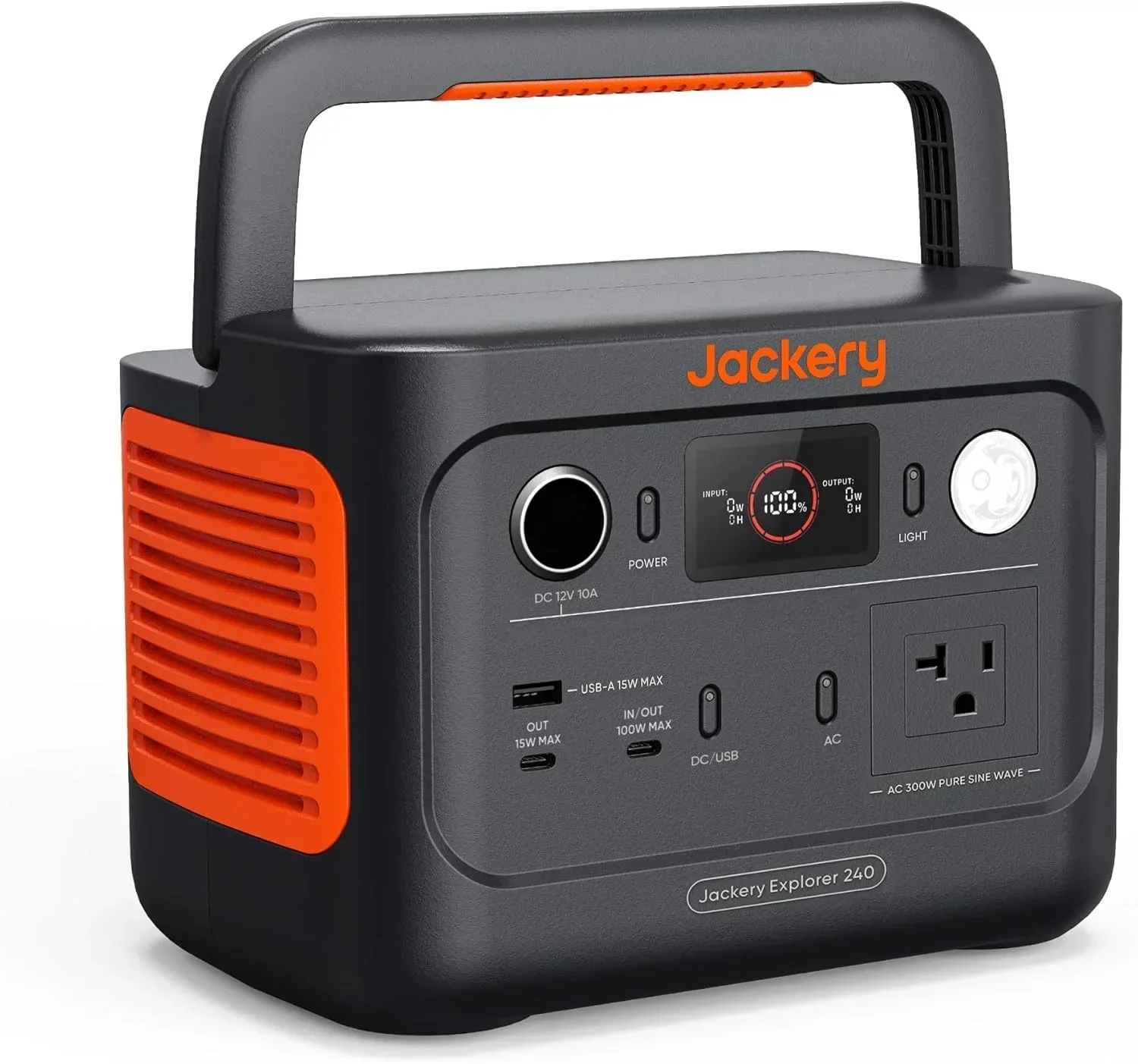
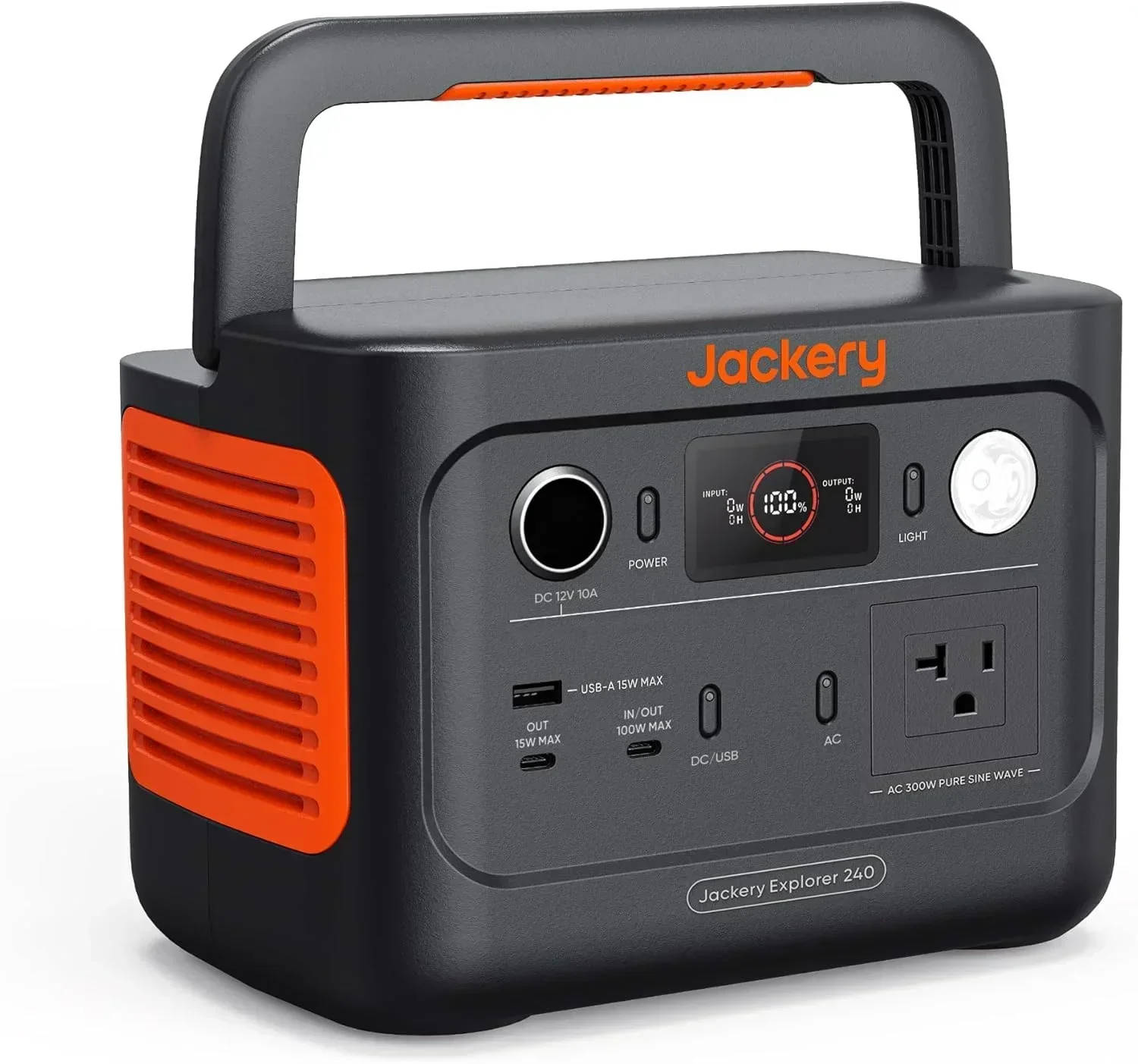
That is not a real drawback once you plan for it. A Jackery Explorer 240 v2 power station covers exactly this gap: its 256 watt-hours run a fan, lights and phone charging through the night, and it recharges off the Forester's 12V socket as you drive between camps, so you never lean on the car battery while you sleep.
- Never run accessories off the car overnight - the 12V sockets die with the ignition on many trims, and draining the starter battery is how a camping trip becomes a jump-start.
- A small station is enough in a Forester; you are powering a fan and a phone, not a fridge and a kettle.
- Charge as you drive and you arrive at each camp with a full battery and a car that starts.
Size the battery to the job and it stays small. A single night of a low fan, a string of LED lights, and topping up a phone draws only a modest slice of a 256 watt-hour station, so one charge often covers a weekend if you are careful with the fan. Add a 12V-to-USB adapter and you can trickle-charge the station on every drive, which matters most in cold weather when both phone and battery lose capacity faster. The rule that never changes: sleep on your own battery, and start the engine on the car's.
Fifth-gen versus the 2025 redesign: the roomier one is the old one
Here is the generation surprise worth spelling out, because it runs against instinct. Newer usually means bigger, but the sixth-generation 2025 Forester actually rates slightly smaller inside than the fifth-generation SK it replaced. Subaru lists 74.4 cubic feet folded on the new base car versus about 76.1 cubic feet on the 2019-2024 model - so on paper, the older Forester is the roomier one for cargo.
For a sleeper the practical differences are small, and both share the same flat-floor virtue, but know what you are comparing:
- Fifth-gen SK (2019-2024): a hair more folded volume, the same near-flat floor, and the generation most people already own.
- Sixth-gen (2025+): a published 70.7-inch floor length and 43.3-inch well width, marginally less volume, still no AC outlet.
- Either way the sleeping story is identical: flat floor, roughly 70-inch length, single sleeper.
So do not pay a premium for the new one expecting a bigger bed - you would be paying for other things. For sleeping, a clean used fifth-gen SK is every bit the camper the 2025 is, and slightly roomier on the numbers that matter.
Shopping-wise, that makes the used market friendlier than it looks. A clean fifth-gen SK from 2019 onward gives you the class-leading folded volume, the same flat floor, and years of proven reliability at a used price, while the 2025 redesign's changes land mostly in tech, safety, and styling rather than in the space you sleep on. If a new-car warranty matters to you, the sixth-gen is still a fine sleeper; just buy it for those reasons, not for a roomier bed, because the numbers say the bed did not grow.
The verdict on the Forester as a bed
Can you sleep in a Subaru Forester? Comfortably, yes - for one person, up to about five-foot-ten flat and a bit taller on the diagonal. The flat, step-free folded floor is the best sleeping surface in the compact class and needs almost no build, which is the whole appeal. The two honest limits are length - roughly 70 inches, so tall solo campers angle - and the total absence of a household outlet.
The Forester sleeps one adult beautifully on a floor most SUVs can't match, as long as you respect the 70-inch length and bring your own power. It is a single bed, and a very good one.
Measure your height against that 70-inch floor, plan on a portable battery instead of a wall outlet, and level the surface with a pad, and the Forester delivers the easiest good night's sleep of any compact SUV. For the exact fold-by-fold measurements see our Forester cargo dimensions for sleeping, and if you are weighing it against its natural rivals, the Outback vs Forester comparison lays out long-versus-tall side by side.
Put simply, the Forester earns its camper reputation the honest way: not with marketing about adventure, but with a floor that lies flat and a footprint small enough to park almost anywhere. Respect its two limits and it asks very little of you in return. Bring a pad, bring a battery, and know your height against that floor, and it turns a compact SUV into a reliable one-person bedroom that starts every morning and drives to the next trailhead.
Related on Auto Roamer: RAV4 vs Forester for car camping; how to sleep in your car safely and legally.