
The twist: the RAV4 carries more - until you fold the seats to sleep
Here's the number trap: the Toyota RAV4 carries 37.6 cubic feet with the seats up to the Subaru Forester's 29.6 - and the Forester carries 74.4 folded to the RAV4's 69.8. Every RAV4-versus-Forester comparison quotes the first pair and skips the second, which makes them technically right and practically misleading. With the rear seats UP, the RAV4 genuinely wins, per Toyota and Subaru. If you're stuffing groceries behind upright seats, the RAV4 is the bigger trunk. Case closed - except that's not how you camp.
Camping happens with the seats DOWN, and the moment you fold them the numbers flip. Folded, the Forester opens to 74.4 cubic feet against the RAV4's 69.8, per Toyota and Subaru. The Forester also carries far more passenger volume - 111.6 cubic feet versus 98.9 - which is the cabin room you're actually sleeping and living inside. So the same two SUVs trade the lead depending on one thing: whether the seats are up or down.
That's the whole story of this matchup, and it's why the 'RAV4 has more cargo' line is a trap for campers. Read on for the numbers that matter with the seats folded, the rugged trims, the value math, and the clean answer: the Forester is the better CAMPER, the RAV4 is the better daily driver that happens to camp.
The sleeping numbers: folded cargo and cabin room both go Subaru
Once you're committed to sleeping in the thing, two numbers decide comfort, and the Forester wins both. Folded cargo capacity is 74.4 cubic feet versus 69.8 for the RAV4 - about five cubic feet more usable bay for your body and your gear. And passenger volume, the total air-space of the cabin, is 111.6 versus 98.9 cubic feet, a nearly 13-cubic-foot Subaru advantage, per Toyota and Subaru.
Why passenger volume is the sleeper stat nobody quotes:
- Room to sit up and change: 13 extra cubic feet of cabin is headroom and elbow room - the difference between dressing lying down and sitting up.
- Less claustrophobic overnight: more air volume means a roomier-feeling box and slower condensation buildup on the glass.
- Folded floor: the Forester's boxier greenhouse and larger folded volume translate to a more usable flat rectangle, not just a bigger number.
Subaru has leaned into this for years, which is why the Forester is a car-camping staple - our best Subaru for car camping guide ranks it near the top of the lineup. For sleeping, this round is a Forester win, clean.
Where the RAV4 earns its keep: seats-up space and efficiency
I'm not here to bury the RAV4 - it wins real things, they're just not the SLEEPING things. That 37.6-versus-29.6 seats-up cargo advantage is genuinely useful the other 360 days a year: it's the SUV that hauls the kids AND their gear with the second row still up. Reviewers land on exactly this split - if you'll be stuffing groceries in the trunk with kids in the back, the RAV4 takes it; if you plan to car-camp, the Forester is the better choice.
The RAV4's real-world wins:
- Everyday hauling: the biggest seats-up trunk in the class carries a family's daily load without folding anything.
- Efficiency and hybrid range: Toyota's hybrid powertrain stretches the miles between remote fill-ups on the drive to camp.
- Resale: RAV4 residuals are strong - it costs less to own across years of trips.
If the SUV is your daily driver first and your campsite occasionally, the RAV4's everyday practicality is a fair reason to give up a few sleeping cubic feet. Our RAV4 vs CR-V comparison shows how it fares against its other big rival.
The rugged trims: Wilderness vs Woodland
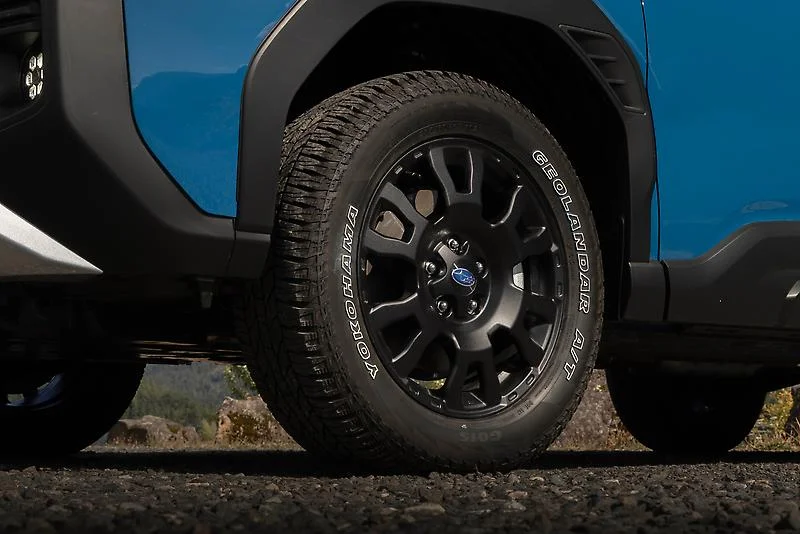
Both brands now sell an off-road-flavored trim aimed squarely at campers, and they're the versions most readers of this page actually want. Subaru's Forester Wilderness and Toyota's RAV4 Woodland add clearance, tougher tires, and adventure styling, per Autoblog's head-to-head. The Wilderness is the more committed off-roader of the two; the Woodland is a lighter-touch appearance-plus-capability package.
The rule with these trims: buy the Wilderness if you'll genuinely use the clearance on rough campground roads; buy the Woodland if you want a little capability and a lot of the look without the ride penalty. Neither turns a compact crossover into a rock crawler.
For a camper choosing between them:
- The Wilderness pairs Subaru's standard all-wheel drive with real extra clearance - the more capable basecamp shuttle.
- The Woodland leans on the RAV4's efficiency and everyday manners while adding just enough for graded gravel.
Round to the Forester Wilderness for genuine dirt-road campers, a wash for everyone who sticks to established campgrounds.
Value and the standard-AWD factor
On pure value, the tiebreaker most people forget is standard all-wheel drive. Every Forester comes with Subaru's symmetrical AWD; the RAV4's base LE is front-wheel drive, with AWD costing extra. For a camper who drives to trailheads in rain, mud, or shoulder-season snow, that's capability you don't have to option up to on the Subaru.
How the money actually shakes out:
- Forester: AWD is baked in, so the camping-relevant traction is standard equipment, not a line item.
- RAV4: to match it you pay for AWD, which narrows the price gap - and you get the hybrid efficiency and resale in return.
- The honest read: for a low-fuss camper, standard AWD plus the sleeping-room win makes the Forester the better value AS a camper; the RAV4 claws it back on efficiency if you drive far more than you camp.
Value depends on the ratio of driving to camping. Camp a lot, the Forester's standard capability pays off; drive a lot, the RAV4's economy does.
The night itself: fog, elbow room, and the 13 cubic feet you feel
Spec-sheet cubic feet turn into physical sensations around 2 a.m., so it's worth translating the Forester's 111.6-versus-98.9 passenger-volume win into what a sleeper actually notices. The first thing is elbow room while changing clothes: in the Forester's taller greenhouse you sit up, pull on a jacket, and turn around without braille-reading the headliner; the RAV4's sleeker roofline makes the same routine a seated crouch. Neither is a hardship - but one reads as a small room and the other as a big bed.
The second thing is glass fog. Two people breathing in a sealed cabin will coat the windows by morning in either SUV, but the bigger air volume buys you time and the Forester's more upright glass sheds drips less directly onto your sleeping bag. The fix is identical in both - crack two screened openings on opposite corners for cross-flow - and it matters more in the RAV4 simply because the smaller volume saturates sooner.
The third is where gear lives while you sleep. The Forester's extra folded volume means duffels stack beside the bed instead of in the front seats; in the RAV4 the front seats become the closet. That's the practical texture behind the numbers: nothing about the RAV4 is bad for sleeping, but every one of these small comforts tips the same direction, and they compound across a week of nights the way a few cubic feet never look like they will on paper.
Try before you buy: the one-weekend test-fit
Here's the cheapest smart move in this whole decision, and almost nobody does it: test-fit both SUVs as BEDROOMS before signing anything. A dealer will happily let you fold the seats flat on the lot. Bring a tape measure and the sleeping pad you already own, and run the same five-minute drill in each.
The drill: fold the rear seats, measure the flat length at floor level from hatch to seatbacks, lie down on your pad with the hatch closed if they'll let you, and note where your head and feet land. Your own height against that tape tells you more than every comparison article ever written - including this one.
What you're checking in each vehicle:
- Your length against the floor: taller sleepers find the honest limits fast - and discover whether the diagonal trick is comfortable or a nightly annoyance.
- The seatback step: both have one; feel whether your pad bridges it or whether you'll want a thicker layer.
- Sitting headroom: sit up straight on the folded floor - the Forester-vs-RAV4 greenhouse difference is instantly obvious from inside.
Twenty minutes across two dealer lots settles what the brochures can't, because the brochure doesn't know how tall you are. If the test-fit ties, buy on the money math; if one of them fits your body and the other doesn't, no residual-value argument should override your spine.
The hundred-dollar sleep kit that works in either
Whichever compact you pick, the overnight build is the same short list, and it's cheap - this class of SUV needs less gear than people think. The one purchase that matters most is the mattress: a back-seat SUV air mattress sized for mid- and full-size vehicles, like the Onirii SUV air mattress, fills either folded bay and levels the small step where the seatbacks meet the cargo floor - the step both of these SUVs have.
The rest of the kit, in order of bang-for-buck:
- Power off the truck: a compact portable power station runs the fan and charging overnight so the starter battery stays for starting - the cheapest insurance against a no-crank morning.
- Mesh for the windows: screens over a cracked window and hatch give cross-flow without mosquitoes; both cabins fog by morning without it.
- Reflective covers: privacy at the trailhead plus insulation on cold nights, cut to fit the glass.
Notice what's NOT on the list: platforms, drawers, lift kits. A compact crossover camper works best kept light and simple - spend the savings on gas and campsites. Our RAV4 sleeping guide shows the same build in place.
Resale, upkeep, and the ten-year view
Both of these badges are famous for holding value, so the long-game money question is closer than most matchups - but it isn't a tie, and the difference runs opposite to the camping verdict. Toyota's resale reputation is the strongest in the mainstream market, and the RAV4 hybrid's fuel economy compounds that advantage every mile; over a decade of ownership, the RAV4 is very likely the cheaper vehicle to have owned, especially for a high-mileage driver.
The Forester's counterargument is about what you get while you own it rather than what you get back when you sell. Standard all-wheel drive on every trim means the capability is never an option-box regret, and Subaru's flat-four and symmetrical drivetrain have their own long-haul following among the outdoorsy crowd the car is built for. Maintenance costs on both are ordinary - neither is a money pit, and both routinely run deep into six-figure mileage with basic care.
So the ten-year view mirrors the whole comparison: the RAV4 is the better financial instrument, the Forester the better camping tool. If the SUV is an investment you occasionally sleep in, Toyota's resale math wins; if it's a basecamp you happen to drive to work, the Subaru's standard capability is worth the few points of residual value. Neither answer is wrong - they're just answers to different questions.
One more money note worth 60 seconds: insurance and tires run close to identical on these two, so don't let anyone hand-wave 'ownership costs' as a tiebreaker without naming the line item. The real recurring differences are fuel (RAV4 hybrid wins) and the option-box math (Forester's standard AWD wins) - everything else is noise at this price point.
The wrong reasons to pick each one
I watch people spend real money on the wrong compact SUV for reasons that sound sensible and aren't, so let me name the classic mistakes before the verdict. These are the arguments that should NOT decide this matchup.
Buying the RAV4 'because it has more cargo room.' It does - with the seats up. If the sentence that sold you was about grocery runs and you're reading a camping comparison, you've been sold the wrong number; folded, the Forester carries more and sleeps bigger. Make sure the cargo figure you're quoting matches the way you'll actually use the vehicle.
Buying the Forester 'because Subarus are for camping.' The image is earned, but an image is not a measurement. If you camp twice a year at paved campgrounds and commute 15,000 miles, the RAV4 hybrid's running costs will quietly out-argue the vibe every month you own it. Buy the badge that matches your calendar, not your self-image.
Buying either for a capability you won't use. A Wilderness trim that never sees dirt and a hybrid that never sees a commute are both wasted money in different directions. The cheapest correct answer is the trim that matches your real week - and both lineups offer it once you're honest about what that week looks like.
Forester to sleep in, RAV4 to live with
Strip it to the studs and the split is genuinely clean. The Subaru Forester is the better vehicle to CAMP in - more folded cargo (74.4 vs 69.8 cu ft), far more cabin room to sleep and live inside (111.6 vs 98.9 cu ft), standard AWD, and a more committed Wilderness trim. The Toyota RAV4 is the better vehicle to OWN - more seats-up cargo for daily life, stronger efficiency and resale, and a camping floor that's perfectly workable if not class-leading.
Buy the Forester if the SUV is your campsite and the daily commute is secondary; buy the RAV4 if it's your daily driver first and your campsite on weekends. The 'RAV4 has more cargo' line is true only with the seats up - flip them down to sleep and the Forester wins.
Neither is wrong. But if you came to this page asking which one to sleep in, the answer is the Forester, and the numbers with the seats folded say so plainly - 74.4 cubic feet of bay, 111.6 of cabin, and standard traction to reach the site. Run the dealer-lot test-fit if you're anywhere near 6 ft tall, keep the sleep kit to the hundred-dollar short list, and either badge will give you years of good nights; the Subaru will just give you slightly bigger ones. Our guide to which SUV is best for camping places it in the wider field.