A Nine-Year-Old Budget Cam That Still Outsells Half the Market
The Rexing V1 has been the stock answer to "what's a cheap dash cam that actually works?" since roughly 2015. That alone deserves suspicion. Budget electronics don't normally survive nine years of refreshes unless they're genuinely good — or unless the marketing is doing the heavy lifting.
This review works through the V1 family the way I'd check a warranty claim at the parts counter: what the sheet says, what years of attributed owner and reviewer consensus actually supports, and whether Rove and Viofo have simply made the V1's price argument obsolete. No invented bench tests here — sourced consensus, flagged as exactly that.
The V1 Family Tree, Untangled
First problem: the V1 isn't one camera. It's a badge Rexing has applied to a wedge-shaped family for nearly a decade, and the variants share a shell but not a spec. Half the confusion in V1 reviews comes from people comparing notes on different hardware.
Knowing which box you're actually looking at matters more than any single verdict, so here's the map.
The one most buyers mean in 2026. Single-channel, claimed 4K HDR at 2160p/30fps, 170-degree field of view, 2.4-inch LCD, built-in Wi-Fi, and a supercapacitor instead of a lithium battery. GPS is not built in — it's an optional logger module that clips into the mount.
It supports microSD cards up to 512GB and does the usual loop recording, G-sensor file locking, and a parking mode with collision detection. The discreet wedge profile is the signature: it tucks behind the mirror instead of dangling below it.
V1 Basic — the $50 loss leader
The Rexing V1 Basic strips the package to 1080p with no Wi-Fi. Same wedge, same 170-degree lens, same screen — but you pull the card to get footage, every time. It exists to put a sub-$50 price on the shelf.
Above it sits the Rexing V1P Max, which pushes the front channel to 4K while keeping the 1080p rear. There's also a solo V1 Max with the 4K sensor and no rear camera, mostly seen on sale.
Same family, four very different value propositions. Keep that in mind every time a one-line review says "the Rexing V1 is great" or "the Rexing V1 is junk" — odds are they're describing different cameras.
What the Sheet Claims
Rexing's own product page for the V1-4K makes five load-bearing claims: 4K HDR video at 2160p/30fps, a 170-degree wide-angle lens, auto-adjusting WDR with "night vision," parking mode with collision detection, and a temperature-resistant supercapacitor. Sale price $99.99 against a $119.99 list.
Read that supercapacitor line carefully, because Rexing is actually being more honest than its resellers. The page describes it as emergency backup only — enough stored power to finish writing the current file when power cuts, not enough to run the camera. That's the correct engineering description.
The practical consequence: parking mode is real, but it needs constant power. That means a hardwire kit tapped into a fuse, not the cigarette-lighter cable in the box. If you're new to that job, our dash cam hardwire kit guide covers what the kits cost and which fuses to tap.
The "night vision" claim deserves a flag too. There's no infrared emitter here and no STARVIS 2-class sensor — it's WDR doing software brightening. We'll get to what that means for license plates in a minute.
One more number worth a skeptical squint: the V1-4K shows a 4.83-star rating across 800-plus reviews on Rexing's own store. On-merchant ratings always run hot — the store controls the funnel. Amazon's much larger, much less curated review base for the V1 line lands noticeably lower, with a long tail of support complaints mixed into broadly positive footage reports.
So the sheet, decoded: clean daytime 4K is plausible, the heat story is engineering rather than marketing, parking mode carries an asterisk shaped like a hardwire kit, and the night-vision language is the one claim doing more selling than describing.
That ratio — four defensible claims to one stretch — is actually better than most budget dash cam sheets I've read. It's worth saying plainly, because the rest of this review leans hard on the gap between claims and consensus, and with the V1 that gap is narrower than the price tag suggests.
What Your Footage Will Actually Look Like
Specs are claims. Footage is the product. Here's what the owner-posted clips and reviewer samples consistently show, condition by condition.
Daylight, open road: the V1-4K's strongest case. The 2160p front channel resolves plates at normal following distance, colors hold up, and the exposure doesn't hunt through shadows and overpasses the way older budget cams did. Owner-posted highway clips from the current revision look genuinely good — not flagship good, but evidence-grade good.
Daylight, edge cases: the 170-degree lens is a trade you should understand before buying. That width captures both adjacent lanes and the curb — useful in sideswipe disputes — but wide lenses stretch distant objects smaller, so a plate three car-lengths ahead carries fewer pixels than the 4K badge implies. It's the standard wide-angle compromise; our field of view guide walks through the geometry.
Dusk and overcast: still serviceable. WDR earns its keep here, pulling detail out of gray scenes without blowing out brake lights. This is the band where the V1 quietly outperforms its price.
Full night: the documented weak spot, and no firmware update has changed it. Scene context survives — vehicle types, lane positions, signal states are all readable — but plate capture becomes unreliable the moment headlights enter the frame. Stationary plates under streetlights are hit-or-miss; moving plates are mostly miss.
Audio: the cabin mic is adequate for documenting a conversation at a traffic stop and nothing more. Wind noise dominates at speed, which is true of nearly everything in this class.
Net read: the V1-4K produces footage that wins daytime disputes and loses nighttime plate hunts. Whether that's a flaw or a fair trade depends entirely on when you drive.
Where the Consensus Actually Backs the Sheet
Marketing says a lot. Here's what nine years of attributed owner reports and reviewer testing consistently agree on — the parts of the V1 story you can take to the bank.
Daytime footage is genuinely good for the money. Owner reviews and independent roundups — TechGearLab's dash cam testing has covered the V1 line for years — land in the same place: in decent light, the 4K front channel produces clean, stable video with plates readable at practical following distances. For a daily commuter cam, that's most of the job.
The heat tolerance is real, and it's the V1's best argument. Supercapacitors tolerate the 150-plus-degree windshield soak that swells and kills lithium-battery cams. Long-running Dashcamtalk forum threads are full of owners in Arizona, Texas, and Florida reporting V1s that have survived multiple summers on the glass. That's not a vibe — it's a documented pattern, and it's why the V1 keeps getting recommended in hot-state owner groups.
It's simple in a way cheap electronics usually aren't. Set the clock, format the card, and the V1 loop-records every drive without being asked. The G-sensor locks collision clips automatically. Owners who want a camera they never think about — which is most dash cam buyers — repeatedly describe exactly that experience.
The line's longevity is itself evidence. Rexing has refreshed the V1 rather than abandoned it, parts and mounts stay available, and the company runs a registration program that extends the standard one-year warranty. Compare that with the churn of no-name Amazon dash cam brands that vanish before your first warranty email.
If your needs stop at "record my commute, survive the summer, cost as little as possible," the consensus says the V1 delivers — and our budget dash cams under $100 roundup shows how rare that combination still is at this price.
The Recurring Flags — and Which Ones Should Stop You
Now the other column of the ledger. These complaints recur across years of owner reviews and forum threads, which means they're patterns, not bad luck.
Night plate capture is the big one. The V1's WDR brightens dark scenes well enough to show what happened — but headlight bloom routinely washes out license plates, and moving plates at night are a coin flip at best. That's physics: no infrared, no big-pixel low-light sensor, just software stretching. If nighttime plate evidence is the reason you're buying, this is disqualifying. Our explainer on how dash cam night vision actually works covers why sensor class matters more than any "night vision" bullet point.
The app and Wi-Fi transfer feel dated. The Rexing Connect app carries weak ratings on both stores, and the 2.4GHz-only transfer is slow enough that experienced owners mostly skip it — they pull the card and use a reader. Viofo's 5GHz transfer and Rove's app polish make the gap obvious the first time you try to offload a 4K clip.
Support stories are genuinely mixed. Plenty of owners report smooth warranty replacements, including through the registration extension. But Dashcamtalk and Amazon reviews also carry a steady drip of firmware quirks, SD-card error loops, and slow RMA turnarounds. It reads like a company that honors warranties but makes you work the process.
Parking mode needs the hardwire asterisk repeated. Reviews complaining that "parking mode doesn't work" almost always trace back to the supercapacitor misunderstanding — there is no battery, so there is no unplugged operation, period. Budget for the kit and the install hour, or skip the feature mentally when you compare prices.
The mount is commitment-shaped. The adhesive wedge sits clean behind the mirror, but moving the camera between vehicles is clumsy compared with suction or magnetic designs. Buy it for one car, not a fleet rotation.
None of these are scandals. But the night-video flag in particular separates the buyers the V1 serves from the buyers it quietly fails.
The Real Competition: Rove R2-4K and Viofo A119 Mini 2
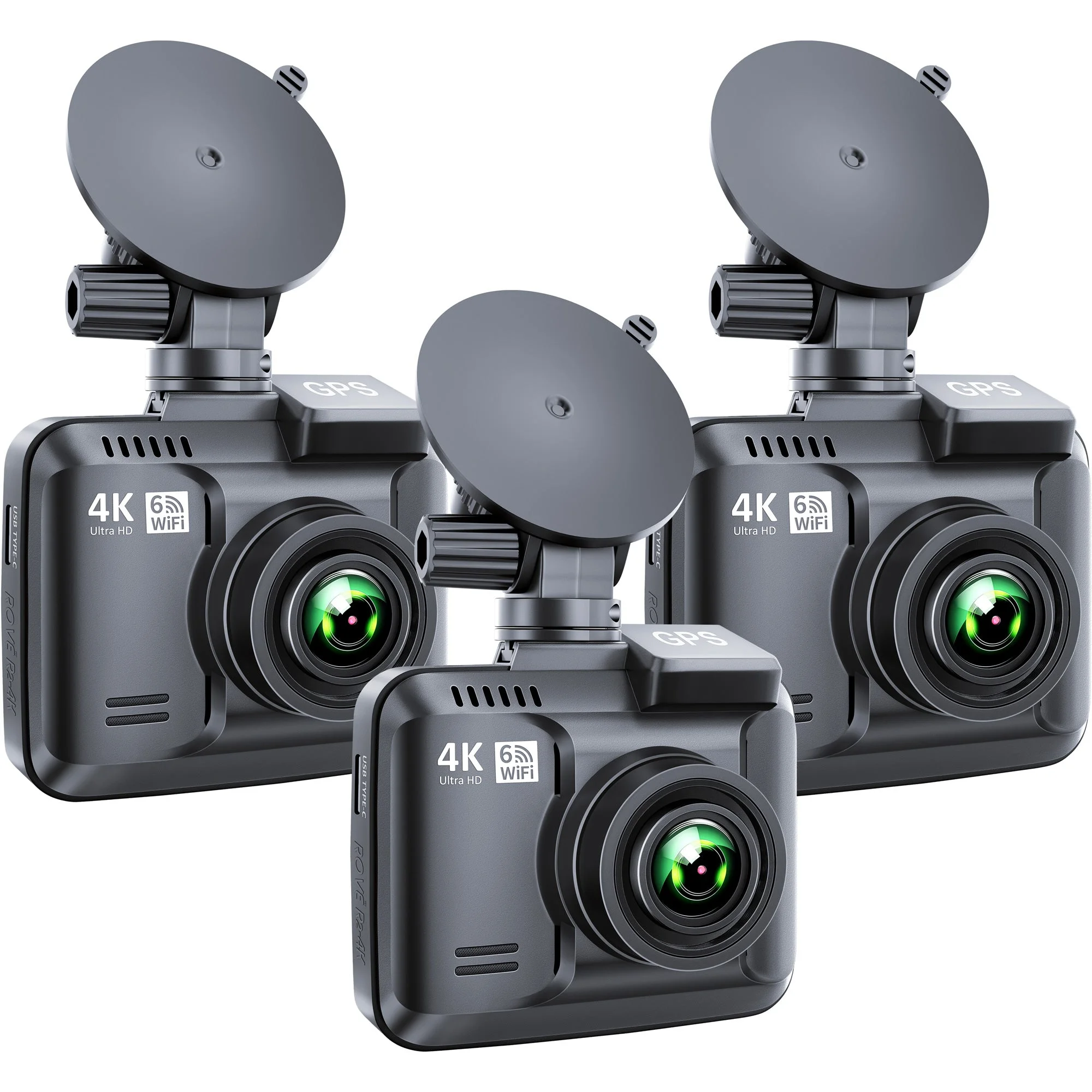
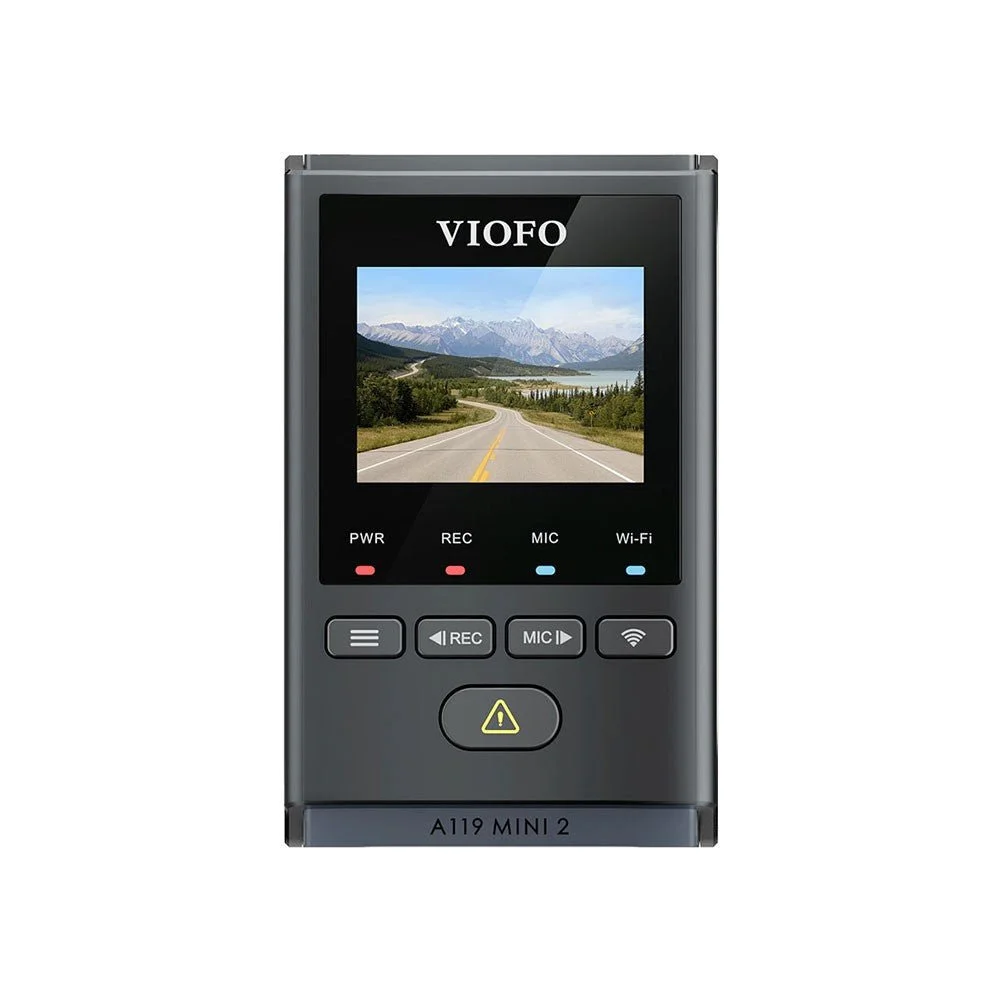
In 2015 the V1's price bought it forgiveness. In 2026 it shares the under-$130 shelf with two cameras that don't need any.
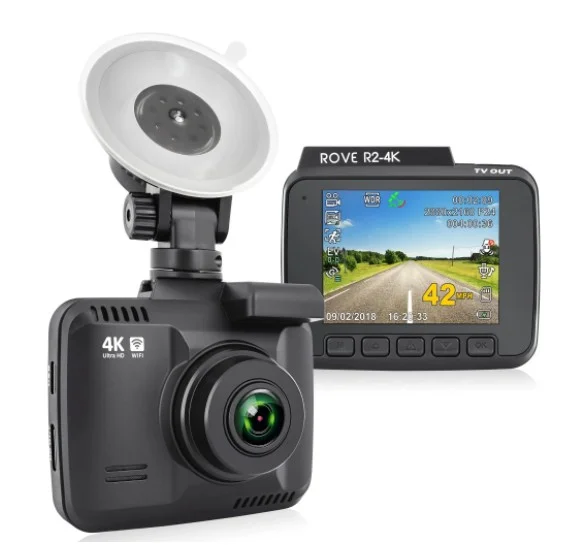
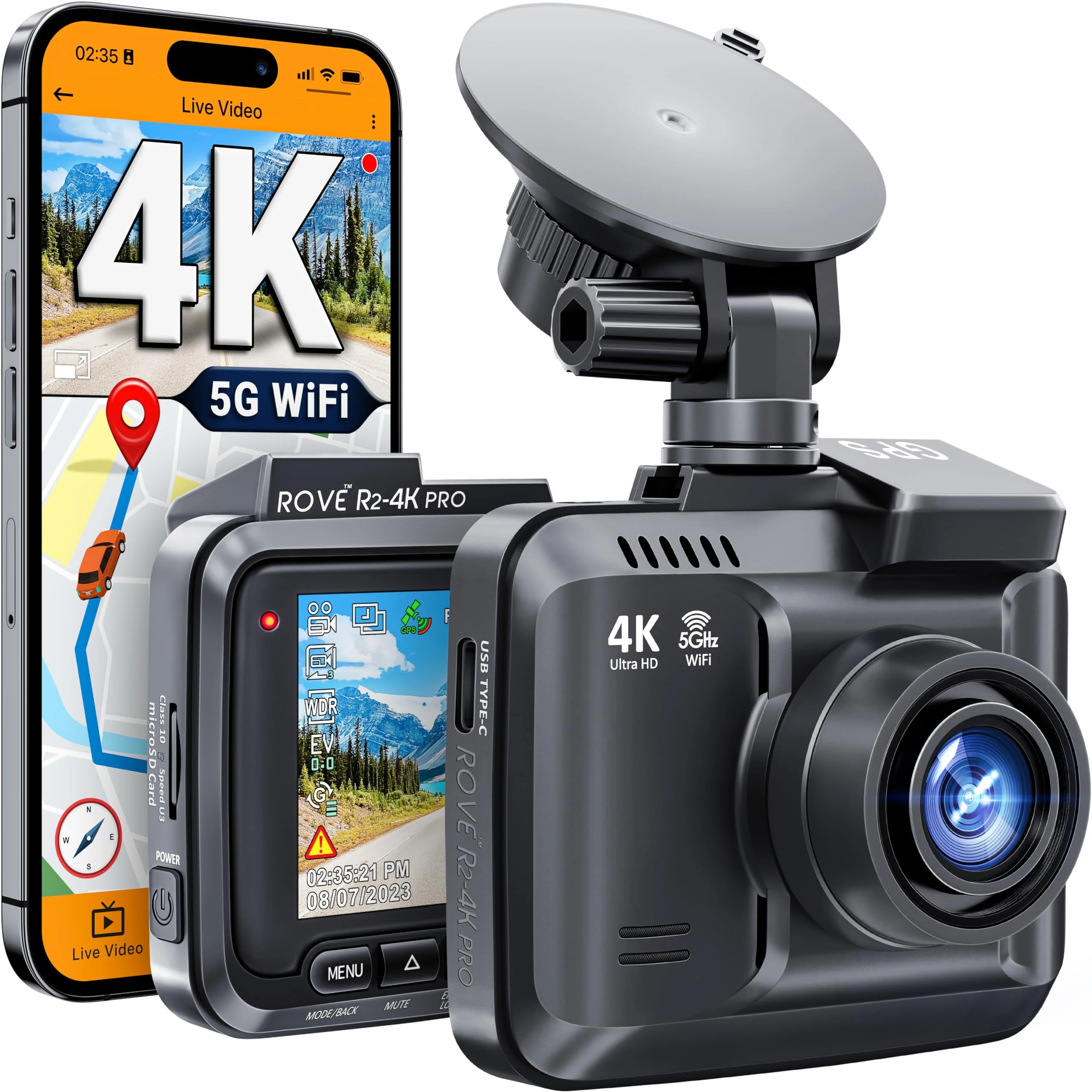
The Rove R2-4K lists at $119.99 and routinely sells below $100 — and at that price it includes built-in GPS and Wi-Fi as standard, where Rexing sells the GPS logger as an add-on. Its Amazon review base is enormous, its app experience is noticeably more modern, and its 2160p footage trades blows with the V1-4K in daylight. Feature-per-dollar, the Rove is the harder bargain.
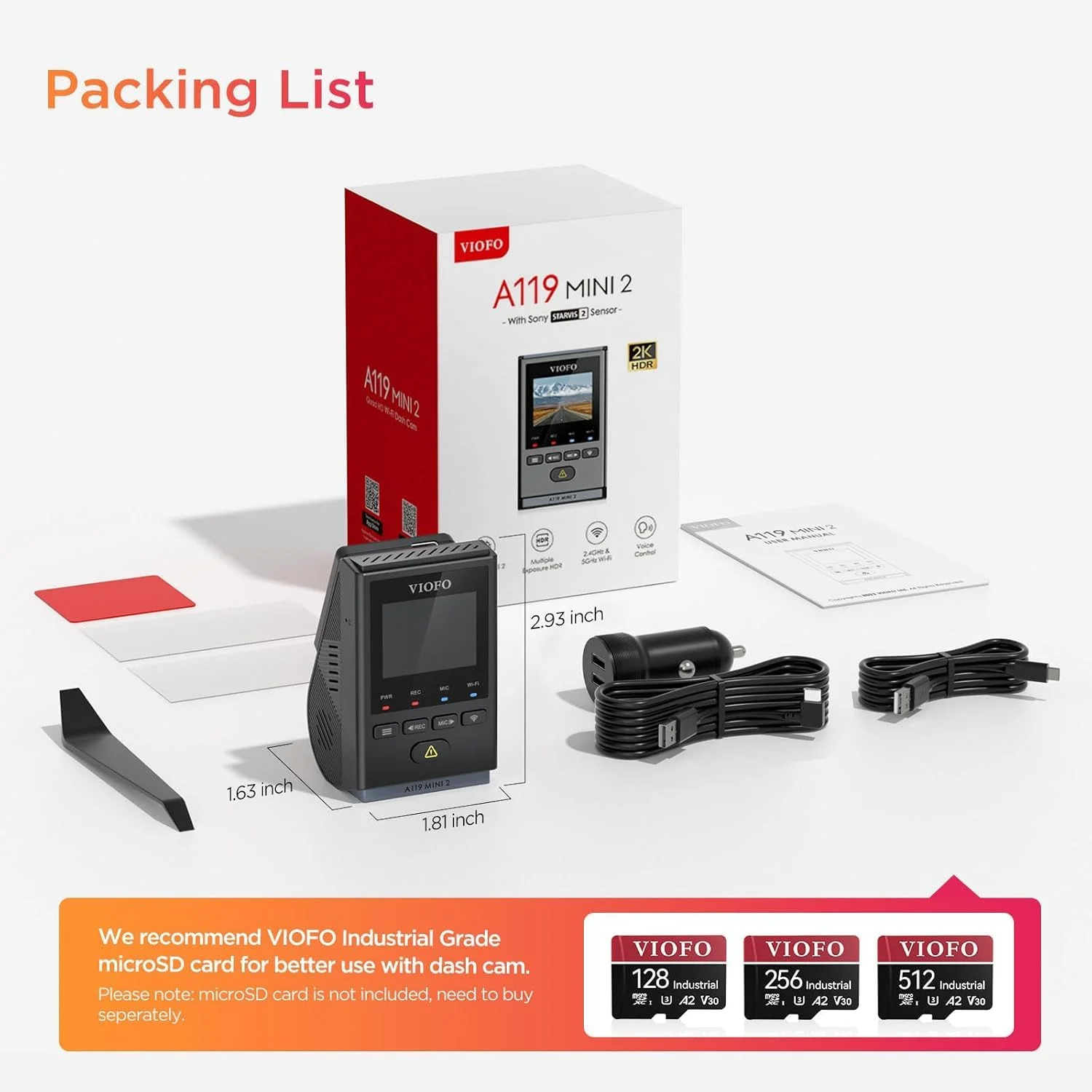
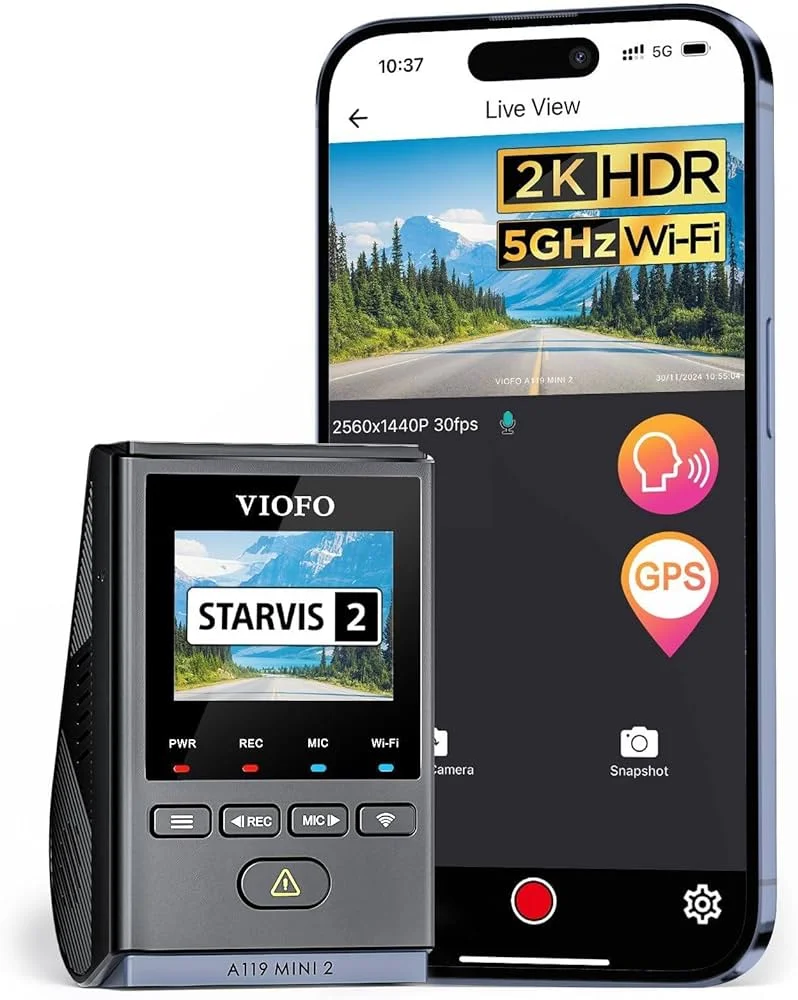
The Viofo A119 Mini 2 takes the other lane: quality. Its STARVIS 2 IMX675 sensor with true HDR is in a different class after dark — this is the camera enthusiast forums actually recommend when night plates matter. Add 2K/60fps recording, buffered parking mode, 5GHz Wi-Fi that makes clip transfer painless, and the same supercapacitor heat tolerance the V1 brags about. List price $129.99, card not included.
So frame the choice honestly. Against the Rove, the V1-4K at full price is asking you to pay the same money for fewer features and a worse app, with the supercapacitor and the longer track record as its counterargument — the Rove's lithium-free claim doesn't apply to every revision, and Rexing's heat story is better documented.
Against the Viofo, the V1 is asking you to accept visibly weaker night footage to save thirty dollars. For a camera whose entire job is producing evidence, that's a strange place to economize.
One more name worth a sentence: Garmin's Mini 2 owns the "smallest possible camera" niche and Redtiger owns the "most features per dollar shipped from a brand you've never heard of" niche. Neither changes the math above — the Rove and the Viofo are the two cameras a V1 shopper should actually cross-shop, because they bracket it on features and on quality respectively.
The V1's honest position in this field: it wins when it's on sale, when your climate is brutal, and when your recording needs are daytime-first. It loses the moment any one of those conditions drops away.
Which V1 Makes Sense — If Any
If you've decided the wedge fits your car and your budget, the variant question has cleaner answers than the brand question.
The V1-4K is the only single-channel pick worth considering — at the right price. Under $80 on sale, it's a legitimately strong value: good daytime 4K, proven heat survival, set-and-forget operation. At the full $119.99 list, the Rove and Viofo arguments above take over. Watch the price, not the badge.
The rear channel is modest, but a modest rear camera beats no rear camera in most disputes. If two channels are the goal, start with our front and rear dash cam guide to see what the next tier up buys you.
The V1P Max only makes sense on deep discount. Its 4K-front-plus-1080p-rear spec is right, but its usual street price overlaps cameras with better sensors and better apps. Same shell, weaker case.
Skip the V1 Basic. The $20 to $30 it saves over a discounted V1-4K buys you a 1080p sensor and no Wi-Fi on the same dated platform. It's the false economy of the lineup — the camera you buy twice. Spend the difference once.
And skip the whole family if your parking is dark, your commute is mostly night shifts, or you need plates after sundown. That's not the V1's job, no matter which variant the listing shows.
A pricing note that applies to every variant: Rexing discounts aggressively and often. The V1-4K has spent much of the past year bouncing between $70 and $100 across Rexing's store and Amazon, which means the difference between "skip it" and "solid buy" can be a Tuesday. Put the variant you want on a price alert rather than paying whatever today's listing happens to say.
Living With One: Cards, Power, and the App Workflow
The gap between a happy V1 owner and a one-star reviewer is usually three setup decisions, not the camera.
Buy a real endurance card. The V1-4K writes 4K loops continuously, and generic microSD cards die under that workload — most "SD card error" complaints in owner reviews trace straight back to the card. A high-endurance card rated for dash cams costs a few dollars more and removes the most common failure mode. Our dash cam SD card guide lists the ratings that actually matter.
Decide your power story on day one. The included 12V cable handles drive recording fine. If you want parking coverage, that's a hardwire kit with low-voltage cutoff — the supercapacitor will not run the camera unplugged, and pretending otherwise is the most repeated mistake in V1 reviews. The trade-offs are covered in our parking mode explainer.
Plan to pull the card, not fight the app. The realistic V1 workflow is a $10 USB card reader and thirty seconds at a laptop. Treat the Wi-Fi as a backup for grabbing one clip in a parking lot, not your main pipeline, and the dated app stops mattering much.
The GPS logger is worth it for some buyers — and worth skipping for others. Speed-stamped footage strengthens your evidence when you're the innocent party and timestamps every dispute cleanly. It also documents your own speed, permanently. Decide which side of that trade you live on before paying the extra.
Handled this way, the V1 is about as low-maintenance as recording electronics get. Handled carelessly, it generates exactly the review-section horror stories you've already read.
One maintenance habit owners recommend across every thread: format the card in-camera monthly, not from a computer. The V1's firmware is pickier about file systems than the spec sheet admits, and the monthly format is the cheap insurance that keeps the loop recording honest.
The Verdict: A Conditional Yes, at the Sale Price
Does the Rexing V1 deserve nine years of default-recommendation status? On the evidence: partially, and conditionally.
Everyone else should let the competition win. At full list price, the Rove R2-4K offers more camera for the same money. If night footage is in your top three requirements, the Viofo A119 Mini 2 is thirty dollars better spent, full stop. And the V1 Basic shouldn't be on your shortlist at all.
The pattern behind all of it: Rexing's sheet is mostly honest, its one stretch is the "night vision" language, and its real moat — heat-tolerant simplicity at a sale price — is narrower in 2026 than the brand's reputation suggests. The V1 survived nine years because it was the right cheap camera for its era. It survives now as the right cheap camera for a shrinking set of buyers.
My parts-counter rule applies: the brochure is an opening offer, and the counteroffer is the price you actually see today. At $75, shake on the V1-4K without guilt. At $120, walk the aisle once more — the camera next to it is probably the better deal, and now you know exactly which spec to check before you decide.