
What You Need to Know
Making a decent cup of coffee on a camping trip used to involve either instant granules that tasted like dirt or lugging a whole kitchen setup. For a while, I thought my espresso dreams were dead on arrival once the pavement ended. The real game-changer for my car camping mornings wasn't a fancy new brewing gadget, but figuring out how to power my little travel coffee maker without draining my car battery or sounding like a lawnmower at 6 AM.
It took a few soggy, caffeine-less mornings before I finally understood the power equation, and it's simpler than you think. Mobile coffee business can be surprisingly complex, but at its heart, it's about managing electrical load. Battery recommendation for coffee carts often boils down to capacity and output.
The Core Answer
The core answer to powering your portable coffee maker on the road, whether it's for a weekend car camping trip or a full-blown mobile coffee cart, revolves around two main concepts: generating power and storing it. You'll either be running directly off your vehicle's electrical system, using a portable power station, or a combination of both.
A common first attempt is plugging a small drip machine into the car's cigarette lighter adapter, which often lasts only a few minutes before the fuse blows. Boiling water can take up to 40 amps, so a tiny adapter isn't going to cut it for anything beyond a 12-volt travel mug warmer.
For most portable coffee makers that run on standard household AC power (like your home espresso machine or drip maker), you'll need an inverter. This device converts your car's 12-volt DC power into the 120-volt AC power you're used to. The key here is wattage. You need to match the inverter's continuous wattage rating to your coffee maker's power draw.
My little drip machine pulls about 600 watts, so I needed an inverter capable of at least that, with a bit of headroom. Power inverter but make sure the wattage of the outlet itself is high enough for your machine. Watts are the same no matter the voltage.
What nobody tells beginners is that running a significant inverter directly off your car's alternator can drain your battery if you're not careful, especially if the engine isn't running. This is where a deep-cycle battery or a portable power station comes in handy. Think of a portable power station like a giant, rechargeable battery pack with built-in AC outlets. One is worth grabbing after a car battery dies mid-brew.
It was a $400 experiment that paid for itself in saved headaches and perfectly brewed coffee. Running an external pump on a cart doesn't add much to the overall draw compared to the heating elements.
For a truly mobile setup, like a coffee cart, you're often looking at a combination of a generator for heavy loads and a robust battery bank with an inverter for quieter periods or when generators aren't allowed. The honest version for car camping is that a decent portable power station with at least 500-1000 watt-hours of capacity and a 1000-watt inverter will handle most travel coffee makers with ease.
A cheap $50 setup of just an inverter can strain or drain the car battery.
Why This Matters for Your Setup
This whole power situation matters because a dead battery means no coffee, and that's a crisis. It's the difference between a peaceful sunrise brew and a grumpy scramble for instant. My first trip to Big Sur, I forgot my power station and just relied on my car's inverter. A typical espresso machine pulls about 1200 watts — far too much for a car's alternator to keep up with while the engine is off.
I ended up with half a shot and a very anxious feeling about starting my engine.
Here's the breakdown for your setup:
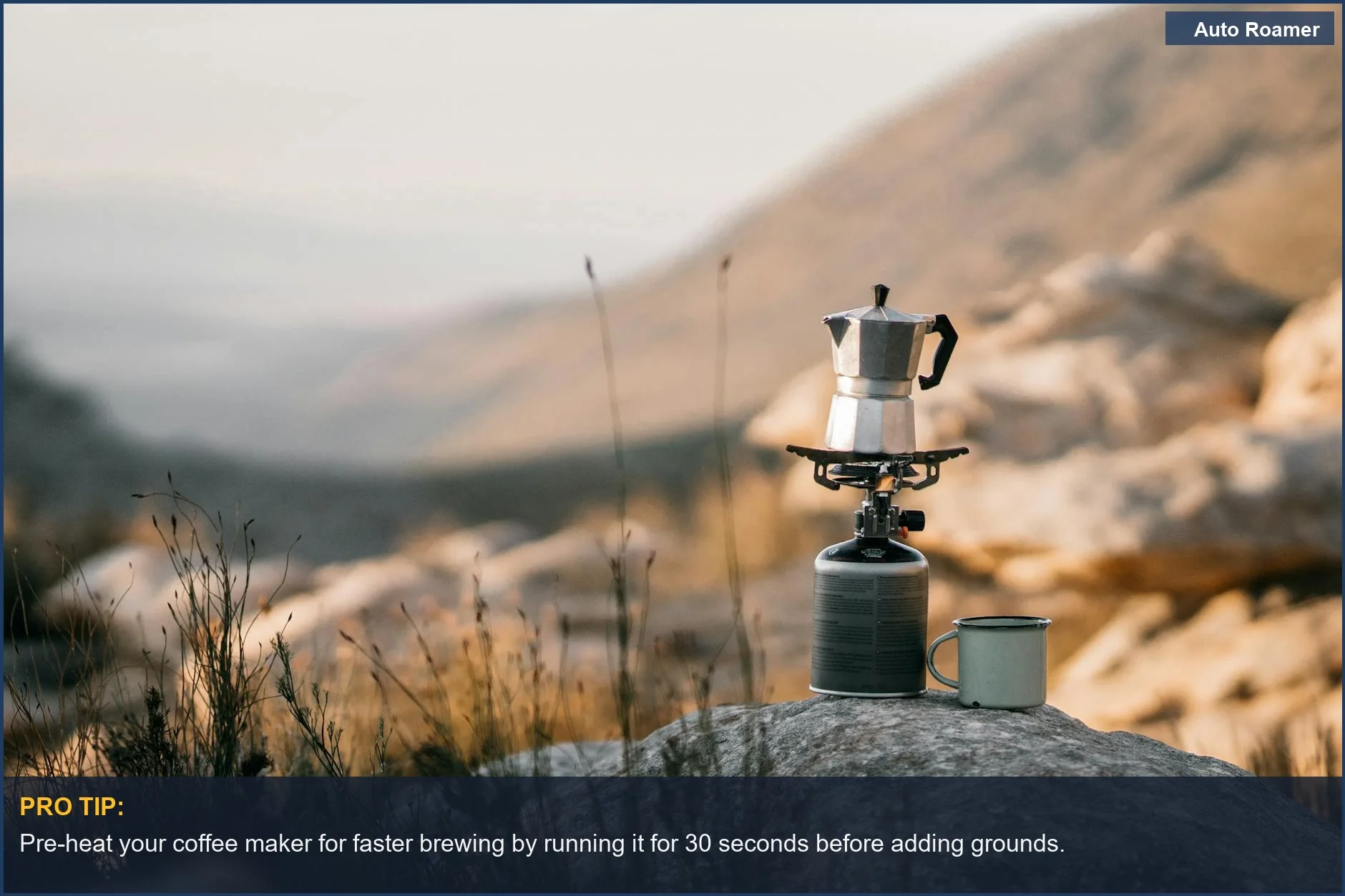
- Understand Your Coffee Maker's Needs: Check the label for wattage. If it's over 150 watts, you're likely going to need more than a basic car adapter. My French press, on the other hand, only needs hot water, which I can get from a small propane stove.
- Inverter vs. Power Station: An inverter is just a converter. A power station is a battery with a built-in inverter.
For car camping, a power station is usually the most straightforward, all-in-one solution. Lithium-based battery system with an inverter-charger is often preferred for its efficiency.
- Wattage is King: Don't just look at the peak wattage of an inverter; check the continuous wattage. My espresso machine needed a continuous 1200 watts, so I got an inverter rated for 1500 watts continuous to be safe.
Different coffee cart setups show how power needs vary greatly.
- Battery Capacity Matters: If you're using a power station, the watt-hour (Wh) rating tells you how long it can power your device. A 500Wh station could theoretically run a 500W coffee maker for one hour, but real-world use is less. Heat all the water we would need is a major power draw.
Making the Right Choice
Choosing the right power solution boils down to how much coffee you need and what kind of machine you're running. For simple drip or pour-over setups, a smaller inverter might suffice, but anything with a heating element or pump will demand more juice. My first camping coffee maker was a simple manual press, which required zero electricity. It was basic, but it worked.
- Know Your Draw: Always check the wattage of your coffee maker. A 1000-watt machine is a different beast than a 50-watt manual brewer. Espresso machines, drip coffee makers, and pumps all add up.
- Portability vs. Power: If you're car camping, a portable power station is often the easiest route. If you're backpacking, you're probably looking at manual methods.
Manual press, battery-powered espresso, and pour-over systems are all options.
- Don't Fry Your Car: Running high-wattage inverters directly off your car battery without the engine running is a fast track to a dead battery and a tow truck. Invest in a dedicated power source if your coffee habit is serious. Make sure the wattage of the outlet is high enough for your machine.
- Plan Ahead: Figure out your power needs before you buy anything.
A $50 inverter might seem like a deal, but if it can't power your coffee maker, it's just $50 wasted. My $400 power station was a splurge, but it's been worth every penny.