
How to Power Your Dashcam and Accessories Reliably
Getting your dashcam to record reliably, especially when your car is off, isn't as simple as plugging it into your cigarette lighter. I learned this the hard way after my dashcam died halfway through a multi-day road trip through Colorado, missing a deer encounter that a buddy later swore happened.
Getting your dashcam to record reliably, especially when your car is off, isn't as simple as plugging it into your cigarette lighter. I learned this the hard way after my dashcam died halfway through a multi-day road trip through Colorado, missing a deer encounter that a buddy later swore happened. Turns out, that 12V socket only works when the ignition is on, which is useless for catching those parking lot fender benders.
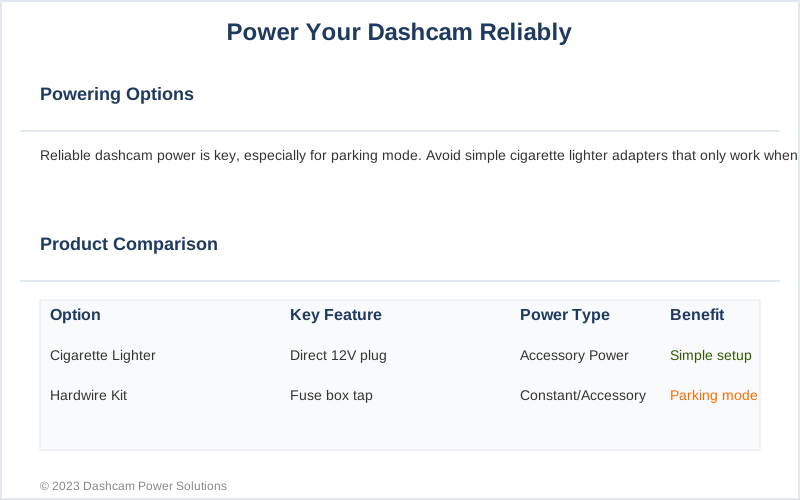
You need a power solution that understands your car's electrical system, not one that just expects constant juice. This isn't rocket science, but it does require knowing where to tap in. powering your dash cam properly means understanding the difference between accessory power and constant power. It's the difference between a useless paperweight and your eyes on the road, day and night.
My first dashcam setup cost me $30 for a fancy cigarette lighter adapter that was basically useless for parking mode. Big rookie mistake. Keep your camera running is the goal, and the method matters.
The Core Answer
The real move for reliable dashcam power, especially for parking mode, is hardwiring. This means tapping directly into your car's fuse box instead of relying on that always-on-but-only-when-the-car-is-on cigarette lighter socket. Hardwiring it directly to your car's electrical system ensures it gets power when you need it, even when the engine is off. I spent a solid hour in a Walmart parking lot in Ohio trying to figure out which fuse to pull for my dashcam power adapter, only to realize it was still tied to the ignition. Frustrating. A fuse tap kit is your friend here. It lets you piggyback onto existing fuse slots without cutting any wires. You'll need two types of fuses: one that powers only when the ignition is on (ACC, or accessory power) and one that's always hot (constant power) for parking mode. USB dash cams often use these kits. The trick is identifying the right fuses. You want an ACC fuse that powers something like your radio or power windows, and a constant fuse for something like interior lights. I once blew a fuse trying to tap into the horn circuit. Don't do that. Hardwiring your dash cam this way means you can set your dashcam to turn off after a certain voltage drop, protecting your car battery from draining. That's the game-time decision for reliable recording. My first hardwire attempt involved a $15 fuse tap kit and about 45 minutes of fumbling under the dash of my old Civic in the dark. It worked, but looked like a bird's nest of wires. The honest version: it's not that hard, but take your time and consult your car's manual. FitDVR Power Adapter style kits make it easier. You're essentially creating a dedicated power line for your dashcam. This bypasses the limitations of simple USB ports or cigarette lighter adapters. For example, a cigarette lighter adapter is essentially a glorified extension cord; it only works when the car is running. Hardwiring gives you control. You can often set a low-voltage cut-off, which is crucial. Without it, your dashcam could drain your car battery completely. I saw a guy on a forum who'd done this and then had to call a tow truck because his battery was dead. That's a $150 mistake you don't want to make. Mirror dash cam setups often benefit from this too.
Why This Matters for Your Setup
Why does this matter? Because your dashcam is only useful if it's actually recording. I learned this the hard way on a trip through the Smokey Mountains when my dashcam, powered only by the cigarette lighter, shut off when I turned the car off. Missed a whole incident later that night. The real move is to ensure continuous power for parking mode. This means:- Catching Hit-and-Runs: If someone bumps your car while it's parked and drives off, your dashcam can capture it. My neighbor's car got dinged in a grocery store lot, and the security footage was useless. My dashcam would have had it.
- Preventing Vandalism: Seeing who keyed your car or smashed a window is invaluable. I heard about a guy whose car was vandalized at a campsite, and he had no idea who did it.
- Peace of Mind: Knowing your camera is always watching, even when you're not, is a huge relief. I sleep better knowing my rig is covered.
- Clean Installation: No more dangling wires from the cigarette lighter obscuring your view. It looks professional and keeps things tidy. My first setup looked like a spaghetti explosion.
Making the Right Choice
Choosing how to power your dashcam comes down to reliability and convenience. The cigarette lighter is easy, but limited. Hardwiring is a bit more involved but offers true parking mode functionality.- Accessibility First: For a first-timer, a cigarette lighter adapter is the path of least resistance. It's a $20 fix that works for basic recording.
- Experience Upgrade: If you want parking mode, which I highly recommend after my own screw-ups, hardwiring is the way to go. A good fuse tap kit will run you around $15.
- The $50 Version: You can get a decent hardwiring kit and maybe even a dashcam battery pack for under $50 if you shop around.
- Your Car's Battery: Remember, if you're running parking mode, always use a low-voltage cut-off feature to protect your car's battery. I don't want you stranded like I almost was.
- Don't Overcomplicate: You don't need a $300 hardwiring module for most basic setups. Start simple and upgrade if you find you need more.
Frequently Asked Questions
How much does it cost to have a shop hardwire my dashcam compared to doing it myself?
Do I really need a multimeter to hardwire my dashcam, or can I just guess which fuse is which?
What if I hardwire my dashcam and it still doesn't turn on when the car is off?
Can hardwiring my dashcam permanently damage my car's electrical system?
I heard you can just plug a dashcam into any USB port in the car, so why bother hardwiring?
🏅 Looking for Gear Recommendations?
Check out our tested gear guides for products that work with this setup:
Sources
- Hardwire Your Dash Cam the EASY Way – No Splicing or Fuse ...
- How to Hardwire a Dash Cam: A Step-by-Step Guide - TYPE S
- Don't Hardwire your Dash Cam! Try this instead! (Dongar Power ...
- How to Power Your Dash Cam: Step-by-Step Installation Guide
- How to Power a Dash Cam: 4 Easy Ways to Keep Your Camera ...
- How to power a dashcam the easy way! FitDVR Power ... - YouTube