
Car Charging Is the Fussiest Way to Fill a Power Station
Charging a power station from the car is convenient in theory and finicky in practice, so a station that will not car-charge is a common and usually fixable complaint. Portable power stations charge from a vehicle's 12V DC cigarette-lighter socket, which supplies a nominal 12V, rising to about 14V while the engine is running and charging. That socket is the weak link in the chain, and most no-charge problems live there rather than in the station.
The first thing to understand is that car charging is slow by design, which colors what looks like a fault. Charging over a 12V cigarette socket is capped near 120W, that is 12V times 10A, which is why car charging is much slower than wall or solar charging. A Jackery Explorer 1000, with its 1002Wh capacity, takes roughly 14 hours to charge from a 12V car port, so a station that seems to charge barely at all may simply be charging at the socket's honest, slow rate.
The genuine no-charge faults cluster around three things: the socket losing power, the socket's fuse, and the voltage the station is willing to accept. A cigarette socket that dies at idle, a blown fuse, or an input below the station's minimum will each stop charging cold, and each has a distinct tell.
This guide works those three in order, because they cover the large majority of cases, then covers the connection problems and the direct-to-battery fix that sidesteps the socket entirely. Most of the time the station is fine and the socket is the problem.
Match the Symptom to the Cause
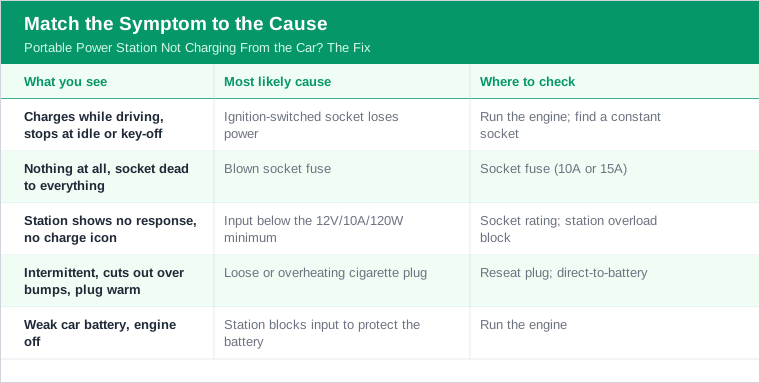
How and when the charging fails points at the cause. Line it up before swapping cables.
| What you see | Most likely cause | Where to check |
|---|---|---|
| Charges while driving, stops at idle or key-off | Ignition-switched socket loses power | Run the engine; find a constant socket |
| Nothing at all, socket dead to everything | Blown socket fuse | Socket fuse (10A or 15A) |
| Station shows no response, no charge icon | Input below the 12V/10A/120W minimum | Socket rating; station overload block |
| Intermittent, cuts out over bumps, plug warm | Loose or overheating cigarette plug | Reseat plug; direct-to-battery |
| Weak car battery, engine off | Station blocks input to protect the battery | Run the engine |
The single most common cause is the switched socket, because most vehicles cut power to the 12V accessory socket when the engine is off or the key is only in accessory, so a station will only charge with the ignition on and stops when the car is switched off. If your station charges while driving and stops when you park, that is the socket doing what the carmaker designed it to do.
The next most common is the socket fuse, which is easy to check and easy to blow. After that comes the voltage the station will accept, and finally the plug connection. Work them in that order and the fix usually appears fast.
The Switched Socket and the Idle Drop
If the station charges on the highway and stops when you park, the socket is switched, and this is the leading cause. Many vehicles cut power to the 12V accessory socket when the engine is off or the key is only in accessory, so the station only charges with the ignition on. Nothing is wrong with the station; the socket simply has no power when the car is off.
Idling exposes a subtler version. Vehicles with idle stop-start, or that drop to accessory power at idle, can momentarily cut or lower socket voltage, interrupting the station's car charging. A station that charges at speed but stutters or stops in stop-and-go traffic is seeing the socket voltage sag every time the engine idles down or the stop-start system cuts in.
The clean fix for both is to make sure the engine is genuinely running while you charge. Jackery advises the engine should be running during car charging, with the engine supply voltage about 14V, both to power the socket and to avoid draining the starter battery. Charging with the key in accessory and the engine off is exactly the condition that leaves the station uncharged and the starter battery slowly drained.
Some vehicles offer an escape hatch. Certain cars have both an ignition-switched socket and a constant, always-on socket, and moving the station to the constant socket lets it keep charging with the engine off, at the risk of draining the starter battery. That is useful for topping up during a short stop, but for a full charge the engine should be running so the socket holds its voltage and the starter battery stays healthy.
The Blown Socket Fuse
When the socket is dead to everything, not just the station, suspect the fuse. Factory cigarette-lighter circuits are commonly fused at only 10A or 15A, and a blown socket fuse is a frequent reason the port suddenly stops working, with the exact value varying by vehicle. A dead socket that will not power a phone charger either is almost certainly a fuse, not the station.
Power stations are good at blowing these fuses because they ask a lot of the circuit. A car-charge cable or accessory that tries to draw more current than the socket's fuse allows will blow the fuse and kill charging. A station configured to pull the full car-charging current can sit right at the edge of a 10A fuse, and any extra draw or a marginal fuse tips it over.
Checking and replacing the fuse is a five-minute job with the owner's manual. Find the fuse for the accessory or cigarette-lighter socket in the fuse box, confirm it is intact, and replace a blown one with the same rating, never a higher one, since the fuse protects the wiring. If the replacement blows again immediately, the station is trying to draw more than the circuit can supply, which points to the voltage-and-current limits in the next section.
Replacing a fuse with a higher-rated one to stop it blowing is a mistake worth calling out, because it removes the wiring's protection and can overheat the circuit. If a 10A fuse keeps blowing, the answer is not a 15A fuse; it is a connection that does not exceed the socket's honest limit, which usually means a direct-to-battery cable rather than the socket.
The Voltage and Current the Station Will Accept
A station can refuse to charge not because the socket is dead, but because what the socket offers falls outside what the station accepts. Jackery states its car-charging cable is only compatible with a vehicle 12V socket rated 10A / 120W, and if the socket delivers less, the station's overload protection blocks charging. The station is protecting itself, and the result looks like a no-charge fault.
The current cap is real and low. EcoFlow car charging supports a 12V or 24V vehicle battery with a maximum charging current of 8A, and the EcoFlow cable uses an XT60i connector that auto-detects current to distinguish car charging from solar input and protect the vehicle from overload. These caps exist to keep the station from overloading the socket, and they mean the station simply will not pull more than the socket can safely give.
When the socket cannot meet the minimum, the station goes quiet rather than charging. Insufficient socket power triggers the station's overload or error-code protection, so the station shows no response instead of charging when the 12V / 10A / 120W minimum is not met. A station showing no charge icon and no response on a socket that powers smaller devices is often seeing a socket that cannot meet its input minimum.
The practical check is to confirm the socket genuinely meets 12V / 10A / 120W with the engine running. A tired socket, a long thin adapter, or a fuse near failure can all pull the delivered power below the station's minimum. If the socket cannot hold the minimum, the reliable answer is to bypass it, which is what the direct-to-battery cable does.
Low Car-Battery Voltage Blocks the Input
There is a protective refusal that catches people trying to charge with the engine off: the station guarding the car battery. If the car battery is weak or its voltage drops below the minimum needed, the power station blocks the input to avoid draining the vehicle battery or damaging its own charger. The station is deliberately not charging, to keep from flattening the starter battery.
This is why engine-off charging is unreliable and often stops on its own. With the engine off, the station draws the socket down, the car-battery voltage falls, and at some point the station's protection blocks the input to prevent a dead starter battery. What looks like a station that quit charging is a station refusing to keep draining a battery that cannot afford it.
Running the engine solves this directly. With the engine running, the alternator holds the system at about 14V and supplies the charging current, so the station sees healthy voltage and keeps charging without pulling the starter battery down. This is the same reason Jackery advises running the engine during car charging: it both powers the socket and protects the battery.
If you must top up with the engine off, do it briefly and watch the car battery, and understand the station may cut itself off to protect the vehicle. For any real charge, run the engine. A station that only charges with the engine running is not faulty; it is respecting the limit that keeps you from a no-start in a parking lot.
Loose, Warm, or Melting Cigarette Plugs
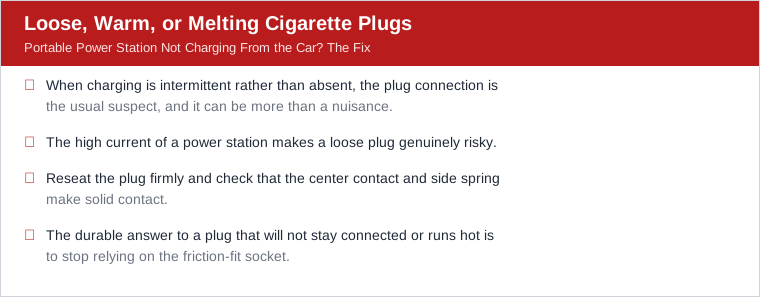
When charging is intermittent rather than absent, the plug connection is the usual suspect, and it can be more than a nuisance. Loose, corroded, or not-fully-inserted cigarette-plug connections are a common cause of no car charging and must be reseated firmly in the socket. A plug that backs out slightly over bumps breaks the circuit, and charging stops and starts with the road.
The high current of a power station makes a loose plug genuinely risky. 12V cigarette-lighter plugs can overheat or melt when charging a high-draw all-in-one power station, because a rattling center contact sparks and heats up on rough roads. A plug or socket that feels warm to the touch during charging is a warning, not a quirk, and it points to a connection that is resisting the current it carries.
Reseat the plug firmly and check that the center contact and side spring make solid contact. If the plug or socket runs warm, or charging cuts out over bumps, the socket connection is marginal for the current the station draws. That marginal connection both interrupts charging and creates the heat that can melt a plug, so it is worth fixing rather than tolerating.
The durable answer to a plug that will not stay connected or runs hot is to stop relying on the friction-fit socket. A direct-to-battery connection with a solid clamp does not rattle loose and does not concentrate the current on a small sprung contact, which is why it is the recommended fix for a high-draw station that keeps interrupting or overheating at the socket.
The Reliable Fix: Go Direct to the Battery
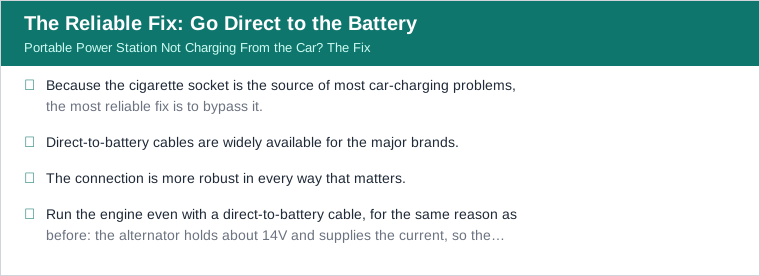
Because the cigarette socket is the source of most car-charging problems, the most reliable fix is to bypass it. A direct-to-battery cable with alligator clamps bypasses the cigarette socket and its fuse limit, giving a more reliable and higher-current connection to the vehicle battery. It removes the switched socket, the small fuse, and the rattly friction-fit plug in one move.
Direct-to-battery cables are widely available for the major brands. The Jackery 12V automobile battery charging cable, a clamp-to-cigarette design, is listed as compatible with all Jackery power stations except the Explorer 160. A brand-matched power station car-charging cable with battery clamps connects the station straight to the battery terminals, avoiding the socket's limits.
The connection is more robust in every way that matters. Clamping to the battery posts gives a solid, low-resistance contact that will not back out over bumps and does not funnel the current through a small sprung socket contact that can overheat. And because it bypasses the socket's 10A or 15A fuse, it is not limited or interrupted by a fuse sitting at the edge of its rating.
Run the engine even with a direct-to-battery cable, for the same reason as before: the alternator holds about 14V and supplies the current, so the station charges steadily without draining the battery. A direct connection plus a running engine is the setup that turns unreliable car charging into a dependable, if still slow, top-up while you drive.
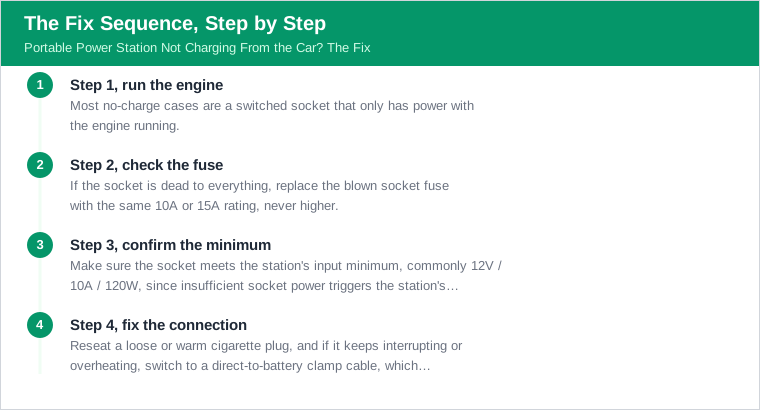
The Fix Sequence, Start to Finish
Car-charging failures resolve in a clear order: power the socket, check the fuse, confirm the station's minimum, then fix the connection. Follow it top to bottom.
Step 1, run the engine. Most no-charge cases are a switched socket that only has power with the engine running. Run the engine so the socket holds about 14V, which also keeps the station from blocking the input to protect a draining car battery. If your vehicle has a constant socket, that can help for short top-ups.
Step 2, check the fuse. If the socket is dead to everything, replace the blown socket fuse with the same 10A or 15A rating, never higher. If it blows again, the station is drawing more than the circuit allows, so move to a direct-to-battery cable.
Step 3, confirm the minimum. Make sure the socket meets the station's input minimum, commonly 12V / 10A / 120W, since insufficient socket power triggers the station's overload protection and it shows no response.
Step 4, fix the connection. Reseat a loose or warm cigarette plug, and if it keeps interrupting or overheating, switch to a direct-to-battery clamp cable, which bypasses the socket, its fuse, and the friction-fit plug for a reliable, higher-current connection.
The Verdict: The Socket Is Usually the Problem
A power station that will not charge from the car is, far more often than not, a socket problem rather than a station problem. The cigarette-lighter socket is the weak link, switched off with the key, fused low, prone to a rattly plug, and the station typically works fine the moment that link is fixed.
Start by running the engine, because most no-charge cases are a switched socket that only has power while the engine runs, and running it also holds the system at about 14V so the station does not block the input to protect a draining car battery. Then check the socket fuse, replacing a blown 10A or 15A fuse with the same rating, never higher.
If the socket has power and a good fuse but the station still shows no response, it is likely seeing an input below its minimum, commonly 12V / 10A / 120W, and refusing to charge. And if charging is intermittent or the plug runs warm, the friction-fit cigarette connection is failing under the station's high current.
The fix that resolves most of these at once is a direct-to-battery clamp cable run with the engine going, which bypasses the switched socket, the small fuse, and the unreliable plug. Set up that way, car charging is still slow, a 1002Wh station takes roughly 14 hours, but it becomes dependable, filling the station steadily while you drive instead of quitting the moment you leave the highway.