Setting the Scene
LED camping lanterns are a common sight at car campsites these days, but are they actually safe to use inside your tent or vehicle? A cheap battery-powered LED lantern can feel warm to the touch after just an hour. That's enough to make anyone wonder if they're about to set their nylon palace ablaze.
The honest version: most modern LED lanterns are perfectly safe, but there are a few things you need to know to avoid a rookie mistake. Workgloves Depot points out that water resistance is key, but heat is a different beast entirely. You don't want a device that generates enough heat to melt your sleeping bag. It's all about understanding the technology and how it behaves in an enclosed space.
On a chilly October trip, a lantern can get hot enough to make you nervous even though it never actually catches fire. That's the kind of close call worth avoiding.
The Core Answer
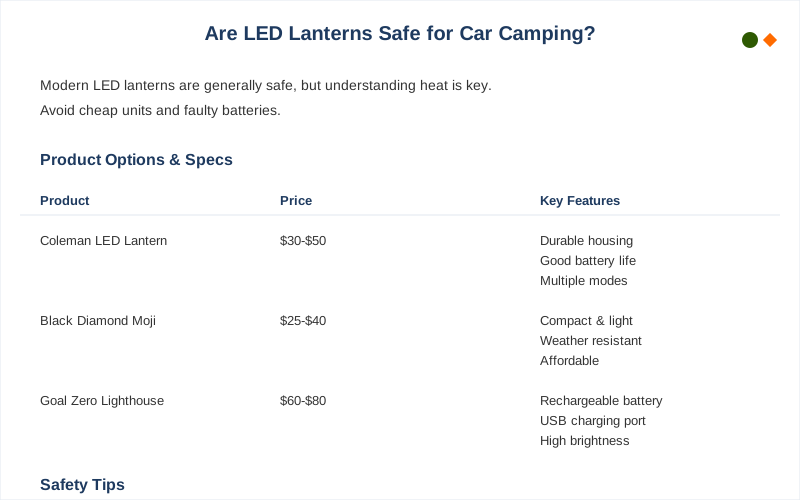
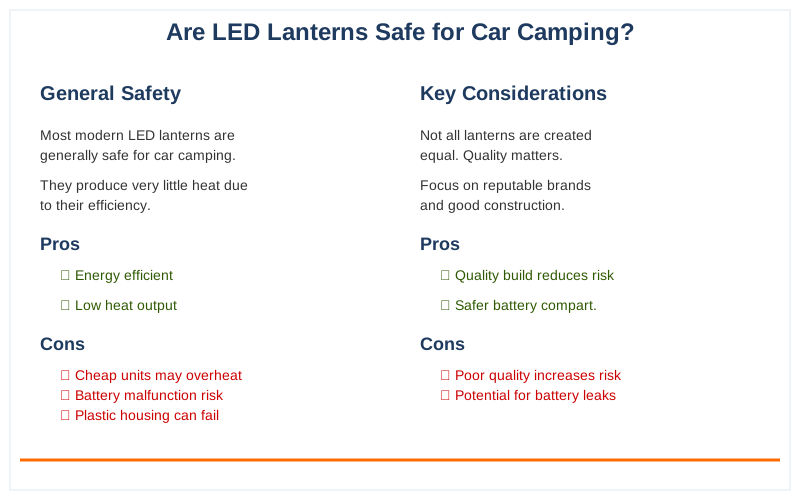
The core answer is that LED camping lanterns are generally safe, but not all are created equal. The vast majority of modern LED lanterns produce very little heat. They're designed to be efficient, and that means they don't waste a lot of energy as heat like older incandescent bulbs did. REI Co-op mentions that for car camping, size and weight aren't usually concerns, which is why you can opt for more robust, safer options.
The real danger isn't usually the LED itself overheating, but rather the battery compartment or the plastic housing getting too hot if there's a malfunction or if it's a particularly cheap, poorly made unit. A lantern that feels suspiciously warm can turn out to have a battery starting to leak. Not ideal.
It's like buying a $10 tool versus a $50 tool; you're going to get what you pay for. The $50 version is usually built with better components that are less likely to fail spectacularly. You want a lantern that has good heat dissipation. This means it has vents or materials that allow any minimal heat generated to escape. Paddling.com has discussions where people talk about lanterns that can run on a low setting all night.
That low setting is crucial because it generates even less heat. The real move is to look for lanterns that have multiple brightness settings and a low 'night light' mode. That's usually around 10-20 lumens, and it's perfect for navigating a dark tent without generating much heat at all. OZK Customs notes that a low mode around 10 to 20 lumens is great for quiet hours.
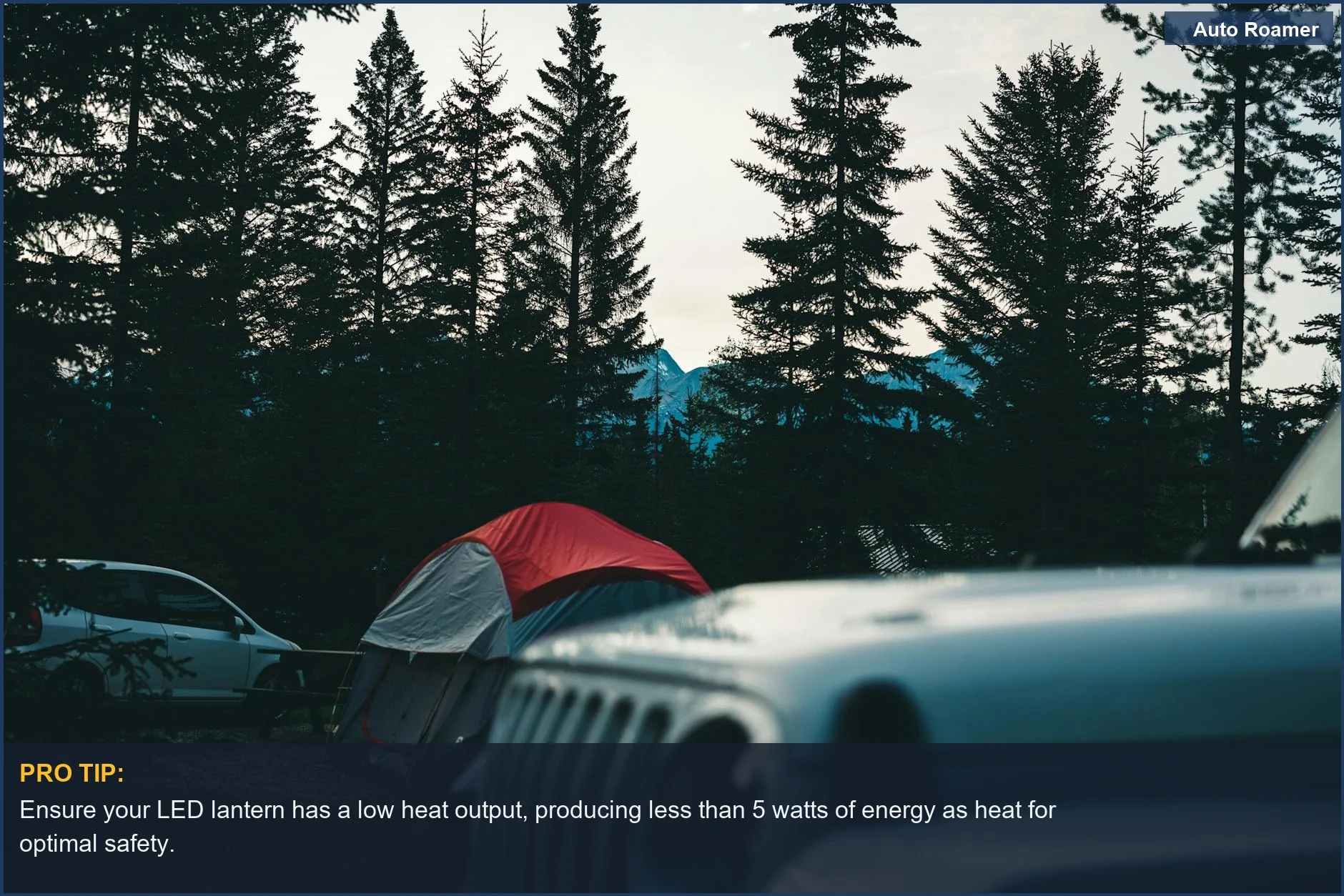
If a lantern feels hot to the touch after just a few minutes on its lowest setting, that's a red flag. It's a rookie mistake to assume all LEDs are cool to the touch. A cheap, unbranded lantern can get so hot it's hard to hold — a close call that's a little too easy to have inside a tent.
The honest version: stick to reputable brands and look for features like multiple brightness modes and good heat dissipation. You're not just buying light; you're buying peace of mind.
Why This Matters for Your Setup
Why this matters for your setup is pretty simple: fire is bad, and getting a good night's sleep is good. You don't want to wake up to a smoky tent because your lantern decided to stage a spontaneous combustion event. Outdoor Gear Lab tested over 50 lanterns, and even they acknowledge that brightness, battery life, and features are important. But safety is paramount, and that includes thermal safety.
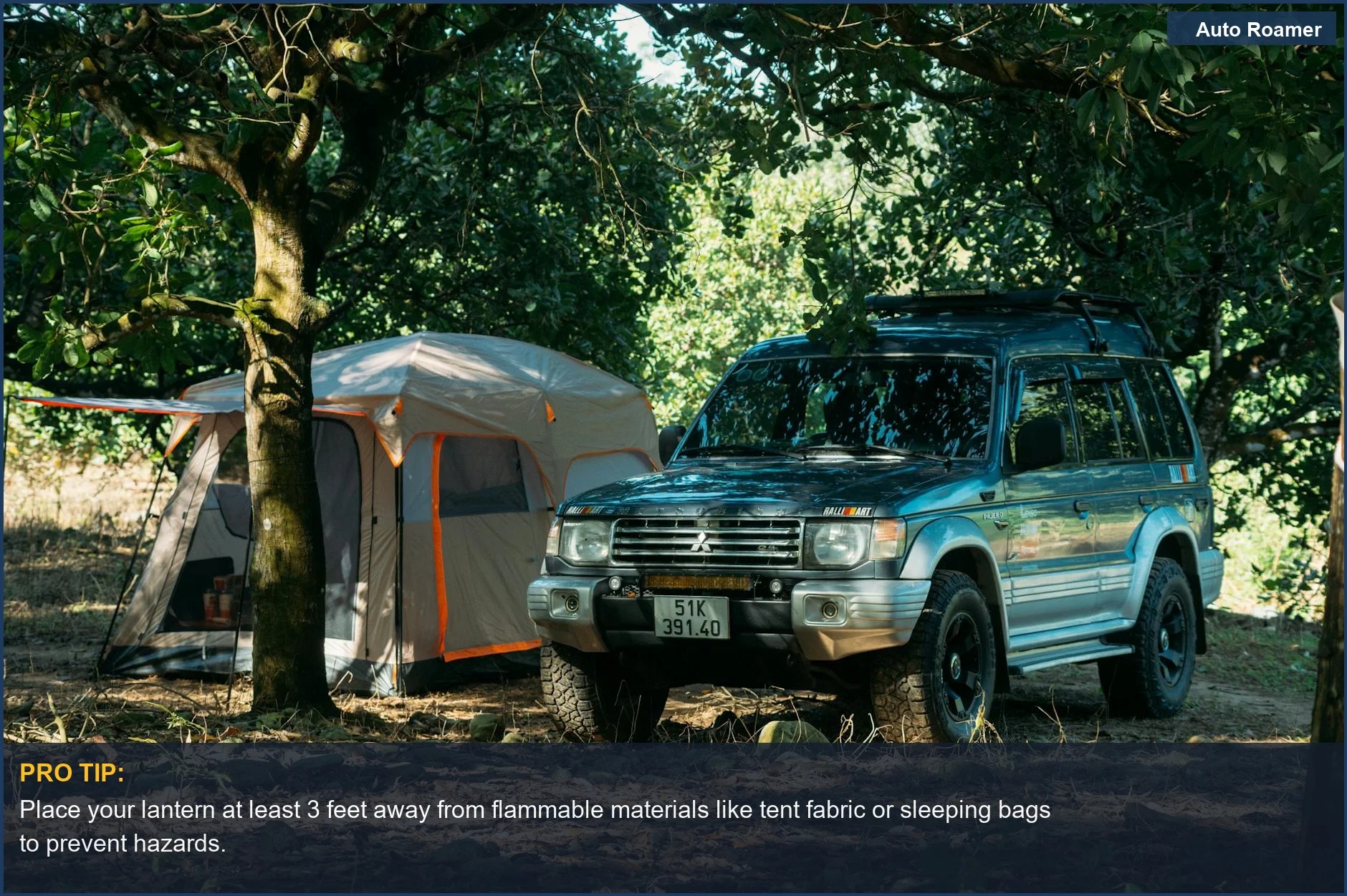
You're often in a confined space, like a tent or your car, so any heat generated is concentrated. It's not like being in an open field where heat dissipates quickly. A tent can get surprisingly warm at night, and a heat-generating lantern only makes it worse. The real move is to choose a lantern that offers a range of brightness levels.
A high setting is great for setting up camp in the dark or cooking, but for inside the tent, you want a low, gentle glow. This not only saves battery but also drastically reduces heat output. Think about it: a bright spotlight generates more heat than a dim reading light. It's basic physics, but what nobody tells beginners is that even LEDs can get warm enough to be a concern in a closed environment.
Always check reviews for comments about heat or melting plastic. That's the kind of intel you won't find in a manufacturer's spec sheet. There are forum posts about cheap lanterns melting their own casings, and that's not something you want happening 10 feet from your sleeping bag. The goal is to create a cozy, well-lit space, not a fire hazard. The honest version: a little research goes a long way in ensuring your camping trips are safe and enjoyable.
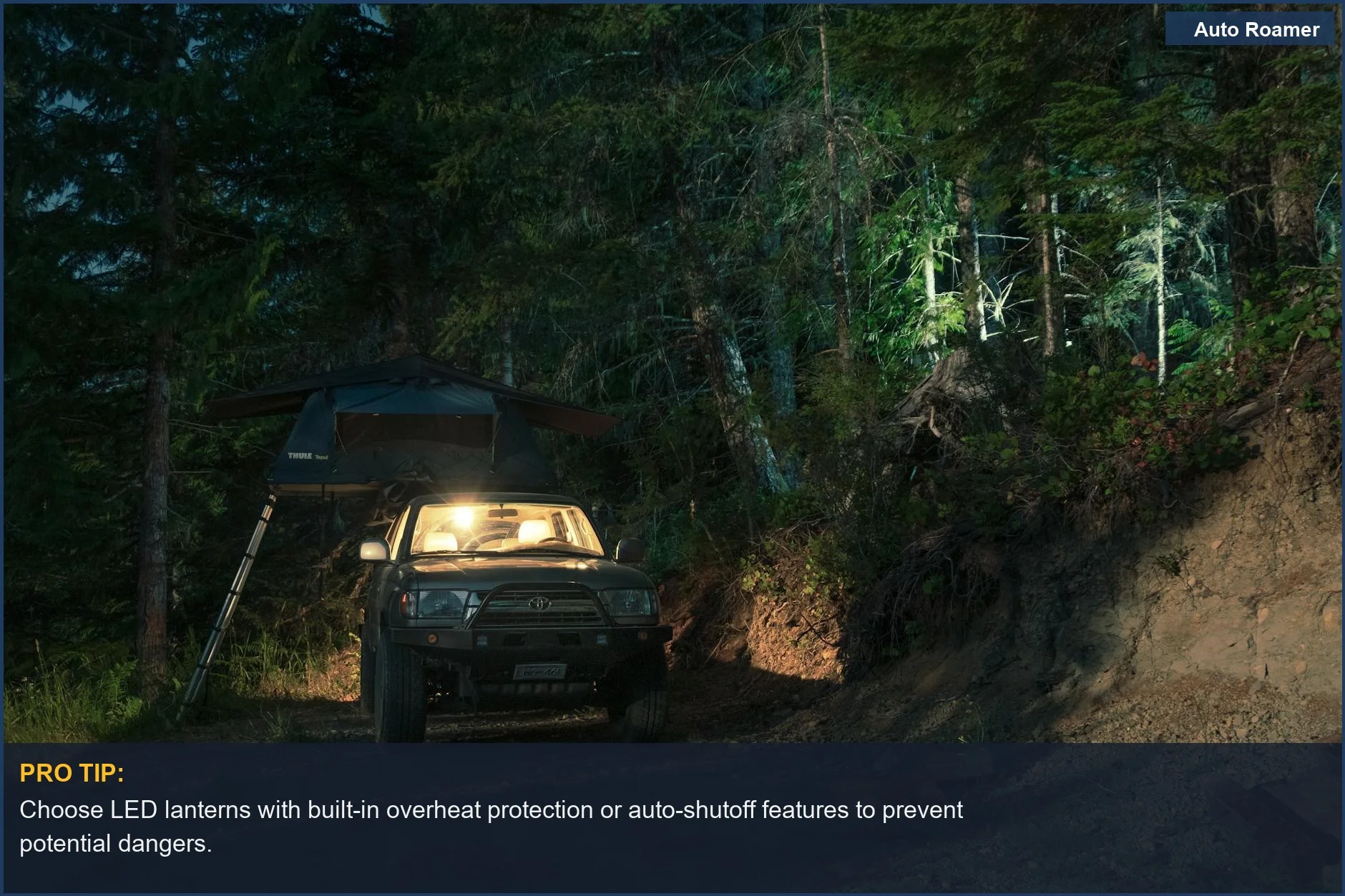
Making the Right Choice
Making the right choice for your car camping lighting means prioritizing safety and functionality. You don't need a $200 expedition-grade lantern for car camping; a solid, reliable LED option will do. A popular choice is a rechargeable lantern that can also charge a phone. Facebook groups often have people sharing their favorite affordable lighting options.
Look for lanterns with:
- Multiple brightness settings, especially a low-lumen 'night light' mode.
- Good build quality from a reputable brand.
- Positive reviews mentioning heat output or lack thereof.
Campers use everything from cheap dollar-store LEDs (not recommended, obviously) to high-end rechargeable units. The $50 version often hits the sweet spot for car camping. You want something that feels sturdy, performs reliably, and doesn't get alarmingly hot.
A lantern with a warm color temperature is much more pleasant for reading than a harsh, blue-toned light. It's not just about lumens; it's about the quality of the light and how it makes your campsite feel. The honest version: don't overthink it, but do your homework. A little bit of research can prevent a lot of potential headaches, or worse, fire.