
The 30-Inch Number Has an Asterisk
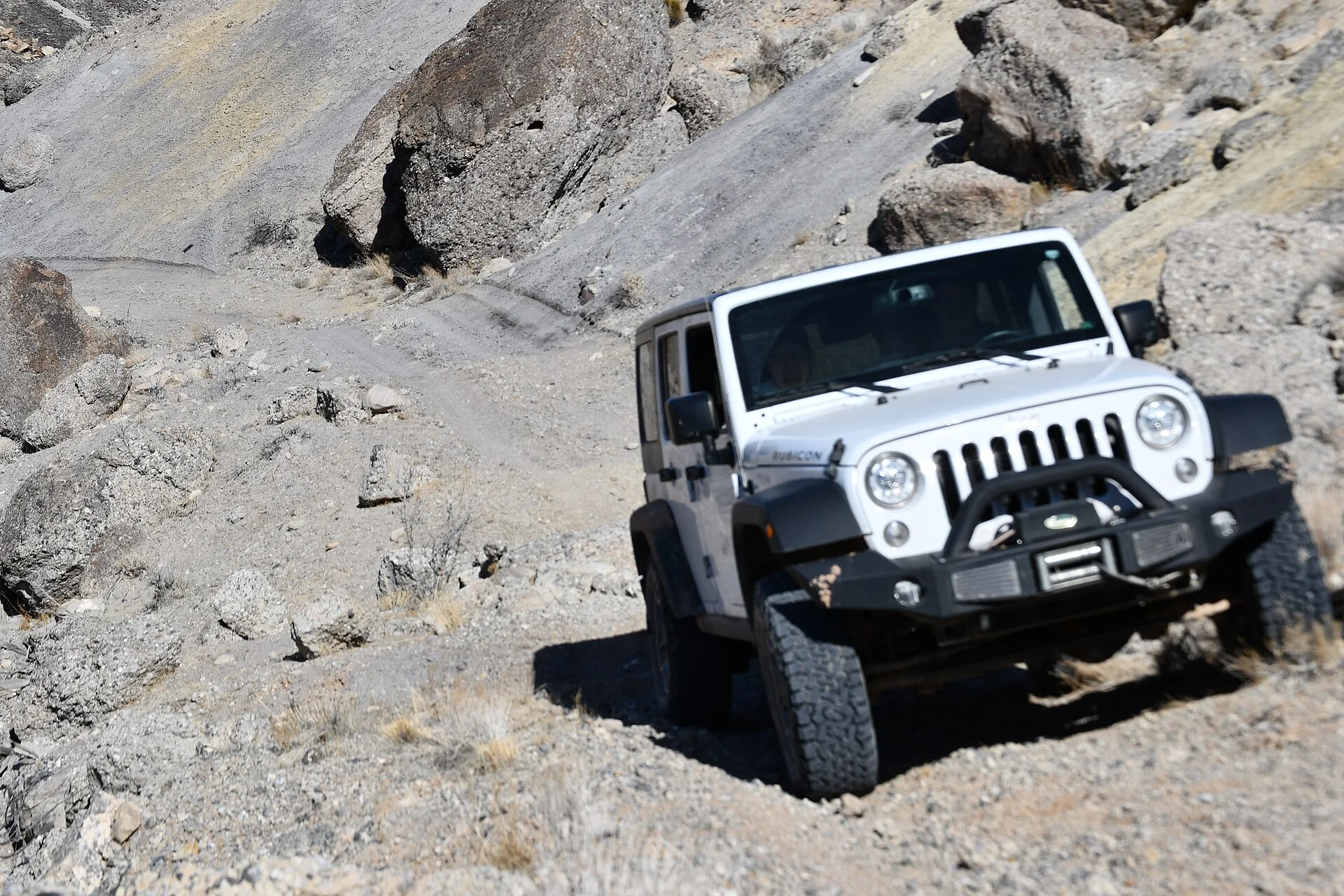
The Jeep Wrangler's water-crossing headline is a clean one: the Wrangler JL has an official water fording depth of 30 inches, or 762 mm. It is one of the specs that makes the Wrangler feel unstoppable, and it is genuinely capable. But like most capability numbers, it comes with conditions that the figure alone does not tell you, and those conditions are what keep a river crossing from ending an engine.
The first condition is speed. Jeep's 30-inch fording rating assumes a slow, steady pace of 5 mph. That is not incidental fine print; the rating only holds at that pace, and going faster changes the effective water level in ways covered later. A 30-inch crossing at highway-ford speed is not a 30-inch crossing anymore.
The second and more important condition is what actually sets the 30-inch number. The fording depth spec is set by the height of the factory air intake, which sits at roughly 30 inches on a stock JL Wrangler. The number is not about ground clearance, tire size, or how tall the Jeep looks. It is about one point: where the engine breathes.
That reframing is the whole point of reading a fording spec honestly. The 30 inches is a proxy for the intake height, and the intake is the hard limit. Understand that, and you can read your own Jeep's real fording capability, judge a modified one correctly, and know exactly why exceeding the number is so unforgiving.
What Actually Sets the Limit: The Air Intake
The single most important limit when fording is the air intake, because water reaching the intake can be pulled into the cylinders and cause hydrolock and severe engine damage. Water does not compress, so an engine that ingests it can bend rods and destroy itself in an instant. This is why the intake, not the floor of the Jeep, defines the fording ceiling.
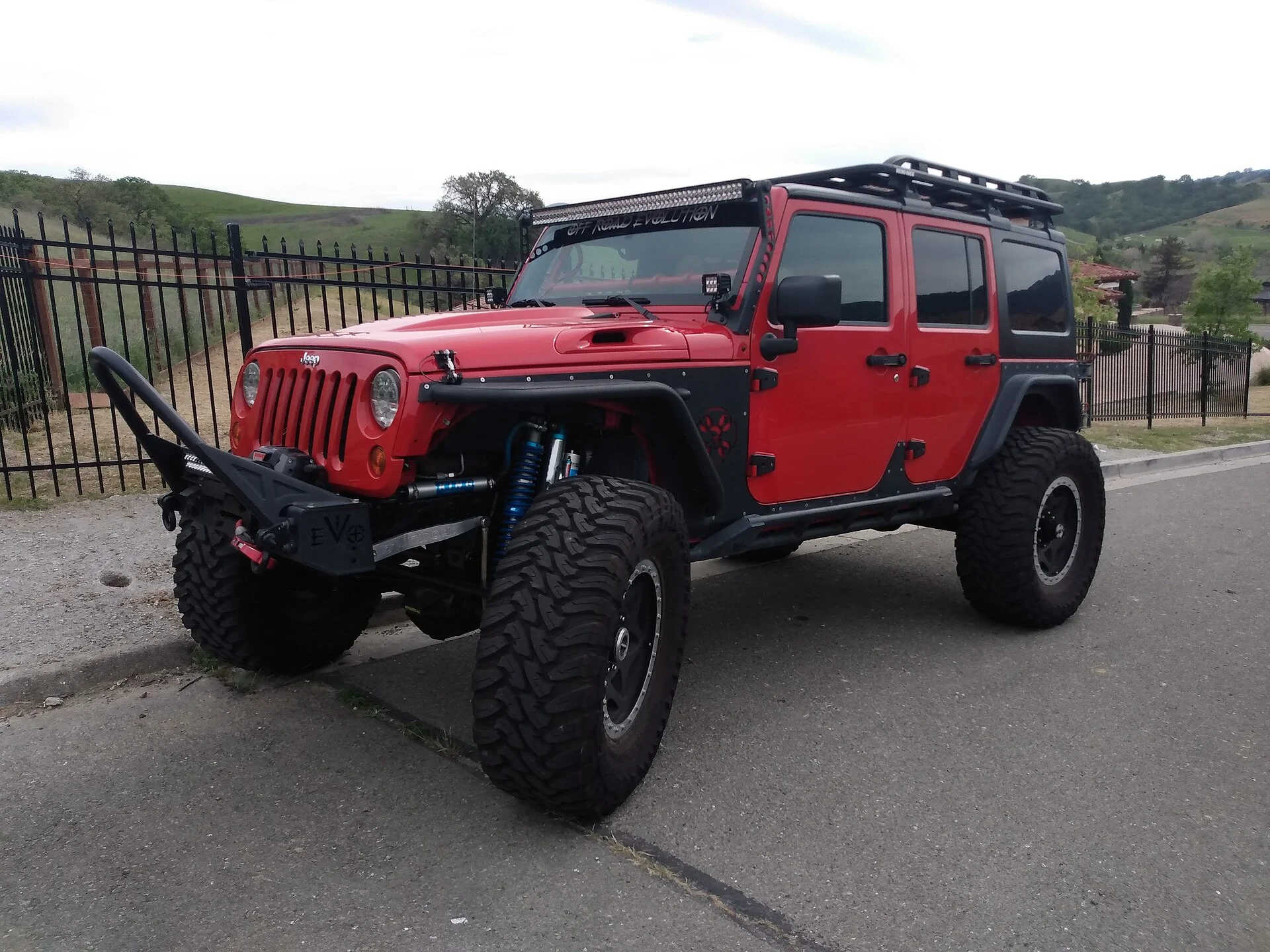
The governing rule follows directly: water depth should never exceed the lowest air intake point on the vehicle, which is why intake height, not tire size, defines the true fording limit. Bigger tires lift the body and improve clearance, but if the intake stays at its stock height, the fording depth does not improve, the Jeep just sits taller over the same drowning point.
The fording number is really an intake-height number in disguise. The Wrangler fords 30 inches because its air intake sits at roughly 30 inches. Move the intake up with a snorkel and the limit moves up; leave it stock and no amount of lift or tire changes it.
This is the mental model to carry into any water crossing: find the lowest point where the engine draws air, and treat that height as the absolute maximum, with margin. On a stock JL that point is around 30 inches, which is where the rating comes from. On a modified Jeep it is wherever the intake actually sits, which is not always where the owner assumes.
Read the Crossing by Component Height
A Wrangler in the water is a stack of components at different heights, each with its own risk if submerged. Knowing roughly where they sit turns a guess into a judgment.
| Component | Approximate height | Risk if submerged |
|---|---|---|
| Factory air intake | ~30 in (stock JL) | Hydrolock, severe engine damage |
| ECU and relays | ~wiper height | Electrical damage, stalling |
| Transmission and transfer case breathers | ~25 in | Water in the fluids |
| Axle differential breathers | Low (front and rear axles) | Water in the gear oil |
The intake governs the headline limit, but the breathers and electronics are why a crossing near the limit is risky even below the intake. The transmission and transfer case breather tubes sit at about 25 inches high, so at a slow 30-inch crossing they stay above the waterline, but only just, and only if the water is genuinely at 30 inches and not surging higher.
The takeaway from the stack is that the intake sets the ceiling, but the components below it set the margin. A crossing that keeps water well below the 25-inch breathers and nowhere near the wiper-height electronics is comfortable; one that pushes toward the 30-inch intake is leaving little room for the surge, the soft spot, or the unexpected dip that river bottoms specialize in.
The Breathers You Forget Until It's Too Late
Breathers are the quiet vulnerability in a water crossing, because they sit lower than the intake and lead straight into fluids you cannot easily inspect from the driver's seat. The Wrangler has axle differential breathers at both the front and rear axle, and if a breather is submerged, water can be drawn in and contaminate the gear oil. The axles sit low, so their breathers are among the first things underwater.
The mechanism is suction. As a hot axle or gearbox cools on entering cold water, the air inside contracts and draws through the breather, and if that breather is underwater, it draws water instead of air. The result is milky, contaminated gear oil or transmission fluid that degrades the lubrication and, left unaddressed, damages the components.
The fix that serious water crossers use is to relocate the breathing points upward. Extended breather hoses can be routed up to the airbox to raise the safe water threshold for the axles, transmission, and transfer case. A differential breather extension kit routes those low breathers high into the engine bay, so a deep crossing no longer risks sucking water into the diffs and gearboxes.
Even with extended breathers, the intake remains the ceiling, so breather extensions raise the margin, not the maximum. They protect the fluids on a crossing that stays within the intake limit, which matters because a crossing at 30 inches submerges the stock axle breathers long before it threatens the intake. Extending them is what lets a Wrangler use its rated depth without quietly ruining its gear oil.
The Electronics at Wiper Height
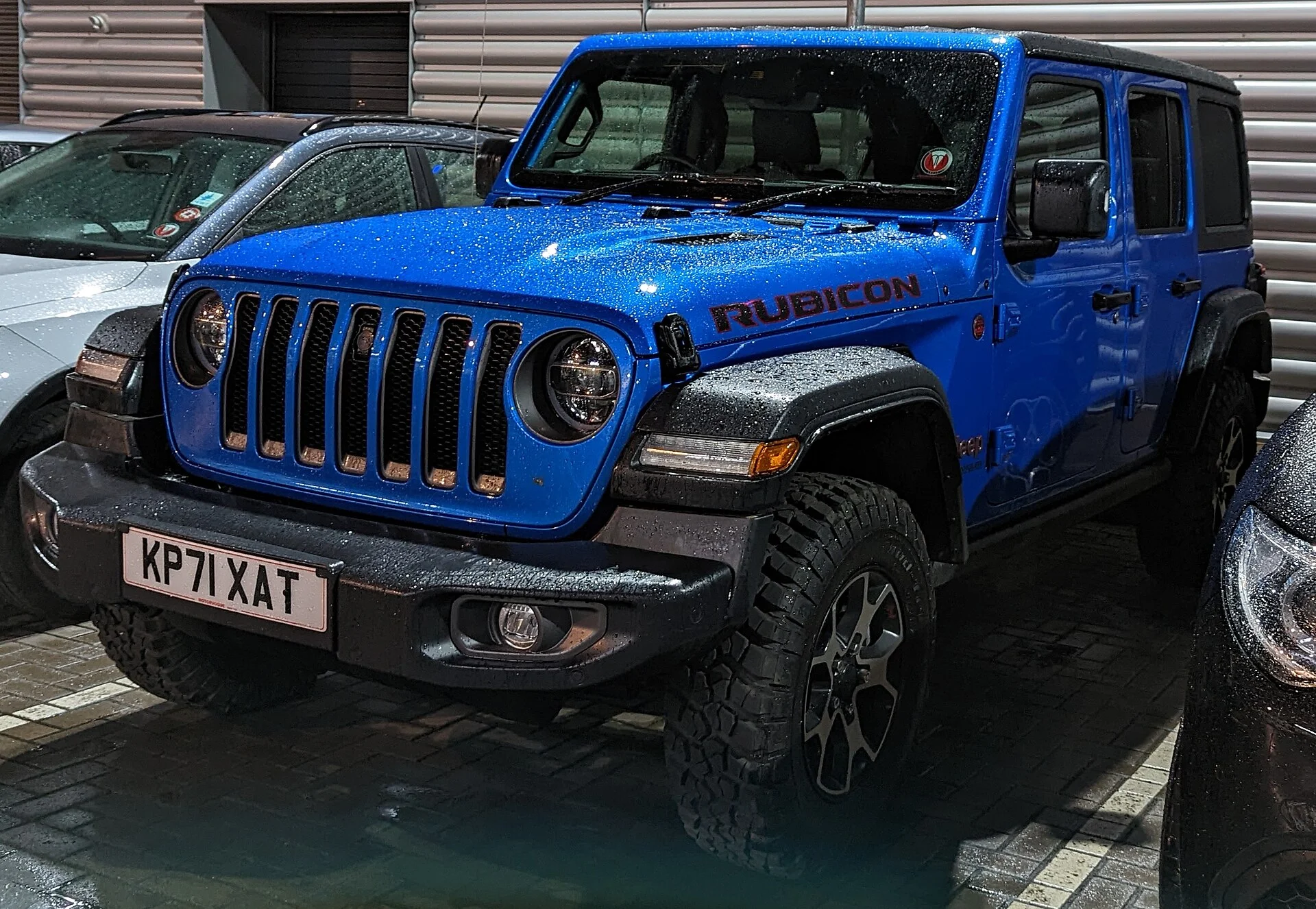
Above the breathers but critical in their own way are the electronics, and they draw a hard line on how deep is too deep. Important electronics such as the ECU and relays sit roughly at wiper height in the engine bay, and once water reaches that level the engine is effectively submerged and electrical damage is likely. That is a different failure from hydrolock, but no less trip-ending.
Wiper height is a useful landmark because it is easy to see from outside the vehicle. If a crossing threatens to bring water up toward the base of the windshield, it is threatening the ECU and relays, and modern engines do not run with drowned electronics. This is well above the 30-inch intake on the exterior, but standing water and surge can reach it on a deep, badly-judged crossing.
The lesson is that a Wrangler has two distinct drowning points: the intake at roughly 30 inches, which causes catastrophic mechanical damage, and the wiper-height electronics, which cause electrical failure. Both are reasons the rated depth is a ceiling to respect rather than a target to chase, since a surge that reaches either one ends the crossing badly.
Sealing and protecting electronics is part of why the 4xe plug-in hybrid can ford at all. The Wrangler 4xe carries a published water fording depth of 31.5 inches, with sealed high-voltage battery and electrical components, a reminder that Jeep engineers the fording rating around protecting exactly these vulnerable systems, and that the number reflects deliberate sealing, not luck.
Why the 5 mph Bow Wave Matters
The speed condition on the fording rating is not arbitrary, and understanding it changes how you drive a crossing. Moving at a slow, steady pace pushes a bow wave ahead of the Jeep that lowers the water level around the engine bay, while stopping or going too fast lets water surge back over the hood and into the intake. The bow wave is a moving trough that keeps the water around the intake lower than the river's actual level.
That is why the rating specifies 5 mph. At that steady pace the Jeep maintains a bow wave with a depression behind it, right where the engine bay sits, effectively buying a little depth. Stop in the middle and the wave collapses, letting the water level rise back to the true river depth around the intake and breathers. Go too fast and the wave itself splashes up over the hood toward the intake.
Because the rating is measured at 5 mph, exceeding that speed can raise the effective water level at the intake above the rated 30 inches even in shallower water. This is the counterintuitive part: charging a crossing does not get you through faster and safer, it raises the water at the intake and increases the risk. The slow, steady, unbroken pace is the technique the rating assumes.
Practically, this means committing to one smooth, slow pass without stopping. Pick the line, enter at a steady 5 mph, keep the bow wave in front of you, and do not stop until you are out. A crossing that would be safe at a steady slow pace becomes dangerous the moment the Jeep stalls in the current or the driver panics and speeds up.
Trim Differences: Sport, Rubicon, and 4xe
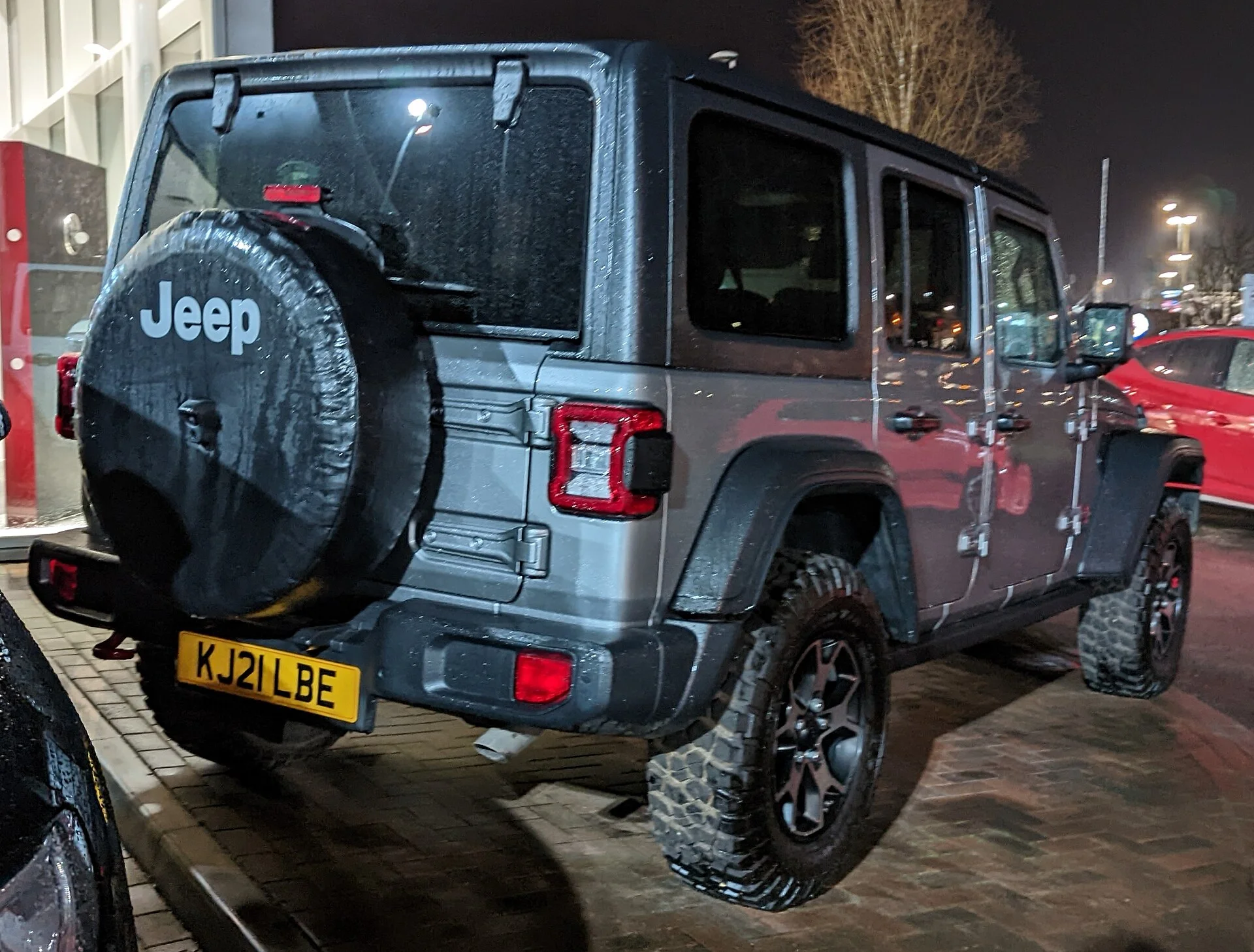
Not every Wrangler fords to the same depth, because the trims sit at different heights and seal their systems differently. The Rubicon, with its taller factory suspension and larger tires, is commonly cited as capable of roughly 34 inches of water depth versus 30 inches for Sport and base models. The extra lift and tire height raise the body and, importantly, the intake along with it.
This is the exception that proves the intake rule. The Rubicon fords deeper not because it has more clearance in the abstract, but because its taller stance raises the air intake above the stock 30-inch point. The fording gain tracks the intake height, which is exactly what the governing rule predicts. A Sport lifted with only bigger tires but a stock-height intake does not gain the same way.
The 4xe adds a different angle. The Wrangler 4xe carries a published water fording depth of 31.5 inches, with sealed high-voltage battery and electrical components. Its slightly deeper rating reflects the engineering effort to seal the electrical systems a hybrid cannot afford to drown, and shows that fording depth is as much about sealing vulnerable components as about raw height.
For an overlander choosing or reading a Wrangler, the trim differences matter mostly as a reminder to verify the actual intake height rather than trust a badge. The 762 mm, 30-inch figure applies to both the 2-door and 4-door JLU body styles of the JL Wrangler, so body length does not change it, but suspension, tires, and modifications do, by moving the intake.
Snorkels and the Honest Real-World Depth
The way to genuinely increase fording depth follows directly from the intake rule: raise the intake. A snorkel raises the air intake, often up to the Jeep's roofline, dramatically increasing the theoretical maximum fording depth to the snorkel inlet height. This is the single modification that actually moves the fording ceiling, because it moves the one thing that sets it.
A snorkel does not make deep crossings casual, though, because the breathers and electronics still apply. A snorkeled Wrangler with stock axle breathers can send its intake to the roofline and still contaminate its gear oil at 30 inches, which is why serious water builds pair a snorkel with extended breathers. The snorkel raises the catastrophic limit; the breather extensions protect everything below it.
Even fully equipped, the honest real-world number is more conservative than the spec. A conservative real-world fording estimate is often given as around 20 inches, below the 30-inch maximum, because vehicle weight and soft riverbeds can let the Jeep settle deeper than expected. A river bottom is not a level parking lot; a soft spot can drop a wheel and raise the effective depth in an instant.
That conservative 20-inch figure is not timidity, it is margin for the variables a spec sheet cannot include. Current, a soft or uneven bottom, an unseen hole, and the Jeep's own weight settling into silt all argue for treating the rated 30 inches as a ceiling and planning crossings well below it. The overlanders who cross water for years are the ones who leave that margin.
Before and After the Crossing
Reading the spec is half the job; the crossing itself has a routine that keeps the rated capability from turning into an expensive lesson. Before crossing, drivers should confirm the water is at or below 30 inches, or 762 mm, and walk or probe the crossing to check depth and bottom firmness. Walking a crossing on foot, where safe, is the only way to know the depth and find the soft spots and holes.
The pre-crossing check is where the component heights become practical. If probing shows water near the 25-inch breathers or approaching the 30-inch intake, that is a crossing to reconsider or to attempt only with extended breathers and a snorkel. Confirming the bottom is firm matters as much as the depth, because a soft bottom lets the Jeep settle deeper than the standing water suggests.
The crossing itself is the steady 5 mph bow-wave pass covered earlier: one smooth line, no stopping, no charging. Keep the wave in front, hold the pace, and drive out the far side without pausing in the current. The discipline of the technique is what makes the rated depth usable.
Afterward, inspect for the damage a crossing can hide. After a deep crossing, the axle, transmission, and transfer case fluids should be inspected for a milky appearance that indicates water intrusion. Milky fluid means a breather drew water and the fluid needs changing before it damages the component. Catching it early, right after the crossing, is what turns a soaked breather into a fluid change rather than a rebuild.
The Verdict: Read the Intake, Not the Brochure
The Jeep Wrangler's 30-inch, 762 mm fording depth is real and genuinely capable, but it is best understood as an intake-height number in disguise. The rating exists because the factory air intake sits at roughly 30 inches, and the intake, not ground clearance or tire size, is the hard ceiling, because water reaching it can hydrolock and destroy the engine.
Below the intake sit the components that set the margin: the transmission and transfer case breathers around 25 inches, the low axle breathers that foul gear oil, and the wiper-height electronics that drown the engine electrically. This is why a crossing near the rated depth is risky even below the intake, and why extended breathers and sealed electronics matter for using the depth safely.
The rating also assumes technique. It holds at a steady 5 mph that pushes a protective bow wave ahead of the Jeep, and exceeding that speed or stopping lets water surge back toward the intake, raising the effective depth even in shallower water. One smooth, slow, unbroken pass is the method the number was measured with.
For overlanding, treat the 30 inches as a ceiling and plan below it, because a conservative real-world depth is often around 20 inches once soft bottoms and vehicle weight are accounted for. Raise the intake with a snorkel and protect the breathers to go deeper, probe every crossing first, and check the fluids after. Read the intake, respect the margin, and the Wrangler's fording capability becomes a tool you can trust instead of a number that betrays you.