
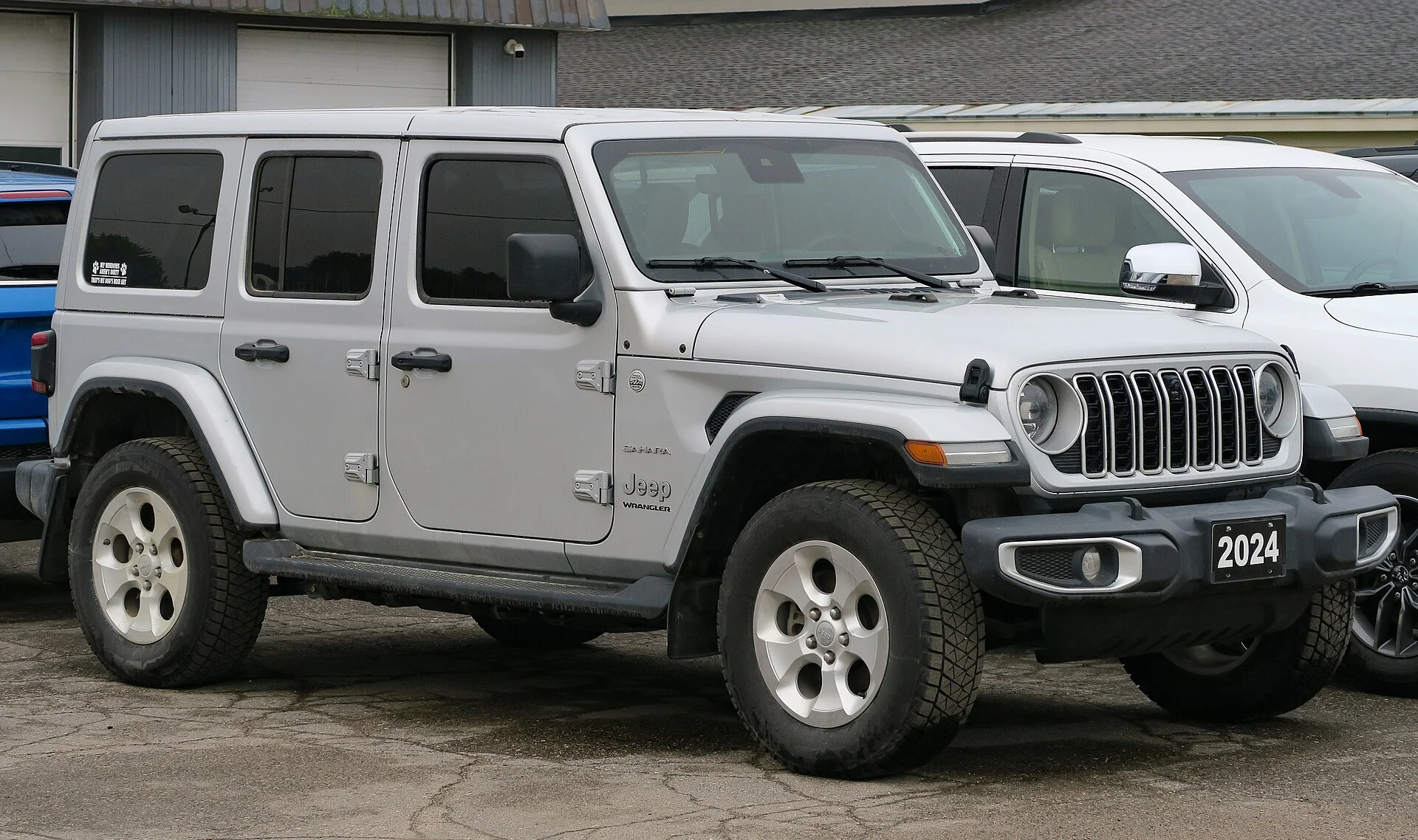
The Short Answer: Yes, But the Floor Fights You
Yes, you can sleep inside a 4-door Jeep Wrangler — the Unlimited body, with its back seat and rear cargo area, is the one people car-camp in. But the Wrangler does something most SUVs don't: its rear seats fold forward without lying truly flat, so instead of one long bed you get a floor that is both short and stepped. The folded seatbacks sit several inches higher than the cargo floor behind them, and the whole usable run from those seatbacks to the tailgate is only about four to five feet. That is a foot or more short of a six-foot adult.
So the honest version of the answer is: one adult sleeps in a Wrangler fine once you deal with the step and sleep diagonally; a tall adult borrows length by folding a front seat forward; and two adults fit only shoulder-to-shoulder with a compromise. None of that is a dealbreaker — it just means a Wrangler rewards a setup built around its quirks rather than a pad thrown in the back.
The flip side is that the Wrangler gives you something a sleek crossover can't: tall, boxy, upright walls. You get genuinely good sitting headroom, room to change and cook from a seated position, and width near the floor that a sloping roofline steals from other vehicles. The trade you make for all that glass and that removable top is in insulation, security, and how the cabin sweats overnight — and those are the things this guide walks through next, with the numbers you should verify against your own truck before you spend a dollar.
The Stepped, Short Floor: Why a Wrangler Isn't a Flat Bed
Start with the fact that decides everything else: the Wrangler's rear seatbacks fold forward, but they don't drop level with the cargo floor. They tip down onto the seat bottoms and end up sitting several inches proud of the load floor behind them. You are left with two levels — a lower cargo deck near the tailgate and a higher shelf where the seats used to be — with a step in between. In a Grand Cherokee or a long wagon, the folded seats give you one continuous platform; in a Wrangler, they don't.
On top of that, the floor is short. With the rear seats folded, the usable length from the seatbacks to the closed tailgate in a 4-door Unlimited runs only on the order of four to five feet. The brochure cargo volume sounds generous because it counts all that boxy vertical space up to the roof, but vertical volume doesn't help you lie down. The number that matters is flat-floor length, and that number is well short of an adult lying straight from tailgate to front seats.
This is the single most common surprise for first-time Wrangler campers: they expect SUV-style flatness and get a short, two-tier surface instead. Once you accept it, the solutions are straightforward — sleep on an angle, borrow length from the front, or build the lower deck up to meet the step. Get a tape measure and record two figures from your own truck right now: the flat length from the folded seatbacks to the tailgate, and the height of the step. Those two numbers drive every choice that follows.
Are You Actually a Wrangler Sleeper? A Quick Honesty Check
Before you buy a pad or build a platform, run an honest check on whether sleeping inside even makes sense for you. The Wrangler is a great basecamp and a tight bedroom, and being clear-eyed about that saves money.
Your height is the first filter. If you are under about five foot eight, the diagonal trick alone will likely fit you on the floor. Between five-eight and six feet, you will probably need to fold a front seat forward to get full length. Over six feet, sleeping straight inside isn't realistic, and a rooftop or ground tent is the honest answer with the cabin used for gear.
How many people is the second filter. Solo, a Wrangler is a comfortable one-person cave. As a couple, you are accepting a real squeeze: shoulder-to-shoulder, head-to-toe, or splitting between the rear floor and a folded front seat. The third filter is how often and how cold. For occasional fair-weather nights, a simple pad-and-bag setup is plenty; for frequent or cold-weather use, the insulation and condensation issues below are worth solving properly. If you answered tall, two people, and frequent cold nights, plan for a tent and treat the Wrangler as the support vehicle — that is not failure, it is matching the tool to the job.
Building a Bed: Bridging the Step So You Get One Surface
The whole game inside a Wrangler is turning the two-level floor into one continuous surface. There are three ways campers do it, and they trade cost against effort.
The cheapest is a thick pad that simply spans the step. A generous self-inflating foam pad or a stack of foam laid over both levels compresses unevenly but smooths the transition enough that you stop feeling the ridge under your hip. It is the no-build option and it works for occasional nights. The middle option is trimmed foam mattress cut to fill the lower deck up to the height of the folded seatbacks, so the foam itself erases the step and you sleep on a flat top. Many owners cut high-density foam to the exact floor shape, wheel wells included, for a custom fit.
The most durable is a low platform: a simple plywood deck built on legs or crates to the height of the folded seatbacks, leveling the whole floor and creating storage underneath. It is the most work and adds weight and cost, but it gives you a flat, rigid bed plus a place to slide bins out of the weather. Whichever you pick, build to the step height you measured, not to a number from the internet — seat types and trims vary enough that a guess will leave you with a lump.
Sleeping Diagonally and Borrowing the Front Seats for Length
Because the floor is short, the two length tricks are what make an adult fit, and they are worth practising in the driveway before a trip.
The diagonal is the simplest. Lying corner to corner — head at one rear quarter, feet at the opposite front corner of the cargo area — buys you several extra inches over lying straight along the centerline. For a sub-six-foot solo sleeper, the diagonal is often the entire solution: no front-seat folding, no platform, just an angle and a pad that bridges the step. The cost is that the diagonal eats the whole floor, so it is a one-person move.
When the diagonal isn't enough, borrow length from the front. Fold the front passenger seat fully forward (and recline or remove the headrest) so your sleeping surface can run from the rear cargo area up into and over the front passenger footwell. This is how taller campers get genuinely full-length flat in a Wrangler. The limitation is obvious: you can only do it on the passenger side, so it is a solo or one-of-two solution, and you will be sleeping with your feet up near the dash. Plan your pad layout around whichever trick you use, because the diagonal and the front-seat-fold want different pad shapes.
Two People in a Wrangler: What Actually Fits
Two adults inside a 4-door Wrangler is possible, but be honest about what 'fits' means: it is a snug, shoulder-to-shoulder arrangement, not the spread-out comfort of a longer SUV. The width across the cargo floor is roughly enough for two narrow pads pushed together, but the wheel wells pinch the truly flat zone, so you sleep close and you sleep aware of each other.
The two layouts couples land on are: both diagonal and head-to-toe, weaving your lengths across the floor so each person gets the diagonal's extra inches; or splitting levels, with one person on the folded-flat front passenger seat and the other on the rear floor. The split-level option is more comfortable per person but separates you, which some couples like and some don't.
If you camp as a pair regularly, this is the strongest argument for a rooftop tent: it converts the Wrangler's biggest weakness (a short interior floor) into a non-issue by moving the bed onto the roof, while the cabin becomes your gear locker and changing room. Inside-only works for two for a night or a weekend; for anything longer, most couples want the extra room.
Why a Sealed Wrangler Rains on You by Morning
This catches every new car camper, and the Wrangler's big glass area makes it vivid. Seal yourself into any vehicle overnight and the cabin air reaches its dew point: a sleeping adult breathes out and perspires well over a pint of water across a night, two people more than a quart between them, and that moisture has nowhere to go. It condenses on the cold windows and metal and drips back down onto your bag by morning. It isn't a leak; it is physics.
The fix is airflow, and it is nearly free. Crack two windows on opposite sides about an inch each so the moist air can cross-ventilate out before it reaches dew point. A small USB fan moving air across the cabin does even more. A soft-top Wrangler actually has an edge here: the zip-open rear and quarter windows make it easy to vent without leaving a wide-open gap. Fighting condensation is the difference between waking up dry and waking up in a damp bag, and it costs nothing but a couple of inches of open window.
The trade with venting is temperature and security, which is why getting the gap small and on the lee side of the wind matters. You want enough airflow to carry moisture out, not a draft that steals all your warmth. In cold weather, a narrower crack plus a warmer sleep system beats a wide-open window, and a moisture-absorbing approach plus ventilation together keep the glass clear.
The Removable Top: Security, Noise, and Weather
The Wrangler's signature feature — a removable roof — is also its biggest sleeping wrinkle, and it splits sharply by top type. A hard-shell hardtop seals well: it is quieter in wind, warmer at night, more weatherproof in rain, and far more secure against someone reaching in. If you sleep in your Wrangler often, a hardtop is the meaningfully better bedroom.
A soft top is lighter, airier, and easier to vent, but it is noisier when the wind picks up, leaks heat faster, and — the real concern — can be cut into. Anyone serious can open a fabric top quickly, so a soft-top sleeping rig should keep valuables minimal and out of sight, and you should think hard about where you park. The removable freedom panels and rear window add to this: even on a hardtop, those are removable points that a fixed-roof SUV simply doesn't have.
None of this means a soft top can't be camped in — plenty of people do — it means you choose your spot more carefully and travel lighter on valuables. The practical move is to keep the cabin's visible contents boring, lock what you can, and treat a soft top as a fair-weather, low-crime-area bedroom rather than a vault.
Heat, Cold, and Window Covers Without Running the Engine
All that boxy glass and thin, uninsulated metal means a Wrangler swings temperature hard: it bakes in afternoon sun and gives heat back fast after dark. Managing that without ever running the engine is the core climate skill.
For heat, block the sun. Reflective window covers cut down the greenhouse effect dramatically, and parking in shade with cross-ventilation does the rest; the Wrangler's easy-open soft-top panels help dump hot air on a summer evening. For cold, the answer is insulation and bedding, never the heater. Staying warm on cold nights comes from a sleeping system rated below the expected low, an insulating pad under you (cold comes up through that metal floor fast), and covering the glass to slow heat loss. A 12V heated blanket run from a battery is a comfortable, low-draw boost.
The rule that never bends: the engine stays off all night. A parked, idling engine can let carbon monoxide reach the cabin, and CO is invisible and odorless. Warmth comes from your bag, your pad, and covered windows — not from the heater. If you ever feel you need the engine to survive the cold, the real fix is a warmer sleep system, not a running motor.
Power, Leveling, and the Small Stuff That Wrecks a Night
Two practical details decide whether a Wrangler night is good or miserable, and both are easy to get wrong.
Power first. Most Wrangler trims give you 12V accessory sockets and USB ports but not a true 115V household outlet as standard equipment, so don't assume you can plug a normal charger in overnight. The clean answer is a portable power station charged before you leave: it runs lights, fans, a heated blanket, and device charging without touching the starter battery, which you never want to drain while parked. Confirm whether your specific trim has the optional inverter outlet before you rely on it.
Leveling second, and it matters more in a Wrangler than in most vehicles. These are tall rigs, often lifted on aggressive tires, so they sit at a noticeable angle on uneven ground. Sleeping with your head downhill guarantees a bad night and a headache. Parking on genuinely level ground, or carrying a couple of leveling blocks to set under the downhill tires, fixes it. Check level with a phone app or just lie down and feel for the slope before you commit to a spot.
Keeping Gear Off the Bed in a Short Cabin
The Wrangler's short floor creates a problem the brochure never mentions: the same space you sleep in is the only space you have for gear, so where your bins, cooler, and clothes go at night decides whether you actually fit. In a long wagon you can shove everything to one end; in a Wrangler, there is no spare end to shove it to.
The cleanest fix is vertical. The boxy upright walls that give the Wrangler its headroom also give you height to stack, so soft duffels and bins ride up the sides and on the folded seat shelf rather than spreading across the floor you need for your body. A low platform pays off doubly here: building the lower deck up to the step height not only flattens the bed, it creates a storage drawer underneath where bins slide out of the way and out of the weather. Even without a build, hanging organizers off the roll bar and the seatbacks get small items off the sleeping surface.
Two habits keep a Wrangler livable across more than one night. First, pack in soft bags, not rigid suitcases — they compress, stack, and mold to the wheel wells where a hard case wastes space. Second, run a strict bedtime routine: everything that isn't bedding gets moved to its night home before you lay the pad out, so you are never repacking in the dark. With gear going up the walls and under a platform instead of onto the floor, the short cabin suddenly has room for both you and your kit.
Five Wrangler Sleeping Mistakes That Ruin the First Night
Most bad first nights in a Wrangler come from the same handful of errors, and all of them are avoidable once you know the vehicle's quirks.
One: expecting a flat bed. The folded seats leave a step; if you don't bridge it with foam or a platform, you sleep on a ridge. Two: ignoring length. Throwing a pad in straight and discovering at midnight that you can't stretch out — plan the diagonal or the front-seat fold in advance. Three: sealing the cabin tight. No ventilation means a wet bag by morning; crack two windows.
Four: trusting the soft top with valuables. A fabric top is not a lock; keep the cabin boring and gear out of sight. Five: running the engine for heat. Never — solve cold with a better sleep system and covered glass, not a running motor. Get those five right and a Wrangler goes from a frustrating box to a genuinely fun little basecamp you can throw a bag into and drive anywhere.
The Bottom Line: A Wrangler Sleeps One Well, Two at a Squeeze
Can you sleep in a 4-door Jeep Wrangler? Yes — and once you respect its quirks, it is a surprisingly capable little bedroom that can take you places a lower vehicle can't. The catch is always the same: the rear seats don't fold truly flat, so you are working with a short, stepped floor that asks you to sleep diagonally, borrow length from a front seat, or build the lower deck up to one level. Solve that and a sub-six-foot solo camper sleeps well; a taller camper manages with the front-seat trick; two adults fit snugly for a night or a weekend.
The Wrangler's real gifts are its tall, boxy headroom and the freedom to remove the top — gifts that come paired with weaker insulation, a security wrinkle, and a cabin that sweats if you don't vent it. Handle the step, the airflow, the temperature, and the power, and none of those are dealbreakers. Go in expecting a long flat SUV bed and you'll be frustrated; go in building around the step and the diagonal and you'll have a rig that sleeps you fine and gets you to the trailhead. Measure your own floor, pick your bridging method, and the Wrangler does the rest.