
Before you replace anything, the outlet probably isn't broken
You plug in a phone charger, an air pump, or a dash cam, and nothing happens. The 12V outlet — the round socket people still call the cigarette lighter — is dead. Before you assume the car has an expensive electrical fault, know this: in the overwhelming majority of cases the socket itself is fine, and the real cause is one of a small handful of cheap, fixable things you can check in your own driveway.
The single most common cause, by a wide margin, is a blown fuse. These sockets sit on a low-amperage circuit that is easy to overload, and the fuse is designed to be the weak link that fails first to protect the wiring. The second most common cause isn't a fault at all: a great many outlets are wired to only have power when the ignition is in the accessory or on position, so a 'dead' socket is simply an off car doing what it was built to do.
After those two, the causes get physical and still simple: a coin or crumbs fallen into the socket, corrosion on the contacts, a center pin that has been pushed in and no longer springs out to touch the plug, or a fault in the accessory plug rather than the car. None of those needs a mechanic. They need a fuse, a flashlight, and five honest minutes.
One note up front: I haven't pulled the dash on your specific car to write this. What follows is how a standard automotive 12V accessory socket, its fuse, and its wiring actually work — so you can read your own symptom and fix the right thing instead of paying a shop to replace a fifteen-cent fuse. We'll go cause by cause, easiest first, and finish with a quick lookup table that points your exact symptom at its fix.
How a 12V outlet actually works (and why that matters)
To diagnose a dead socket you only need a simple mental picture of the circuit. Power leaves the battery, runs through a fuse in the fuse box, and arrives at the socket. Inside the round socket, the small spring-loaded pin at the very bottom is the positive (+) contact; the metal side wall of the socket is the ground (−). When you push a plug in, its tip presses the center pin and its side springs touch the wall, completing the circuit. That's the whole design — it has been essentially unchanged since it was built to heat a cigarette lighter element, which is why the socket is wider and deeper than the plugs we use today.
That heritage matters for two reasons. First, because the socket is oversized for a modern charger plug, it's easy for the plug to sit loose or for debris to fall in alongside it — both real causes we'll get to. Second, an actual cigarette-lighter element (the push-in knob that heats up) is a different part from the socket used as a power outlet. If your lighter knob won't glow but a charger still works, that's the heating element, not the circuit; if nothing draws power at all, it's the circuit.
The other half of the picture is when the socket is alive. Many cars wire the accessory socket to switched power, meaning it only has voltage when the key is in accessory (ACC) or run. Others wire it to constant, always-on power so it works with the car off — handy for a parked dash cam, risky for draining the battery. Some cars even have two sockets wired differently. Knowing which kind you have decides whether a 'dead' outlet is a fault or just an off ignition, so it's the first thing to establish.
The number-one cause: a blown fuse
If your outlet died suddenly — it worked yesterday and is dead today — bet on the fuse first. The accessory socket sits on a dedicated circuit fused somewhere around 10 to 20 amps (commonly 15A or 20A; your owner's manual lists the exact one). That fuse is engineered to blow before the wiring overheats, which means it is the sacrificial part that fails when the circuit is pushed too hard.
What pushes it too hard? High-draw accessories. A single socket realistically delivers about 120 to 150 watts — roughly 10 to 15 amps at 12 volts — and plenty of popular devices exceed that. The usual culprits all draw enough to pop the fuse, especially at the surge when they start:
- Portable air compressors and tire inflators
- Power inverters running laptops or small appliances
- Plug-in coolers
- Cheap high-wattage adapters
The classic story is 'I plugged in the tire inflator and now the outlet is dead.' That's not a coincidence; that's the fuse doing its job.
Finding and checking the fuse is straightforward. Your owner's manual (or a diagram printed on the fuse-box lid) maps each fuse; look for one labeled for the cigarette lighter, power outlet, accessory, or ACC. Don't trust your eyes alone — a fuse can be blown with no obvious break. Pull it with the little fuse puller in the box and hold it to the light, or better, probe it in place with a 12V circuit tester to confirm power on both legs. Replace a blown one with the exact same amperage rating from a blade-fuse assortment kit — never a higher one, which we'll explain later is a genuine fire risk.
Ignition-switched outlets: it's 'dead' because the car is off
Before you go fuse-hunting, rule out the simplest explanation of all: the socket has power only with the key on. As noted, most cars wire the accessory outlet to switched power, so with the engine off and the key out it is genuinely, intentionally dead. People test a new charger in a parked car, see nothing, and conclude the socket is broken — when all they had to do was turn the key.
The test takes ten seconds. Plug in a device you know works and cycle the ignition through its positions: off, accessory (ACC), and run/on (without starting). If the outlet comes alive in ACC or run but is dead with the key out, congratulations — nothing is broken. That's a switched outlet behaving exactly as designed, and there's nothing to fix. It's worth knowing which of your sockets are switched and which (if any) are constant, because it decides where you can leave a dash cam or trickle a charger overnight without the key in.
This also explains a confusing intermittent complaint: an outlet that 'works sometimes.' If a charger only powers up while you're driving and dies at every stop, that's a switched socket plus a car that cuts accessory power when you crank the starter or shut off — normal behavior, not a loose wire. Establishing switched-versus-constant first saves you from chasing a fault that was never there, which is why it sits right behind the fuse check on the priority list.
Debris, coins, and corrosion inside the socket
Because the socket is a wide, open cup pointed slightly upward, it is a magnet for anything small near the console:
- Coins
- Crumbs
- Paperclips
- Bits of foil from gum wrappers
This is more than untidy. A coin that falls in and bridges the center pin to the side wall creates a dead short — positive straight to ground — which instantly blows the fuse. So 'my outlet is dead' and 'there's a quarter wedged in there' are very often the same problem.
With the ignition off, shine a light into the socket and look at the bottom. Fish out any debris with non-metallic tweezers or a wooden skewer; do not poke around with anything metal while there's any chance the circuit is live, and if you've already found a coin, replace the fuse it almost certainly blew. Clear the junk, fit a good fuse, and a surprising number of 'dead' outlets come straight back to life.
The quieter version of this is corrosion. Moisture, spilled drinks, or just years of humidity leave the contacts dull, green, or filmed over, and a corroded contact won't pass current reliably — you get a socket that works intermittently, or only if you wiggle the plug. With the power off, clean the center pin and the side wall with a little contact cleaner on a cotton swab, or gently scuff bright metal back with fine sandpaper rolled on a stick. Clean contact is the difference between a connection and a maybe, and it's free.
The stuck center pin and a plug that won't seat
If the fuse is good, the key is on, and the socket is clean but the plug still gets no power, look hard at the center pin at the bottom. It's spring-loaded for a reason: it has to push up and press firmly against the tip of whatever you plug in. Over years of jamming plugs in, that pin can get mashed down, bent off-center, or simply weak, so it no longer makes contact. The circuit is perfect right up to that last quarter-inch, and then the connection never closes.
You can usually see it: compare the center pin to a healthy socket and it'll sit lower or look cocked to one side. With the ignition off and the fuse pulled, you can carefully bend a slightly-flattened pin back up with a small non-metallic tool so it springs proud again. Be gentle — it's a light spring, and snapping it means replacing the socket. If the pin is corroded as well, clean it while you're in there.
The other seating problem is the plug, not the pin. Because the socket is sized for an old lighter, a slim modern charger can sit loose, rattle, and lose contact over bumps. Many quality plugs have their own little spring-loaded side wings or a tightening collar to grip the wall; a cheap one often doesn't. If a charger only works when you hold it pressed in or twisted to one side, the fault is a loose fit, not a dead circuit — and the fix is a better-built plug, not surgery on the car.
When the socket itself is worn out, scorched, or the pin is broken, a replacement 12V socket is an inexpensive part, though routing it to fused power is a job worth doing carefully.
When the plug or the device is the problem, not the car
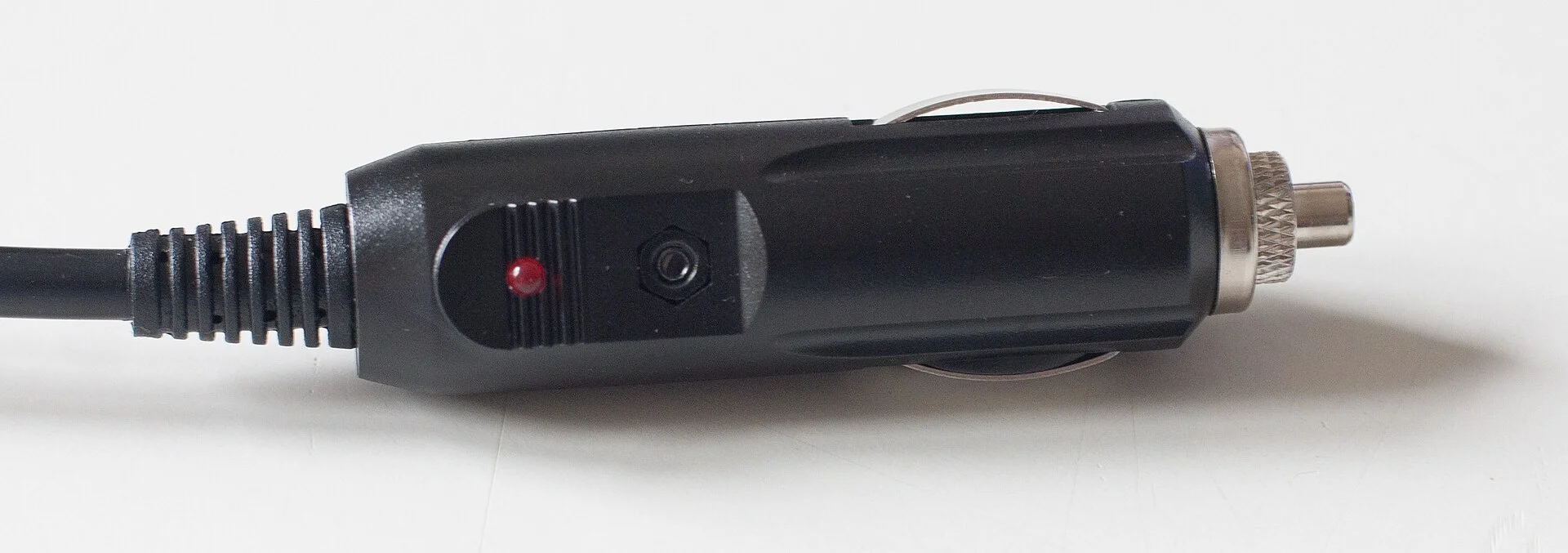
It's easy to blame the car, but a dead outlet is frequently a dead accessory. Most 12V plugs — chargers, inflators, adapters — have their own small fuse hidden inside the tip, under the screw-off cap or the metal nub at the very end. That internal fuse blows for the same overload reasons the car's does, and when it goes, the device is dead even though your outlet is perfectly fine. Unscrew the tip, check the little glass or blade fuse inside, and swap it for one of the same rating.
This is exactly why your first diagnostic move should be testing the socket with a different device you know works, and testing the suspect device in a different socket you know works. Two swaps tell you instantly whether the fault is in the car or in the gadget. Skipping that step is how people end up replacing a perfectly good socket to chase a problem that lived in a two-dollar charger the whole time.
Built-in USB ports are their own category. The USB-A or USB-C ports molded into a modern dash are not the same circuit as the 12V socket — they can fail at the port, on their own fuse, or from a data/power negotiation fault, independent of whether the cigarette-lighter socket works. If the 12V socket is alive but a built-in USB port is dead, treat them as separate problems. For charging reliability in general, a good 12V-to-USB charger plugged into a working socket is often more dependable than a flaky built-in port, and our guide to car USB charging standards explains why a charger that fits can still under-deliver power.
How to diagnose a dead outlet in five minutes
Put the causes in order and you have a fast, no-guessing routine. Work it top to bottom and stop when the outlet comes back — most people are done by step three.
- Confirm the ignition. Turn the key to accessory or run and retest. A switched outlet is dead with the key out by design; this rules out a non-problem in seconds.
- Swap the device. Try a charger you know works in the socket, and try the suspect device in a known-good socket. This splits the problem cleanly into 'car' or 'gadget.'
- Check the fuse. Find the outlet's fuse on the manual's map, pull it, and inspect it — or probe it in place with a 12V test light or multimeter for power on both legs. Replace a blown one with the same amperage.
- Inspect the socket. Light it up. Remove any coin or debris, look for corrosion on the pin and wall, and clean the contacts with the power off.
- Check the center pin. It should stand proud and spring back when pressed. Gently lift a flattened pin (fuse pulled), or note a loose-fitting plug that only works when held.
- Check the plug's own fuse. Unscrew the device's tip and inspect the internal fuse before condemning the car.
A cheap 12V test light or multimeter turns most of this from guessing into knowing: it tells you whether 12 volts is actually reaching the socket's pin, which instantly separates a wiring/fuse problem (no voltage at the pin) from a contact/plug problem (voltage present, but the plug isn't picking it up). For ten dollars it's the single most useful tool for this whole class of fault, and it pays for itself the first time it stops you replacing the wrong part.
Repeated blown fuses, a melted socket, and when to call a pro
Most dead outlets are a five-minute fix, but a few symptoms are telling you to stop and get help. The clearest is a fuse that blows again the instant you replace it, with nothing plugged in. A fuse that won't stay in means there's a dead short in the wiring — a chafed wire grounding out, or a damaged socket — and the fuse is correctly refusing to power a fault. Do not keep feeding it fuses, and absolutely do not 'fix' it by fitting a bigger one.
That last point is the one safety rule to take seriously. The fuse rating matches the wire's safe capacity; up-fusing (putting a 25A or 30A fuse where a 15A belongs) defeats the protection and lets the wiring overheat instead of the fuse blowing.
That is a genuine cause of under-dash fires.
Always replace with the same amperage, and if that amperage keeps blowing, the answer is to find the overload or short, not to raise the limit.
Other call-a-pro signs: a socket or plug that is melted, scorched, or smells of burning; warmth at the socket in normal use; or a fault you've traced to wiring behind the dash rather than the socket, fuse, or plug. Repeated failures on a used car with unknown history are also worth a professional eye — our note on used-car electrical unknowns and the round-up of accessory wiring mistakes cover why. An auto electrician can trace a short in an hour; the goal here is to make sure you've ruled out the fuse, ignition, debris, pin, and plug first, so you only pay for the problems that actually need a shop.
Quick reference: match the symptom to the fix
Once you know a dead socket has only a handful of causes, diagnosing yours collapses into a short lookup. Find the row that matches and start with the fix beside it:
| What's happening | Most likely fix |
|---|---|
| Worked yesterday, suddenly dead | Blown fuse — check and replace the outlet fuse with the same amperage. |
| Died right after a tire inflator / inverter / compressor | Overload blew the fuse — replace it and keep that device under the socket's ~150W limit. |
| Dead with the car off, works while driving | Switched (ACC) outlet behaving normally — nothing to fix; use a constant-power socket for parked devices. |
| Fuse blows again immediately with nothing plugged in | Dead short in the wiring — stop replacing fuses; have it traced. |
| There's a coin or debris in the socket | Remove it (power off), then replace the fuse it shorted. |
| Plug only works when held in or twisted | Loose fit or weak center pin — better-built plug, or gently lift the pin. |
| One device dead, others work in the same socket | The device's internal tip fuse — unscrew the plug and check it. |
| Socket melted, scorched, or smells of burning | Stop using it — replace the socket and have the wiring checked. |
Run it from the top and most people land in the first three rows. The reason the table is short is that a 12V socket has only a few inputs — a fuse, a switched or constant feed, a clean contact, a working pin, and a sound plug — so there's no hidden cause to chase, just a question of which one to check first.
Check the fuse first, and you'll usually fix it yourself
A dead 12V outlet looks like a real electrical problem and almost never is one. In the large majority of cases it's a blown fuse, an ignition-switched socket on an off car, a coin or some corrosion in the cup, a tired center pin, or a fault in the plug rather than the vehicle — every one of which you can check yourself without a shop and usually without spending more than the price of a fuse.
Work it in order. Confirm the key position, swap in a device you trust, check and replace the fuse with the same amperage, then clean the socket and inspect the pin. A cheap 12V tester turns the whole job from guessing into knowing by telling you exactly where the voltage stops. Six steps, five minutes, and the outlet is usually back.
The two things to take seriously are these: never up-size a fuse to stop it blowing — that trades a dead socket for a fire risk — and treat a fuse that blows instantly, or a socket that's melted or smells hot, as a stop-and-get-help signal rather than a part to keep replacing. Short of those, a dead cigarette-lighter socket is one of the friendliest faults a car will ever hand you: cheap, well-understood, and fixable in your own driveway.