
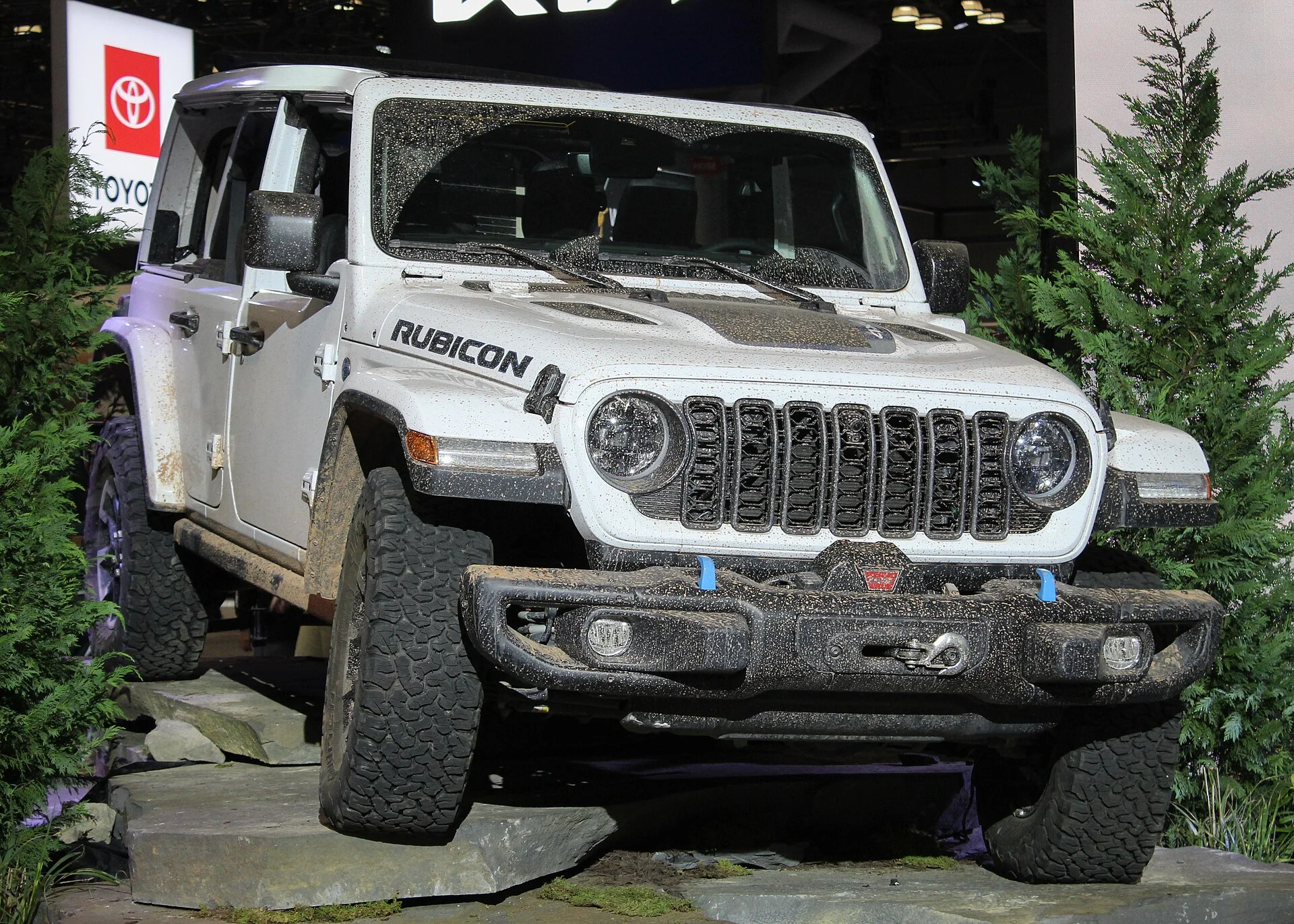
Ground Clearance Is Only One of Four Numbers
Ask what makes a Jeep Wrangler good off-road and most people answer with ground clearance. It matters, but it is one number of four, and on real terrain the other three decide whether the Jeep clears an obstacle or hangs up on it. Clearance under the axle is useless if the front bumper plows into the hill or the tail drags coming off a ledge.
The four numbers that actually describe a Wrangler's geometry are ground clearance, approach angle, breakover angle, and departure angle. Clearance is the gap under the lowest point; the three angles describe what happens at the front, the belly, and the rear when the terrain rises faster than the flat ground the clearance number assumes.
The Wrangler is built around these numbers more openly than almost any vehicle, and they climb by trim from the Sport up to the Rubicon and beyond with the Xtreme Recon package. Reading them as a set, rather than fixating on clearance alone, is how an overlander matches a trim to the terrain they actually drive.
This guide walks all four numbers across the Wrangler lineup, shows which one binds on which kind of obstacle, and makes the case that the right trim is the one whose weakest angle still clears your trips, not the one with the biggest single spec.
The Clearance Ladder by Trim
Start with the number everyone knows, because it does climb meaningfully across the lineup. The Wrangler Rubicon offers 10.8 inches of ground clearance, compared to 9.7 inches on the Sport trim and roughly 10 inches on the Sahara. That spread, from 9.7 to 10.8 inches, is the difference the suspension and axle package make.
Ground clearance is the gap between the lowest fixed point of the Jeep and the ground, and it sets how tall a rock or rut the vehicle can straddle without contact. More clearance means taller obstacles cleared and deeper ruts crossed, which is why the off-road-focused Rubicon sits highest at 10.8 inches.
The reason the Rubicon leads is hardware, not just ride height. It comes standard with 33-inch all-terrain tires as part of its off-road suspension and axle package, and taller tires lift the axles and the body, contributing to the higher clearance figure alongside the suspension itself.
For an overlander, the clearance ladder is the first cut but not the whole decision. A Sport at 9.7 inches clears most maintained forest roads and moderate trails; the Rubicon's 10.8 inches buys headroom for the rockier terrain where the extra inch keeps the skid plates off the obstacles. Where the trips fall on that spectrum decides how much clearance is actually needed.
Approach Angle: The Front-Bumper Number
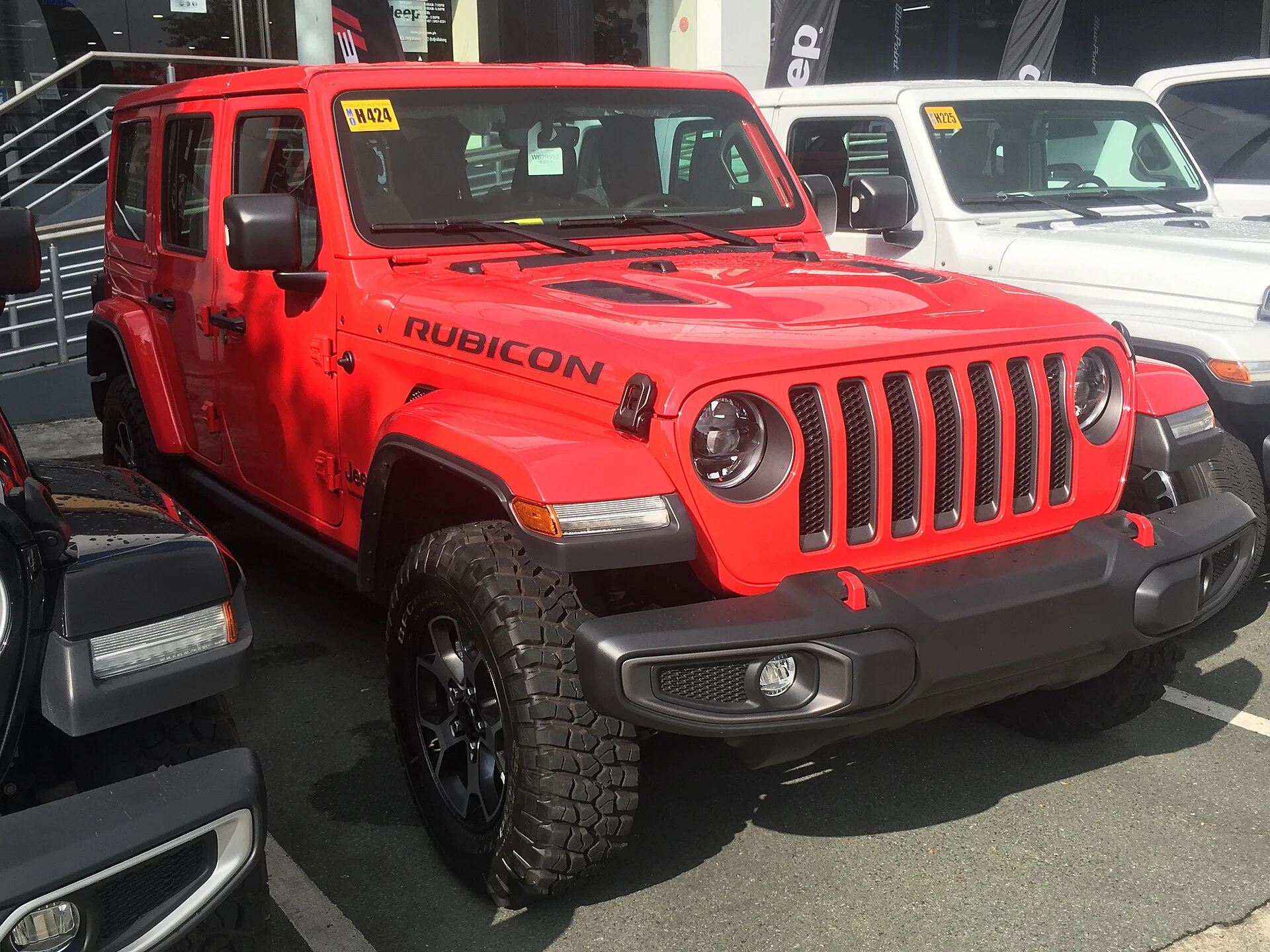
The first angle that bites is approach, the steepest incline the Jeep can drive into before the front bumper or air dam contacts the slope. It governs climbing onto a ledge, cresting a steep bank, or nosing into a washout, and it climbs sharply across the Wrangler trims.
The numbers tell the story: the Sport trim's approach angle is rated at 38.7 degrees, the Sahara posts 41.7 degrees, and the Rubicon reaches 44 degrees. Even the Sport's 38.7 degrees is steep by SUV standards, but the Rubicon's 44 degrees is the difference between clearing a sharp ledge and stuffing the bumper into it.
Approach angle is why a Jeep with plenty of ground clearance can still get stopped at the base of an obstacle. If the front end contacts the slope before the tires climb it, the clearance under the axle never comes into play.
For overlanding, approach angle matters most where trails climb abruptly, onto rock shelves, up eroded banks, out of stream crossings. A Rubicon's 44-degree approach lets it take those obstacles the Sport's 38.7 degrees would catch on, which is exactly the kind of terrain that separates the trims in the field.
Departure Angle: The Number You Feel Backing Off
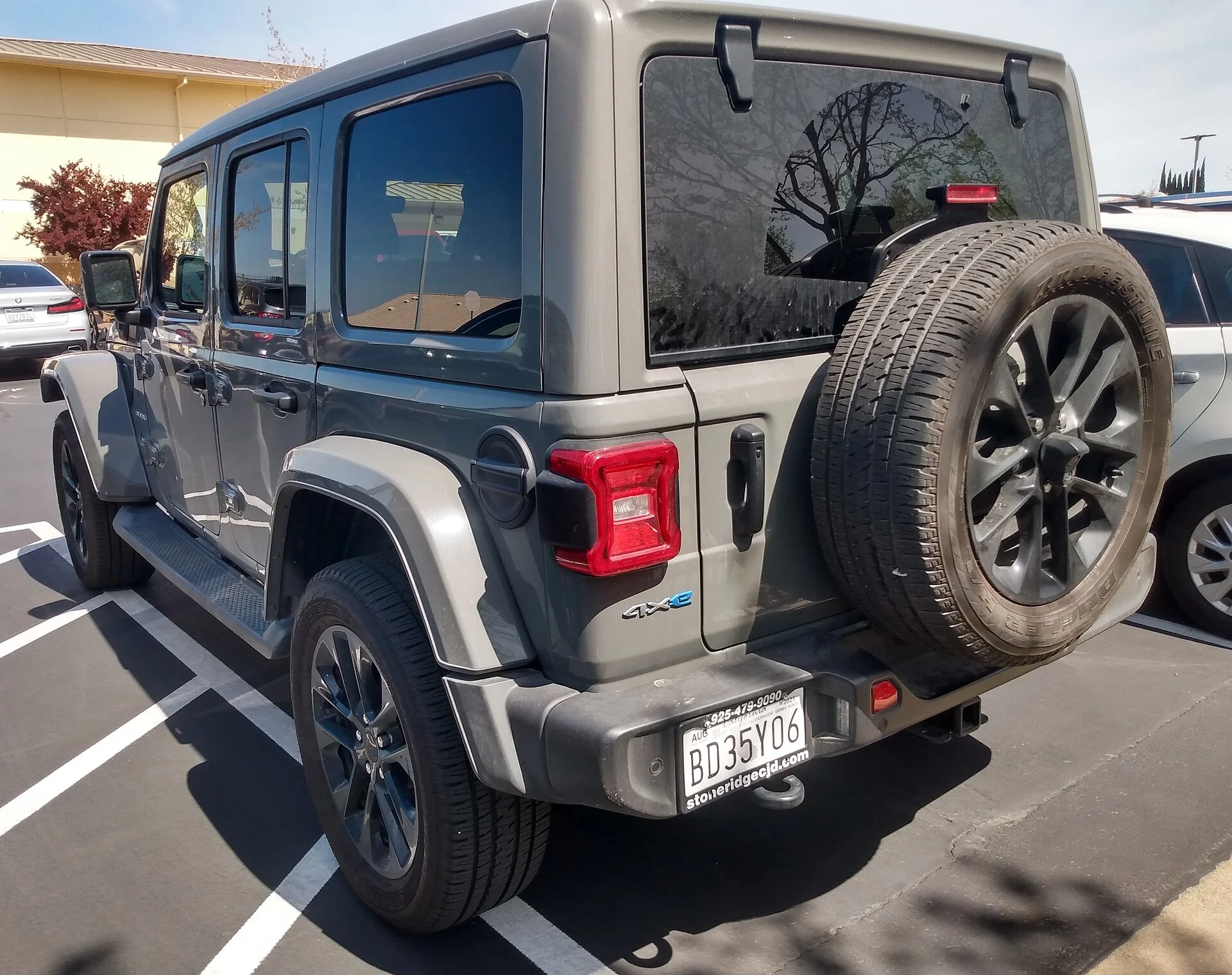
Departure angle is approach in reverse: the steepest slope the Jeep can descend or back off before the rear bumper drags. It is the number felt coming down off a ledge or reversing out of a bad line, and it is easy to forget until the tail hits.
Across the lineup, the Sport's departure angle is 29.1 degrees, the Sahara's is 31.8 degrees, and the Rubicon's is 37 degrees. The Rubicon's 37 degrees is a substantial margin over the Sport's 29.1, which is why the off-road trim comes off obstacles cleanly that would catch a lesser Wrangler's rear.
The reason departure often surprises drivers is that it is behind them and out of sight. Cresting an obstacle feels like the hard part, but dropping off the far side is where a shallow departure angle drags the bumper, and on a Sport the 29.1-degree figure is the one to respect when picking a line off a ledge.
For an overlander who runs technical trails with drop-offs and ledges, departure angle is as important as approach. The Rubicon's 37 degrees gives real freedom to descend steep terrain and reverse out of dead ends, while the Sport's 29.1 degrees asks for more careful line choice on the way down.
Breakover Angle: The Belly on the Ridge
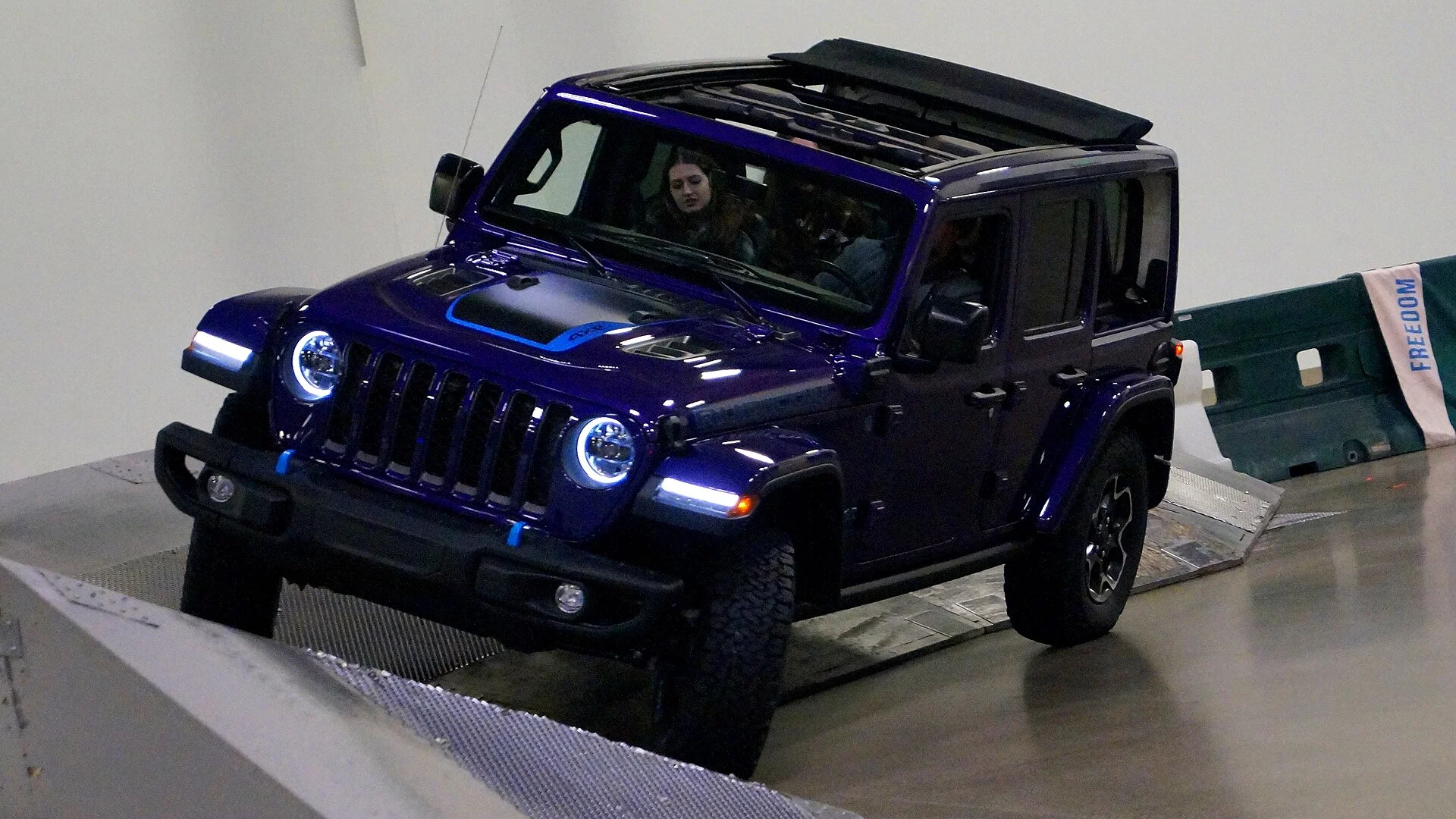
The third angle is the one people know least and high-center on most: breakover, the angle formed at the middle of the wheelbase that determines whether the Jeep clears the crest of a ridge or beaches its belly on it. It is the number that bites when a vehicle drives over a sharp hump rather than into or off it.
The Wrangler's breakover figures are the tightest of the three angles, which is inherent to a vehicle with a fixed wheelbase. The Sport is rated at a 21.5-degree breakover angle, and the Rubicon at 22.6 degrees. The gap is smaller here than on approach and departure, because breakover is set largely by wheelbase and ride height rather than bumper design.
High-centering is the failure this number predicts: the tires still have grip, but the frame rests on the obstacle's crest and the Jeep sits stranded. It happens on rock ridges, steep road crowns, and the tops of ledges, and it is why belly skid plates matter as much as the breakover figure itself.
For overlanding, breakover is the angle to watch on undulating rock and sharp ridge crests. Neither the Sport's 21.5 degrees nor the Rubicon's 22.6 degrees is huge, so line choice, driving diagonally across a crest rather than straight over it, is how experienced drivers work around the number the wheelbase imposes.
Water Fording: The Depth Number
Overlanding often means water, and the Wrangler has a published fording depth that most vehicles cannot match. Jeep rates the standard Rubicon's water fording depth at 30 inches, allowing it to cross moderate water without drawing water into the engine. That 30-inch figure is a genuine capability, not a marketing flourish.
Fording depth is set by the height of the air intake and the sealing of the electrical and driveline components, which is why it is a specific engineered number rather than simply how deep the body sits. Exceeding it risks water reaching the intake, which is the failure fording depth exists to prevent, so the 30 inches is a limit to respect, not a target to beat.
The practical use is judging crossings honestly. A stream that reaches the middle of the door is near the standard Rubicon's 30-inch limit, and reading water depth against that number before committing is the difference between a clean crossing and a hydrolocked engine. Current and bottom conditions matter too, but 30 inches is the ceiling.
Fording is also where the Wrangler's height advantage compounds the angles: the same geometry that clears obstacles keeps the vulnerable components higher out of the water. For an overlander whose routes include crossings, the 30-inch rating is a capability worth planning around, and one the Xtreme Recon package extends further.
Xtreme Recon: Buying More of Every Number
For the Wrangler that maxes the geometry from the factory, the Xtreme Recon package is the answer, and it improves all four numbers at once. Optioned with Xtreme Recon and 35-inch tires, the Rubicon's ground clearance rises to 12.9 inches, its water fording depth to 34 inches, its approach angle to 47 degrees, and its departure angle to 40 degrees.
The jump is significant across the board. Clearance climbs from 10.8 to 12.9 inches, approach from 44 to 47 degrees, departure from 37 to 40 degrees, and fording from 30 to 34 inches. The 35-inch tires are the mechanism, lifting the whole vehicle and its angles without the aftermarket lift that would otherwise be needed to fit them.
What makes the package notable is that it delivers these numbers from the factory, warrantied and integrated, rather than through a stack of aftermarket parts. For an overlander who knows they need the tallest geometry, buying it built is cleaner than assembling it, and the 12.9-inch clearance and 47-degree approach are genuine hardcore-trail figures.
The trade is that Xtreme Recon is more capability than many trips require. Its numbers earn their keep on serious rock and deep crossings; for maintained forest roads and moderate trails, a standard Rubicon or even a Sport already clears the terrain, and the extra geometry is capacity that goes unused.
What Overlanding Actually Demands
The honest question is not which Wrangler has the biggest numbers but which numbers a given route demands. Most overlanding, forest roads, moderate trails, and the occasional obstacle, is bounded by clearance and approach far more than by the extremes the Rubicon and Xtreme Recon unlock. A vehicle rarely uses all four numbers at their limit on the same trail.
Terrain maps to numbers predictably. Rocky climbs and ledges lean on approach angle and clearance; drop-offs and ledge descents lean on departure; ridge crests and undulating rock lean on breakover; crossings lean on fording depth. Knowing which of these a route contains tells an overlander which number has to be big and which can be modest.
This is why a Sport is genuinely capable for a lot of overlanding. Its 9.7 inches of clearance, 38.7-degree approach, and 29.1-degree departure clear maintained trails and moderate obstacles with margin, and its lower cost leaves budget for the recovery gear and tires that matter more than a few degrees on easy terrain.
The Rubicon and Xtreme Recon earn their premium on terrain that actually taxes the angles, technical rock, steep ledges, and deep water where the Sport's numbers run out. Matching the trim to that reality, rather than buying the biggest spec for trails that never test it, is the difference between a well-chosen rig and an overbought one.
Reading the Numbers for Your Trips
Turning the four numbers into a decision is a matter of matching the weakest angle to the hardest obstacle a route contains. A trim clears a trail only if every one of its four numbers exceeds what the terrain demands, so the binding number is whichever one the terrain stresses most, not the trim's best figure.
For maintained dirt and forest roads, clearance is usually the binding number, and the Sport's 9.7 inches or the Sahara's roughly 10 handle them comfortably. For rockier trails with ledges, approach and departure start to bind, and the Rubicon's 44 and 37 degrees pull ahead. For serious rock and deep crossings, everything binds, and Xtreme Recon's numbers earn out.
Tires and skid plates factor in alongside the trim numbers. The Rubicon's 33-inch tires and the belly protection that comes with the off-road package let a driver use the geometry without punishing the underside, which is part of why the trim's numbers translate into real trail confidence rather than just a spec sheet.
A good set of recovery boards belongs in any overlanding Wrangler regardless of trim, because even the best geometry meets terrain that stops it. Matched to the trips honestly, the right Wrangler clears what it needs to and carries the gear to recover when it does not.
The Verdict: Match the Weakest Angle to the Terrain
The Jeep Wrangler is one of the most capable overlanding platforms available, but its capability is four numbers, not one. Ground clearance, from 9.7 inches on the Sport to 10.8 on the Rubicon and 12.9 with Xtreme Recon, is where the conversation starts, and the approach, breakover, and departure angles are where obstacles are actually won or lost.
The angles climb with the trim: approach from 38.7 to 44 degrees, departure from 29.1 to 37 degrees, breakover from 21.5 to 22.6 degrees, and fording from 30 to 34 inches with the package. Each describes a different obstacle, the front, the belly, the rear, and the water, and the trim clears a trail only when all four exceed what the terrain demands.
The overlanding truth is that most routes do not tax the extremes. A Sport's numbers clear maintained trails and moderate obstacles with margin; the Rubicon and Xtreme Recon earn their premium on technical rock and deep crossings where the Sport runs out. Buying the biggest spec for easy terrain is capacity that never gets used.
Match the weakest of the four numbers to the hardest obstacle your trips contain, add tires, skid plates, and recovery gear, and the right Wrangler clears its terrain confidently. The trim that fits is the one whose smallest angle still exceeds what your routes throw at it, not the one with the most impressive single figure on the window sticker. Fixate on ground clearance alone and the front bumper, the belly, or the tail will find the limit the single number never mentioned.