
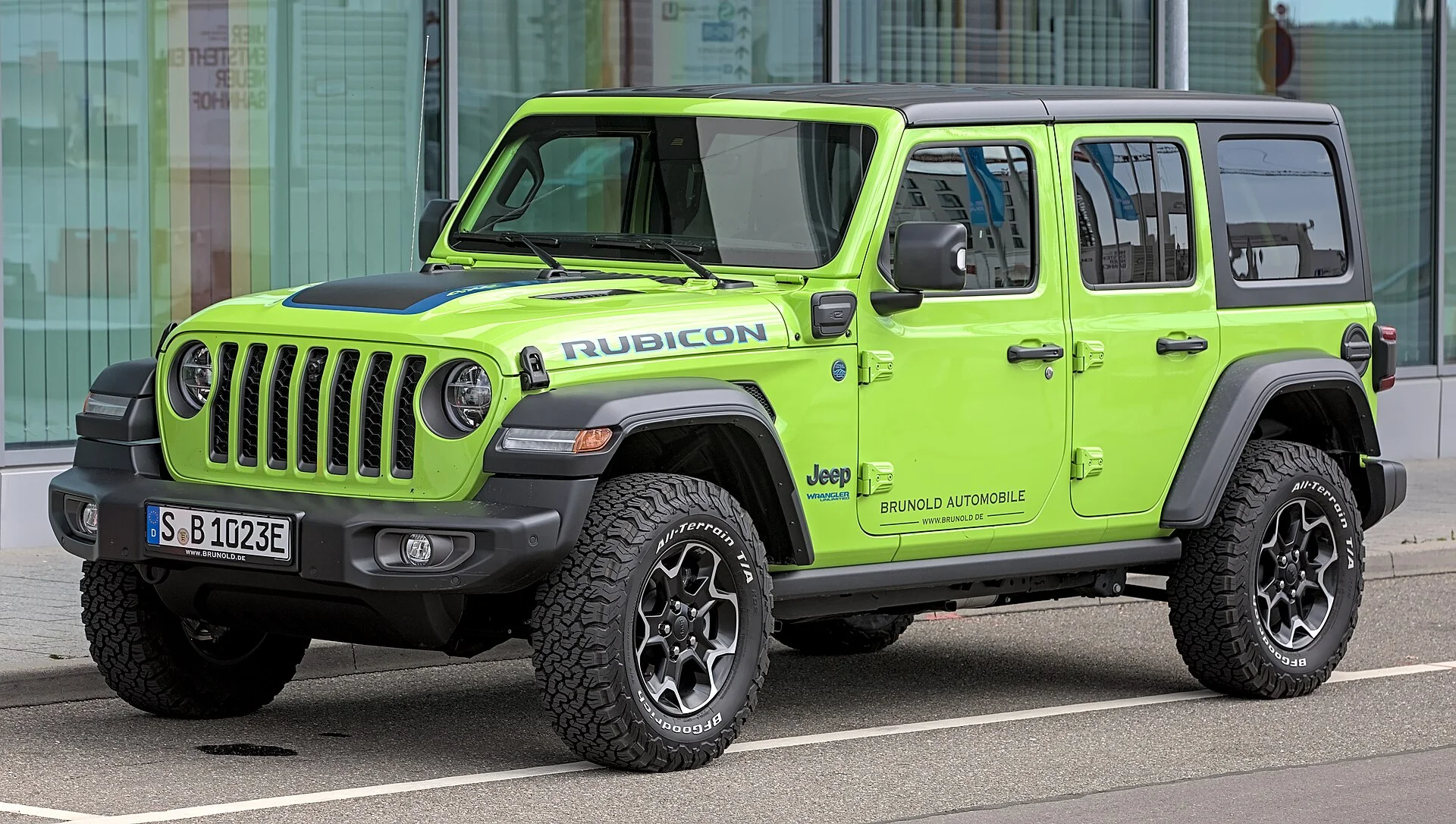
The Number That Actually Decides This: Doors
Here's what nobody prints big on the window sticker: a Jeep Wrangler's tow rating is set almost entirely by how many doors it has. A 2-door tops out at 2,000 lb. Add two doors and the 4-door jumps to 3,500 lb when properly equipped, per Jeep's published capability figures. That is not a rounding difference. It is the line between a bare utility trailer and a real teardrop camper you can sleep in.
The reason is wheelbase, not engine. The longer 4-door platform sits calmer behind a load, so Jeep certifies it to pull more. Both body styles share the same engine menu, which means you cannot buy your way past the 2-door limit with more power. The short truck is capped by physics, not by its motor.
My angle here is the shop mechanic's one: separate the spec that matters from the spec that sells. Dealers love to quote the 3,500-lb headline because it sounds capable. If you are standing on a 2-door lot, that number simply does not apply to you, and no hardware on the accessories wall will change it.
So before you put a deposit on a camper, get the order of operations right. The doors set your ceiling. Tongue weight and hitch class decide whether you can safely use that ceiling. And the trailer's loaded weight, not its brochure dry weight, is what has to fit underneath it. Everything below traces to the manufacturer capability sheets and the published hitch-class ratings, compared impersonally. I have not weighed a specific trailer on a specific Jeep; I am reading the numbers the way a builder reads a blueprint, then telling you where people get hurt.
2-Door vs 4-Door: Where the Gap Comes From
The 2-door Wrangler's 2,000-lb ceiling and the 4-door's 3,500-lb ceiling come from the same engineering reality that governs every tow vehicle: the longer the wheelbase, the calmer the trailer behaves at speed. A short two-door reacts faster to trailer sway because the pivot point sits close to the rear axle, so the certified limit lands lower for safety margin. It is not that the drivetrain gives out first; it is that the platform runs out of stability first.
That difference reshapes what you can camp with. The 2,000-lb figure covers a small off-road utility trailer, a bike or kayak hauler, or the lightest hard-floor teardrop pods. The 3,500-lb figure opens the door to a genuine hard-sided teardrop with a galley and a real mattress, which is where most first-time trailer campers actually want to be.
The engine choice does not move either number. Whether you order the 3.6-liter Pentastar V-6, the 2.0-liter turbo four, or the plug-in-hybrid 2.0-liter 4xe, the body-style ceiling holds. Torque changes how the Jeep feels pulling a grade; it does not raise what Jeep will legally certify. This trips people up constantly, because the turbo and hybrid feel muscular enough to pull more than the paper says.
Here's what the reps won't tell you: buyers cross-shop the 2-door because it looks nimble and costs less, then discover the camper they wanted weighs more than 2,000 pounds once it is loaded with water, a battery, and gear. On a 2-door that is over the line, full stop. If towing a camper is anywhere on your list, let the doors make the first cut. Size the trailer to the body you actually own, and every later decision gets simpler.
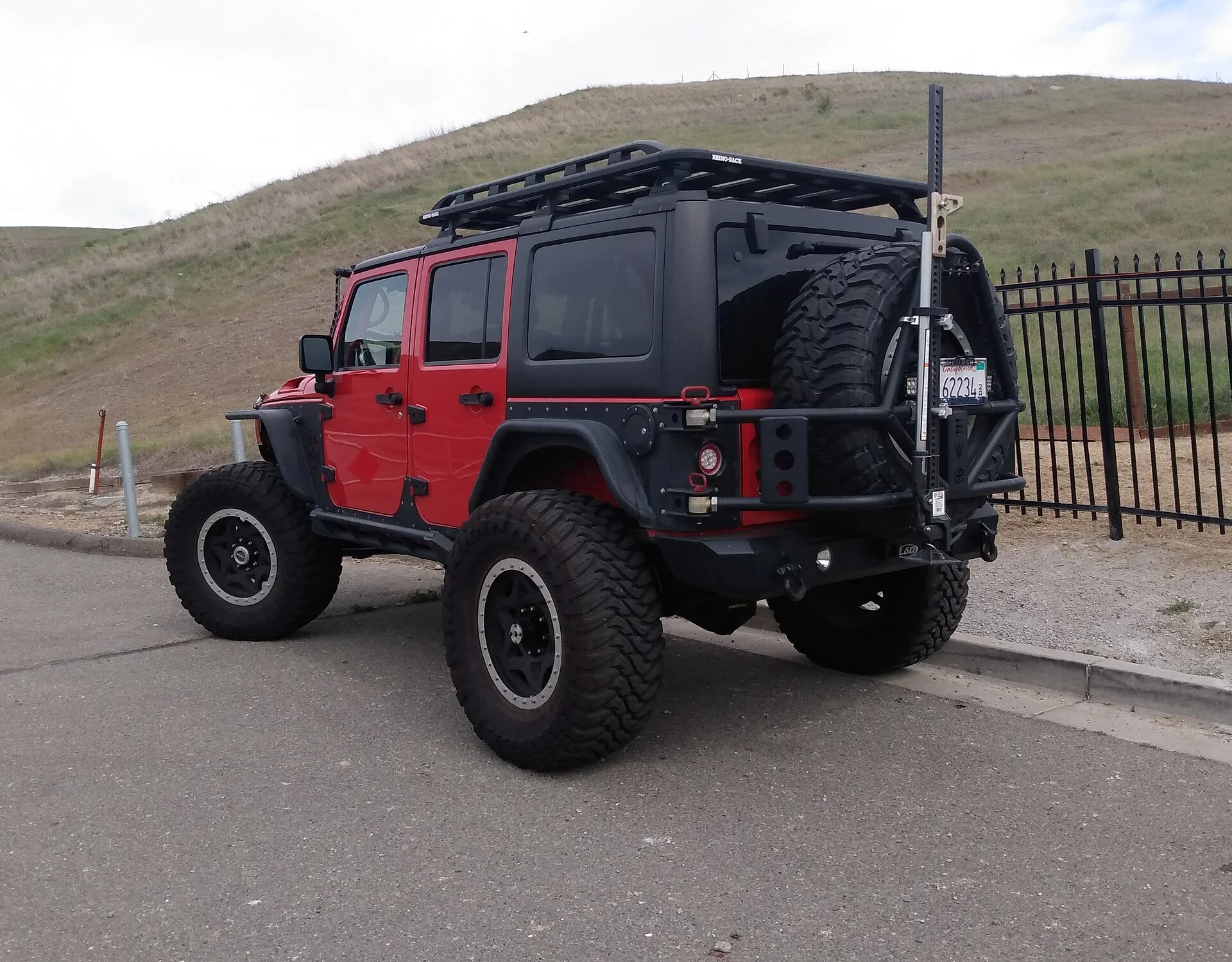
The 4xe Wrinkle: Big Torque, Same Ceiling, Trim Traps
The plug-in-hybrid 4xe is the trim that confuses buyers most, so let's be precise. It makes up to 375 horsepower and a stout 470 lb-ft of torque, the most twist in the lineup, and that torque genuinely helps a loaded trailer leave a stoplight or crawl up a wet boat ramp without the drivetrain hunting for gears.
But more torque does not mean more towing. The 4xe is still rated up to 3,500 lb, the same ceiling as the gas 4-door. The extra grunt buys you composure on a climb, not additional capacity. If you were hoping the hybrid would let you pull a heavier camper, the spec sheet says no.
The real trap is inside the 4xe range itself, and it is a marketing landmine. Not every 4xe is tow-rated. The Rubicon 4xe carries the rating, while the Sport S 4xe and Willys 4xe are not rated to tow at all. So a shopper reads that a 4xe can tow, orders the cheaper 4xe trim to save money, and later finds their exact build has no tow rating on paper. That is an expensive surprise to discover after delivery.
If you want the hybrid and you want to tow, the trim label matters as much as the drivetrain. Confirm the specific build's tow rating on the vehicle's own capability sheet before you sign, because reviewer summaries blur the trims together and that blur is exactly where people get burned. One more quiet cost: the battery pack under the 4xe adds curb weight, which eats into how much gear you can carry inside the Jeep while you tow. Capability on the hitch and capability in the cargo area are two different budgets, and the hybrid spends more of the second one before you load a thing.
Tongue Weight: The Second Number, and Why It Bites First
Max tow rating gets the headline, but tongue weight is the number that actually strands people on the shoulder. Tongue weight is the downward force the trailer's coupler presses onto your hitch ball. Too little and the trailer wags like a loose door; too much and you overload the Jeep's rear axle and the hitch itself. It is a balance problem, not a strength problem.
The working rule from towing guides: aim for tongue weight around 10 percent of the loaded trailer weight, and never let it exceed 15 percent. That range is what keeps a trailer tracking straight instead of building sway. Below the range the trailer floats; above it, the Jeep's nose goes light and the steering gets vague.
Here's why it bites before the tow number does. Your hitch has its own separate tongue-weight limit. The OEM Mopar Class II receiver is rated for 3,500 lb of towing but only 350 lb of tongue weight. Load a nose-heavy trailer and you can blow past the 350-lb tongue limit long before you approach the 3,500-lb tow limit. Two numbers, and the smaller one governs.
Don't guess this part. Weigh the loaded tongue on a bathroom scale under the coupler, or roll across a truck scale, and load the trailer so the heavy items ride over or just ahead of the axle to keep the tongue in the target range. Getting that balance right is the whole difference between a trailer that tracks arrow-straight when a semi passes and one that starts a slow fishtail you have to steer out of. A basic tongue-weight scale and weight-distribution hardware pays for itself the first trip you don't white-knuckle.
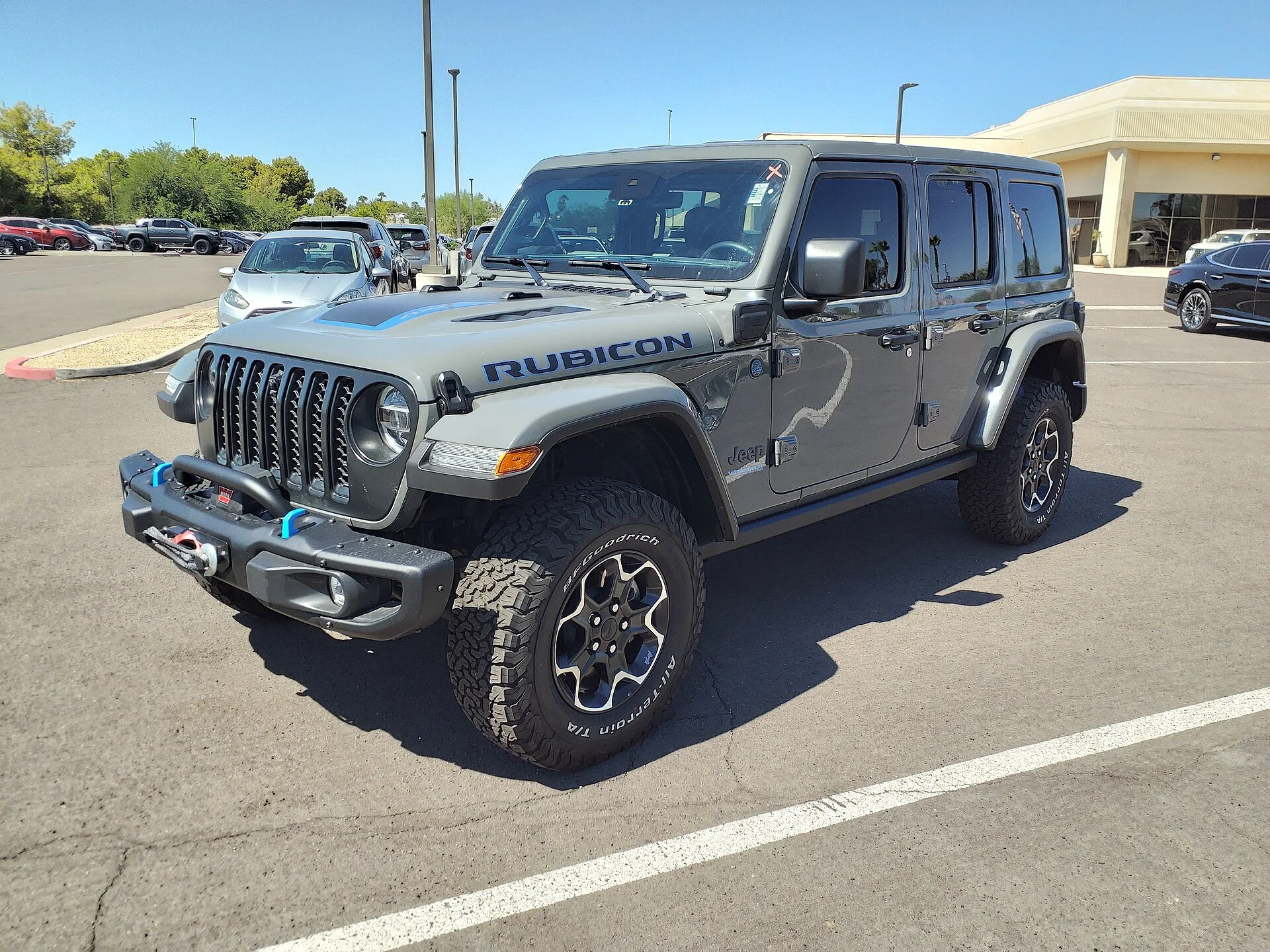
Hitch Classes: Why a Bigger Receiver Doesn't Raise Your Rating
This is the single most expensive misunderstanding in Wrangler towing, so I'll say it flat: the hitch never changes the vehicle's tow rating. Bolt on a burlier receiver and your Jeep still tows exactly what Jeep certified, not one pound more. The rating lives with the vehicle, and the hitch is just the connection point.
What the hitch class does set is the hardware's own ceiling. The factory Class II Mopar unit is rated 3,500 lb tow and 350 lb tongue, a clean match to the 4-door's rating, which is precisely why Jeep specs it. A Class III hitch steps up to a larger 2-inch by 2-inch receiver opening and can be rated up to 5,000 lb towing and 500 lb tongue weight. Those are bigger numbers, and they are also a trap for the unwary.
Read the interaction carefully. A Class III hitch rated to 5,000 lb bolted to a 4-door Wrangler does not let you tow 5,000 lb. Your Jeep still stops at 3,500. The stronger hitch only guarantees that the receiver itself is not the weakest link, which is genuinely useful if you want the beefier 2-inch opening for a heavier ball mount, a bike rack, or a cargo carrier that shares the receiver.
The discipline is simple: obey the lower of the vehicle rating and the hitch rating, on both the tow number and the tongue number. On a Wrangler the lower tow number is almost always the vehicle, and the lower tongue number is often the hitch. Anyone selling you a receiver as a 'towing upgrade' is selling the wrong story. Buy the hitch that matches or clears your trailer's needs, then tow to the vehicle's ceiling and no further.
What You Can Actually Camp With at Each Rating
Let's turn ratings into campers. At the 2,000-lb 2-door ceiling, your realistic menu is a lightweight off-road utility trailer, a gear or kayak hauler, or the smallest hard-floor teardrop pods. The rating is for the loaded trailer, so the water, battery, and gear all count against it. A teardrop advertised well under the limit on dry weight can crowd that ceiling once you actually pack it for a trip.
At the 3,500-lb 4-door ceiling, you reach the heart of the towable-camping market. Many popular teardrops and small off-road campers are deliberately built with a GVWR at or under 3,500 lb precisely so that half-ton-and-under vehicles can pull them. That is the sweet spot the 4-door was designed to hit, and it is why the 4-door is the Jeep to buy if a camper is the goal.
The honest limitation: even at 3,500 lb, a Wrangler is a short, tall, boxy tow rig. It pushes a lot of air, and it will feel the trailer more than a long-wheelbase pickup does. Plan for slower highway speeds, longer stopping distances, and real attention in crosswinds and around passing trucks. This is capable towing, not effortless towing, and pretending otherwise is how people end up frightened on a mountain pass.
My rule when sizing a camper: use the trailer's GVWR, never its dry weight, and keep it comfortably under your body style's ceiling. The published 10 percent to 15 percent tongue range is your friend here too. Leaving headroom below the tow ceiling gives you room to load water, propane, and gear without tipping either number into the red. Buy to the loaded figure and you will never be the driver nursing a maxed-out trailer up a grade with the flashers on.
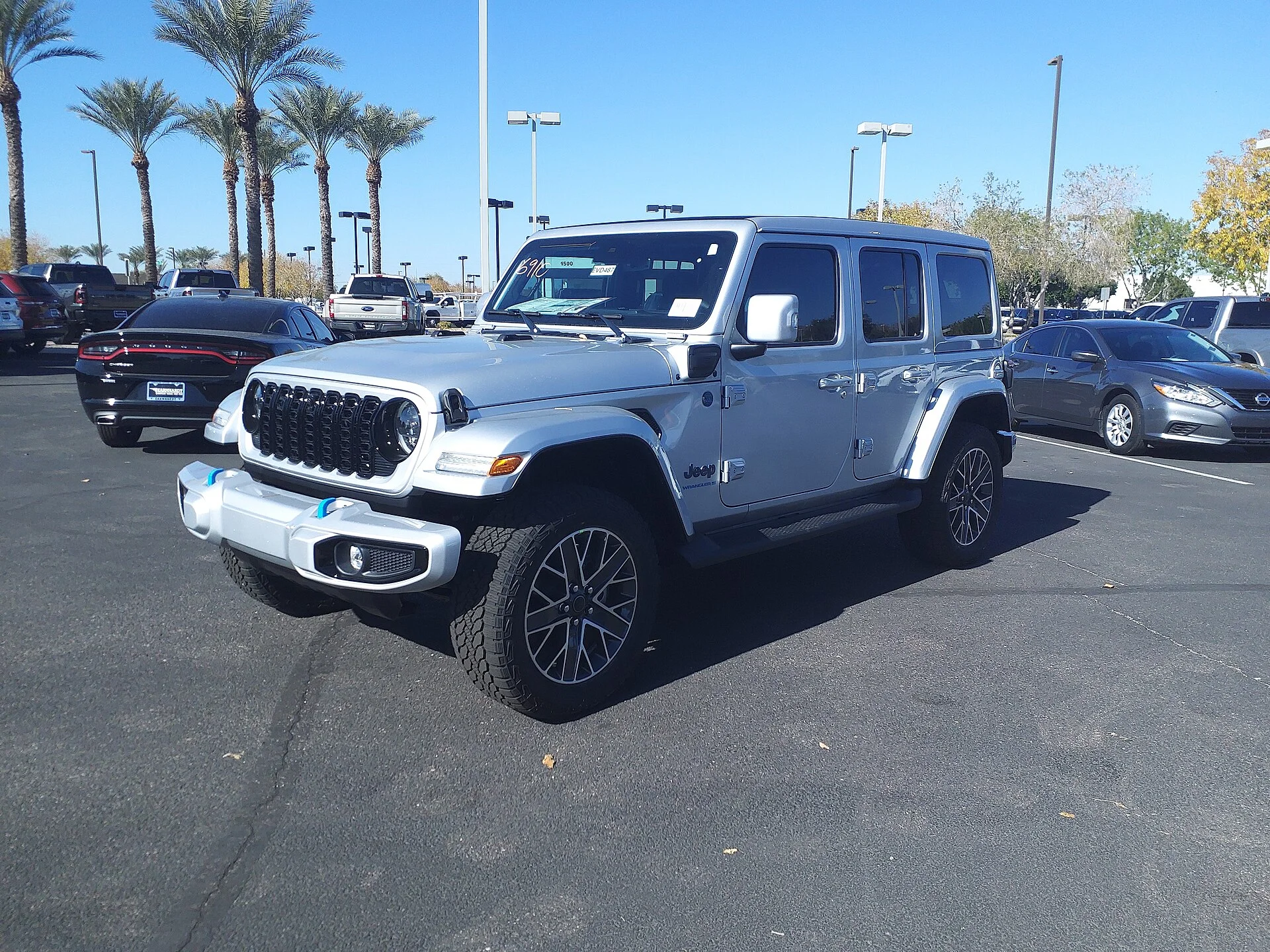
Setting Up the Wrangler to Tow Without Drama
Beyond the raw ratings, a few setup choices decide whether towing is calm or nerve-racking. Start with hitch height: the ball should sit so the coupled trailer rides level. A nose-high or nose-down trailer shifts weight off the axle that needs it and makes sway worse, no matter how clean your numbers look on paper. An adjustable drop-or-rise ball mount is usually what dials this in on a lifted Jeep.
Wiring is next. If your trailer has electric brakes, a smart feature on anything approaching the 3,500-lb ceiling, you need a brake controller and the correct connector. The Wrangler's short wheelbase makes trailer brakes worth the install, because letting the Jeep's own brakes do all the work on a long descent is exactly how you cook them and lose pedal on the one grade where you need it.
Tires and pressure are the quiet variables. Tow near the limit and the rear tires carry both cargo and tongue weight at once, so set pressures to the door-jamb load spec rather than the soft off-road pressures overlanders like to run on the trail. A squishy rear tire under tongue load is a sway generator that no hitch can cure.
Finally, mirrors and mindset. A boxy trailer behind a boxy Jeep hides a lot of road, so extended tow mirrors help you actually see what is back there. Leaving early and driving unhurried helps more than any accessory. Here's the mechanic's summary: the Wrangler will tow what Jeep rates it for, reliably, but it rewards a driver who respects the short wheelbase and punishes one who forgets it. Set it up level, braked, and properly inflated, and the ratings do their job.
Common Mistakes That Void Your Safety Margin
Even with the right Jeep and the right hitch, a handful of habits quietly erase the safety margin the ratings are supposed to give you. The first is quoting dry weight. A trailer's advertised dry weight is a marketing number measured empty at the factory; the weight that matters is the loaded GVWR with your water, battery, food, and gear aboard. Plan against the dry number and you can be over the vehicle rating without ever noticing.
The second is ignoring passengers and cargo inside the Jeep. Towing consumes payload. Every person and every cooler in the Wrangler adds to the load the rear axle already carries from tongue weight. On a small SUV that budget is tight, and on a battery-heavy 4xe it is tighter still. Capability at the hitch does not excuse you from watching the weight inside the cabin.
The third is treating the tongue-weight limit as optional. It is not the same as the tow limit, and as we saw, the 350-lb factory tongue rating can be the true constraint. A trailer loaded tail-heavy to dodge the tongue limit trades one problem for a worse one, because a light tongue is what starts sway in the first place.
The fourth is skipping the level check. A trailer that rides nose-up or nose-down defeats good numbers by shifting weight to the wrong axle. Fix the ball height first, then load to balance, then confirm the tongue weight lands in the 10 percent to 15 percent window. Do those three things in order and the Wrangler tows like the honest tool it is.
The Buyer's Verdict: Match the Trailer to the Doors
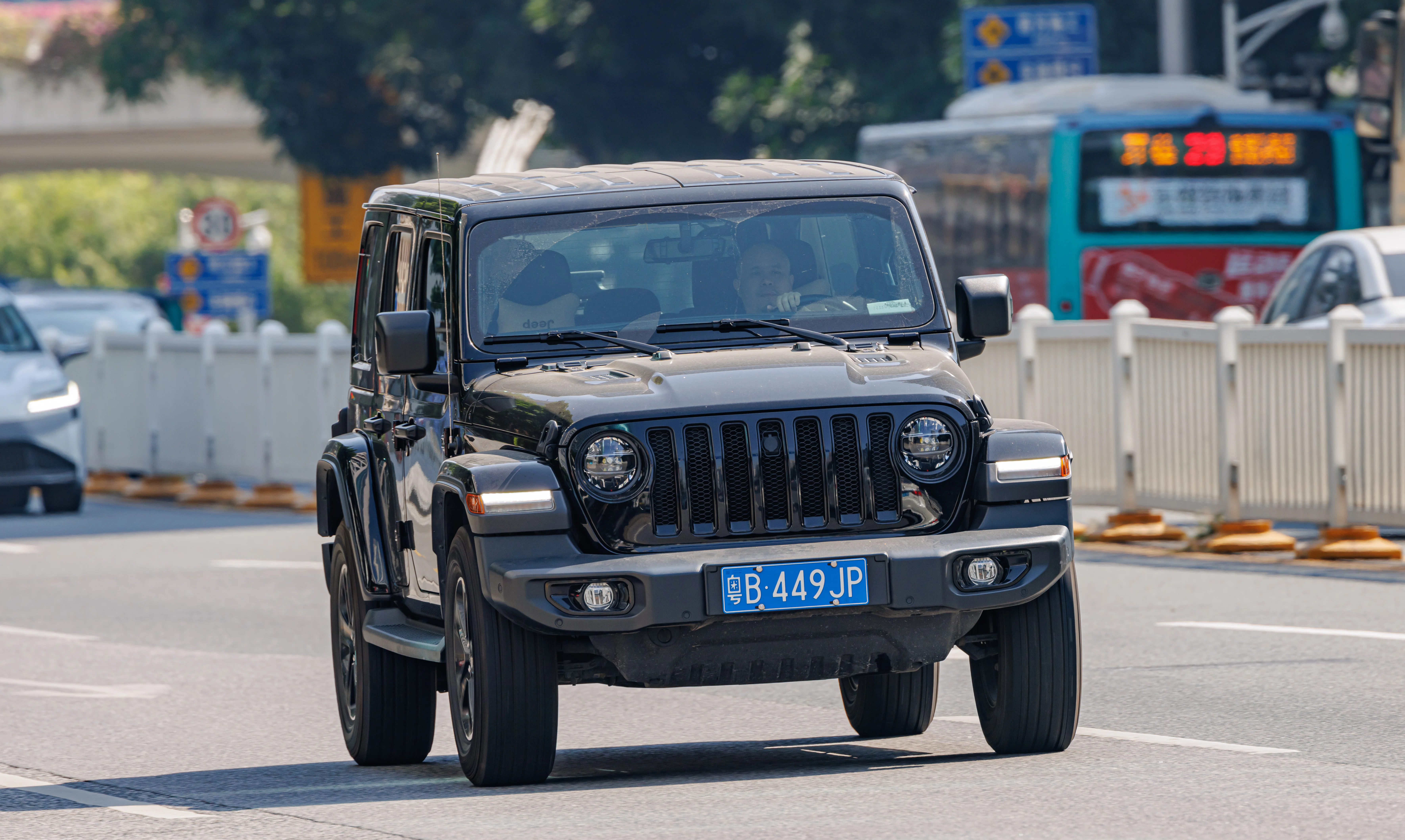
Strip away the marketing and Wrangler towing comes down to two decisions. First, the doors: a 2-door is a 2,000-lb tool, a 4-door is a 3,500-lb tool, and no hitch, engine, or trim sticker moves those ceilings. Second, the balance: keep tongue weight near 10 percent and under 15 percent, and honor whichever is lower between your vehicle rating and your hitch rating on both the tow and tongue numbers.
If you are buying a Jeep specifically to tow a camper, the recommendation writes itself: get the 4-door. The extra wheelbase and the 3,500-lb rating put the real teardrop and small off-road camper market in reach, while the 2-door leaves you stuck with utility trailers and the lightest pods. Spend the money where the capability actually lives.
If you already own a 2-door and love it, don't force it into a job it was not built for. Size the trailer to 2,000 pounds loaded, run a properly balanced tongue, keep it level, and it will serve you for years. The Wrangler is an honest tow rig when you respect its numbers and an expensive lesson when you don't. Buy the trailer for the Jeep you actually have, not for the headline figure you read on the lot.