
Where to Start
A first solo car camping trip can be a $35 experiment in a beat-up Toyota Corolla in a national forest. Early July, a half-eaten bag of pretzels and a blanket clearly meant for indoor movie nights. By 9PM, it's easy to be convinced every rustle in the woods is a bear, and every passing car a serial killer. The honest version: most of those fears are in your head.
What nobody tells beginners about solo female car camping is that the biggest hurdle isn't the gear, it's the mental game. You hear all the horror stories, but rarely the practical steps people take to feel safe. That lesson often lands the hard way, shivering in a sleeping bag, clutching car keys like a weapon. Road-tested lessons show that confidence comes from preparation, not just bravado.
Women have been solo car camping for years, from state parks to national forests, in everything from a minivan to a small SUV. The real authority comes from all the times something goes wrong and a better way emerges. This isn't about being fearless; it's about being smart and having a plan.
The real move is understanding that your car itself is your best defense. It's a locked, mobile shelter. A tent, no matter how sturdy, doesn't offer the same level of security. A Honda Civic makes a much better fortress than any fabric structure.
The first few trips are often a constant battle between wanting to feel empowered and genuinely feeling vulnerable. Confidence takes a while to build. This guide is for anyone who wants to try solo car camping but feels overwhelmed by the 'what-ifs' and the expert advice that doesn't quite hit home for a true beginner. We're going to talk about what actually works.
Understanding is car camping safe for solo women
Understanding if car camping is safe for solo women starts with ditching the Hollywood narratives. It's not about surviving some wilderness ordeal; it's about making smart choices. The first time out, it's tempting to think you need to be a survivalist. Turns out, you just need to pick a good spot.
Reports from women in online communities suggest solo car camping is generally safe. The biggest risks aren't boogeymen in the woods, but poor planning or ignoring your gut feelings. More women are choosing this adventure for the freedom it offers.
The question "Is solo car camping safe for women?" comes up constantly. The answer is always the same: it's as safe as you make it. The vehicle itself provides a level of security a tent simply cannot. Being locked in a car beats being zipped into a tent when you hear something sketchy outside.
One classic rookie mistake is trying to camp in a completely isolated spot the first time out, thinking 'more remote equals more authentic.' It actually just equals more anxiety. It's easy to spend a sleepless stretch staring into the dark, convinced something is lurking.
The real move is to start in established campgrounds. State parks, national parks, even some private campgrounds. These places have rangers, other campers, and a sense of community that makes you feel less alone. Many solo women campers prioritize these areas.
Sleeping inside a locked vehicle offers privacy and protection that tents often lack. You're off the ground, sealed from the elements, and have an instant escape route if you need it. A 2007 Honda CRV can become a mobile sanctuary after a few trips.
It's about feeling in control. Knowing you can lock your doors, pull window covers, and drive away if necessary. This sense of autonomy is a huge reason why so many women are embracing solo car camping. It puts you in the driver's seat of your own adventure.
is car camping safe for solo women in Detail
Is car camping safe for solo women in Detail boils down to a few key strategies learned through trial and error.
1. Planning Your Route and Overnight Stops
Wing a first 3-day trip to somewhere like Big Sur and it's a big mistake — an hour after dark spent trying to find a spot is the absolute worst feeling. The honest version: plan your stops.
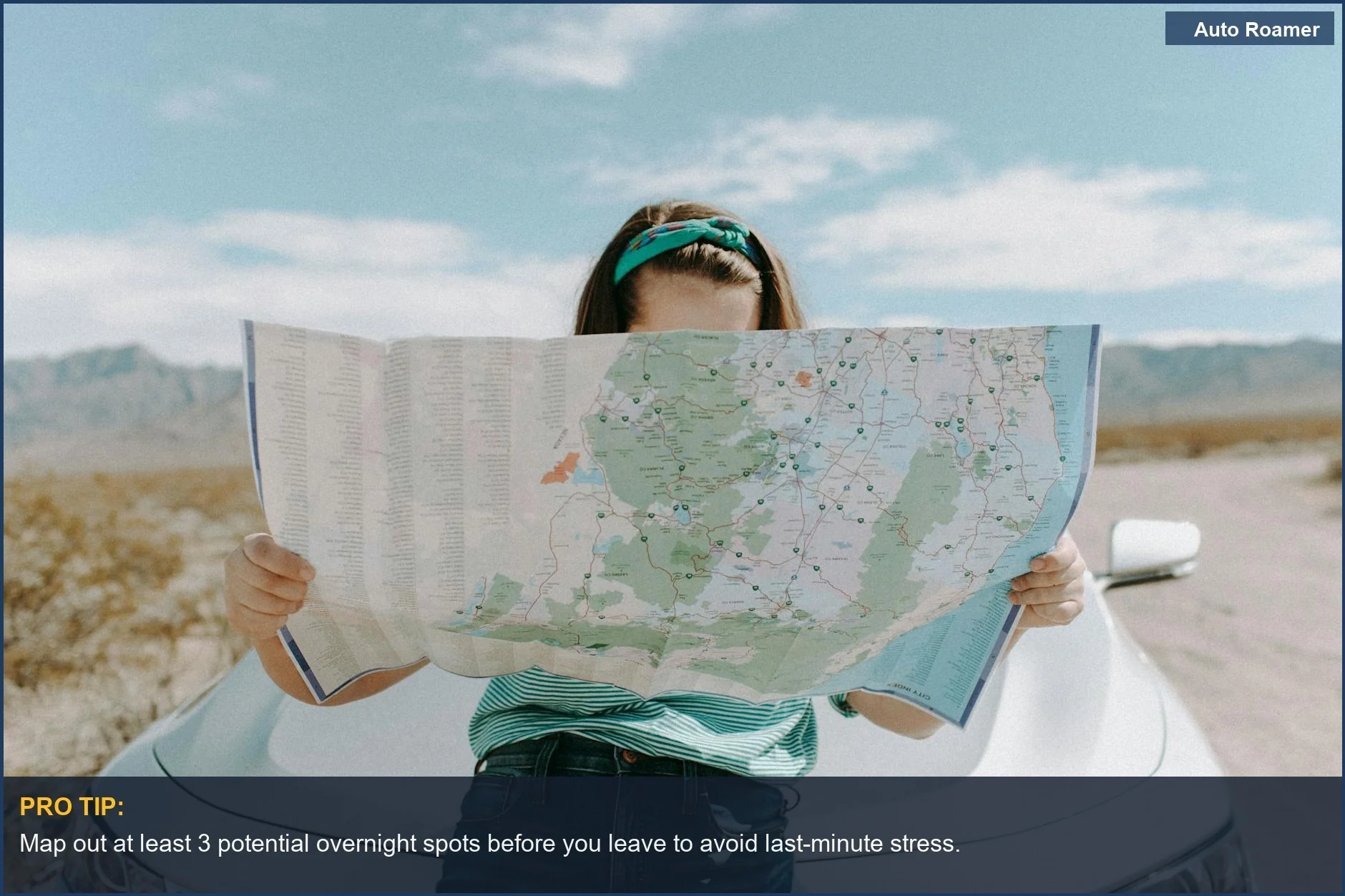
Map out your overnight spots in advance. This is the single most important safety step. Knowing where you'll sleep each night, and having a backup option, eliminates that dangerous scenario of searching for accommodation after dark. Route planning is crucial for solo female travelers.
Pick specific campgrounds, read reviews, and even look at satellite images if possible. The game-time rule: never arrive at a new spot in the dark. It just adds unnecessary stress.
2. Choosing Your Campsite Wisely
This is easy to learn the hard way at a busy state park. Pick a site at the very end of a loop, thinking it will be quiet, and it may be — but it can also feel isolated. The real move: don't hide.
Look for good visibility, moderate foot traffic, and clear exit paths. You want to see who's around, and you want people to see you. Lori Loves Adventure suggests looking at campground maps for two ways out.
Avoid dead ends and tucked-away corners, even if they look pretty. They can also be darker and more isolated. The $50 version of safety is paying for a site in a well-lit, visible area.
3. Securing Your Vehicle
This might seem obvious, but it's easy to forget to lock the doors at a rest stop and wake up in a cold sweat. Always lock your doors.
Sleeping inside a locked vehicle offers more physical protection than tents. Blackout window covers, about $20 on Amazon, add privacy and block out light. Sleeping inside your car provides a secure, sealed environment.
Keep your keys easily accessible, right next to your head. A small panic button on the keychain is a simple thing that adds peace of mind.
4. Communication and Emergency Prep
What nobody tells beginners: tell someone where you're going. A trusted family member should always get your itinerary, even for just a weekend trip.
Share your route and expected return time with a trusted contact. Use GPS tracking apps if you have them. This way, if something goes wrong, someone knows where to look. An outdoor guide recommends having an emergency plan.
I always carry a fully charged phone, an external battery pack, and a physical map. Cell service is not guaranteed, especially in remote areas. A classic rookie mistake is relying solely on a phone's GPS in a dead zone.
Common Questions About is car camping safe for solo women
The questions about solo female car camping share a common thread: safety. Let's tackle some of the real-world concerns.
Is it really safer than tent camping?
Yes, absolutely. A first night alone in a tent feels exposed. Inside a locked car, there's a solid shell around you. Your car can be locked and sealed from strangers, animals, and bad weather.
It's the difference between a fabric wall and a steel one. Plus, you can drive away instantly if you feel unsafe. That's a game-changer for peace of mind.
What about animals, especially bears?
This is a huge fear in bear country, where it's easy to be convinced a bear is going to rip the car door off. The real move: keep all food sealed in airtight containers, preferably in a bear-proof cooler.
Never keep food in your sleeping area. Put the cooler in a separate locked bin or in the trunk if you're sleeping in the back. Bears are usually looking for an easy meal, not a fight. Most risks are natural, like bears or snakes.
Should I carry self-defense items?
This is a personal choice. Many solo campers carry pepper spray and a loud whistle, both easily accessible. You may never have to use them, but knowing they're there helps.
What nobody tells beginners: the best self-defense is awareness and avoiding sketchy situations in the first place. Trust your gut. If a place feels off, leave. Many women affirm it is safe, just be mindful.
Won't I get lonely?
Yes, sometimes. A first solo trip can bring real pangs of loneliness. But it also comes with a profound sense of independence. It's a trade-off.
Having a good book, a podcast, or even just calling a friend for a few minutes helps. It's about embracing the quiet, not fearing it. Loneliness can be part of the journey, but it doesn't define it.
Tips and Best Practices
Field notes from countless solo trips boil down to these practical tips. They're not just theoretical; they're grounded in what actually works.
1. Trust Your Gut Instinct
This is the number one rule. Pull into a spot, catch a weird vibe from the neighboring campers, and the right call is to pack up and move to another site across the park. Best decision ever.
If a location, a person, or a situation feels off, leave. Your intuition is your best safety tool. Don't try to rationalize away a bad feeling. Sleeping in your car makes this quick exit possible.
2. Research Your Campsites Thoroughly
Before you even hit the road, check reviews online, especially those from solo female travelers. Look for comments about safety, noise, and general atmosphere. Google Maps street view is your friend.
Call the campground office if you have specific questions. A common rookie mistake is assuming all campgrounds are created equal. They are not. A guide for solo women recommends using the campground map like a safety preview.
3. Blend In and Don't Advertise You're Alone
It's tempting to put out a cute little camping chair and blanket. A discreet setup is better — you don't want to draw unnecessary attention to yourself.
Park your car facing out for an easy exit. Keep your window coverings up at night. Leaving a pair of men's shoes outside the car gives the impression of company. It's a $15 trick that adds peace of mind. Reddit users suggest a pocket knife and bear mace.
4. Have a Communication Plan
Text a trusted contact every morning and evening when you're on a trip. If they don't hear from you, they should have a plan to check in. This isn't just for emergencies; it's a routine that keeps everyone comfortable.
Consider carrying a satellite messenger if you're going truly off-grid. Cell service is unreliable. Even in popular national parks, there can be huge dead zones.
5. Keep Essentials Accessible
Keys, phone, headlamp, and pepper spray should always be within arm's reach while you sleep. Keep them in a small pouch within easy reach. You don't want to be fumbling around in the dark if you need something.
This is game-time preparedness. The $10 headlamp from Walmart is just as good as a fancy one for finding your keys in the dark. It's about function, not flash.
Real-World Examples
Some approaches work, some don't. Here are a few real-world examples that highlight what actually makes a difference.
Trip 1: Shenandoah Valley, Virginia - October, Honda Civic
- Experience: A first solo trip to a remote, first-come, first-served campsite, arriving after dark — a rookie mistake. The site was beautiful but isolated, and the night was spent hyper-aware of every sound outside.
- Mistake: Lack of pre-planning for the specific site. Arriving in the dark. Not having a backup plan.
It's hard to feel safe enough to truly relax.
- Lesson: Prioritize established campgrounds with visible sites. Plan to arrive with at least 2 hours of daylight left. Solo female road trips need careful campsite strategy.
Trip 2: Assateague Island National Seashore, Maryland - June, Subaru Forester
- Experience: A planned trip to a well-reviewed campground, choosing a site near the ranger station and a bathroom. There's still privacy but also a sense of community, with wild horses grazing in view of the car.
- Success: Strategic campsite selection. Being close to amenities and other people. The car felt like a secure bubble.
It made for eight hours of sound sleep.
- Lesson: Proximity to other campers and park staff can significantly boost your feeling of safety without sacrificing the outdoor experience.
Trip 3: Great Smoky Mountains National Park, Tennessee - August, Toyota Rav4
- Experience: Dispersed camping on forest service land, which is more remote. The area was researched extensively beforehand, noting cell service blackouts, with an external battery and pre-downloaded maps on hand.
- Success: Thorough communication plan with a friend. Knowing the limitations of cell service. Having multiple ways to navigate and charge devices.
That preparation makes the isolation manageable.
- Lesson: For more remote camping, your communication and navigation setup is game-time critical. Don't rely on a single device.
Key Takeaways
Learned the hard way over many trips, here are the key takeaways for solo women considering car camping. These are the things that actually matter for safety and peace of mind.
- Your Car is Your Fortress: This is the big one. Sleeping in a locked vehicle is inherently safer than a tent. It's your mobile home and your escape route. A locked vehicle provides protection from strangers, animals, and weather.
- Plan, Don't Wing It: The rookie mistake of arriving in the dark is a huge stressor. Always plan your route and know exactly where you're sleeping. Have a backup site in mind.
- Campsite Selection is Key: Choose well-trafficked, visible sites. Avoid isolated corners, especially as a beginner. Look for sites with clear sightlines and easy exits. Using a campground map to scout your site is a powerful tool.
- Trust Your Gut: If a place or situation feels off, leave. No campsite is worth ignoring your intuition. The $0 cost of driving to a new spot is worth every penny.
- Communicate Your Plans: Tell someone where you're going and when you expect to check in. This simple step can be a lifesaver if something unexpected happens. Starting 2026 with a cozy winter camping shows the peace that comes with preparation.
- Keep Essentials Accessible: Keys, phone, headlamp, and any self-defense items should always be within arm's reach. Don't fumble in the dark. This is game-time readiness.
Solo car camping as a woman is not just safe; it's incredibly empowering. It's about taking control of your adventure, one well-planned, secure night at a time.