
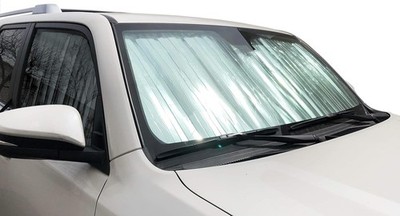
Before You Buy: The Three Measurements That Decide Fit
Sun shades are sold on one dimension, usually a width, and a windshield is not one dimension. Take these three numbers before you look at a single listing. It takes about ninety seconds and it is the entire difference between a shade that seals and one that leaves a four inch strip of dashboard in full sun.
| # | Measurement | Where | What it controls |
|---|---|---|---|
| 1 | Maximum width | Across the glass at its widest point, which on most cars is an inch or two above the dashboard, not at the mirror | Whether the shade reaches both A-pillars, or leaves wedges of exposed glass at the corners |
| 2 | Centre height | Dash top to headliner, straight up the middle, going around the mirror housing rather than under it | Whether the top edge tucks behind the mirror or floats below it |
| 3 | Pillar height | The same top-to-bottom distance taken beside each A-pillar | The one nobody takes. It is always shorter than the centre, and it is what decides whether the shade jams or slumps |
Write all three down. The shade you want is the one whose stated dimensions cover the largest of them, because a shade can always be tucked and never stretched.
Why Windshield Rake Breaks the Number on the Box
A windshield is not a flat pane standing upright. It is a curved surface leaning back over the dashboard, and the shade lies against that surface. Those two facts wreck the intuition people size by.
Lean the glass back and the surface you have to cover grows while the opening you see from the driver's seat does not. A tape held straight across the cabin measures the shortcut through the air. A tape run along the glass measures what the shade actually has to span, and on a steeply raked windshield the second figure is meaningfully larger than the first. Sizing off the shortcut is how a shade ends up an inch or two short at both ends.
Curvature does the same thing in the other axis. Modern windshields are curved in two directions, so a shade cut as a flat rectangle has to buckle somewhere to sit against them. That buckle is why a generic shade sags in the middle even when its printed width is right, and it is why a custom-cut panel is a different shape from the flat rectangle you would draw yourself.
The rule that falls out of both: follow the glass with the tape. You are covering a surface, so measure the surface. A shade cut to that arc is very slightly generous when laid flat, and generous is the side you want to be on.
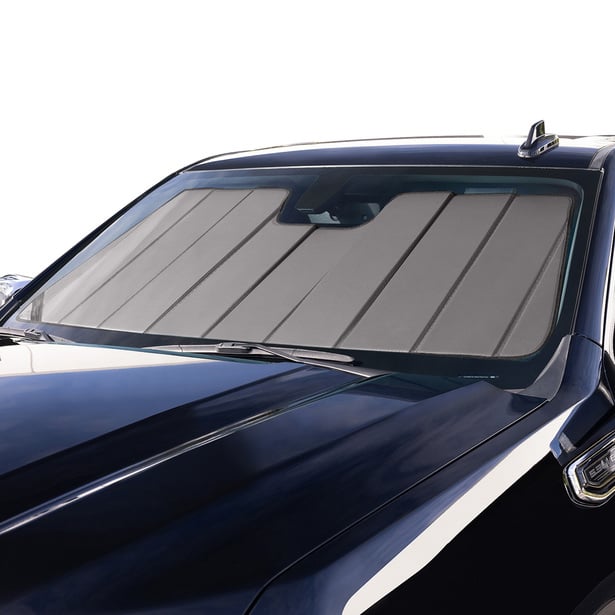
Where to Put the Tape, and Where Not To
The measurement itself is where most of the error creeps in. Four things to do, one to avoid.
- Measure from inside the car. The shade goes inside, against the glass, inside the black ceramic border. Measuring the outside of the windshield includes the frit band and the trim, and over-reads by an inch or more per side.
- Use a fabric or flexible tape, not a steel rule. A steel rule bridges the curve instead of following it, which reproduces exactly the shortcut error above.
- Go around the mirror, not under it. The mirror housing, the rain sensor pod and, on newer cars, a driver-assistance camera bracket all live at the top centre. Measure the height you actually have beside that cluster; the shade needs a notch or it needs to stop below it.
- Take the widest width, not the width at eye level. The glass tapers toward the roof on almost every vehicle, so the number that matters is near the dash.
What not to do: do not size from your vehicle's exterior width, its wheelbase, or a class label like ‘mid-size SUV’. Two vehicles in the same class routinely differ by several inches of glass, and a class label is a marketing category, not a dimension. The same logic applies to any interior fitment question — see sizing a mattress to your vehicle.
Published Shade Dimensions to Measure Against
Here are the stated dimensions of the shade types on this page, so you have something concrete to hold your three numbers against. These are the makers' own published figures, not measurements taken here.
| Shade | Published size | Construction | Sizing behaviour |
|---|---|---|---|
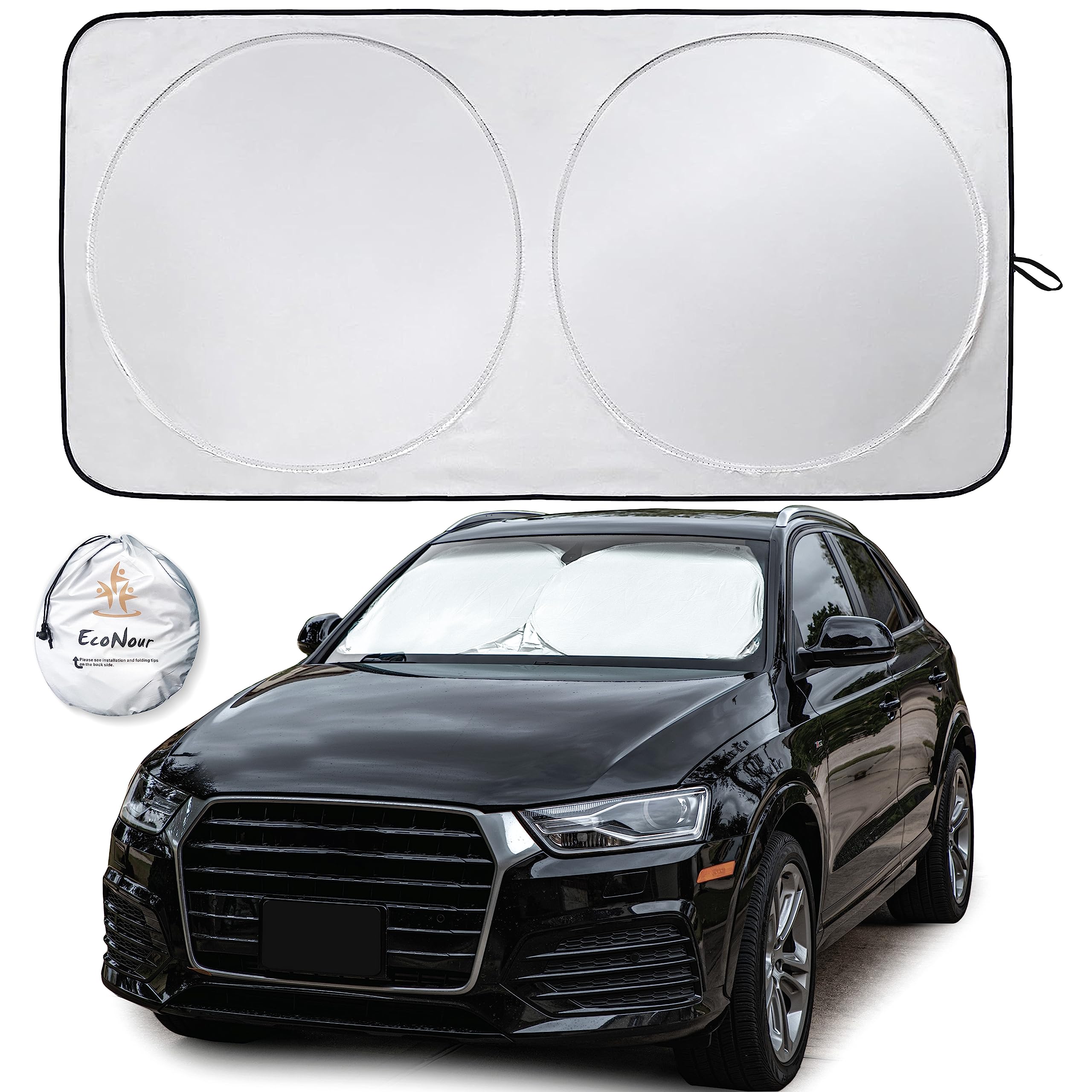
| EcoNour universal | 59 x 29 in up to 69 x 35 in, several sizes | Wire-edge polyester, twists into a disc | Buy up: the wire edge lets a slightly oversized one bow into the corners |
| Magnelex accordion | 63 x 33.5 in standard | Reflective foil over a foam core | Rigid panel — oversize does not tuck, it jams. Match the pillar height, not the centre |
| Aootek umbrella style | 57 x 31 in medium | Ribbed umbrella mechanism | The centre shaft sets the minimum height it can occupy; check mirror clearance first |
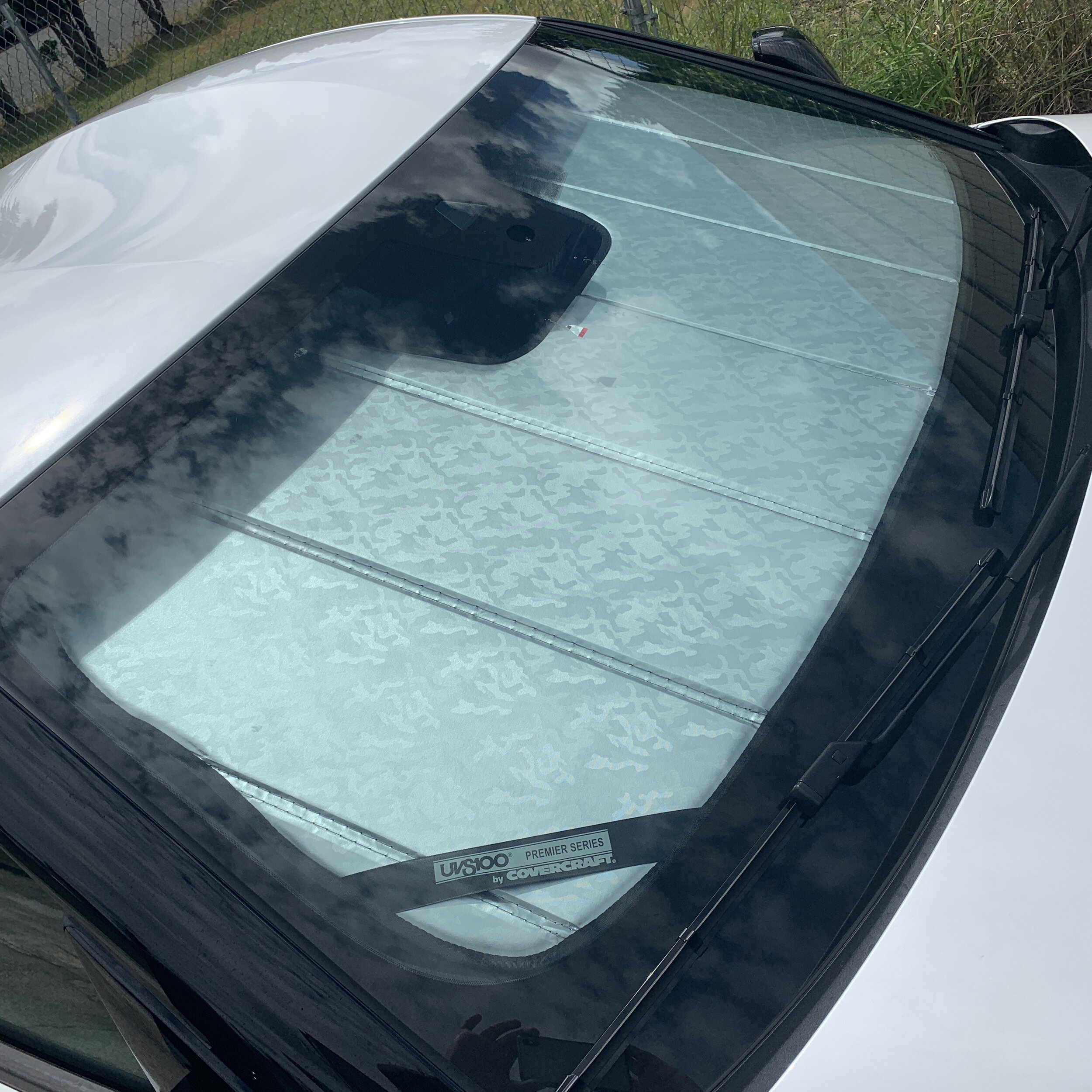
| Covercraft UVS100 | Cut per year, make, model and trim | Multi-layer reflective with a foam core, accordion fold | No measurement needed if the fitment lookup is right — and no recovery if it is wrong |
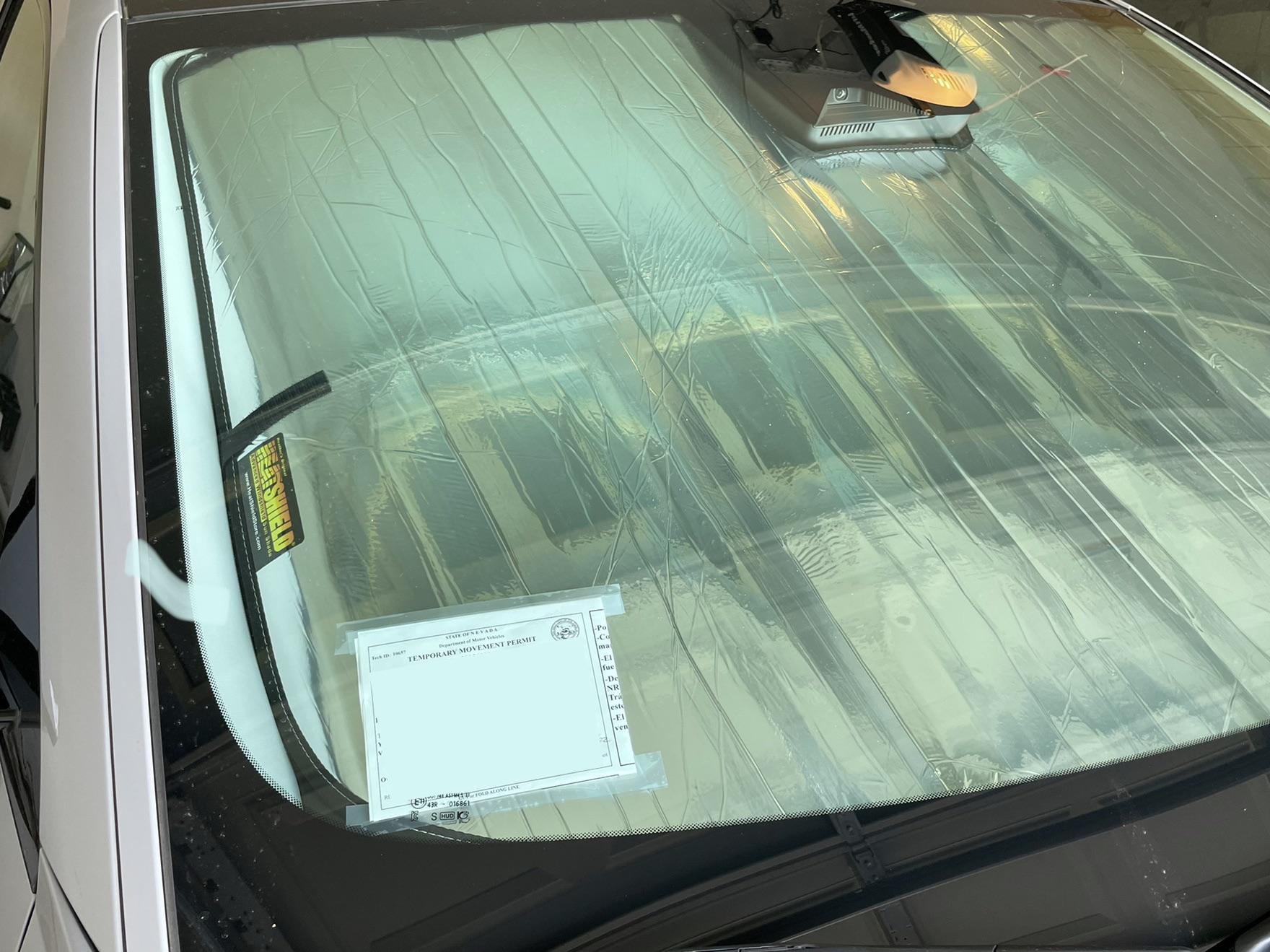
| HeatShield custom-fit | Cut per year, make, model and trim | Reflective laminate, rolls into a cylinder | Same fitment logic, stores in far less space |
Read the third column as the actual advice. A flexible wire-edge shade forgives an extra inch; a rigid accordion panel does not. That single distinction decides whether you should round your measurement up or down.
Custom-Fit vs Universal: What the Gap Costs
The honest comparison is not about quality. Both categories reflect. It is about what a gap does.
A sun shade works by reflecting solar radiation before it lands on the dashboard, and a dashboard in direct sun is a genuinely hostile place — Car and Driver reports interior temperature reductions on the order of 40 degrees F from a properly fitted shade. That figure assumes the glass is covered. A shade that leaves a strip along the bottom edge is not delivering a fraction of the benefit; it is delivering the benefit everywhere except the exact spot where the sun is landing on the dash top.
Custom-cut shades exist to close that strip. They are cut to a specific year, make, model and trim, so they reach into the corners a rectangle cannot, and they need no measurement from you at all — provided the fitment lookup is correct. Get the trim wrong and you own a shade for a car you do not have, with no adjustment available.
The trade in one line: a universal shade is forgiving about being wrong and never quite right; a custom shade is exactly right or entirely wrong. Which risk you prefer is the actual decision.
One thing neither category fixes: side glass. A windshield shade covers the windshield. If the goal is a cool cabin rather than an intact dashboard, the side windows are the next largest aperture and no windshield product addresses them.
Use Cases: Matching a Shade to How You Actually Park
Fit is one axis. The other is how often you will actually put the thing up, which is the axis that decides whether it protects anything at all.
- Steeply raked windshield, tall glass, and you park outdoors all day. Custom-cut, accordion or roll. The raked glass is exactly where universal shades fall short, and daily all-day exposure justifies the fitment work.
- Ordinary sedan glass, in and out of the car constantly. A wire-edge universal that twists into a disc. It is a two-second deploy and a two-second stow, and a shade you use every time beats a better shade you use twice a week.
- Small cabin, no storage room. The roll-up laminate style. It stores as a cylinder in a door pocket instead of a flat panel that has to live somewhere.
- Deep dashboard with a lot of glass and a heavy mirror cluster. Rigid accordion, sized to the pillar height rather than the centre height. Foam-cored panels hold their shape against a long dash top instead of slumping into it.
- Umbrella style, if the deploy speed is the whole point. Fastest to open and close by a wide margin. Check the mirror clearance before you buy, because the centre shaft has to sit somewhere.
- Second car, rental, or a vehicle you are about to change. A cheap universal in the right size. There is no case for a custom-cut panel on a car you will not keep.
Notice that four of those six are decided by behaviour rather than by geometry. Fit gets the shade to work; convenience decides how many days a year it is deployed.
The Fitment Mistakes That Waste the Purchase
Five failure modes account for almost every returned sun shade, and all five are sizing errors wearing different clothes.
- Sized off the printed width alone. A shade that is wide enough and two inches short leaves the dash top exposed along its entire length — the worst possible strip to miss, because that is where the sun lands at midday.
- Measured across the cabin instead of along the glass. Under-reads on any raked windshield. Covered above; it is the single most common version of this mistake.
- Bought oversize for a rigid accordion. On a flexible shade an extra inch bows into the corner and helps. On a foam-cored panel it will not compress, so it either will not seat or it bends permanently and stops sitting flat afterwards.
- Ignored the mirror and sensor cluster. Newer cars carry a rain sensor and a camera bracket alongside the mirror. A shade with no notch has to stop below the whole assembly, which costs several inches of coverage the box never mentioned.
- Relied on suction cups to hold the size wrong. Suction cups are a convenience feature, not a fit correction, and they lose grip through exactly the heat cycling you bought the shade to prevent. A correctly sized shade is held by the visors and by friction against the pillars.
Named, not linked: the shades in the table above are named for their published dimensions, which is what a sizing page needs. Amazon blocks automated checks from this server, so we cannot currently confirm that any specific listing is live and selling the product it claims — and rather than send you to a page nothing has verified, we have left the links off. Take your three measurements to whichever retailer you prefer.