
Car Accessories

How to Choose the Right Tire Inflator for Your Car's Needs

Casey - The Weekend Warrior
5 min read
Includes Video

Choosing a car tire inflator can feel like picking a lottery ticket in a hurricane of options. You've got everything from tiny keychain gadgets to full-on air compressors that look like they belong in a mechanic's shop Car and Driver .

Choosing a car tire inflator can feel like picking a lottery ticket in a hurricane of options. You've got everything from tiny keychain gadgets to full-on air compressors that look like they belong in a mechanic's shop Car and Driver. My first run-in with a flat tire happened at 10 PM on a back road in rural Pennsylvania, miles from anywhere.

I had zero tools, zero knowledge, and a whole lot of regret for not having a simple tire inflator AutoGuide.com.

It's not just about getting air in your tires; it's about getting the right amount of air, safely and efficiently. The wrong choice means you might be waiting hours for roadside assistance or, worse, driving on underinflated tires that wreck your fuel economy and your rubber Bridgestone.

Forget the fancy marketing jargon. We're talking about what actually works when you're stranded, not what looks good on a shelf. This isn't about engineering specs; it's about real-world situations and making sure you're not the person I saw trying to use a bicycle pump on a truck tire.
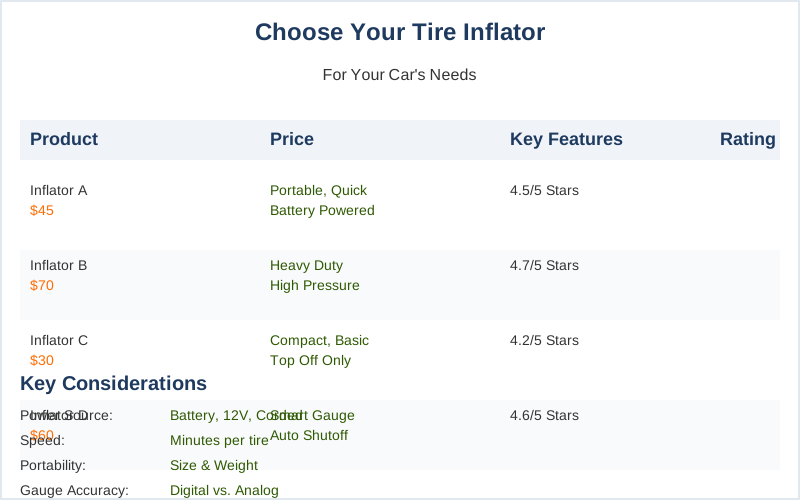
How to Choose the Right Tire Inflator for Your Car's Needs — Key Specifications Compared
Key specifications for How to Choose the Right Tire Inflator for Your Car's Needs

The Core Answer

The biggest thing nobody tells beginners about tire inflators is that they're not all built to the same standard. Some are designed to just top off a tire that's slightly low, while others can take a completely flat tire and get it to a drivable pressure in just a few minutes MotorTrend. Think about your typical driving. Are you mostly cruising on paved roads, or do you venture onto rougher terrain where a slow leak is more likely? If you're just topping off your tires once a month, a smaller, battery-powered unit might be fine. But if you've ever had a nail in your tire or a slow leak that needs constant attention, you need something with more oomph. For most people, the sweet spot is an inflator that can reach at least 100 PSI. Why 100 PSI? Because that's generally more than enough to get any standard car tire up to its recommended pressure, which is usually somewhere between 30 and 40 PSI Tameson.com. Going higher than that is usually overkill for everyday car tires but might be useful if you ever need to inflate something like a truck tire to a higher setting. Another crucial factor is how fast the thing actually pumps. I once bought a cheap inflator that took 20 minutes to add 5 PSI to a tire. That's not a tool; that's a workout. Look for inflators that are rated for a decent airflow, often measured in liters per minute or cubic feet per minute, though many don't list this clearly. The honest version: it's usually tied to the PSI rating and the motor size. Corded vs. Cordless is a big decision. Corded units plug into your car's 12-volt outlet. They're usually more powerful and don't have battery life to worry about, but you're tethered to your car. Cordless units have batteries, offering more freedom, but you need to make sure the battery is charged and has enough juice to do the job. I learned this the hard way when my cordless inflator died halfway through filling my third tire on a freezing morning in Ohio. So, the real move is to consider both power and portability. You want something that can handle your needs but is also easy to store and use without a ton of hassle. Don't fall for the $20 ones that look like toys; they'll leave you stranded.
For those who love outdoor adventures, finding the right inflator for your trips is essential, as discussed in our article on car camping inflators.
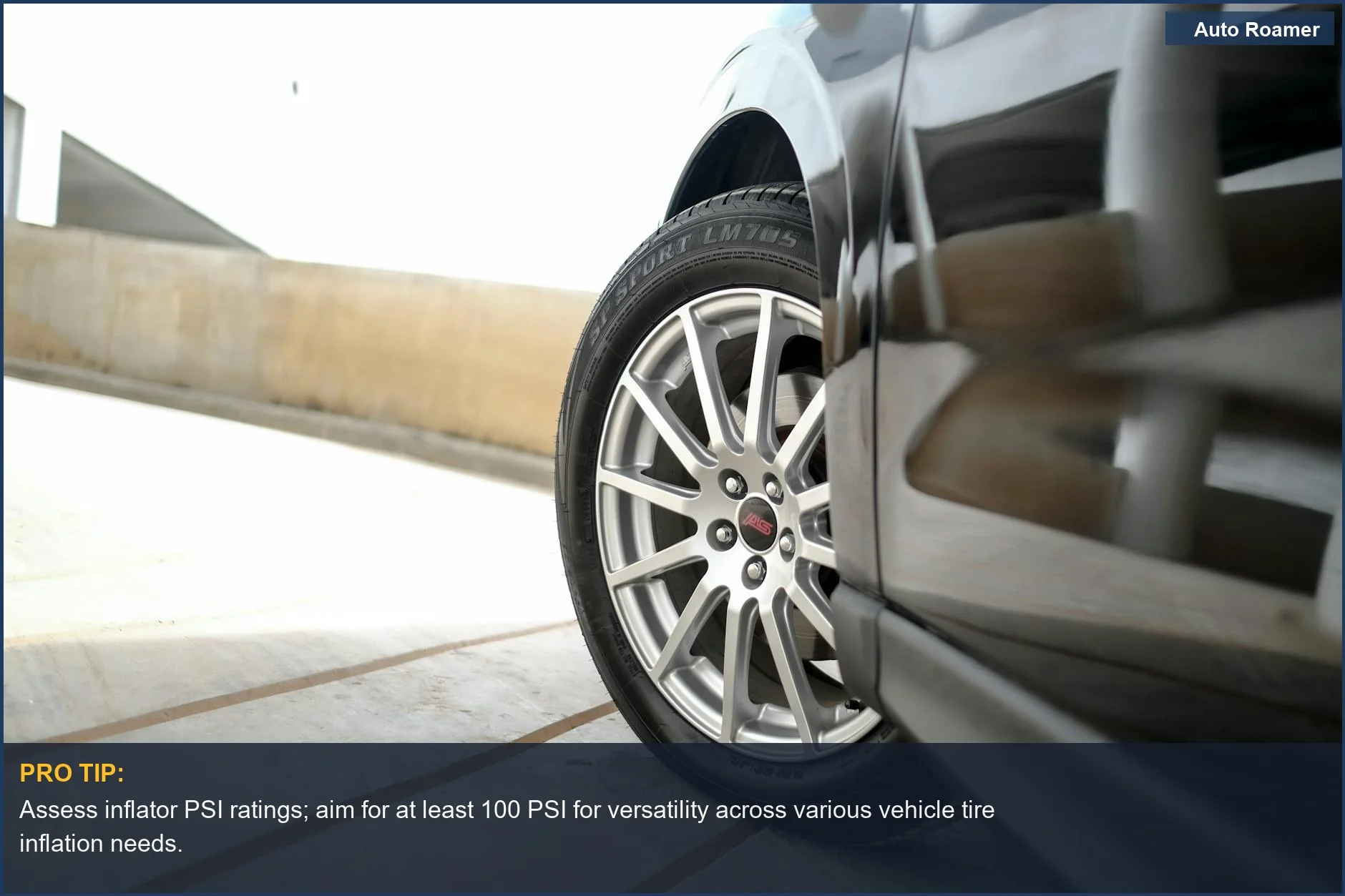
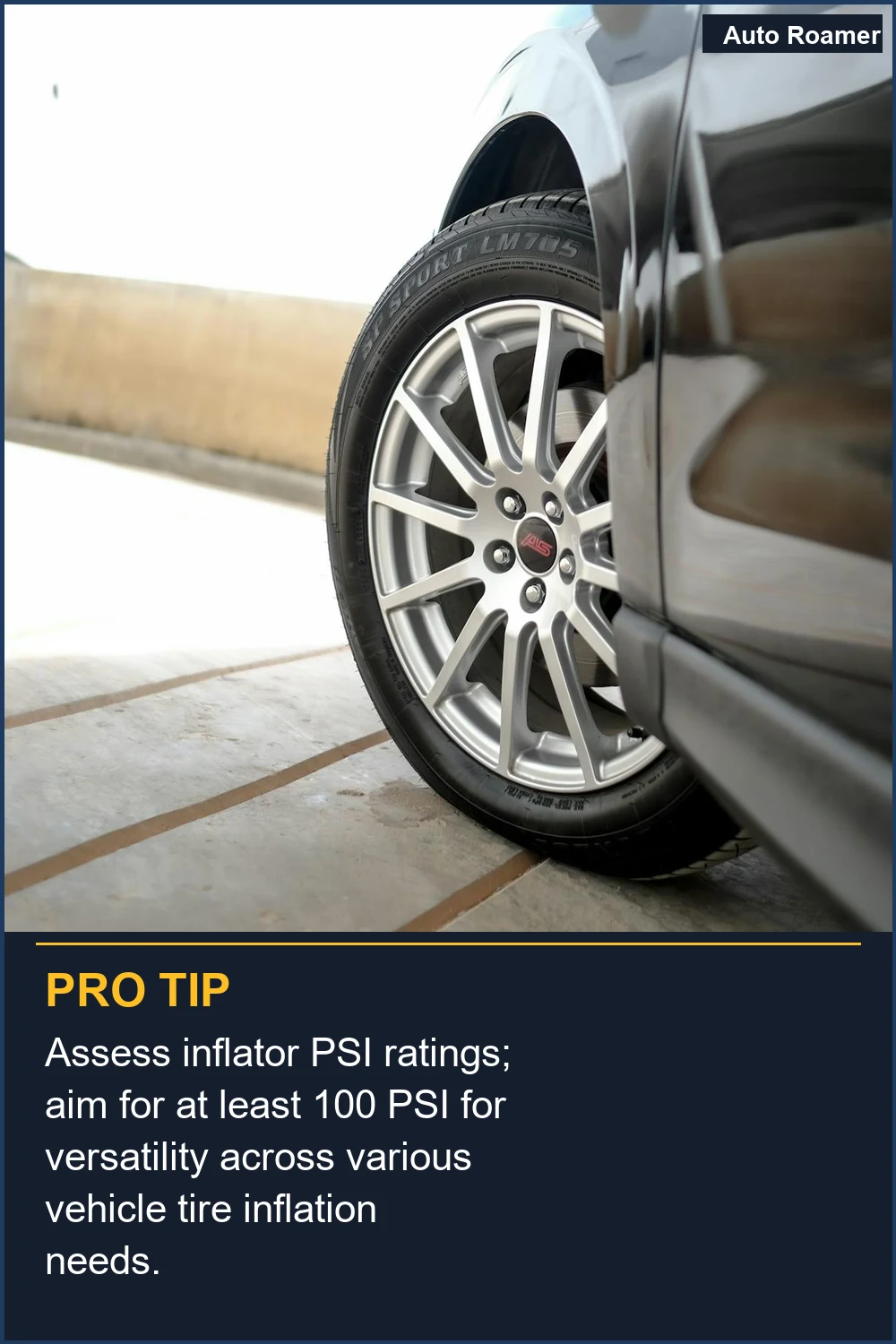
Assess inflator PSI ratings; aim for at least 100 PSI for versatility across various vehicle tire inflation needs.
Not all car tire inflators are created equal. Understand the difference between basic top-off units and powerful ones that can inflate a flat tire quickly. | Photo by Ayyeee Ayyeee

Why This Matters for Your Setup

Why does any of this matter when you're just trying to get to the campsite? Because a properly inflated tire is safer and saves you money. My first camping trip involved a leaky tire on the highway, and I spent a good hour at a gas station trying to get enough air in it to make it the remaining 30 miles. It was miserable, and I know I burned extra gas on the way. Here's the breakdown:
  • Fuel Economy: Underinflated tires are like dragging an anchor. They increase rolling resistance, and your engine has to work harder. This means fewer miles per gallon, which adds up, especially on longer road trips AutoGuide.com. I noticed a solid 2 MPG improvement after I started consistently checking and topping off my tires.
  • Tire Lifespan: Over time, tires that are consistently underinflated wear unevenly. This means you'll be buying new tires sooner than you should. It's a rookie mistake that costs you hundreds of dollars down the line.
  • Safety and Handling: Properly inflated tires grip the road better, stop shorter, and handle more predictably. This is critical when you're navigating winding mountain roads or dealing with unexpected obstacles. I felt a huge difference in my car's stability after I started using a reliable inflator.
  • Convenience: Imagine this: it's 6 AM, you're packing up, and you notice a tire is low. Instead of driving to a gas station and fumbling with quarters, you pull out your portable inflator and have it fixed in 5 minutes. That's game-time.
  • To keep your TPMS functioning well, it's essential to choose a compatible portable tire inflator for your vehicle.
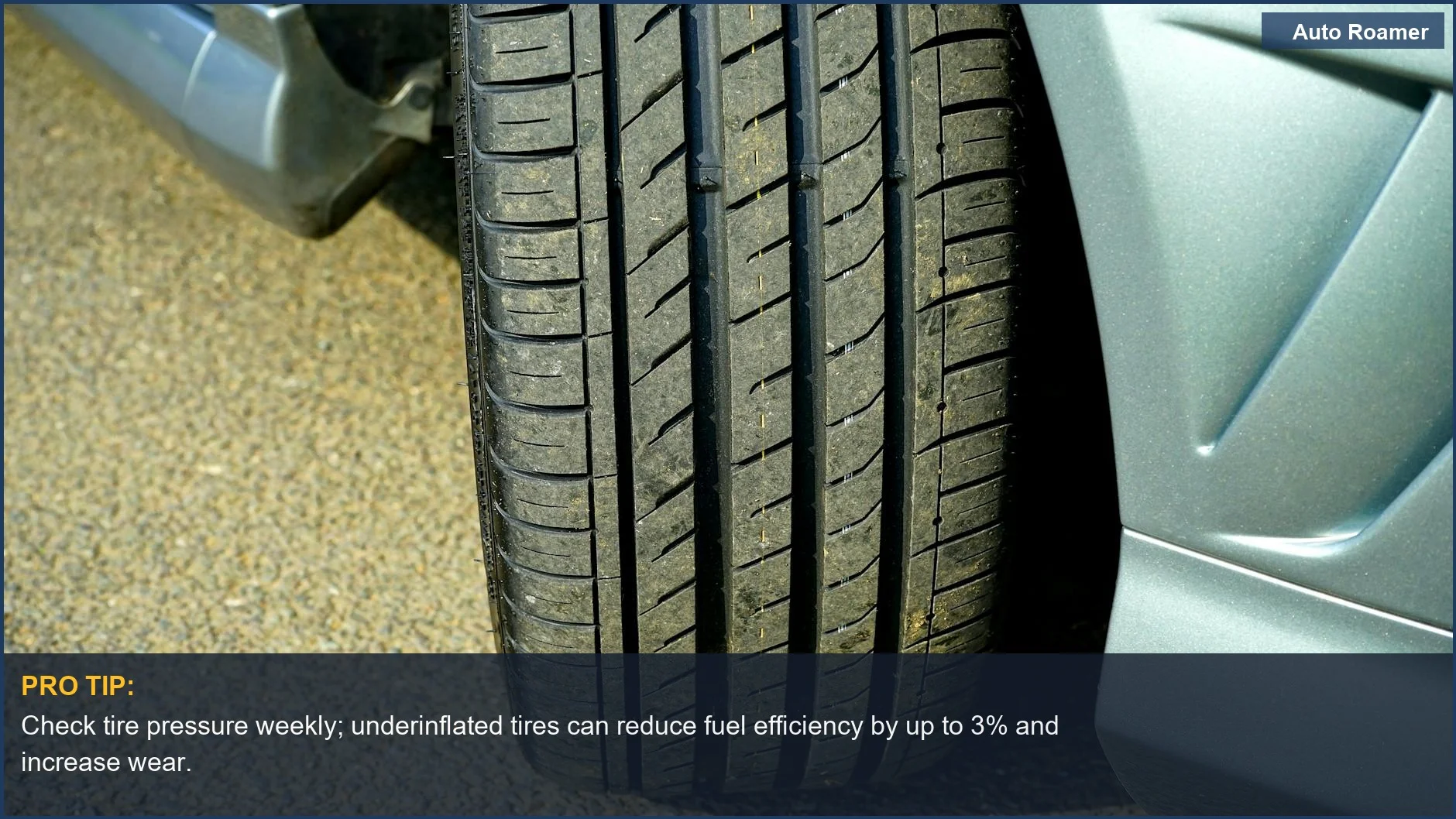
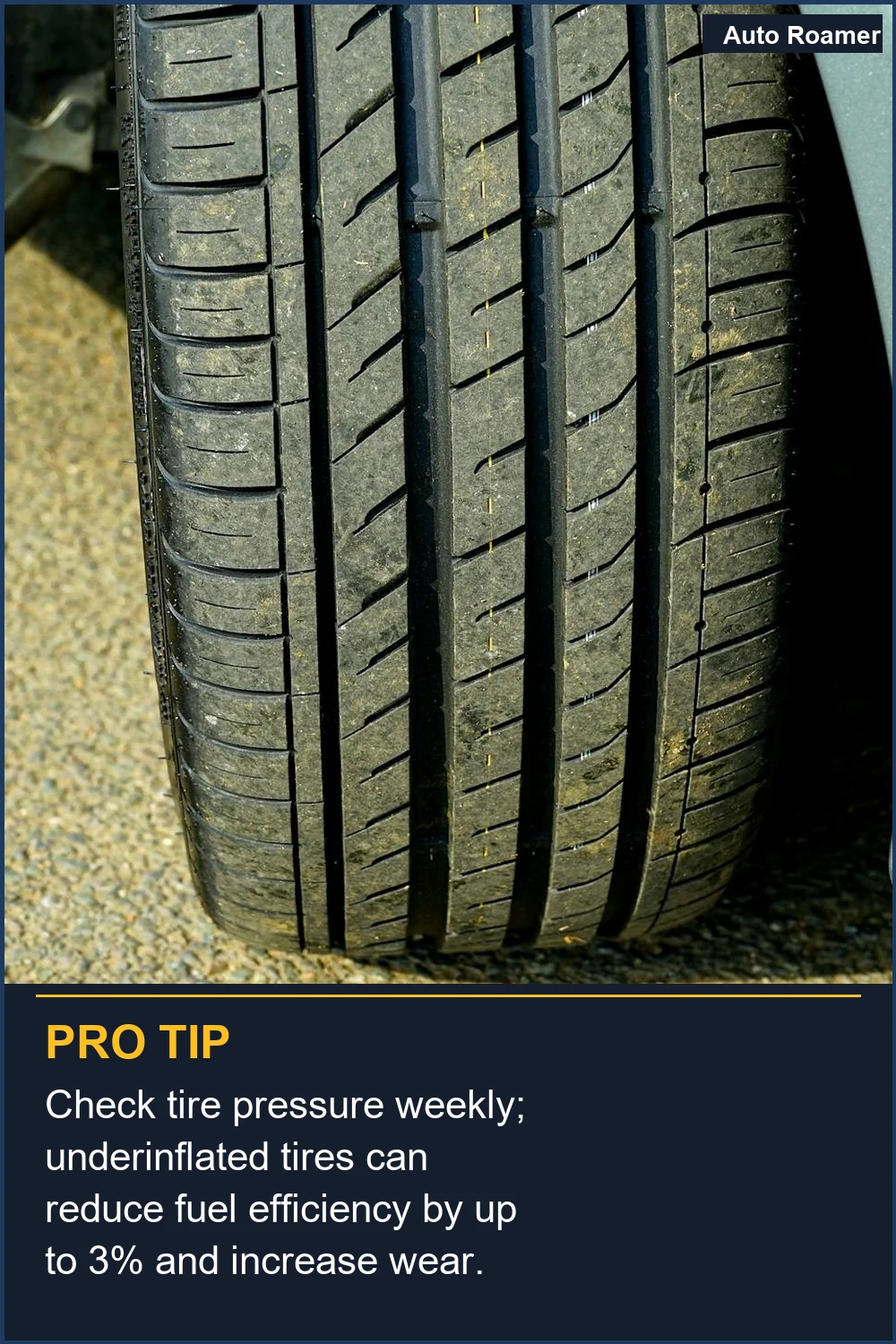
    Check tire pressure weekly; underinflated tires can reduce fuel efficiency by up to 3% and increase wear.
    Properly inflated tires, like this one with deep tread, are crucial for safe driving and saving money on gas. Learn how to choose the right tire inflator. | Photo by Mike Bird

    Making the Right Choice

    Picking the right tire inflator is about matching the tool to your lifestyle. Don't overbuy if you don't need it, but definitely don't skimp if you rely on your vehicle for more than just commuting. Consider these points:
  • Your Vehicle Type: A small car might be fine with a basic unit, but a truck or SUV with larger tires needs something more robust Reddit. My neighbor's F-150 eats basic inflators for breakfast.
  • Your Typical Use: Are you topping off weekly, or do you only check pressure when the warning light comes on? This dictates the speed and power you'll need.
  • Power Source: Do you prefer the freedom of cordless, or the reliability of a corded unit plugged into your car?
  • My first inflator was a $30 battery-powered one that barely made it through two tire tops. The $70 one I have now, which plugs into my car, has been a lifesaver on multiple occasions. It's about investing in reliability when it comes to your car's safety.
    To ensure you're well-prepared for unexpected situations, consider exploring the best portable tire inflators for emergency use in our article best portable tire inflators.
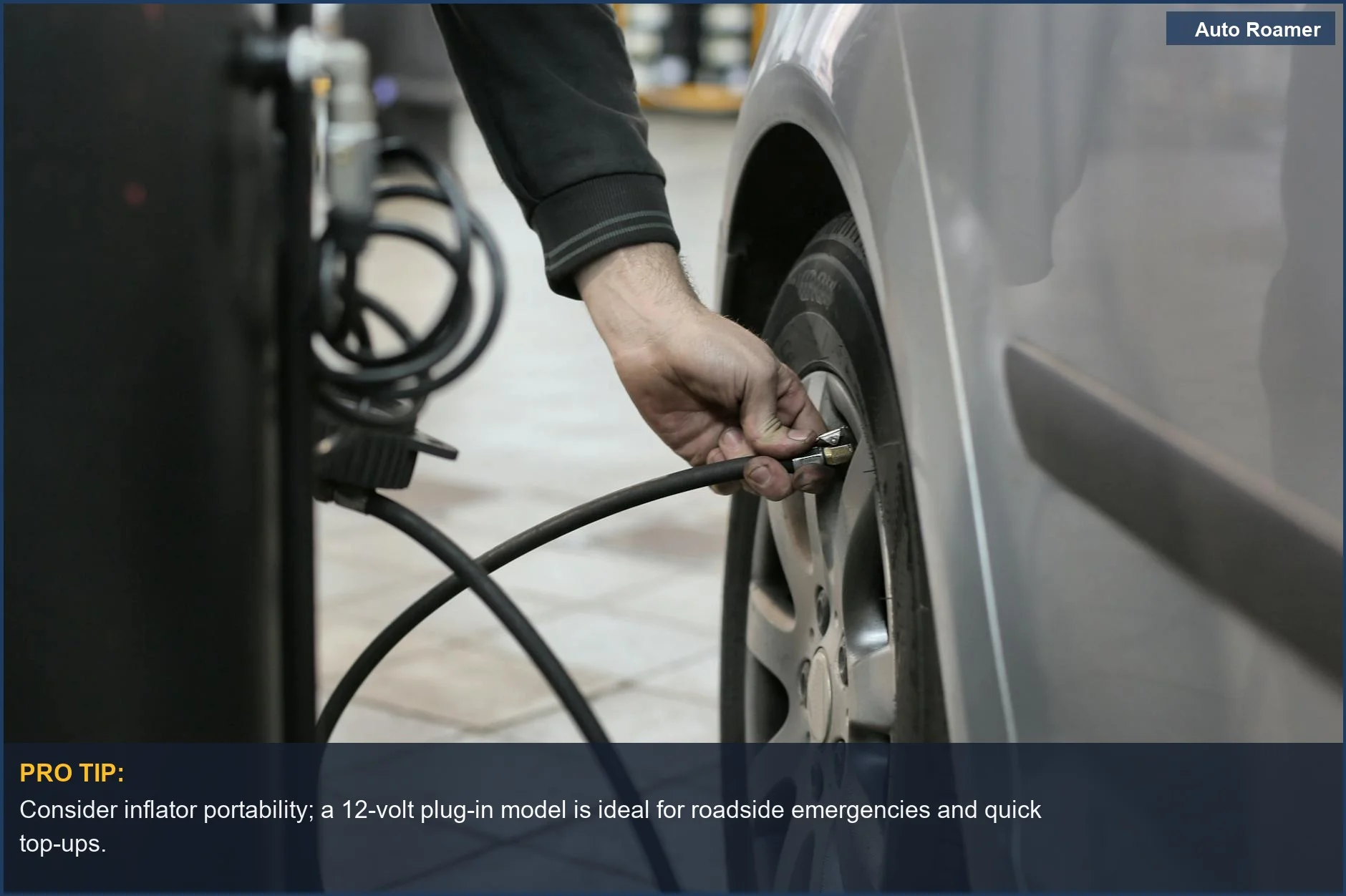
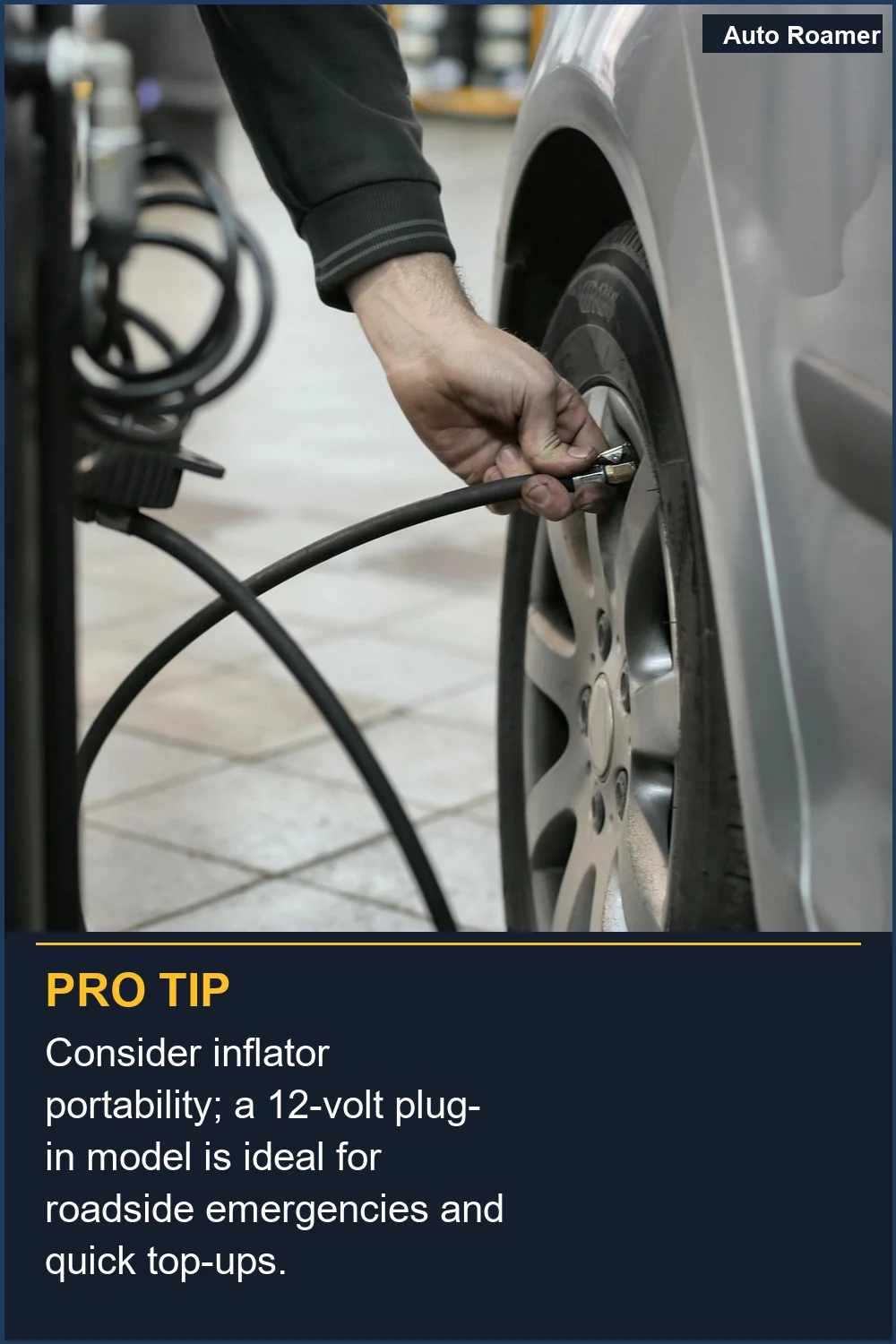
    Consider inflator portability; a 12-volt plug-in model is ideal for roadside emergencies and quick top-ups.
    A mechanic ensures optimal tire pressure, highlighting that choosing the right car tire inflator depends on your lifestyle and vehicle needs. Don't skimp on reliability. | Photo by Andrea Piacquadio

    Frequently Asked Questions

    Is it cheaper to buy a tire inflator myself or just pay the tire shop to top up my air when needed?
    Buying a decent portable tire inflator, say in the $40-$70 range, pays for itself after a few uses compared to paying a shop $5-$10 each time. My $50 inflator has already saved me probably $100 in shop visits and gas station fees over the last two years. Plus, you can't beat the convenience of doing it yourself at home or on the road.
    Do I really need one of those fancy digital tire inflators with a built-in pressure gauge?
    Honestly, yes. Trying to guess your tire pressure with one of those old-school analog gauges is like trying to land a plane by looking out the window. A digital gauge on the inflator itself is way more accurate and makes setting the correct pressure a breeze. My first inflator had a wonky gauge that overinflated my tires, leading to a rough ride until I figured it out.
    What if my tire inflator just stops working halfway through filling a tire?
    That's exactly why you need a reliable unit. If your inflator dies mid-fill, the best move is to have a backup plan, like knowing the location of the nearest gas station with an air pump. For me, it meant a frantic call to roadside assistance on a freezing night in West Virginia. Always check your inflator's charge or connection before you leave home.
    Can using a cheap tire inflator permanently damage my car's tires?
    Using a cheap inflator that overinflates your tires can absolutely cause damage. Overinflation puts excessive stress on the tire's internal structure and can lead to premature wear, reduced traction, and even blowouts. My friend's cheap inflator consistently overshot the target PSI, and he had to replace his tires a year earlier than expected.
    Is it true that I can just use a CO2 cartridge to inflate my tires in a pinch?
    Sure, you *can* use CO2 cartridges for a quick top-off, but it's not a long-term solution for car tires. CO2 leaks out of tires much faster than regular air, and it's expensive to keep buying cartridges. Plus, you can't easily regulate the pressure. It's more of a bicycle or emergency fix, not something for everyday use.

    🏅 Looking for Gear Recommendations?

    Check out our tested gear guides for products that work with this setup:

    C

    Casey - The Weekend Warrior

    Weekend car camper and road trip enthusiast. Focuses on practical, budget-friendly solutions for families and first-time campers.

    Sources

    Related Articles