
How Much Weight Can a Hitch Cargo Carrier Hold?
The weight limit of a hitch cargo carrier isn't just about what the carrier itself can hold; it's a complex dance involving your vehicle's hitch, your vehicle's frame, and the physics of a moving load. Ignoring these limits can turn a simple trip into a roadside disaster, and trust me, I've seen enough forum posts about snapped racks to know it's not worth the gamble.
The weight limit of a hitch cargo carrier isn't just about what the carrier itself can hold; it's a complex dance involving your vehicle's hitch, your vehicle's frame, and the physics of a moving load. Ignoring these limits can turn a simple trip into a roadside disaster, and trust me, I've seen enough forum posts about snapped racks to know it's not worth the gamble.
It's about more than just the advertised '500 lb capacity' on the box; that's often just the starting point for the conversation. You need to understand what your vehicle can actually handle before you start loading it up like a pack mule. My first time I just eyeballed it and hoped for the best. Rookie mistake. car towing capacity can be high, but tongue weight is a different beast entirely.
The Core Answer
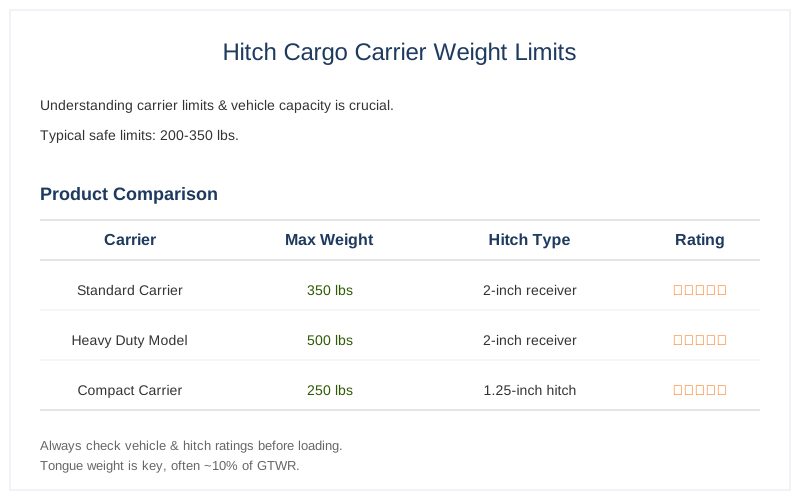
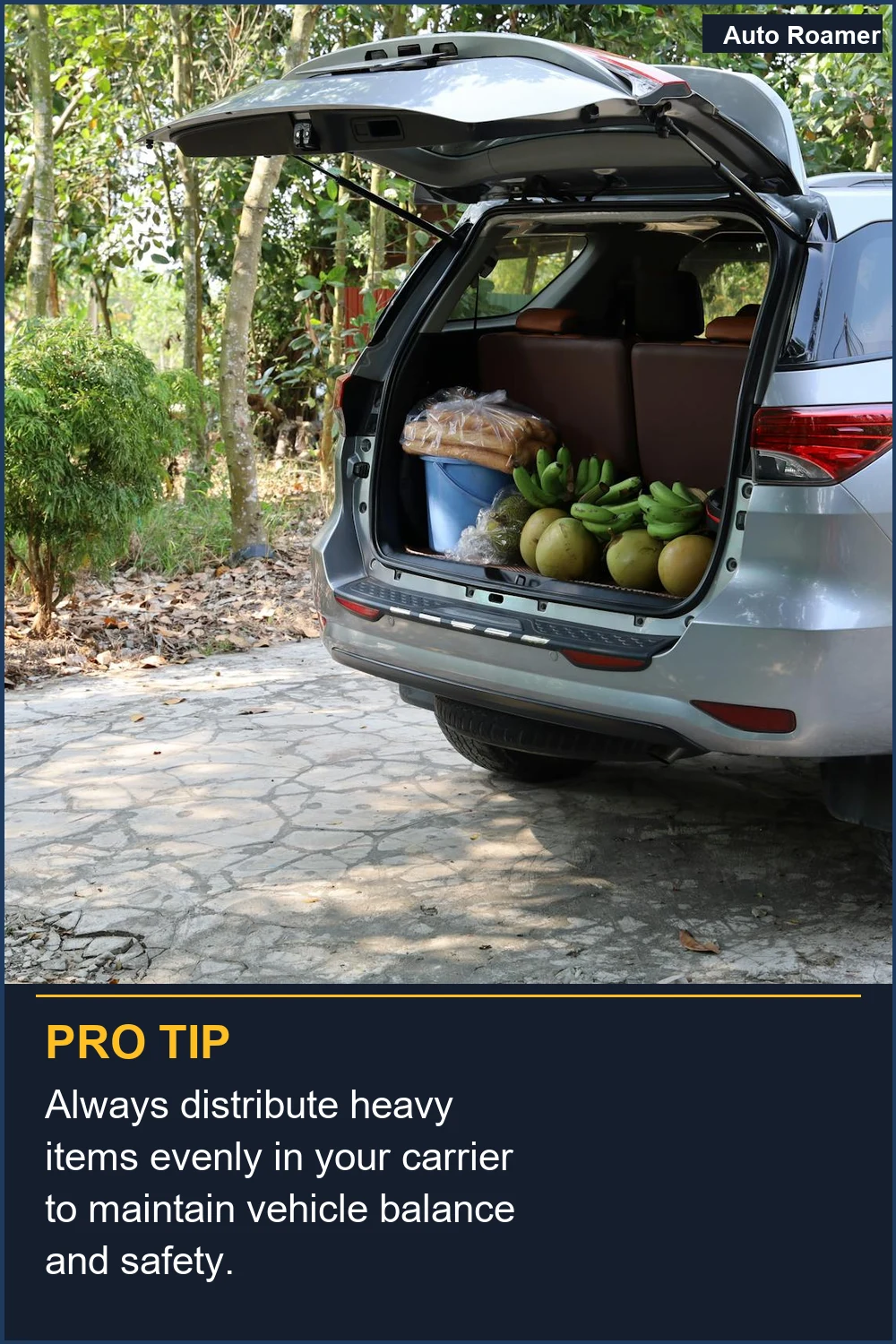
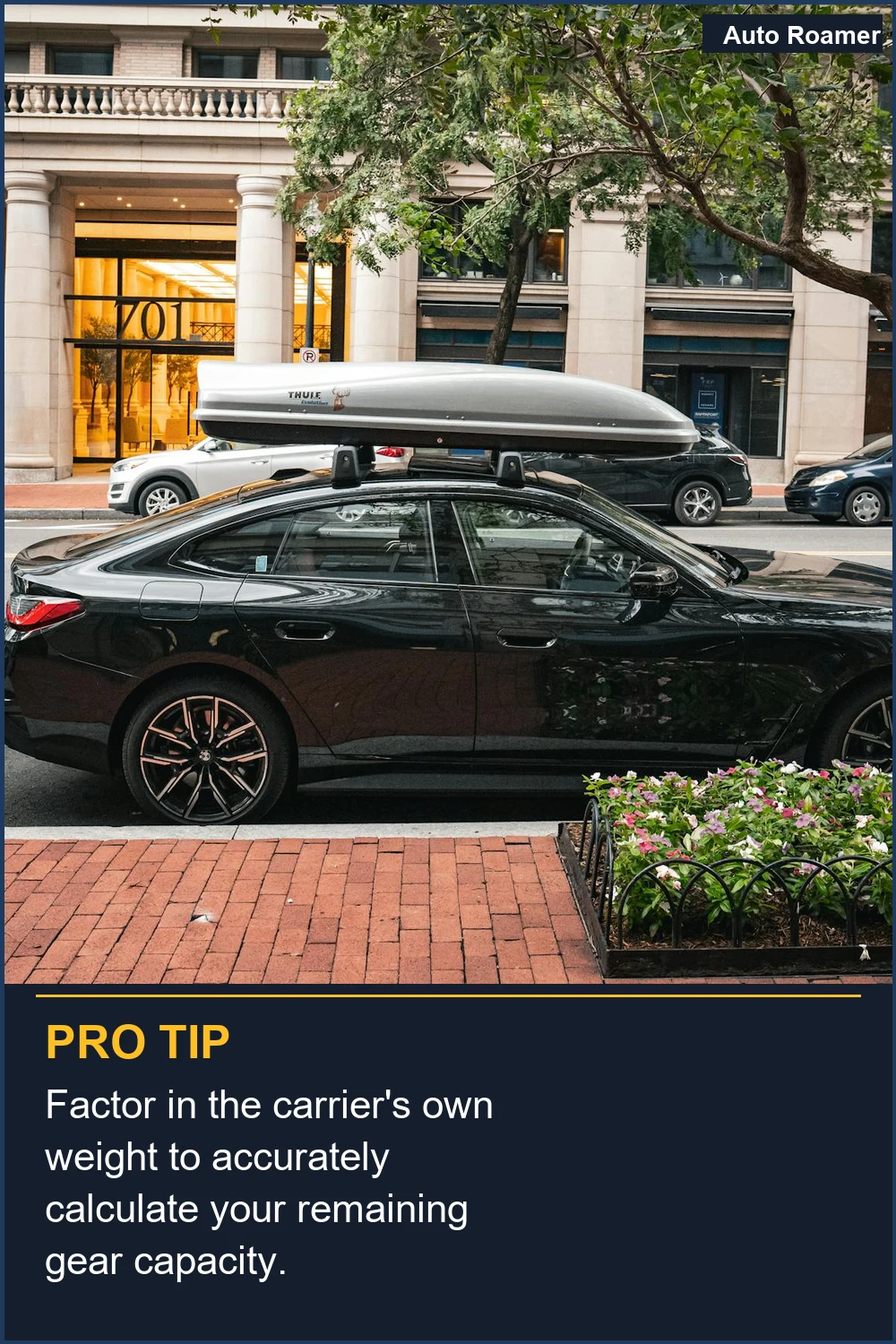
Here's the honest version: most hitch cargo carriers have a weight limit that's lower than you think. While some carriers brag about holding 500 lbs or more, the real world often limits you to between 200 and 350 lbs for safe operation. This isn't just about the carrier's metal; it's about your vehicle's hitch. Your hitch has a 'tongue weight capacity' (TWC), which is the maximum downward force it can safely handle. For a standard 2-inch receiver, this is often around 500 lbs for the hitch itself. But your vehicle's TWC might be much lower. A common rule of thumb is that tongue weight is about 10% of your vehicle's Gross Towing Capacity (GTWR) if you can't find it directly. So, if your SUV can tow 3,500 lbs, your TWC is likely around 350 lbs. That 500 lb carrier you saw? It might be rated for 500 lbs, but your car's hitch might only handle 200 lbs like in one forum discussion. Brilliant engineering, right? You also have to factor in the weight of the carrier itself. If the carrier weighs 50 lbs, and your vehicle's TWC is 200 lbs, you can only put 150 lbs of cargo on it. Don't forget dynamic forces, either. Hitting a pothole isn't just a bump; it's a force multiplier that can double or triple the load. I learned this the hard way on a bumpy road in rural Pennsylvania. My cooler, filled with ice and drinks, felt like it was trying to rip the hitch off my old Outback. It was a sickening clunking sound that made me pull over immediately. The real move is to check your vehicle's owner's manual or the sticker on the driver's door jamb for its specific TWC. Don't just trust the carrier's box. Some trucks with tow packages might have higher capacities, like 600 lbs, but that's not the norm for most daily drivers according to online discussions. The $50 aluminum carrier from Harbor Freight might say 500 lbs for a Class III receiver, but your car might not even have a Class III receiver. It's a lot to keep track of, but way better than explaining to a tow truck driver why your bumper is dragging.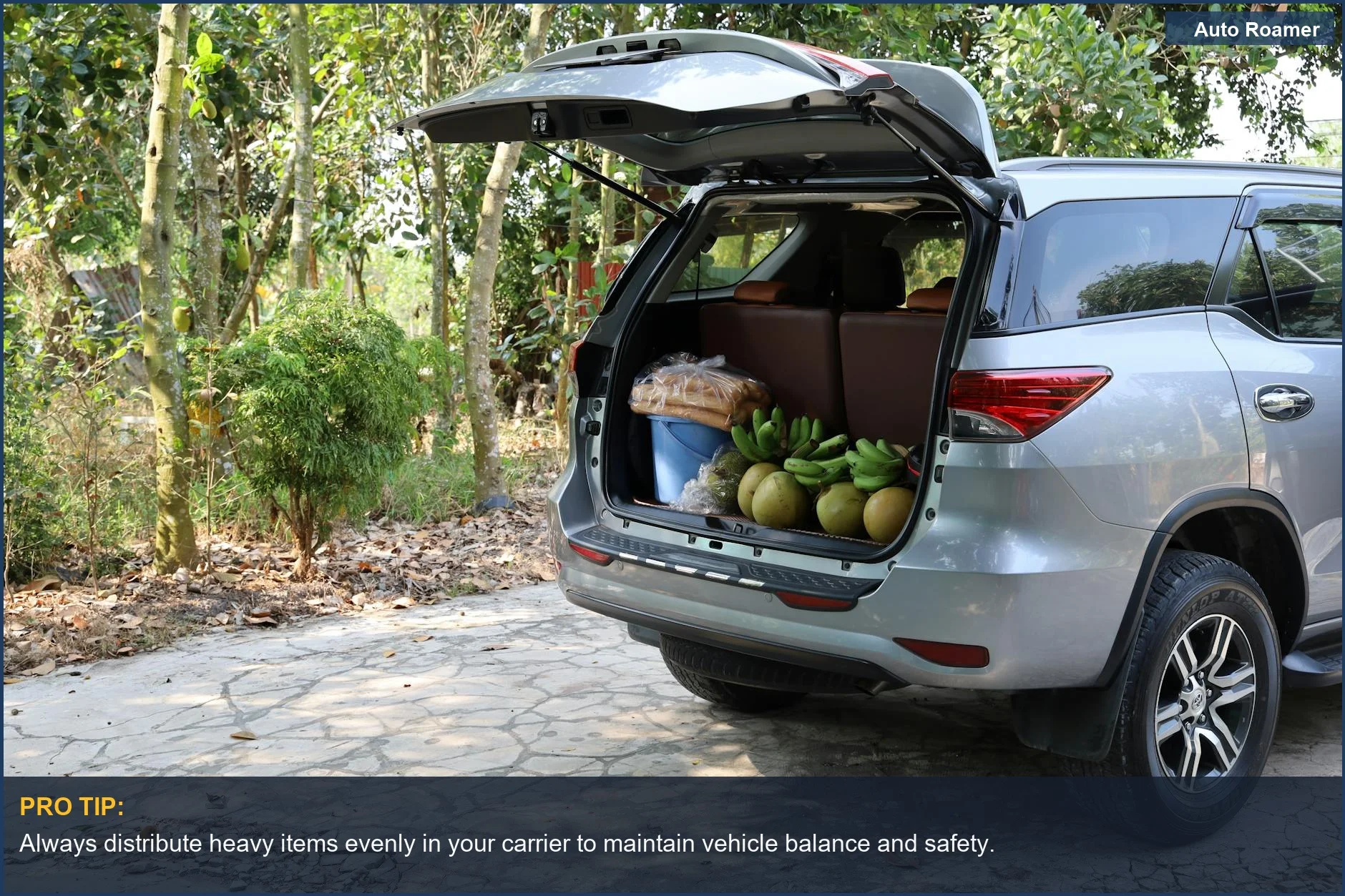
The Bottom Line
So, what's the bottom line? The advertised weight limit on a hitch cargo carrier is often just a suggestion. Your vehicle's tongue weight capacity is the real boss. If your vehicle's TWC is 300 lbs, and the carrier weighs 50 lbs, you've only got 250 lbs of wiggle room for your gear. That's not a lot for a weekend's worth of camping stuff, especially if you have a family. I once tried to haul my son's entire soccer team's equipment on one. Big mistake. The suspension sagged like a sad balloon. Always, always check your vehicle's manual first. It's usually listed right next to the towing capacity. If you can't find it, multiplying your Gross Towing Weight Rating by 0.10 is a decent ballpark estimate for your tongue weight. Don't be the person who snaps their hitch off on the highway. It's a messy, expensive lesson.
Frequently Asked Questions
If I'm only carrying about 150 lbs of gear, and my carrier says 500 lbs, am I good to go?
Do I need one of those fancy hitch alignment tools to figure out my tongue weight?
What if I overload my hitch carrier and it starts wobbling like crazy on the highway?
Can consistently overloading my hitch cargo carrier permanently damage my vehicle's frame?
I heard that some hitches are rated for 500 lbs, so I can just ignore my car's smaller rating. Is that true?
🏅 Looking for Gear Recommendations?
Check out our tested gear guides for products that work with this setup:
Sources
- Best Hitch Cargo Carrier: Why Weight Ratings Matter - rucRak
- Hitch mounted carrier - weight limits - ThumperTalk
- Understanding the Limitations of Hitch-Mounted Carriers
- Tongue Weight limit of a cargo carrier is 200 lbs. - Reddit
- HAUL-MASTER 500 lb. Capacity Aluminum Cargo Carrier
- Hitch Tongue Weight Cargo Carrier
- Hitch carrier weight capacity and durability concerns - Facebook