
Hitch Cargo Carrier vs. Roof Rack: Which is Right for Your SUV?
Adding extra storage to your SUV often comes down to two main options: a hitch cargo carrier or a roof rack system. Both extend your vehicle's carrying capacity beyond the trunk, but they do it in fundamentally different ways. Choosing the right one isn't just about how much stuff you can haul, it's about how much you're willing to sacrifice in terms of vehicle performance and accessibility.
Adding extra storage to your SUV often comes down to two main options: a hitch cargo carrier or a roof rack system. Both extend your vehicle's carrying capacity beyond the trunk, but they do it in fundamentally different ways. Choosing the right one isn't just about how much stuff you can haul, it's about how much you're willing to sacrifice in terms of vehicle performance and accessibility.
My first thought when I saw these things was, 'Can I just strap everything to the roof?' Turns out, there's a bit more to it than that. Car and Driver pointed out that even without a load, a roof rack messes with your aerodynamics. And when you start loading it up, that penalty gets bigger. Let's Go Aero has also done studies showing a noticeable decrease in fuel efficiency with rooftop carriers.
It's not just about the sticker price of the rack; it's about what it costs you at the pump.
The Core Answer
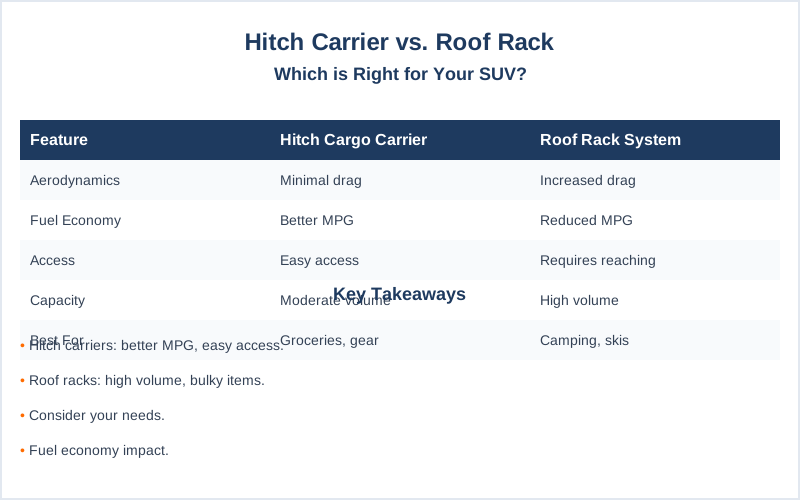
The real move here is understanding what you're actually going to do with the extra space. If you're just hauling groceries for a weekend trip or some camping gear that you don't need to access constantly, a roof rack can be a solid option. You've got a huge amount of real estate up there, from just bars to fully enclosed boxes. Think of all the skis, kayaks, or even just bulky camping furniture you can strap down. 4Runner Forum folks often talk about the sheer volume you can get with a roof setup. It's like adding a whole extra room to your vehicle, especially if you go with one of those big, enclosed cargo boxes. But here's the rookie mistake I almost made: thinking that roof space is free. It's not. That extra drag is like throwing money out the window every mile. My buddy showed me his gas receipts after he put a big roof box on his Outback. He was not happy. Studies, like the ones from Car and Driver, have measured this penalty, showing a significant drop in MPG. It's not just about the extra weight; it's the wind resistance. Brilliant engineering, right? Now, the hitch cargo carrier. This is where things get simpler, and often, more practical for everyday car camping. It bolts onto your hitch receiver, sitting behind your vehicle. The biggest win? Accessibility. You can actually reach your stuff without needing a step ladder or performing a Cirque du Soleil routine. I remember struggling to get my cooler out of a roof box in the rain at Big Meadows. Never again. Rerack mentions how much easier it is to load and unload from a hitch carrier. It's game-time for getting your gear in and out quickly. However, the honest version is that a hitch carrier can sometimes block access to your rear hatch or tailgate. If you have a lifted SUV or a really deep hitch carrier, you might find yourself having to unload the carrier just to get to your trunk. 4Runner Forum users often debate this, and it really depends on your specific vehicle and the carrier setup. Also, you're adding length to the back of your vehicle, which can make parallel parking an adventure. Thule even points out that hitch carriers might make parallel parking harder. From a fuel economy standpoint, hitch carriers generally have a smaller MPG penalty than roof racks. They sit lower and are more tucked into the vehicle's aerodynamic wake. Car and Driver testing showed a 4-MPG difference in favor of the hitch carrier in one test. That's significant over hundreds of miles. The physics don't lie: less drag, better mileage. Let's Go Aero also highlights this, noting the reduced drag. It's the $50 version of saving money on gas.
The Bottom Line
The bottom line for me, after years of stuffing my Civic and then my Forester to the brim, is that hitch carriers win for most casual campers. They're easier to load, generally better for your wallet at the pump, and you can actually reach your gear without a wrestling match. I've seen too many people struggle with roof boxes in the wind and rain. Rerack agrees that accessibility is a major pro for hitch setups. If you're hauling long, awkward items like lumber for a DIY project or a full-size kayak that simply won't fit anywhere else, a roof rack is probably your only option. But for camping gear, coolers, and general overflow, the hitch carrier is the way to go. It's the real move for accessibility and efficiency. Let's Go Aero points out that while roof racks are popular, the MPG penalty is a serious consideration for long trips.

Frequently Asked Questions
If I buy a cheap hitch carrier online for $150 and a cheap roof rack for $200, is it worth it to pay a shop $300 to install them?
Do I really need to measure my hitch size with a tape measure, or can I just eyeball it?
What if my hitch carrier rattles like crazy on the highway, even after tightening it?
Can I permanently damage my SUV's suspension by overloading a hitch cargo carrier?
I heard that hitch carriers can block your backup camera. Is that true?
🏅 Looking for Gear Recommendations?
Check out our tested gear guides for products that work with this setup:
Sources
- Roof Rack vs Tow Hitch Cargo - 4Runner Forum
- How do hitch mounted cargo boxes stack up against rooftop cargo ...
- Hitch vs. Rooftop Carriers: Maximize your Gas Milage - Let's Go Aero
- Pros and cons – why choose a hitch cargo carrier? - Thule
- Roof Box or Hitch Carrier? The MPG Difference Might Surprise You