Where to Start
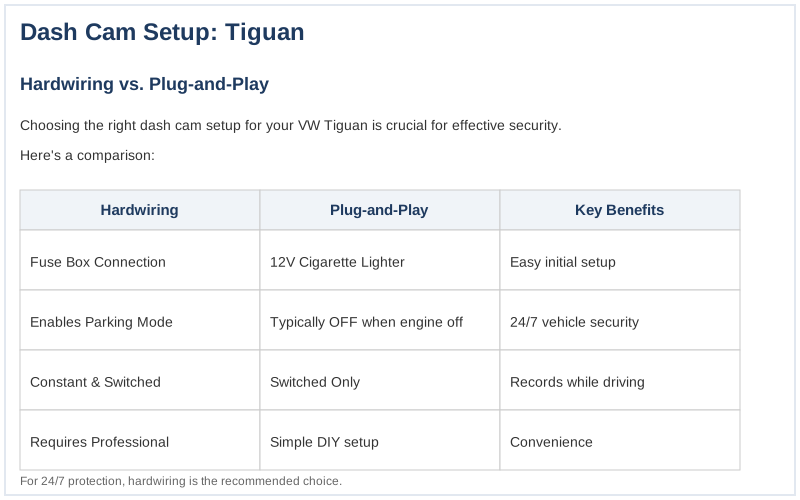
Deciding between hardwiring a dash cam and just plugging it into your Volkswagen Tiguan's cigarette lighter is a classic rookie mistake if you don't know the difference. It's not just about hiding wires; it's about whether your camera is actually doing its job when you're not around. The real move is understanding what each setup unlocks, or leaves locked, for your car's security.
I learned this the hard way when my first dash cam, plugged into the 12V socket, decided to take a nap every time I parked. Hardwired vs Plug-In explains the basics, but my field notes are where the truth lies.
The Core Answer
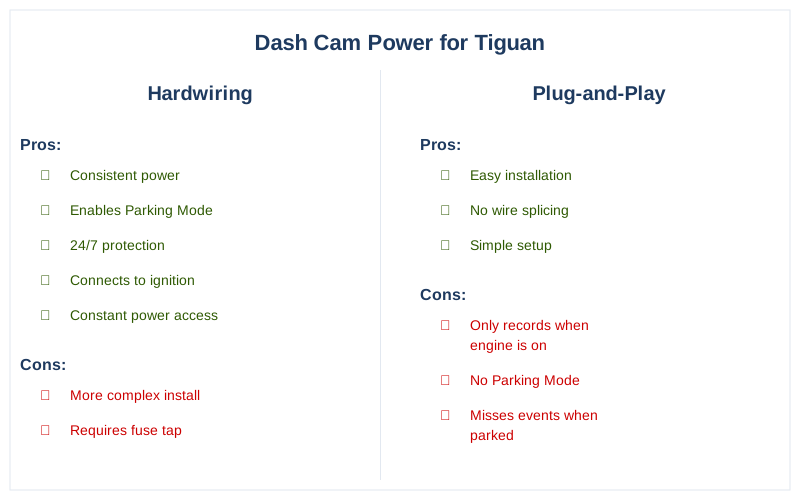
Here's the honest version: hardwiring a dash cam directly into your Tiguan's fuse box is the game-time move for consistent power, especially if you want parking mode. Plugging into the 12V socket, like I did with my first setup in a $40,000 SUV, is easy but often means the camera only records when the engine is on. Dash Cam Power Guide spells this out.
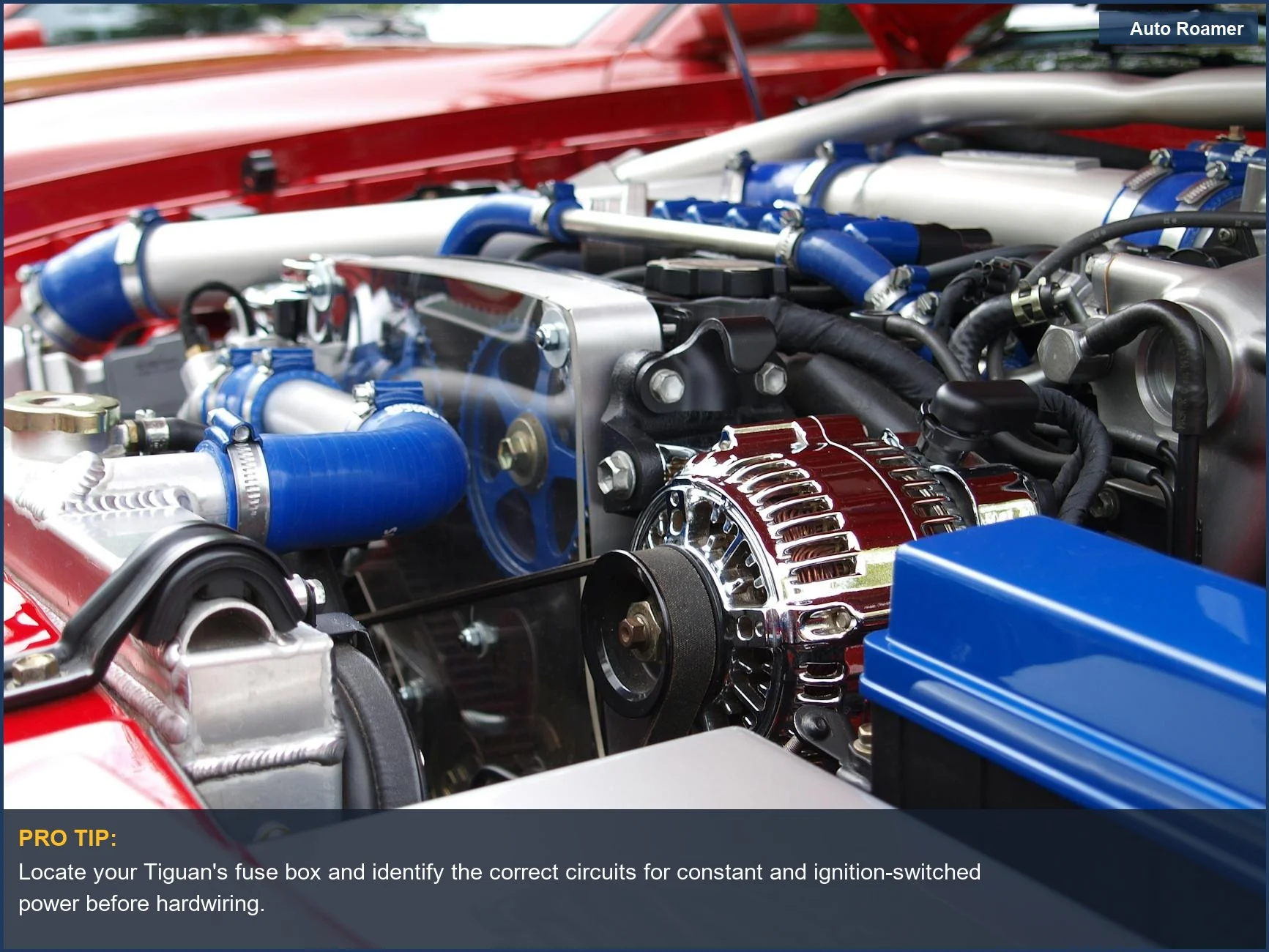
When you hardwire, you connect to two types of circuits: one that's always on (constant power) and one that only turns on with the ignition (switched power). This is what allows your dash cam to keep watching for bumps or break-ins even when your Tiguan is parked and off. Brilliant engineering, right? Without this, your camera is basically useless for 24/7 protection.
Plugging into the 12V socket is simple - run the cable, plug it in. Your dash cam powers up with the car. But when you turn the key off, the camera dies. This is fine if you only care about what happens while you're driving. My first trip with a plug-in camera in my old Honda CR-V meant I missed a shopping cart ding in a parking lot. Rookie mistake.
The real move for parking mode is a hardwired setup. It uses a kit that taps into your fuse box, often with a low-voltage cut-off to prevent draining your car battery completely. This is the difference between a camera that's just recording your commute and one that's actually protecting your investment when you're not there. Hardwire or Plug & Play? details these options.
Some newer cars offer an OBD-II port connection which can sometimes provide the constant power needed for parking mode without going into the fuse box. However, not all cars support this, and it can still be a less clean install than a proper hardwire. My buddy tried this on his truck and still ended up with a dangling wire. Not ideal.
So, while plugging in is the $50 version of dash cam power, hardwiring is the $100-$200 setup (if you pay someone) that gives you the full features. It's about ensuring your camera is game-time ready for anything, not just when you're behind the wheel. Hardwire Your Dash Cam the EASY Way shows how it can be done.
Ultimately, if you want that peace of mind knowing your Tiguan is being monitored even when parked, hardwiring is the way to go. It's the difference between a dash cam that's just along for the ride and one that's actively protecting you. It's a small investment for a lot of security.
Why This Matters for Your Setup
Why this matters for your setup in a Volkswagen Tiguan:
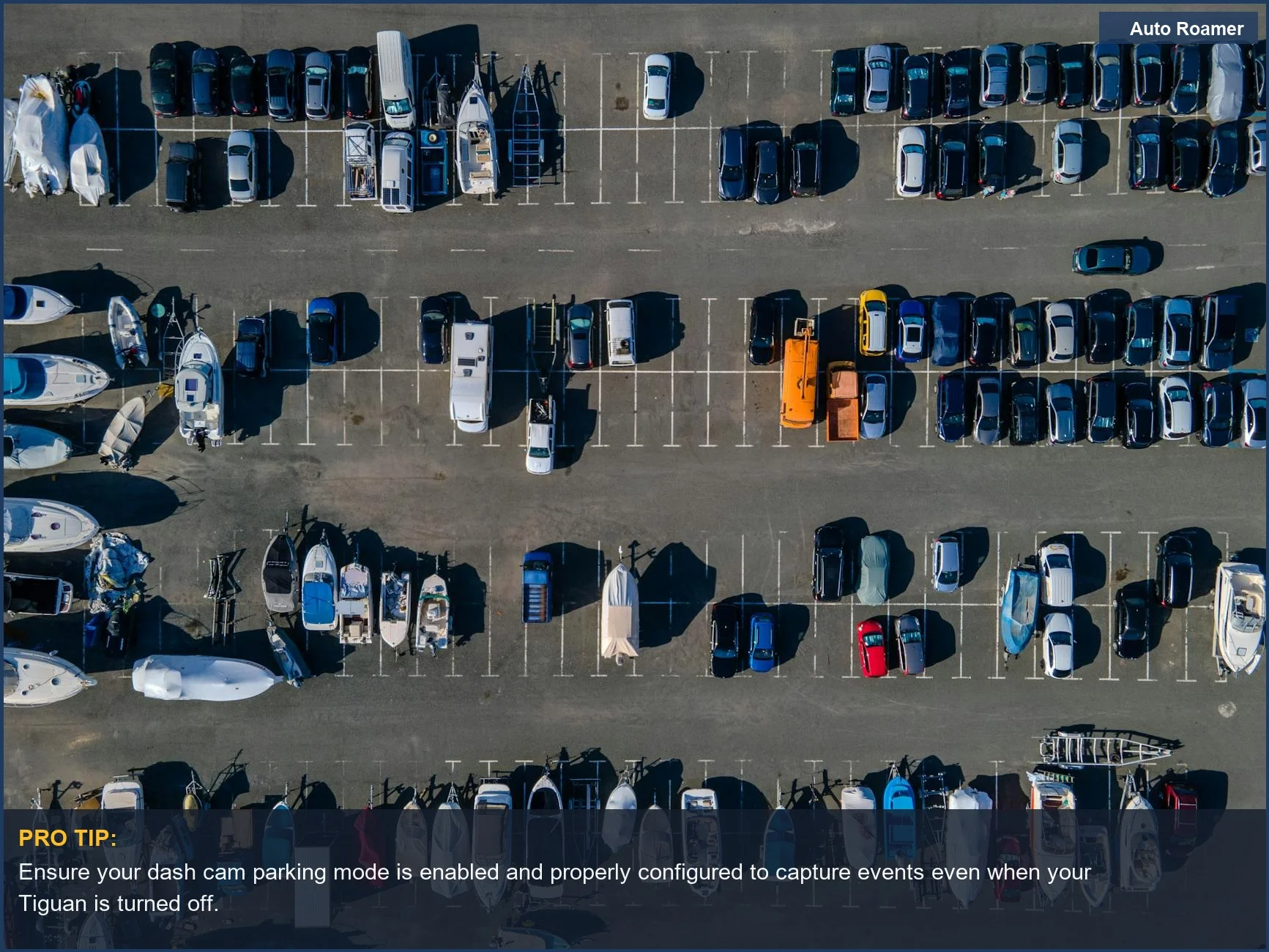
- Parking Mode Power: This is the biggest reason. If you want your dash cam to record events like vandalism or accidents while your car is parked, you need a constant power source. Plugging into the 12V socket usually cuts power when the ignition is off. Hardwiring taps into your fuse box to get that always-on juice. Dash Cam Power Guide explains this.
- Clean Install: Let's be real, nobody wants a spaghetti monster of wires hanging from their windshield. Hardwiring involves routing the power cable discreetly through your car's trim, making it look factory-installed. My first attempt at plugging in looked like a bird's nest. The $12 wire-concealing kit I bought later was a game-changer.
- Battery Protection: A properly hardwired setup includes a voltage cutoff. This means your dash cam won't completely kill your car battery if it's left running in parking mode for too long. It's like a built-in safety net. Without it, you might wake up to a dead battery and a very expensive tow. Hardwire or Plug & Play? touches on this.
- Avoiding Accessory Socket Issues: Some cars, like my old Toyota Camry, turn off the 12V socket after a certain period to save battery. If your Tiguan does this, your camera will just turn off, defeating the purpose. Hardwiring bypasses this entirely. Facebook Group Discussion mentions similar concerns.
- Feature Access: Some advanced dash cam features, like buffered parking mode (which records a few seconds before an impact), rely on continuous power. You won't get those benefits if your camera powers down with the engine. It's the difference between seeing an incident and having proof of it.
Making the Right Choice
Making the right choice for your Tiguan:
- For Simple Recording: If you only care about what happens while you're actively driving and want the easiest setup, plugging into the 12V socket is fine. It's the $50 version of dash cam security. Hardwired vs Plug-In covers the basics.
- For Full Protection: If you want 24/7 surveillance, parking mode, and a clean look, hardwiring is the way to go. It's the real move for serious security. This often involves a ~$20 hardwire kit and potentially a ~$100-$200 professional installation if you're not comfortable with car electrics. Reddit Tiguan Discussion highlights installation challenges.
- Consider Your Comfort Level: Hardwiring involves tapping into your car's fuse box. If you're not comfortable with that, or if your Tiguan's fuse box is in a tricky spot, paying a pro is a smart move. My first attempt at hardwiring in my Subaru Outback resulted in a blown fuse and a trip to the mechanic. Rookie mistake.
- Parking Mode is Key: The biggest difference is parking mode. If that's important to you, hardwiring is almost non-negotiable. It's the difference between a camera that's just a passenger and one that's actively watching your back. VW Vortex Forums often discuss this.
- It's Not Rocket Science: Don't let the tech intimidate you. Once you understand the 'why' behind hardwiring, it makes perfect sense. It's about giving your dash cam the reliable power it needs to do its job properly, day and night.