
The only place these numbers live in one table
Every EV maker publishes its vehicle-to-load (V2L) figure somewhere different — a press kit, a spec sheet, a support article, an owner's manual PDF buried on a CDN. Nobody has collated them. This page does: the real rated output, the actual outlet locations, and the camp-mode behavior for every EV that offers usable camp power, each cell traceable to a manufacturer or press source in the last column.
One rule governs the whole table. If a maker does not publish a number, the cell reads Not published rather than a guess. That is why the overnight-drain column is honest to the point of being boring — no manufacturer publishes a measured stationary-drain figure, and we will not invent one. What you get instead is every number that is real, in one place, with the receipt.
The complete EV camping-power database
Ten V2L-capable EVs, sorted from the mainstream crossovers up to the generator-class trucks. Where we publish a dedicated camping guide for the vehicle, its name links straight to it.
| EV | Rated V2L output | Outlet locations | Camp / climate-hold mode | Mfr. overnight drain | Source |
|---|---|---|---|---|---|
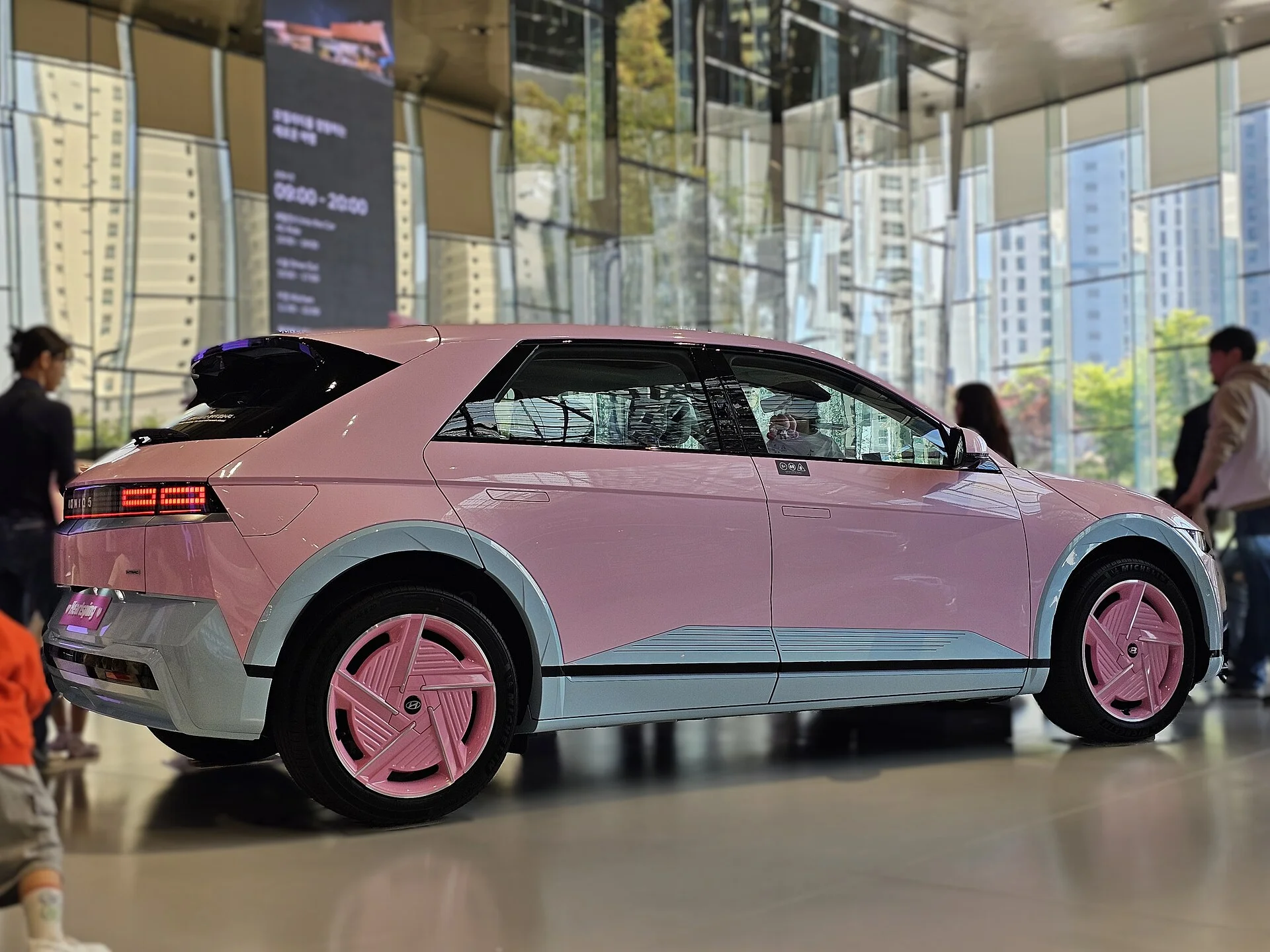
| Hyundai IONIQ 5 | 3.6 kW (interior socket ~1.9 kW) | Interior 120V outlet under the 2nd-row seat; exterior outlet via the charge-port V2L adapter | Utility Mode holds cabin climate in Park; BMS auto-cuts V2L near a 10-20% charge floor | Not published | Hyundai IONIQ 5 V2L: How to Use It Safely |
| Hyundai IONIQ 6 | 3.6 kW | Interior 120V outlet under the 2nd-row seat; exterior charge-port V2L adapter | Same Hyundai Utility Mode family as the IONIQ 5; no dedicated camp label | Not published | Hyundai IONIQ 6 press kit |
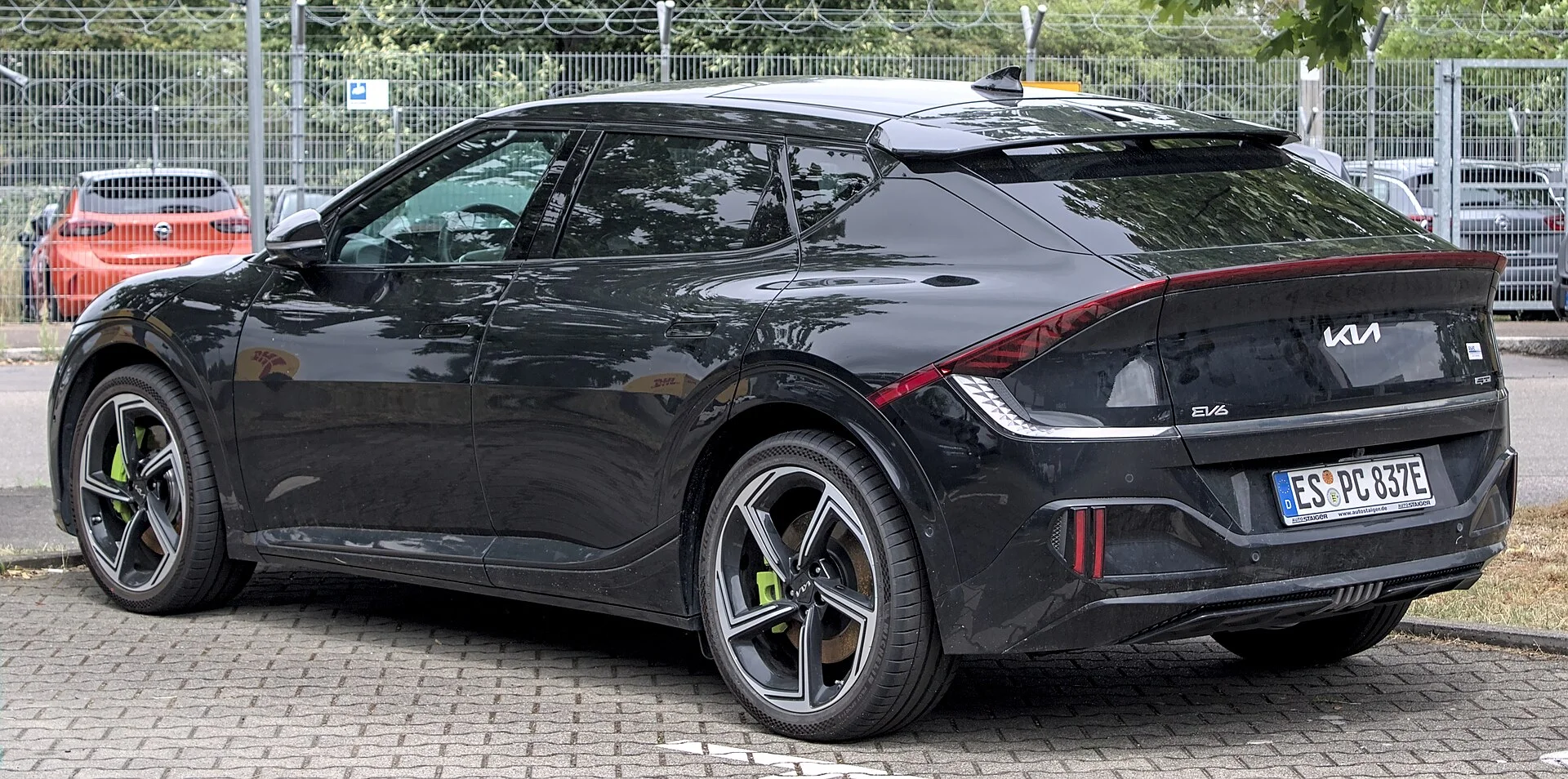
| Kia EV6 | 3.6 kW peak (~1.9 kW continuous) | Interior 120V outlet at the base of the rear seat; exterior charge-port V2L adapter | Utility Mode runs heat/AC/audio in Park; BMS backstop near 10-20% charge | Not published | 2025 Kia EV6 Specifications (Kia Media) |
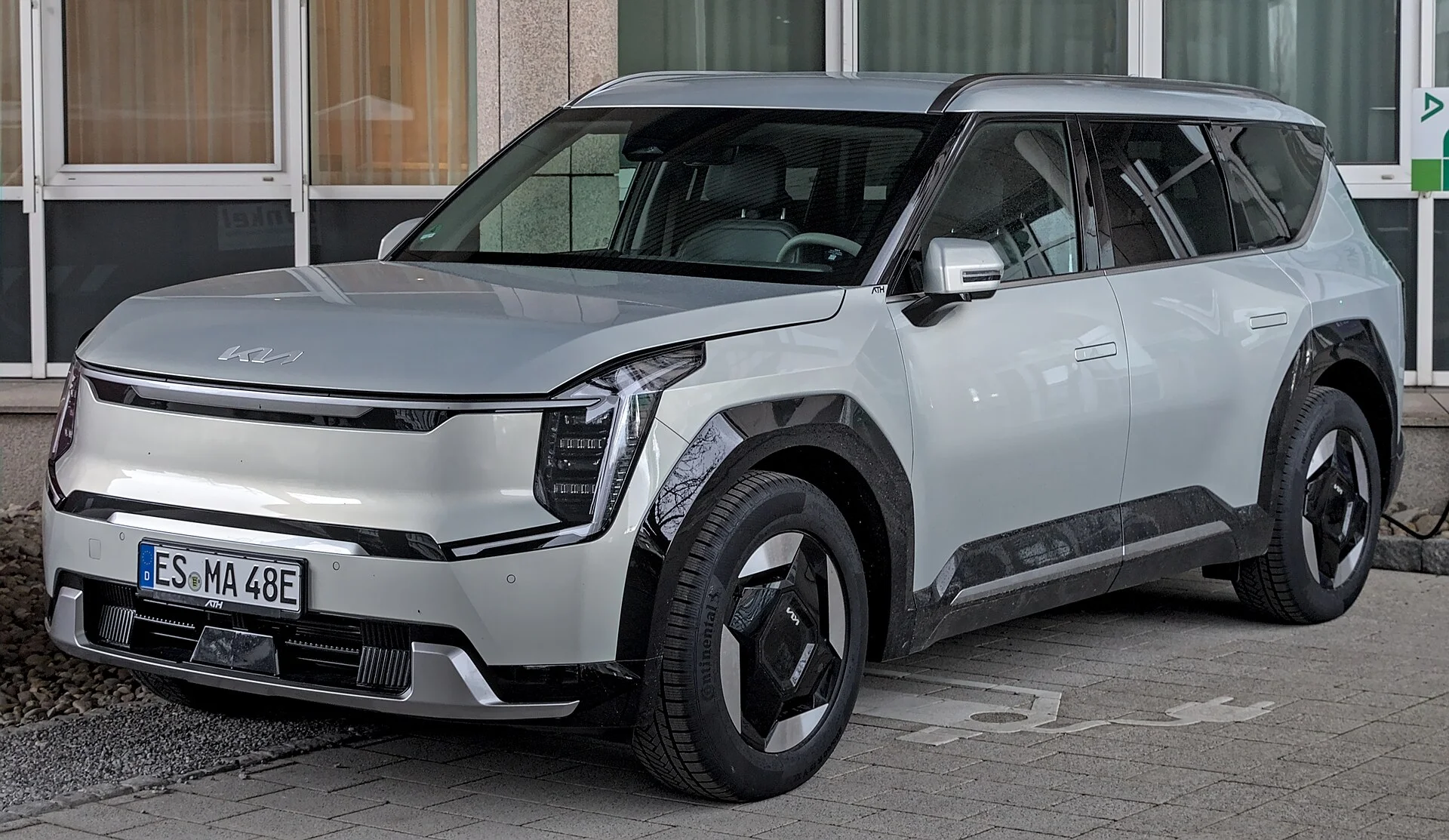
| Kia EV9 | 3.6 kW (interior socket ~1.9 kW) | Interior 120V outlet behind the 2nd row; exterior charge-port V2L adapter | Utility Mode holds climate off the ~96 kWh pack in Park | Not published | 2025 Kia EV9 Specifications (Kia Media) |
| Kia PV5 | 3.6 kW | Interior cabin/cargo 120V outlet; exterior charge-port V2L adapter | Utility Mode holds climate/12V in Park; V2L and Utility Mode each carry timeouts | Not published | Kia PV5 camping kit (Electrek) |
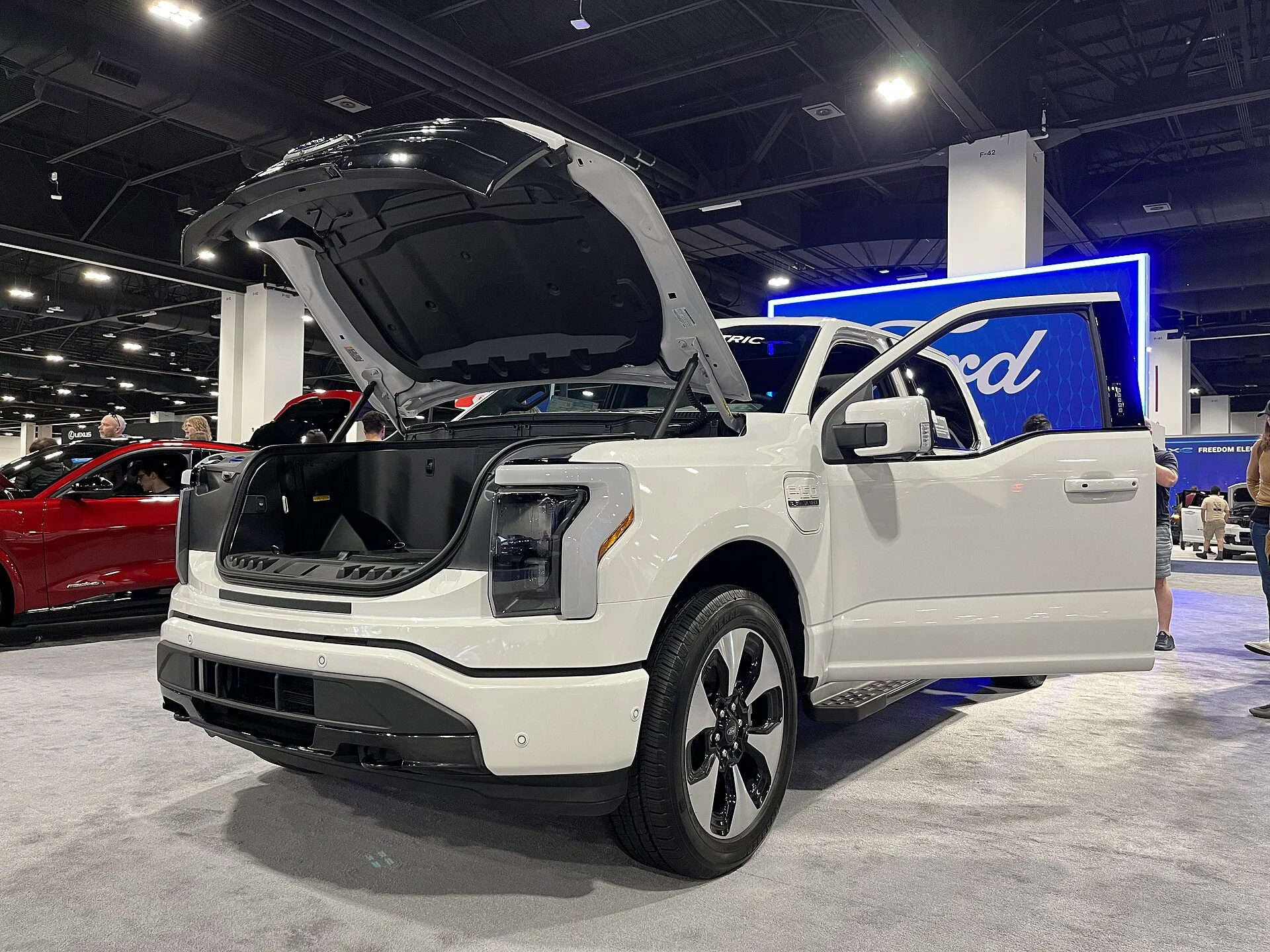
| Ford F-150 Lightning | Up to 9.6 kW (2.4 kW on base trim) | Pro Power Onboard: two 120V in the cab, four 120V plus one 240V (NEMA 14-50) in the bed, two 120V in the frunk | No Utility Mode; climate runs on accessory power; output is capped/monitored in the Ford app | Not published | What is Ford Pro Power Onboard? (Ford.com) |
| Chevrolet Silverado EV | 7.2 kW onboard (10.2 kW with the accessory PowerBar) | Six 120V plus one 240V (NEMA L14-30) across the eTrunk, cab and bed | PowerBase output continues with the truck parked; a reserve charge is maintained | Not published | V2L and PowerBase Quick Start Guide (Chevrolet) |
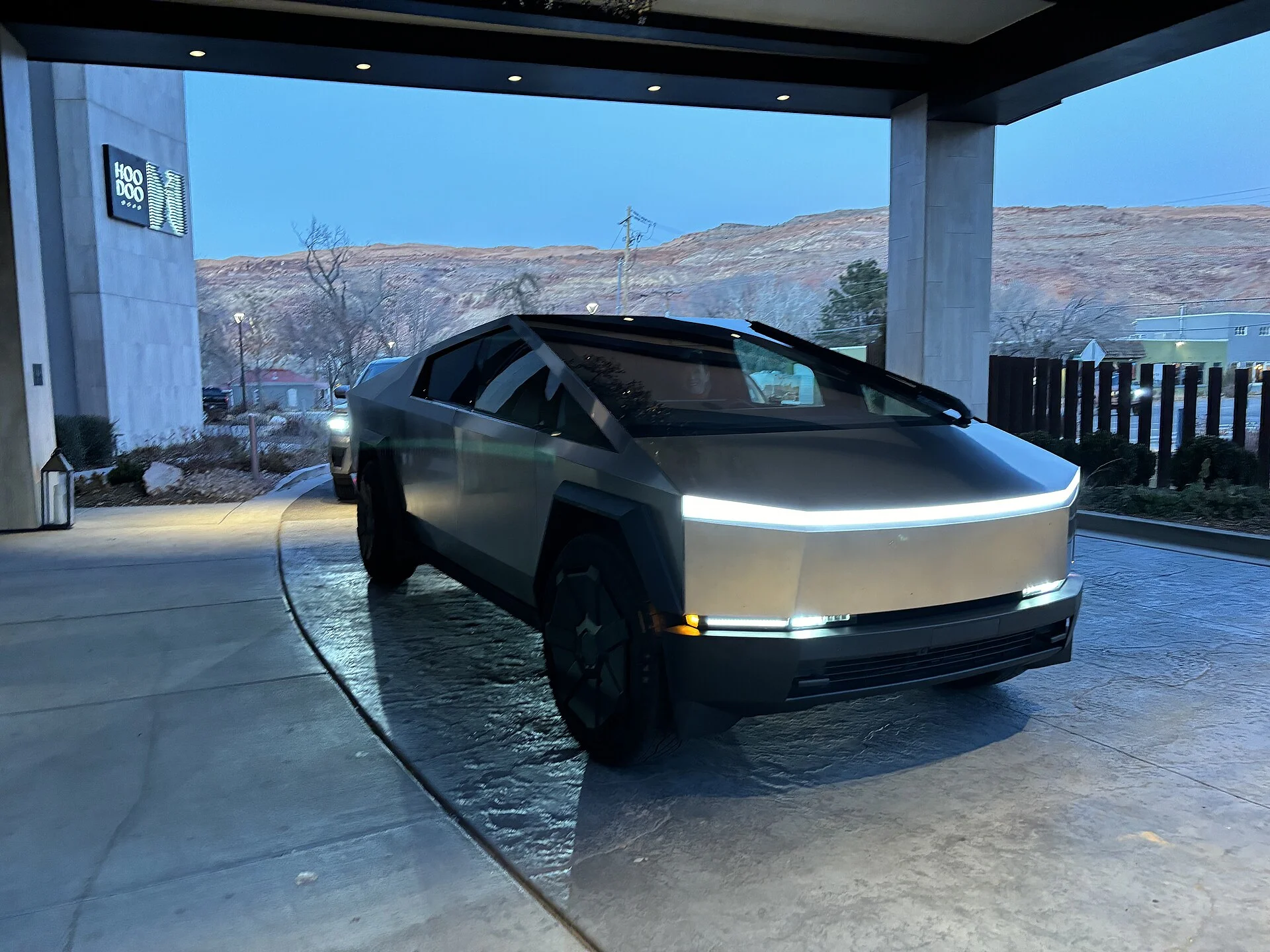
| Tesla Cybertruck | Up to 11.5 kW via the inlet (9.6 kW at the bed 240V); RWD trim only 2.4 kW | Two 120V in the cabin plus two 120V and one 240V in the bed; 400W feeds to frunk and tonneau | Tesla Camp Mode holds cabin climate, lighting and USB overnight off the pack | Not published | Powershare - Vehicle to Home/Grid (Tesla) |
| Rivian R1T / R1S | 1.5 kW per 120V outlet (no whole-vehicle export rating) | R1T: 120V outlets in the bed, gear tunnel and frunk (400W each, 1500W cap); R1S: two cabin 120V outlets | Camp Mode runs climate and outlets in Park and auto-levels the air suspension | Not published | R1T Owner's Guide, Feb 2024 (Rivian) |
| GMC Hummer EV Pickup | 3.0 kW at 120V outlets (6.0 kW vehicle-to-vehicle) | Energy Transfer 'Power Station': six 120V plus one 240V outlet across bed, eTrunk and cabin | No Utility Mode; the outlets support a timer for camping/BBQ use | Not published | Energy Transfer Outlets (GMC) |
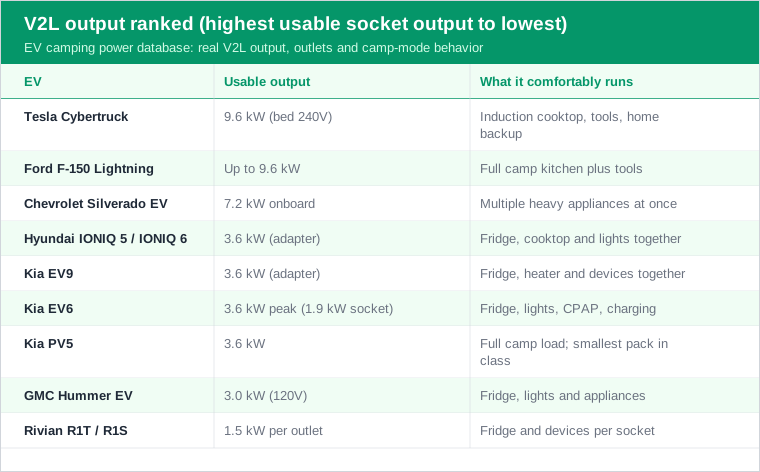
The shape of the data is immediately clear: the Korean crossovers cluster at a shared 3.6 kW ceiling, the electric trucks jump to 7–11.5 kW, and Rivian sits apart with an outlet-based 1.5 kW-per-socket design rather than a bulk export rating.
How we compiled these numbers (methodology)
Every figure here comes from a primary or near-primary source, checked against our own vehicle guides. The priority order was deliberate:
- Manufacturer spec sheets and support pages first — Kia Media, Ford.com, Chevrolet, GMC and Tesla all publish the outlet counts and rated output directly. Those are the cells you can trust to the watt.
- Press kits and owner's manuals second — for the IONIQ 6 and the Rivian R1T we pulled the numbers from Hyundai's press kit and Rivian's owner's-guide PDF respectively, because those carry the exact ratings the marketing pages round off.
- Our own camping guides for context, never for hard numbers — where our guide and the manufacturer disagreed, the manufacturer won.
That last rule caught two errors worth flagging. Our older Lightning guide referenced a "7.5 kW SuperCruiser Camp" figure that is not a real Ford spec — Ford's published Pro Power Onboard maximum is 9.6 kW, which is what the table shows. And the Silverado EV's headline "10.2 kW" only holds with the optional PowerBar accessory fitted; the truck's built-in outlets are capped at 7.2 kW, so both numbers appear in the cell.
Peak versus continuous versus whole-home: reading the output column
The single most misread number in EV camping is the V2L rating. A 3.6 kW crossover does not give you 3.6 kW from the socket you can actually reach.
On the Hyundai and Kia cars, the interior 120V outlet is limited to roughly 1.9 kW; the full 3.6 kW is only available through the exterior charge-port adapter. For camping that distinction rarely bites — 1.9 kW still runs a 12V fridge, a string of lights, a CPAP and device charging simultaneously — but it means the interior socket is a one-heavy-appliance-at-a-time proposition, not a kitchen.
At the truck end, the Cybertruck's 11.5 kW and the Silverado's 10.2 kW are vehicle-to-home (V2H) or accessory-assisted figures, not what a bed outlet delivers. The Cybertruck's usable in-bed 240V outlet tops out at 9.6 kW; the Silverado's onboard outlets cap at 7.2 kW. Those are still generator-replacement numbers, but they are the honest socket figures, not the home-backup headline.
A concrete example makes the distinction real. Say you want to run an induction burner rated at 1800 watts to cook dinner. On an EV6, that single burner nearly maxes out the 1.9 kW interior socket, so you cook, then unplug the burner before you plug in anything else. On an IONIQ 5 using the charge-port adapter at 3.6 kW, the same burner leaves headroom for a fridge and lights running alongside it. On a Lightning, the burner is a rounding error against 9.6 kW — you could run three of them. None of these is wrong for camping; they are just three different ceilings, and the output column is only honest once you know which socket the number describes.
Outlet locations decoded: where the power actually is
Rated watts mean nothing if the outlet is in the wrong place for how you camp. The layout falls into three patterns:
- Crossovers (IONIQ 5/6, EV6, EV9, PV5): one interior 120V socket, usually under or behind the second row, plus the exterior charge-port adapter. You run gear from inside the cabin or, with the adapter, from the charge port at the vehicle's flank — convenient for a fridge in the cargo area.
- Trucks (Lightning, Silverado EV, Hummer EV): a spread of bed, cab and frunk outlets including a 240V, designed so you can power a job site or a full camp kitchen from the bed without an extension cord snaking into the cabin.
- Rivian: low-wattage 120V outlets distributed through the bed, gear tunnel and frunk — the most places to plug in, but each capped at 1500W.
If your camp habit is a fridge plus lights, any layout works. If it is an induction cooktop or power tools, you want the trucks' bed outlets, and specifically a 240V.
The charge-port adapter deserves a note of its own, because it is the accessory that unlocks the higher output on the crossovers and it is easy to forget you need it. On the IONIQ 5, EV6, EV9 and PV5, the full 3.6 kW is only available through a dongle that plugs into the exterior charging port and gives you a household socket at the flank of the car. Some trims ship it in the box; on others it is a separate purchase, and it is the difference between a 1.9 kW interior socket and the headline rating. For a camper who parks tail-out and runs a fridge in the cargo area, the interior socket is usually the more convenient of the two anyway — but if you plan to power a kitchen set up outside the vehicle, the adapter is not optional.
Battery size is the runtime number the output column hides
Watts tell you what you can run at once; the usable pack tells you how long. This is where the crossovers quietly separate from each other despite sharing a 3.6 kW ceiling. The Kia EV6 carries roughly 74 kWh usable, the EV9 around 96 kWh, and the Kia PV5 the smallest tank in the family at about 67 kWh on the long-range pack. Against a typical overnight camp draw — a portable 12V fridge averaging 40–60 watts, plus lights and charging — even the 67 kWh PV5 has days of margin before the pack becomes the constraint.
That is why the discharge-floor setting matters more than the headline output. Every Hyundai and Kia lets you set the charge level at which V2L cuts off, so the car protects enough range to get you home. On the smaller PV5 pack you set that floor higher; on a 96 kWh EV9 you can let it run down further without worry. If you plan to place gear away from the vehicle, budget for a heavy-duty outdoor extension cord from the charge-port adapter rather than trailing a cable through a door seal, which breaks the climate hold.
The trucks make this section almost irrelevant. A Lightning's extended-range pack is so large that a full weekend of camp loads barely moves the state of charge; the discipline there is range planning to the next fast charger, not runtime.
Camp mode versus Utility mode: what actually holds climate overnight
The camp-mode column hides a real behavioral split that matters more than the watts for sleeping comfort:
Hyundai and Kia (Utility Mode): the crossovers hold cabin climate and 12V systems off the traction battery while parked in Park, with the BMS auto-cutting V2L and accessory draw as the charge approaches a user-set floor around 10–20%. There is no button literally labeled "Camping Mode" on most of them — you enable Utility Mode. Our per-vehicle guides on the IONIQ 5 for camping, the EV9 for camping and EV6 camping mode walk through the exact menu path and the overnight climate behavior on each.
Tesla and Rivian (a real Camp Mode): both use the original "Camp Mode" term for a parked state that holds climate, lighting and USB overnight. Rivian's version additionally levels the air suspension so the floor is flat to sleep on. Ford is the outlier: no Utility-style mode at all — climate runs on accessory power, and Pro Power Onboard is the separate system you cap in the app.
The overnight-drain gap: the number nobody publishes
Ten vehicles, ten "Not published" cells for measured overnight drain. That is not laziness — it is the honest state of the data.
No manufacturer publishes a measured stationary climate-hold drain figure, because it genuinely depends on outside temperature, cabin setpoint, and how much V2L gear is drawing at the same time. The closest thing to a published number in the whole segment is Tesla's own rough estimate for Model Y Camp Mode of about 1% of battery per hour — and even that, as our Model Y camp-mode drain breakdown explains, is an estimate that owners see vary widely, not a single measured test result.
So here is how to estimate it yourself instead of trusting a fabricated table cell. Climate hold on a mild night pulls roughly 0.3–1.0 kW. Divide that by your usable pack — a ~74 kWh EV6, a ~96 kWh EV9, a ~67 kWh PV5 — and a full night of climate hold lands in the low single-digit percent per hour on the crossovers, and a rounding error on the trucks. Add your V2L load (a fridge is ~0.05 kW average) on top. The point of the database is that you never need a made-up drain number: the pack size is real, the climate draw is a known range, and the arithmetic is yours to do with confidence.
The verdict: which EV for camp power
If you already own any V2L EV in this table, you have enough. Even the 1.9 kW interior socket on an EV6 runs everything a normal camp needs at once. The database exists to end the guessing, not to sell you a bigger battery.
If you are shopping specifically for camp power, the honest split is this: the crossovers are the sweet spot — enough output, a real climate-hold mode, and a flat floor to sleep on — while the trucks are overkill that happen to double as home backup. The Kia PV5 is the most camper-shaped body of the group but carries the smallest pack, so its Utility-Mode discharge floor matters most. And the one number to stop worrying about is overnight drain: no maker publishes it because it is knowable from your pack size and the weather, not from a spec sheet. See our full guide to using EV V2L power for car camping for the appliance-by-appliance runtimes.
One last practical note: the whole reason this database is worth bookmarking is that the numbers move. New model years add trims, adapters get bundled or unbundled, and the truck outputs creep up with each hardware revision. When a figure here changes, the manufacturer source in the table is where you confirm it — which is exactly why every cell carries its receipt rather than a number we ask you to take on faith.