
How fast Camp Mode actually drains a Model Y battery
If you want to sleep in a Tesla Model Y, the number that decides everything is the overnight battery drain — and the honest answer is a range, not a single figure. Tesla's own published estimate for Camp Mode is roughly 1% of battery per hour, and that lines up well with what owners report across the Tesla forums and EV camping communities: in mild weather, most see about 8–12% gone over an eight-hour night. Cold or hot nights push that higher. Those are sourced, aggregated owner figures and Tesla's estimate — not measurements we took ourselves.
That distinction matters, because plenty of guides quote a tidy “we measured 1% per hour” as if from a single overnight test. The reality is messier and more useful: drain depends on outside temperature, your set cabin temperature, and whether the system is heating or cooling. Below is a per-hour and miles-of-range table built from Tesla's estimate and owner-reported data, how Camp Mode works under the hood, the simple math for your own overnight estimate, and the handful of moves that stretch a single charge across a comfortable night.
The short version, if you only read this far: in mild weather a Model Y barely notices an overnight in Camp Mode, and you should not lose sleep over the battery. The anxiety most people bring to the question comes from a single bad-weather story they read somewhere, then mentally apply to every night. The truth is that the difference between a worry-free night and a tense one is almost entirely the weather and your starting charge — both of which you can plan around. The rest of this guide is about turning that vague worry into a two-minute checklist you run before you park.
Battery drain per hour and miles of range, by condition
Here is what Tesla's estimate and aggregated owner reports show for Camp Mode drain, with the basis of each figure labeled plainly. The miles-per-hour column is calculated from the percentage against a Long Range Model Y's EPA range — it is arithmetic, not a measured result:
| Condition | Drain per hour | ~Miles of range per hour | 8-hour overnight total |
|---|---|---|---|
| Mild (60–70°F) | ~1% | ~3 miles | ~8–12% |
| Cold (near freezing) | ~2–2.5% | ~6–7 miles | ~15–20% |
| Hot (heavy A/C, full sun) | ~1.5–2.5% | ~5–7 miles | ~10–20% |
Read the table as ballpark, not gospel. The per-hour rate is Tesla's published estimate (~1% in mild conditions) plus the spread Tesla Model Y and Model 3 owners commonly report on the forums; the overnight columns come from the same owner data. The miles figures are derived: roughly 3 miles of range per 1% on a Long Range pack of about 75 kWh and an EPA range in the low 300s. A Standard Range car has fewer total miles to give, so the same percentage costs you the same percentage but fewer absolute miles.
One honest gap: no source publishes a single authoritative “Model Y Camp Mode drains exactly X% per hour” number, because it genuinely depends on conditions and is not, as one reference puts it, an exact science. Treat the mild row as your planning baseline and add margin for weather.
Why does cold cost so much more than heat? A heat pump moves warmth efficiently in moderate conditions, but as the outside temperature drops toward and below freezing it has less ambient heat to work with and leans harder on the system, so the curve steepens fast in genuine cold. Heat is more forgiving because shade, reflective covers and a cracked window all cut the load cheaply — which is why the hot-weather row spans a wider range: a shaded, well-prepped car sits near the bottom of it, while a dark car baking in direct sun with the A/C fighting all night sits near the top. The takeaway is that your prep moves you within these bands as much as the weather does.
It also helps to know what these percentages mean against a real pack. A Long Range Model Y carries roughly 75 kWh of usable capacity, so 1% is about three-quarters of a kilowatt-hour — the kind of energy a small space heater would burn in well under an hour, here spread across a whole hour of gentle climate cycling. That is why the numbers feel small: Camp Mode is not running a furnace, it is nudging an already-insulated cabin back to your set temperature now and then. Standard Range cars hold less, so while the percentage drain is similar, you have fewer total kilowatt-hours and miles in reserve, which is the real reason to start those nights with a higher charge.
What Camp Mode actually keeps running while you sleep
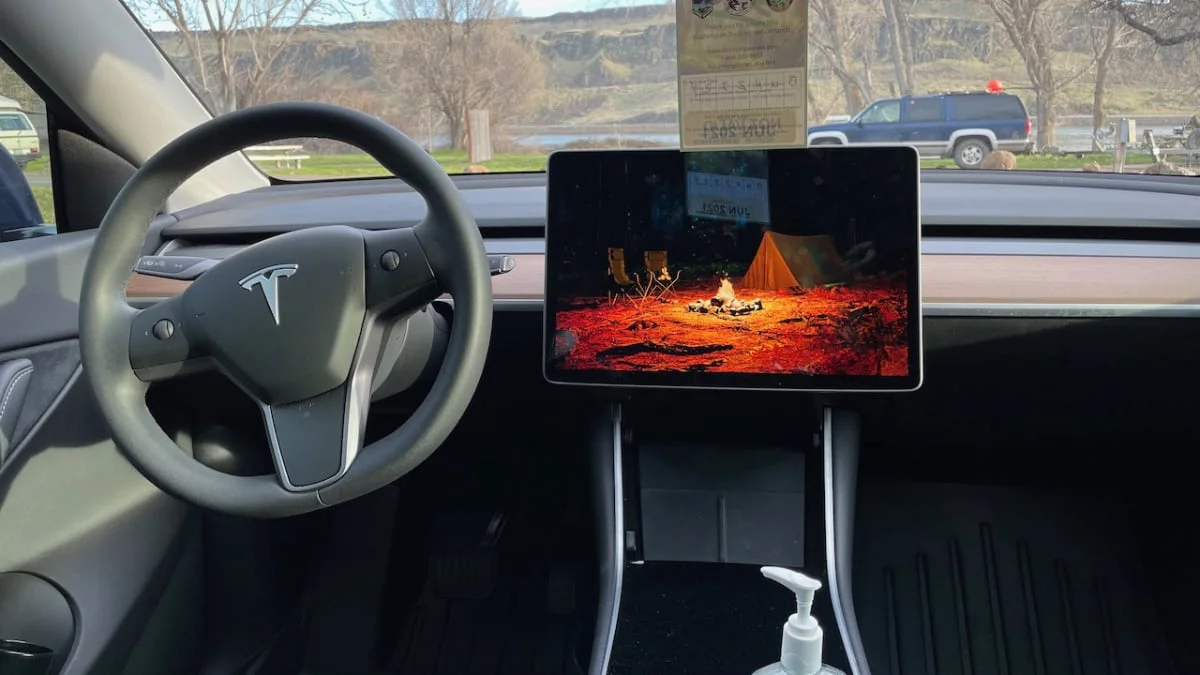
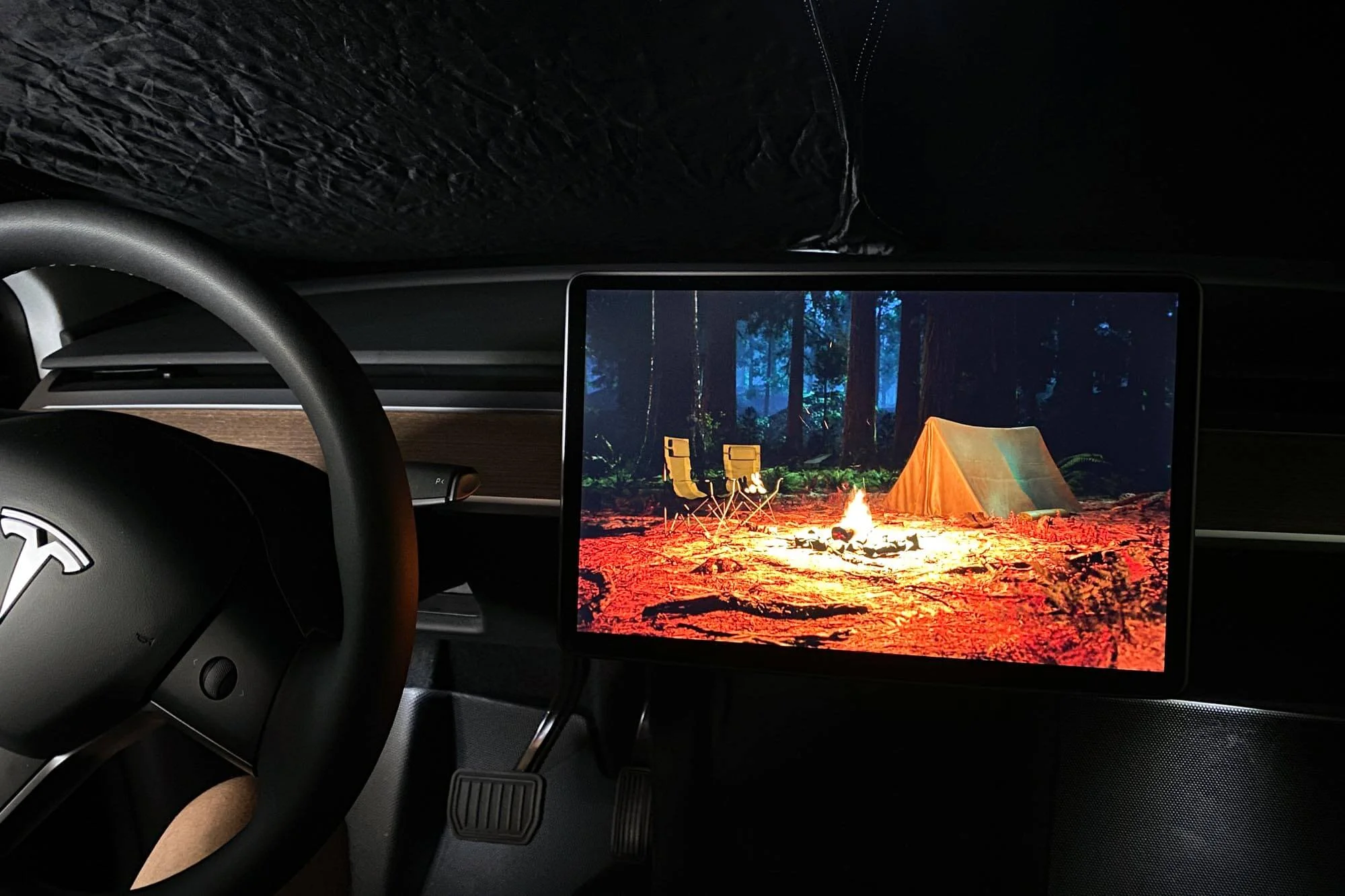
Camp Mode is Tesla's built-in “stay parked and comfortable” feature, and understanding what it powers explains where the battery goes. With the car in Park, you open the climate menu, set a temperature, and tap Camp. The car then holds your set cabin temperature — heating or cooling as needed — and keeps the interior lights, the USB ports, the 12V outlet and the main touchscreen alive so you can run a fan, charge devices, play music or watch something. The climate system is the single biggest draw; everything else is minor.
Two behaviors matter for planning. First, Camp Mode disables Sentry Mode, the alarm and auto-lock while it runs, so you trade some security for a quiet, stable cabin — lock the doors manually and stay aware of where you park. Second, Camp Mode shuts itself off at about 20% state of charge to leave you enough range to drive to a charger. That is a safety floor, not a target: you do not want to wake up at 21% with no plan.
Model Y cars use a heat pump, which several references note makes climate-holding somewhat more efficient than the resistive heaters in older Teslas — part of why the ~1% mild-weather estimate holds up. The heat pump helps most in cool-but-not-frigid weather; in a hard freeze, heating demand still climbs and so does the drain.
It is worth knowing what Camp Mode is not, too. It is not a way to run the car as a generator for a campsite of devices, and it is not the same as simply leaving climate on, which would eventually time out and lock you out for safety. Camp Mode is the supported, stay-as-long-as-you-like state, and it deliberately strips away the things that would either wake the car unnecessarily or drain it faster — which is exactly why Sentry and the alarm go quiet. Think of it as the car agreeing to stay awake and comfortable on your terms, while quietly protecting its own ability to get you home.
Before you park: a quick checklist to estimate your night
You do not need a measured test to plan a night — you need a percentage and a little arithmetic. Work it in this order before you park for the night:
- Pick your hourly rate from conditions. Mild night, start at ~1% per hour. Near freezing or running hard A/C in the sun, plan on ~2–2.5% per hour. When in doubt, round up.
- Multiply by hours asleep. Eight hours at 1% is about 8%; eight hours at 2.5% is about 20%. That is your expected overnight draw.
- Add the 20% floor. Camp Mode cuts off at ~20%, so your real usable buffer is your starting charge minus 20. Starting at 60% in mild weather leaves roughly 40 usable points — plenty for a night with margin.
- Leave a driving reserve on top. You still have to reach a charger in the morning. Arriving with 50–60% for a cold or off-grid night is sensible; 30–40% is the bare minimum even in mild weather.
A worked example: a mild summer night, eight hours, starting at 70%. Expect about 8–12% used, so you wake near 58–62% — comfortable, with range to spare. The same night at 30°F could use 15–20%, landing you near 50–55% from the same 70% start. Build the habit of arriving with charge to burn and the cutoff never becomes your problem.
If you want to take the guesswork out entirely, log your own first few nights. Note the starting and ending percentage, the rough low temperature and what you set the cabin to, and within two or three trips you will have a personal rate that beats any generic table — because it bakes in your specific car, your tires, your software version and how you actually like to sleep. That habit also catches a genuinely useful edge case: if your own number drifts far above the expected band one night, it is a signal to check whether you left something running or parked somewhere the climate system had to fight unusually hard.
One scenario worth planning for specifically is the off-grid multi-night trip. Stack the math: two cold nights at 18% each plus the driving you do between sites can clear half a pack in a hurry, and there is no Supercharger at a remote dispersed site to bail you out. The fix is not heroics; it is arithmetic done in advance. Decide before you leave how many nights the charge supports with a comfortable reserve, and treat the answer as a hard limit rather than a hope. An EV rewards the planner and punishes the optimist, and Camp Mode is no exception.
The accessories and add-ons that make a charge last the night
The biggest lever is climate demand, and almost everything that lowers it is free or cheap. Stack these before you rely on the battery to do all the work:
- Set a modest target temperature. Every degree the climate system has to fight the outside air costs battery; aim for comfortable, not toasty.
- Insulate the glass. Reflective window covers cut to the side and rear glass slow heat loss in winter and block solar gain in summer, so the climate system cycles less and the drain drops.
- Use bedding to do the heating. A good sleeping bag or quilt lets you set a cooler cabin and lean on the climate system far less — the single most effective cold-weather move.
- Park smart. Shade in summer and a wind-sheltered spot in winter both reduce the load the climate system carries all night.
- Charge devices off a separate power bank when you can, so the car's draw stays almost entirely climate — the part you actually need it for.
None of these change Tesla's ~1% baseline in perfect weather, but they keep a cold or hot night from ballooning toward the 2–2.5% end of the range. The difference between a planned and an unplanned night is usually just window covers and a warmer bag.
There is a behavioral lever too, easy to overlook. The touchscreen, the arcade, Tesla Theater and constant cabin-temperature fiddling all add small draws on top of the baseline climate load. Watching a movie to fall asleep is fine; leaving the screen and a streaming session running till dawn is not free. Set your temperature once, let the system settle into a gentle cycle, and resist the urge to nudge it warmer at 2 a.m. when another blanket would do the same job for nothing. The car is most efficient when it is allowed to hold a steady state rather than chase a moving target.
Finally, mind the pre-sleep setup. Pre-conditioning the cabin while you are still plugged in or driving — warming or cooling it to your target before you stop — means Camp Mode starts from comfortable and only has to maintain, not climb. Closing up the car, deploying window covers and getting into bedding before the cabin loses its driving warmth all reduce the work the battery does in the first crucial hour, which is often the hungriest of the night.
None of these add-ons is expensive, and most pay for themselves the first cold or hot night you spend out. A set of cut reflective panels, a small clip-on fan, a separate power bank and a genuinely warm sleeping bag together cost less than a single tank of gas on a long trip, and they are the entire difference between dreading the battery readout and never thinking about it. Buy them once, leave them in the trunk, and the car is ready to sleep in whenever the trip calls for it.
Real-world scenarios: road trips, trailheads and festival nights
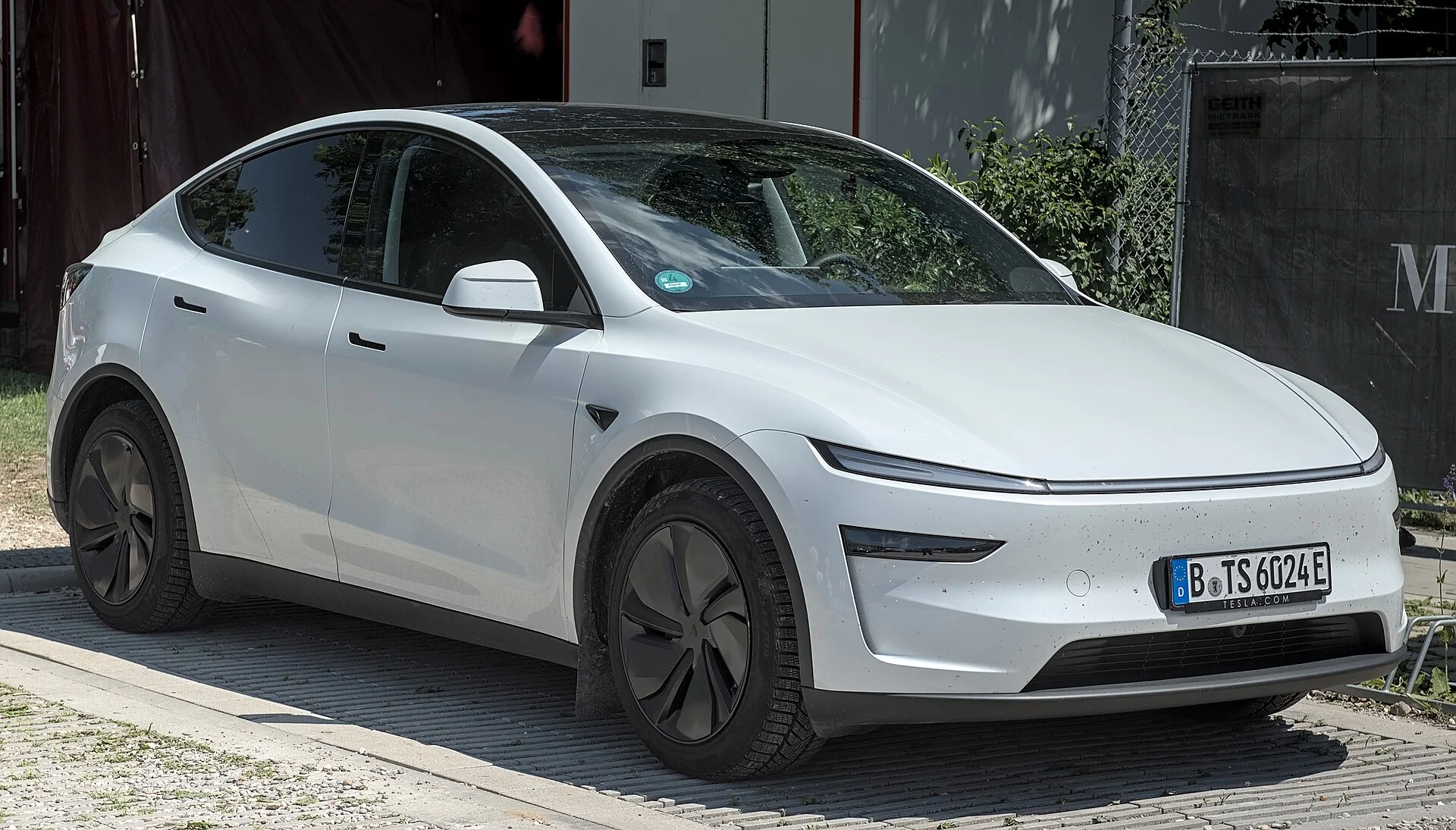
Camp Mode shines for the trips most EV owners actually take: a roadside rest on a long drive, an overnight at a trailhead before an early start, a festival or stargazing night, or a backup plan when a campsite falls through. In mild weather, an ~8–12% overnight cost is trivial against a full pack, and the climate-controlled cabin beats a tent for comfort and security against the elements.
Where it gets harder is multi-night off-grid camping in extreme weather with no charging in reach. A single brutal-cold night can take 15–20%, and two or three in a row without a recharge will run you toward the 20% cutoff fast. For that kind of trip, plan your charging stops as carefully as your campsites, or accept that the Model Y is a one-to-two-night base rather than a week-long boondocking rig. Knowing which trip you are on — and arriving charged for it — is the whole game.
It is also worth being honest about what a Model Y gives up against a purpose-built camper, and what it gains. You lose a standing-height interior, a fixed bed, a kitchen and a bathroom; you are folding seats and rolling out a pad every night. What you gain is a vehicle that costs nothing extra to own because you already own it, drives like a normal car the other 360 days a year, and turns any quiet pull-off into a weatherproof room without a tent to pitch in the rain. For the weekend warrior and the road-tripper, that trade is overwhelmingly worth it; for someone living on the road full-time, it is not, and that is fine — the tool should match the trip.
The myth of the single 'exact' drain number
Search this topic and you will find confident, precise claims — “exactly 1% per hour,” “we measured 10% overnight” — often presented as a single first-hand test. Treat those with caution. Tesla itself publishes only an estimate (~1% per hour), and the people who track it most carefully are clear that real drain varies widely with conditions and is not an exact science.
The honest framing is the useful one: a ~1% mild baseline, a 2–2.5% per-hour ceiling for cold or hard A/C, and an 8–12% typical mild overnight, all drawn from Tesla's estimate and a broad pool of owner reports rather than one drive. The reason this matters is practical, not pedantic: if you plan around someone's single perfect-weather night and then park in a freeze, you will be surprised at 4 a.m. Plan with the range, add margin, and the number you actually see will fall comfortably inside it.
One more honest caveat: figures shift with model year, battery size, tire and software changes, so anchor to the percentage (which is fairly stable) rather than a miles number (which moves with your specific car's range). The percentage is the durable planning tool.
A night in the Model Y, start to morning
You pull into a quiet trailhead lot at dusk with 68% on the battery, fold the rear seats flat, and roll out a pad across the load floor. The forecast is mild, low 50s, so you set the cabin to a comfortable 66, tap Camp, and clip a small USB fan to a grab handle for airflow. Reflective covers go up on the side and rear glass for privacy and a little insulation, and you lock the doors manually since Camp Mode has switched the alarm and auto-lock off.
Through the night the climate system cycles gently, sipping around 1% an hour. You charge your phone off a separate power bank so the car's draw stays almost all climate. By morning the screen reads about 59% — roughly 9% gone over eight hours, right in the expected mild-weather band — with plenty of range to reach the next Supercharger.
The detail that makes it work is the margin, not the magic. You arrived with charge to burn, picked a comfortable rather than aggressive temperature, and insulated the glass, so the battery never had to fight. Do that, and Camp Mode turns the Model Y into a quiet, weatherproof place to sleep that is a normal car again the moment you fold the seats up and drive away.
The verdict: plan with a percentage, not a promise
Plan on roughly 1% of battery per hour in mild weather — about 3 miles of range, or 8–12% over a typical eight-hour night — and 2–2.5% per hour when it is near freezing or you are running hard A/C. Those are Tesla's estimate and aggregated owner reports, not a single measured test, and the real number always depends on conditions.
Arrive with charge to spare, remember the ~20% cutoff that ends Camp Mode, and lean on free levers — a modest set temperature, reflective window covers and a warm sleeping bag — to keep cold and hot nights from drifting toward the high end of the range. Do that and a Model Y is a genuinely comfortable place to sleep for a night or two between charges. Anchor your planning to the percentage, leave margin for weather, and the battery side of car camping in a Tesla stops being a worry and becomes just one more line on the checklist.