Where to Start
When you're trying to keep your car interior looking halfway decent, especially if it's seen more than its fair share of muddy paws or shedding beasts, the question of how you're going to vacuum it up is a big one. You're staring down two main paths: the corded car vacuum and the cordless car vacuum.
It's not just about sucking up dirt; it's about how easily and effectively you can do it without turning a 5-minute cleanup into a 30-minute wrestling match with an extension cord or a dying battery. An older beat-up Civic is a testament to this struggle. The 'best' vacuum is the one you'll actually use when the dog hair crisis hits.
This whole debate hinges on power, convenience, and how much you loathe pet dander.
The Core Answer
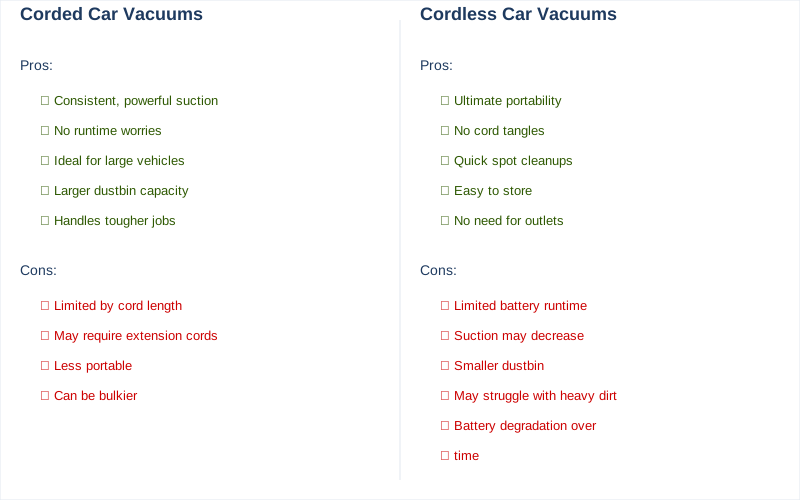
The honest version is that both corded and cordless car vacuums have their place, but they serve different masters. If you've got a lot of ground to cover, like a full-size SUV or a minivan that doubles as a mobile dog kennel, a corded vacuum is your friend. Think of it like this: a giant Suburban used for camping trips and hauling lumber is a lot of vehicle to clean.
Try a cordless in one and by the third row the battery is already gasping for air, leaving you spending more time looking for the charger than cleaning. Corded vacuums give you that consistent, powerful suction that doesn't quit until you do. You don't have to worry about runtime or finding an outlet in the middle of nowhere.
They're generally built for longer cleaning sessions and can handle tougher jobs without breaking a sweat. Plus, the dustbin on a corded unit is usually way bigger, meaning fewer interruptions to empty it out, which is a lifesaver when you're dealing with a fur explosion after a trip to the dog park. That's the real move for deep cleaning. Corded vacuums are ideal for larger spaces, deep cleaning, or homes with pets that require stronger, consistent suction power.
On the flip side, the cordless camp is all about freedom. A cheap $30 cordless car vacuum from Amazon is a common first buy. It was fine for picking up a few crumbs after a fast-food run, but for actual pet hair embedded in the seats? Forget it. It died after about 10 minutes. But that's the $50 version. The good cordless vacuums, the ones that aren't designed to just be glorified dustbusters, are fantastic for quick touch-ups.
If you just need to zap some Cheerios off the floor before your mother-in-law arrives, or clear out the back seat after a single dog ride, a cordless is way easier to grab and use. No wrestling with cords, no hunting for an outlet in the garage. You just grab it and go. Cordless vacuums are typically better utilized for quick cleanups. They're lighter, more maneuverable, and perfect for those 'just in case' moments.
But be warned, the battery life and suction power can be a gamble. You might find yourself running out of juice right when you hit that stubborn patch of hair under the driver's seat. That's the rookie mistake - thinking any cordless will do. You need to look at the specs for runtime and power if you're going to rely on it. It's not always about the brand, but the battery and motor inside.
Why This Matters for Your Setup
Why does this even matter for your car setup? Because the wrong tool makes a simple job a nightmare. Spending 45 minutes at a gas station trying to get an extension cord to reach the back of a minivan, only to discover the vacuum itself has almost no power, is a pathetic display. The core debate is about consistent power versus portability.
Here's the field notes version:
- Pet Hair Tsunami: If your furry co-pilot leaves a trail of fur that rivals a snowdrift, you need sustained, strong suction. That's usually the domain of corded models because batteries can struggle to maintain peak power for long enough to tackle deep-set hair. Corded models often offer more power for tough jobs.
- The 'Just Need to Grab and Go' Scenario: For quick spills, cookie crumbs, or a light dusting of sand after a beach trip, a cordless is your best bet. It's the convenience factor. Pull it out of the console, zap the mess, and put it back. Cordless vacuums are typically better utilized for quick cleanups.
- Power Outlet Availability: This is the obvious one. If you plan on cleaning your car at home, you've got power. If you're more likely to need to clean it up at the grocery store parking lot, a cordless is your only option. It's an easy lesson to learn the hard way: buy a powerful corded unit and then realize there's no way to plug it in anywhere but the garage.

Making the Right Choice
So, how do you make the right call for your specific car situation? It really boils down to your personal chaos tolerance and how you use your vehicle. The choice depends on your cleaning needs and lifestyle.
- For the Serious Mess-Makers: If your car is constantly battling dog hair, mud, or extensive kid-related debris, and you have the luxury of cleaning it at home or near an outlet, a corded vacuum is probably the more robust choice. It's the workhorse. Cordless vacs aren't meant to be your primary vacuum, especially if you have a lot of carpets and rugs.
- For the Quick Fixers: If your car needs frequent, but minor, cleanups and you value speed and portability above all else, a good quality cordless unit is a game-changer. Think of it as your emergency cleanup crew. If you dislike frequent emptying (especially with pets that shed a lot), a corded canister's larger capacity will give you fewer interruptions.
Ultimately, if you have a lot of pets, a corded one might be the better primary tool, but a decent cordless is still handy for those quick grabs. It's about having the right tool for the right level of mess.