
For a truck, the bed is the bedroom - so start there
One number frames this whole matchup: the Chevy Colorado sells with exactly one bed, 61.7 inches long, while the Toyota Tacoma offers a 5-foot or a 6-foot box. Comparing two midsize trucks for camping is a different job than comparing two SUVs, and I build these setups for a living, so let me put the important thing first: in a truck, you don't sleep in the cabin, you sleep in the BED. Which means the whole comparison comes down to bed dimensions and what you can build on top of them - length, depth, and the shelter you bolt or strap over it. Everything else is a tiebreaker.
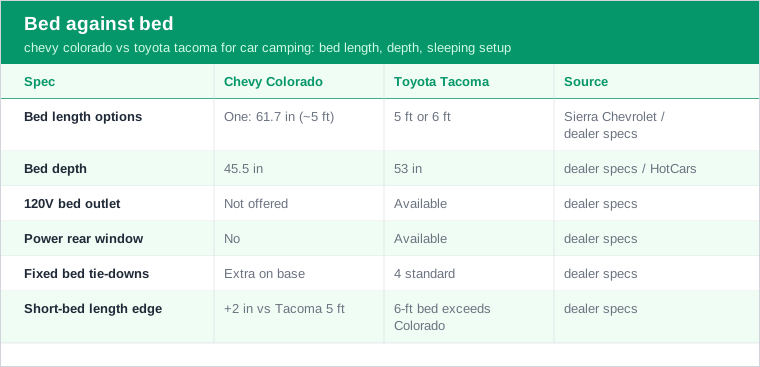
On that measure the Toyota Tacoma and Chevy Colorado split clearly. The Tacoma gives you CHOICES - a 5-foot or a 6-foot bed, a deeper box, and camp-friendly features baked in. The Colorado gives you ONE bed, 61.7 inches long, that happens to be a couple inches longer than the Tacoma's SHORT bed, per Sierra Chevrolet and dealer specs. If that one Colorado config fits your build, great; if you need the 6-footer, only the Tacoma has it.
So this guide is ordered the way I'd actually spec a build: bed length first, then depth, then the shelter decision (tent, topper, or platform), then power at the bed, then the long-term ownership stuff. Measure your sleeping length against the bed before you fall for a badge.
A quick map of what's ahead, so you can jump to your decision point: bed length first (the sleep-straight question), then depth (the storage question), the three shelter paths and how to choose between them, bed power, the crew-cab fallback bunk, four-season climate under a topper, and the used-market money math. By the end you'll know which truck fits your build - and just as usefully, which bed length to order once you've picked it.
Bed length: the Tacoma's choice vs the Colorado's single box
Here's the number that decides whether you sleep straight. The Colorado comes with one bed length across the lineup: 61.7 inches, about five feet, per Sierra Chevrolet. The Tacoma offers two - a roughly 5-foot bed OR a 6-foot bed, depending on cab and configuration. That Colorado box is about 2 inches longer than the Tacoma's SHORT bed, but the Tacoma's 6-foot bed blows past both.
A 61.7-inch bed is 5 feet 1.7 inches - shorter than most adults. Sleeping in ANY midsize bed straight means a drop-down tailgate extension, a diagonal layout, or a bed-topper that lets you use the closed-tailgate length. The 6-foot Tacoma is the only one of the two that gets close to a flat adult length inside the walls.
How I'd read it for a build:
- Want the longest sleeping length: the Tacoma's 6-foot bed, full stop - the Colorado can't match it.
- Fine with a 5-foot bed + tailgate down: the Colorado's 61.7 inches is actually the longest SHORT bed here, a real if narrow win.
- Either way, plan the tailgate: a folded pad or platform that extends over a dropped tailgate is how most people sleep flat in a midsize.
Flexibility is the Tacoma's edge; the Colorado's single box only wins if it's exactly the size you wanted. And be honest about the 6-foot bed's cost before you order it: the longer box stretches the wheelbase, which means a wider turning circle on tight forest switchbacks and a longer truck to park at trailheads. Plenty of campers order the 6-footer for the sleeping length and then discover they sleep on a platform over a dropped tailgate anyway - at which point the short bed would have camped identically and driven better. Match the bed to the BUILD you'll really do, not to the longest number on the order sheet.
Bed depth: the Tacoma's deeper box carries more gear
Length gets the attention, but depth decides how much you can stack under a sleeping platform or haul under a topper - and the Tacoma wins here too. Its bed measures about 53 inches deep versus the Colorado's 45.5, per dealer specs and HotCars. That's nearly 8 inches of extra vertical space, which matters more than it sounds for a bed-camping build.
Where the depth pays off:
- Under-platform storage: a deeper bed lets you build a taller drawer system or stash bins under the sleeping deck and still have headroom above.
- Gear stacking: more vertical room for coolers, totes, and recovery gear under a topper without blocking the sleeping surface.
- The Colorado counter: a shallower bed is easier to reach into and load over the side - a small daily-use win against the Tacoma's camping-storage advantage.
For a truck drawer system or platform build, the Tacoma's deeper box gives you more to work with. Depth to the Tacoma - and one measuring tip from the install bench: depth at the RAILS isn't depth at the wheel wells. Both trucks lose several inches of usable width and height where the wells intrude, so any drawer or platform kit gets sized to the well-to-well dimension first. The spec-sheet depth tells you what fits UNDER a topper; the wells tell you what fits in the box.
The shelter decision: tent, topper, or platform
No midsize truck bed is a bedroom until you put a roof over it, and this choice is the same for both trucks - it's about YOUR build, not the badge. Three paths, and the right one depends on how often you camp and whether you want the bed back for hauling.
- Bed tent: cheapest and simplest - a custom-fit tent straps into the bed, sets up in minutes, and comes out when you need to haul. Best for occasional campers who want the bed back.
- Topper / camper shell: a truck canopy turns the bed into a lockable, weatherproof room you can leave on - the best all-weather sleeping box, at the cost of bed versatility.
- Sleeping platform: a raised deck that levels the bed, extends over a dropped tailgate for length, and hides storage underneath - the serious camper's build.
Both trucks take all three, and the aftermarket for each is deep. This decision is about your camping frequency and weather, not Chevy versus Toyota - pick the shelter first, then the truck that fits your build.
How to actually decide between the three: count nights and check the calendar. Under ten camping nights a year, the bed tent wins - minimal money, zero commitment, and the truck stays a truck. Ten to thirty nights, or any camping outside high summer, the topper earns its price in dry gear and lockable storage alone. Past thirty nights, you're a platform person - build it once and the bed becomes a permanent bedroom with a basement. Our DIY sleeping platform guide walks the build that works in either bed, and the platform is also where the Tacoma's deeper box pays its biggest dividend - 8 extra inches of under-deck storage is a whole second gear layer.
Power at the bed: the Tacoma's outlet is a real camp feature
This is the tiebreaker feature that surprises people, and it's a genuine Tacoma advantage. Toyota offers a 120-volt AC power outlet MOUNTED IN THE BED, plus an available power rear sliding window, per dealer specs. The Colorado doesn't offer a bed-mounted 120V outlet. For a camper, an AC plug at the bed means running a fan, charging a battery, or powering a small appliance without a separate inverter or reaching into the cab.
Why the bed outlet matters at camp:
- Right where you sleep: plug in a fan or light without running a cord from the cabin.
- Power window: the rear sliding glass vents the cab into a bed topper for airflow - a small but real comfort touch.
- Colorado's answer: you add a portable power station, which you'll probably want anyway for overnight loads in either truck.
The Tacoma's bed outlet isn't a dealbreaker - a power station levels it - but it's a thoughtful, camping-specific win Toyota built in and Chevy didn't. If you do lean on the outlet, know its limits: factory bed outlets are sized for small loads like fans, chargers, and lights, not for heaters or induction burners, and they typically run only in specific ignition modes. Read the owner's manual page on it before you plan a menu around it - the outlet is a convenience layer, and the power station remains the backbone of any overnight setup in either truck.
The cab is the backup bedroom - don't ignore it
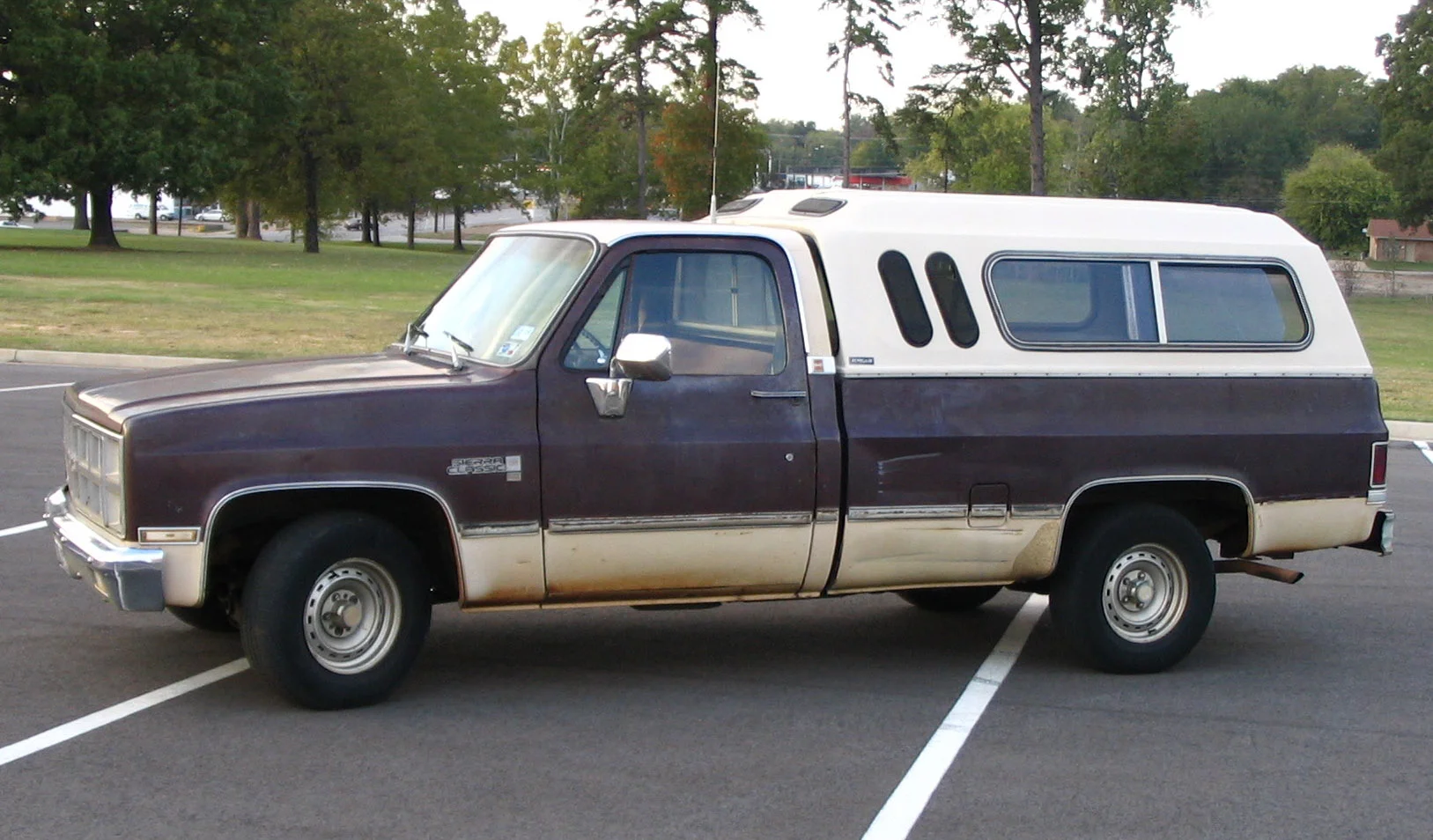
Every truck-bed camping plan needs a bad-weather fallback, and it's sitting right in front of the bed: the crew cab. When the forecast turns or the topper's not on yet, the back seat of either of these double cabs becomes the emergency bunk, and it's worth prepping for that night BEFORE it happens. A backseat truck mattress like the AirBedz 60-inch backseat bed is built exactly for this - it spans the rear bench and fills the footwell gap, turning either crew cab into a real single bed in a few unhurried minutes.
Power runs the same logic in a truck as in any camper: overnight loads never touch the starting battery. A compact power station handles the fan, lights, and charging from the bed or the cab - and in the Tacoma it simply plugs into the bed's 120V outlet to recharge while you drive, one of the quiet perks of that factory feature.
The cab-bunk fallback matters more than it sounds when you're choosing between these two, because it's the great equalizer: on the nights weather drives you inside, the Colorado and Tacoma crew cabs sleep nearly identically. The bed war above decides your GOOD nights; the cab decides your worst ones, and there it's a tie.
Four seasons in a truck bed: heat, cold, and topper climate
A truck bed under a topper is a different thermal animal from an SUV cabin, and knowing the difference keeps you comfortable in months the fair-weather campers skip. The bed box is uninsulated metal on all six sides - it sheds heat fast after sunset and soaks it up brutally in summer sun. The topper adds a roof but almost no insulation, so your sleep system does all the thermal work.
The truck-bed rule: insulate the FLOOR first. You lose more heat conducting into cold bed metal than to the air above you - a closed-cell foam layer under the mattress is worth more than a second blanket on top, every time.
Season by season, the bed build changes like this:
- Summer: the topper's windows and the cab's sliding rear glass (powered on the Tacoma) become your airflow system - open opposite ends, screen everything, and park nose to the breeze.
- Shoulder seasons: the foam-under-mattress layer plus a real sleeping bag covers nights down to freezing without any powered heat.
- Winter: add a bag rated for the true overnight low and crack two vents anyway - condensation freezes on topper ceilings, and drips on your face at 3 a.m. teach the lesson once.
Both trucks take the identical system; the Tacoma's deeper box just leaves more room for the gear that makes it work.
The resale reality: the Tacoma tax cuts both ways
Talk to anyone who's shopped these trucks used and they'll name the phenomenon before you do: the Tacoma tax. Toyota's midsize pickup holds its value like almost nothing else on the road - great news when you sell, painful news when you buy, because used Tacomas routinely price within shouting distance of new ones. The Colorado depreciates more conventionally, which makes it the stronger value play on the used lot and the weaker one at trade-in.
For a camping buyer, that cuts an interesting fork. Buying new and keeping the truck a decade? The Tacoma's resale floor and durability folklore make it the safer total-cost bet, and its bed flexibility means the truck grows with your camping ambitions. Buying used on a budget to get INTO truck camping? The Colorado is quietly the smart move - the same 61.7-inch bed and crew cab at a friendlier price, with the savings funding the topper and the build.
Either way, remember what actually holds value in this hobby: the truck, not the build. Toppers, platforms, and drawers sell for pennies on the dollar - so buy the truck for the long game and the build for YOUR camping, not a future buyer's.
The verdict: Tacoma for flexibility, Colorado if its one bed fits
Build both out in my head and the Tacoma is the more flexible camping truck: two bed lengths including a real 6-footer, a deeper box for storage, a 120V bed outlet, a power rear window, and standard tie-downs. If you want the longest sleeping length and the most camp-ready features from the factory, it's the pick, and it's not especially close.
Buy the Tacoma if you want bed-length choice (especially the 6-foot bed), the deeper box, and the built-in camp features. Buy the Colorado if its single 61.7-inch bed - the longest short bed here - fits your build, or if you prefer its road manners and value; just plan the tailgate extension and add a power station.
Both are capable midsize trucks, and the shelter and platform you build matter more than the badge on the tailgate. But on the raw bed numbers and factory camp features, the Tacoma gives you more to work with. Our Tacoma camping guide and Colorado camping guide take whichever you choose into the full build. One last installer's note: whichever truck wins, spend your first weekend measuring, not buying. Bed rails, wheel-well spacing, and tailgate height vary enough between these two that a platform or drawer kit sized for one needs re-cutting for the other - and the 30 minutes of tape-measure work up front is the difference between a build that slides in square and one that rattles down every washboard road you ever drive.