Decide the build path before you shop a single drawer
As an Amazon Associate we earn from qualifying purchases.
A truck drawer system is the rare piece of camping gear where the biggest decision is not which product but which build path. Based on published specs and what owner reviews and overlanding build threads consistently report, there are three honest routes — DIY plywood, a modular flat-pack kit, and a bolt-in welded unit — and they differ more in cost, time, and weight than in what they actually do.
Get the path right for your budget, your tools, and your truck's bed, and the drawers will outlast the truck. Get it wrong and you either spend a weekend rebuilding a sagging plywood box or bolt 150 pounds of steel into a half-ton that can barely spare the payload. So this guide goes path first, then the measuring and load realities that decide whether any of them fit. If you are still assembling the broader kit, our car camping essentials guide covers what rides on top of the drawers.
The three build paths, honestly compared
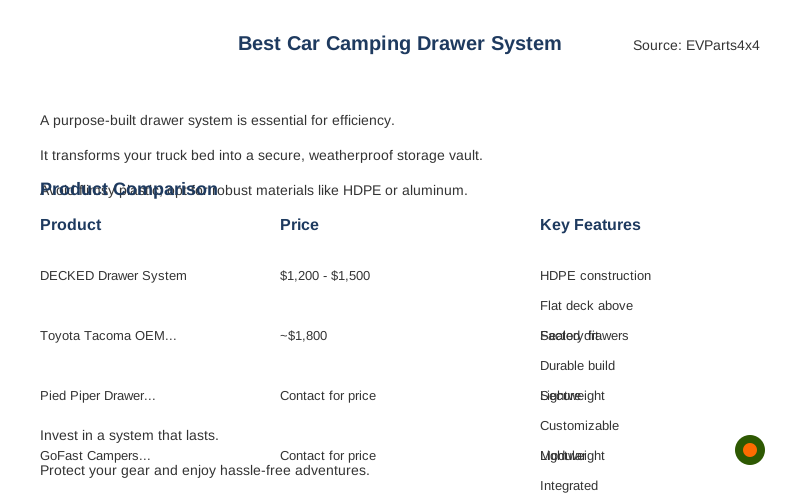
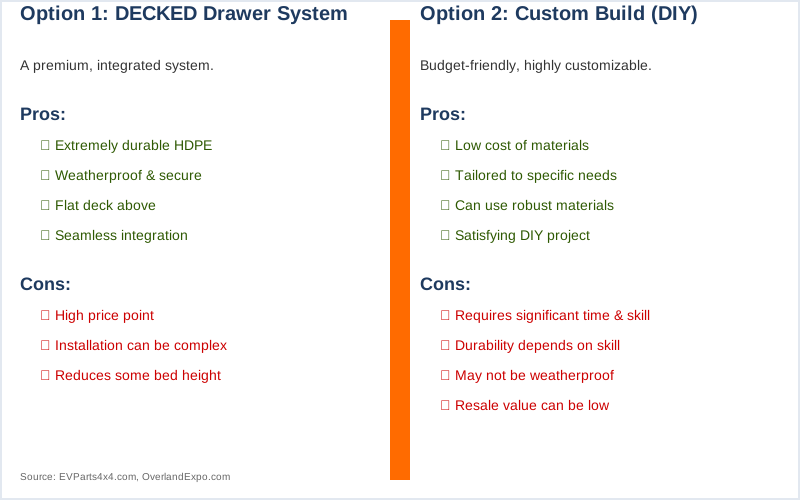
Owner reviews map cleanly onto three routes, each with a different cost-and-effort signature.
DIY plywood is the cheapest and most customizable. Build threads show it costs a fraction of a kit and fits any bed exactly — but it demands tools, a weekend, and real drawer slides, because the most common DIY regret is undersized hardware that sags under a loaded drawer. If you go this way, buy rated heavy-duty slides and do not improvise them.
Modular flat-pack kits ship as panels you assemble with a screwdriver. Reviewers like the finished look and the engineered slides; the trade-off is price and a fixed footprint that may waste a few inches in your specific bed. They are the middle path: more than plywood, less than welded steel.
Bolt-in welded units are the heavy-duty overlanding choice — powder-coated steel or aluminum, rated slides, often a fridge slide built in. Owners praise the durability and dust sealing, but flag the two costs nobody advertises: the price, and the weight. A ready-made drawer unit can run well over a hundred pounds before you load it.
One honest way to choose between the three: be truthful about whether you will actually build. Plenty of plywood projects start strong and end as a half-finished box in the garage, and a kit you assemble in an afternoon beats a DIY system you never finish. If you have the tools and the weekend, DIY is unbeatable on cost and fit. If you do not, a kit or a bolt-in unit is the system that actually gets used.
Measure your bed first — the spec that kills most kits
The single most common return, reviewers say, is a drawer system that does not fit the bed it was bought for. Truck beds vary by far more than the marketing implies, and three measurements decide everything.
Bed length (short bed near 5 feet, standard near 6.5) sets whether a full-length system even closes the tailgate. Width between the wheel wells is the hard limit on drawer width — many systems narrow there and lose usable space. Bed height and any liner or bedrail determine clearance for the drawer faces and your sleeping platform on top.
Owners who measure all three against the system's stated dimensions before buying almost never report a fit problem; those who trust the truck's marketed bed size often do. If you also sleep in the bed, confirm the platform height leaves you headroom under a topper or canopy.
Slide rating and load: where cheap systems quietly fail
Drawers live or die on their slides, and the spec to read is the per-slide load rating, not the brochure photo. Reviewers are consistent: a drawer rated for 200-plus pounds of gear over corrugated forest roads needs genuinely heavy hardware, and the budget systems that skimp here develop sag, stiction, and eventually drawers that will not close.
Look for full-extension, locking slides with a stated weight rating, and pay attention to whether the rating is per slide or per pair. A locking detent matters more than owners expect — an unlocked drawer that rolls open on a steep climb dumps your kitchen across the bed. Bearing slides outlast roller slides on washboard, which is exactly where overland gear gets used.
Reviewers also call out the difference between a drawer that pulls smoothly when empty and one that still pulls smoothly when loaded. Cheap slides bind under weight, especially on an incline, and the failure compounds: a sticky drawer gets yanked, the yank stresses the mount, and the mount works loose. The honest test owners describe is to load a system to its rated weight, park nose-up, and see whether the drawer still opens with one hand. The good ones do; the budget ones reveal themselves immediately.

Weight versus payload: the number that bites half-ton owners
Here is the trade-off the welded-steel crowd learns late: a drawer system is dead weight you carry full-time, and it counts against your truck's payload before you add gear, water, passengers, or a 12V fridge.
A heavy bolt-in unit can eat 150 pounds of a midsize or half-ton's already-modest payload. Owners on smaller trucks repeatedly recommend aluminum over steel, or a lighter modular kit, specifically to keep payload for the stuff that matters. Full-size truck owners have more headroom and can run the heavy steel without thinking about it. Match the system's weight to your truck's actual payload sticker, not the badge on the tailgate — that sticker is the honest limit.
It adds up faster than people expect. Two adults, a full tank, a fridge, water, and a rooftop tent can already crowd a midsize truck's payload before the drawers ever enter the math. Owners who do the arithmetic first tend to land on a lighter system and never think about it again; owners who buy the heaviest unit in the catalog sometimes discover they are over their rated payload the moment the truck is packed for a real trip.
Where to spend, and where it's wasted
Owner reviews point the money at the parts that fail and away from the parts that just look good.
Spend on: the drawer slides (rated, locking, full-extension), the build material's fit to your exact bed, and dust sealing if you run gravel roads — fine grit in an unsealed drawer ruins gear and grinds slides.
Don't overspend on: a fridge slide you will not use, a welded steel unit when a modular kit fits your payload better, or premium finishes on a surface that lives under a topper in the dark. Reviewers note the best-value system is the one matched to your bed and your payload, not the heaviest one in the catalog.
The bottom line: path to your budget, system to your bed
For most truck campers, the honest sequence is: pick the build path your budget and tools support, measure bed length, wheel-well width, and height before you buy anything, and confirm the slides are rated and locking. A weekend DIY plywood build wins on cost and fit; a modular kit wins on convenience; a bolt-in unit wins on durability if your payload can carry it.
The system owners regret is almost always the one bought without measuring the bed, or the heavy welded unit bolted into a truck that could not spare the payload. Avoid those two mistakes and any of the three paths works.
Whichever you choose, treat the slides as the heart of the build and the payload sticker as the ceiling. Do that and you get a kitchen that pulls out clean for years, not a sagging box you rebuild next season.