Car Camping

Best Truck Canopy for Camping (2026 Complete Guide)

Morgan - The Gear Gatekeeper
12 min read
Includes Video

I've witnessed more camping gear failures than I care to admit, and a significant portion of them stem from a foundational misunderstanding of what constitutes 'durable' when it comes to truck canopies. The market is flooded with options that promise adventure but deliver only disappointment after 18 months of regular use.

I've witnessed more camping gear failures than I care to admit, and a significant portion of them stem from a foundational misunderstanding of what constitutes 'durable' when it comes to truck canopies. The market is flooded with options that promise adventure but deliver only disappointment after 18 months of regular use. My focus, as always, is on the material science that dictates true longevity, not the marketing fluff.

RealTruck highlights the convenience, but I demand more than convenience; I demand industrial-grade resilience.

Many consumers gravitate towards the cheapest option, often a canopy composed primarily of thin-gauge fiberglass-reinforced plastic (FRP) with dubious resin quality. This material choice is a direct path to premature structural degradation. The resin matrix, often a polyester variant, is susceptible to UV degradation and micro-cracking from thermal cycling, especially in climates with significant temperature swings. This isn't just about aesthetics; it compromises the load-bearing capacity.

I've seen FRP canopies develop stress cracks around mounting points within a year, even with minimal rooftop cargo. The repeated vibration from road travel exacerbates these weaknesses, leading to fatigue cracking where the shell meets the truck bed rails. This is a classic case of planned obsolescence, designed to fail just outside the warranty period.

A proper truck canopy for camping isn't just a glorified storage box; it's a critical component of your mobile base camp. It must withstand dynamic loads, resist environmental stressors, and maintain its structural integrity for decades, not merely a few seasons. Anything less is a waste of money and resources, destined for the landfill. Choosing the right setup requires a critical eye for material composition.

When I evaluate a canopy, I'm looking beyond the paint job. I'm examining the thickness of the material, the quality of the bonding agents, and the robustness of the hardware. If the primary structural elements aren't up to industrial-grade standards, then it's simply not worth your time or investment. You're better off with a tarp and some bungee cords.

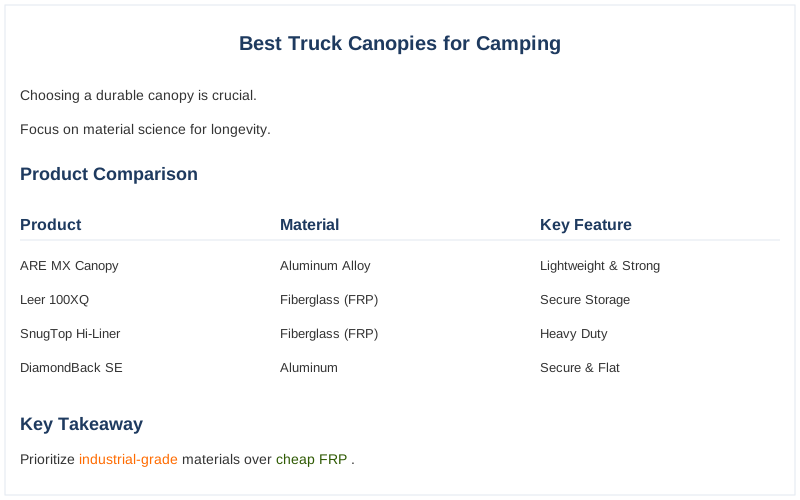
Best Truck Canopy for Camping (2026 Complete Guide) — Key Specifications Compared
Key specifications for best truck canopy for camping

Key Features to Consider

When evaluating a truck canopy, superficial aesthetics are irrelevant. My focus is on the core engineering and material science that dictate its true value and longevity. Guide Gear offers some options, but the devil is in the details.
Feature My Standard (Industrial-Grade) Common Inferior Compromise (Landfill-Ready)
Shell Material Marine-grade 5052 or 6061-T6 aluminum, minimum 0.080 inch thick, or high-density, woven fiberglass with vinylester resin. Thin-walled fiberglass-reinforced plastic (FRP) with polyester resin, often less than 0.060 inch. Prone to UV degradation and micro-cracking.
Frame Construction Welded 6063-T5 aluminum extrusions, minimum 1.5-inch square tubing. Provides superior rigidity and load-bearing capacity. Bonded or riveted aluminum sheet metal, sometimes reinforced with injection-molded ABS or polypropylene internal components. Susceptible to fatigue cracking.
Window Material Tempered safety glass, minimum 0.125 inch thick, or abrasion-resistant polycarbonate (PC) with UV-stabilized coating. Acrylic (PMMA) or uncoated polycarbonate, typically 0.090 inch. Prone to hazing, scratching, and UV embrittlement.
Hardware (Latches, Hinges) 304 or 316 stainless steel, investment-cast or forged, with robust internal mechanisms. Zinc-plated mild steel, stamped aluminum, or even glass-filled nylon (PA6-GF30). Prone to corrosion, fatigue, and brittle fracture.
Sealing Gaskets EPDM rubber or closed-cell neoprene, continuous and properly compressed. Open-cell foam or PVC weather stripping. Degrades rapidly, leading to water ingress and accelerated corrosion of internal components.
The shell material is paramount. MotorTrend reviews some shells, but rarely delves into the material science. A thin FRP shell, while lightweight, lacks the impact resistance and long-term structural integrity of a proper aluminum or high-grade fiberglass composite. The resin quality makes all the difference; cheap polyester resins will chalk and delaminate. Frame construction, especially for load-bearing roof racks, demands welded aluminum. Anything less, like riveted sheet metal, introduces points of stress concentration that will inevitably lead to fatigue failure. It's not a question of if, but when. And the hardware? If your latches are made of anything less than proper stainless steel, you're setting yourself up for corrosion failure in any humid environment. I've seen cheap pot-metal latches seize or snap off within months. This is not a feature; it's an engineering oversight disguised as cost-saving.
To enhance your camping experience, consider pairing your canopy with a sturdy truck bed tent for extra comfort.
LEER 100XR
Image: Radco Truck Accessories
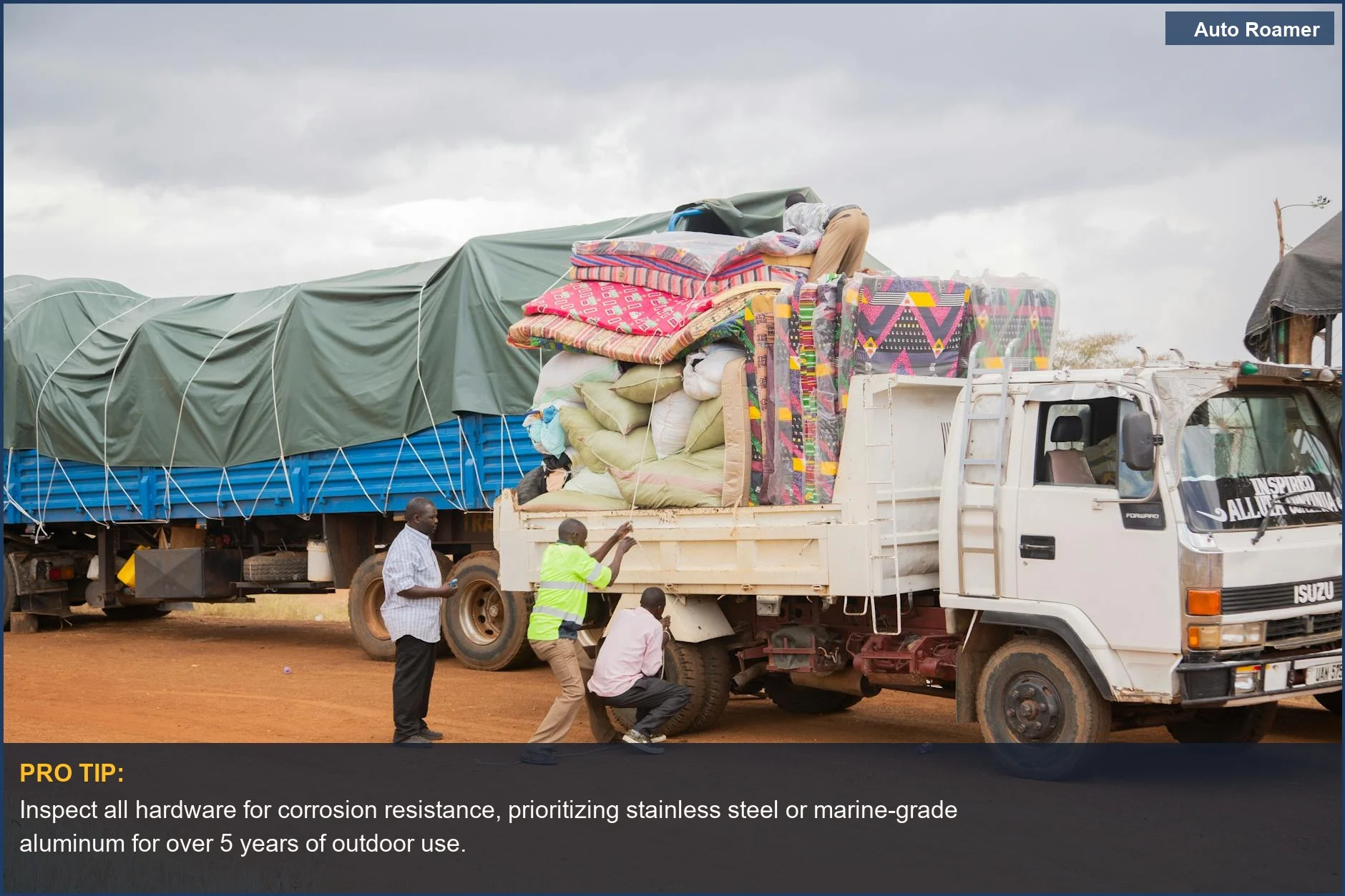
Inspect all hardware for corrosion resistance, prioritizing stainless steel or marine-grade aluminum for over 5 years of outdoor use.
When choosing the best truck canopy for camping, remember that practical loading is key. This setup highlights how much gear you can fit, even with less-than-ideal weather. | Photo by Speak Media Uganda

Our Top Picks

After sifting through the marketing hype, a few options stand out for their commitment to material science and industrial longevity. These aren't just 'good enough'; they're engineered to perform for decades, not merely a few seasons. Many guides discuss questions to ask, but I prefer to examine the answers in the product itself. LEER 100XR (~$2,500) This is a solid, no-nonsense fiberglass canopy. The material composition is robust, utilizing a hand-laid fiberglass construction that provides excellent rigidity. The hardware is typically stainless steel, resisting the common corrosion issues seen with lesser brands. My primary concern is always the base resin, but LEER generally uses a decent vinylester blend, which offers better UV resistance than cheap polyester. It's a workhorse, not a show pony. ARE Z-Series (~$3,000) ARE consistently delivers a high-quality fiberglass product. The Z-Series features a smooth, automotive paint finish that is bonded well to the fiberglass, indicating a better quality gel coat and resin system. The structural integrity is excellent, with reinforced sections where it matters. The gas struts and locking mechanisms are typically industrial-grade, offering smooth operation and reliable security. It's an investment, but one that pays dividends in durability. Snugtop Rebel (~$2,800) Snugtop is another brand that understands material science. The Rebel series uses a high-quality fiberglass composite that resists flex and cracking. The internal bracing, often overlooked, is well-integrated, preventing distortion under load. Their window seals are typically EPDM rubber, a superior choice for long-term weatherproofing compared to cheaper PVC or foam strips. Snugtop caps are known for their quality. WildTop (Price Varies, ~25% of traditional hardtop) This one is an interesting departure, focusing on an aluminum frame. The WildTop uses a robust, lightweight aluminum frame, likely 6061-T6, which is excellent for structural integrity and resisting fatigue cracking. The canvas shell, while not a hardtop, is a heavy-duty, marine-grade material designed for UV and abrasion resistance. Outside Online praises its design. It's a compromise on security compared to fiberglass, but an intelligent one for weight and flexibility. GoFastCampers Platform Topper (~$8,500) While technically a topper with an integrated tent, the GFC Platform Topper deserves mention for its sheer structural integrity. It employs a fully TIG-welded aluminum space frame, typically 6061-T6, with precision-machined billet aluminum components. This is industrial-grade engineering at its finest. The panels are aluminum sheet, offering excellent impact resistance and thermal conductivity for heat dissipation, unlike flimsy fiberglass. This is built to outlast your truck, not just your next camping trip.
To maximize your camping experience, consider integrating a practical car camping drawer system with your canopy.
ARE Z-Series
Image: Jordan Camper
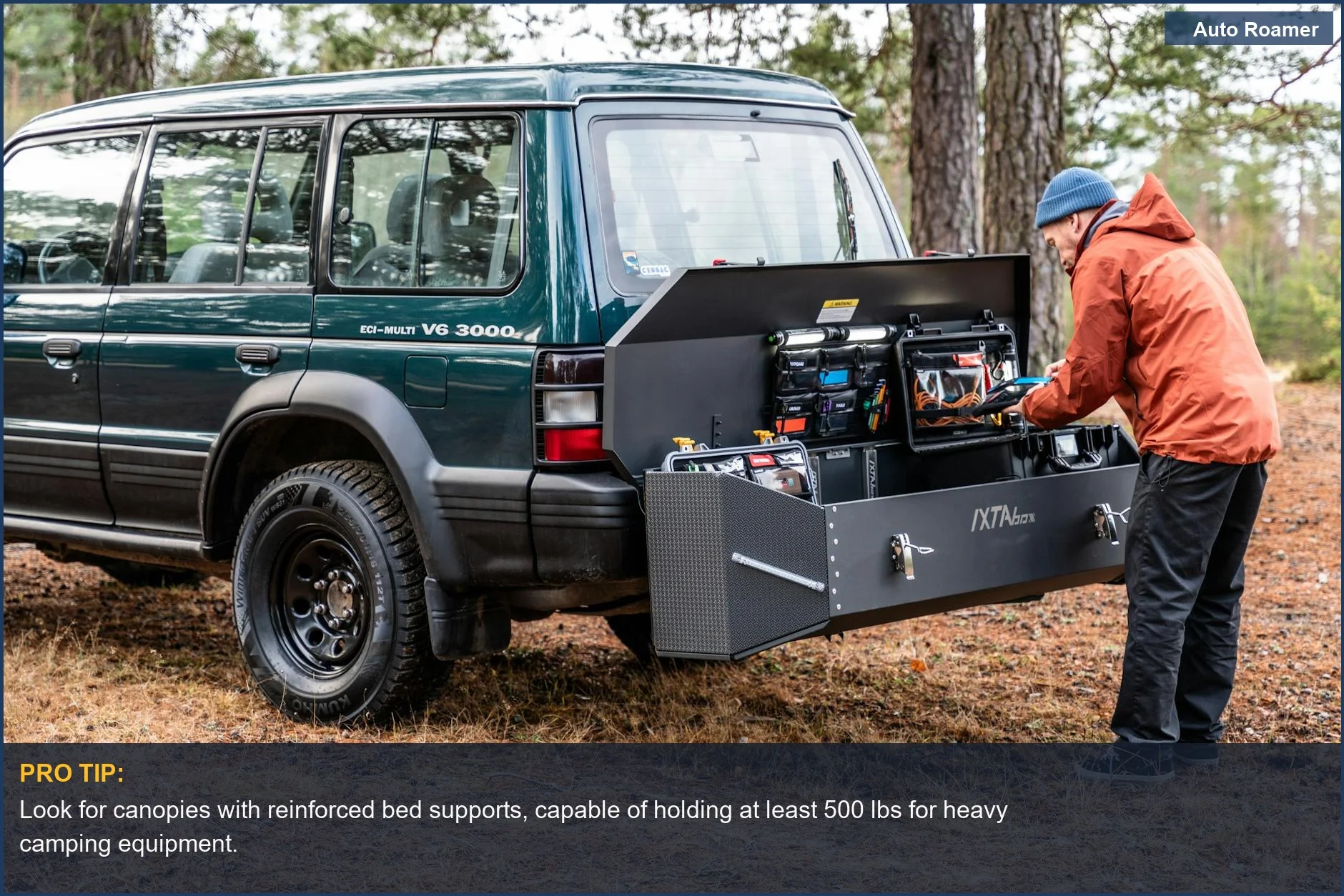
Look for canopies with reinforced bed supports, capable of holding at least 500 lbs for heavy camping equipment.
Discover the best truck canopy for camping that offers rugged versatility. This forest setting showcases how a durable canopy enhances any outdoor expedition, blending seamlessly with nature. | Photo by Andreas Näslund

Budget vs Premium Options

The distinction between a 'budget' and 'premium' truck canopy isn't about marketing; it's about a fundamental difference in material science and manufacturing processes. One is engineered for a lifespan, the other for a price point. The 2026 Buyers Guide offers a glimpse into the market, but not the underlying material choices.
Feature Budget Option (Landfill-Ready) Premium Option (Industrial-Grade)
Shell Fabrication Chopped strand mat fiberglass with polyester resin, often thin and prone to voids. Hand-laid or vacuum-infused woven fiberglass with vinylester resin, or welded 5052/6061-T6 aluminum.
Structural Reinforcement Minimal or internal wood stringers, susceptible to rot and delamination. Integrated aluminum sub-frames, composite core materials, or additional fiberglass layers at stress points.
Paint/Finish Single-stage gel coat, prone to chalking, fading, and UV degradation within 2-3 years. Multi-stage automotive-grade paint system (base coat/clear coat) or anodized aluminum, offering superior UV stability and abrasion resistance.
Hardware Durability Stamped mild steel, cheap zinc alloys, or injection-molded PA6. Prone to rust, fatigue, and brittle fracture. Investment-cast 304/316 stainless steel, billet aluminum, or heavy-duty forged components. Designed for cyclic loading and corrosion resistance.
Installation Clamps Thin-gauge aluminum or mild steel C-clamps, often requiring frequent re-tightening. Heavy-duty, anodized aluminum J-hooks or internal bolt-through systems with load-spreading plates. Superior clamping force and vibration resistance.
Budget options cut costs by using inferior materials. A thin fiberglass shell with cheap polyester resin is a recipe for premature failure. The resin will break down under UV exposure, leading to fiber bloom and eventual structural compromise. This isn't 'value'; it's a short-term solution creating long-term waste. Premium options, conversely, invest in materials like vinylester resin, which offers superior hydrolytic stability and resistance to environmental degradation. They use proper aluminum alloys for framing, not just flimsy sheet metal. The security and weather resistance of a hard shell depends entirely on these material choices. The difference in price, often $1,500 to $3,000, reflects this material disparity. You're paying for engineering and material science that ensures your canopy doesn't become another piece of landfill-ready garbage in five years. Invest once, or buy twice.
Understanding these differences can enhance your overall experience, especially when exploring truck camping setup ideas.
Snugtop Rebel
Image: SnugTop
Prioritize canopies offering at least 6 feet of interior headroom for comfortable standing room during setup.
For the best truck canopy for camping, consider the journey and the destination. This image emphasizes the communal aspect of camping, with gear ready for transport to your campsite. | Photo by Maël BALLAND

Setup and Installation Tips

Proper installation is not a suggestion; it's a critical step to ensure the structural integrity and longevity of your canopy. I've seen more failures from improper setup than from material defects, which is saying something. Reddit discussions highlight various setups, but the devil is in the details. 1. Clean and Prep Bed Rails: Before anything else, thoroughly clean the truck bed rails with a degreaser and then isopropyl alcohol. Any dirt, wax, or grime will compromise the seal and clamping force. Don't skip this; it takes 15 minutes and prevents water leaks and shifting. 2. Apply Proper Sealing Tape: Use a high-density EPDM foam tape, minimum 0.5 inches wide and 0.125 inches thick, along the entire length of the bed rails. This creates a waterproof barrier and cushions the canopy, preventing abrasion and stress concentrations. Do not use cheap, open-cell weatherstripping; it will compress and fail within months. 3. Positioning and Alignment: Carefully lower the canopy onto the bed rails. Ensure it's centered and flush. This might require two people, especially for larger units. Misalignment puts uneven stress on the shell and mounting points, accelerating fatigue cracking. 4. Install Clamps Correctly: Use the manufacturer-specified clamps, typically J-hooks or C-clamps. Torque them evenly, starting from the cab side and working towards the tailgate. For a 6.5-foot bed, I recommend a minimum of six clamps, three per side. Over-tightening can crack fiberglass; under-tightening leads to movement and leaks. Check torque after 100 miles, then again after 500 miles. Proper clamp installation is crucial. 5. Verify Electrical Connections: If your canopy has interior lights or a third brake light, ensure all electrical connections are properly crimped, sealed, and routed. Use marine-grade heat-shrink connectors to prevent corrosion and short circuits. Loose wires cause intermittent failures and can chafe through insulation, leading to more serious electrical issues.
To enhance your camping experience, consider exploring our tips on pickup truck camping setup.
GoFastCampers Platform Topper
Image: Go Fast Campers
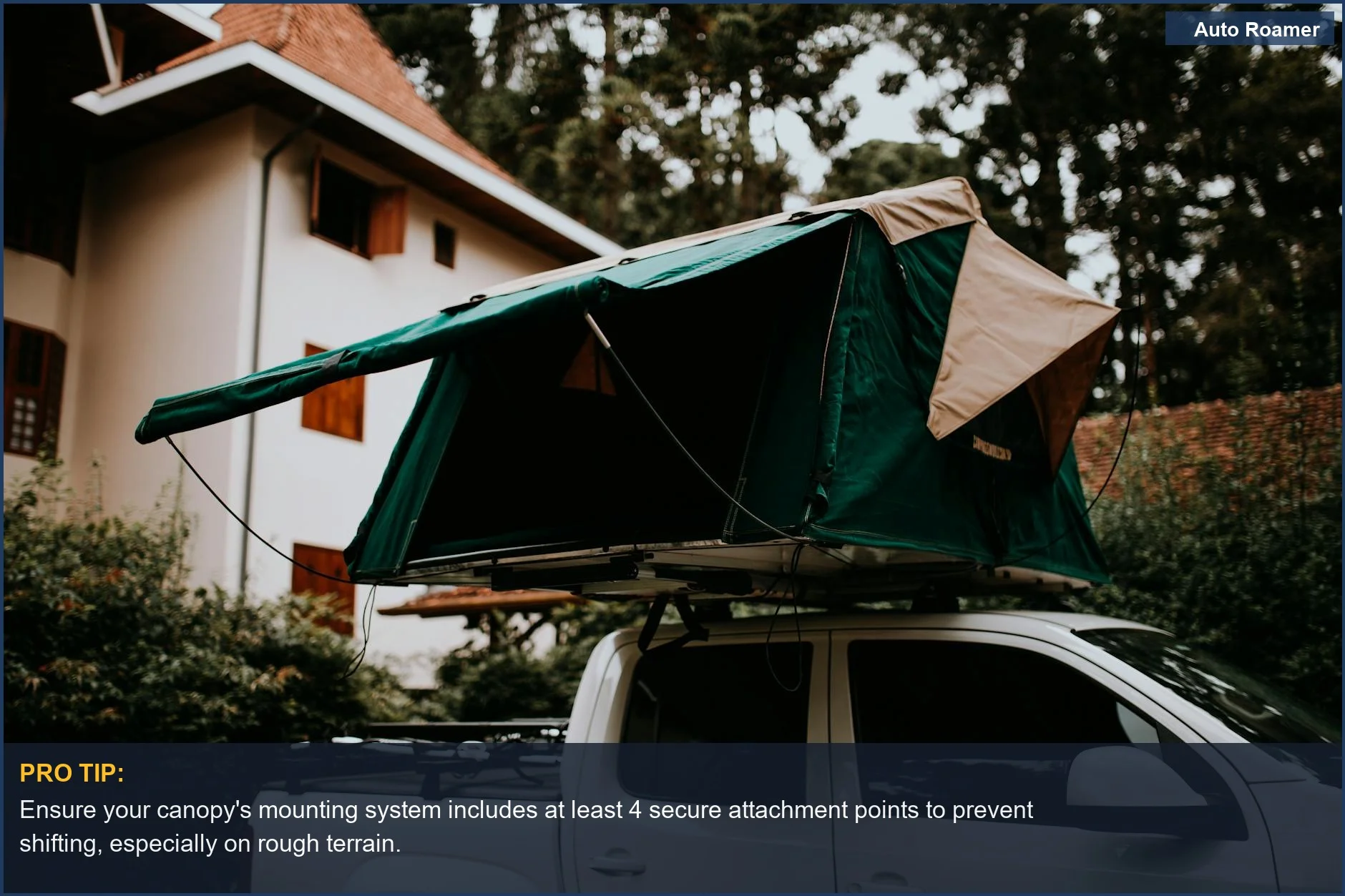
Ensure your canopy's mounting system includes at least 4 secure attachment points to prevent shifting, especially on rough terrain.
Exploring the best truck canopy for camping often includes rooftop tent options. This setup demonstrates how a canopy can be the foundation for a complete overlanding experience. | Photo by Matheus Bertelli

Care and Maintenance Tips

Neglecting a truck canopy is a direct path to premature material degradation and structural failure. These are not 'install and forget' items; they require diligent care to ensure their industrial longevity. Choosing a canopy is only the first step; maintaining it is paramount. 1. Regular Exterior Cleaning: Wash the exterior every 2-3 months with automotive soap and water. This removes road grime, bird droppings, and environmental contaminants that can degrade the clear coat or gel coat. Immediately remove any sap or tar, as these can etch the finish. 2. UV Protection for Fiberglass: For fiberglass canopies, apply a UV protectant wax or sealant every 6 months. This is critical for preventing the clear coat or gel coat from oxidizing and chalking, which leads to fiber bloom and compromised structural integrity. Neglecting this invites rapid material degradation. 3. Inspect Seals and Gaskets Annually: Check all window, door, and bed rail seals for cracks, hardening, or compression set. EPDM rubber seals, while durable, can still degrade over time. Replace any compromised seals immediately to prevent water ingress, which can lead to mold, corrosion of internal hardware, and damage to your gear. 4. Lubricate Hardware: Annually lubricate all hinges, latches, and gas struts with a silicone-based lubricant. This prevents seizing, reduces wear on moving parts, and ensures smooth operation. Neglecting lubrication can lead to premature failure of these critical components, often requiring costly replacements. 5. Check Clamp Torque: Re-check the torque on all bed rail clamps every 6 months, especially after significant off-road use. Vibration can cause clamps to loosen, leading to canopy shift, leaks, and potential damage to both the canopy and your truck bed rails. A loose canopy is an unstable canopy.
To enhance your camping experience, consider essential gear that complements your truck canopy, like our guide on truck camping essentials.
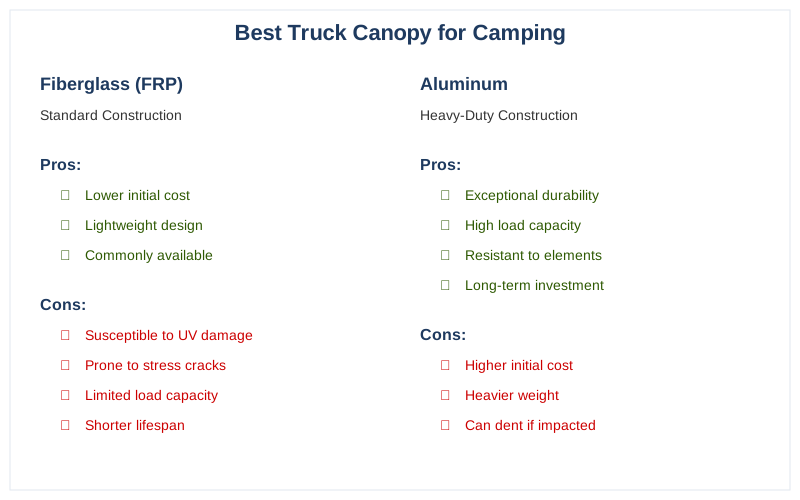
Best Truck Canopy for Camping (2026 Complete Guide) — Pros and Cons Breakdown
Comparison overview for best truck canopy for camping

Final Recommendations

The market is rife with truck canopies that masquerade as durable camping solutions but are, in reality, engineered for a short, disposable lifespan. My analysis always returns to the bedrock of material science and robust engineering. If it isn't built to last, it's not worth considering. LEER offers a guide, but the emphasis should always be on what's under the surface. For genuine longevity and structural integrity, prioritize these factors:
  • Material Composition: Seek out canopies constructed from high-quality, hand-laid fiberglass with vinylester resin, or welded 5052/6061-T6 aluminum. Anything less is a compromise that will lead to premature failure from UV degradation or fatigue cracking.
  • Industrial-Grade Hardware: Demand 304 or 316 stainless steel for all latches, hinges, and fasteners.
  • Zinc-plated mild steel or injection-molded polymers are landfill-ready components that will corrode or fracture under normal use.
  • Robust Sealing: Ensure continuous EPDM rubber or closed-cell neoprene gaskets are used for all seals. Cheap foam or PVC weatherstripping will fail, leading to leaks and accelerated internal corrosion.
  • Proper Reinforcement: Verify that load-bearing areas, particularly for roof racks, are reinforced with integrated aluminum sub-frames or additional composite layering. This prevents flex and stress cracking under dynamic loads.
  • Do not be swayed by superficial features or low price points. A true investment in a truck canopy is an investment in industrial longevity. Choose wisely, or prepare to replace it sooner than you'd like. Your gear, and your wallet, will thank you.
    To enhance your camping experience, consider also investing in a high-quality SUV cargo liner for gear protection.

    Frequently Asked Questions

    My cheap canopy's gas struts are failing after 14 months. Can I replace them myself, or is this a dealer-only repair that will cost me $250?
    You absolutely can replace them yourself. Most gas struts are a standardized ball-and-socket design. You'll need to measure the extended length and force (e.g., 60-pound lift) of your current struts. A pair of industrial-grade stainless steel struts will cost you around $40-60 online. Paying a dealer $250 for a 10-minute job is an insult to your intelligence.
    Do I really need a torque wrench for installing the clamps? My buddy just used a ratchet and 'ugga-duggas' until it felt tight.
    Yes, you absolutely need a torque wrench. 'Ugga-duggas' are a recipe for disaster. Over-tightening fiberglass canopies can cause stress cracks around the mounting points, leading to structural failure. Under-tightening allows the canopy to shift, abrading your truck's paint and compromising the seal. Consult your canopy's manual for the specific torque value, usually around 15-20 ft-lbs, and adhere to it.
    What if I meticulously wax my cheap fiberglass canopy, but it still starts to chalk and fade after two years? Did I do something wrong?
    No, you didn't do anything wrong; you simply encountered the limitations of inferior materials. If your canopy uses a cheap polyester gel coat, no amount of waxing will prevent its eventual UV degradation and chalking. The material composition itself is the problem, not your maintenance efforts. It's actively engineered to fail.
    Can leaving my truck canopy unmaintained, with leaky seals, cause permanent damage to my truck bed or electrical system?
    Absolutely. Persistent water ingress from failed seals will lead to accelerated corrosion of your truck bed, especially around bolt holes and seams. Furthermore, water can wick into your truck's wiring harness, causing corrosion in electrical connectors, leading to intermittent failures, short circuits, and potentially costly repairs to the entire electrical system. It's not just an inconvenience; it's a slow destruction.
    I heard that aluminum canopies are 'too noisy' compared to fiberglass. Is this true, or is it just a myth spread by fiberglass manufacturers?
    The notion that aluminum canopies are inherently 'too noisy' is largely a misconception, often perpetuated by those unfamiliar with proper construction. A well-engineered aluminum canopy, with a fully welded frame and internal sound-dampening measures like closed-cell foam insulation, will be no noisier than a fiberglass equivalent. Poorly constructed aluminum, with loose panels or inadequate bracing, will indeed rattle. It's a matter of construction quality, not the material itself.

    🏅 Looking for Gear Recommendations?

    Check out our tested gear guides for products that work with this setup:

    M

    Morgan - The Gear Gatekeeper

    Product testing engineer with 8+ years evaluating automotive and camping gear.

    Sources

    Related Articles