
Best Vehicle Mounted Awning for Overlanding (2026 Complete Guide)
I've witnessed more flimsy outdoor gear than I care to admit, but few categories suffer from more egregious material compromises than vehicle-mounted awnings. For something designed to offer shelter from 100-degree desert sun or a sudden downpour, you'd expect industrial-grade components.
I've witnessed more flimsy outdoor gear than I care to admit, but few categories suffer from more egregious material compromises than vehicle-mounted awnings. For something designed to offer shelter from 100-degree desert sun or a sudden downpour, you'd expect industrial-grade components. Yet, I routinely find critical load-bearing elements crafted from materials barely suitable for a child's toy. The market is flooded with landfill-ready options.
GearJunkie tested awnings for five years, and I can tell you, the good ones are few and far between.
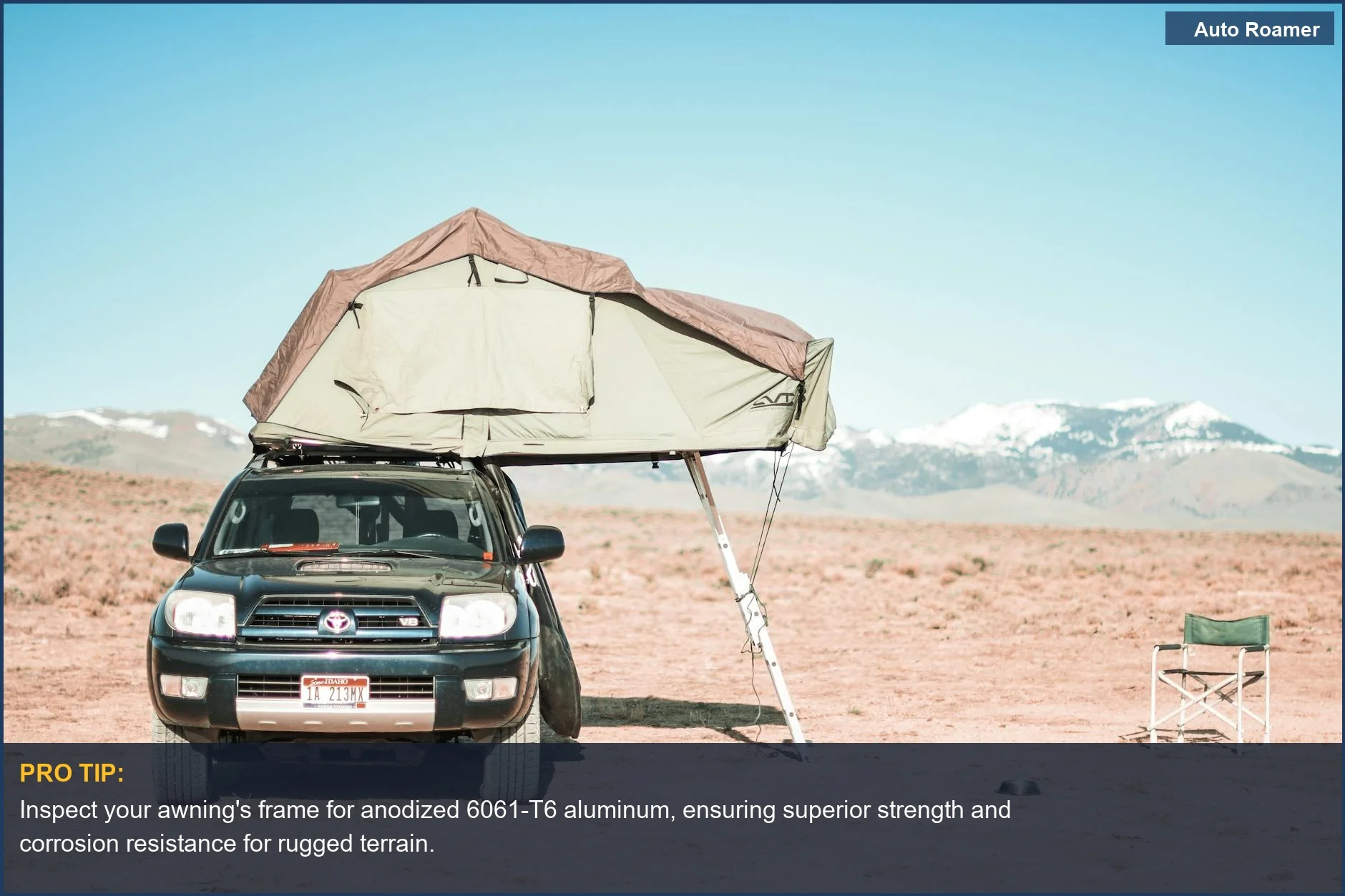
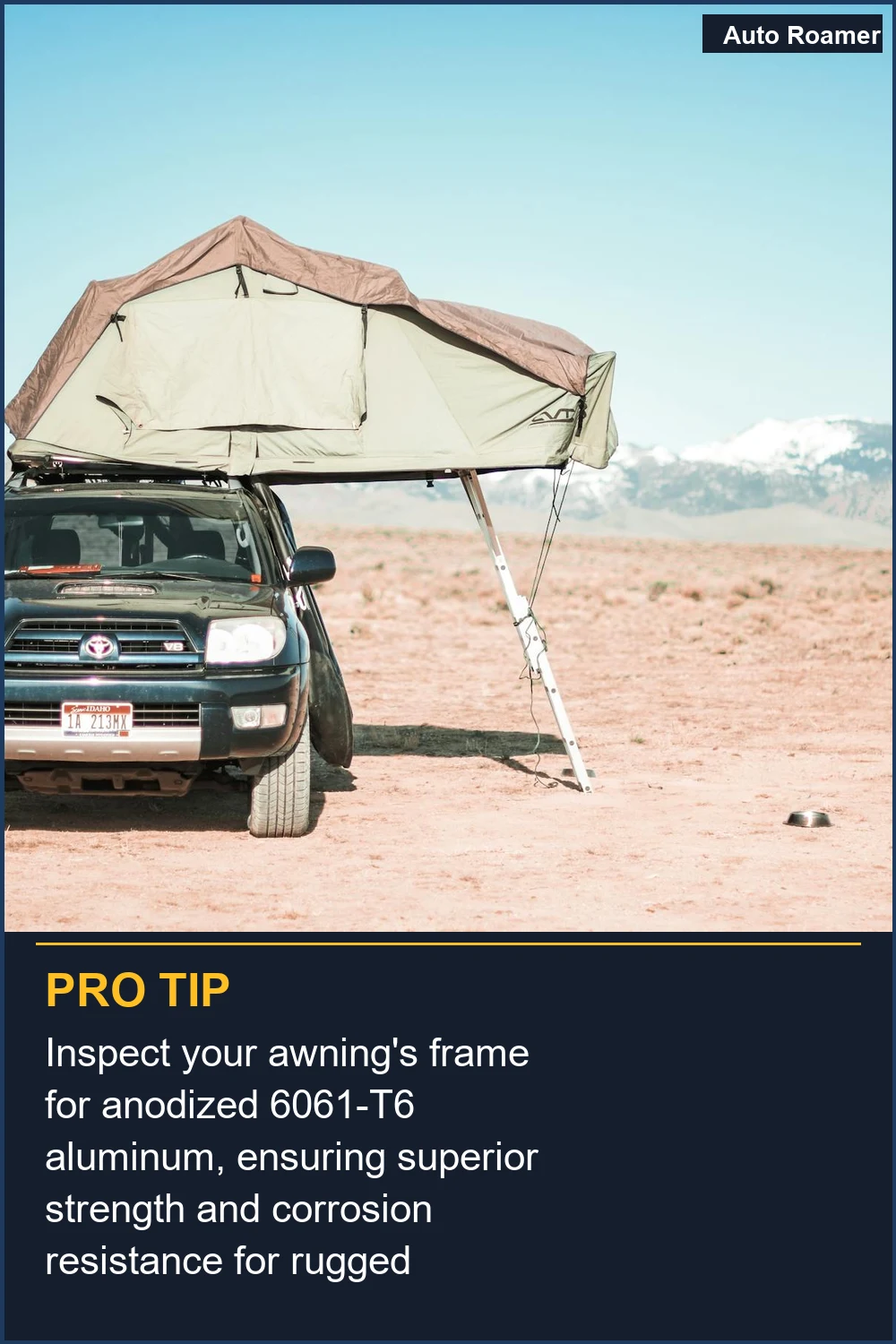
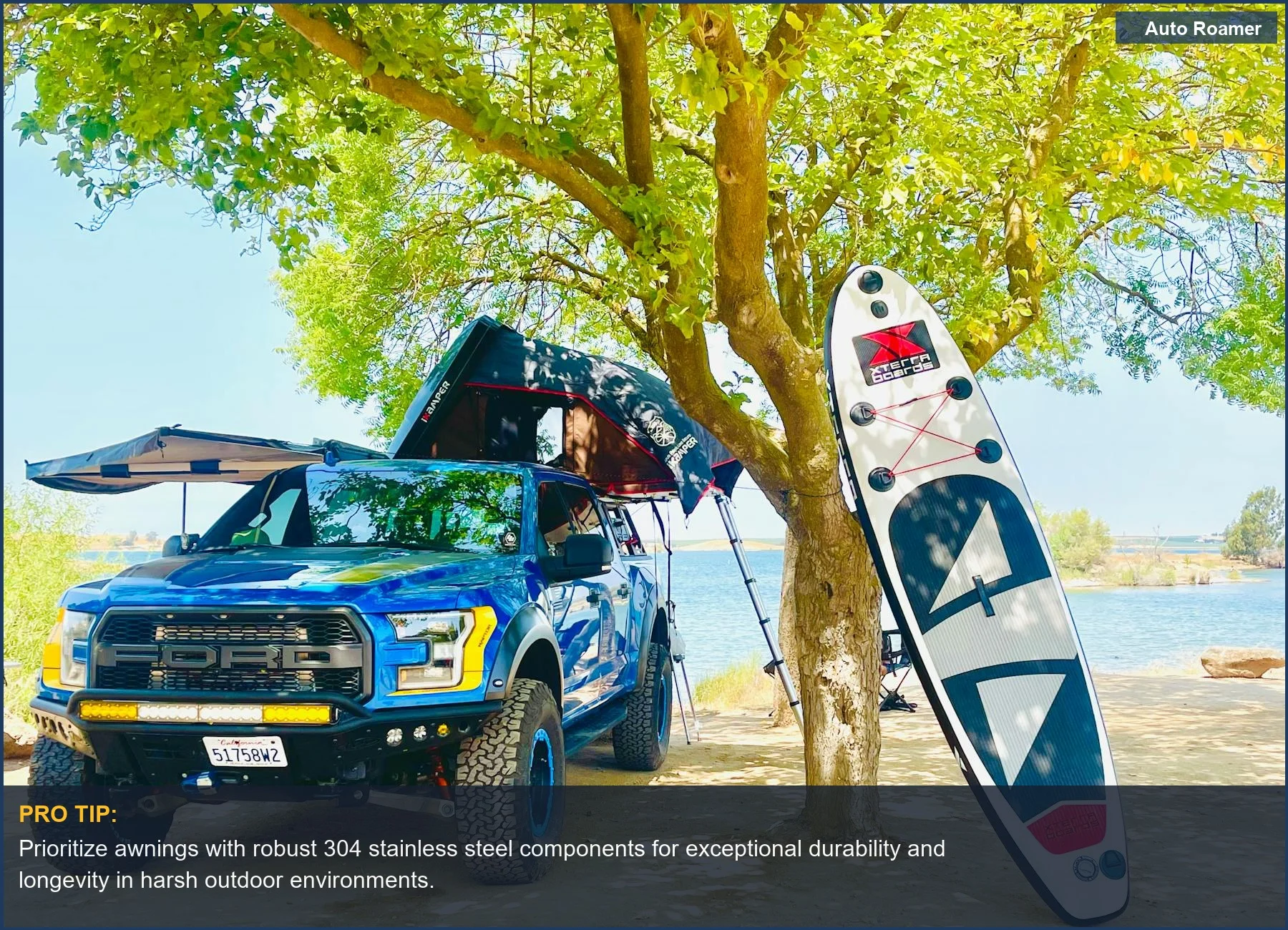
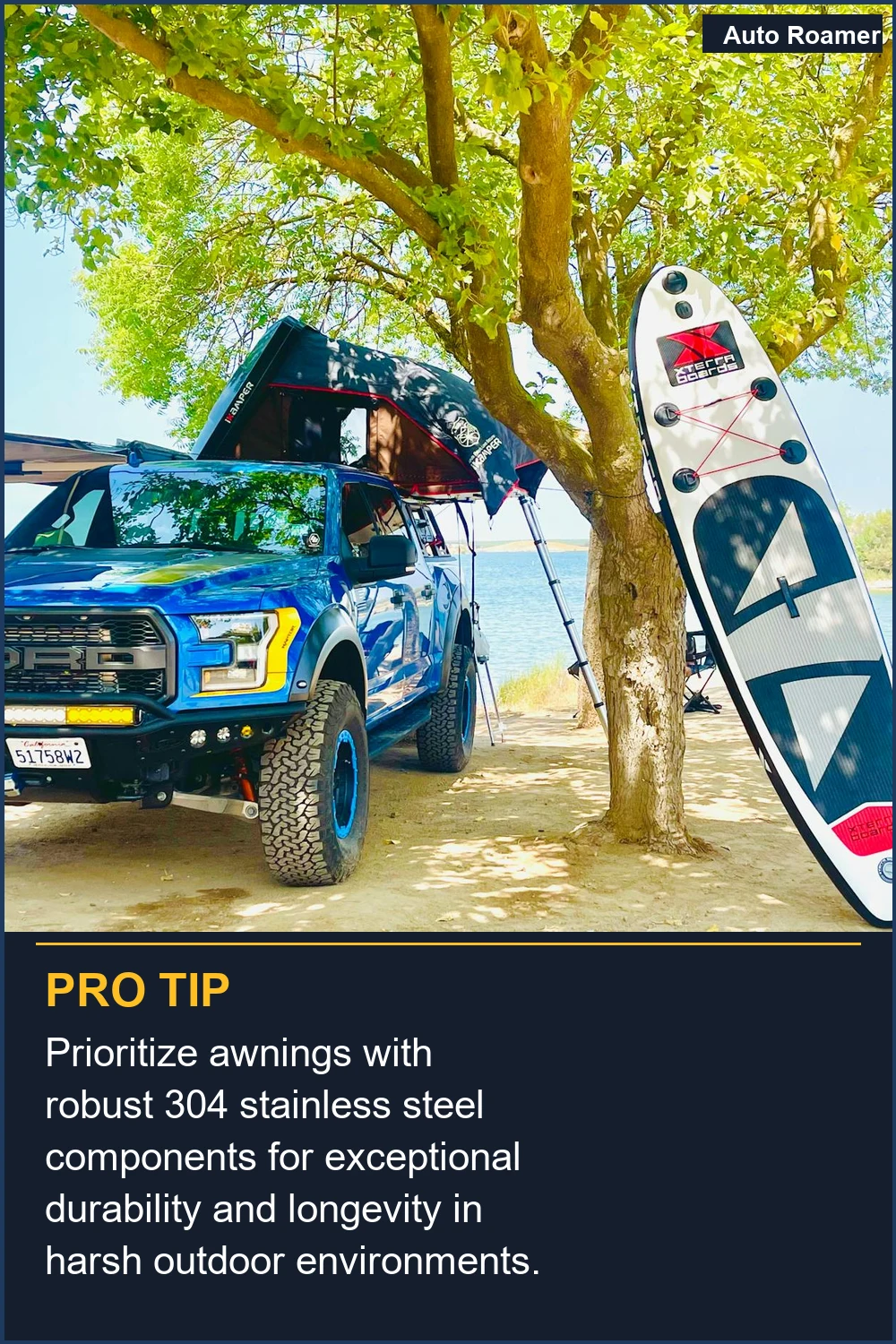
My personal threshold for acceptable structural integrity begins with the mounting hardware. If it's not 304 stainless steel or a properly anodized 6061-T6 aluminum, it's not going on my rig. Anything less is an invitation for corrosion-induced failure after a single season. I've seen countless instances where cheap zinc-plated steel bolts seize or shear, turning a simple awning into a permanent fixture of rust.
Then there's the frame. The sheer audacity of some manufacturers to use thin-walled 6063-T5 aluminum, which is fine for window frames but not for dynamic loads in a crosswind, is baffling. This material choice inevitably leads to fatigue cracking at stress points, usually near the hinge mechanisms. It's a deliberate design flaw to ensure you're back in the market within 18 months.
True longevity in an overlanding awning comes from thoughtful material composition. We're talking about heavy-duty ripstop canvas or PVC-coated polyester, not the flimsy 400D Oxford fabric that degrades under UV exposure in less than a year. Outside Online notes that many traditional awnings are "fussy and unreliable." This is often due to poor material choices, not inherent design. I demand components that can withstand constant thermal cycling and mechanical stress without turning into dust.
Anything less is a waste of money and resources.
This isn't just about comfort; it's about reliable shelter when you're 50 miles from the nearest paved road. My standards are high, because the consequences of failure in the backcountry are not trivial. I refuse to compromise on structural integrity for the sake of a few dollars saved on the manufacturing floor. You shouldn't either.
⭐ Quick Picks
Key Features to Consider
| Feature | Material Science Perspective | Why it Matters |
|---|---|---|
| Frame Material | Anodized 6061-T6 or 7075-T6 Aluminum; 304 Stainless Steel | 6061-T6 offers superior strength-to-weight and corrosion resistance compared to weaker alloys like 6063-T5, preventing fatigue cracking. 7075-T6 is even better, though heavier. Steel for ultimate rigidity. Durability is key. |
| Canopy Fabric | Heavy-duty, Ripstop Poly-cotton Canvas (300gsm+) or UV-stabilized PVC-coated Polyester (600D+) | Ripstop weave prevents tears from propagating. High denier (D) count and PVC coating provide UV resistance and waterproofing, mitigating UV degradation and material breakdown over time. Inferior fabrics will embrittle and fail. |
| Mounting Hardware | 304 or 316 Stainless Steel; Hard-anodized 6061 Aluminum | Resists galvanic corrosion when paired with aluminum racks and prevents rust. Zinc-plated mild steel bolts are landfill-ready after one season of road salt and moisture exposure. This is a critical load-bearing connection point. |
| Hinge Mechanisms | Cast or Machined 304 Stainless Steel; Forged Aluminum | Injection-molded PA6-GF30 (glass-filled nylon) might seem tough, but it suffers from creep under sustained load and embrittlement from thermal cycling. Metal hinges maintain structural integrity and resist fatigue cracking. A professional review emphasizes robust components. |
| Strap/Guyline Material | UV-resistant Polyester or Nylon Webbing; Dyneema/UHMWPE Ropes | Polyester has excellent UV stability and low stretch, unlike cheap polypropylene which degrades rapidly. Dyneema offers extreme strength for minimal weight, preventing catastrophic failure in high winds. |
| Pole Construction | Thick-walled 6061 Aluminum; Anodized Aluminum Telescoping Sections | Thin-walled poles bend or fracture under moderate wind loads. A proper pole design ensures load-bearing capacity. Telescoping sections must have robust locking mechanisms, not flimsy plastic collars that crack. |
Our Top Picks
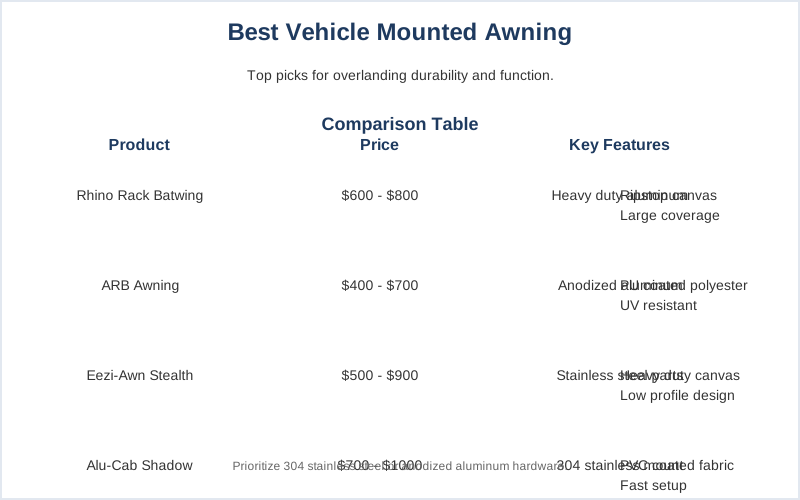
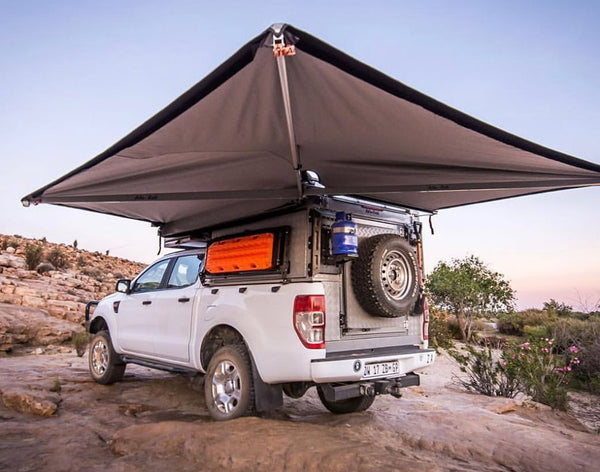
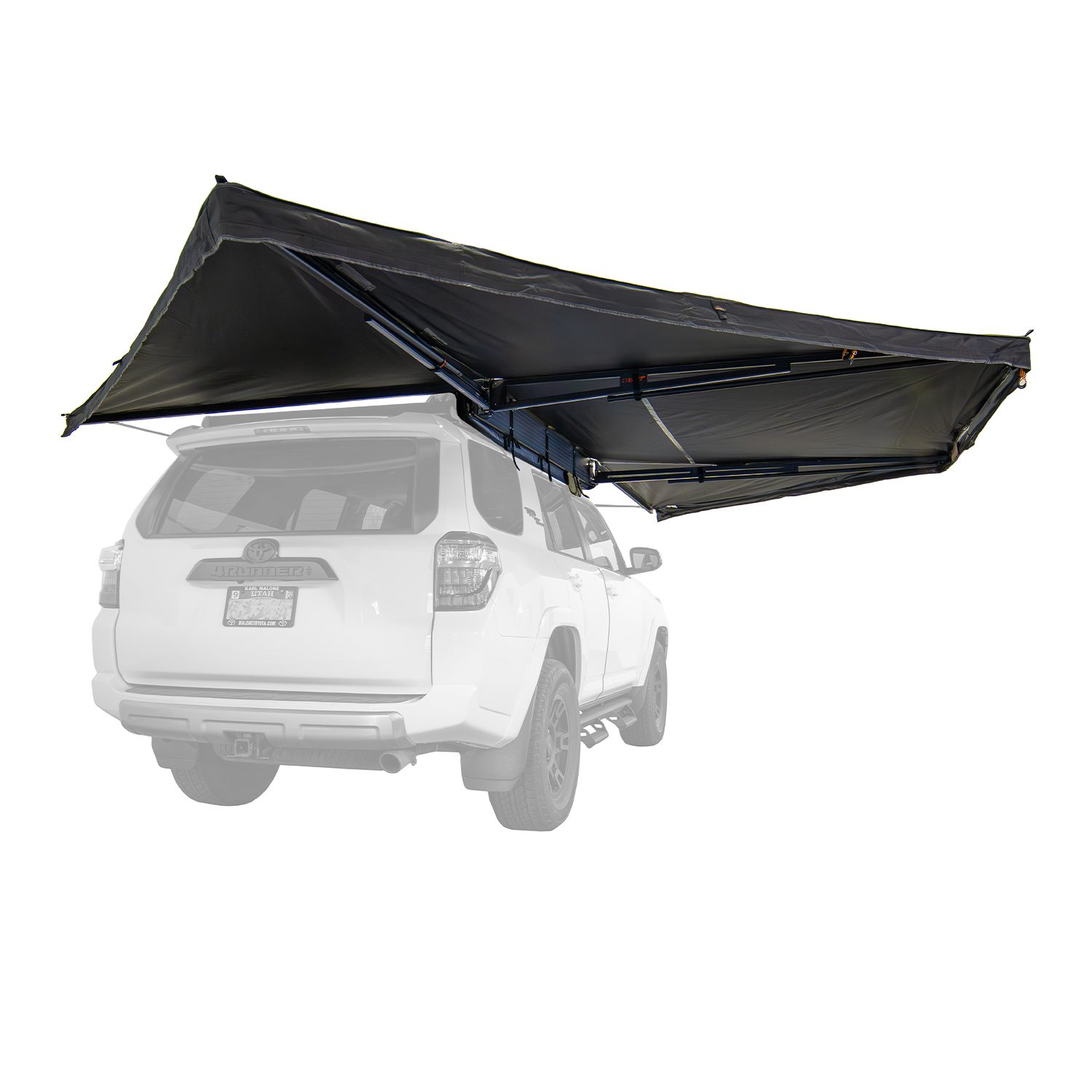
I don't recommend products lightly, especially when structural integrity is paramount. These are the awnings that meet my stringent material science and industrial longevity requirements. They are not cheap, but quality never is. The Adventure Portal highlights durability as a key feature, and I agree. Alu-Cab 270-Degree Shadow Awning (~$1,700) This is the benchmark. The frame is extruded 6061-T6 aluminum, hard-anodized for superior corrosion resistance. All pivot points and hinges are heavy-gauge 304 stainless steel, precisely machined. The canopy is a robust, UV-stabilized 400gsm ripstop poly-cotton canvas. It's designed to be freestanding, a testament to its structural integrity. Field Mag also praises this awning. Pros: Unmatched durability, superior material composition, true freestanding capability, excellent wind resistance. Cons: Significant weight (around 60 lbs), premium price point. Eezi-Awn Bat 270 Awning (~$1,500) Eezi-Awn utilizes a robust aluminum frame, likely 6061-T6, with stainless steel hardware throughout. The canopy is a 260gsm poly-cotton ripstop, which is a good compromise between weight and durability. Its unique bat-wing design provides extensive coverage without needing external poles in moderate conditions. BTR Outfitters calls it a "top choice." Pros: Excellent coverage, proven design, durable materials, quicker setup than some competitors. Cons: Still heavy (around 55 lbs), can be complex to re-tension after initial setup. 23 Zero Peregrine 270-Degree Awning (~$1,200) This awning also features a robust aluminum frame and a 280gsm poly-cotton canvas. The standout is its LST (Light Suppression Technology) fabric, which reduces heat absorption. While not as heavy-duty as the Alu-Cab, its hinges are still solid metal, not landfill-ready plastic. The Adventure Portal notes its free-standing design. Pros: Good value for a 270-degree awning, effective heat reduction, decent material composition. Cons: Slightly less robust frame than Alu-Cab, some reports of fabric fading over extended UV exposure. Bush Company 270 XT Awning (~$1,800) If you truly want to withstand a gale, this is it. The Bush Company employs an incredibly thick-walled aluminum frame and heavy-duty 304 stainless steel components. The canopy is a 300gsm ripstop canvas. Reddit users rave about its wind resistance, claiming no other awning compares. Reddit users consider Bush Company awnings "the most robust on the market." Pros: Unrivaled structural integrity, extreme wind resistance, built for absolute punishment. Cons: Very heavy (over 70 lbs), highest price point, potentially overkill for casual users. Front Runner Easy-Out Awning (2.5m, ~$400) For a simpler, straight pull-out design, Front Runner offers solid construction. The frame is anodized aluminum, and the canopy is a 400D Oxford/polyester ripstop with a PU coating. While not a 270-degree behemoth, it's a reliable option if your needs are more modest. GearJunkie praises its lightweight and durable poles. Pros: Good value for a straight awning, decent materials, relatively lightweight (29 lbs, 12.8 oz for the 8'2" model), sturdy storage bag. Cons: Limited coverage compared to 270-degree options, setup often requires two people.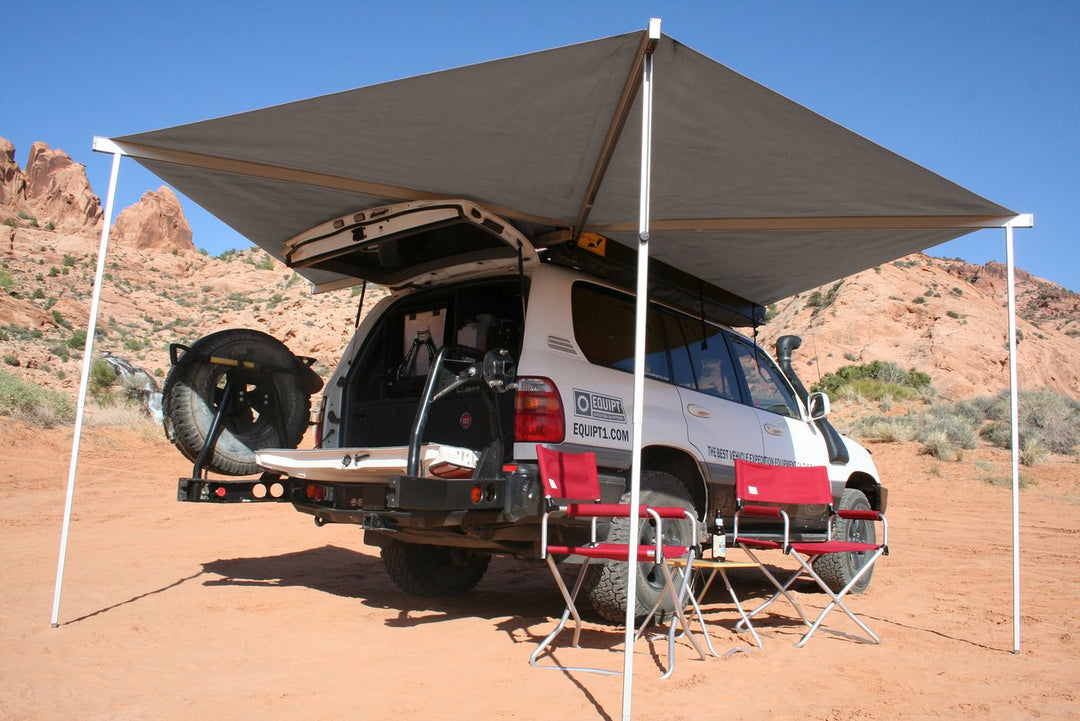
Budget vs Premium Options
| Feature | Budget Options (~$200-500) | Premium Options (~$1000+) |
|---|---|---|
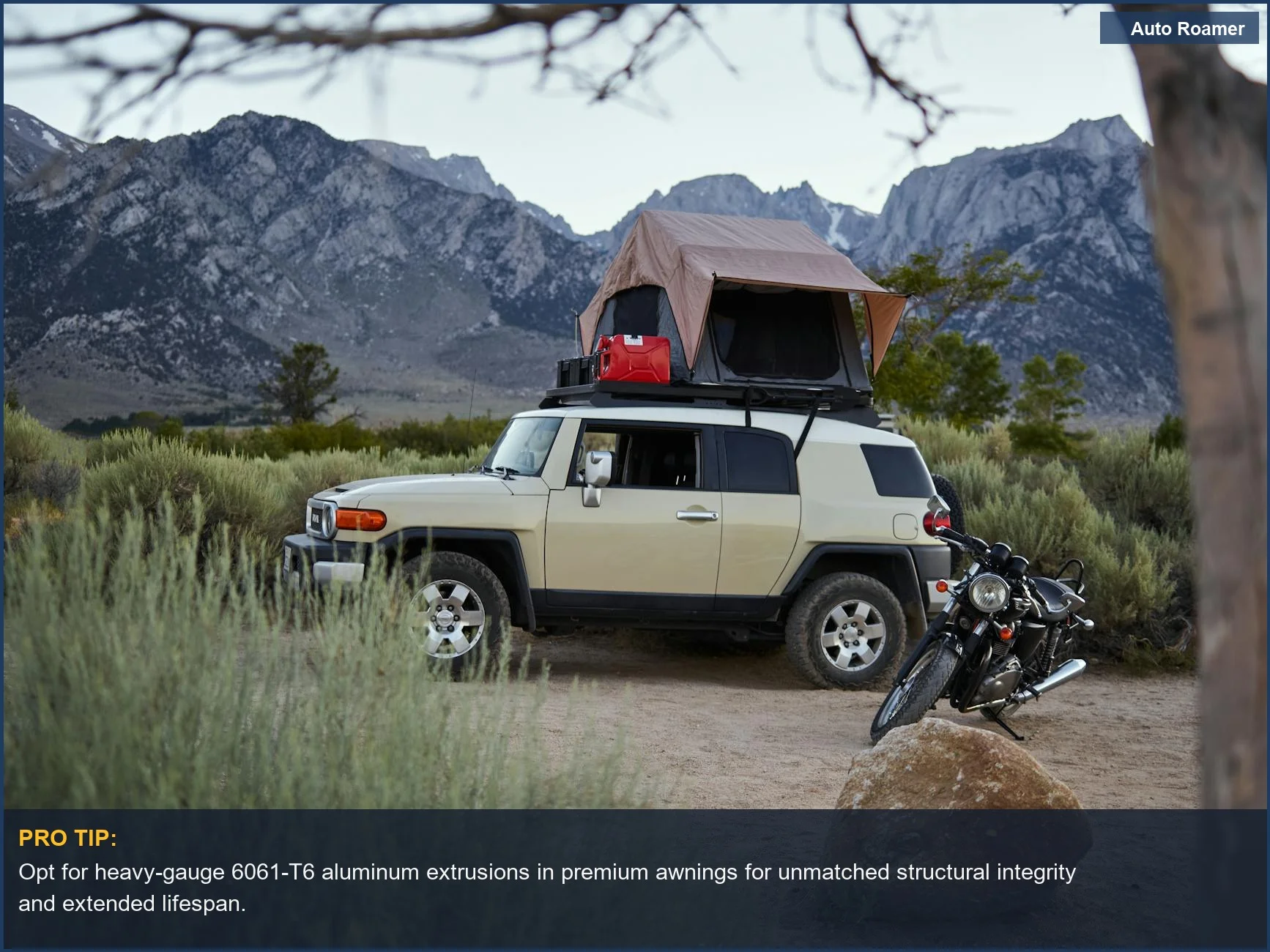
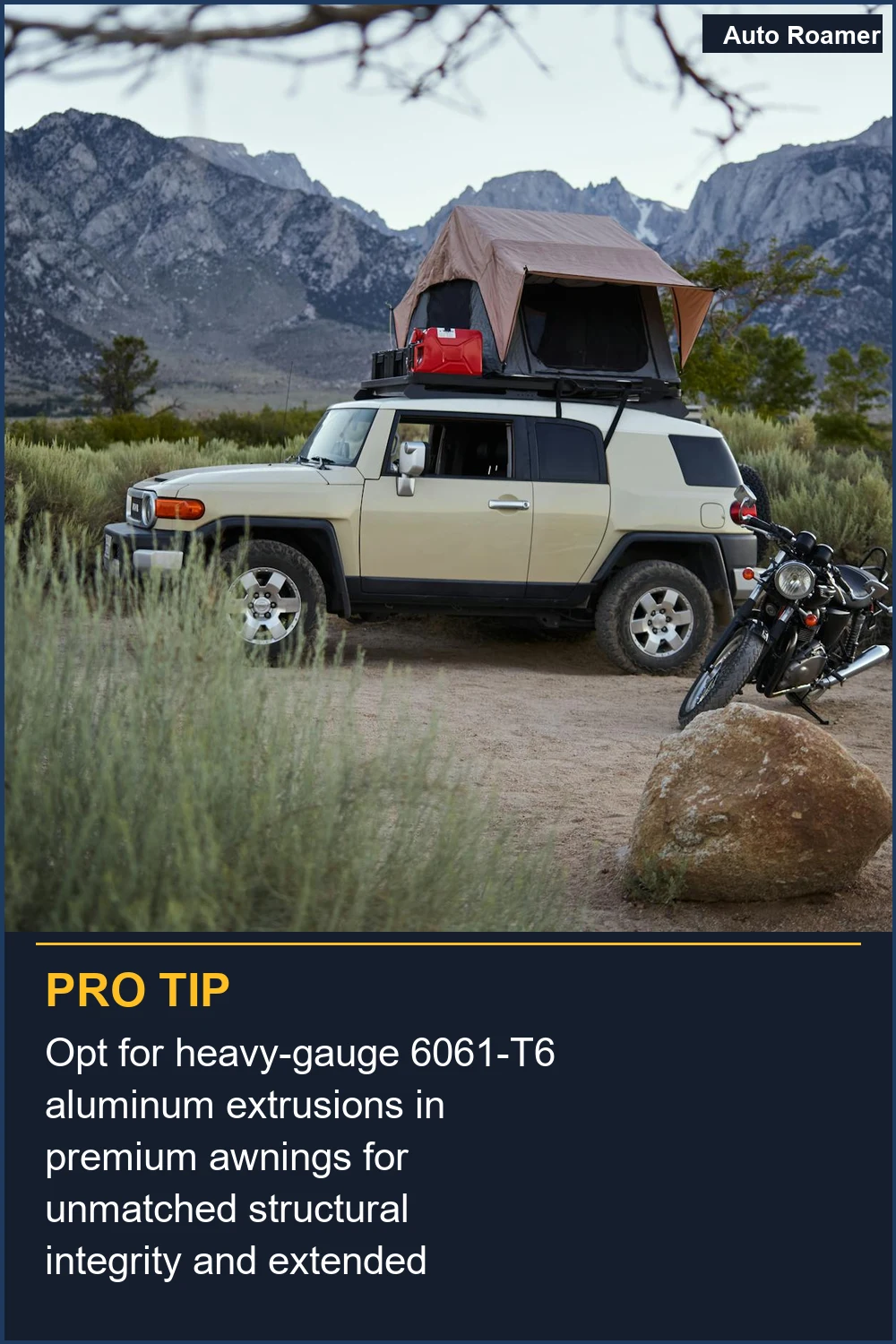
| Frame Material | Thin-walled 6063-T5 aluminum or even steel tubing with inferior coatings. | Heavy-gauge 6061-T6 or 7075-T6 aluminum extrusions, often hard-anodized for corrosion resistance. |
| Canopy Fabric | 200D-400D polyester with a thin PU coating. Susceptible to UV degradation and tearing. | 260gsm+ poly-cotton ripstop canvas or heavy 600D+ UV-stabilized PVC-coated polyester. Exceptional tear and UV resistance. |
| Mounting Hardware | Galvanized or zinc-plated mild steel bolts, thin stamped brackets. Prone to rust and bending. | 304 or 316 stainless steel bolts and heavy-duty, laser-cut 6061 aluminum brackets. Designed for sustained vibration and load. |
| Hinge Mechanisms | Injection-molded ABS or PA6-GF30 (glass-filled nylon). Will embrittle and fracture. | Machined 304 stainless steel or forged aluminum. Engineered for thousands of cycles without fatigue. |
| Overall Longevity | 1-3 years before major component failure due to material compromise. Landfill-ready. | 10+ years with proper maintenance. Built for the long haul. |
Setup and Installation Tips
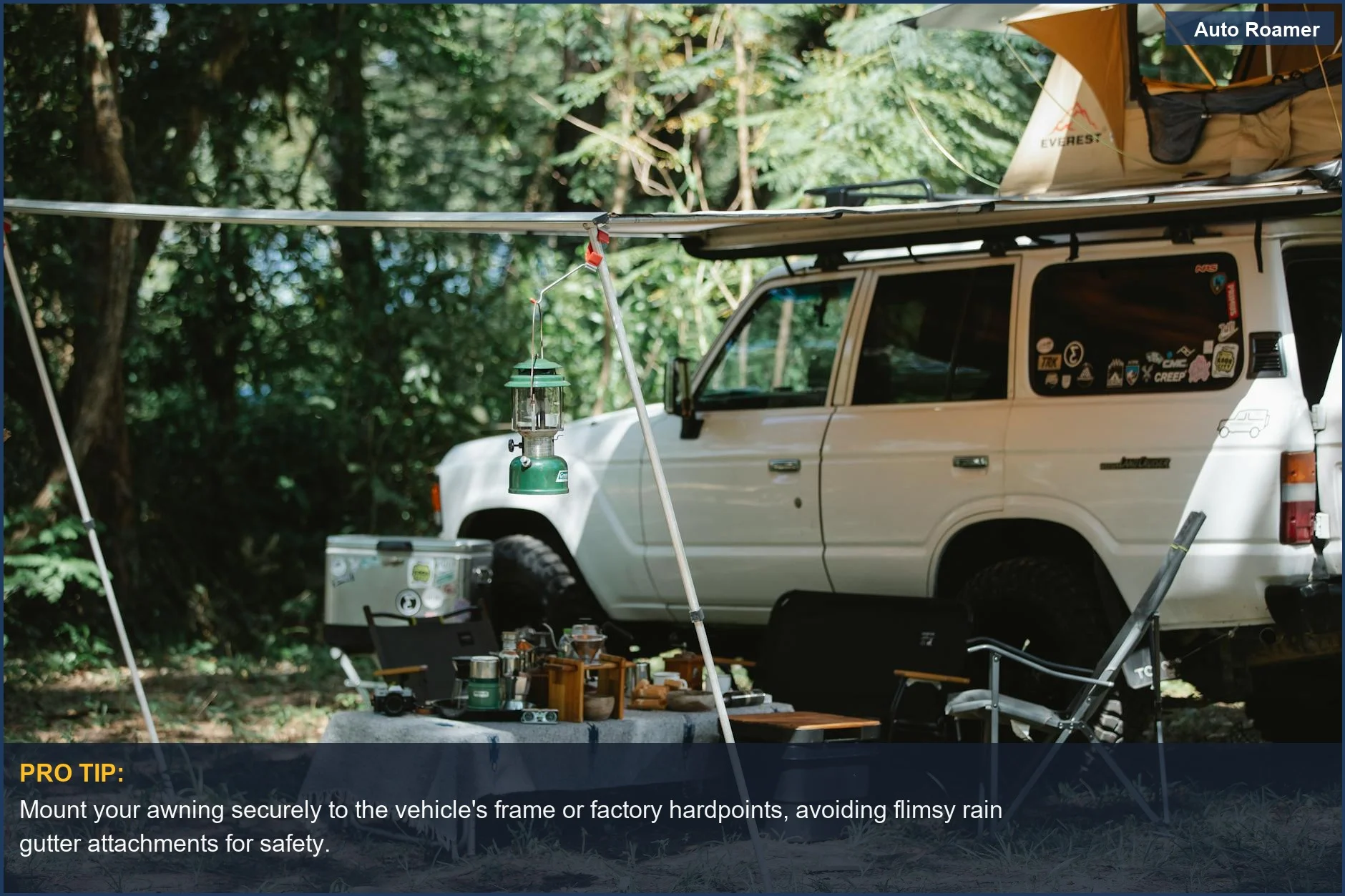
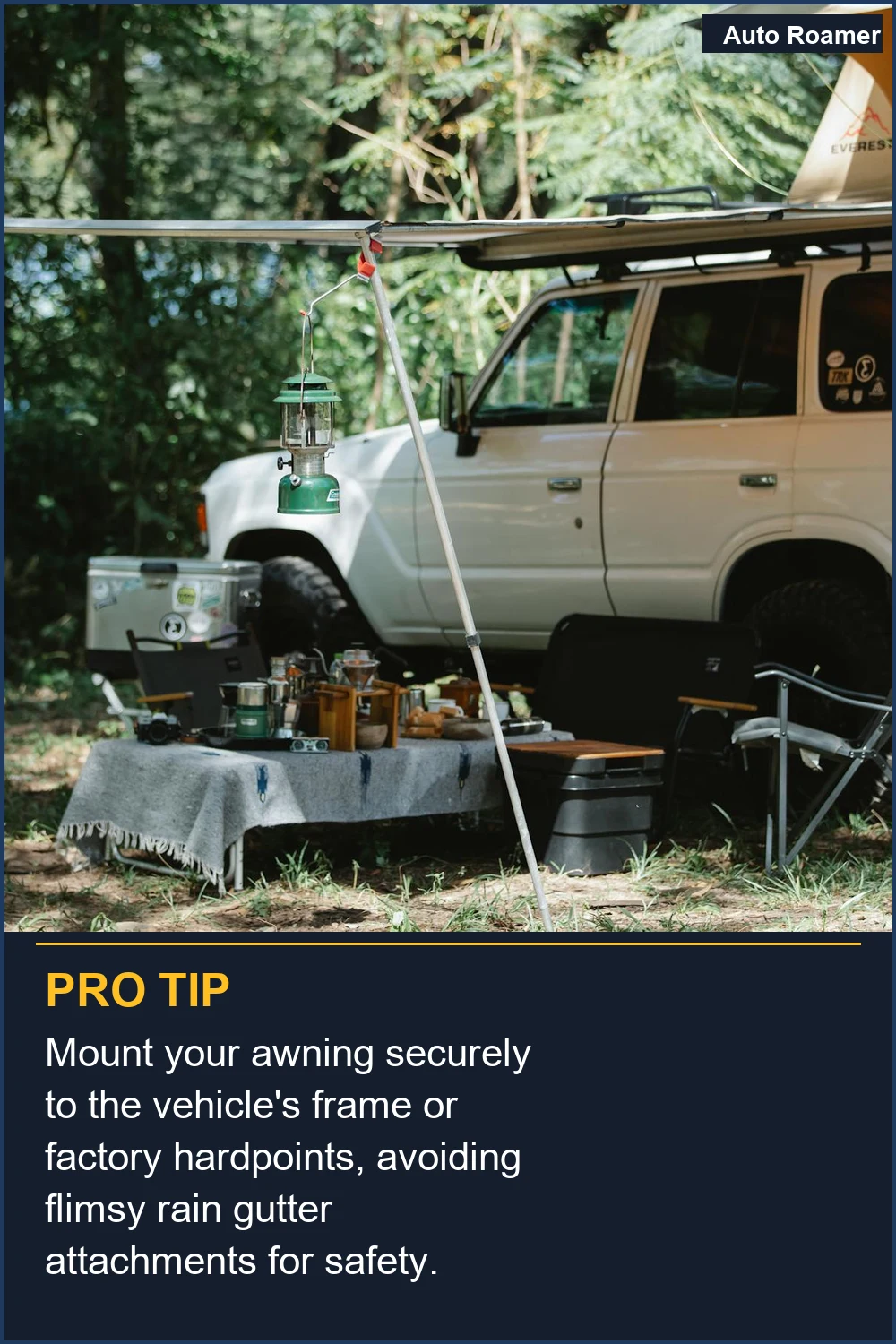
The first step to a reliable awning setup involves your roof rack. Ensure it's mounted to the vehicle's frame or factory hardpoints, not just flimsy rain gutters. I've seen enough catastrophic failures from inadequate mounting to be quite particular. This video offers visual guidance. 1. Inspect Mounting Hardware: Before you even think about lifting the awning, confirm all bolts are 304 or 316 stainless steel and brackets are heavy-gauge aluminum. If you see any zinc-plated mild steel, replace it immediately. That $2 bolt will cost you a $1000 awning in a year. 2. Secure Rack Attachment: Mount the awning to your roof rack using the provided high-quality bolts and brackets. Ensure even spacing and proper torque on all fasteners. Loose mounting points will lead to fatigue cracking in the awning's frame from constant vibration on corrugated roads. Proper compatibility is essential. 3. Pre-Deployment Check: Before extending the canopy, check all hinge mechanisms for freedom of movement. Lubricate with a dry PTFE spray if there's any binding. Forcing a stiff hinge will introduce stress concentrations, leading to eventual material failure. 4. Extend and Support: Carefully extend the awning. For non-freestanding models, deploy all support poles and guy lines. Angle the poles slightly to provide maximum compression strength against wind loads. Use robust stakes for guy lines; cheap plastic stakes are a joke. 5. Tension Canopy: Once fully extended, tension the canopy to remove slack. This prevents wind flapping, which can cause fatigue in the fabric and frame. Over-tensioning can stress seams, so find a balance. A well-tensioned canopy sheds water and resists wind much better.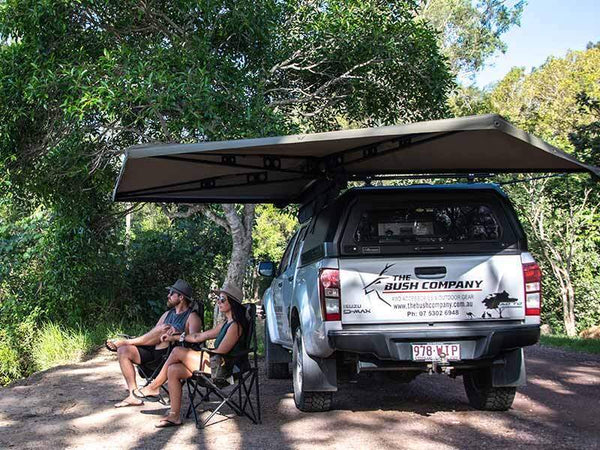
Care and Maintenance Tips
Proper care is not optional; it's essential for extending the industrial longevity of your awning. Neglecting these steps guarantees premature material degradation. I've seen awnings turn into brittle, mildew-ridden rags in less than two seasons because of poor maintenance habits. Field Mag offers some basic tips. 1. Regular Cleaning: After every trip, clean the canopy with mild soap and water. Remove all dirt, dust, and organic matter (bird droppings, tree sap) promptly. These can accelerate UV degradation and promote mildew growth, which compromises fabric integrity. 2. Thorough Drying: NEVER pack away a wet or even damp awning. Moisture promotes mildew, which will attack the fabric's fibers and coatings. Mildew stains are permanent and significantly weaken the material. Ensure it is bone dry, even if it means deploying it in your driveway for 24 hours. 3. Hardware Inspection: Annually, inspect all frame joints, hinges, and mounting hardware. Look for any signs of corrosion, stress cracks, or loose fasteners. Tighten bolts to spec. Apply a thin layer of marine-grade grease to metal-on-metal pivot points to prevent seizing and reduce wear. 4. Fabric Protection: Reapply a UV protectant and water repellent to the canopy fabric every 1-2 years, depending on exposure. This replenishes the sacrificial layer that protects the fibers from UV degradation and maintains the waterproofing. This is a critical step to prevent plasticizer migration and embrittlement. 5. Storage: Store the awning in its heavy-duty bag when not in use. Keep it in a cool, dry place, away from direct sunlight. This minimizes exposure to ambient UV and extreme thermal cycling, which can prematurely age the materials.
Final Recommendations
The market for vehicle-mounted awnings is a minefield of material compromises and planned obsolescence. My experience has shown that true industrial longevity stems from a commitment to superior material science, not marketing hype. You want an awning that will outlast your vehicle, not one that becomes landfill-ready after 18 months. My primary recommendations revolve around proven structural integrity and material composition:Frequently Asked Questions
My cheap awning's plastic hinges broke. Can I just buy new ones and install them myself, or is a shop repair necessary?
How do I verify the aluminum grade of my awning frame without specialized equipment?
What if my 'heavy-duty' canvas awning starts leaking after only a year of use?
Can leaving my awning deployed for extended periods, like weeks at a campsite, permanently damage its structure?
Some brands claim their awnings are 'fully waterproof.' Is this actually true, or is it just marketing fluff?
🏅 Looking for Gear Recommendations?
Check out our tested gear guides for products that work with this setup:
Sources
- The 10 Best Car Awnings for Camping & Overlanding - Field Mag
- The Best Overland Awnings - The Adventure Portal
- BEFORE You BUY: 7 Overland Awnings Reviewed by a Professional
- the-ultimate-guide-to-vehicle-mounted-awnings-for-overlanding-and-camping?srsltid=AfmBOooRu2JjypaVRkzIrs2SCi28GCgmJiLUwDL6qGOXIH0gO1bkozu
- Best Overlanding Awnings 2023
- Best Overlanding Awnings 2026 - YouTube
- OpenRoad 270 Awning Review - Perfect for Overland or Car Camping
- Awning recommendations and opinions : r/overlanding - Reddit
- the-ultimate-guide-to-vehicle-mounted-awnings-for-overlanding-and-camping?srsltid=AfmBOop-Y4WUD1-C1j6oIim5wNZ
- Top 11 Vehicle Mounted Awnings For Overlanding & Car Camping
- The Best Car and Truck Awnings of 2026 | GearJunkie Tested
- Tested: The Two Best Modular Awning Options for Your Rig