Driving Safety

What Are the Best Types of Headlights for Driving at Night?

Casey - The Weekend Warrior
5 min read
Includes Video

Headlights are basically your car's way of saying 'I see you out there.' They're crucial for night driving, and frankly, some of them are just sad jokes. The whole point is to see the road and for others to see you, but not in a blinding, 'you-just-killed-a-deer' kind of way.

Headlights are basically your car's way of saying 'I see you out there.' They're crucial for night driving, and frankly, some of them are just sad jokes. The whole point is to see the road and for others to see you, but not in a blinding, 'you-just-killed-a-deer' kind of way. Modern headlights have come a long way from those dim, yellow beams of yesteryear. We're talking about technology that can literally change how you navigate the dark.

It's not just about brightness; it's about focus, efficiency, and not annoying everyone else on the road. Car lighting has changed dramatically. Think about it, your car's eyes are pretty important, and getting them right makes a huge difference when the sun dips below the horizon. They put out a clear, bright light without glare.

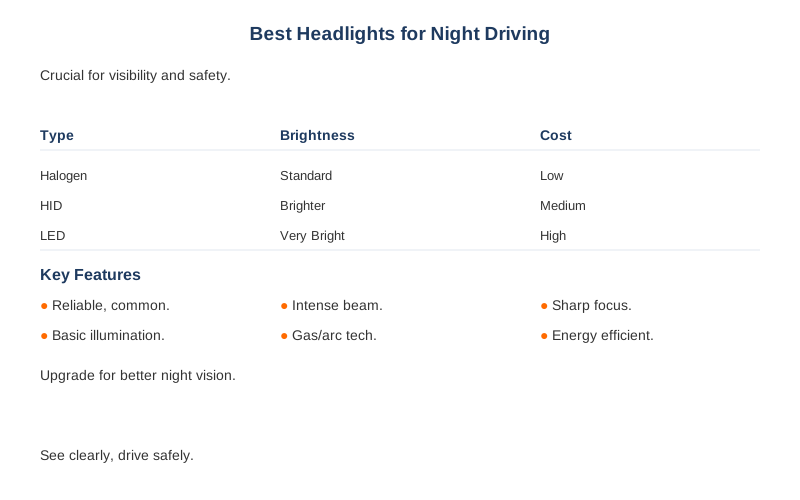
What Are the Best Types of Headlights for Driving at Night? — Key Specifications Compared
Key specifications for What Are the Best Types of Headlights for Driving at Night?

The Core Answer

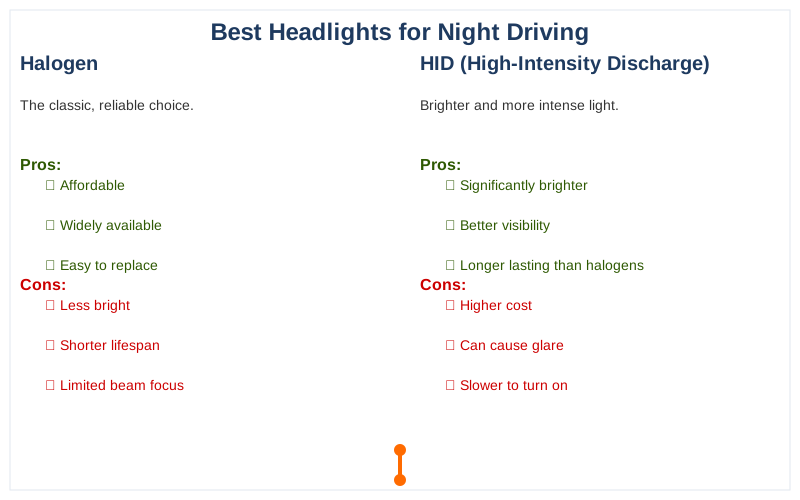
The real move for seeing at night boils down to a few main types of headlights, and honestly, some are just better than others. You've got your standard halogen bulbs, which are the old reliable - think of them like that trusty old flashlight that still works but isn't exactly winning any awards. They're cheap, readily available, and get the job done, but they don't exactly light up the road like a stadium. My first car had these, and driving on unlit country roads felt like I was exploring with a candle. They're the baseline. Then you have HID (High-Intensity Discharge) lights. These are brighter than halogens, giving you a more intense beam. They use a gas and an electric arc to create light. I saw a buddy upgrade to these, and it was like night and day, literally. The road ahead was much clearer, but sometimes they could be a bit much for oncoming drivers if not aimed right. They manage heat better than halogens. The game-changer, though, is LED (Light Emitting Diode). These are what most new cars are coming with, and for good reason. They're super bright, use less power, and last way longer than halogens. LED headlights produce three times as much light and use only a quarter of the power. Plus, they turn on instantly, which is a huge safety plus. I've seen these in action on a friend's truck, and it's like driving in daylight. You get a clean, crisp white light that really illuminates the road ahead without that annoying yellow tint. LED headlights are best for nighttime driving. There's also a feature called adaptive headlights. These actually swivel or adjust their aim based on your steering and the road ahead. It's like the car knows where you're going and lights it up before you get there. I saw one of these in action on a rental car in the mountains, and it was wild. No more dark corners on winding roads. Cars with adaptive headlights can help make driving safer. When you're looking at upgrading, think about the beam pattern. You want something that throws light down the road and to the sides, not just a bright spot directly in front of you. The real move is to get a light that gives you good visibility without being a menace to other drivers. These are direct upgrades. Nobody likes being blinded by oncoming traffic, so a well-designed beam is key. It's about seeing clearly and letting others see you clearly. Your normal headlights should be on during the night.
To ensure your headlights perform at their best, it's essential to know how to adjust your car's headlights.
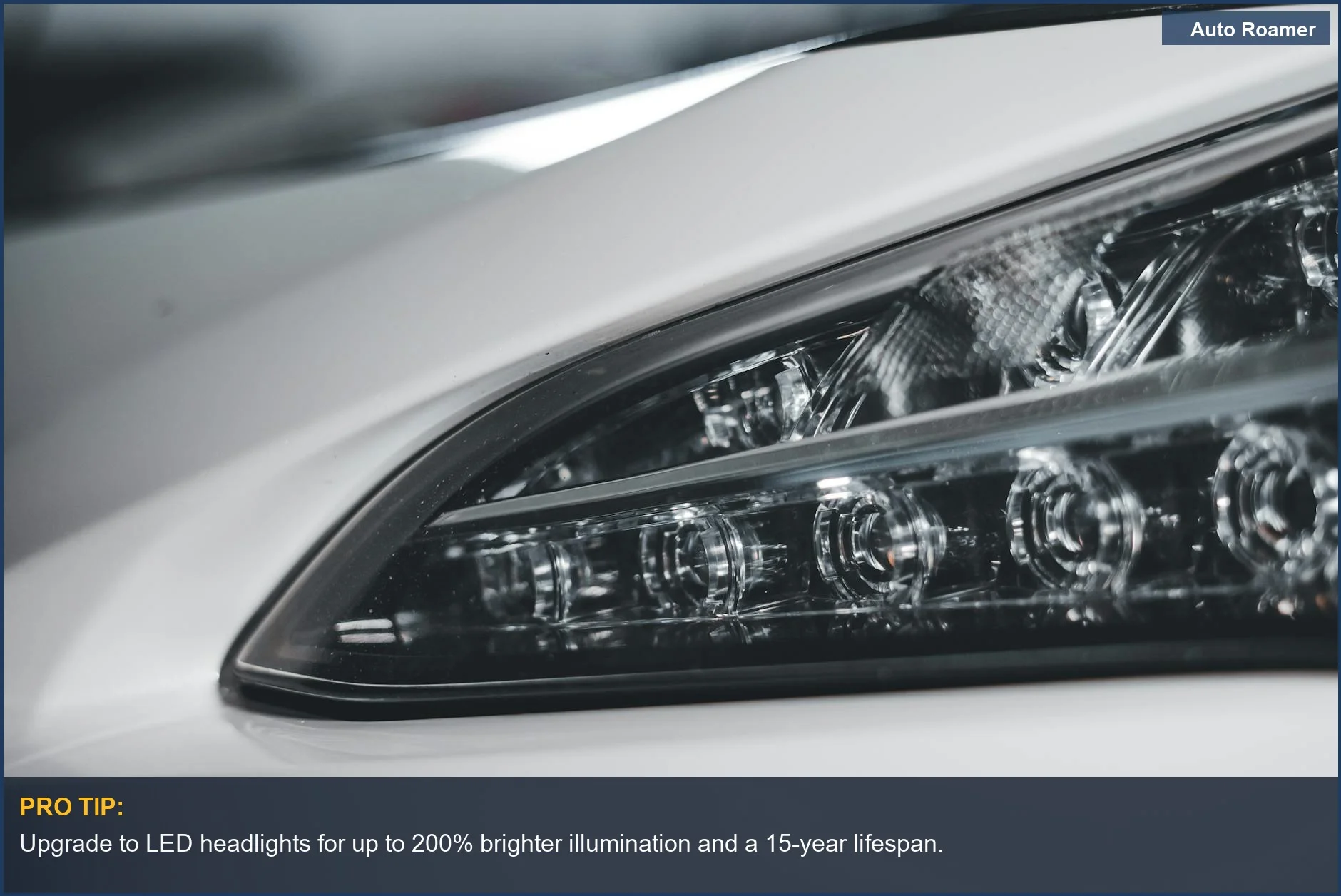
Upgrade to LED headlights for up to 200% brighter illumination and a 15-year lifespan.
Discover the latest in automotive lighting with this sleek headlight. Modern headlight types offer significantly better night driving visibility than older technologies. | Photo by Erik Mclean

Why This Matters for Your Setup

Why does all this headlight talk even matter? Because driving at night is a whole different ballgame, and your stock lights might be holding you back. I remember one trip back from a late concert, on a road I barely knew. My headlights were the dim, yellow kind, and I swear I was squinting more than driving. It was downright unnerving, especially when a deer or some other critter decides to play frogger. I do a lot of night driving and I'm thinking I need something brighter than factory.
  • Seeing Hazards: The most obvious one. Better headlights mean you spot that pothole, that fallen branch, or that wandering animal way sooner. This isn't just about convenience; it's about avoiding accidents. My cousin actually swerved to miss a raccoon thanks to his newer, brighter LEDs. Saved him a new bumper, for sure.
  • Reducing Fatigue: Straining your eyes to see in the dark is exhausting. When your headlights are good, your eyes relax more. You can focus on the road and the driving task itself. Think of it like reading a book in a dimly lit room versus a well-lit one. Which one makes your eyes hurt less?
  • Being Seen: It's not just about you seeing the road; it's about others seeing you. Brighter, clearer headlights make your vehicle more visible to other drivers, especially in bad weather or when you're on a poorly lit street. This is crucial, especially if you have older, dimmer headlights that don't project as well. These are designed for different kinds of users.
  • Confidence: Honestly, just having good lights gives you a confidence boost. You feel more in control and less anxious when you can actually see what's in front of you. My first car with decent headlights felt like I'd unlocked a new level of driving. It made those late-night drives so much more pleasant.
  • To enhance your nighttime safety, consider these essential tips for driving with oncoming headlights on your next adventure: driving safely at night.
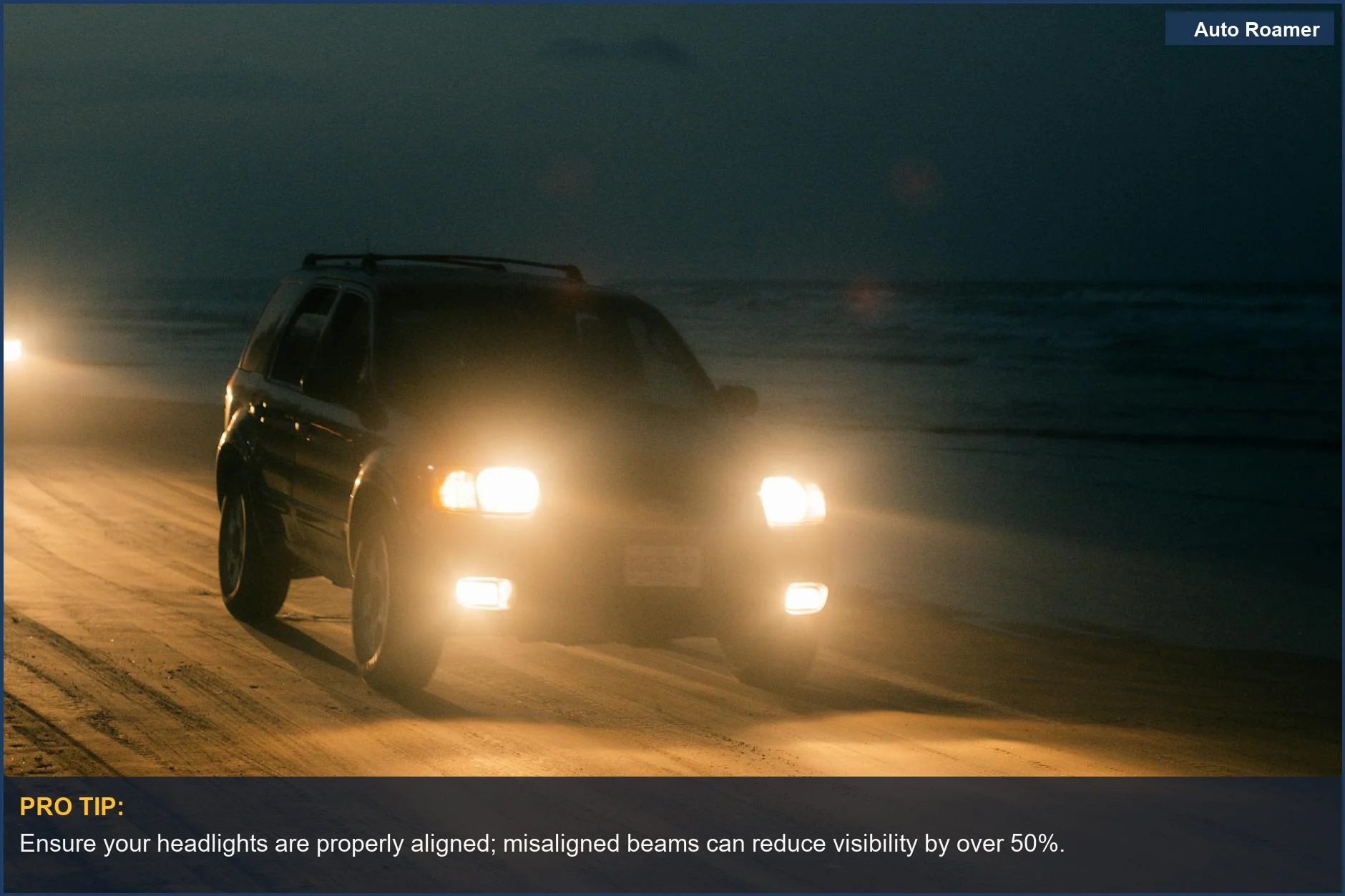
    Ensure your headlights are properly aligned; misaligned beams can reduce visibility by over 50%.
    Navigating challenging roads at night requires optimal headlight performance. This SUV's bright beams cut through the darkness, crucial for night driving. | Photo by Alex wolf mx

    Making the Right Choice

    So, when you're thinking about your car's headlights, don't just treat them as an afterthought. They're a critical safety feature, and upgrading them can genuinely make a difference. It's not just about looking cool; it's about seeing and being seen.
  • Know Your Options: Understand the difference between halogen, HID, and LED. While halogens are the basic, LEDs are generally the way to go for brightness and efficiency. LED headlights are better than halogen bulbs in nearly every way.
  • Consider Adaptive Features: If your budget allows and your car supports it, adaptive headlights are a serious upgrade for visibility on curves and turns. They're a bit more complex, but the safety payoff is huge. Adaptive headlights can help make driving safer.
  • Beam Pattern Matters: Don't just go for the brightest bulb you can find. A good headlight has a well-defined beam pattern that illuminates the road effectively without blinding others. This is where quality really counts. They put out a clear, bright light without glare.
  • Professional Help: If you're not comfortable messing with your car's electrical system, there's no shame in taking it to a mechanic. Getting the right headlight setup installed correctly is worth the peace of mind. These are direct upgrades.
  • Upgrading your headlights can enhance your nighttime visibility, but don't forget about the importance of proper car camping lighting when parked.
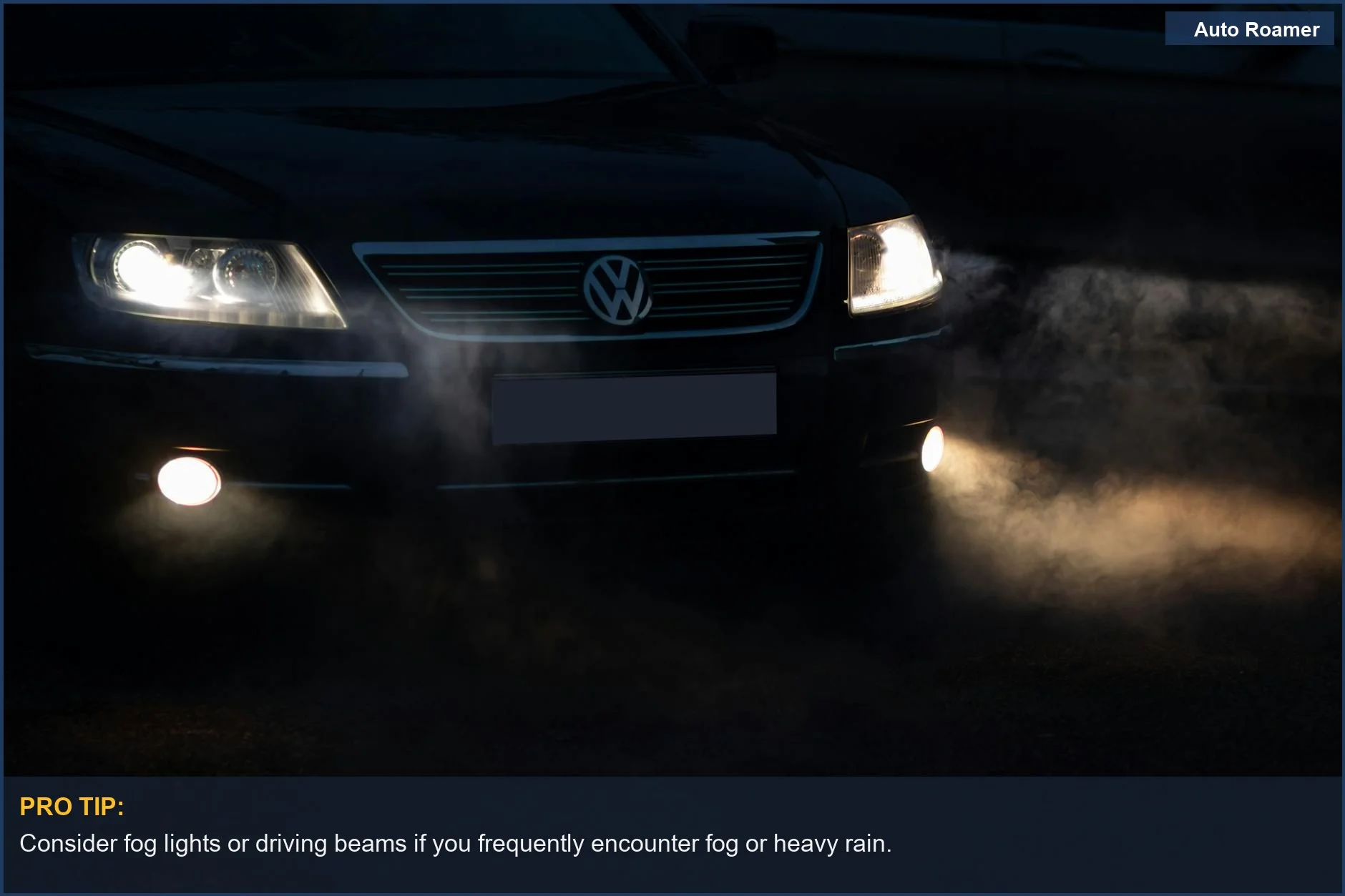
    Consider fog lights or driving beams if you frequently encounter fog or heavy rain.
    Cutting through the night fog, these headlights demonstrate the power of effective automotive lighting. Choosing the right headlight types is essential for safety. | Photo by Patrick

    Frequently Asked Questions

    If I have my mechanic install new LED headlights, how much more is that going to cost me compared to just buying the bulbs myself and trying to shove them in?
    That's a solid question. Buying a decent set of LED bulbs yourself might run you anywhere from $50 to $150, depending on the brand and your car. Now, if you take that to a shop, you're looking at an extra $50 to $150 in labor, because some headlight assemblies are a real pain to get to. So, the total could easily jump from $100 to $300. It's the classic 'DIY saves money but costs time and sweat' versus 'Shop costs more but saves your sanity' trade-off.
    Do I really need some fancy multimeter or special tools to figure out if my headlights are working right, or can I just, you know, turn them on?
    For the most part, no, you don't need a multimeter just to see if your headlights are on. If they turn on, that's a good start. The real 'measurement' you're doing is visual: can you see the road, and are other drivers flashing you? If your headlights are dim or have a weird color, that's a sign they're probably not performing optimally, not necessarily that there's a voltage issue. Save the multimeter for when you're troubleshooting actual electrical gremlins.
    What if I install these super bright LED headlights and then every other driver starts flashing their high beams at me, thinking I'm blinding them?
    That's the rookie mistake waiting to happen if you don't get the right ones. If everyone's flashing you, it's a sign your headlights are either aimed too high, or the beam pattern is all over the place, scattering light upwards. The fix is usually adjusting the headlight aim, which most shops can do for about $50. You want bright, but you want that brightness focused down on the road, not into the sky or other people's windshields.
    Could putting in those super-bright aftermarket headlights permanently mess up my car's electrical system or even melt something?
    Generally speaking, no, not if you buy quality LEDs designed for your vehicle. The main concern is if you buy some cheap knock-offs that draw way too much power or don't have proper heat dissipation. Overloading the circuit could potentially blow a fuse or, in extreme cases, damage wiring. Modern LEDs are pretty energy-efficient, using less power than older bulbs, so it's usually not an issue unless you go for something absurdly powerful or poorly made.
    I heard that brighter headlights actually make you *less* safe at night because they create more glare. Is that true?
    That's a myth, or at least a misunderstanding. It's not the brightness itself that's the problem, it's *how* that brightness is delivered. Cheap, poorly designed bulbs or incorrect aiming can absolutely cause excessive glare. But modern LEDs, when properly designed and installed, provide a clearer, more focused beam that actually reduces glare for oncoming drivers while giving you better visibility. It's about smart brightness, not just blinding brightness.

    🏅 Looking for Gear Recommendations?

    Check out our tested gear guides for products that work with this setup:

    C

    Casey - The Weekend Warrior

    Weekend car camper and road trip enthusiast. Focuses on practical, budget-friendly solutions for families and first-time campers.

    Sources

    Related Articles