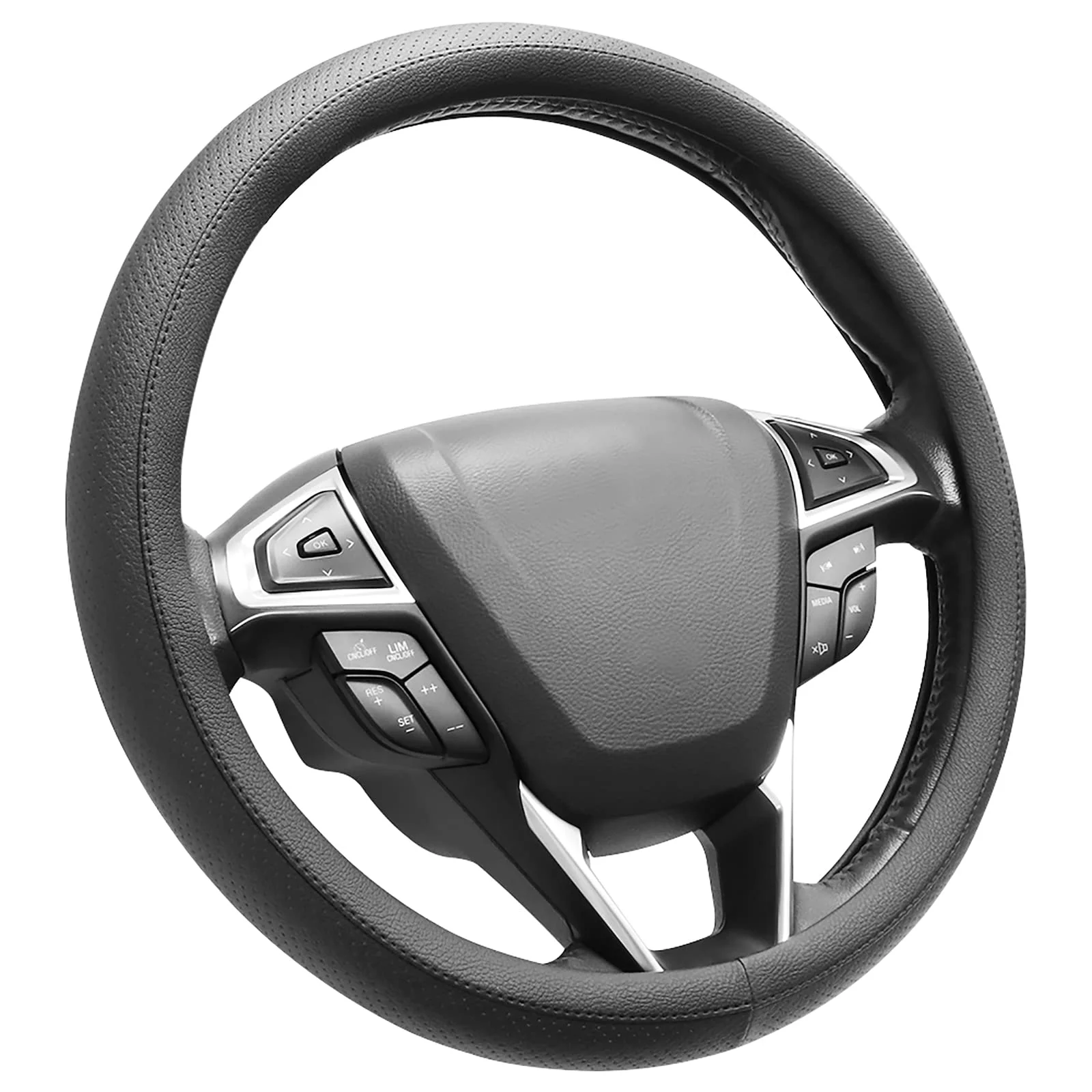
The Short Answer: Size First, Then Material
The best steering wheel cover is not a brand. It is the one whose size code matches your wheel's diameter, in a material that suits your climate. Get those two right and almost any well-reviewed cover works; get the size wrong and the most expensive cover in the catalog spins under your palms or refuses to seat. For the largest slice of drivers, the SEG Direct Microfiber Leather Steering Wheel Cover is the pick, because it fits the standard 14.5-to-15-inch wheel found on most cars and crossovers and uses the microfiber-leather surface that resists cabin heat instead of hardening in it.
One honest note up front: the picks here come from manufacturer sizing specs, published size charts, owner feedback, and temperature research — not from a workshop of our own. We have not stretched every one of these covers onto a wheel ourselves, so nothing below claims first-hand use. What it does instead is pull the real sizing numbers and the consistent patterns in owner reviews into one place, so you can match a cover to your car without guessing.
Here is the decisive number nobody puts first: a passenger-car steering wheel is almost always in the 14.5-to-15-inch outer-diameter range, and that single measurement decides more about how a cover feels than the material, the color, or the price. Measure that before you read another spec.
Measure the wheel's outer diameter first. On most cars it falls in the 14.5-to-15-inch medium class, and that single number decides more than material, color, or price ever will.
Read the Size Code Before Anything Else
Most regretted steering wheel covers trace back to one skipped step: the buyer never measured the wheel. Covers are sold by outer-diameter range, usually as a size code, and the ranges line up like this:
- Size S (small): about 14 to 14.25 inches outer diameter — small cars and some compacts.
- Size M (medium / standard): 14.5 to 15 inches — the common range that fits the vast majority of cars and crossovers. The SEG Direct Microfiber Leather Steering Wheel Cover, for example, lists a 14.5-to-15-inch fit.
- Size L (large): 15.5 to 16 inches — trucks, older vehicles, and big-rim models.
To measure, lay a tape flat across the face of the wheel from one outer edge to the other — the outer ring, not the inner opening. The average passenger-car wheel runs about 14 to 15 inches (roughly 36 to 44 centimeters), and the full population of steering wheels spans 14.5 to 17.5 inches once you count vintage and specialty cars. A "universal" cover typically means it stretches across the 14-to-16-inch band, not that it fits literally everything.
There is a second dimension the marketing skips: grip circumference — the thickness of the rim where your hands wrap. Rims run roughly 2.75 to 4.25 inches around, and a chunky sport wheel and a thin economy-car wheel can share the same diameter yet feel completely different under a cover. Owners consistently report that a cover sized for a thin rim will not seat on a fat one, while a cover sized for a fat rim leaves a loose, rotating sleeve on a thin wheel. Measure twice; if your rim is unusually thick or thin, check the listing's grip note before you ever look at price.
The material almost never fails you as often as the size does. A great cover strangled onto the wrong wheel feels worse than a mediocre cover that fits clean.
Measuring Your Wheel: A Two-Minute Walkthrough
Measuring is the short step that prevents the single most common return, and it needs nothing but a flexible tape. Do it in this order and you get it right the first time:
- Diameter, across the face. Lay the tape flat across the wheel from one outer edge, straight through the center, to the opposite outer edge. That number — almost always 14 to 15 inches on a passenger car, or 36 to 44 centimeters if your tape reads metric — is what maps to the S/M/L code.
- Grip circumference, around the rim. Wrap the tape around the thickness of the rim where your hands actually hold it, snug but not stretched. Most rims land between 2.75 and 4.25 inches around. This is the number the size charts bury, and it is the one that explains a cover that looks right on diameter yet still will not seat.
- Match to the code, not the marketing. A diameter of 14.5 to 15 inches is the medium class, 14 to 14.25 inches is small, and 15.5 to 16 inches is large. A universal cover only promises the 14-to-16-inch band, so a big truck or classic wheel near 17.5 inches is out of range for most of them.
Two habits save the most grief. First, run the tape twice — a tape that sags or bends across the face reads long, and half an inch is the whole difference between a snug fit and a spinning sleeve. Second, if your wheel has a padded or sport rim, take the circumference at its thickest point, because that thick spot is where a cover binds or gapes rather than the average around the ring.
Older and specialty vehicles are where the tidy code breaks down. Cars built before power steering was universal often ran larger wheels, and the overall population of steering wheels stretches from 14.5 all the way to 17.5 inches, so a classic or a heavy-duty truck can sit above the medium class entirely. If your measurement lands between two codes, size down for microfiber and silicone — both stretch to close the gap — and size to the exact number for genuine leather, which has almost no give. Write the two numbers down before you shop, and the listing's size filter does the rest.
Why a Bare Wheel Is Worth Covering at All
There are two honest reasons to put a cover on a wheel, and only one of them is comfort. The first is temperature and grip. A bare wheel in a closed summer cabin is not a mild annoyance — it is a genuine burn risk. Researchers who parked six cars in the sun on a 100-degree day found the steering wheels averaged 127 degrees after an hour, and on a sunny 95-degree day a wheel can climb to 150 to 170 degrees in that same hour. For scale, the dashboard nearby can hit about 160 degrees.
Those numbers matter because skin starts to register pain around 111 degrees, first-degree burns become possible near 118 degrees, and second-degree burns near 130 degrees. A wheel at 127 to 170 degrees is squarely in that range, which is why summer drivers end up steering with two fingertips. A cover puts a heat-buffering layer between your palms and that metal-and-plastic ring.
A wheel at 127 to 170 degrees sits inside the burn zone: skin pain starts near 111 degrees and second-degree burns near 130. The cover is the buffer between that ring and your palms.
The second reason is money. A worn, peeling, or sun-cracked factory wheel is expensive to refinish, and a low-cost cover hides and protects the original for the life of the car. Most people buy for comfort and get the repair-economy benefit for free. Worth pairing with the fix that beats all of them: shading the cabin. A windshield sun shade can drop interior surface temperatures by 40 to 50 degrees, which is why a sun shade and a cover are partners, not rivals — and why a cold winter wheel is the same comfort problem in reverse.
Microfiber Leather vs Genuine Leather vs Silicone vs Sheepskin
Once the size is settled, material is the decision that shapes how the cover feels day to day and how long it survives. Four honest categories cover the market, and each trades something:
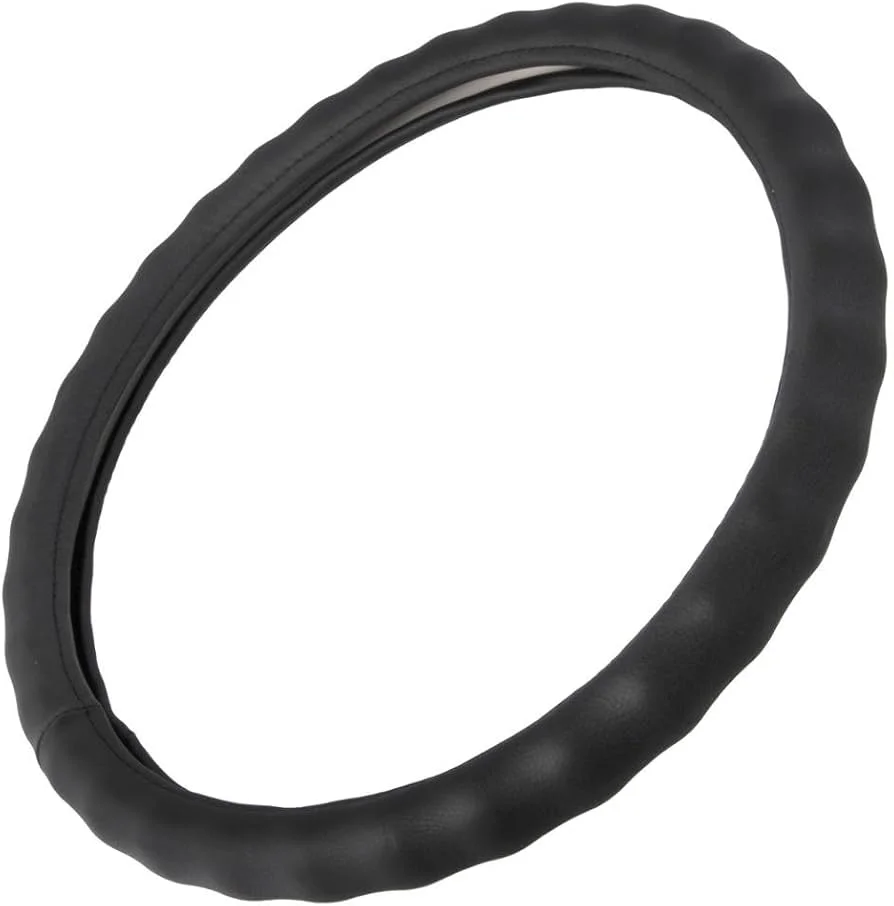
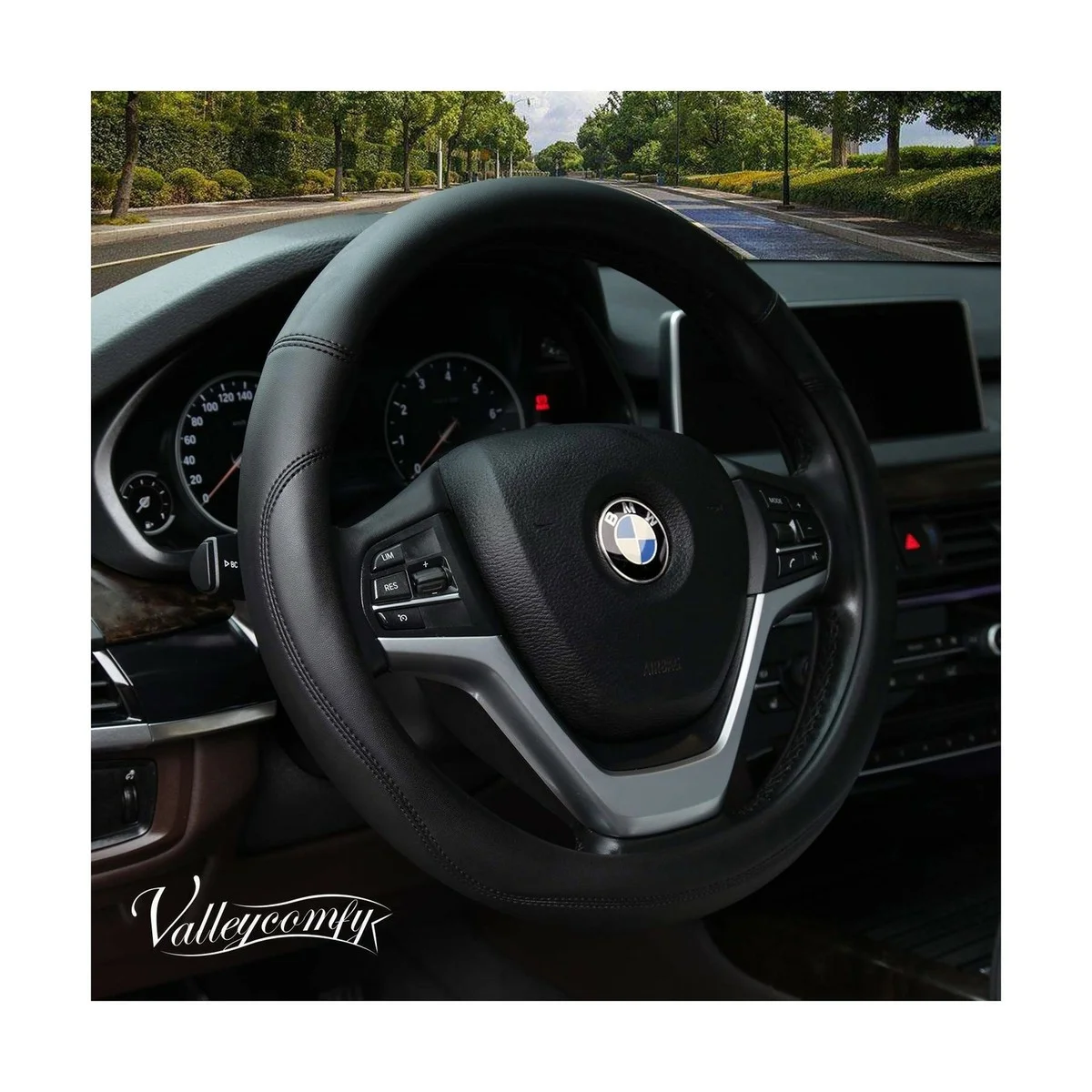
- Microfiber leather — the all-rounder. Owners consistently report it grips well bare-handed, and its perforated, textured surface stays noticeably cooler than a bare wheel in direct sun while resisting the cabin heat that hardens cheap vinyl. The SEG Direct Microfiber Leather Steering Wheel Cover, Valleycomfy Microfiber Leather Steering Wheel Cover, and Mayco Bell Microfiber Leather Steering Wheel Cover are this type.
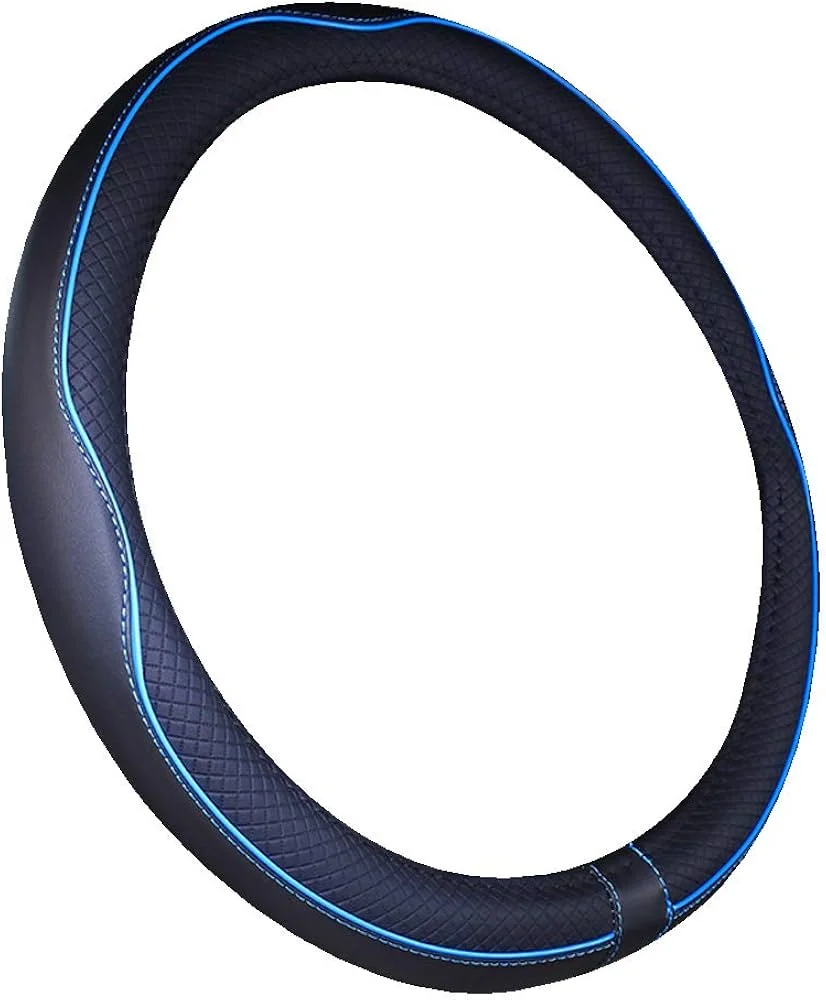
- Genuine leather — the premium look. It smells right and ages handsomely, but it is less elastic, so it needs a precise size match, occasional conditioning, and a break-in period where hand oils can leave it briefly slick. The BDK Genuine Leather Steering Wheel Cover is this category.
- Silicone — the utility pick. It is heat-resistant, stays relatively cool to the touch after hours in the sun, grips even with sweaty or gloved hands, wipes clean, and stretches on in seconds with no lacing. The trade-off owners note is a firmer, rubbery feel and trapped heat against the palms on long drives. The ANDALUS Silicone Steering Wheel Cover is this type.
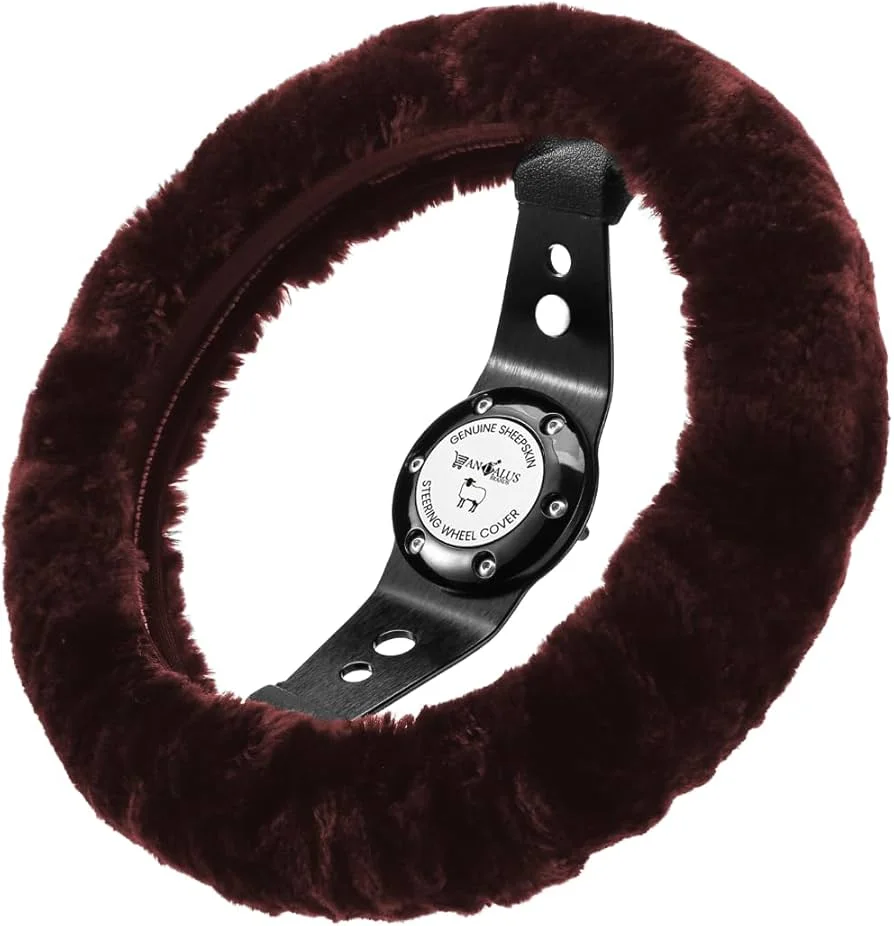
- Sheepskin / plush — the cold-weather comfort choice. It is warm and cushioned for winter drives, but it traps heat in summer, is harder to clean, and its softness means you squeeze harder for a firm grip. Great in January, wrong in July.
The short version: microfiber leather for the daily driver who wants grip and durability without fuss, silicone for the hot-climate driver who values a cool, grippy wheel over luxury feel, genuine leather for the person who wants the look and will maintain it, and sheepskin only if your problem is cold, not heat.
Heat and Cold Performance, Material by Material
Because a wheel bakes daily and freezes seasonally, temperature behavior is where materials genuinely separate. This is the practical read on each:
Silicone handles heat best on paper. It naturally resists heat transfer and reviewers describe it staying cool to the touch even after hours in direct sun, which is exactly what a driver in the desert Southwest wants when the bare wheel is untouchable by noon. The honest limit is that same material can feel rubbery and hold warmth against your palms once you have been driving a while.
Microfiber leather is the balanced performer. Its perforated construction lets air move, so owners report it stays cooler than a bare wheel and does not develop the greasy, hardened sheen that vinyl gets where hands sit. That breathability is also why it does not turn into a sweaty ring on a humid day the way a non-breathable cover can.
Genuine leather is a comfort material, not a heat shield. It insulates a cold wheel nicely in winter and feels premium year-round, but neglected leather can dry and stiffen, and an unconditioned surface gets slick with hand oils. Sheepskin is the winter specialist — cushioned and warm — and precisely the wrong call for a car that lives in the sun, since it traps heat and is a chore to clean.
No cover, in any material, beats physics on its own. The single biggest lever against a scorching wheel is keeping the sun off the cabin in the first place: a sun shade knocks 40 to 50 degrees off surface temperatures, turning a 150-degree wheel into one you can actually hold.
Material choice fine-tunes the comfort; shade does the heavy lifting.
The Five Covers, Compared
Here is the rundown across the five picks, drawn from manufacturer specs and the consistent patterns in owner reviews rather than any first-hand use of our own. The traits that hold up in reviews are the ones worth buying on.
The SEG Direct Microfiber Leather Steering Wheel Cover is the all-rounder. Owners consistently report the microfiber grip works bare-handed, its listed 14.5-to-15-inch size chart fits the common wheel that covers most cars, and the heat-resistant surface keeps it from going slick or hard through a summer. The trade-off buyers note is that a correctly snug fit takes a couple of minutes of patient stretching — the same install step that, skipped, generates the occasional "too small" review.
The BDK Genuine Leather Steering Wheel Cover is the premium option. Owners report it looks and smells the part, and because genuine leather is less elastic, the tighter, precise fit is a feature once it is on — it does not rotate. The honest catch is the conditioning it wants over time and the break-in period where hand oils can make it briefly slick.
The Valleycomfy Microfiber Leather Steering Wheel Cover is the value microfiber pick. Owners credit its anti-slip backing for staying planted and its breathable surface for not turning sweaty, with the same size-chart discipline as the SEG Direct. The Mayco Bell Microfiber Leather Steering Wheel Cover covers similar ground with a softer hand-feel that owners with smaller hands tend to prefer.
The ANDALUS Silicone Steering Wheel Cover is the budget-and-utility play. Owners praise that it stretches on in seconds with no lacing, grips with sweaty or gloved hands, and wipes clean in a moment. Its honest limit is the rubbery feel and trapped heat on a long summer drive that the leather-type covers avoid.
Five honest covers, one decision: get the size code right, then match the material to your climate.
A Pre-Buy Checklist That Kills the Common Regrets
Run any cover past these five points before you buy, and most of the one-star reviews stop being about you. None of them are headline specs, and every one is the difference between a cover you forget about and one you fight daily:
- Size match, measured. Diameter first, because the other four points are irrelevant if the wheel is 14.5 inches and the cover is a large. Match your measurement to the S/M/L code, not the marketing.
- Grip circumference sanity check. If your rim is unusually thick or thin, read the listing's grip note — two wheels with the same diameter can need different covers.
- Backing material. The underside that grips the rim matters more than the top. A thin, slick backing rotates no matter how well it fits; a textured anti-slip backing stays put.
- Breathability. A non-breathable cover turns sweaty in summer heat. Perforated microfiber and silicone shed that better than solid vinyl.
- Heat tolerance. This part sees 127-to-170-degree surface temperatures in summer, so a material rated to hold its shape — microfiber, silicone, quality leather — outlasts a vinyl that hardens and cracks by the second season.
Run a cover past those five and the marketing falls away fast. A silicone cover like the ANDALUS Silicone Steering Wheel Cover is not trying to win on luxury; it wins on backing grip and instant install, which for a hot-climate driver is exactly the right set of trade-offs.
Installing It Without the "Too Small" Panic
The install saves more covers than any product recommendation, because a correctly sized microfiber cover is supposed to go on snug. That tightness scares people into thinking they bought the wrong size, so they force it on crooked and live with a lump. The fix is heat and patience, not a bigger cover.
On a warm day the material is more pliable; on a cold day, warm the cover in the car or between your hands first. Seat it over the top of the wheel, then work it down both sides evenly toward the bottom, stretching as you go rather than yanking one section all the way on. The last few inches at the bottom are the hard part — owners who report a "too small" cover are usually two minutes of even stretching away from a clean fit.
For laced genuine-leather covers, the lacing is the feature, not a chore: it lets you dial the tension exactly so the cover never rotates, and because leather is less stretchy, that adjustability is how you get a factory-tight result. It takes fifteen minutes and a podcast. Skip the patience and you get the lumpy, spinning cover that fills the one-star reviews; spend it, and even a mid-priced cover feels like it came with the car.
- Warm it first — pliable material stretches; cold material fights back.
- Top down, both sides even — never force one section fully on before the rest.
- Use your palm heels — work around the rim in stages and let the material relax.
How to Choose for Your Car and Your Climate
The right cover is a function of three things: your wheel size, your weather, and your patience. Being honest about those narrows five products to one fast.
- Temperate climate, standard 14.5-to-15-inch wheel, wants zero maintenance. This is the biggest group, and it is squarely SEG Direct Microfiber Leather Steering Wheel Cover or Valleycomfy Microfiber Leather Steering Wheel Cover territory: microfiber grip, a fitting size chart, durability with no upkeep.
- Hot climate, bare wheel untouchable by noon. Grip-when-sweaty and instant install beat luxury feel here, which is where the ANDALUS Silicone Steering Wheel Cover stops looking cheap and starts looking smart — paired with a sun shade to attack that 40-to-50-degree temperature drop at the source.
- Wants the wheel to look and smell like an upgrade, and will maintain it. The BDK Genuine Leather Steering Wheel Cover rewards the fifteen minutes of lacing and the few minutes a year of conditioning with a premium, non-rotating fit.
- Cold-climate winter driver. A sheepskin or plush cover is the warm, cushioned choice for freezing mornings — just know it is the wrong material for a summer car. And the oddball wheel — unusually thick, thin, or a non-standard diameter — should measure twice and read the grip note before anything else, because no material fixes a size mismatch. Figure out which driver you are, and the cover picks itself.
The Verdict
Strip away the marketing and the decision is simple. For most drivers with a standard 14.5-to-15-inch wheel who want grip, durability, and no maintenance, the SEG Direct Microfiber Leather Steering Wheel Cover is the one to point people to: it fits the common size, grips bare-handed, and survives the heat that ruins cheap covers. Its only real ask is a patient two-minute install, which for a cover you will keep for years is a fair trade.
If you want real leather and will lace and condition it, the BDK Genuine Leather Steering Wheel Cover is the upgrade that ages well. The Valleycomfy Microfiber Leather Steering Wheel Cover is the value microfiber pick when you want the anti-slip backing, the Mayco Bell Microfiber Leather Steering Wheel Cover is the softer-feel option for smaller hands, and the ANDALUS Silicone Steering Wheel Cover is the honest budget-and-hot-climate answer.
Whichever you choose, measure the wheel first and install with patience.
The best cover in the catalog feels like junk if it is the wrong size or stretched on crooked, and the cheapest one feels fine if it fits right and seats clean.
The cover is on your hands every mile — it is worth ten extra minutes to get the one that disappears.