Where to Start
The dealer wanted $180 to tow my buddy's dead F-150 to the shop, just to tell him the battery was flat. Absolute highway robbery. You can pick up a decent portable jump starter for under $100 and avoid that whole circus. Car and Driver found plenty of solid options that won't break the bank. Most of these lithium packs pack enough punch to spin over a V8.
Forget flagging down a stranger for jumper cables.
Those things are a mess of tangled copper and potential reverse-polarity explosions. A portable unit is a self-contained power source. No second vehicle needed. No risk of frying your ECU because some Good Samaritan hooked up positive to negative.
I've seen too many roadside fiascos where a simple dead battery turned into a multi-hour ordeal. A portable jump starter is about mechanical independence and circuit integrity. It's about having reliable 12V supply when your lead-acid decides to take a vacation.
Carku's guide highlights how crucial these units are for daily drivers.
The real value isn't just the cost savings on a tow. It's the mitigation of kinetic energy loss on your commute. The reduction of thermal cycling stress on your starter motor from repeated failed crank attempts. And the peace of mind knowing you aren't stranded in the middle of nowhere, waiting for a $200 service call. Yeah, I'd say that's worth the $70 investment.
Quick Verdict
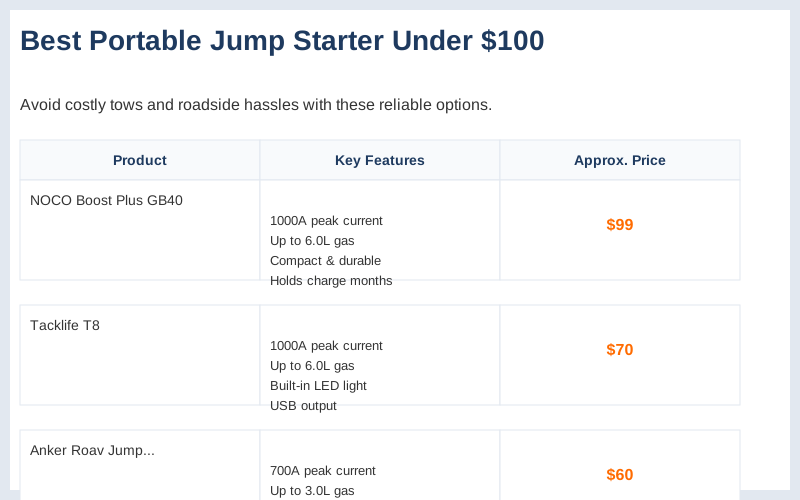
- NOCO Boost Plus GB40 (~$99): Still the gold standard. 1000A peak current is plenty for most gas engines up to 6.0L. Compact, durable, and holds a charge for months. Wired recommends NOCO for its reliability.
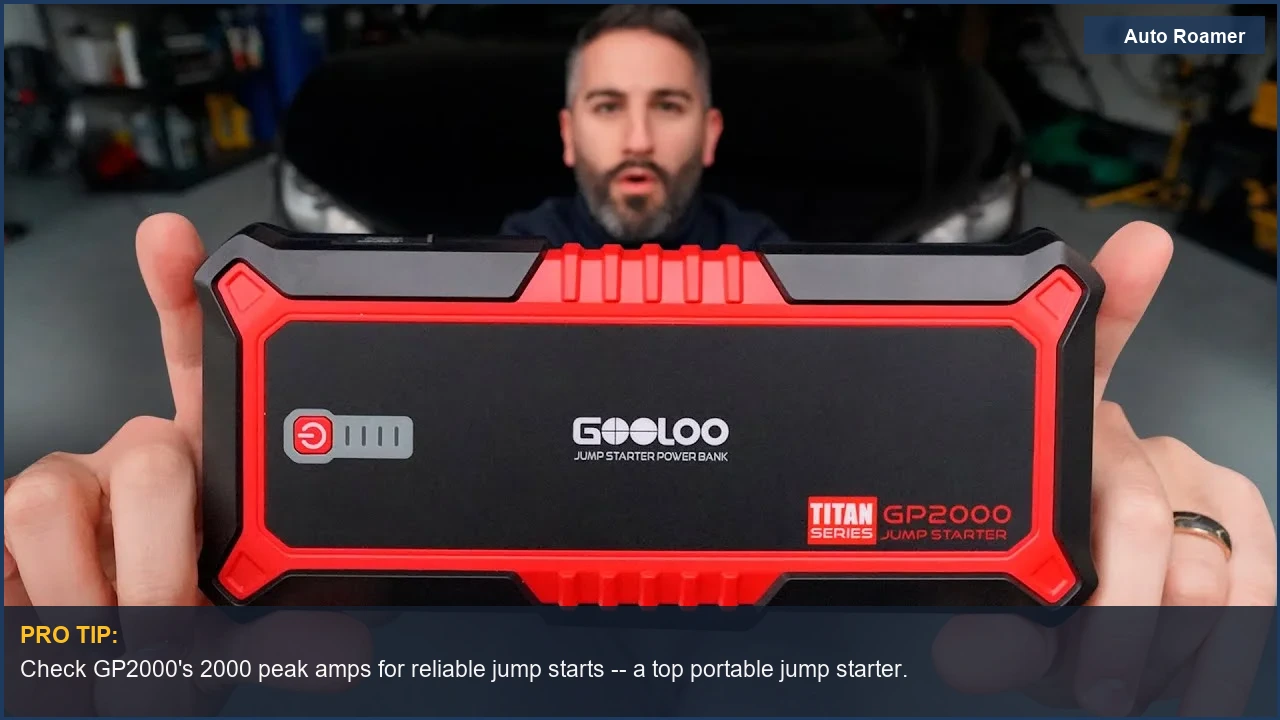
- GOOLOO GP2000 (~$69): Excellent value with 2000A peak. Handles larger engines, even some diesels. USB charging ports are a nice bonus. My buddy uses one in his old Tacoma.
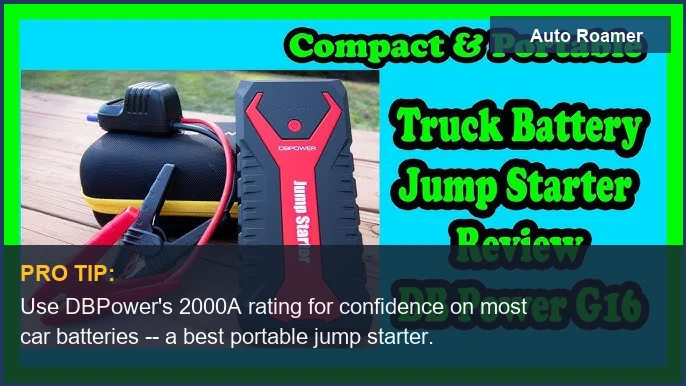
- DBPower 2000A (~$75): Another solid contender with 2000A peak. Often on sale. Known for its quick charge capability. Good clamp quality, which matters for minimizing resistance.
- Clore Automotive JNC325 (~$85): A bit bulkier, but Clore makes serious shop tools. This one is rated for 1000 peak amps. Known for its heavy-duty cables and robust construction. Less features, more brute force.
- Audew 2000A (~$60): The budget king. 2000A peak. Sometimes a bit hit-or-miss on long-term charge retention, but for occasional use, it'll get the job done. Top Firearm Reviews noted the NOCO Boost HD as a top pick, but this is the cheaper alternative.
- Why these? They all deliver sufficient CCA (Cold Cranking Amps) for typical passenger vehicles. The key is the lithium-ion chemistry. Higher energy density, lower self-discharge rate compared to traditional lead-acid packs. Less weight, more power.
- What to avoid? Anything with flimsy clamps or too many 'features' for the price point. A cheap air compressor or a weak inverter just adds complexity and failure points. Focus on the core function: delivering current without thermal overload.
- My take: For under $100, you're not getting a commercial-grade unit that'll jump a semi. But you're getting enough power to reliably start a dead 12V car battery several times over. The NOCO GB40 is my default recommendation for its consistent performance.
What to Look For
When your engine won't crank, you don't care about LED flashlights. You care about peak current delivery and clamp integrity. Here's what I look at:
| Feature | Why it Matters (Dirtbag Engineer's POV) |
|---|---|
| Peak Amperage (A) | This is the instantaneous current output. You need enough to overcome the internal resistance of the starter motor and the viscous drag of cold engine oil. A 1000A unit is usually fine for gas engines up to 6.0L.
More is better for diesels or really cold mornings when oil viscosity is through the roof. Too low, and you get weak cranks and thermal stress on the starter. Road & Track emphasizes high amperage. |
| Battery Capacity (Wh or mAh) | Not directly related to cranking power, but it dictates how many jumps you get, or how long it'll charge your phone. Higher capacity means less thermal cycling on the internal cells from frequent charging.
A 15,000 mAh (55.5 Wh) pack is a good minimum. |
| Clamp Quality | This is critical for circuit integrity. Flimsy stamped metal clamps with weak spring tension lead to high resistance at the connection point. High resistance means voltage drop, heat generation, and less power getting to your starter. Look for solid copper jaws and strong springs. These are tactile indicators of quality. |
| Cable Gauge | Thicker cables (lower gauge number) mean less resistance, less voltage drop, and less heat generated at high current.
Thin cables are a failure point, especially in cold weather where the insulation can become brittle and crack due to mechanical stress. |
| Safety Features | Reverse polarity protection, over-current protection, and short-circuit protection. These aren't luxuries; they prevent you from frying your vehicle's sensitive electronics or turning the jump starter into a thermal event. My buddy once hooked up a cheap unit backwards and popped his ECU. Not fun.
AutoGuide mentions safety features as a key element. |
| Charge Retention | A good lithium pack should hold 80% of its charge for at least 6-12 months. What's the point if it's dead when you need it? This reflects the quality of the battery management system (BMS) and the cell chemistry. |
| Operating Temperature | Lithium-ion batteries don't like extreme cold. Their internal resistance increases, reducing available current. Check the spec sheet for the lowest operating temperature.
If you live somewhere that hits -20 degrees F, you might need a higher-rated unit or keep it indoors. |
Don't fall for flashy screens or built-in air compressors unless they're secondary to solid electrical specs. Those are failure points and often compromise the main function to hit a price point. Focus on the raw power delivery.
Our Top Picks for Reliable Performance
Alright, let's cut to the chase. These are the units that actually deliver current without turning into a paperweight after two uses. I'm looking for solid construction, decent peak amperage, and a battery that doesn't self-discharge into oblivion. Popular Mechanics has some good recommendations, and I generally agree with their assessment of capacity.
NOCO Boost Plus GB40 (~$99)
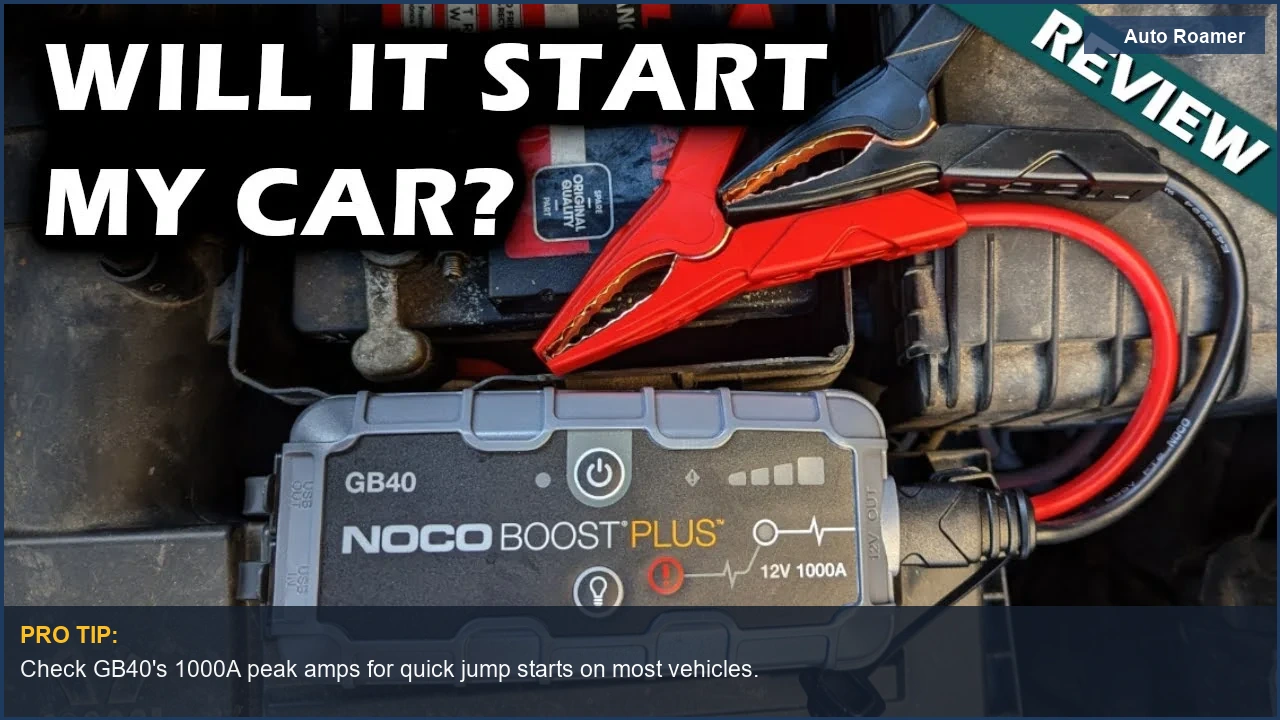
- Capacity: 1000A Peak, 24Wh
- Pros: Over-engineered safety features, compact size, excellent charge retention. Quality clamps that actually bite. Reliable brand.
- Cons: Lower peak amps than some competitors at this price point. Might struggle with very large diesels in sub-zero.
- Best For: Most gas vehicles (up to 6.0L) and smaller diesels (up to 3.0L). The 'set it and forget it' option. Garage Journal users often praise NOCO.
GOOLOO GP2000 (~$69)
- Capacity: 2000A Peak, 49.5Wh
- Pros: High peak amperage for the price. USB-C PD output for fast charging phones. Good value.
- Cons: Build quality can feel a bit less robust than NOCO. Some reports of slightly faster self-discharge.
- Best For: Those needing more cranking power for larger engines or colder climates without blowing the budget. Reddit users have good things to say about Gooloo's capacity.
DBPower 2000A (~$75)
- Capacity: 2000A Peak, 59.2Wh
- Pros: Strong peak current. Includes a DC output for 12V accessories. Often found on sale.
- Cons: Clamps are decent but not exceptional. Some units have a higher failure-rate on the integrated flashlight.
- Best For: Truck owners or anyone who needs extra 12V power for accessories in a pinch.
Clore Automotive JNC325 (~$85)
- Capacity: 1000A Peak, 27.8Wh
- Pros: Heavy-duty construction. Built like a brick. Excellent cables and clamps. Designed for shop environments.
- Cons: Bulkier than lithium-ion competitors. Fewer extra features.
- Best For: Mechanics or those who prioritize raw durability and proven performance over compact size.
Audew 2000A (~$60)
- Capacity: 2000A Peak, 59.2Wh
- Pros: Unbeatable peak amperage for the price. Can jump multiple vehicles on one charge.
- Cons: Brand reliability is less established. Charge retention can be inconsistent.
- Best For: Budget-conscious users who need high power and don't mind a slightly higher risk of long-term issues. A cheap solution for occasional use.
Head-to-Head Comparison
When you're staring down a dead battery, the only thing that matters is raw power delivery without burning up. Let's stack these up, focusing on the physics that keeps your engine from becoming a paperweight. YouTube comparisons often highlight peak amps.
| Feature | NOCO Boost Plus GB40 | GOOLOO GP2000 | DBPower 2000A |
|---|---|---|---|
| Peak Amperage | 1000A | 2000A | 2000A |
| Battery Capacity | 24Wh | 49.5Wh | 59.2Wh |
| Engine Compatibility (Gas) | Up to 6.0L | Up to 8.0L | Up to 8.0L |
| Engine Compatibility (Diesel) | Up to 3.0L | Up to 6.0L | Up to 6.5L |
| Clamp Quality | Excellent, heavy-duty copper jaws, strong spring tension for low contact resistance. | Good, solid but slightly thinner jaws. Acceptable contact area. | Good, similar to Gooloo. Can show some thermal discoloration after heavy use. |
| Cable Gauge | Thick, low-resistance. Minimal voltage drop under load. | Good, slightly thinner than NOCO but adequate. | Good, similar to Gooloo. |
| Charge Retention | Excellent. Minimal self-discharge over 6-12 months. BMS is dialed in. | Very Good. Holds charge well, but check every 3-4 months. | Good. Can see a 10-15% drop over 6 months. |
| Thermal Management | Robust. Designed to dissipate heat effectively during high-current discharge. | Adequate. Can get warm after multiple consecutive jumps. | Adequate. Similar thermal profile to Gooloo. |
| Price (~$) | 99 | 69 | 75 |
The NOCO GB40, while lower on peak amps, has superior component quality. Better clamp-to-terminal contact means more current gets where it needs to go. The GOOLOO and DBPower offer double the peak current on paper, which is great for larger engines, but the long-term mechanical stress on their internal components and cables might be higher. Reddit users often debate the real-world difference between 1000A and 2000A.
My money is on the NOCO for sheer durability and consistent performance over years of thermal cycling. The others are solid budget options, but you're trading a bit of long-term robustness for immediate peak power.